Author name: 胡思

How African and Asian Countries Lead Clean Energy Transition

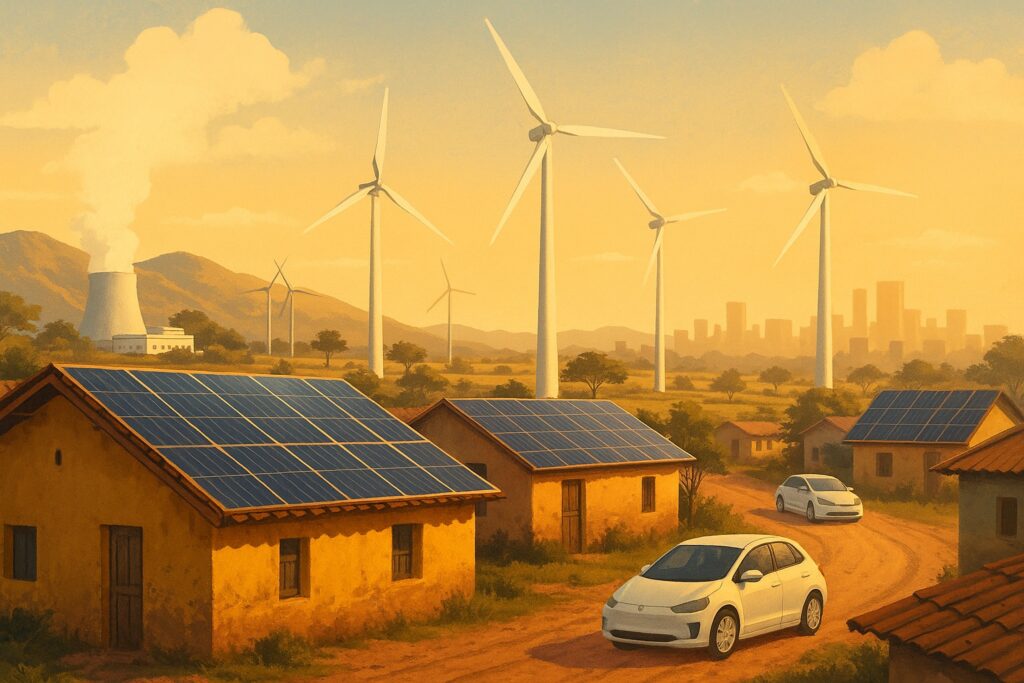
For a long time, developing countries have been synonymous with pollution: coal smoke, diesel fumes, frequent power outages, and the incessant noise of generators. However, this reality is changing. It is the developed nations that are truly shackled by the old systems. Refineries, gas pipelines, and coal-fired power plants are all remnants of 20th-century designs, burdened by expensive and rigid sunk costs that make transitions slow and costly. In contrast, many countries in Africa, Asia, and Latin America lack comprehensive fossil fuel infrastructure and do not carry the burden of recouping investments. They can leapfrog outdated technologies and move directly to a clean energy system centered on solar, wind, batteries, and smart grids. Here, energy transition is not idealism but the most cost-effective and rapid choice available.

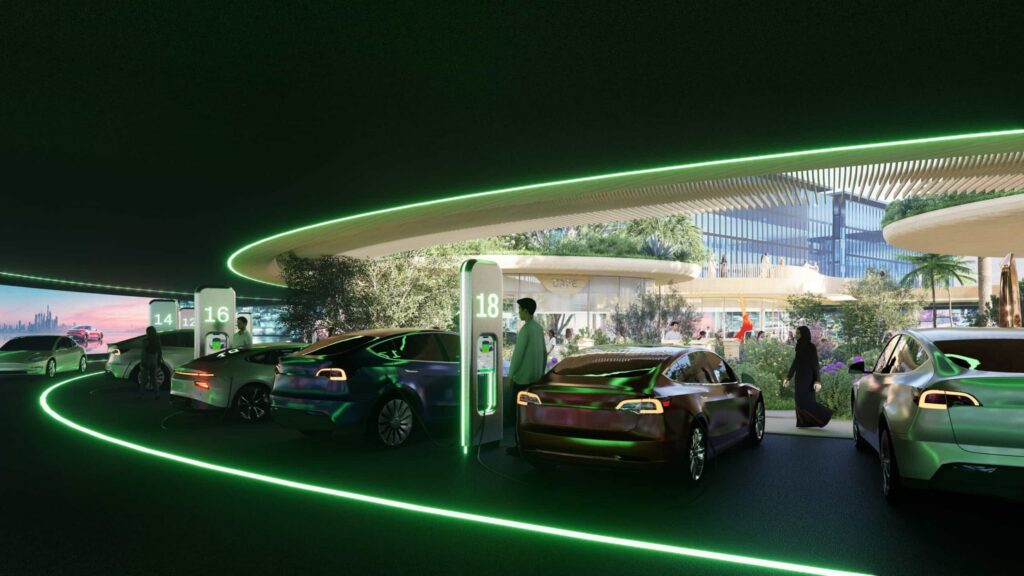
Pakistan serves as a striking example. With soaring electricity prices and frequent blackouts, the market has found its own solution. In the past two years, the import of solar panels has surged, with capacity measured in tens of gigawatts, and the pace of new installations has at times exceeded that of the entire African continent. This is not driven by government subsidies but by businesses and households calculating the costs: self-generated power is cheaper and more reliable than purchasing from the grid. As a result, solar energy’s share in the electricity mix has skyrocketed, driving down the marginal price during the day to extremely low levels. More importantly, this path is naturally compatible with electric vehicles and heat pumps. When rooftops can generate electricity, electric vehicles become mobile batteries, and heat pumps can amplify every kilowatt of electricity into three to four kilowatts of heating or cooling. In such a system, laying expensive gas pipelines merely locks capital into a less efficient and riskier dead end.

Argentina’s transition illustrates that even resource-rich countries need not be held captive by their resources. Through straightforward renewable energy auctions and long-term contracts, wind and solar power have rapidly become key sources of electricity, supporting nearly half of the demand during midday and peak periods. This not only reduces price volatility but also enhances energy security and minimizes foreign exchange outflows. As electricity becomes progressively cleaner, the electrification of transportation and heating becomes a natural progression: electric vehicles are no longer constrained by imported oil prices, and heat pumps prove to be significantly more cost-effective than gas water heaters over their entire lifecycle. The energy system is shifting from ‘continuously burning fuel’ to ‘installing equipment once and using electricity long-term.’

Kenya showcases an even more radical path. With geothermal, hydropower, and wind energy as its backbone, clean energy now constitutes an absolute majority of its electricity generation. This means that new electricity demand need not be accompanied by new emissions, allowing for the simultaneous expansion of the grid and carbon reduction. This is crucial for a country still working to improve electricity access. When the foundational power supply is already clean, promoting electric vehicles and heat pumps is easier than in developed countries, as there are no old systems to maintain, no gas pipelines to depreciate, and no vested interests to appease.

The common thread among these countries is clear: transition is driven not by sentiment but by cost curves. Solar, wind, and battery technologies continue to decline in price, while the grid serves as the most universal and scalable infrastructure. Electric vehicles and heat pumps extend the value of electricity to transportation and climate control. Under these conditions, any rational actor would not choose to build a new gas system to accomplish tasks that could be performed more efficiently by electricity. This is not just high-carbon; it is also economically unwise.

If this trend continues, the scene a decade from now may be quite ironic. You might enter a country still labeled as ‘developing’ today, only to be greeted by clean air, rooftops adorned with solar panels, quiet electric vehicles gliding through the streets without emissions, and buildings heated and cooled by the grid. In contrast, those countries still shackled by oil and gas assets and politics, desperately prolonging the life of old pipelines, may resemble today’s underdeveloped regions. Energy transition has never been about who shouts the loudest first; it is about who is willing to let go of the past the earliest. As the world has already turned the corner, the slowest will ultimately find themselves trapped in their own history.

How African and Asian Countries Lead Clean Energy Transition Read More »

Reforming Britain’s National Speed Limit

In the UK, there exists an exceedingly abstract road sign: a white background with a black diagonal line, symbolising the ‘National Speed Limit’ (NSL). It lacks numbers or text, serving as a symbol that can only be deciphered by those familiar with local regulations. For foreign drivers, it is perplexing; for many local drivers, it is often confusing. This system, rooted in the road philosophies of the last century, increasingly appears outdated in today’s driving environment.

Many assume that the NSL is 70 mph, but this is only true for motorways and dual carriageways; on single carriageways, the limit is 60 mph. The issue is that a dual carriageway is not simply defined as having two lanes, but rather as having lanes separated by a physical divider. Even if each side has only one lane, as long as there is a divider, it qualifies as a dual carriageway; conversely, two lanes side by side without a divider remain a single carriageway. Some dividers are so narrow that they are hardly distinguishable from the shoulder, making it difficult to judge with the naked eye, and misjudgments are common.

An even greater issue arises in built-up areas. The law stipulates that once a driver enters a built-up area, the speed limit automatically drops to 30 mph; however, this transition is sometimes entirely unmarked. A built-up area is defined as any road with streetlights spaced no more than approximately 61 meters apart. Yet, rural areas may sporadically have streetlights, and the distance is difficult to gauge visually. Drivers may still believe they are in the countryside while the legal speed limit has already dropped to 30 mph, creating inherent risks in a system reliant on inference.

The speed limits for heavy vehicles are similarly complex: 50 mph on single carriageways and 60 mph on dual carriageways and motorways. However, when variable speed limit systems are in operation, all vehicles, including heavy ones, are required to travel at the same maximum speed, with no distinction between 50 and 60 mph. Since the busiest and most sensitive motorways can manage all vehicle types at a ‘single speed’, the understanding costs of enforcing a distinction between 50 and 60 mph on regular roads seem to outweigh any safety benefits.

Reflecting on the history of the NSL, this system was not without purpose. In the 1960s, the government adopted abstract symbols partly to avoid the need to replace all road signs when national speed limits required adjustment. For instance, during the 1973–74 oil crisis, the UK reduced all NSL roads to 50 mph and motorways to 60 mph. Thanks to the NSL, the policy only needed legal modification, and national road signs remained unchanged, marking the only true moment of flexibility for the NSL. However, since the establishment of the current 70/60 mph system in 1977, national speed limits have not been uniformly adjusted. Traffic research has become increasingly precise, necessitating the individual handling of risks, making a one-size-fits-all approach outdated. The original flexibility of the NSL has vanished, leaving behind a perplexing symbol.

Given this, the direction for reform has become clear. At a minimum, all built-up areas should be mandated to display numerical speed limit signs of 30 mph, making the boundaries of urban areas unmistakable and eliminating reliance on streetlights for inference. Further, a comprehensive replacement of the NSL with clear numerical limits is warranted: 70 should be marked as 70, and 60 as 60, allowing drivers to decode no more. Additionally, legislation should stipulate that heavy vehicles must never exceed 60 mph, simplifying the previously complex 50/60 mph distinction and aligning it more closely with the practical operation of variable speed limits.

The essence of road safety lies in clarity, not in testing drivers with symbols. When understanding speed limits relies on experience, guesswork, or even counting streetlights, the system has strayed from its original intent. Replacing abstract symbols with universally understood numbers is an update that the UK roads should have implemented long ago.

Reforming Britain’s National Speed Limit Read More »

Are Electric Vehicles Truly More Eco-Friendly Than Gas Cars?

Electric vehicles are becoming increasingly popular in Hong Kong, yet a lingering question remains: given that local power plants still rely heavily on natural gas and coal, are electric vehicles genuinely more environmentally friendly? To answer this question, we must rely on calculations rather than impressions.

First, let us examine the most direct measure: carbon dioxide emissions. A typical gasoline vehicle in Hong Kong has an actual fuel consumption of about 7.5 L/100 km. Each liter of gasoline burned emits approximately 2.3 kg of CO₂, translating to about 170 g per kilometer. When accounting for upstream emissions from extraction, refining, and transportation, the total comes to around 200 g/km. In contrast, a medium-sized electric vehicle consumes about 18 kWh per 100 km. Based on the local power grid’s CO₂ emissions of approximately 0.40–0.45 kg per kWh, the emissions per kilometer amount to roughly 72–81 g, which is about half that of gasoline vehicles.

To illustrate this difference more clearly, consider an annual driving distance of 10,000 km. The gasoline vehicle would emit about 2 tons of CO₂, while the electric vehicle would emit approximately 1–1.2 tons, resulting in a difference of nearly 1 ton, equivalent to not taking one or two long-haul flights. If the mileage were higher, the savings would increase correspondingly.

The critical factor lies in the calculation of the entire life cycle. The manufacturing phase of electric vehicles, particularly battery production, indeed incurs a higher ‘carbon burden.’ However, this emission does not permanently overshadow electric vehicles. Based on the current intensity of Hong Kong’s power grid, electric vehicles will have lower cumulative emissions than gasoline vehicles after driving approximately 12,000–20,000 km. Over the entire lifespan of 100,000–150,000 km, the life cycle emissions of electric vehicles are generally about 30–50% lower than those of gasoline vehicles. As the power grid becomes greener, this gap will only widen.

Moreover, the life cycle does not end with the vehicle’s ‘retirement’; the ‘second life’ of batteries is rewriting the environmental ledger. Many retired electric vehicle batteries still retain 70–80% of their capacity and are commonly repurposed for energy storage systems, balancing grid loads and supporting renewable energy. This implies that the carbon emissions associated with batteries are not a one-time cost but can be amortized over a longer usage period. Regarding recycling after disposal, global technological advancements are rapid; hydrometallurgy can recover metals like lithium, nickel, and cobalt with an efficiency of around 90%, significantly reducing the emissions associated with raw materials for the next generation of batteries. In other words, the environmental burden of battery manufacturing is decreasing with technological progress.

In Hong Kong, a more immediate concern is not climate change but roadside air pollution. The concentrations of NO₂ and particulate matter in Hong Kong have long been elevated, with gasoline and diesel vehicle exhaust being the primary sources. While electric vehicles still require electricity, they produce zero tailpipe emissions on the road, leading to immediate reductions in pollution near bus stops, schools, and sidewalks. Power plants can be centrally managed, whereas roadside pollution is directly inhaled by citizens, making the health impacts incomparable.

Of course, electric vehicles are not without environmental costs. The extraction of lithium, nickel, and cobalt has its footprint; larger vehicles with bigger batteries naturally require more materials, resulting in higher emissions. From an environmental perspective, electric vehicles are ‘better cars,’ but for most Hong Kong residents, public transportation is often the superior option.

Therefore, in the specific context of Hong Kong, the conclusion is clear: electric vehicles are more environmentally friendly than gasoline vehicles. Their operational emissions are significantly lower, and after driving 12,000–20,000 km, they begin to achieve ‘net reductions.’ Over their entire life cycle, they emit about 30–50% less than gasoline vehicles. Coupled with battery reuse and efficient recycling, the long-term environmental burden will continue to decline. However, to fully realize the advantages of electric vehicles, Hong Kong must transition its power grid to be entirely green, including phasing out coal power, increasing the proportion of renewable energy, and seriously exploring stable low-carbon options like nuclear energy. The electrification of transport is merely the first half; the second half requires a fundamental reform of the energy system.

Are Electric Vehicles Truly More Eco-Friendly Than Gas Cars? Read More »

Ten Years After Zero-Carbon Homes Rejected, Hongkongers Suffer

The energy crisis in the UK today has its roots in decisions made a decade ago. In 2015, the Cameron government famously declared “cut the green crap” and scrapped the zero-carbon homes policy that was set to be implemented in 2016. At the time, the government emphasized that this would save families money; however, ten years later, it has become clear that the real cost is the future that was sacrificed.

Since 2021, many Hongkongers have moved to the UK and purchased properties, primarily new homes. While these homes appear modern, they lack the essential technologies that should have been included: no heat pumps, no solar panels, and insulation and airtightness standards that fail to meet original requirements. As a result, new homes still heavily rely on natural gas for heating, leading to significantly increased gas consumption in winter and soaring energy bills. Had the policy not been abruptly halted in 2015, many new homes today could have been close to zero-carbon, sparing residents from gas bills and the future costs associated with decommissioning gas pipelines.

The energy crisis has magnified the consequences of this policy. The war in Ukraine has driven up global gas prices, and the UK, with its long-standing dependence on natural gas for heating, has been particularly hard hit. The issue is not about predicting wars; rather, new residential buildings were intended to mitigate such risks, yet the policy dismantled this very safeguard.

Ofgem, the regulatory body, has pointed out that had insulation and energy-saving measures not been cut between 2013 and 2015, UK households could have consumed less energy, saving approximately £150 per household annually. On the construction front, the MCS Foundation cites government modeling indicating that if heat pumps, solar panels, and battery systems had been integrated during the construction of new homes, the average additional building cost would have been around £5,000, yet households could have saved approximately £1,300 annually on energy expenses. In other words, a manageable upfront cost during construction could have led to stable, reduced bills for years to come, significantly lessening the impact of gas price fluctuations.

This illustrates that the rejection of zero-carbon homes was never about saving families money; rather, it transformed a one-time construction investment into a long-term, recurring, and uncontrollable energy expenditure risk. For Hongkongers who entered the market after 2021, this risk is not an abstract concept but a tangible figure reflected in their annual bills.

The cancellation of the zero-carbon homes policy seemingly alleviated costs for builders but effectively shifted the burden onto future residents. Today, many new homes look sleek, yet their energy efficiency remains stuck in the past decade. In alignment with the 2050 net-zero policy, these homes will still require retrofitting: installing heat pumps, solar panels, and batteries, ceasing the use of natural gas, and managing the pipelines. What could have been a one-time construction effort is now an additional burden that families must bear in the future.

The shortsighted decision made a decade ago is now being paid for in real terms. The policy once derided as “green crap” was, in fact, an insurance policy that exchanged minimal costs for maximum stability. The UK’s current discussions on net-zero are merely an attempt to rectify the homework that was torn up ten years ago. Unfortunately, the energy savings that were missed will not return, and the wasted decade cannot be reclaimed. Each political “cut” carries a cost, and that cost often far exceeds the savings made at the time.

Ten Years After Zero-Carbon Homes Rejected, Hongkongers Suffer Read More »

Health Risks of Cooking with Open Flame

Gas stoves remain prevalent in households not because they are particularly safe, but simply because they have always been used that way. Flames are seen as symbols of efficiency and tradition, and over time, few have questioned whether this practice remains reasonable. However, recent scientific research has clearly indicated that cooking with open flames fueled by natural gas, propane, or butane is a long-underestimated source of indoor pollution.

Studies conducted by Stanford University and various public health research institutions have shown that gas cooking releases nitrogen dioxide (NO₂) and benzene. Nitrogen dioxide can irritate the respiratory tract and exacerbate asthma and lung inflammation; benzene, classified as a Group 1 carcinogen by the World Health Organization, is associated with an increased risk of blood cancers such as leukemia. These are not incidental impurities but rather byproducts that are inevitably produced during combustion.

More importantly, the risks do not only exist during the act of cooking. Research has found that in poorly ventilated homes, these pollutants can linger for hours even after the flame has been extinguished, gradually spreading throughout the living space. In other words, even if you are not standing by the stove, you may continue to inhale these substances throughout the night. This is precisely where indoor pollution is most easily overlooked: it is silent, colorless, and odorless, yet it persists for extended periods.

A risk assessment study published this year in an international journal indicates that in households that frequently use gas stoves without effective ventilation, the long-term exposure to benzene has exceeded the acceptable levels recommended by public health guidelines, with children bearing particularly significant risks. Additionally, multiple studies have shown that the concentration of benzene produced during gas stove operation can, in certain situations, be comparable to or even exceed that of secondhand smoke. The only difference is the source of the pollution, but the harmful substances entering the lungs are the same. If secondhand smoke is unacceptable, there is theoretically no reason to ignore the combustion of gas.

The problem lies in the fact that we have never truly regarded gas cooking as a risk that needs to be examined. It has been packaged as a lifestyle choice, a cultural tradition, and even seen as a symbol of professionalism and taste. However, when scientific evidence consistently points in the same direction, the habit itself can no longer serve as a reasonable defense.

The solution is not complicated. Switching to induction cooktops can eliminate combustion pollution at the source; until a replacement can be made, at the very least, exhaust equipment that vents air directly outdoors should be used, and ventilation should continue after cooking. These are not matters of lifestyle preference but rather fundamental risk management.

Is gas cooking really a given? If we were to redesign a household today, rather than relying on old habits, would anyone actively choose to keep a flame burning indoors for extended periods?

Health Risks of Cooking with Open Flame Read More »

How Crossrail Bridges Hongkongers to Central London

The Elizabeth Line, formerly known as Crossrail 1, has delivered an undeniable performance for London. Since its opening, it has quickly become one of the busiest and most reliable railways in the UK. More importantly, it has fundamentally altered the perception of distance within the city. Areas such as Reading, Slough, and Abbey Wood, once considered ‘too far to live,’ are now naturally included within the daily commuting range. The recruitment radius for businesses has expanded, residents’ daily rhythms have become more predictable, and London has re-learned how to grow outward. Crossrail 1 demonstrates that the value of intercity rail lies not in speed, but in frequency, reliability, and direct access.

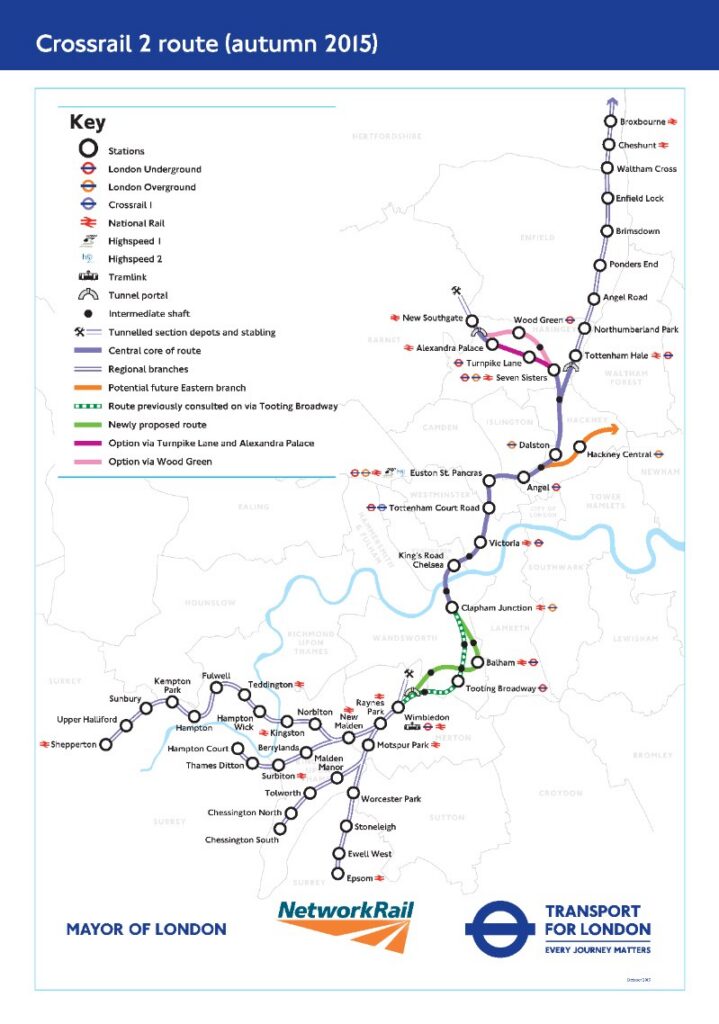
The concept of Crossrail 2 aims to replicate this model. Its origins can be traced back to the 1970s, with a consistent goal: to provide London with a high-capacity north-south backbone to alleviate the long-standing overload on the Victoria and Northern lines. By the 2010s, the route had gradually taken shape. The core section runs through the city centre from Wimbledon via Clapham Junction, Victoria, Tottenham Court Road, and Euston St Pancras; at both ends, branches extend outward. The southwestern terminus includes four major endpoints: Shepperton, Hampton Court, Chessington South, and Epsom; the northeastern end extends to New Southgate and Broxbourne, with potential connections to Hackney Central to the east. The overall design is clear: a high-density main line traversing the city, with multiple branches converging on the outskirts.

This route configuration precisely covers the actual residences of recent Hong Kong migrants. These migrants are concentrated in southwest London, including towns like Kingston upon Thames, New Malden, and Wimbledon. These areas are stable in terms of schools, mature in terms of community, and offer larger living spaces, making them natural choices for family-oriented migrants. However, the transportation reality is also apparent: travel into the city primarily relies on National Rail, which has infrequent services, limited options during peak hours, and delays that can disrupt the entire journey.

The key significance of Crossrail 2 for these communities lies in its ‘mainlining.’ The core section will operate at a frequency close to that of the Underground, with services every few minutes during peak times. For residents along the line, commuting into the city will no longer require checking timetables or enduring the risks of delays and disruptions across the entire network.

As rail services become more frequent, the definition of ‘distance’ is naturally rewritten. Living in southwest London no longer equates to sacrificing urban opportunities, but rather choosing an alternative lifestyle. For dual-income families, there is greater time flexibility; for those needing to frequently travel to the city centre, their employment and development radius is effectively widened.

Overall, this represents the healthiest development path for London. Crossrail 1 connects east to west, while Crossrail 2 fills in the north-south gap, completing the urban framework. For Hongkongers, it offers not speculative dreams, but a tangible prospect of living comfortably without being marginalized. As distance is recalculated, the reasons to stay become more compelling.

How Crossrail Bridges Hongkongers to Central London Read More »

The Best Energy-Saving Setting for Washing Machines: Eco 40-60

Washing machines are becoming increasingly complex, with a bewildering array of programs, but in reality, laundry does not require excessive thought. In nine out of ten cases, the Eco 40-60 setting is sufficient to clean clothes effectively while conserving energy and being gentle on fabrics. This program is a standard feature in all European washing machines because it serves as the international benchmark for assessing a machine’s ability to clean everyday cotton garments at the lowest possible energy consumption. In other words, Eco 40-60 is the ‘baseline mode’ for the entire machine, designed under the assumption that this will be the primary setting used by consumers.

A common misconception is that selecting the ‘shortest cycle’ will save the most energy. In fact, the primary energy consumption of a washing machine comes from heating water, not from the drum’s rotation. Quick wash programs often require higher water temperatures or increased agitation to achieve cleanliness within a limited timeframe, resulting in greater energy use. Some models offer time management features that allow users to shorten wash cycles, but in most cases, the preset Eco duration strikes the best balance between energy consumption and cleaning effectiveness.

There is no need to overthink water temperature settings. A temperature of 40°C is adequate for most fabrics, while 60°C should be reserved for items like post-illness clothing, kitchen cloths, or situations requiring special treatment, such as bedbug infestations. Generally, there is no need to resort to high temperatures for regular laundry.

Another easily overlooked setting is the spin cycle. The higher the spin speed, the lower the moisture content in the clothes, which in turn reduces drying time. While high-speed spinning consumes slightly more electricity, it ultimately helps save energy by decreasing the workload of the dryer.

As for whether to separate whites, darks, and underwear, there are no strict rules. As long as garments do not bleed color and lack metal components that could cause scratches, mixing loads is entirely feasible. In fact, excessive sorting can lead to smaller loads, wasting both water and electricity, and increasing wear on clothes due to more frequent tumbling in the drum.

One practice worth promoting is washing your own clothes. This is not merely a matter of cleanliness, but also a balance of hygiene and responsibility. Mixing the family’s laundry can facilitate the transfer of sweat, skin flakes, and fungi; washing separately can reduce skin issues and help teenagers develop self-sufficiency through daily chores.

Laundry is inherently simple and should not be daunting due to complicated controls, nor should one assume that faster cycles save more energy. Choosing Eco, setting the highest spin speed, and pressing start is the most energy-efficient, hassle-free, and straightforward approach to laundry.

The Best Energy-Saving Setting for Washing Machines: Eco 40-60 Read More »

UK’s Wayve Innovates in Autonomous Driving

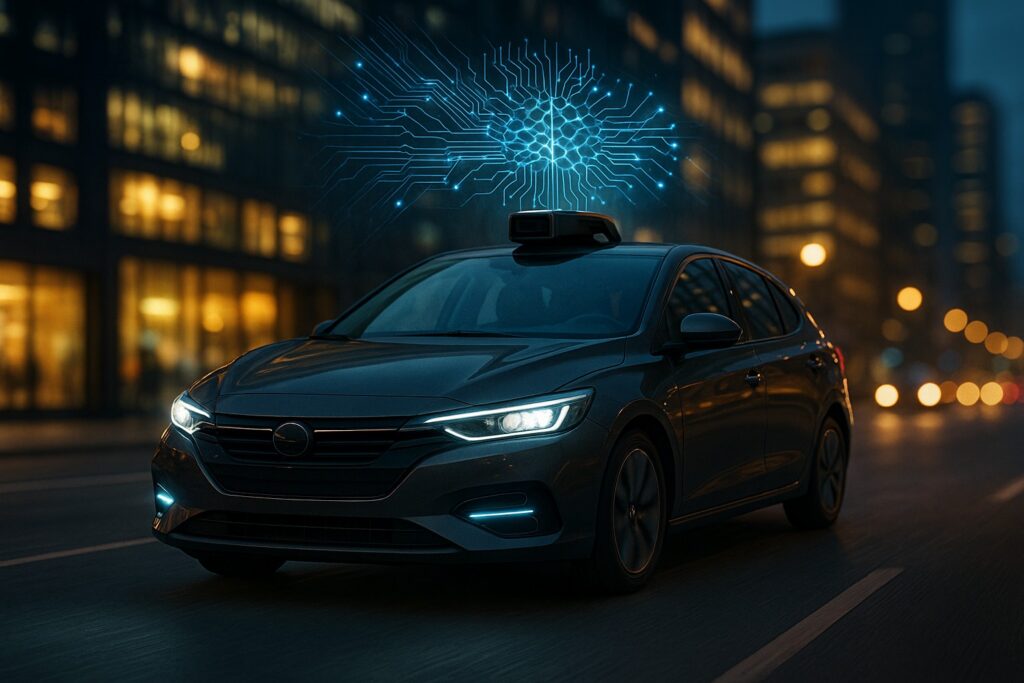
British technology has often been understated, but the rise of Wayve is compelling the world to reassess the UK’s role in the autonomous driving sector. Founded by Cambridge scholars Alex Kendall and Amar Shah, this company has no car manufacturing facilities or massive production lines, yet it has emerged as a significant new player in the global autonomous driving arena. Its strategy does not rely on hardware accumulation but rather on redefining the entire technological roadmap.

Wayve’s primary competitor is the American firm Waymo, a subsidiary of Google’s parent company Alphabet, which has a solid position and mature technology. For years, Waymo has successfully launched driverless taxis in several American cities, relying on LIDAR, high-definition maps, and multiple perception systems. This approach is cautious but expensive and complex, requiring extensive mapping and hardware deployment for cross-city expansion, resulting in a heavy operational burden.

China has also made rapid advancements in autonomous driving, with companies like RoboTaxi operating without safety drivers in multiple cities, achieving a scale that is rare globally. However, exporting this system abroad presents significant challenges. Autonomous driving involves road imaging and urban information, which many countries view as national security risks. Coupled with geopolitical pressures and highly localized maps and infrastructure, the Chinese model faces considerable hurdles in going global. Speed does not equate to international viability.

Wayve’s success lies in its ability to circumvent these bottlenecks. It employs end-to-end AI, deriving decisions directly from images without relying on high-definition maps or requiring extensive urban transformations. If the model can learn to drive in complex streets like those in London, it can be adapted to other cities. This is a genuinely internationalizable technology, and the UK possesses a sufficiently diverse road environment, making it an ideal training ground for AI.

Crucially, Wayve’s business model is not about building vehicles in isolation; rather, it licenses its autonomous driving technology to global car manufacturers. It provides the brain, not the chassis; it aims to establish an ecosystem rather than a factory. This model does not involve heavy assets, production pressure, or the need to replace traditional car manufacturers, but instead collaborates with all manufacturers to integrate AI models into any wheeled machinery.

The UK also offers an ideal policy environment. The enacted Automated Driving Act provides a comprehensive legal framework for driverless vehicles, positioning the UK as one of the first countries ready to embrace autonomous driving on the roads. Technology requires clear regulations, and Wayve has developed under this system, evolving from a research lab into an AI enterprise that attracts global investors.

While the race is on globally, the methods differ. Waymo relies on stability, RoboTaxi on speed, and Wayve on innovation. It tackles the most complex scenarios with the lightest hardware and the most versatile models. If millions of vehicles are ultimately to be driven by AI, the ability to license technology safely and cost-effectively to global manufacturers will be the decisive factor, and Wayve is precisely targeting this.

In this technological race, the UK has emerged as a key player. Wayve’s technology and model enable the UK to become an indispensable partner for global manufacturers without the need to produce cars. This is not just a technological victory for the UK; it represents a rewriting of industrial strategy.

UK’s Wayve Innovates in Autonomous Driving Read More »

The Success of Electric Vehicle Adoption in Hong Kong

The rapid adoption of electric vehicles (EVs) in Hong Kong is nothing short of astonishing. This year, over 70% of newly registered private cars are electric, significantly surpassing the approximately 50% level in mainland China and outpacing the UK and EU, even approaching the leading Nordic countries in electrification. Despite its lack of residential garages and land scarcity, Hong Kong has surged to the forefront of the global electrification wave. The promotion of electric vehicles represents one of the few genuinely effective and far-reaching environmental policies of the Hong Kong government. To understand how Hong Kong achieved this, two key factors emerge: pricing and infrastructure.

First, the tax system has inverted the pricing logic. Hong Kong’s first registration tax has always been high, with petrol cars incurring taxes of over HKD 100,000. Initially, electric vehicles were completely exempt from this tax, and later, the ‘one-for-one’ scheme further reduced costs, making many electric vehicles cheaper than their petrol counterparts. Given that cars are a significant purchase, once the price gap widened, the market naturally tilted rapidly. Hong Kong residents are pragmatic and will not go against their wallets.

Secondly, infrastructure has gradually improved. With extremely high housing density and no garages, home charging was initially a barrier. The government introduced the ‘Residential Charging Easy’ subsidy to fund the installation of trunk lines, increase power capacity, and implement load management systems, enabling residential complexes to deploy private chargers on a large scale, thereby gradually overcoming the most critical structural obstacles in Hong Kong. Simultaneously, the government and power companies are actively expanding the public charging network, allowing those without fixed parking spaces to rely on public charging stations. Although these projects are time-consuming, they are on the right track, and the cumulative effects are becoming apparent.

Furthermore, the difference in operating costs is substantial. For a typical petrol car in Hong Kong, fuel costs range from HKD 1.7 to 2.6 per kilometer. In contrast, charging an electric vehicle at home costs only HKD 0.2 to 0.3 per kilometer; even when relying entirely on paid public charging, costs remain between HKD 0.5 and 0.7. The inherent energy efficiency gap is significant, and while petrol is subject to high fuel taxes, electric vehicles are not taxed by mileage. This policy structure keeps the operating costs of electric vehicles at a persistently low level, providing a more enduring incentive than the initial registration tax. Car owners need not delve into policy details; they simply need to monitor their monthly expenses to see the clear direction.

Hong Kong has managed to overcome the natural constraints of a high-density city through the combined forces of pricing and infrastructure, gradually dismantling the most critical barriers. The result is a city with almost no garages and intense competition for space, yet it has successfully surpassed mainland China in EV adoption, outpaced the UK and EU, and is closing in on the Nordic countries. Hong Kong’s experience demonstrates that high density is not an obstacle; it is merely a problem that requires targeted solutions. This insight is worthy of emulation by major cities worldwide.

The Success of Electric Vehicle Adoption in Hong Kong Read More »

UK’s Zero Bills Home Initiative

Many believe that energy costs in the UK are soaring, but for 100,000 households, the future will be quite the opposite. Nothing is cheaper than free. The UK is pushing to establish 100,000 “Zero Bills Homes” by 2030, where residents will pay no electricity or gas bills. This initiative does not rely on government subsidies or the contributions of other users, but rather on a clearly defined energy operation model.

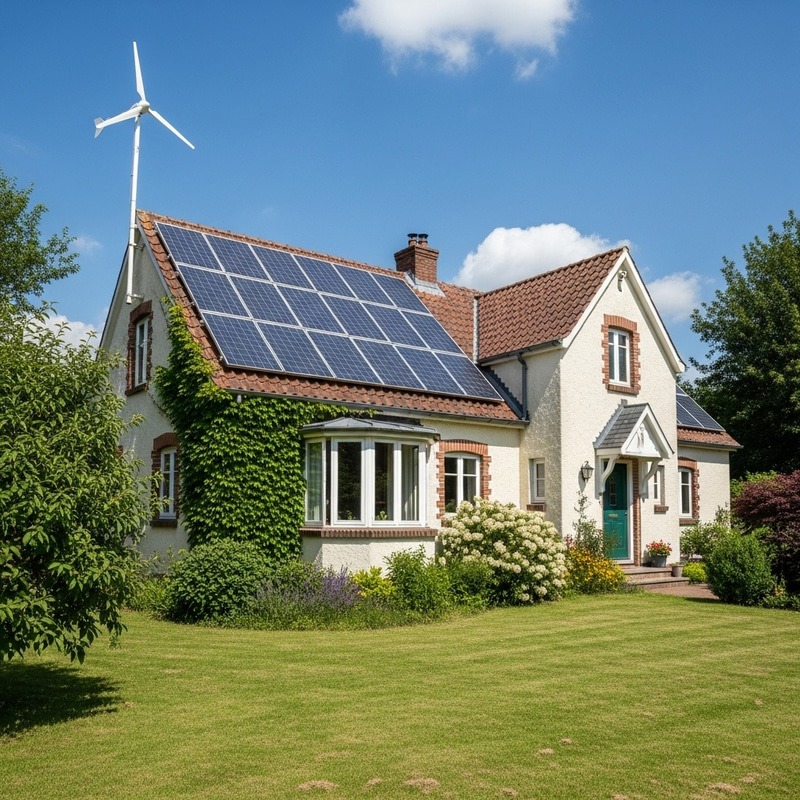
The core concept is simple: transform residences into micro power stations. Rooftop solar panels generate electricity, home batteries store energy, and heat pumps manage heating and hot water, minimizing annual energy demand. During sunny days, energy is self-generated and consumed; on cloudy days and in winter, the battery comes into play. When averaged over the year, the combination of solar power and storage is sufficient to offset the household’s total energy consumption.

What truly renders the bills zero is Octopus’s business model. It leverages smart meters and dynamic pricing to purchase electricity in bulk during off-peak hours when prices are lowest, storing it in residents’ home batteries. During peak price periods, it sells the electricity back to the grid. Coupled with the self-generated power from rooftops, the arbitrage and production over the year can offset typical household electricity usage. This allows the company to promise residents “no bills,” with the risks and energy management borne by the company.

If the “Zero Bills Home” represents a revolution, it is not just in technology but in the structure of the energy system. Households are no longer merely consumers; they become part of the power generation network. The grid is no longer solely supported by central power stations but is distributed across thousands of homes. This reduces peak demand and reshapes overall energy costs. This is a symbol of distributed energy entering the mainstream.

Recently, Octopus also revealed that it is exploring the expansion of the “Zero Bills Home” initiative beyond new developments. If successful, suitable existing homes may also join this model, further transforming the UK’s energy landscape.

The UK is demonstrating to the world that with appropriate technology and business model arrangements, Zero Bills Homes are not only feasible but can also become a sustainable and profitable business.

UK’s Zero Bills Home Initiative Read More »

Scroll to Top