Explainers

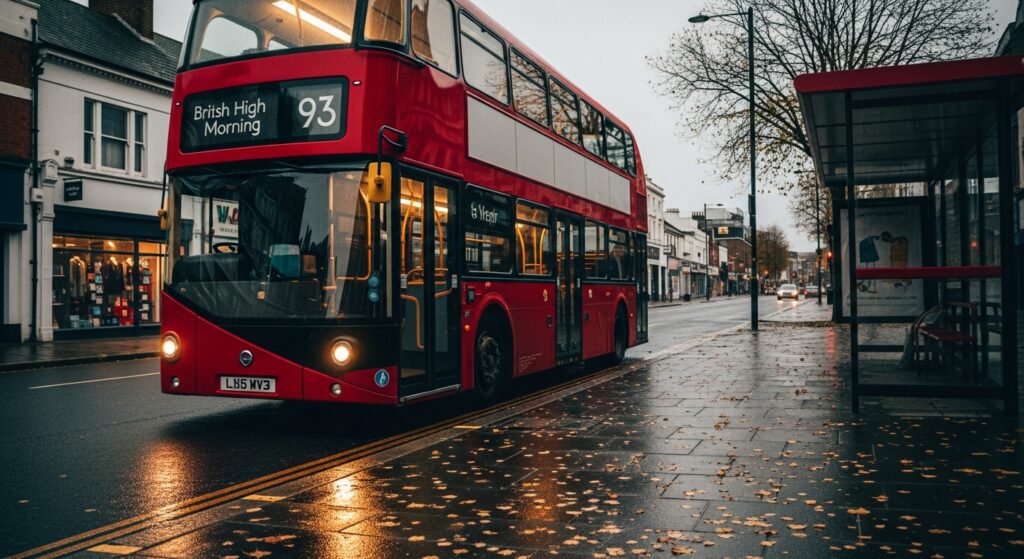
Why Don't British People Use Umbrellas?

Why Don’t British People Use Umbrellas?

For Hong Kong immigrants living in the UK, the sight can be quietly baffling: the sky is grey, a light rain is falling, and yet the British people around them walk on without a care, heads bare, not even bothering with a hood. In Hong Kong, reaching for an umbrella at the first sign of rain is pure instinct. In Britain, people seem almost immune to it. This is not simply a difference in personal habit — there is a coherent logic behind it, shaped by climate, infrastructure, history, and culture.

The rain itself is fundamentally different. Hong Kong rain arrives fast and falls hard. Within minutes, streets can flood and anyone caught without an umbrella is soaked through. British rain is something else entirely. Most of the time it is a drizzle — so fine it feels closer to mist than rain, drifting rather than falling, slow to penetrate fabric. There is even a cultural phrase for it: “It’s only drizzle.” That dismissiveness is telling. For the British, this kind of rain simply does not register as a problem worth solving.

Wind, however, is the more important factor. Britain sits on the edge of the Atlantic, exposed to the prevailing westerlies year-round. Winds are unpredictable and gusts are common. In these conditions, an umbrella becomes less a tool of protection and more a liability. Open one and it may invert within seconds, or the frame may snap entirely. The bins along London streets tell the story — bent and broken umbrellas are a regular sight, casualties of a single gust. Many British people have simply concluded that fighting the wind with an umbrella is more undignified than getting a little wet.

The practical alternative is the waterproof jacket. A good one repels both wind and rain, leaves both hands free, takes up no space on the Tube, and will not be destroyed by a sudden squall. It is the rational solution to the specific conditions Britain presents, and it explains why outdoor and hiking brands do such brisk business in a country with no mountains nearby.

How people travel also shapes how much the rain matters. In rural and suburban Britain, the car is dominant. Many journeys involve nothing more exposed than a short walk from a front door to a car, and from a car park to an entrance. The cumulative time spent outdoors in the rain can be remarkably small. Hong Kong operates on an entirely different model. The city runs on public transport, and getting around means walking — to bus stops, MTR stations, through covered walkways that nonetheless have gaps. Exposure to the elements is unavoidable, and an umbrella is as essential as a phone.

Hong Kong’s relationship with rain also carries a historical weight that has no equivalent in Britain. In the 1990s, Hong Kong suffered from significant acid rain, driven by industrial emissions from across the border. Rainwater became genuinely harmful — corrosive to skin and damaging to clothing. That era conditioned an entire generation to treat rain as something to be blocked rather than tolerated. The acid rain problem has eased since, but the habit of caution it produced has not.

The city’s physical form adds another dimension. Hong Kong is dense with high-rise buildings, and when rain falls across that kind of vertical landscape, it does not stay clean for long. Water picks up grime as it runs down facades and bounces off ledges and canopies before reaching street level. The rain that hits a pedestrian in Mong Kok has travelled a long way and touched a lot of surfaces. In that context, an umbrella is not just about staying dry — it is about staying clean.

Cultural attitude completes the picture on the British side. Generations of living with persistent, unremarkable rain have produced a studied indifference to bad weather. The British talk about weather constantly — not because they find it dramatic, but because it is so relentlessly present that it has become the default small talk, a social ritual rather than a genuine complaint. Getting caught in a bit of drizzle is not seen as a hardship. It is simply Tuesday.

For Hong Kong people settling in Britain, this difference can take time to internalise. The umbrella habit was not arbitrary — it was built by monsoon rains, acid rain, high-rise grime, and a transit-dependent city that puts people outdoors in all conditions. In Britain, the rain is lighter, the wind is stronger, the car is closer, and the cultural bar for what counts as bad weather is set considerably higher. Both responses are logical. The conditions that produced them are just very different.

Why Don’t British People Use Umbrellas? Read More »

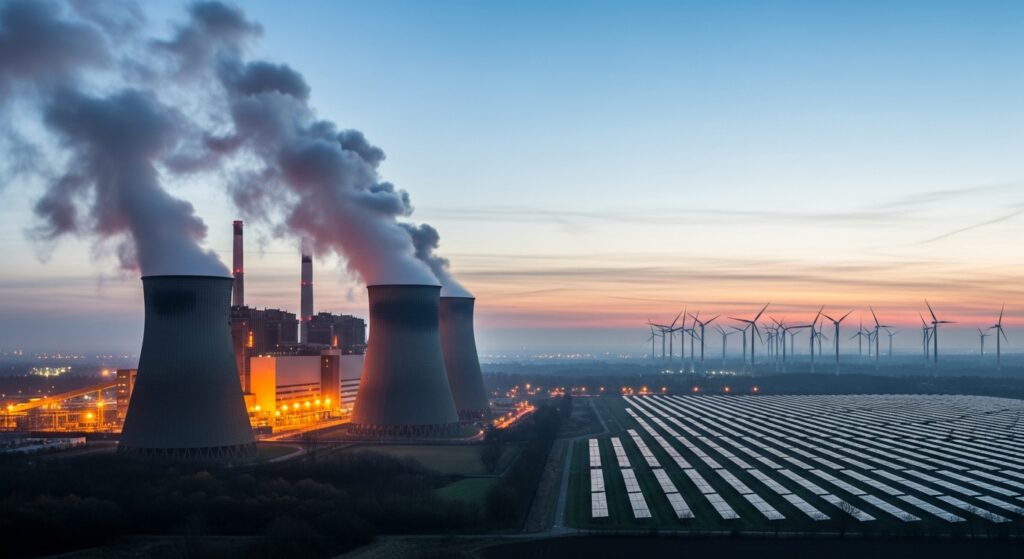
A large ground-mounted solar photovoltaic power plant in Saxony, Germany, with rows of solar panels stretching across an open landscape.

Why an Iran Crisis No Longer Sends European Power Bills Soaring

On 28 February 2026, US and Israeli forces launched strikes on Iran. Within hours, global energy markets were in turmoil.

The Strait of Hormuz carries roughly a fifth of the world’s daily oil supply and a large share of its liquefied natural gas. When the shooting started, commercial tanker traffic through the strait ground to a near standstill. Insurance premiums surged. Then, on 2 March, Iranian drones struck QatarEnergy’s production facilities at Ras Laffan, knocking out around 19% of near-term global LNG supply almost overnight. Europe’s benchmark gas contract, the Dutch TTF, jumped nearly 50% in a single session — the largest one-day move since Russia’s invasion of Ukraine in 2022 — briefly breaking through €63 per megawatt-hour, against €32 the week before. Brent crude approached $120 a barrel at its peak. For many Europeans watching the headlines, the feeling was familiar. Here we go again.

But something was different this time.

German and French wholesale electricity prices fell during the same week that gas markets were convulsing. That detail is worth sitting with.

Oil and gas surging while electricity holds steady — even dips — is not a coincidence. It reflects a structural change that has been quietly building for years. According to Ember, the energy research group, wind and solar together supplied 30% of EU electricity in 2025, surpassing fossil fuels for the first time on record. Five years earlier, that figure was 20%. In Germany, renewables already account for around 56% of net public electricity generation. Rabobank has estimated that without the cushion provided by renewable output, European power prices would currently be roughly a third higher than they are. For context, Dutch TTF gas futures peaked at €311 per megawatt-hour in August 2022, at the height of the last crisis. The current shock is real, but it is operating on a different scale.

The logic is not complicated. In a power market, prices are set by the marginal generator — the last plant needed to meet demand. When gas is expensive, gas-fired plants push prices up. But solar and wind have near-zero fuel costs. When sunshine and wind flood the grid with cheap electricity, they displace gas plants from the pricing queue and drag the market price down. This spring, that effect is unusually strong. BloombergNEF forecasts German solar output to rise around 25% year-on-year in April, with wind generation up approximately 70%. France’s nuclear fleet, which was badly degraded during the last crisis, is in far better shape. Analysts at the London Stock Exchange Group noted that Germany has been recording low or even negative prices during peak solar hours since mid-February — a phenomenon that normally does not appear until April.

Markus Krebber, chief executive of German energy group RWE, put it plainly: renewables offer stability precisely because they are not tied to imported fuels. The observation sounds simple. But it captures something that is often missing from the public debate about the energy transition — that solar panels and wind turbines are not just a climate policy. They are a form of geopolitical insurance. Every kilowatt-hour generated from domestic sunshine or wind is one fewer kilowatt-hour whose price can be held hostage by events in the Strait of Hormuz.

That insurance, however, is not complete.

Europe’s gas storage position is a serious vulnerability. According to Bruegel, the Brussels-based think tank, European gas inventories stood at around 46 billion cubic metres at the end of February 2026 — well below the 60 billion recorded a year earlier and the 77 billion in February 2024. Analysts expect storage to end March at only 22 to 27% of capacity, against a five-year average of around 41%. Europe will need to inject an enormous volume of gas over the summer refill season to reach safe levels before next winter, at exactly the moment when the LNG market is tightest.

There is also a more fundamental physical constraint. What happens when the sun goes down?

During daylight hours, solar generation suppresses prices — sometimes below zero. But as evening arrives and output fades, the grid falls back on gas-fired plants to fill the gap. The high price of gas then flows straight through into electricity costs. Earlier this month, evening power prices in the Netherlands briefly exceeded €400 per megawatt-hour. Germany saw similar spikes. The protection that renewables offer is unevenly distributed across the day: a buffer in the afternoon, a gap after dark. Battery storage is scaling up, but nowhere near fast enough to close that window. The evening peak remains the weak point in Europe’s new energy architecture.

What this crisis offers, then, is a rare real-world test. For years, the case for the energy transition rested largely on climate arguments — emissions targets, long-term responsibility, the costs of inaction. Those arguments remain valid. But the electricity market data from the past few weeks makes a different, more immediate case. A power system built on domestic wind and solar is structurally less exposed to the shocks that travel through fossil fuel markets. The more of your electricity that comes from sunlight and wind harvested at home, the less vulnerable your economy is to decisions made — or disruptions caused — on the other side of the world.

Krebber said after the crisis began that the signal to invest in electrification, and to break free from fossil fuel import dependency, is now stronger than it was before the war started. The direction is clear. But the gaps are real too — inadequate storage levels, exposed evening hours, industrial energy costs that remain stubbornly high across much of the continent. None of these are solved yet.

Every step forward in the energy transition is a reduction in exposure. Not a guarantee, not a complete solution — but a measurable, compounding reduction. For now, that is the most honest thing the data can tell us.

Why an Iran Crisis No Longer Sends European Power Bills Soaring Read More »

Why Is There Only One Global Oil Price? Why Americans Still Pay More and Why North Sea Drilling Won’t Change It

When the news talks about oil prices, it almost always refers to Brent crude. Many people find this puzzling. Oil is produced in different countries, with different qualities and transport distances. In theory there should be many different prices. Yet in reality the world behaves as if there is almost a single global oil price.

The reason is simple. Oil markets are global.

Brent crude comes from oil fields in the North Sea between Britain and Norway. Originally it was simply one regional type of oil. Over time, however, it became the benchmark for global oil pricing as futures trading developed. Today many crude oil contracts around the world are priced relative to Brent, with small adjustments for quality or transport.

For example, higher quality crude might sell one or two dollars above the Brent price, while heavier crude might trade at a discount. Regardless of where the oil is produced, prices tend to move around the Brent benchmark. Brent futures trading creates a transparent price signal used by energy companies, airlines and commodity traders around the world.

One reason oil forms a global price is that transport costs are relatively low. A large oil tanker can carry around two million barrels of crude. Shipping oil across oceans typically costs only a few dollars per barrel. Compared with today’s oil price of roughly $100 per barrel, that cost is small.

Whenever price differences appear between regions, traders move quickly. If oil becomes cheaper in one market, traders buy it there and ship it to a higher-priced market. Demand rises in the cheaper region and prices increase. Supply rises in the expensive region and prices fall. This constant arbitrage prevents large price differences from lasting.

That is why even different types of crude oil tend to move together. West Texas Intermediate, for example, often trades close to Brent. Brent simply appears in the news more often because it is the most widely used benchmark.

Oil is usually sold at export terminals near where it is produced. Buyers may be refineries or large commodity trading houses. Once loaded onto tankers, the oil travels across the world. Sometimes a cargo is bought and resold several times while still at sea before its final destination is decided. This active trading network keeps the global market tightly connected.

This also explains why Americans still feel the impact of rising oil prices. The United States is now the world’s largest oil producer, pumping more than 13 million barrels per day. But global supply is around 100 million barrels per day. American oil can be exported, and domestic refineries must compete with global buyers. When international oil prices rise, petrol prices in the United States rise as well.

The same logic applies to Britain. Some argue that expanding North Sea drilling could reduce energy costs. Yet oil produced in the UK sector of the North Sea accounts for less than 1% of global supply. Even if new fields are developed, additional output would likely amount to only tens of thousands of barrels per day. Compared with a global market of roughly 100 million barrels daily, the effect on price would be negligible.

Others suggest a more direct approach: requiring all oil produced in British waters to be used domestically instead of exported. At first glance this might appear to lower local fuel prices. In practice the drawbacks would be significant. Oil companies currently sell at international prices. Forcing them to sell domestically at lower prices would reduce investment returns and weaken incentives to explore and develop new fields. Britain’s refining system is also integrated with global supply chains. Different refineries require different crude types, and the country still imports some oil and petroleum products. Restricting exports would disrupt these supply chains while sacrificing international revenue, yet prices would still be influenced by the global market.

In other words, oil markets are no longer national markets but truly global ones. Prices are determined by worldwide supply and demand rather than by any single country. Brent crude appears in the headlines precisely because it represents the closest thing the world has to a common oil price.

Why Is There Only One Global Oil Price? Why Americans Still Pay More and Why North Sea Drilling Won’t Change It Read More »

From Work Ban to Hotel Requisition: Britain’s Self-Fulfilling Asylum Policy Trap

The central contradiction of Britain’s asylum system today can be summarised simply: the more restrictive the policy becomes, the harder the problem is to manage.

The story begins in 2002. Under political pressure, the government of Tony Blair removed the right of asylum seekers to work while their claims were pending. Previously, if an application had not been decided within six months, asylum seekers could enter the labour market. After the change, they were effectively required to rely on government accommodation and a small weekly allowance.

The intention was political damage control. The government wanted to avoid accusations that the system was attracting migrants or allowing them to “take British jobs”. Yet the long-term consequences were very different. Once asylum seekers were banned from working, they became dependent on the state throughout the entire decision process. Whenever decisions slowed, the demand for accommodation inevitably increased.

In the early years the system still functioned. Asylum seekers were placed in what was known as the “dispersal accommodation” system. This meant that government contractors rented ordinary housing across different towns and cities and distributed asylum seekers across communities instead of concentrating them in large refugee camps. But as global conflicts increased, applications rose and decisions slowed, the system’s weaknesses began to appear. When dispersal housing ran out, the government had to turn to temporary solutions. Hotels gradually became the default form of accommodation.

Restrictive policies also produced another side effect. When asylum seekers are banned from working and housed by the government for long periods, it becomes easy for the public to perceive them as a burden. This design itself fuels resentment and hostility. As public anger grows, politicians respond with even tougher policies. A cycle emerges: the stricter the rules, the greater the hostility; the greater the hostility, the stricter the rules become.

Brexit took place in this political climate. After leaving the European Union, the United Kingdom also withdrew from the Dublin Regulation. Under this system, asylum claims were generally the responsibility of the first European country a migrant entered. That allowed Britain to transfer some applicants back to mainland Europe. The system also relied on a shared fingerprint database that allowed countries to check whether someone had already applied for asylum elsewhere. After Brexit, the UK lost these mechanisms. It became harder both to return migrants to EU countries and to verify their previous asylum claims.

Another change followed. Today the small-boat crossings of the English Channel dominate political debate, but before Brexit this route was almost non-existent. When Britain still participated in European asylum cooperation, some migrants could be returned to other EU states. Once those mechanisms disappeared, Channel crossings gradually increased and quickly became a powerful political symbol.

Pressure on the system worsened further in recent years. Toward the end of its time in office, the Conservative government deliberately slowed asylum processing in the belief that long delays would reduce the system’s “pull factor”. The theory was that if asylum seekers expected a difficult and prolonged process, fewer would attempt to come to Britain. In practice the opposite occurred. Applications piled up, waiting times lengthened and accommodation demand expanded rapidly. A policy intended to deter migration ended up making the system far more expensive and harder to manage.

In this environment the Conservative government introduced another deterrence policy: the Rwanda scheme. Its central idea was to transfer some asylum seekers to Rwanda for their claims to be processed there. The hope was that this would discourage migrants from attempting the journey to Britain. The government paid hundreds of millions of pounds to Rwanda, yet the scheme was designed to process only a few hundred people — insignificant compared with the tens of thousands of asylum applications each year. Rwanda is also an authoritarian state. Outsourcing asylum responsibilities to such a regime carries obvious moral risks and practical dangers. Once such an arrangement begins, the host country could easily gain leverage over Britain. If the regime were to face political instability or eventual collapse — a common fate of authoritarian systems — the question of what would happen to those transferred there would become even more complicated. Ultimately the policy ran into major legal and political obstacles and never truly took effect.

The current Labour government has now introduced another measure: offering cash payments to some rejected asylum seekers to encourage voluntary departure. The logic is financial. Paying a lump sum may be cheaper than housing people for years. Yet in an already polarised political climate, such policies are easily framed as paying migrants with taxpayers’ money, which may only deepen public hostility.

Meanwhile, most European countries have moved in a different direction. Many allow asylum seekers to work after three to six months, enabling at least some of them to support themselves. Accommodation systems are also structured differently, with purpose-built reception centres rather than emergency hotel use. The European Union has gradually harmonised these policies, including reducing the maximum waiting time for labour market access to six months.

Looking back over this policy trajectory reveals a common pattern. Governments of different parties have repeatedly responded to anti-immigration pressure with stricter policies. Each step appeared politically safer in the short term. Yet over time these decisions pushed the system toward the most expensive and least efficient outcomes.

The work ban prevented self-sufficiency. Brexit weakened international cooperation. Slower processing created enormous backlogs. The Rwanda scheme consumed public funds without solving the problem. These policies may appear unrelated, but they follow the same political logic. When a system is designed primarily around deterrence, it can end up reinforcing the very problem it seeks to control. The result is a self-fulfilling policy trap.

Restoring order to the system may not require complicated innovations. Many European countries recognise a basic reality: asylum seekers waiting for decisions need the opportunity to work, and cross-border cooperation is essential for managing migration. If Britain wishes to escape its current predicament, the answer may not lie in ever tougher policies but in learning from the approaches already used across Europe. In the long run, rebuilding institutional cooperation with Europe may be the most straightforward path back to a functioning system.

From Work Ban to Hotel Requisition: Britain’s Self-Fulfilling Asylum Policy Trap Read More »

One Formula, Billions in Funding: How the UK Allocates Money to Scotland, Wales and Northern Ireland

The UK spends hundreds of billions of pounds on public services every year. Yet when it comes to Scotland, Wales and Northern Ireland, many people struggle to explain how the money is actually allocated. It is often assumed that there must be a sophisticated formula calculating what each nation should receive. In reality, the mechanism used to adjust these allocations is surprisingly simple. It is known as the Barnett formula.

The Barnett formula was introduced in 1978 and is named after Joel Barnett, who was then Chief Secretary to the Treasury. Its origin was pragmatic rather than constitutional. When spending on public services in England increased or decreased, the government needed a quick way to adjust the budgets of Scotland, Wales and Northern Ireland at the same time. The Barnett formula was designed to solve that problem. It deals with how much spending should rise or fall, not with how total resources should be distributed.

The calculation itself is straightforward. When the UK government increases spending on a service in England that is devolved elsewhere, such as health or education, the other three nations receive a proportionate increase based largely on population. If spending on a service in England rises by £10 billion, Scotland, Wales and Northern Ireland receive additional funding according to their population shares. Because the adjustment happens automatically, the Barnett formula is often described as an automatic mechanism for increasing or decreasing funding.

The crucial point is that the formula only applies to changes in spending, not to the overall level of funding. Each devolved administration already has a baseline budget, and that baseline was not determined by the formula. It emerged gradually from historical spending decisions and political negotiations. If one nation started with higher spending per person, the formula does not correct that difference. It simply increases or decreases funding on top of the existing base.

One of the most prominent recent controversies illustrates how this works in practice. The high speed rail project HS2 is being built entirely within England. Yet the UK government classified it as an England and Wales project. One argument originally put forward was that HS2 could allow trains from North Wales to reach London more quickly through connections to the new network.

Rail infrastructure in Wales is not fully devolved. Because of this classification, HS2 spending does not trigger additional Barnett funding for the Welsh government. Politicians in Wales have therefore argued that a railway built entirely in England is being treated as a project benefiting Wales, and that Wales is losing funding it would otherwise have received.

The argument became more contentious after later changes to the project. Parts of Phase 2 were cancelled, including the section that would have connected Birmingham to Manchester. As those plans were abandoned, the earlier claim that the project would significantly improve rail journeys for North Wales became harder to sustain.

The dispute highlights an important limitation of the Barnett formula. The formula only operates when spending is classified as applying to England alone. If the UK government categorises a programme as covering England and Wales together, additional funding for Wales may not be triggered even if the spending itself takes place almost entirely in England. In many cases, the political argument is therefore not about the calculation itself, but about how spending is classified.

The contrast with Germany makes the difference clearer. Germany is a federal state with a formal system of fiscal equalisation between its regions. The system calculates the fiscal capacity of each state. Wealthier states transfer resources to poorer ones, and the federal government also provides additional support. The objective is explicit. Public services across Germany should not diverge too widely simply because some regions are richer than others.

The UK system works very differently. The Barnett formula does not measure fiscal capacity and it does not aim to equalise spending levels. It simply distributes changes in spending on top of existing budgets. As a result, public spending per person in Scotland has long been higher than in England, with Wales and Northern Ireland also typically receiving more per capita. The formula itself does not attempt to remove those differences.

Another striking feature is that the Barnett formula was never intended to become a permanent system. It was introduced as a temporary administrative arrangement. Yet it has remained in place for decades. As devolution developed and the powers of Scotland, Wales and Northern Ireland expanded, this simple mechanism gradually became a central part of how funding is allocated within the United Kingdom.

On the surface the Barnett formula looks like a neat calculation. In practice it reflects a political compromise embedded in the UK’s constitutional structure. Compared with the carefully designed fiscal equalisation systems found in federal countries such as Germany, the UK approach is remarkably simple. Public spending is not determined by a comprehensive formula calculating fairness. Instead, it evolves gradually on top of historical spending patterns.

Understanding the Barnett formula therefore reveals something broader about the UK state. Many of its most important institutions were not created through grand design. They emerged incrementally and persisted because they were convenient. The allocation of public spending across the UK’s nations is no exception.

One Formula, Billions in Funding: How the UK Allocates Money to Scotland, Wales and Northern Ireland Read More »

Scroll to Top