Explainers

Conceptual frameworks for understanding policy and society — from Rawls’ veil of ignorance to comparative tax structures. Each piece breaks down a single idea or system before connecting it back to current affairs.

The Best Energy-Saving Setting for Washing Machines: Eco 40-60

Washing machines are becoming increasingly complex, with a bewildering array of programs, but in reality, laundry does not require excessive thought. In nine out of ten cases, the Eco 40-60 setting is sufficient to clean clothes effectively while conserving energy and being gentle on fabrics. This program is a standard feature in all European washing machines because it serves as the international benchmark for assessing a machine’s ability to clean everyday cotton garments at the lowest possible energy consumption. In other words, Eco 40-60 is the ‘baseline mode’ for the entire machine, designed under the assumption that this will be the primary setting used by consumers.

A common misconception is that selecting the ‘shortest cycle’ will save the most energy. In fact, the primary energy consumption of a washing machine comes from heating water, not from the drum’s rotation. Quick wash programs often require higher water temperatures or increased agitation to achieve cleanliness within a limited timeframe, resulting in greater energy use. Some models offer time management features that allow users to shorten wash cycles, but in most cases, the preset Eco duration strikes the best balance between energy consumption and cleaning effectiveness.

There is no need to overthink water temperature settings. A temperature of 40°C is adequate for most fabrics, while 60°C should be reserved for items like post-illness clothing, kitchen cloths, or situations requiring special treatment, such as bedbug infestations. Generally, there is no need to resort to high temperatures for regular laundry.

Another easily overlooked setting is the spin cycle. The higher the spin speed, the lower the moisture content in the clothes, which in turn reduces drying time. While high-speed spinning consumes slightly more electricity, it ultimately helps save energy by decreasing the workload of the dryer.

As for whether to separate whites, darks, and underwear, there are no strict rules. As long as garments do not bleed color and lack metal components that could cause scratches, mixing loads is entirely feasible. In fact, excessive sorting can lead to smaller loads, wasting both water and electricity, and increasing wear on clothes due to more frequent tumbling in the drum.

One practice worth promoting is washing your own clothes. This is not merely a matter of cleanliness, but also a balance of hygiene and responsibility. Mixing the family’s laundry can facilitate the transfer of sweat, skin flakes, and fungi; washing separately can reduce skin issues and help teenagers develop self-sufficiency through daily chores.

Laundry is inherently simple and should not be daunting due to complicated controls, nor should one assume that faster cycles save more energy. Choosing Eco, setting the highest spin speed, and pressing start is the most energy-efficient, hassle-free, and straightforward approach to laundry.

The Best Energy-Saving Setting for Washing Machines: Eco 40-60 Read More »

The Environmental Fallacy of Turning Off Lights

For many years, the phrase ‘turn off the lights when you leave the room’ has been regarded as an entry point into environmentalism. However, with the widespread adoption of LED lighting, the practical impact of this advice has diminished significantly. LEDs consume 80-90% less electricity than incandescent bulbs, and lighting now accounts for only about 10% of annual electricity use in British households. Even if one diligently turns off lights upon leaving a room, the monthly savings on electricity bills amount to less than £1. In comparison to the ‘big energy consumers’ such as heating, hot water, and automobiles, a few light bulbs hardly make a difference.

The same applies to collective lighting-off events. Records from the electricity grid repeatedly show a slight drop in load during designated periods, which is soon compensated, resulting in negligible overall change. Some participants even resort to using candles or driving to join these events, effectively shifting emissions from low-carbon electricity to high-carbon fuels, where the symbolic gesture outweighs the actual impact.

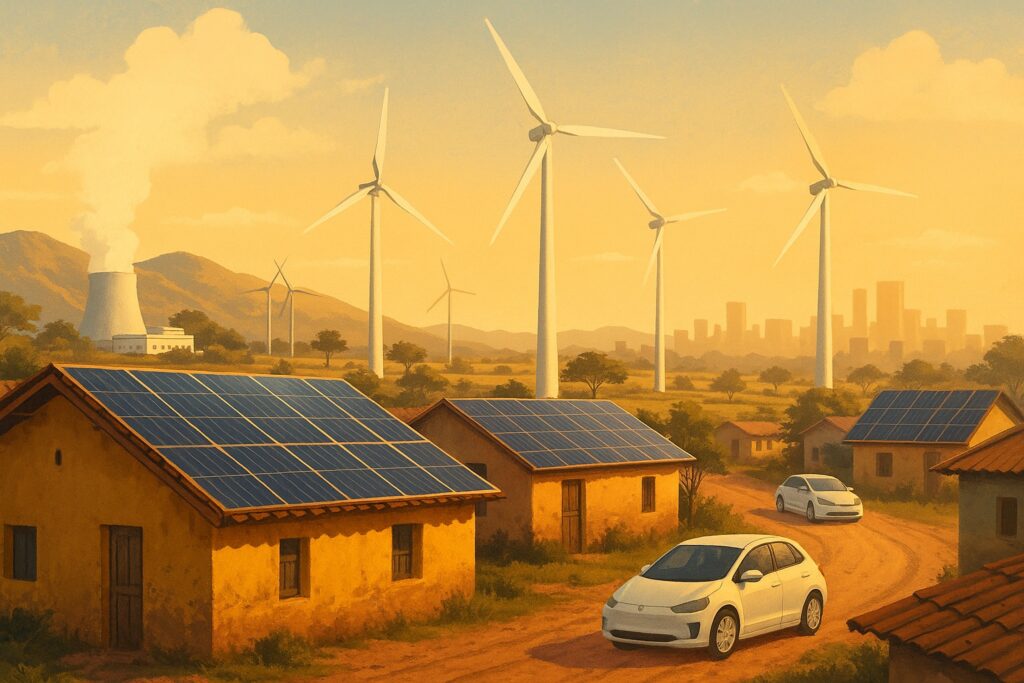
The adverse effect is also the blurring of public messaging. When governments and organizations consistently exaggerate ‘easy but ineffective’ actions as core environmental practices, citizens may develop the illusion that they are doing their part for the environment, thereby overlooking truly impactful decisions: how often they fly in a year, their red meat consumption, whether their homes are insulated, if they will install solar panels and batteries, and whether they will switch to electric vehicles and heat pumps. These choices can drastically reduce hundreds or even thousands of kilowatt-hours or gas, serving as the real backbone of carbon reduction.

To genuinely reduce carbon emissions, one must first understand the proportions involved. Lighting is merely a small fraction; the real numbers lie elsewhere. Turning off lights can be done, but it should not obscure our vision. What determines the future is not a single light bulb, but our willingness to implement genuinely effective emission reduction measures.

The Environmental Fallacy of Turning Off Lights Read More »

Switching to Induction Cookers for Safety and Health

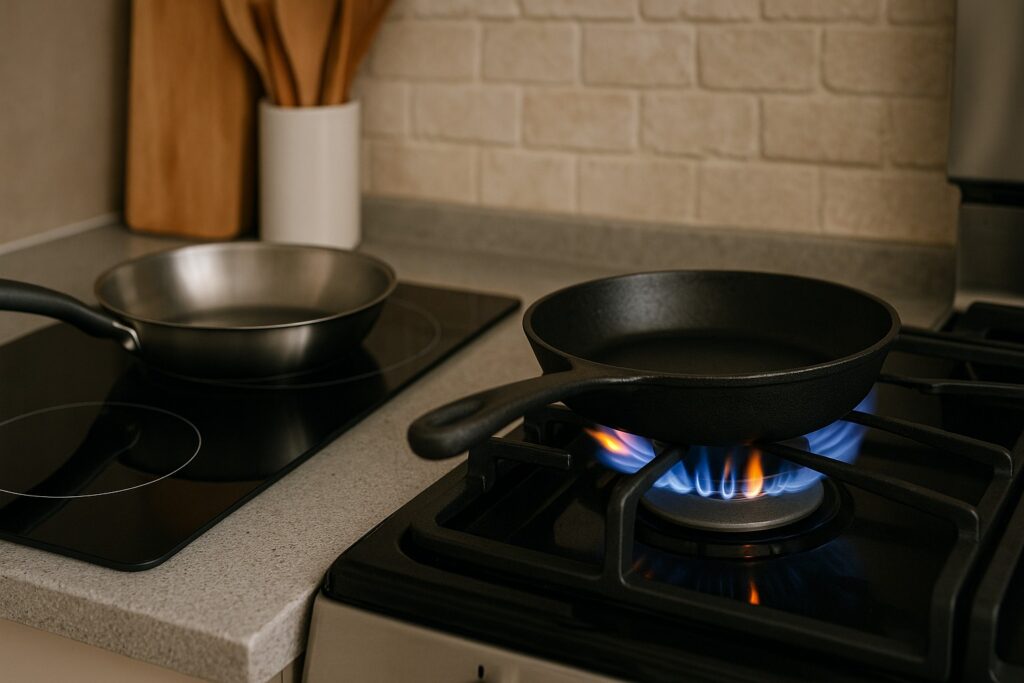
The phrase ‘cooking with open flames’ is not an ancient wisdom but rather a marketing ploy by gas companies over the years. They romanticize the flame, mythologize the smoke, and package high temperatures as ‘wok hei’. However, setting aside the promotional language, the costs of open flames are substantial: fires, oil fumes, carcinogens, and air pollution all stem from that flicker of light.

Let us begin with health. Burning natural gas or coal gas releases nitrogen dioxide (NO₂), carbon monoxide (CO), and fine particles. Numerous studies from Europe and America indicate that just half an hour of using a gas stove can elevate indoor nitrogen dioxide levels to outdoor pollution warning thresholds. In the long, cold winters of the UK, people close their doors and windows to keep warm, turning kitchens into sealed spaces where pollutants have nowhere to escape. Elderly individuals, children, and asthma sufferers cooking in these environments often inhale far more pollutants than they realize.

The issue of high-temperature cooking cannot be overlooked either. An excessive pursuit of flame can cause oil temperatures to soar, generating more oil fumes and carcinogens such as acrylamide and polycyclic aromatic hydrocarbons. These are not the essence of Chinese cuisine but rather the accumulated risks over the years. The true ‘wok hei’ is the reaction between the ingredients and the pan’s surface, not the flame itself. Induction cookers heat up quickly, respond rapidly, and maintain precise temperature control, preventing overheating and thereby preserving cooking quality while reducing oil fumes. Boiling water, cooking noodles, and stir-frying are often faster than with natural gas.

Safety is another critical factor. Open flames are the root cause of kitchen fires: towels catching fire, oil pans igniting, and embers being left behind—all due to the presence of flames. Natural gas leaks can also potentially blow up an entire house. Induction cookers, on the other hand, have no flames, no combustion, and no leaks. The cooktop only heats up when in contact with the pot, cooling down quickly once removed. Even if you place your hand on it, it merely feels warm and will not cause burns. In homes with children or the elderly, the sense of safety is not just slightly improved but elevated to an entirely new level.

Ease of cleaning is another compelling reason. Open flame stoves have complex structures, and oil fumes always find gaps to infiltrate. Cleaning a gas stove requires disassembly, soaking, and scrubbing, which is a waste of time. An induction cooker is a flat glass surface that can be wiped clean after cooking. Over time, this reduces kitchen odors and makes it harder for grease to accumulate on walls.

Some may worry about costs. Given today’s energy prices, electricity is generally more expensive than natural gas, which could lead to slightly higher cooking costs. However, the difference is limited, and cooking itself constitutes a small portion of household energy expenses. In the long run, electricity prices may not maintain the current gap with gas prices. If natural gas is eliminated from the entire house, it could also save on monthly fixed charges, accumulating to a substantial saving over the year.

More importantly, the times have changed. Cities around the world are moving towards ‘flame-free kitchens’ and ‘electrified homes’ not merely to follow trends but to enhance health, safety, efficiency, and air quality. Stir-frying, pan-frying, and enhancing flavors in Chinese cooking do not require flames; they only need sufficient heat and stable temperature control. Induction cookers excel in all these aspects.

‘Cooking with open flames’ is merely an advertising slogan that leads people to believe that fire represents flavor. What truly retains flavor is technology, time, and good ingredients, not a flame. If we can reduce the risk of fires, avoid exhaust fumes, and improve air quality, why not make the next meal easier and safer?

Switching to Induction Cookers for Safety and Health Read More »

Flexitarianism: Balancing Enjoyment, Health, and Climate

Excessive consumption of red meat adversely affects health. Conditions such as cardiovascular disease, colorectal cancer, and diabetes are linked to high-fat, high-calorie meats. Reducing red meat intake while increasing vegetables, legumes, and nuts leads to improved digestion, lower blood lipids, and better metabolism. There is no need for a radical overhaul; simply adjusting portion sizes can yield significant health benefits.

Caring for oneself also means caring for the planet. According to the United Nations and various large-scale studies, livestock farming accounts for up to 20% of global emissions. Cattle and sheep produce methane, feed requires land, forests are cleared for grazing, water sources are depleted, and ecosystems are damaged. Every steak has implications for forests, energy, and carbon emissions. In an era of rapid warming, dietary choices are not merely personal preferences but tests of the planet’s resilience.

However, dietary habits are intertwined with family, culture, and taste, making it challenging to adopt a strictly vegetarian diet. Many are reluctant to forgo the pleasures of meat. Thus, ‘flexitarianism’ has emerged as a compromise. It is not about giving up but rather about adjusting; not about prohibition but about reduction; not opposing enjoyment but ensuring that enjoyment does not become a burden on health and the climate.

The spectrum of flexitarianism is broad. Some people eat vegetarian meals one or two times a day; others may choose vegetarian options one or two days a week. Some may eliminate red meat while still consuming chicken and fish, while others may adopt a pescatarian diet, eating fish but no meat. Vegetarians consume eggs and dairy but avoid meat, and vegans abstain from all animal products. Each individual can find their own place within this spectrum without feeling compelled to conform or label others.

Change is best initiated gradually. Reducing red meat consumption by half, substituting chicken and fish, and incorporating tofu and mushrooms for protein can make a difference. Achieving one vegetarian meal a day is already a contribution; two vegetarian days a week would have an even greater impact. The core message is this: maintaining enjoyment while lessening the cost is a sign of maturity.

The changes in the UK in recent years have been particularly pronounced. The vast majority of restaurants now offer vegetarian options, from coffee shops to chain establishments. Street markets and supermarkets are also filled with plant-based foods. Vegetarianism has transitioned from a niche to a mainstream choice. If this trend can spread globally, the demand for meat will gradually decline, and emissions will naturally decrease.

The real challenge lies not in vegetarianism itself but in our ability to loosen ingrained habits and forge a new path. Food is both a source of enjoyment and a responsibility. Willingness to eat less meat is not only a step towards better health but also a commitment to the health of the planet.

Flexitarianism: Balancing Enjoyment, Health, and Climate Read More »

The Urgency of the Population Crisis

Humanity’s fear of population has shifted dramatically. Malthus warned that while population grows exponentially, resources increase linearly, leading to inevitable collapse. Similarly, Ma Yinchu cautioned that rapid population growth could overwhelm a nation. In the past, the concern was about too many children; today, it is about too few. With fertility rates consistently below 2.1, a decline in population is an ironclad certainty.

The United Nations predicts that global population will peak in the 2080s, but an increasing number of experts believe this estimate is overly conservative. This is due to the precipitous decline in fertility rates in major countries. Urban pressures are immense, and young people see little hope for the future. If current trends persist, the population peak could arrive a generation or two earlier than expected, or even turn negative by the middle of this century.

East Asia is experiencing the fastest decline. Japan has seen negative population growth since 2008, with a natural decrease of 500,000 people annually. Schools are closing, villages are emptying, and the elderly are becoming ubiquitous. South Korea’s situation is even more severe, with a fertility rate plummeting to 0.7, the lowest in the world. In China, young people are deterred from having children due to the overwhelming pressures of housing costs, education, and workplace demands. Even India, a populous nation, now has a fertility rate of approximately 1.9. The only regions still experiencing significant growth are sub-Saharan Africa. The demographic landscape is undergoing a profound reshaping.

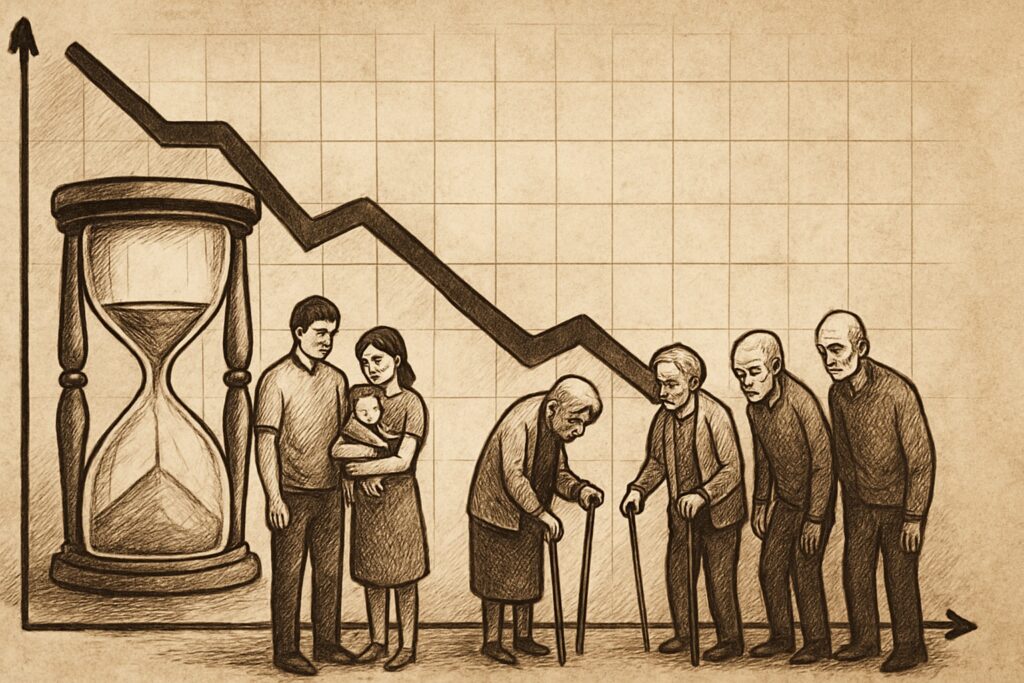
The first impact of population decline is fiscal. The number of retirees is increasing while the working population shrinks. Healthcare costs are rising, and the tax base is eroding. Governments are left with no choice but to raise taxes, extend retirement ages, and reduce services. The second impact is economic. Labor shortages lead to gaps in service industries, competition for talent in technology, and a shift of manufacturing overseas. Domestic demand contracts, the housing market cools, and growth stalls. The demographic dividend is fading, leaving society older, slower, and narrower.

The root of the problem is straightforward: having children is no longer economically viable. Raising a child is prohibitively expensive, time is scarce, work is challenging, housing is unaffordable, and education is exhausting. The investment is substantial, but the returns are uncertain. Rational calculations lead many to conclude that not having children is a reasonable choice. Government subsidies, childcare support, and parental leave can only provide temporary relief; they cannot fundamentally alter perceptions. The willingness to have children is not merely a policy issue; it is a matter of lived experience.

Some argue that technology can save us, with robots, AI, and humanoids filling the labor gap. This is only partially true. Robots can perform tasks, but they cannot form families; they can compute, but they cannot raise children; they can enhance efficiency, but they cannot create the next generation. Technology can fill gaps, but it cannot replace humans.

Humanity has only three paths: increase the birth rate, extend working years, or welcome immigrants. The first option is difficult, the second painful, and the third the most sensitive. One can evade the issue temporarily, but not indefinitely. There are no miraculous solutions to the population problem, only costs to bear.

The population bomb will not explode suddenly; it will slowly wither away. One day, when schools are empty, hospitals are full, businesses cannot find young workers, and cities lose their vitality, we will understand that this bomb has been beneath our feet all along, silent yet deadly.

The Urgency of the Population Crisis Read More »

Climate Change: The Last Line of Defense Against the Tragedy of the Commons

The difficulty in addressing climate change lies not in technology, but in human nature. Every country understands that the more emissions they produce, the greater the disasters they will face; they also recognize that acting sooner incurs lower costs. The problem arises at the moment of bearing costs, when everyone hopes others will act first. They wait for neighboring countries to reduce emissions, for competitors to transition, or for the next government to take on the burden. The tragedy of the commons gradually takes shape in this mutual understanding yet inaction.

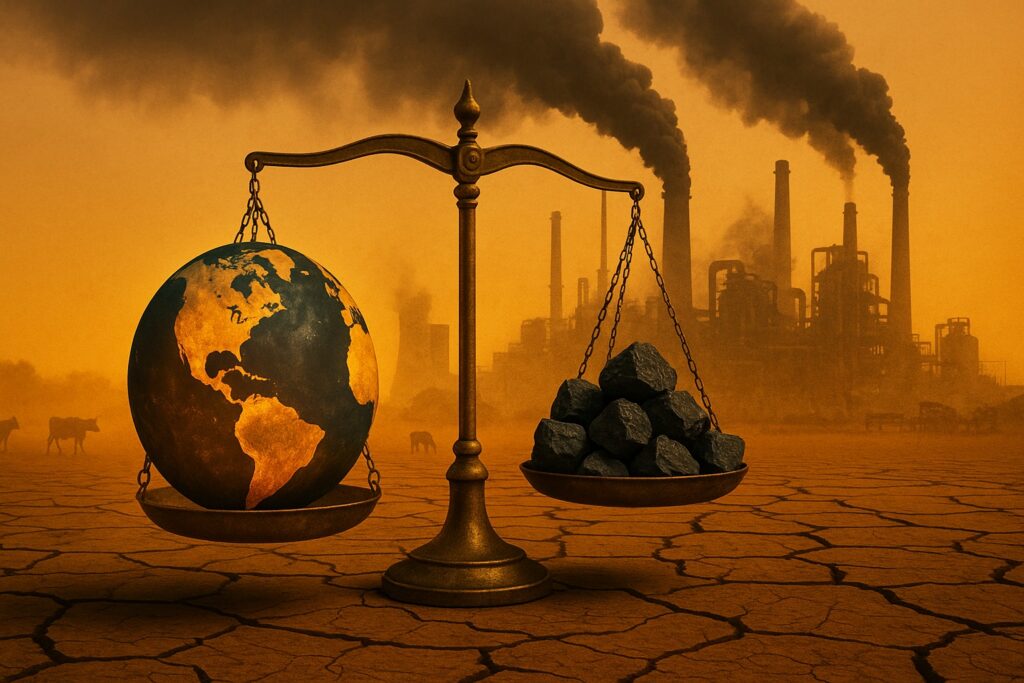
There are no villains in this tragedy. Developing countries strive to improve living standards, wealthy nations maintain high-energy consumption patterns, businesses pursue profits, and voters resist rising energy prices. Each individual choice appears justifiable, yet collectively, they lock the planet onto a trajectory of 2.8°C warming. This is the paradox of civilization: no one intentionally harms the Earth, but together, we are pushing ourselves towards an irreversible abyss. Relying on conscience will not solve the problem, nor will appeals change behavior.

To escape the tragedy of the commons, only a system can help. A system places costs on the table, calculates expenses clearly, and makes evasion no longer cheap. The logic of a carbon tax is straightforward: it converts every ton of emissions into a monetary amount. Pollution is no longer free, prompting companies to tighten their budgets, upgrade equipment, and enhance efficiency. Sweden’s long-standing high carbon prices have resulted in decreased emissions while the economy continues to grow. Despite ongoing political controversies, Canada demonstrated that early implementation of carbon pricing was sufficient to drive the entire energy system to self-adjust. Once pollution becomes costly, the market will naturally shift towards cleaner options.

Carbon trading approaches the issue from another angle. The government first sets emission caps and then allows companies to buy and sell quotas. Those who can reduce emissions stand to profit; those who cannot must pay. The market will automatically direct resources to the lowest-cost options, making emission reductions a competitive advantage rather than a burden. The European Union’s emissions trading system has already proven that this method can effectively phase out coal power and accelerate the penetration of renewable energy.

However, both carbon taxes and carbon trading share a common limitation: they are only effective within national borders. If Country A has a carbon price while Country B does not, high-emission industries will relocate to Country B and sell their products back to Country A. Emissions do not decrease, competition becomes more chaotic, and the tragedy of the commons deepens. This phenomenon is known as ‘carbon leakage,’ a loophole that is effectively a vote with one’s feet.

The Carbon Border Adjustment Mechanism (CBAM) aims to close this loophole. Its rationale is equally simple: if you do not pay a carbon price in your home country, you must compensate for it at the point of export. The carbon content of steel, cement, aluminum, and fertilizers is accounted for regardless of where they are produced. The unpaid carbon costs are settled at the border. This is not a punishment; rather, it aligns the rules so that any emitter attempting to evade regulations across borders cannot gain a trade advantage. The significance of carbon tariffs lies in extending carbon pricing beyond national borders, compelling the entire supply chain to reduce emissions together.

Carbon taxes, carbon trading, and carbon tariffs may seem different, but they are fundamentally interconnected. They reveal truths through pricing, constrain behavior through systems, and repair human nature through markets, ensuring that growth can be sustainable.

The greatest challenge of the tragedy of the commons is that no one is willing to bear the costs first; the brilliance of the carbon pricing system is that it makes inaction more expensive. Once the system is in place, emission reductions will no longer rely on goodwill, but on self-interest; they will depend not on voluntary actions, but on logical imperatives.

The choice no longer lies in science or morality, but in whether the system dares to be implemented. If the system hesitates, the future will bill us; if the system is resolute, the tragedy of the commons will no longer be our fate.

Climate Change: The Last Line of Defense Against the Tragedy of the Commons Read More »

Scroll to Top