Explainers

Conceptual frameworks for understanding policy and society — from Rawls’ veil of ignorance to comparative tax structures. Each piece breaks down a single idea or system before connecting it back to current affairs.

A Clean Energy World is a More Peaceful World

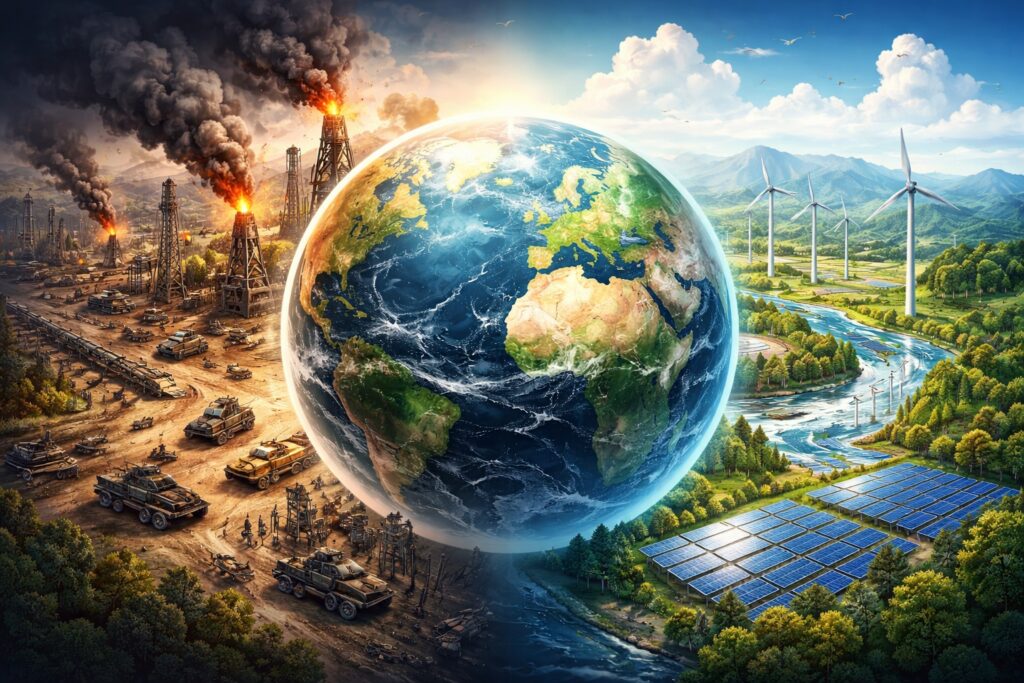
Looking back at modern history reveals an uncomfortable yet undeniable truth: most wars have, at their core, been about the plunder or control of fossil fuels. The slogans may vary and the justifications may be grand, but energy is almost never absent from the equation. Oil and gas are not merely commodities; they are integral to national power, diplomacy, and military strategy. Those who control production sites and supply lines hold the negotiating leverage and can even turn energy into a weapon.

A prime example of this is the expansion of the Japanese military during World War II. Japan, lacking domestic oil supplies, found its military machine nearly immobilized after the United States and Britain imposed an oil embargo. The strategic necessity of advancing into Southeast Asia to seize the oil fields of the Dutch East Indies became apparent. The attack on Pearl Harbor was not an isolated incident but a fierce response to being choked off from energy supplies. From the outset, the Pacific War was deeply marked by the shadow of oil.

The post-war history did not fundamentally change this dynamic. The Gulf War of 1991 was ostensibly about sovereignty disputes, but what truly concerned the West was the oil supply from the Persian Gulf. By the time of the Iraq War in 2003, the official narrative shifted from weapons of mass destruction to counter-terrorism, yet the fate of oil fields and energy contracts post-war made everything clear. More recently, the Russia-Ukraine war has seen the battlefield in Ukraine, yet energy shocks have reverberated throughout Europe, with gas pipelines, supply rights, and prices becoming crucial elements of strategic contention.

The common thread in these conflicts is not ethnicity or ideology but the high concentration, irreplaceability, and plunderability of fossil fuels. The distribution of underground resources is extremely uneven; some regions have them while most do not, creating a naturally one-sided and fragile dependency. Once supply is cut off, economies and societies are immediately impacted, making war an extreme yet realistic option.

Renewable energy disrupts this logic. A frequently underestimated yet critical fact is that under renewable energy conditions, the vast majority of countries in the world can actually meet their energy needs domestically. The geographical distribution of sunlight and wind is far more equitable than that of oil and gas. Only a few small, densely populated city-states or micro-island nations struggle to achieve high energy self-sufficiency. They are exceptions rather than the norm.

However, this does not imply that countries will become isolated energy islands. On the contrary, clean energy fosters multi-directional interdependence rather than new forms of dependency. Different regions experience varying sunlight, wind patterns, and seasonal peaks, allowing countries to support each other through cross-border power grids, regional dispatching, and energy storage systems. This creates a relationship that is equal and networked, unlike the control structures of the fossil fuel era where some have and others do not.

Such interdependence inherently reduces the incentives for war. You can blockade oil ports or bomb pipelines, but you cannot block sunlight and wind; you can occupy oil fields, but you cannot occupy an entire sky. Energy transitions from being a plunderable prize back to a decentralized public infrastructure, naturally diminishing the role of military power within it.

The stability of energy prices should not be underestimated either. Fossil fuel prices are extremely sensitive to wars, sanctions, and coups; energy inflation often first impacts livelihoods, then destabilizes regimes, and ultimately spills over into external conflicts. Renewable energy requires high upfront investment, but once established, its marginal costs approach zero, leading to stable price trends. Stable energy means stable social expectations, which translates to fewer political risks.

When the world no longer fights over the plunder of fossil fuels, wars will naturally lose one of their most common and realistic justifications. A clean energy world may not be perfect, but it is indeed a world closer to peace.

A Clean Energy World is a More Peaceful World Read More »

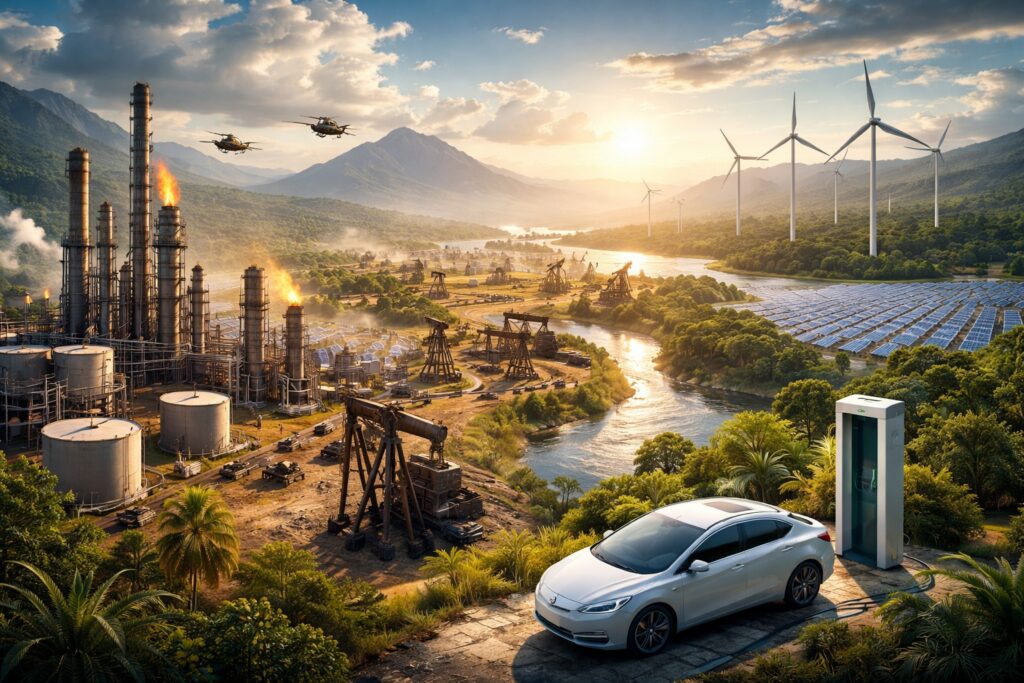
The Mineral Myth of Electric Vehicles: Who Exaggerates Pollution?

The assertion that “electric vehicles require extensive mining, leading to greater pollution than gasoline cars” has emerged repeatedly in recent years. While it may sound like a rational inquiry, it does not withstand scrutiny. This statement captures a fragment of truth—electric vehicles do indeed require minerals such as lithium, nickel, and cobalt—but it misrepresents the overall narrative.

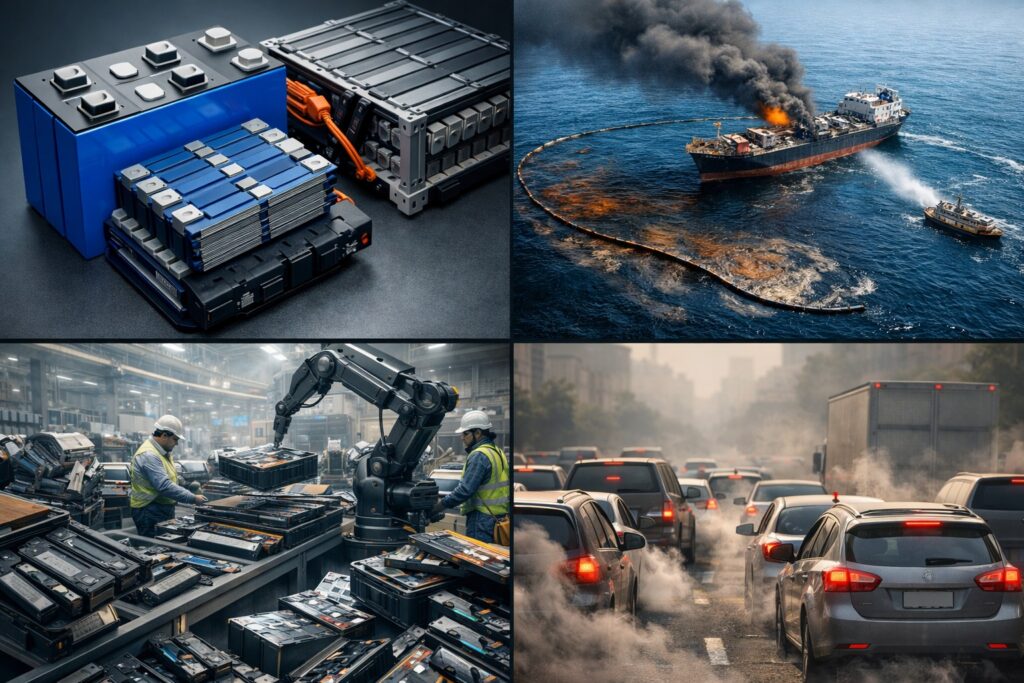
To clarify the facts: the pollution associated with electric vehicles primarily occurs during the production phase, particularly in battery manufacturing. Mining, smelting, and processing undeniably generate emissions, a fact that cannot be denied. However, internal combustion engine vehicles are not free from mining either. A gasoline car, from its inception to its disposal, requires substantial amounts of steel, aluminum, and copper, relying on a vast and perpetually operational system: oil exploration, drilling, pipelines, tankers, refineries, and gas station networks. The pollution from these processes is dispersed over time and space, gradually becoming taken for granted.

The real difference lies in the distinction between “one-time” and “ongoing” inputs. This can be elucidated with numbers rather than adjectives.

Take a mid-sized electric vehicle equipped with a 60 kWh LFP (lithium iron phosphate) battery as an example. The battery contains approximately 6 kilograms of lithium, 41 kilograms of iron, and 70 kilograms of phosphate (PO₄). These minerals are extracted in a one-time input before the vehicle is produced, used over a decade, and can subsequently be recycled, rather than requiring continual mining for every kilometer driven.

In contrast, a similarly sized NMC (nickel manganese cobalt) battery, while structurally different, presents a similar scale. Based on current high-nickel formulations, a 60 kWh NMC battery contains about 9 kilograms of lithium, 33 kilograms of nickel, 5 kilograms of cobalt, and approximately 18 kilograms of manganese and other metals such as aluminum and copper. In total, this amounts to “tens of kilograms” of metallic materials, rather than an infinitely expanding demand for minerals.

Applying the same metric to gasoline vehicles reveals a stark imbalance. A gasoline car driven for 150,000 kilometers, with a fuel consumption of 6.3 liters per 100 kilometers, will consume approximately 9,450 liters of gasoline over its lifetime. This gasoline corresponds to the extraction and refining of about 20,000 liters of crude oil, which weighs approximately 17,000 kilograms. This is not a one-time input; rather, it is burned, emitted, and dissipated gradually throughout the vehicle’s lifespan.

Thus, the comparison becomes quite direct:

Electric vehicles are often exaggerated for their one-time input of tens of kilograms of recyclable metals;

Gasoline vehicles, on the other hand, habitually overlook the thousands of kilograms of unrecoverable crude oil consumed throughout their entire lifecycle.

To frame these two within the same context of “which is more polluting” is inherently misguided.

Examining the entire lifecycle, even when accounting for the carbon emissions from mining and manufacturing, electric vehicles in the current power structures of Europe or the UK exhibit lower total emissions after driving several tens of thousands of kilometers compared to their gasoline counterparts; the longer they are driven, the greater the disparity. The reason is simple: the electricity grid is decarbonizing, while the emissions pathway of gasoline vehicles remains fixed, perpetually reliant on the combustion of fossil fuels.

Some argue that it is not just carbon dioxide, but also air and water pollution. While this assertion sounds comprehensive, the conclusion remains the same. The air pollution from internal combustion engine vehicles is immediate, dispersed, and close to populations: nitrogen oxides, volatile organic compounds, and PM₂.₅ are emitted with every kilometer driven on urban streets, directly posing public health risks. Electric vehicles produce no tailpipe emissions while in operation; even if some electricity still derives from fossil fuels, the pollution is concentrated at fixed power plants, which can be regulated and improved, representing a fundamentally different nature.

Water pollution is similarly structured. The extraction of lithium and other battery minerals can indeed exert pressure on local water resources, a reality the electric vehicle industry must confront. However, the water pollution from the oil system is long-term and systemic: oilfield wastewater, pipeline leaks, oil tanker accidents, and refinery emissions. Any significant oil spill can cause damage to oceans and groundwater lasting for decades. This is not an occasional accident, but an inherent risk within the fossil fuel system.

At this point, there is often a follow-up question: “What happens when batteries are discarded?” The reality is clearer than imagined. Current recycling technologies allow for recovery rates of over 90% for metals such as cobalt, nickel, and copper, with lithium recovery rates also reaching between 70% and 90%. The metals can be retained and reused; however, once 17,000 kilograms of crude oil is burned, it is impossible to recover even a gram.

Another frequently overlooked comparison is that we use products containing lithium and various metallic minerals daily. Mobile phones, laptops, tablets, and Bluetooth headphones all contain lithium, nickel, cobalt, and copper, yet few question whether using a phone is environmentally unfriendly. The reason is intuitive: the materials are one-time inputs and can be recycled; the real source of ongoing pollution is the energy consumed daily. This common understanding is uncontroversial in consumer electronics but is suddenly dismissed when it comes to electric vehicles, revealing a double standard.

Moreover, battery technology is still evolving. Sodium-ion batteries, which do not require lithium, nickel, or cobalt, have begun to enter the market and have the potential to replace LFP in certain applications. Looking further ahead, if solid-state batteries can mature, they may gradually replace current NMC technologies. In other words, the dependence of electric vehicles on critical minerals is a declining variable, not a fixed burden.

Of course, electric vehicles are not perfect. They still produce particulate pollution from tire wear and do not address urban structural issues such as traffic congestion. However, these problems also exist with gasoline vehicles, which additionally incur pollution from engines and exhaust systems. Electric vehicles are not a panacea, but they outperform internal combustion engine vehicles on nearly every quantifiable environmental metric.

To magnify “tens of kilograms of recyclable metals” while ignoring the daily combustion of “thousands of kilograms of unrecoverable crude oil” is not a rational comparison; it is a narrative that allows for the comfortable maintenance of the old system. What truly deserves scrutiny is not how many minerals electric vehicles consume, but why we are still willing to accept a transportation method that inevitably continues to burn, emit, and carries the risk of oil spills.


The Mineral Myth of Electric Vehicles: Who Exaggerates Pollution? Read More »

Global Events to Watch in 2026

From February 6 to 22, 2026, the Winter Olympics will take place in Milan and Cortina d’Ampezzo, Italy, marking the timely commencement of the 2026 Winter Olympic Games. A few months later, the summer will usher in the World Cup, scheduled from June 11 to July 19, where 48 teams will compete across Canada, the United States, and Mexico. In a world marked by chaos and disorder, these highly institutionalized global spectacles will proceed as planned, for they have long ceased to be driven by passion and have become a matter of routine.

2026 will also be an election year. On November 3, the United States will hold its midterm elections, with all 435 seats in the House of Representatives up for grabs and approximately one-third, or 33 seats, in the Senate needing to be filled. The question of whether the Trump administration will quickly become a lame duck, with its policy space constrained by Congress, hinges not on personal style but on the arithmetic of seats.

In the UK, May will see a significant round of local and devolved government elections. Both the Welsh Parliament and the Scottish Parliament will undergo elections, while several local councils in England, including those in multiple London boroughs, will also hold elections. Although these elections are not at the national level, they directly impact housing, transportation, public services, and local finances, representing the most immediate and pragmatic expression of public sentiment towards daily governance.

In Europe, Hungary will hold parliamentary elections in April, while Sweden’s general election is scheduled for September 13. Italy may also hold a parliamentary election in 2026, although the timing remains uncertain. Whether Viktor Orbán can continue to be the EU’s troublemaker will test not only Hungarian politics but also the entire continent’s tolerance for internal divisions.

In South America, Colombia will hold the first round of its presidential elections on May 31, while Brazil will conduct its elections in October. The economic policies and foreign orientations of these countries are likely to have spillover effects on the international landscape.

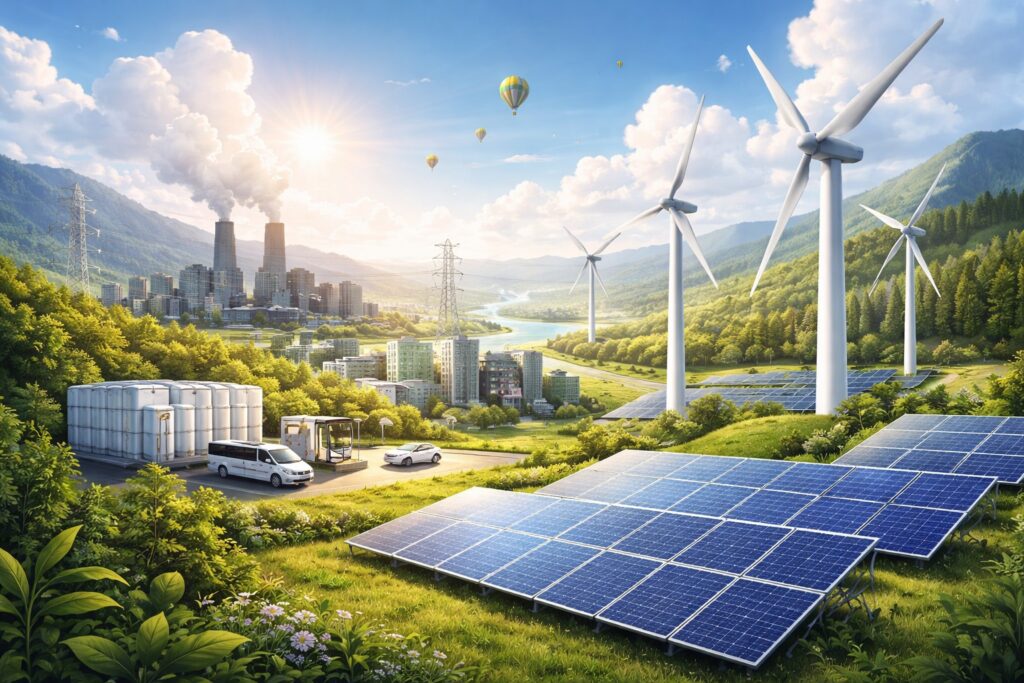
In terms of energy transition, the changes in the UK are the most concrete. By 2025, the proportion of low-carbon electricity in the UK is expected to reach around 60%. With several large offshore wind farms set to come online around 2026, this proportion will further increase to approximately 65%. The structural transformation of the electricity system is already locked in, with discussions shifting from direction to speed and supporting measures.

Globally, the momentum for clean energy will continue to rise. The penetration rate of electric vehicles is steadily increasing, and charging infrastructure is gradually being established, leading to long-term suppression of oil demand. Global carbon emissions are likely to peak by 2026 or even earlier; despite potential short-term fluctuations, the overall trend is becoming increasingly clear.

However, this does not equate to good news. Even if emissions peak, the target of limiting global warming to 1.5°C has essentially been abandoned. Under current policies and national commitments, the world is on a path towards 2.0°C or higher. Extreme temperatures, floods, and droughts will continue to set new records, but societal attitudes have shifted—these events are no longer seen as isolated disasters but as long-term risks, prompting a shift in policy focus from denial to adaptation.

The world will not suddenly improve, nor will it collapse overnight; however, many will clearly feel that the choices made over the past decade are beginning to come due.

Global Events to Watch in 2026 Read More »

Reviewing Energy Transition Progress in 2025

A decade ago, mainstream discussions on climate change were notably pessimistic. Many models projected global warming to reach 3–4°C, which was considered a reasonable forecast, assuming the world would continue to rely on a high-carbon energy system, with transitions being slow and costly. By 2025, this assumption has clearly begun to waver.

When only accounting for implemented policies, the median estimate for global warming now stands at approximately 2.8°C. While this is certainly not an ideal outcome, it represents a significant downward shift in the risk range compared to ten years ago. This change is not merely rhetorical; it reflects a fundamental rewriting of the trajectory of the energy system itself.

The most evident turning point has occurred in the electricity sector. In 2025, global renewable energy generation is likely to surpass coal power for the first time in total output. While coal power has not disappeared, it no longer dominates new supply, serving primarily as backup during peak demand or emergencies. The rapid expansion of solar and wind energy has reached a pace capable of reshaping the entire system’s focus.

This is not just a story of wealthy nations. An increasing number of developing countries are directly entering the renewable energy era, bypassing the traditional transition path from coal to gas and then to renewables. For these countries, this is not a moral choice but a rational investment. Solar and wind energy can be deployed in a decentralized manner and brought online quickly, without the need for prior investments in heavy assets like refineries, oil storage, or gas pipelines, thus avoiding the burden of stranded assets in a net-zero world. In these regions, energy transition is no longer an expensive environmental policy but rather the cheapest and most flexible development solution.

Turning to the world’s largest emitter, China’s carbon emissions have likely peaked. Recent trends indicate that total emissions are no longer rising in tandem with economic growth, with new energy sources primarily coming from non-fossil origins, and coal’s role shifting to supply security and backup. This suggests that the steepest segment of the global emissions curve is being flattened. This alone has a substantial impact on global climate risk.

Cost is the most significant driver of this transformation. A decade ago, solar and wind energy were heavily reliant on subsidies; by 2025, they have become the cheapest new sources of electricity in most regions. The rapid expansion of battery storage has further enhanced the resilience of the electricity system, rendering the argument of ‘instability’ increasingly untenable.

Changes in the transportation and building sectors have similarly reinforced this trend. Global annual sales of electric vehicles have surpassed 14 million, and in many markets, total ownership costs are now lower than those of fuel-powered vehicles. In Europe and parts of Asia, the annual installation of heat pumps has also increased several times compared to a decade ago. While overall renewal will take time—not due to a lack of direction, but because of the large existing number of vehicles and buildings—the technological choices for new and retrofitted installations have already shifted and are accelerating.

For this reason, the 4°C world that was seriously discussed a decade ago is no longer at the core of mainstream analysis. This is not because the problem has vanished, but because certain high-risk pathways have gradually been closed off by market, technological, and engineering realities.

Of course, challenges remain. Grid construction, storage scale, approval speed, and geopolitical factors could all slow progress. However, unlike in the past, the direction is now clear, and the tools are in place.

What is worthy of reflection and affirmation in 2025 is not that the world is now safe, but that it has demonstrated that energy transition can be faster, cheaper, and more pragmatic. From developed economies to developing countries, low-carbon energy is gradually becoming the default option rather than the exception.

Reviewing Energy Transition Progress in 2025 Read More »

The Real Reason Christmas is on December 25

Each December, as cities are adorned with lights and carols fill the air, many assume that Christmas is celebrated on December 25 because it marks the birth of Jesus Christ. Others suggest that the date is significant as it is close to the winter solstice, symbolizing the retreat of darkness and the return of light. While these interpretations hold some merit, a closer examination of church history reveals that the origin of December 25 resembles a gradually formed narrative of faith rather than a precisely recorded historical date.

In the worldview of the early church, time was not seen as fragmented or random. Jewish tradition and early Christian belief commonly held that God’s actions in history possess inherent harmony and symmetry. One belief that is less frequently mentioned today is the concept of the ‘full age’: significant figures chosen by God would have their earthly missions begin and end on the same day. Conception and crucifixion, beginnings and completions, resonate with one another in God’s design.

Thus, the early church’s primary focus was not on determining the date of Jesus’ birth but rather on pinpointing the moment of His crucifixion. All four Gospels record that Jesus was sentenced to crucifixion by the Roman governor Pontius Pilate around Passover. Historical records can roughly establish Pilate’s tenure from AD 26 to 36, while Passover, according to the Jewish calendar, always falls on a full moon. For contemporary Christians, this provided a rare and valuable timeline clue.

By the second and third centuries, the Western church gradually adopted a traditional view that Jesus was crucified on March 25. This date was not precise enough to serve as historical evidence but was seen as a complete, solemn, and theologically coherent day within the narrative of salvation. Following the belief in ‘full age’, it was also concluded that Jesus must have been conceived on the same day. Adding nine months leads naturally to December 25 as the commemorative date of His birth.

If we delve further into the question of the exact year of Jesus’ birth, history provides a clearer outline. The Gospel of Matthew states that Jesus was born during the reign of King Herod; historians generally agree that Herod died in 4 BC. Therefore, Jesus could not have been born in AD 1 but was likely born between 6 BC and 4 BC, with some studies even suggesting as early as 7 BC. This implies that the ‘AD’ dating system we use today is already several years out of sync with the actual timing of Jesus’ birth.

The ‘star’ mentioned in the Gospel of Matthew, often referred to as the ‘Star of Bethlehem’, has sparked considerable imagination and speculation over the centuries. Some scholars note that in 7 BC, Jupiter and Saturn had a rare triple conjunction in Pisces; in the context of ancient astrology, such celestial events were easily interpreted as symbols of kingship and the Israelite nation. Other studies mention that Chinese historical texts recorded a possible nova or comet phenomenon in 5 BC, which aligns closely with the estimated years of Jesus’ birth. While these speculations are certainly intriguing, they remain mere attempts by later generations and were never foundational to the church’s establishment of the Christmas date.

For early Christians, celestial bodies served more as a narrative language than as tools for calculating years. What truly mattered was how God entered the world through history, not the precision of a particular night. Consequently, the Eastern church employed the same theological reasoning, interpreting the dates of crucifixion and conception as April 6, which naturally leads to January 6, celebrated today as Epiphany. The methodology is the same, the dates differ, but the focus remains on meaning rather than precision.

Therefore, December 25 has never been Jesus’ ‘birth certificate’. It is a day that gradually took shape through prayer, contemplation, and theological understanding, later fortuitously aligning with the winter solstice, enhancing the symbolism of ‘light entering the world’. It serves as a reminder not of historical certainty but of how faith perceives time and discerns the rhythm of God’s presence throughout the ages. In this sense, Christmas transcends the date itself, becoming a celebration of deeper significance.

The Real Reason Christmas is on December 25 Read More »

A Turbulent Christmas Eve in 2025

Christmas Eve should be a moment to lay down arms and light candles; yet, on the world map of 2025, red dots remain densely clustered. The fires of conflict have not ceased for the holiday, nor has hatred cooled in the face of goodwill. This year, conflicts not only persist but intertwine and expand in various corners, creating a disturbing global tableau.

The war in Europe shows no signs of abating. The grinding conflict between Ukraine and Russia has entered its fourth winter. While territorial advances are limited, the costs continue to escalate. Militarily, it is a stalemate; economically, a burden; and politically, a test of patience. Sanctions and counter-sanctions are in play, and European energy security has transformed from a mere pricing issue into a long-term shadow of supply and risk. This war has long ceased to be merely a bilateral dispute; it is a pressure test for the entire European security order.

The wounds in the Middle East are even more grievous. The Gaza issue remains unresolved, with ceasefire windows being brief and fragile, and reconstruction negotiations repeatedly interrupted by new rounds of conflict. The security risks in the Red Sea have spilled over into global trade: shipping companies are rerouting, leading to increased time and costs; insurance premiums are rising, and markets are pricing in worst-case scenarios. While the fighting is concentrated in one area, the costs are being pushed onto businesses and families worldwide.

The turmoil in Latin America may not manifest through tanks, yet it similarly stirs great power confrontations. Venezuela’s internal legitimacy crisis remains unresolved, with the economy suffering long-term losses, and the regime increasingly inclined to adopt a hardline external stance to deflect internal pressures. More critically, the long-standing standoff with the United States continues: sanctions and exemptions are repeatedly adjusted, energy issues are highly politicized, and diplomatic communications fluctuate between warmth and coldness. This is not a traditional war but a form of low-intensity conflict: capital retreats, risk premiums rise, and refugee flows are sufficient to drag down the entire region’s development prospects.

The fires of war in Africa are often the least visible, yet the most brutal. The civil war in Sudan has nearly paralyzed the state machinery, with food shortages, disease, and displacement overlapping to create a structural humanitarian crisis. The struggle for influence by external powers makes ceasefires more difficult; the fragmentation of armed groups pushes peace further away. This is not a tragedy that can be encapsulated by the term ‘civil war,’ but rather a chain reaction following governance collapse.

The situation in Central Africa is also deteriorating. The long-standing tensions between Rwanda and the Democratic Republic of the Congo persist, with periodic escalations in armed conflict in the east, intertwining mineral interests and ethnic fears. When such conflicts are viewed as a ‘tolerable norm,’ the suffering of civilians becomes a tragedy managed by statistics, with the world only briefly looking up when numbers spike.

Asia is similarly unsettled. Myanmar’s civil war is marked by a tug-of-war among multiple armed factions, continuously eroding the social foundation, with the costs borne by civilians accumulating year by year. Meanwhile, border conflicts between Thailand and Cambodia have seen substantial escalation in 2025, as historical disputes combine with national sentiments and domestic politics, making previously manageable frictions harder to cool.

A common feature of the conflicts in 2025 is that war is no longer confined to the battlefield. Cyberattacks, information warfare, and the weaponization of sanctions have made non-military means the norm. The lines between front and rear have blurred, with energy, food, shipping, and finance all caught up in the fray; no society can truly remain untouched.

Yet, the meaning of Christmas Eve lies in not bowing to reality. History repeatedly reminds us that war is not inevitable, and peace is not a gift from above. It requires institutions, patience, and honest compromise. Whether 2026 can be better does not depend on the eloquence of well-wishes, but on whether all parties are willing to view de-escalation as courage, to treat ceasefires as starting points, and to see reconstruction as a shared interest.

The candlelight may be weak, but it can illuminate the way. May 2026 see fewer frontlines and more negotiation tables; less hatred and more restraint. Peace is not a slogan but a decision that must be repeatedly chosen.

A Turbulent Christmas Eve in 2025 Read More »

Inefficiency and Transformation of Energy Demand

We tend to view rising energy demand as an inevitable result of economic development: population growth, improved living standards, and more complex industries naturally lead to increased energy consumption. However, recent scenario analyses by the International Energy Agency (IEA) repeatedly highlight a counterintuitive conclusion: in a highly electrified world with significantly improved efficiency, the total amount of final energy required globally may actually decrease, even as the economy continues to grow. This is not achieved through austerity, but by replacing an extremely inefficient system with a far more efficient one.

The core issue in today’s energy landscape is “too much waste.” We burn fossil fuels in large quantities and convert high-temperature, high-pressure energy into power or heat, resulting in staggering losses. Take heating as an example: the efficiency of natural gas water heaters typically ranges from 70% to 90%, with a significant portion of the generated heat wasted through the flue. Heat pumps operate on a fundamentally different logic; they do not create heat but rather transfer it, extracting warmth from the air or ground to bring indoors. For every unit of electricity consumed, they can provide 3 to 4 units of heating service. The heating remains unchanged, yet the energy required is reduced by more than half.

The same principle applies to transportation. The efficiency of internal combustion engine vehicles is constrained by thermodynamic limitations, with most gasoline burning off as waste heat and noise. Only a small fraction of the energy actually propels the vehicle forward. Electric vehicles circumvent this issue, as electrical energy is almost directly converted into mechanical power. Consequently, for the same distance traveled, an electric vehicle often requires only one-third, or even less, of the energy consumed by a gasoline vehicle. This is simply a matter of basic physical laws.

The kitchen serves as a microcosm of this phenomenon. Gas stoves disperse flames, with nearly all the heat wasted outside the pot; in contrast, induction cookers generate heat directly at the bottom of the pot, concentrating the heat. When cooking the same meal, the difference in ‘useful energy’ consumed between gas and electricity is substantial. These seemingly trivial daily scenarios collectively reflect the energy structure of society as a whole.

In addition to these three commonly cited examples, there are many other factors quietly reshaping energy demand. Lighting is a typical case; during the era of incandescent bulbs, most electricity was wasted as heat, but LED bulbs have nearly eliminated this waste, leading to a continuous decline in the proportion of electricity consumed for lighting and permanently lowering demand.

Industrial sectors also contain numerous overlooked efficiency gains. Electric motors are already more efficient than combustion engines, but when paired with variable frequency drives, they can precisely adjust power output according to actual loads, avoiding idling and excessive consumption. This can save electricity costs for factories and significantly reduce the demand for primary energy across the entire economy.

More importantly, electrification not only enhances end-use efficiency but also drastically reduces waste within the energy supply chain itself. Today, as much as 40% of the weight of goods transported globally by sea consists of coal, oil, and natural gas. A vast amount of shipping, fuel, labor, and time is expended merely to transport ‘fuel itself’ from one continent to another. This does not even account for the energy losses involved in liquefied natural gas cooling and regasification, as well as the energy consumed during the extraction, refining, and storage of oil. In a world dominated by electricity, energy is increasingly produced locally and transmitted via the grid, allowing for a significant reduction, or even elimination, of this lengthy and inefficient fuel logistics chain.

The IEA’s scenario models indicate that under a strong decarbonization pathway, global final energy demand may actually decline due to these efficiency differences being systematically aggregated. People’s lives do not become poorer; the levels of service for transportation, heating, lighting, and production do not diminish, yet the energy required to provide these services is significantly lower than in the past. There is no doubt that electricity demand will rise; however, ‘total energy’ and ‘electricity consumption’ are not the same thing.

We are currently living in a highly inefficient transitional era, using vast amounts of energy to compensate for outdated systems and technologies. As heat pumps, electric vehicles, and efficient motors gradually become mainstream, energy demand may decline even as the economy continues to grow. The issue has never been how much energy humanity requires, but rather whether we are still willing to use it in such an inefficient manner.

Inefficiency and Transformation of Energy Demand Read More »

The Real Reason for Banning Non-Electric Cars by 2035

The European Union has recently reaffirmed that after 2035, new cars will only need to reduce emissions by 90%, rather than the previously stated “complete ban on internal combustion engines.” This represents a retreat. What was once a clear policy red line has now been rewritten as a negotiable technical target. For industry lobbyists, this may seem like a sigh of relief; however, it adds confusion to the overall transition. Climate does not heed political rhetoric; it only counts the total emissions and the timeline.

The reason for phasing out petrol vehicles is straightforward: net-zero emissions must be achieved by 2050. Failure to do so will not result in an abstract temperature curve, but rather in concrete and cumulative damages—extreme heat becoming the norm, frequent wildfires, rising sea levels, coral bleaching, and the loss of habitats for fisheries. While transportation is not the only source of emissions, cars are the easiest segment to address among all high-emission activities. Electric vehicles are efficient, the technology is mature, and alternatives are already available in the market; in contrast, long-haul aviation, steel, and cement still lack scalable zero-carbon solutions. Prioritizing cars is not radical; it is common sense.

The real issue lies in timing. In the UK, the peak age for scrapping private cars is around 14 years, with many vehicles still usable for up to 20 years with proper maintenance. If new petrol cars are still allowed on the road in 2039, by 2050, they will have only been in service for 11 years, still within their operational lifespan. Working backwards from 2050, the phase-out date should logically fall around 2030 to allow the entire fleet to naturally retire. A 2035 deadline is already the bare minimum and cannot be considered premature.

If the phase-out is not timely, by 2050, under the premise of “net-zero,” allowing petrol cars to remain on the roads will leave only one option: to use negative emissions to compensate. The most frequently mentioned method is Direct Air Capture and Storage (DACCS). Currently, the actual cost of DACCS is about $1,000 per ton of CO2. Even with optimistic assumptions that efficiency could quadruple in the next 25 years, reducing costs to $250 per ton by 2050, the economics still do not add up.

Burning one liter of petrol emits approximately 2.3 kilograms of CO2. At a cost of $250 per ton, capturing and permanently storing these emissions from the air would cost nearly $0.6 per liter. Given the current petrol price of about $1.2 per liter, this would equate to an immediate price increase of about 50%, not accounting for transportation, storage, regulation, and long-term liabilities. This is not a transitional solution; it is an expensive and impractical fallback.

Another possibility is that the government may introduce large-scale early scrappage or vehicle replacement subsidies, forcibly retiring still-usable petrol cars. This does not solve the problem; it merely transforms today’s political decisions into tomorrow’s public expenditure. The costs will not disappear; they will simply shift from the market to taxpayers.

What is even more concerning is that the EU’s recent retreat will undoubtedly be viewed as a victory by the automotive lobby. Today, the “complete ban” can be rewritten as a “90% reduction in emissions,” and tomorrow, they could demand further delays. There will always be sufficient justifications: employment, competitiveness, consumer burden, energy security. One concession leads to the next demand. Tomorrow will come, and tomorrow will bring many more issues.

This ambiguity effectively punishes those who have already borne the costs of the transition. Automakers that invested early in electric platforms, companies that established charging networks, and parts suppliers that restructured their supply chains all require clear and stable policy signals. Now that the red line has turned into a grey line, it rewards the observers and punishes the pioneers. This is not neutrality; it is misalignment.

The historical direction will not change as a result. All cars will ultimately transition to electric; the only difference lies in who leads the charge. If Western automakers hesitate due to policy fluctuations, the market will naturally be filled by countries like China and South Korea, which are already prepared. Electric vehicles are industrial products, governed by cost, scale, and speed, not sentiment.

The phase-out of petrol cars is not due to the perfection of electric vehicles, but rather because time is running out. The earlier and clearer the boundary is drawn, the lower the transition costs will be; the longer it is delayed, the more concentrated and expensive the consequences will be. The truly unrealistic notion is not 2035, but the belief that one can delay indefinitely without facing the repercussions.

The Real Reason for Banning Non-Electric Cars by 2035 Read More »

How African and Asian Countries Lead Clean Energy Transition

For a long time, developing countries have been synonymous with pollution: coal smoke, diesel fumes, frequent power outages, and the incessant noise of generators. However, this reality is changing. It is the developed nations that are truly shackled by the old systems. Refineries, gas pipelines, and coal-fired power plants are all remnants of 20th-century designs, burdened by expensive and rigid sunk costs that make transitions slow and costly. In contrast, many countries in Africa, Asia, and Latin America lack comprehensive fossil fuel infrastructure and do not carry the burden of recouping investments. They can leapfrog outdated technologies and move directly to a clean energy system centered on solar, wind, batteries, and smart grids. Here, energy transition is not idealism but the most cost-effective and rapid choice available.

Pakistan serves as a striking example. With soaring electricity prices and frequent blackouts, the market has found its own solution. In the past two years, the import of solar panels has surged, with capacity measured in tens of gigawatts, and the pace of new installations has at times exceeded that of the entire African continent. This is not driven by government subsidies but by businesses and households calculating the costs: self-generated power is cheaper and more reliable than purchasing from the grid. As a result, solar energy’s share in the electricity mix has skyrocketed, driving down the marginal price during the day to extremely low levels. More importantly, this path is naturally compatible with electric vehicles and heat pumps. When rooftops can generate electricity, electric vehicles become mobile batteries, and heat pumps can amplify every kilowatt of electricity into three to four kilowatts of heating or cooling. In such a system, laying expensive gas pipelines merely locks capital into a less efficient and riskier dead end.

Argentina’s transition illustrates that even resource-rich countries need not be held captive by their resources. Through straightforward renewable energy auctions and long-term contracts, wind and solar power have rapidly become key sources of electricity, supporting nearly half of the demand during midday and peak periods. This not only reduces price volatility but also enhances energy security and minimizes foreign exchange outflows. As electricity becomes progressively cleaner, the electrification of transportation and heating becomes a natural progression: electric vehicles are no longer constrained by imported oil prices, and heat pumps prove to be significantly more cost-effective than gas water heaters over their entire lifecycle. The energy system is shifting from ‘continuously burning fuel’ to ‘installing equipment once and using electricity long-term.’

Kenya showcases an even more radical path. With geothermal, hydropower, and wind energy as its backbone, clean energy now constitutes an absolute majority of its electricity generation. This means that new electricity demand need not be accompanied by new emissions, allowing for the simultaneous expansion of the grid and carbon reduction. This is crucial for a country still working to improve electricity access. When the foundational power supply is already clean, promoting electric vehicles and heat pumps is easier than in developed countries, as there are no old systems to maintain, no gas pipelines to depreciate, and no vested interests to appease.

The common thread among these countries is clear: transition is driven not by sentiment but by cost curves. Solar, wind, and battery technologies continue to decline in price, while the grid serves as the most universal and scalable infrastructure. Electric vehicles and heat pumps extend the value of electricity to transportation and climate control. Under these conditions, any rational actor would not choose to build a new gas system to accomplish tasks that could be performed more efficiently by electricity. This is not just high-carbon; it is also economically unwise.

If this trend continues, the scene a decade from now may be quite ironic. You might enter a country still labeled as ‘developing’ today, only to be greeted by clean air, rooftops adorned with solar panels, quiet electric vehicles gliding through the streets without emissions, and buildings heated and cooled by the grid. In contrast, those countries still shackled by oil and gas assets and politics, desperately prolonging the life of old pipelines, may resemble today’s underdeveloped regions. Energy transition has never been about who shouts the loudest first; it is about who is willing to let go of the past the earliest. As the world has already turned the corner, the slowest will ultimately find themselves trapped in their own history.

How African and Asian Countries Lead Clean Energy Transition Read More »

Health Risks of Cooking with Open Flame

Gas stoves remain prevalent in households not because they are particularly safe, but simply because they have always been used that way. Flames are seen as symbols of efficiency and tradition, and over time, few have questioned whether this practice remains reasonable. However, recent scientific research has clearly indicated that cooking with open flames fueled by natural gas, propane, or butane is a long-underestimated source of indoor pollution.

Studies conducted by Stanford University and various public health research institutions have shown that gas cooking releases nitrogen dioxide (NO₂) and benzene. Nitrogen dioxide can irritate the respiratory tract and exacerbate asthma and lung inflammation; benzene, classified as a Group 1 carcinogen by the World Health Organization, is associated with an increased risk of blood cancers such as leukemia. These are not incidental impurities but rather byproducts that are inevitably produced during combustion.

More importantly, the risks do not only exist during the act of cooking. Research has found that in poorly ventilated homes, these pollutants can linger for hours even after the flame has been extinguished, gradually spreading throughout the living space. In other words, even if you are not standing by the stove, you may continue to inhale these substances throughout the night. This is precisely where indoor pollution is most easily overlooked: it is silent, colorless, and odorless, yet it persists for extended periods.

A risk assessment study published this year in an international journal indicates that in households that frequently use gas stoves without effective ventilation, the long-term exposure to benzene has exceeded the acceptable levels recommended by public health guidelines, with children bearing particularly significant risks. Additionally, multiple studies have shown that the concentration of benzene produced during gas stove operation can, in certain situations, be comparable to or even exceed that of secondhand smoke. The only difference is the source of the pollution, but the harmful substances entering the lungs are the same. If secondhand smoke is unacceptable, there is theoretically no reason to ignore the combustion of gas.

The problem lies in the fact that we have never truly regarded gas cooking as a risk that needs to be examined. It has been packaged as a lifestyle choice, a cultural tradition, and even seen as a symbol of professionalism and taste. However, when scientific evidence consistently points in the same direction, the habit itself can no longer serve as a reasonable defense.

The solution is not complicated. Switching to induction cooktops can eliminate combustion pollution at the source; until a replacement can be made, at the very least, exhaust equipment that vents air directly outdoors should be used, and ventilation should continue after cooking. These are not matters of lifestyle preference but rather fundamental risk management.

Is gas cooking really a given? If we were to redesign a household today, rather than relying on old habits, would anyone actively choose to keep a flame burning indoors for extended periods?

Health Risks of Cooking with Open Flame Read More »

Scroll to Top