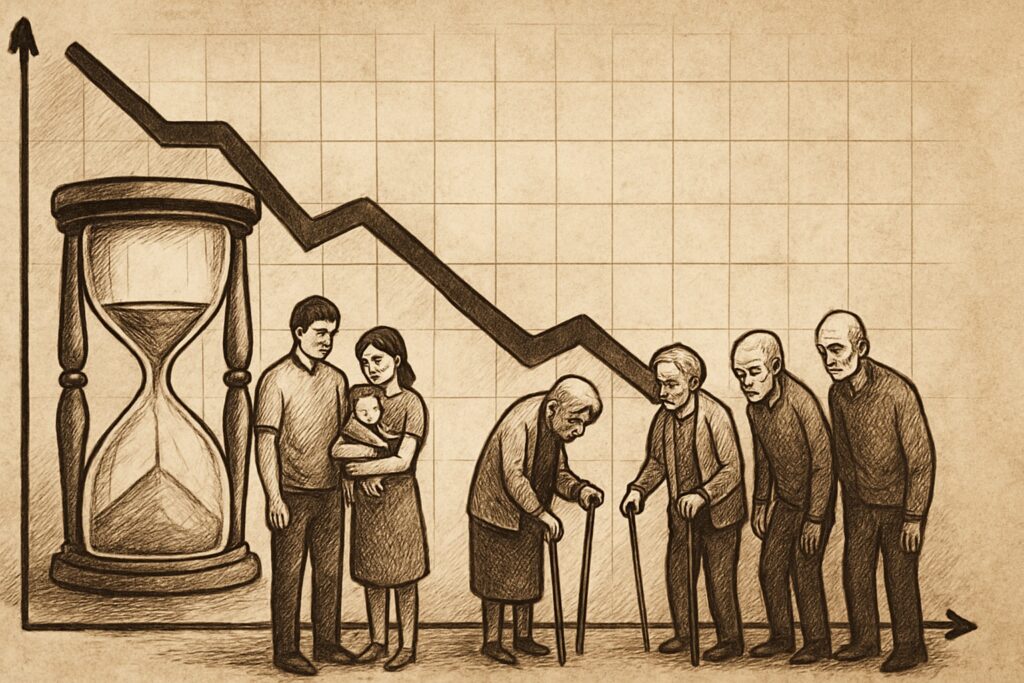
Financial markets excel at generating hope. Every day, fund managers discuss stock selection and strategies with great confidence, suggesting that diligent analysis can help them avoid risks and outperform the market. However, when the time frame is extended to ten or twenty years, the conclusion becomes stark and singular: over ninety percent of fund managers underperform their benchmarks in the long run.
This is not merely a feeling; it is statistical fact. According to the SPIVA report published by S&P Dow Jones Indices, in the U.S. large-cap market, more than 90% of active funds underperformed the S&P 500 index over a 20-year period; even over a 10-year period, the underperformance rate remains close to 85%. Time is not a friend to active funds; rather, it is their adversary. The longer the time horizon, the fewer winners remain.
This phenomenon is not unique to the United States. SPIVA’s European data reveals that approximately 80% of UK equity funds underperformed their benchmark over a 10-year period; in mature markets like the Eurozone and Japan, the long-term underperformance rate generally ranges from 70% to 90%. Even in emerging markets, which are often considered ‘less efficient,’ more than half of active funds still lag behind their indices over a 10-year period. While markets may not be perfect, they are sufficient to pull most investors below the average.
Some may argue that the issue lies not with active management itself but with selecting the wrong funds. However, research from Morningstar indicates that this argument also lacks merit. Statistics show that the likelihood of a fund that was once in the top 25% remaining there five years later is typically below 20%. Good performance is difficult to sustain, while poor performance tends to be remarkably stable. Choices that seem reasonable in hindsight are nearly impossible to identify in advance.
An even harsher statistic is the ‘survivorship rate.’ Long-term tracking by Morningstar shows that after 15 years, only about half of active funds still exist; the rest have either been liquidated, merged, or quietly disappeared. Investors face not only the risk of underperforming indices but also the risk that the funds they select may not survive long enough to deliver long-term returns.
Costs represent the final blow. Active funds typically charge management fees of 1% to 2% annually, coupled with hidden costs from frequent trading, which can erode most returns due to compounding effects. The overall market return is fixed; before costs are deducted, all investors combined equal the market; after costs, active investors are bound to lose. This is not a question of ability but of arithmetic.
It is for this reason that John Bogle proposed a counterintuitive choice: do not attempt to beat the market; instead, own the market directly. Low-cost, broadly diversified, long-term investments in index funds, without predictions or frequent trading, allow time to make the decisions.
The conclusion is, in fact, quite calm. For the average investor, investing is not about proving oneself smarter than fund managers, but rather about avoiding the statistically marked disadvantage. When 90% of professionals cannot consistently outperform indices over the long term, the most rational choice is to refrain from participating in a competition that is destined to yield negative expectations.
Passive index investing is not laziness; it is a clear-eyed recognition of the numbers. The market does not entertain excuses; it merely tallies results.