Author name: 胡思

Is Labour Preparing to Rejoin the EU?

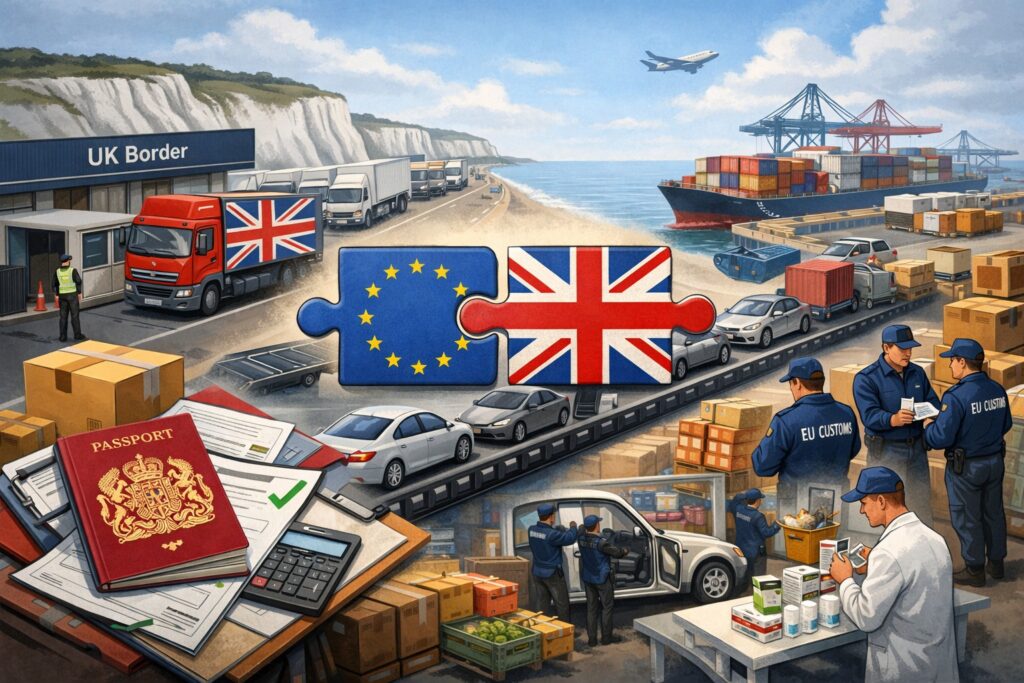
The 2016 referendum set the United Kingdom on a long and painful path. Brexit passed with a narrow margin of 52% to 48%, driven not by calm analysis but by the misleading slogan on the red bus claiming ‘£350 million a week for the NHS’ and emotional appeals to ‘take back control’. Nine years on, reality has gradually unfolded: tariffs and regulatory barriers have risen, business investment has been stifled, trade volumes have declined, and productivity has stagnated. The OBR, the Bank of England, and international research institutions now broadly agree that the UK’s GDP has permanently shrunk by 4–8% compared to remaining in the EU, resulting in the government losing billions of pounds in tax revenue each year, forcing it to make difficult choices between raising taxes, cutting spending, or borrowing more.

The pain is tangible, and the consequences are clear, leading to a shift in public opinion. Recent polls indicate that over 60% of voters believe Brexit was a mistake; even in areas that voted for Brexit, an increasing number of people acknowledge that life has become more difficult. British public sentiment has shifted from viewing Brexit as a victory to recognizing it as a costly mistake, marking a fundamental change in the political climate.

In this new environment, the Labour government has begun to adjust its tone. Chancellor of the Exchequer Rachel Reeves has acknowledged that Brexit is a primary cause of the economic predicament; Deputy Prime Minister Oliver Dowden has pointed out that a customs union could aid growth; and Shadow Foreign Secretary David Lammy has repeatedly dodged questions about whether he believes the UK will not rejoin the EU during his lifetime. While the tone has softened, the policies remain rigid. Labour admits that Brexit has caused trauma but continues to uphold three red lines: no return to the EU, no return to the single market, and no return to the customs union, akin to knowing the remedy yet refusing to prescribe it.

This stance of ‘acknowledging the problem but not addressing it’ reflects Labour’s fear of alienating Brexit-supporting voters in England and reigniting cultural tensions. They are only willing to propose technical adjustments: restoring student exchanges, improving research collaboration, and reducing border inspection costs. While these measures are necessary, they cannot fill the deep void left by the loss of market access. The UK economy continues to sink, while Labour comforts itself with the notion that ‘at least we haven’t angered anyone’.

In stark contrast, the Liberal Democrats, the Green Party, and the Scottish National Party are candid. They are willing to articulate what Labour dares not: if the UK wants to restore economic vitality, it must reintegrate with Europe. The Liberal Democrats advocate rejoining the single market and view rejoining the EU as a long-term goal; the Green Party calls for the restoration of free movement, prioritizing opportunities for young people; and the Scottish National Party asserts that Scotland’s future lies within the EU. Their positions may be sharp, but at least they are honest, unlike Labour’s indecisiveness.

More importantly, even if the UK genuinely wishes to rejoin the EU, the path is fraught with difficulty. The 27 EU member states hold veto power; as long as any one country opposes, the UK will never be able to return. The UK’s recent years of vacillation, chaos, and hostility towards Europe have eroded its trustworthiness. Repairing these rifts will likely require several governments to maintain a consistent direction, rather than Labour’s current strategy of ‘softening the tone without action’.

Today’s Labour Party appears to acknowledge the mistakes of Brexit, yet it is unwilling to take genuine steps toward improvement. The UK is paying a heavy price for a referendum held nine years ago; public opinion has reversed, and the reality is clear: what the UK needs is not more delays, but leadership willing to confront the truth and plan for a long-term direction.

If Labour continues to progress at this pace, the UK will remain trapped in the shadow of Brexit’s aftershocks, while the true forces willing to lead the country back to Europe lie outside the government.

Is Labour Preparing to Rejoin the EU? Read More »

Reduce Flights for a Deeper Travel Experience

Hongkongers love to fly; it is both a habit and a part of their culture. However, air travel has a high carbon footprint, and it is one of the lifestyle choices that ordinary people can most easily adjust.

The British often say, “You don’t have to fly to travel.” In fact, in this island nation, stunning scenery is all around. The rugged beauty of the Scottish Highlands, the tranquility of Loch Ness, the wildness of Snowdonia, and the charm of the Lake District are all world-class destinations. From London or Manchester, one can reach these places without boarding a plane, relying instead on trains, buses, or electric vehicles. Slowing down allows for a deeper and broader appreciation of the surroundings.

If one wishes to venture to the European mainland, flying is not a necessity either. The Eurostar provides direct access to Paris, Brussels, and Amsterdam, and high-speed trains can take you further into the continent. Many believe that rail travel is time-consuming, but from another perspective, sitting in a carriage while enjoying the scenery and experiencing the rhythm of cities is the essence of the journey. For those with limited time, a compromise is possible: fly to the destination and take the train back. This halves emissions while still offering a rich travel experience.

Driving an electric car adds even more freedom. The Eurotunnel connects Folkestone to Calais in under 40 minutes, while a ferry from Dover to Calais takes just two hours. From there, one can head northeast to Estonia, southeast to Greece, or southwest to Portugal, embarking on a classic European road trip. Compared to waiting in airport lines, the autonomy and flexibility of driving are more suitable for family travel.

For those staying in Hong Kong, travel does not have to equate to flying. The density of country parks in Hong Kong is rare among major global cities. Sai Kung Bay, the sunset at Phoenix Mountain, and the tranquility of South Lantau are all within an hour’s drive. For cross-border travel, the Greater Bay Area along the high-speed rail line, as well as Zhaoqing and Guilin, are popular destinations with distinct local cultures and expansive views.

When flying is necessary, it can be approached more strategically. Instead of flying four times a year for one week each time, consider flying twice a year for two weeks each trip. The total holiday time remains unchanged, but flight frequency is halved, reducing emissions and saving on airfare. The journey becomes more immersive and, consequently, more enjoyable.

The purpose of travel is to see the world, not to accumulate flight miles. Flying is not a sin, but it is indeed one of the behaviors that individuals can change most effectively. The world is vast, and we can explore it in a more thoughtful, relaxed, and responsible manner.

Reduce Flights for a Deeper Travel Experience Read More »

Lessons from HSMP on Residency Requirements Tightening

The British immigration system has evolved over a century, and while principles can be adjusted, there is one line that must not be crossed: the government cannot retroactively change the rules, nor can it push individuals who have made life decisions based on previous regulations off a cliff. The HSMP (Highly Skilled Migrant Programme) is a classic case that exemplifies the consequences of such retroactive changes, ultimately resulting in a government defeat. Today, as the government attempts to tighten residency requirements, this historical lesson is particularly relevant.

Launched in 2002, HSMP was the UK’s first large-scale initiative to attract high-skilled talent from around the globe. The guidelines were clear: after one year of residence, individuals could extend their stay for three more years, and those who were economically active for four consecutive years could apply for permanent residency. This was the UK’s commitment to the world: if you were willing to contribute, we would provide a pathway to settle down. Many made the decision to leave their home countries and start anew in the UK based on this promise.

In 2006, the government abruptly changed the rules. The first step was to extend the original four-year pathway to permanent residency to five years, not only for new applicants but also retroactively applied to all existing HSMP migrants. Many who had just completed four years and were preparing to apply for permanent residency were forced to renew their visas, incurring additional costs, scrutiny, and uncertainty in their lives.

In November and December of the same year, a more severe blow was dealt. The government abolished the previously lenient renewal rules, requiring all HSMP migrants (including those who had been in the UK for years) to pass a stricter ‘points-based test’ covering income, education, age, and UK experience, along with new English language requirements. The previous commitment that ‘reasonable efforts to integrate into the economy would suffice for renewal’ was suddenly replaced by criteria favoring higher earners. Many immigrants with extensive local experience but lower incomes, who had always complied with the law, were suddenly deemed ‘ineligible.’

Affected individuals subsequently sought judicial review. The court’s ruling was emphatic. Judge George Newman pointed out that the government had established a clear ‘reasonable expectation’ when introducing HSMP: applicants came to the UK based on the original rules and arranged their lives accordingly. The government’s subsequent tightening of rules retroactively was tantamount to undermining the life arrangements that applicants had already formed, which was both unfair and lacked sufficient policy justification. He noted that these individuals had settled, worked in the UK, and their situations had ‘crystallized’; the government could not arbitrarily change its stance at this point.

Ultimately, the court ruled in favor of the plaintiffs, ordering the government to withdraw the retroactive conditions; the government was also compelled to restore the original renewal and permanent residency pathways for former HSMP migrants, even providing supplementary arrangements for some to complete their residency under the original four or four-plus-one year terms. The HSMP case became an important precedent in immigration administrative law: policies can be adjusted, but they must not harm those who have made significant decisions based on previous regulations.

Today, the government’s consultation document proposes extending the pathway to permanent residency to ten years, using a ‘contribution’ system as a framework for adjusting the duration. While the duration itself remains open for discussion, the UK indeed needs to stabilize immigration levels and ensure social integration. However, for Hong Kong residents in the UK, due to the BNO (British National Overseas) status allowing a five-year reduction, the real concern is not the ten years but the two hard requirements proposed by the government: an English proficiency level raised to B2 and a continuous income of £12,570 for three to five years.

If these two requirements are applied retroactively to all who have yet to obtain permanent residency, the consequences would mirror those of the HSMP case. Many housewives, part-time workers, self-employed individuals, full-time caregivers, and students, or those whose income has not met the threshold due to career changes, would be directly excluded from permanent residency; the B2 English requirement is significantly higher than the current B1, potentially rendering many long-term Hong Kong residents suddenly ‘ineligible.’ The core of judicial scrutiny is not whether the government can set new thresholds, but whether it can overturn old commitments without consequence.

The lesson from HSMP is clear: policies can change, but procedures must remain consistent; pathways to immigration can be tightened, but they must not dismantle the lives people have built based on existing rules. If the UK forgets this principle today, the issue will extend beyond the duration of permanent residency to the very credibility of the system itself.

Lessons from HSMP on Residency Requirements Tightening Read More »

Humanoid Robots Will Rise, But Not Necessarily as Humans

The world is entering an era of shrinking labor forces, with many countries grappling with declining birth rates and an aging population. Labor is becoming increasingly expensive and harder to source, while a new technology is quietly filling the gap: humanoid robots are beginning to demonstrate genuine capabilities for performing tasks.

The accuracy and dexterity of the latest prototypes have far surpassed the clumsy robotic arms of earlier years. They can now reliably fold clothes, sort items, and pick up small objects—tasks that require hand-eye coordination. Many Hongkongers who have moved to Europe and America find it most challenging to adjust to the absence of domestic helpers; however, in the near future, a robot capable of navigating between the kitchen and living room may fill this void.

In fact, our homes have long been filled with ‘specialized’ machines: washing machines wash, dryers dry, vacuum cleaners clean floors, and dishwashers handle dishes. Each performs its designated function but lacks cooperation and oversight. The truly troublesome steps—such as retrieving clothes from the laundry basket, sorting, folding, and putting them away—remain the responsibility of humans. Thus, what the market has been lacking is not stronger motors, but a versatile robot capable of handling multiple tasks.

The deployment of such machines will inevitably begin in controlled environments. Restaurants, department stores, and hospital corridors, where processes are repetitive and on a large scale, are ideal for testing and training. Tasks like wiping tables, organizing trays, and clearing debris do not require high intelligence, only reliability and stability. Once businesses recognize the potential for labor savings and cost reductions, widespread adoption will accelerate, ultimately bringing these robots into ordinary households.

However, future ‘humanoid’ robots may not necessarily resemble humans. The human form is a result of evolutionary processes and biological compromises. Humanoid robots need not be bound by the same constraints; they could take on forms such as three-headed, six-armed beings or octopuses on wheels. The desire for an extra hand, retractable arms, or even built-in wheels would not violate natural laws. This freedom of form could, in fact, reduce human anxiety, as they would not evoke the same discomfort associated with ‘human-like’ appearances.

The decline in population is a long-term global trend, particularly pronounced in labor-short and high-cost countries like the UK and EU nations. As labor shortages become a structural issue, robots that can replace repetitive tasks and support high-cost industries will naturally move into the mainstream. Ultimately, they may integrate into daily life like washing machines and vacuum cleaners, doing so quietly and without fanfare, simply accomplishing the tasks we prefer to avoid.

Humanoid Robots Will Rise, But Not Necessarily as Humans Read More »

Farage’s Reform Party: Scandals and Chaos

Nigel Farage’s controversies began to take shape even before he entered the political arena. While attending Dulwich College, several former classmates and teachers alleged that he had told a Jewish student, “Hitler was right,” and mimicked gas chamber actions. One teacher even wrote to the headmaster, warning him about Farage’s emerging fascist tendencies. While the details may be difficult to verify, the collective memory is strikingly consistent: this young man relished crossing lines and provoking others, and his actions were far from innocent blunders.

Initially, he could have acknowledged his youthful ignorance and offered a candid apology, which might have quelled the situation. However, Farage chose to deny and deflect, dismissing all accusations as jokes or claiming he could not remember. The crux of the matter lies in what he is being asked to demonstrate—not policy, but honesty and judgment; ironically, these are precisely the qualities he lacks.

The Reform Party’s performance at the local level has magnified this attitude into a complete party culture. Following local elections, the Reform Party claimed over 600 seats, asserting its intent to “reshape Britain.” Yet, within just a few months, dozens of MPs across the country have been suspended, expelled, or resigned. A leaked internal meeting in Kent descended into chaos, with leadership hurling expletives at colleagues, paralyzing the council; the council leader in Staffordshire was exposed for making prejudiced remarks on an anonymous account; in Lancashire, an MP was embroiled in extremist messaging groups; in Essex, an MP incited emotions at an anti-mosque protest; and multiple local councils in Wales have seen incidents of racial abuse. Different regions, different events, yet they reveal the same trajectory: gaffes, immorality, and loss of control, with no oversight from the top down.

More troubling is the infiltration by foreign powers. Nathan Gill, a former heavyweight figure in the Reform Party and ex-MEP, has admitted to receiving Russian funds and lobbying for foreign interests, resulting in a harsh court sentence. Farage has proclaimed “patriotism” for years, yet his allies find themselves in the dock for speaking on behalf of Russia, a glaring contrast.

Policy-wise, there is little to inspire confidence. In several upper councils controlled by the Reform Party, leaders have touted a revolution in efficiency, claiming to “reduce waste.” The outcome, however, has been a gradual erosion of social services, with finances remaining tight, ultimately pushing municipal taxes to near the legal limit of 5%. What cannot be saved remains unsaved, with the burden falling on residents.

Symbolic projects, however, have been implemented swiftly. Nottinghamshire spent approximately £75,000 erecting over a hundred Union Jack flags across the region; other councils have busied themselves banning rainbow flags, Ukrainian flags, and even discussing the hiring of political consultants. While the quality of life stagnates, the flagpoles are notably active.

When these threads are woven together, they paint a remarkably consistent picture: leaders unwilling to take responsibility for the past; lax party discipline leading to frequent moral failings among MPs; local governments struggling between tax hikes and budget cuts; and symbolic politics overshadowing the needs of the populace. This is not an anomaly but a deeply rooted party ethos.

If these local councils are a preview of a future “Farage government,” would you still want to see the full feature?

Farage’s Reform Party: Scandals and Chaos Read More »

Rebuilding Tai Po After the Hong Fuk Court Tragedy

The devastating fire at Hong Fuk Court claimed over a hundred lives and left more than 4,000 people homeless. The pain is profound, and the pressing question in the aftermath is how to help residents start anew. Hong Fuk Court, completed nearly 40 years ago, was built in a time when Hong Kong’s concrete structures were typically designed for a lifespan of 50 years, extendable to 75 years with proper maintenance. Given that multiple units were severely damaged in the fire, the cost of repairs would be exorbitant, and safety concerns would linger, overshadowed by the trauma of the disaster. It is unreasonable to expect residents to return to live under such circumstances.

From the perspectives of engineering, human sentiment, and financial considerations, the most pragmatic approach would be to demolish the entire estate and relocate the residents. Compensation must be adequate, and the Urban Renewal Authority’s standard of ‘seven years of age’ for property acquisition could serve as a reference for government compensation. If residents receive a fair amount, they could purchase subsidized housing or private flats nearby, or even choose to relocate to the Greater Bay Area or the UK, thereby establishing a new life. The key is to return the choice to the victims, rather than forcing them back to the site of their trauma.

The site of Hong Fuk Court can accommodate both the relocation and financial functions. By relocating Kwong Fuk Sports Ground, Kwong Fuk Park football pitch, and the Yuen Chau Tsai gas station to this site, the original locations can be freed up for sale, generating funds for compensation and reconstruction, thereby expediting the resettlement of disaster victims. Sale terms should also include a priority purchasing right for former residents of Hong Fuk Court, giving them the opportunity to rebuild their lives within the community, thus creating a solution that balances human compassion with financial viability.

A portion of the land should also be preserved for public memory. A simple monument could be established at the former site of Hong Fuk Court, alongside a permanent outdoor exhibition area showcasing lessons learned from the fire and escape knowledge, serving as a reminder to the city to avoid repeating such tragedies.

The tragedy of Hong Fuk Court will not be forgotten. True remembrance lies in enabling residents to embark on a new life with dignity, allowing the community to heal and renew.

Rebuilding Tai Po After the Hong Fuk Court Tragedy Read More »

The Contradiction of UK Immigration Policy and Fiscal Reality

The current political and fiscal landscape in the UK presents a stark and perplexing contradiction: the government publicly advocates for a reduction in immigration while quietly relying on high immigration levels to maintain fiscal balance. The disparity between rhetoric and reality ultimately undermines the credibility of public finances.

The Labour Party criticizes the Conservative government for opening the floodgates to immigration, resulting in record net migration levels. Prime Minister Rishi Sunak has made reducing immigration a priority. The latest data indicates that net migration fell to 204,000 by June, which the government describes as a step toward its target, emphasizing the need to ‘do more’ and continue to push downward. Visa conditions have been tightened repeatedly, leading to a significant decline in the issuance of work, study, and family visas, while industries reliant on overseas labor have begun to scale back recruitment. If this trend continues, it is not difficult to foresee net migration approaching zero in a few years, or even briefly turning into a net outflow.

However, fiscal forecasts tell a different story. The Office for Budget Responsibility (OBR) continues to assume in its latest budget that net migration will rebound and stabilize at around 340,000 annually, calculating that new immigrants will reduce borrowing by approximately £7.4 billion each year during the forecast period. This assumption equates to the belief that the UK can simultaneously achieve two mutually exclusive goals: tightening immigration sources while attracting more people than currently enter. Both cannot hold true at the same time.

This contradiction is not limited to the Labour Party. For years, the Conservative Party has vocally aimed to reduce net migration to ‘below 100,000’; the Reform Party has even adopted the far-right rhetoric of ‘remigration,’ advocating for the expulsion of certain settled groups in the UK. Political discourse has become increasingly heated, yet no one is willing to address the underlying reality: with a birth rate of approximately 1.4, a stagnating or shrinking working-age population, and chronic staff shortages in the NHS and social care, a significant reduction in immigration will only lead to a shrinking tax base, slower economic growth, and greater difficulty in maintaining public services.

The iron law of the UK’s demographic structure is simple: natural growth no longer contributes significantly to population increases, and the expansion of the overall population and workforce largely depends on immigration. Current economic growth and fiscal revenue similarly rely, in part, on the work, taxes, and consumption of new immigrants. The OBR’s projections are based on earlier assumptions of relatively high net migration, which have now diverged from the latest sharply declining data. Without a substantial influx of new immigrants, the fiscal space outlined in the budget will evaporate; conversely, if there are large numbers of new immigrants, it will contradict the government’s current political objectives.

If the government continues to implement a stringent immigration reduction plan, maintaining net migration at 340,000 will be nearly impossible. At that point, a fiscal gap will inevitably emerge, forcing the government to make difficult choices between raising taxes, cutting spending, or increasing borrowing. This is a contradiction that will reach its limits sooner or later.

Immigration is not a panacea, but in an aging society, it is a critical variable for sustaining the economy and public finances. The issue is not whether immigration numbers should decrease, but whether the UK is willing to face the truth: fewer immigrants mean accepting reduced fiscal capacity and slower growth; better public services cannot be achieved while simultaneously pursuing isolationist policies and expecting others to foot the bill.

The Contradiction of UK Immigration Policy and Fiscal Reality Read More »

The Necessity of Flu Vaccines This Winter

This winter, the flu is proving to be particularly aggressive, with both the UK and Hong Kong facing urgent situations. The virus has mutated, significantly increasing its transmissibility, and the peak has arrived earlier than in previous years, pushing hospitals to the brink of capacity. This is not mere alarmism; it is a reality. In the face of such a winter, vaccination is no longer an option but a necessary line of defense.

The situation in the UK is especially pronounced. Recent NHS data indicates a substantial rise in flu-related hospital admissions compared to the same period last year, with emergency rooms in several areas nearing saturation. This year’s virus is spreading particularly rapidly among children and adolescents; once a cluster appears in schools, cases multiply swiftly. The NHS is providing free vaccines to individuals aged 65 and over, those aged 18 to 64 with chronic illnesses, pregnant women, care home residents, primary caregivers, and those living with immunocompromised individuals. Others can receive the vaccine at their own expense, ranging from £12 to £25, but the availability of low-cost vaccines at pharmacies has already been exhausted, with some needing to wait until late January for appointments.

Hong Kong is experiencing similar pressures. Shortly after the vaccination program launched in September, the flu peak arrived unexpectedly early. The densely populated city, combined with high-contact environments in schools and public transport, has allowed the virus to spread almost unchecked. The government is offering free or subsidized vaccines to individuals aged 50 and over, children, pregnant women, chronic illness patients, elderly care home residents, and healthcare workers. Doctors have noted that many cases this year are deteriorating particularly quickly; waiting until those around them fall ill to get vaccinated may make it too late to avert a crisis.

The most concerning groups are those who have planned travel and students preparing for public examinations. A severe cold can lead to trip cancellations, flight rescheduling, and wasted hotel bookings; for students, falling ill at a critical moment could alter their future. These losses far exceed the cost of a single vaccine.

Vaccines will not render you invulnerable, but they significantly reduce the risk of severe illness and hospitalization, as well as protect your travel plans, work, and daily routine. This year’s flu is more severe than last year’s, and the healthcare system has sounded the alarm. Getting vaccinated as soon as possible is the most rational and straightforward choice.

Please share this message with family and friends, especially those who are elderly, frail, or preparing for exams. A simple reminder from you could save someone from a major inconvenience.

The Necessity of Flu Vaccines This Winter Read More »

Switching to Induction Cookers for Safety and Health

The phrase ‘cooking with open flames’ is not an ancient wisdom but rather a marketing ploy by gas companies over the years. They romanticize the flame, mythologize the smoke, and package high temperatures as ‘wok hei’. However, setting aside the promotional language, the costs of open flames are substantial: fires, oil fumes, carcinogens, and air pollution all stem from that flicker of light.

Let us begin with health. Burning natural gas or coal gas releases nitrogen dioxide (NO₂), carbon monoxide (CO), and fine particles. Numerous studies from Europe and America indicate that just half an hour of using a gas stove can elevate indoor nitrogen dioxide levels to outdoor pollution warning thresholds. In the long, cold winters of the UK, people close their doors and windows to keep warm, turning kitchens into sealed spaces where pollutants have nowhere to escape. Elderly individuals, children, and asthma sufferers cooking in these environments often inhale far more pollutants than they realize.

The issue of high-temperature cooking cannot be overlooked either. An excessive pursuit of flame can cause oil temperatures to soar, generating more oil fumes and carcinogens such as acrylamide and polycyclic aromatic hydrocarbons. These are not the essence of Chinese cuisine but rather the accumulated risks over the years. The true ‘wok hei’ is the reaction between the ingredients and the pan’s surface, not the flame itself. Induction cookers heat up quickly, respond rapidly, and maintain precise temperature control, preventing overheating and thereby preserving cooking quality while reducing oil fumes. Boiling water, cooking noodles, and stir-frying are often faster than with natural gas.

Safety is another critical factor. Open flames are the root cause of kitchen fires: towels catching fire, oil pans igniting, and embers being left behind—all due to the presence of flames. Natural gas leaks can also potentially blow up an entire house. Induction cookers, on the other hand, have no flames, no combustion, and no leaks. The cooktop only heats up when in contact with the pot, cooling down quickly once removed. Even if you place your hand on it, it merely feels warm and will not cause burns. In homes with children or the elderly, the sense of safety is not just slightly improved but elevated to an entirely new level.

Ease of cleaning is another compelling reason. Open flame stoves have complex structures, and oil fumes always find gaps to infiltrate. Cleaning a gas stove requires disassembly, soaking, and scrubbing, which is a waste of time. An induction cooker is a flat glass surface that can be wiped clean after cooking. Over time, this reduces kitchen odors and makes it harder for grease to accumulate on walls.

Some may worry about costs. Given today’s energy prices, electricity is generally more expensive than natural gas, which could lead to slightly higher cooking costs. However, the difference is limited, and cooking itself constitutes a small portion of household energy expenses. In the long run, electricity prices may not maintain the current gap with gas prices. If natural gas is eliminated from the entire house, it could also save on monthly fixed charges, accumulating to a substantial saving over the year.

More importantly, the times have changed. Cities around the world are moving towards ‘flame-free kitchens’ and ‘electrified homes’ not merely to follow trends but to enhance health, safety, efficiency, and air quality. Stir-frying, pan-frying, and enhancing flavors in Chinese cooking do not require flames; they only need sufficient heat and stable temperature control. Induction cookers excel in all these aspects.

‘Cooking with open flames’ is merely an advertising slogan that leads people to believe that fire represents flavor. What truly retains flavor is technology, time, and good ingredients, not a flame. If we can reduce the risk of fires, avoid exhaust fumes, and improve air quality, why not make the next meal easier and safer?

Switching to Induction Cookers for Safety and Health Read More »

Why Electric Vehicle Drivers Can’t Go Back

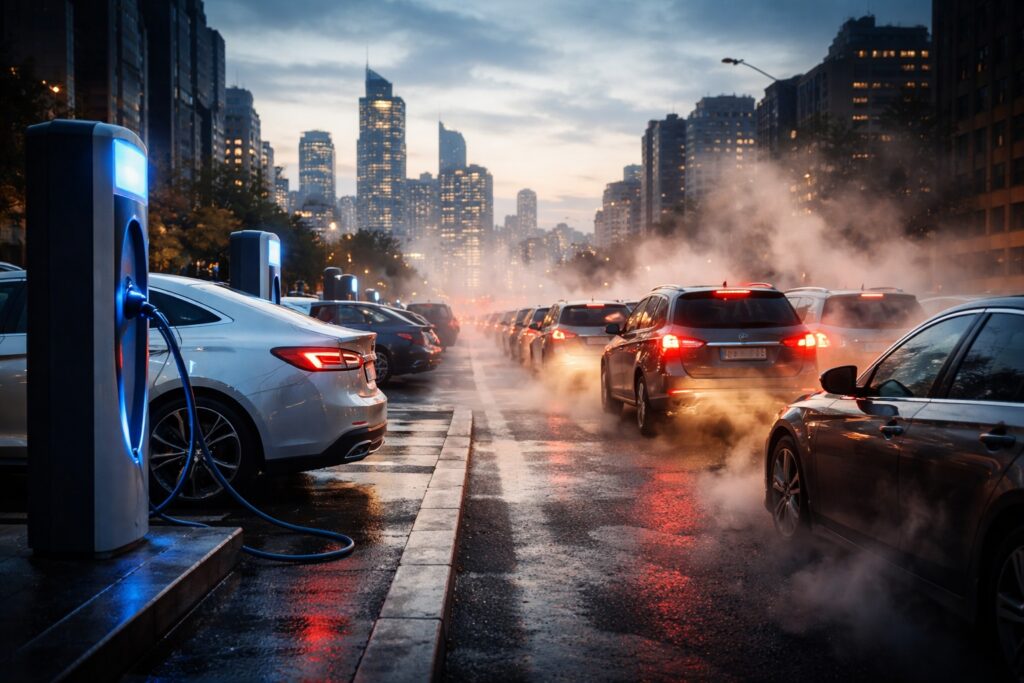
Many who have driven electric vehicles share a common experience: when the light turns green, the car accelerates silently, as if pulled by an invisible force, while nearby petrol vehicles only just start moving, quickly falling behind. There is no need for deliberate acceleration; the technology itself is so direct. After that initial push, many understand what it means to be unable to go back.

The smoothness of electric vehicles is immediately perceptible without the need for adjustment. There is no engine roar, no gear shifting, and no delay; speed builds up linearly, making short urban trips remarkably effortless. When the noise subsides, the changes in speed become even more pronounced. Returning to a petrol vehicle, the harsh engine sound feels jarring, as if time has rolled back to the last century.

Handling is no longer the same. With the battery positioned on the chassis, the center of gravity is significantly lower, allowing the vehicle to hug the road in corners. Even a family SUV outperforms its petrol counterparts in stability and agility. The feedback from the steering wheel is simple and direct, making its structural advantages apparent even to those without engineering knowledge.

The cost difference is equally stark. In the UK, petrol prices are high, with many family cars costing around sixty pounds to fill up, while in Hong Kong, it can easily exceed a thousand Hong Kong dollars. Electric vehicles can be charged at home, and in the UK, electricity can be as low as 7 pence per kilowatt-hour, with a full battery costing only about five pounds; while Hong Kong may not have such low rates, the everyday costs of using an electric vehicle are still far lower than those of petrol cars. Although the cost of long-distance fast charging is comparable to refueling, for most owners, 90% of their charging occurs at home, resulting in average costs that are significantly lower than those of petrol vehicles. Over time, the reluctance to return to queuing at petrol stations becomes evident.

Convenience fundamentally changes the way we use cars. Simply plugging in the vehicle at home takes ten seconds, and by the next day, it is fully charged, eliminating the need to plan trips to the petrol station. Heating and air conditioning can be used at any time without the need for the engine to idle, alleviating concerns about parking without turning off the ignition and avoiding fines. In summer, running the air conditioning while waiting in Hong Kong no longer feels guilty, and in winter, waiting for children to finish school in the UK is no longer a shivering ordeal.

The environmental burden is a clear dividing line. Electric vehicles produce zero emissions while driving, avoiding the release of exhaust fumes towards pedestrians, thus reducing both air pollution and climate change. After driving an electric vehicle for a while, returning to a petrol car and seeing the exhaust pipe emit white or black smoke feels unnatural.

Many drivers, when renting cars abroad, become acutely aware of the differences. Getting into a petrol vehicle means suddenly having to listen to the engine noise, wait for gear changes, and search for petrol stations; the entire rhythm feels like a return to an earlier generation of technology. This sense of ‘regression’ is not an exaggeration but rather a contrast recorded by the human experience.

Concerns about electric vehicles from the public are largely psychological barriers. With a range generally exceeding 250 miles and fast charging networks expanding yearly, the real obstacle is not technology but the imagination before personal experience. Once crossed, the reasons to look back diminish.

Electric vehicles are not a panacea; sometimes public transport may be a better choice. However, there is no doubt that electric vehicles are quieter, smoother, cheaper, and cleaner than petrol cars. As driving becomes easier, costs become manageable, and the burden on air and climate is alleviated, the combination of noise, emissions, and fuel costs associated with petrol vehicles will naturally be relegated to history. The tide of technology moves forward; once you have experienced it, looking back becomes difficult.

Why Electric Vehicle Drivers Can’t Go Back Read More »

Scroll to Top