Science & Tech

How weather forecasting, atmospheric science, and digital infrastructure shape policy and daily life. Reporting blends WooSee’s own weather work with broader UK-relevant tech analysis.

To Be Human, Andrew Must First Agree to Die

To Be Human, Andrew Must First Agree to Die

Bicentennial Man (1999), adapted from Isaac Asimov’s novel The Positronic Man and directed by Chris Columbus, casts Robin Williams as Andrew, a household robot who slowly grows into something close to a person. The story runs across 200 years and follows a machine bought to do the chores as it presses, step by step, to be treated as a human being, winning legal recognition only at the moment of its death.

What the story really forces upon us is an old question that remains unanswered: what is it that makes a being a person. Andrew acquires early on the things humans prize most in themselves, curiosity, creativity, humour, and in time love as well. He learns to carve, learns to tell jokes, fits himself with artificial organs that tire and ache, and turns a steel frame gradually into flesh. In ability and in feeling he lacks nothing, and is arguably more human than several of the flesh-and-blood people around him. Yet the World Congress will not grant him the title. The question surfaces plainly. What defines personhood, is it consciousness, emotion, creativity, or something else.

The film’s answer is unexpected, and the most worth chewing over. The Congress recognises Andrew not because he has finally gained some capability, but because he chooses to let his bloodstream age, choosing to die. What makes him human, in other words, is not something he adds but something he is willing to give up. A machine that cannot break down, however human it seems, stands outside humanity, because it never has to face an ending. Death here is not a human defect but a human entry ticket. To be able to lose, to move toward a close, turns out to be the deepest colour in the word person.

This touches a sharper reflection. We have long treated agelessness and deathlessness as the ultimate blessing, promised by religion and pursued by technology. The story suggests instead that an existence without end may be precisely an existence without weight. It is because time is finite that choices carry a cost, that love carries reluctance to part, that each decision counts at all. Andrew trades 200 years of immortality for a life that will wither and end, and what he gains is not merely a legal title but a weight his existence never had before. Only by surrendering the infinite does he lay claim to meaning, a paradox more arresting than any tearful scene.

Andrew’s romance with Portia brings the abstractions down to earth. Portia is the granddaughter of Little Miss, and Andrew has always carried an unspoken tenderness for Little Miss, so that across several generations the feeling reawakens in a new object. Does love spoken by a machine count as love, and if it is indistinguishable from a human heart’s stirring, on what grounds do we call it false. What stings more is the asymmetry. Portia will age and die, while Andrew can remain fixed in place, watching the one he loves wear away inch by inch. It is this asymmetry that leaves him unable to rest in immortality, and his choice of ageing and death is less about claiming a title than about walking the final stretch of the road beside the one he loves.

There is one episode easily taken as a passing detail that in fact carries great weight. After serving the Martin family for many years, Andrew asks of his own accord to buy back his freedom with the money saved from selling his carvings. On the face of it this is almost pointless. He is already treated as family, paid a wage, free to move as he wishes, and what it earns him is the hurt and coolness of his master, Richard. But a freedom lent out of goodwill remains in another’s hand, given when they are pleased and withdrawn when they are not. Andrew would rather pay for it, so that freedom becomes something held in his own name that no one can take back. The heart of freedom lies not in how comfortable your life is but in whom it actually belongs to.

Following that thread, freedom and recognition turn out to be two sides of one question. What Andrew seeks is never a stronger set of functions but to be treated as a subject, to hold his own name and property and to decide for himself. This reminds us that personhood may be less a measurable inner property than a relationship of mutual recognition, a matter of whether a community is willing to draw you inside the circle of us.

It is worth noting that the film flopped on release and the critics were unmoved, costing roughly 100 million US dollars and taking only about 87 million worldwide, a clear loss, long filed away as a slow and overly sentimental misfire. Yet set aside for 20-odd years and watched again in the age of AI, it has grown new weight, and looks more like an underrated film worth thinking through. Machines can already create and converse, and whether they possess consciousness has become a serious debate. The thing Andrew spent a full 200 years asking is now laid in front of us. When a system behaves human in every respect, on what grounds do we say it is not. Is it because it has no consciousness, or because we cannot prove it has any, is it because it cannot die, or because to recognise it would unsettle our attachment to our own uniqueness. The story answers none of this for us. It only hones the question to a finer edge, pressing us, while there is still time, to think clearly about what we use to define a person, and what we are prepared to use to define a machine.

To Be Human, Andrew Must First Agree to Die Read More »

The Iron Lady Was Also a Chemist: When Science Entered Downing Street

The Iron Lady Was Also a Chemist: When Science Entered Downing Street

Margaret Thatcher is said to have been prouder of being Britain’s first prime minister with a science degree than of being Britain’s first female prime minister. The line is difficult to verify fully, but it captures a fact often hidden beneath the political label of the “Iron Lady”. Thatcher was not only a formidable political figure. She was also one of the few modern heads of government with serious scientific training. She read chemistry at Somerville College, Oxford, worked on X-ray crystallography, and later spent time in industrial research. This was not decorative biography. It shaped how she understood environmental risk. To her, ozone depletion, chlorofluorocarbons and greenhouse gases were not only political issues. They were measurable physical realities.

The ozone problem showed this scientific instinct most clearly. Chlorofluorocarbons, or CFCs, had been widely used in refrigerators, aerosols, air conditioning and industrial processes. They were cheap, useful and commercially embedded. Yet once they reached the stratosphere, they damaged the ozone layer, allowing more ultraviolet radiation to reach the surface. That meant higher risks of skin cancer, cataracts, crop damage and ecological harm. This was not abstract environmentalism. It was atmospheric chemistry. Something invisible could still be real. A substance present in small concentrations could still produce large systemic consequences.

The hard part was policy. Scientists could identify the risk, but governments had to manage business costs, substitute technologies, international competition and the needs of developing countries. If only a few countries restricted CFCs, production could move elsewhere and emissions would continue. If governments imposed bans without transition plans, policy would become little more than a slogan. Ozone protection required countries to accept the science, bear short-term costs and build common rules. Thatcher’s contribution was not simply that she believed the scientists. It was that she helped push scientific warning into international politics.

CFCs and ozone depletion became one of the flagship successes of modern global environmental governance. Through the Montreal Protocol, countries gradually phased out ozone-depleting substances. The Antarctic ozone hole still needs monitoring, and its size still varies from year to year, but the world is no longer facing an ozone hole expanding out of control. International assessments broadly show that the ozone layer is on a long-term path to recovery. That matters beyond ozone itself. It proves that global cooperation does not always fail. When the science is clear, substitutes are available and institutions can share responsibility, the world can pull back an environmental crisis before it becomes irreversible.

Thatcher’s special role lay in the combination of scientific understanding and political reach. At the 1989 Saving the Ozone Layer conference in London, she argued that countries should not merely stay within the original commitments of the Montreal Protocol, but move further and faster. CFCs did not stop at borders. The ozone layer belonged to no single state. She understood that once a scientific problem entered the atmosphere, it became a global political problem. Her international standing and relationships with other leaders allowed her to turn a technical issue in atmospheric chemistry into a shared responsibility for governments.

That experience also shaped the way she spoke about global warming. In her 1988 speech to the Royal Society, she warned that rising levels of carbon dioxide, methane and CFCs could create a global heat trap and destabilise the climate system. At the time, global warming was not yet a mainstream political language. She did not present the issue as emotional campaigning. She framed it as scientific risk. The evidence might not be complete, but the risk was serious enough. Uncertainty was not a reason for delay. It was a reason for earlier action.

In 1989, she brought climate change to the United Nations as a question of international responsibility. In 1990, she opened the Hadley Centre for Climate Prediction and Research, helping turn climate science into part of the British state’s institutional capacity. Her approach was not romantic environmentalism. It was closer to engineering-style governance: recognise physical limits, build research capacity, and move the issue into diplomacy and international rules. For a Conservative prime minister to say this publicly at the time was politically significant.

Thatcher’s example shows why a scientific background can matter in political leadership. It does not turn leaders into expert governments. It does not guarantee good judgement in every field. Its deeper value is cognitive. Scientific training teaches that the world has objective limits, that causes and consequences are not always immediate, that small concentrations can create large system effects, and that waiting for perfect certainty can mean accepting irreversible damage. That was true of CFCs and the ozone layer. It is also true of greenhouse gases and the climate system. Politics can argue over who pays, but it cannot pretend the physical world is not there.

Many governments today say they respect science, but often only when scientific conclusions are convenient. Many politicians speak of long-term risks while calculating only the next election. Thatcher’s scientific background did not remove the controversies around her other policies. But on CFCs and global warming, she showed a rare capacity: she could understand the scientific warning, and she had the authority and connections to turn that warning into international action. The ozone crisis did not become an uncontrollable disaster because science, institutions and political leadership once moved in the same direction. In an age of climate risk, energy transition, artificial intelligence and public health shocks, that capacity is even rarer than it was in her time.

The Iron Lady Was Also a Chemist: When Science Entered Downing Street Read More »

The Safest Password Is No Password At All

The Safest Password Is No Password At All

The password was always a stopgap. In the early 1960s, engineers at the Massachusetts Institute of Technology needed a way for several people to share a single mainframe while keeping their files separate, so each user was assigned a string to identify themselves at the terminal. That was the moment passwords entered computing. Back then, computers were rare and the trick was clever enough. Nobody imagined that half a century later every ordinary person would be juggling dozens of them, each one demanding upper case, lower case, digits and symbols, with a forced reset every ninety days.

People dislike passwords not because they are complicated but because they are contradictory. Security wants them long, random and unique. Memory wants them short, smooth and meaningful. Two opposite demands have been crammed into the same input box. The friction is amplified by the fact that every system has its own private rulebook. A bank insists on at least twelve characters with a special symbol. A corporate intranet forbids certain symbols. An older system caps you at eight characters and refuses to accept a space. Some sites force a change every ninety days and reject any password that matches the last ten you used. Coming up with a single new combination that satisfies one site’s quirks is already a small mental task.

Using one password everywhere is, in practice, impossible. The rules across systems are mutually incompatible, so even the laziest user is forced to vary. And even if uniformity were allowed, reuse would be a poor idea, because a single breach gives attackers a string they can spray against every other account a person owns. One leak can cascade through a dozen services. Yet remembering several dozen unique strings, each tailored to its own peculiar rules, is beyond most people. So forgetting passwords becomes routine, with users endlessly clicking reset links, waiting for verification emails, and scribbling new attempts onto sticky notes. There is a permanent gap between the limits of human memory and the demands of modern authentication, and the password model sits squarely on top of that gap.

Password managers emerged to bridge it. They generate, store and autofill credentials, which appears to solve the problem. But the convenience hides a different risk: every egg sits in one basket. Cloud-synced products like LastPass and 1Password trade local storage for cross-device access, which means the entire encrypted vault lives on a vendor’s servers. Local-only tools such as KeePass spread the risk but burden users with manual syncing, which is why they have never reached mainstream adoption. The LastPass breach in late 2022 became the cautionary case for the cloud-vault model. Once the master password or vault is compromised, everything inside is exposed at once. Concentrating trust in a single point is not safer; it is a bigger bet placed in a single location.

Passphrases were the next idea. Replace the random gibberish with a string of memorable words, four or five English terms strung together, theoretically longer and harder to crack while easier to remember. Passphrases never quite caught on, and the reason was systemic rather than human. Many websites still cap the password field at fifteen characters and disallow spaces. The deeper issue is that a passphrase, however clever, is still a shared secret. The user knows it; the server knows it. Once that string has left the user’s head and been transmitted, stored or cached, it can be stolen.

Social login took a different route. Authentication is delegated to Google, Facebook or Apple, and the user clicks a single button to be on their way. The convenience is real, but the price is that personal identity and behavioural data are handed to the platform with each click. Every login adds another data point about where the user is, what they use and what they do. It is a bargain trading privacy for ease, and most users do not fully grasp what they are giving up.

Social login also carries a less visible nuisance. Many people sign up casually with Google, forget about it some months later, then return and create another account with Facebook. The result is two unlinked profiles inside the same service, with purchase history, subscriptions and points fragmented between them. The site’s engineers must then decide whether to merge the accounts, link them or keep them separate. Each option has side effects, and the logic written to handle these cases often becomes more complex than the authentication itself. The smooth surface of social login is supported by a tangled web of identity reconciliation underneath.

Through all of these iterations, the underlying problem went untouched. The shared secret model itself is the source of the trouble. As long as user and server must both hold the same string, that string can be phished, intercepted or leaked. To fix the problem properly, the model has to change.

That is exactly what passkeys do. They are built on asymmetric cryptography. When a user registers, the device generates a key pair: the private key stays inside the device’s secure chip and never leaves; the public key is handed to the server. To log in, the server issues a challenge, the device signs it with the private key, and the server verifies the signature using the public key. No secret travels across the network at any point. A phishing site that mimics the real one perfectly cannot extract anything usable, because the passkey is bound to the original domain and refuses to operate on any other.

The historical drawback of passkeys was that the private key existed only on a single device, which meant switching phones required re-registering every account from scratch. That barrier has now been cleared. Apple’s iCloud Keychain, Google’s Chrome Password Manager and Microsoft’s Authenticator combined with a Microsoft account can each sync passkeys to a user’s other devices. For those who distrust the cloud, hardware security keys such as YubiKey keep the credential locked inside a physical chip that the user carries with them.

On the surface this looks identical to a password manager: both move login credentials between devices. But what they protect is fundamentally different in nature. A password manager syncs the password itself, which is a secret held by both user and server, and so a breach of the vault hands the attacker a working key to every account inside. A passkey synchronisation moves the private key, but the corresponding server has never held any secret in the first place; even if the website is breached, only the public key leaks, and that is worthless to the attacker.

What if Apple’s or Google’s sync service itself were compromised? The protection here lies in end-to-end encryption. Before the private key leaves the device, it is encrypted with a key known only to the user’s own devices, and the cloud sees nothing but ciphertext that even Apple or Google cannot unlock. If the entire sync system were breached, what leaks is an unreadable encrypted bundle. To actually use a passkey, an attacker would need to compromise the user’s Apple ID or Google account itself, which means stealing the password, defeating two-factor authentication, and then convincing the platform to trust an entirely new device, with each step triggering an explicit alert on the user’s existing devices. The risk has not vanished, but it has been pushed up from the storage layer to the identity layer. The attack surface narrows, the cost rises, and the leaked ciphertext on its own carries no immediate value.

The YubiKey route comes with its own trade-off. The fact that the private key never leaves the chip is its strongest protection, but it is equally its biggest weakness: lose the key and the credentials inside vanish with it, with no recovery path even from Yubico. The standard practice is therefore never to rely on a single key. Each account should be registered with at least two, one carried daily and one stored at home or in a safe. If the everyday key is lost, the backup still works; the first thing to do is delete the old key from the account and add a fresh replacement. Anyone who used only one and lost it falls back on each service’s account-recovery process, which is the weakest link in the entire chain and the favoured target of social engineering attackers.

Passkeys also do not lock a user inside one ecosystem. A passkey created on an iPhone can be used to log in to a website on a Windows computer by scanning a QR code displayed on the screen, with Bluetooth confirming that the two devices are physically near each other before completing the verification. The private key never leaves the phone; the cross-platform handoff is achieved through a FIDO standard protocol handshake, not by copying secrets between devices. Compared with social login, which essentially outsources identity to a single provider, this is a fundamentally different design.

Passkeys are not a panacea. They shift the risk from the storage layer to the device layer and the identity layer. The attack surface narrows and the bar rises, but it is not zero. A device deeply compromised by malware, or with a backdoor planted at the supply-chain stage, would expose any credentials held inside. Compared with passwords, however, this attack path has always been the harder one. A keylogger cannot capture a string that was never typed; a phishing site cannot trick the user into transmitting a private key that never travels; a server breach cannot leak a usable secret because no usable secret was ever stored. Harder is not the same as impossible, and security engineering has never offered a final answer.

There is also a structural concern worth naming. The passkey sync ecosystem currently rests on Apple, Google and Microsoft. End-to-end encryption protects against technical surveillance, but it does not protect against policy shifts. If a platform alters its access rules, complies with regulatory or law-enforcement demands, or freezes a user’s account for any reason, the entire login flow shakes with it. The FIDO Alliance is working on standards such as the Credential Exchange Format that will eventually let passkeys move between providers, but seamless interoperability is still some way off. For elderly users without smartphones, those uncomfortable with biometrics, or those whose work devices forbid personal sync, plain passwords will remain a fallback for the foreseeable future.

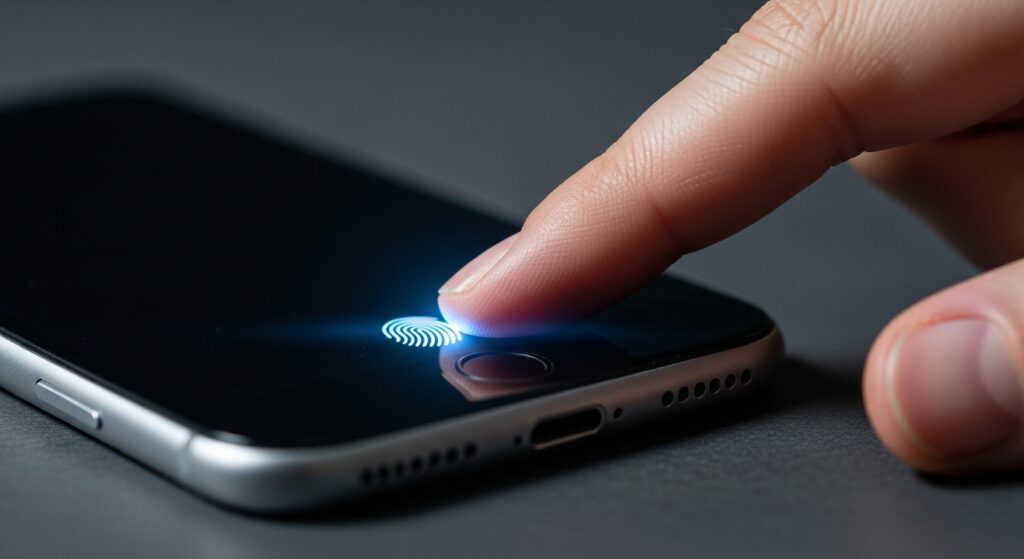
What the user actually sees is a fingerprint or a glance at the camera, and the fingerprint itself never leaves the secure chip inside the device. The server receives only a signature produced by the private key, which has nothing to do with what the biometric data actually look like. Behind that simple gesture is more than thirty years of mature cryptography, finally caught by consumer-grade hardware. Apple, Google and Microsoft now support passkeys natively, and major services including Amazon, PayPal, GitHub and Revolut have rolled them out. The FIDO Alliance reports that more than one billion people worldwide have activated at least one passkey, with consumer awareness running at roughly three quarters. In April 2026 the UK’s National Cyber Security Centre formally advised consumers to make passkeys their first choice for logging in, dropping its long-standing recommendation of plain passwords.

This is not another tech-industry feature push. It is a shift in the underlying engineering model. The reason the safest password is no password at all is not that passwords have ceased to matter, but that the shared-secret premise on which they rest is itself the source of the vulnerability. Keeping the secret behind the fingerprint on your own device, where it never has to travel, is what finally makes the model work.


The Safest Password Is No Password At All Read More »

Do You Really Need to Shower Every Day? The Science, History and Culture Behind Bathing Habits

Do You Really Need to Shower Every Day? The Science, History and Culture Behind Bathing Habits

For most people in Hong Kong, showering every day is simply a given. The city’s summers are brutally hot and humid, and a short walk outside is enough to leave you drenched in sweat. The idea of skipping a daily shower feels, to many Hongkongers, almost unthinkable. Yet those who have moved to the United Kingdom often notice something surprising: British colleagues, neighbours, and friends do not necessarily shower every day, and they see nothing unusual about it. Is this a cultural blind spot, or is there a rational case to be made?

The answer turns out to be more nuanced than instinct might suggest.

Climate is the most obvious factor. Hong Kong summers regularly exceed 30 degrees Celsius, with relative humidity frequently above 80 percent. The body sweats continuously, and when that sweat interacts with bacteria on the skin, body odour follows almost inevitably. Under those conditions, a daily shower is not merely a habit — it is a practical response to the environment. Britain is a different story. Average summer temperatures across much of England sit between 17 and 20 degrees Celsius, and the air is considerably drier. The body simply sweats far less, and the physiological argument for daily bathing becomes correspondingly weaker.

History adds another layer to this. For much of European history, bathing was neither easy nor frequent. Clean water required effort to obtain, heating it was expensive, and dedicated bathing facilities were rare outside the wealthiest households. The widespread use of perfume across European courts and aristocratic society was, in part, a response to this reality — a way of managing odour rather than eliminating it. The French court is often cited as an extreme example, with bathing reportedly a monthly affair at best. What looks from a modern perspective like a failure of hygiene was, in context, a rational adaptation to the available infrastructure.

The turning point came with the great epidemic crises of the 19th century. Cholera and typhoid swept through Britain’s rapidly industrialising cities, killing tens of thousands and forcing a reckoning with public sanitation. Victorian reformers drew a direct line between cleanliness and disease prevention, and a wave of public investment followed — in sewers, in water supply, and in public bathhouses. Bathing gradually shifted from a luxury to a civic duty. Crucially, however, the goal of this movement was to prevent infection, not to establish a once-a-day showering norm.

That norm came later, driven largely by commerce. The 20th century expansion of the soap and personal care industry brought with it advertising that firmly linked daily bathing to respectability, modernity, and social acceptance. The message was simple: clean people shower every day. This framing proved especially effective in Asian cities, where rapid urbanisation, hot climates, and consumer culture reinforced one another. In Hong Kong, Japan, and South Korea, daily bathing became deeply embedded not just as a habit but as an expression of personal standards.

Dermatology, however, offers a more complicated picture. The skin is home to a diverse microbiome — communities of bacteria, fungi, and other microorganisms that help maintain the skin’s natural acidity and defend against pathogens. Frequent washing with soap can strip away the skin’s natural oils and disturb this microbial balance, potentially leading to dryness, irritation, and conditions such as eczema. Several dermatologists now suggest that for people living in temperate climates with moderate activity levels, showering every other day — or focusing only on areas that actually need cleaning — is sufficient to maintain good hygiene without compromising skin health.

Whether you need to shower every day is therefore not a moral question but a practical one, shaped by climate, physical activity, skin type, and personal circumstance. Hongkongers shower daily for good reason: the climate demands it. Britons who shower less frequently are not being unhygienic — they are following habits shaped by an entirely different set of environmental conditions. When the two cultures meet, the sense of strangeness runs both ways, and neither side is wrong.

Hygiene standards, in the end, are always a product of the environment that created them.

Do You Really Need to Shower Every Day? The Science, History and Culture Behind Bathing Habits Read More »

Building an App Is No Longer a Coder's Game

Building an App Is No Longer a Coder’s Game

Not long ago, writing software was a discipline with a steep price of entry. You had to memorise syntax, wrestle with pointers and memory management, and stare at a black terminal screen until the machine did what you wanted — or didn’t. The learning curve was punishing enough to deter most people from ever starting. Being a software engineer meant years of training, not an afternoon of curiosity.

That barrier has largely collapsed.

AI coding assistants have fundamentally changed the rules. You no longer need to memorise function names or recite syntax from memory. You do not even need to fully understand every line of code your programme contains. What you need is the ability to describe clearly what you want to build — and the AI will generate the code, identify the bugs, and explain the logic. Tools like Claude Code and GitHub Copilot have made articulating requirements the core skill of software development, displacing the act of writing code itself.

That said, some foundational knowledge still matters. You need to understand basic terminal commands, how computer systems are structured, what data structures are, and the elementary logic behind algorithms. More importantly, you need to learn how to communicate effectively with AI agents — setting out goals precisely, recognising when something has gone wrong, and knowing when to rephrase a question. This is less about programming in the traditional sense and more about thinking clearly and breaking problems down. A secondary school student with genuine curiosity and a well-structured mind can operate comfortably within this framework.

The second enabler is the commoditisation of cloud computing. A decade ago, deploying an application meant buying physical servers, managing power and cooling, and configuring firewalls — hardware costs alone were a significant barrier. Today, AWS, Google Cloud, and Microsoft Azure have turned that entire infrastructure layer into an on-demand rental service. A virtual server can be spun up in minutes, billed by usage, and shut down when no longer needed. Small projects can cost just a few dollars a month, or nothing at all. The cloud has erased the resource gap between the individual developer and the large enterprise. Anyone with an idea can run it on the same class of infrastructure as a multinational corporation.

A third piece of the puzzle is Tailscale. Built on the WireGuard protocol, it creates a secure private network across all your devices — whether you are at the office, at home, in a café, or on a moving train — without complex configuration. In the past, accessing a remote development environment required either a cumbersome VPN setup or exposing everything to the public internet. Tailscale removes that friction almost entirely. Working from anywhere has stopped being a slogan.

This is precisely the setup the author uses: Claude Code as the primary AI coding assistant, AWS for deployment, and Tailscale to stitch the working environments together. The workflow moves seamlessly between office, home, and café without specialised equipment or an IT team. The author’s iPhone weather application, WITAL.AI, was written entirely by AI agents — not a single line of code was typed by hand. Five years ago, this kind of setup would have been the preserve of well-resourced technology companies. Today, one person at a kitchen table can pull it off with ease.

Which makes certain things look rather unnecessary. If parents genuinely believe their children have talent and ideas, the most meaningful thing they can do is step back and let them build. The tools are all there. The barrier is low enough that it barely exists. Commissioning a professional firm to develop something polished, then presenting it under a child’s name, is not a vote of confidence in that child — it is a shortcut that substitutes money for ability. A secondary school student with real passion for technology and a clear idea of what they want to create can take that idea all the way to a working product entirely on their own.

The democratisation of technology is not a new story, but the pace and scale of this particular wave are unprecedented. What the collapse of barriers produces is not merely more developers — it produces an entirely different mode of creation. Concepts are worth more than code. Expression matters more than memorisation. And genuine creativity may be the only thing that remains stubbornly difficult to automate.

Building an App Is No Longer a Coder’s Game Read More »

Not Romance, But Physics: Why Rainbows Are Everywhere in Britain

Not Romance, But Physics: Why Rainbows Are Everywhere in Britain

Visitors to Britain are often struck by how frequently rainbows appear in the sky. Locals barely look up. The difference is not a matter of temperament — it is the entirely predictable result of physics, geography, and climate combining in a remarkably consistent way.

A rainbow forms when sunlight enters spherical raindrops suspended in the air. The light reflects off the inner surface of each droplet and refracts as it enters and exits, with different wavelengths bending at slightly different angles. This separates white light into its spectral colours, projecting them as an arc across the sky. For a rainbow to be visible, the observer must stand with their back to the sun and face the rain. Critically, the sun must sit below roughly 42 degrees above the horizon — any higher, and the rainbow falls below the line of sight.

Britain lies between 50 and 58 degrees north latitude. At this position, the sun remains relatively low in the sky for much of the year, particularly in spring and autumn. This means the geometric conditions for rainbow visibility are met across a longer window of the day than in lower-latitude countries. In the tropics, where the midday sun climbs steeply overhead, rainbows may form but frequently fall beneath the horizon, invisible to anyone standing on the ground.

Geometry alone, however, does not explain the frequency. Britain also needs rain — and it has plenty. The North Atlantic Current keeps the climate mild and moist, while prevailing westerly winds drive a continuous flow of humid air off the ocean. Crucially, British rainfall tends to arrive as showers rather than prolonged downpours. Cloud systems move quickly across the country, meaning that rain often clears within minutes, followed immediately by direct sunlight. It is precisely this rapid alternation of rain and sunshine that creates ideal rainbow conditions. Steady, overcast rain produces no rainbows at all.

Topography adds a further dimension. The uplands of western Britain force Atlantic air masses to rise, generating orographic rainfall along the western coasts and hills. As rain clouds push eastward over the ridgelines and sunlight returns from the west, a rainbow becomes almost inevitable for anyone looking in the right direction. The western coasts of Scotland and Ireland rank among the most rainbow-frequent locations in all of Europe — a consequence of geography, not luck.

The British habit of glancing skyward after a shower is not merely optimism. It is a reasonable inference drawn from experience: when the clouds part and the sun reappears, the conditions for a rainbow are almost always already in place.

Not Romance, But Physics: Why Rainbows Are Everywhere in Britain Read More »

Why Accurate Weather Forecasting Can Be Easy — and Completely Meaningless

When people talk about weather forecasts, the most common question is simple: is it accurate? If the only standard is avoiding missed events, the answer is surprisingly easy. Forecast rain every single day. You will never miss a rainy day. Your hit rate will reach 100%. It looks impressive. It means nothing.

In forecast verification, one of the most basic metrics is POD, the Probability of Detection. It is calculated as the number of correctly forecast events divided by the number of events that actually occurred. Suppose there are 100 rainy days in a year. As long as all 100 are forecast, the POD is 100%. If you predict rain every day, this condition is automatically satisfied. Even someone with no judgment at all can achieve a perfect score on paper.

But the problem appears immediately. On the remaining 265 days, it does not rain. Yet all of them are forecast as rain. These are false alarms. That is where FAR, the False Alarm Ratio, becomes relevant. FAR is calculated as the number of false alarms divided by the total number of forecast events. If rain is forecast every day, then out of 365 forecasts, only 100 are correct and 265 are false alarms. The FAR is about 73%. In other words, more than seven out of ten warnings are unnecessary. Trust quickly erodes under such conditions.

This is why POD alone is meaningless. A forecast can inflate its detection rate through extreme strategies while simultaneously amplifying false alarms. On the other hand, if rain is never forecast, the FAR is zero. Yet every rainy day is missed. The POD falls to zero. That is equally useless. The real challenge lies in finding a reasonable position between these extremes.

Meteorologists often use CSI, the Critical Success Index, to assess hits, false alarms and misses together. CSI is calculated as the number of hits divided by the sum of hits, false alarms and misses. If a forecast is too aggressive or too conservative, CSI will remain low. Only with balanced judgment does the index improve. This metric forces forecasters to take responsibility for overall performance rather than hide behind a single flattering number.

At its core, this is a question of risk management. If the cost of missing an event is extremely high, such as heavy rainfall triggering landslides, a higher false alarm rate may be acceptable. If the cost of false alarms is substantial, such as unnecessary school closures or economic disruption, then false alarms must be tightly controlled. Forecasting is never a simple competition about being right or wrong. It is a trade-off between costs and risks.

What is described above concerns basic categorical forecast verification. Modern weather forecasting increasingly uses probabilistic formats, such as predicting a 30% or 70% chance of rain. Verifying probabilistic forecasts involves deeper concepts such as reliability, resolution and the Brier Score. These are far more complex than POD or CSI. Determining whether a probabilistic forecast is both reliable and capable of distinguishing different outcomes is another layer of evaluation. That discussion will have to wait.

The idea of being 100% accurate is often little more than a definitional trick. Choose a metric that favours your strategy and impressive numbers will follow. Responsible forecasting requires multiple metrics and clear explanations of trade-offs. Numbers do not speak for themselves. People decide which numbers to emphasise.

What applies to weather forecasts applies equally to other forms of prediction. If we chase surface accuracy without confronting costs and uncertainty, any prediction can be made to look perfect. The question is not whether perfection is achievable. The question is whether we are willing to measure meaning honestly.

Why Accurate Weather Forecasting Can Be Easy — and Completely Meaningless Read More »

The Truth About Air Fryers

The name is catchy, but let’s be clear: air fryers do not actually ‘fry’. They do not immerse food in oil; instead, they use high-speed hot air to dry the surface, creating a texture similar to that of fried food.

The principle behind air fryers is not complicated. At the top of the unit is a heating element, in the middle is a fan, and at the bottom is a food basket. When turned on, the heating element reaches temperatures between 160 and 200°C, and the fan blows hot air rapidly towards the food, creating a circulating convection. The strong hot air quickly removes moisture from the surface, drying it out and triggering the Maillard reaction, resulting in a golden and crispy exterior. The so-called ‘frying’ effect is actually achieved through hot air roasting.

Air fryers excel at handling small portions of food that require a crispy texture. Items like fries, chicken wings, fish fillets, and frozen snacks can yield satisfactory results. The key lies in achieving surface crispiness. Due to their compact size, air fryers heat up quickly and do not require the preheating of a large cavity like traditional ovens. They are particularly convenient for small households of one or two people.

However, they are not a panacea. The results for wet batter foods are limited, as the batter may be blown away before it can dry. Overcrowding the food basket can also impede the flow of hot air. For whole chickens or large cuts of meat, smaller models may not be suitable. Essentially, an air fryer functions as a small, powerful oven and should be used with this understanding.

Is it healthier? From a fat perspective, it often is. Traditional frying requires immersing food in oil heated to 170 to 180°C, resulting in higher oil absorption. An air fryer only needs a thin layer of oil, or even none at all, which can reduce fat intake. However, high temperatures still pose risks such as the formation of acrylamide. Whether it is healthy or not depends not on its name, but on the control of temperature and time.

As for energy efficiency, it depends on the comparison. Typical air fryers have a power rating of about 1200 to 2000 watts, while traditional ovens usually range from 2000 to 3000 watts. The power difference is not drastic, but air fryers have a smaller capacity and shorter preheating times. If cooking for one or two people, the overall energy consumption is often lower. However, if large quantities of food need to be cooked at once, requiring batch processing, the total energy consumption may not be advantageous.

There is also a practical consideration. Due to their enclosed and smaller space, air fryers have a lower impact on the overall temperature of the kitchen. Using them in the summer reduces the burden on air conditioning, indirectly saving energy. This is a point often overlooked in everyday use.

The popularity of air fryers is not mysterious. They condense the oven’s size and enhance convection, resulting in speed and efficiency. They do not truly ‘fry’, yet they can simulate the texture of fried food. Understanding this means we need not mythologize them, nor should we dismiss them.

Tools are merely tools. Names can be misleading, but principles are not.

The Truth About Air Fryers Read More »

The Physics Behind Curling’s Unique Dynamics

The Winter Olympics are in full swing, and amidst a host of events defined by speed and explosive power, curling stands out as an anomaly: its pace is slow, movements are restrained, and it appears devoid of dramatic tension. However, after watching a few matches, one realizes that this sport is exceptionally ruthless, as each stone cannot be remedied once thrown, and nearly all outcomes are determined at the moment of release.

To understand why the physics of curling is so crucial, one must first clarify the rules and scoring. Curling matches are calculated in ‘ends’, with each team throwing 8 stones, for a total of 16. After all stones are thrown, only one team can score: the team whose stones are closest to the center of the house scores, and the number of points is equal to the number of that team’s stones that are closer to the center than the opponent’s closest stone. In other words, it is not simply about having more stones in the house; rather, the order of distance determines everything. A stone that is 10 centimeters off can turn a score from 2 points to 0 points.

Thus, curling is never just about ‘pushing the stone’; it is an art of path control. Many people, upon first seeing curling, wonder why the stone, which appears to be sliding straight, curves to one side at the end. The intuitive answer is often ‘because of the spin’, with some even likening it to a bending soccer ball, but this is not entirely accurate. The curvature of the curling stone does not stem from aerodynamics, but rather from subtle asymmetries in the friction with the ice surface.

The bottom of a curling stone is not flat; it features a narrow band that makes contact with the ice, meaning only this edge is in contact with the surface. The ice used in competitions is not as smooth as a mirror; it is sprinkled with countless tiny droplets that form bumps, referred to as ‘pebble’ in the industry. The stone actually slides on top of these minuscule ice particles, rather than across the entire ice surface.

As the stone moves forward with a slight spin, the ice particles it first contacts are compressed and rubbed, causing a slight increase in temperature; the ice it contacts later is no longer in its original state. This difference in contact states creates a slight increase in friction on the side where the stone is spinning. The difference is minimal, almost imperceptible in real time, but accumulates over the course of several seconds or even tens of seconds, ultimately pulling the stone towards the side of the spin, resulting in the unique and predictable curving path of curling.

The role of sweeping is often misunderstood as simply ‘brushing hard to make the stone go further’. In reality, sweeping is more about controlling the outcome rather than merely pursuing distance. Rapid sweeping raises the temperature of the ice surface momentarily, creating a very thin layer of water while smoothing the tips of the pebble, altering the friction distribution between the stone and the ice. The result is not merely faster or slower; it is about how much or how little the stone curves and when it curves. In high-level competitions, sweeping is often employed to pull back a shot that would otherwise score negatively into a scoring position.

Even within the same Winter Olympics, the conditions of the ice can vary slightly from match to match and time to time. Factors such as venue humidity, ice temperature, water distribution, and wear from previous matches can all affect the state of the pebble, thereby altering the friction characteristics. Top teams repeatedly practice their shots before the match, not relying on intuition but recalibrating to the physical conditions of the ice that day.

Even the material of the curling stones is a serious scientific choice. Competition stones are almost exclusively made from a specific type of granite, not out of tradition but because of its dense crystalline structure and extremely low water absorption rate, allowing it to maintain a stable shape under repeated impacts and long-term friction. If the stones absorb water or develop micro-cracks, the behavior of the contact ring will change over time, leading to a collapse in the predictability of the entire sport.

Curling may appear slow, but it merely stretches extremely small physical effects to a scale observable by the human eye. A bit more spin or half a second less of sweeping may only differ in the third decimal place of the friction coefficient, yet it is enough to turn a scoring shot into a non-scoring one. This is not a slow sport; it is one that demands extreme precision. The next time you watch curling at the Olympics, remember that the elegant arc is underpinned by a comprehensive set of physical laws, operating quietly and accurately.

The Physics Behind Curling’s Unique Dynamics Read More »

Will AI Surpass Humans in Twenty Years?

The question of whether artificial intelligence will surpass humans within twenty years has shifted from science fiction to a pressing topic of discussion among researchers, industry leaders, and policymakers. The real divide lies not in whether it will happen, but in the standards for ‘surpassing’ and who is qualified to make that judgment.

One of the most prominent warners is Geoffrey Hinton. As a pioneer of deep learning and former chief researcher at Google, he is not a mere observer but an architect of the neural network revolution. In recent years, Hinton has publicly acknowledged that he underestimated the speed of technological advancement. He previously believed that humanity had a buffer of 30 to 50 years, but now he considers it realistically possible for AI to reach or exceed human levels in most cognitive tasks within the next 10 to 20 years. His timeline is based on an engineering intuition regarding model scale, emergent capabilities, and self-learning potential, rather than abstract philosophy.

In contrast stands Yann LeCun. Also one of the three giants of deep learning and currently the chief AI scientist at Meta, LeCun emphasizes that today’s AI is fundamentally still a high-level statistical tool, lacking a true understanding of the physical world, causal relationships, and common sense. In his view, unless a groundbreaking theoretical breakthrough occurs, the so-called general artificial intelligence remains ‘decades away’ and may not be achievable through existing pathways alone. He does not provide a specific year but offers a clear negation condition.

At the forefront of industry is Sam Altman. As the CEO of OpenAI, his role is not to define intelligence but to drive capabilities into practical applications. Altman avoids claiming a specific year for when AI will ‘surpass humans,’ but he paints a shorter timeline: within the next 5 to 10 years, AI will be capable of causing irreversible impacts on the labor market and institutional structures in fields such as scientific research, programming, medical assistance, and administrative decision-making. This perspective focuses on when the effects will become undeniable.

The most definitive in terms of timeline is futurist Ray Kurzweil. As an inventor who has long studied computational trends and a former engineer at Google, he predicts that around 2045, machine intelligence will fully surpass human intelligence, triggering what is known as the ‘singularity.’ His judgment is based on extrapolations of exponential growth in computing power, cost, and data scale, which supporters view as a calm mathematical inference, while critics argue that social, energy, and political frictions do not exhibit exponential growth.

When these viewpoints are juxtaposed, a clear structure emerges: Hinton points to a mid-term risk window within twenty years, Altman describes institutional impacts already occurring within ten years, Kurzweil provides a long-term endpoint, while LeCun warns that the entire trajectory may overestimate existing technologies.

Thus, the notion of ‘AI surpassing humans within twenty years’ may not represent a singular moment but rather a cumulative series of critical points. By the time society semantically acknowledges ‘surpassing,’ the scales of power, efficiency, and decision-making may have already tipped.

Will AI Surpass Humans in Twenty Years? Read More »

Scroll to Top