Science & Tech

How weather forecasting, atmospheric science, and digital infrastructure shape policy and daily life. Reporting blends WooSee’s own weather work with broader UK-relevant tech analysis.

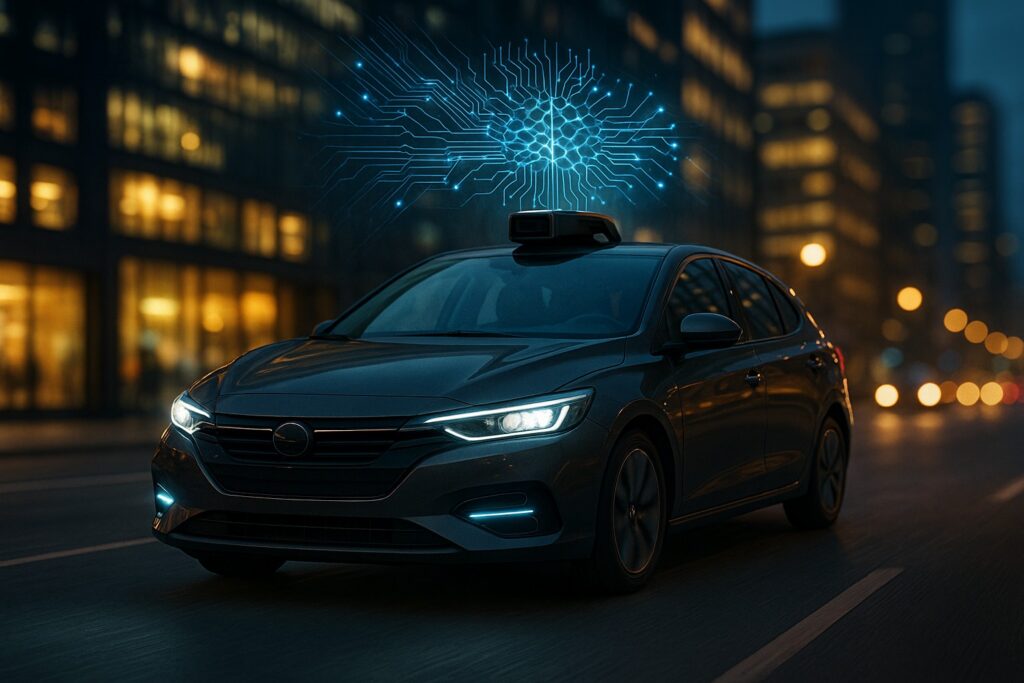
UK’s Wayve Innovates in Autonomous Driving

British technology has often been understated, but the rise of Wayve is compelling the world to reassess the UK’s role in the autonomous driving sector. Founded by Cambridge scholars Alex Kendall and Amar Shah, this company has no car manufacturing facilities or massive production lines, yet it has emerged as a significant new player in the global autonomous driving arena. Its strategy does not rely on hardware accumulation but rather on redefining the entire technological roadmap.

Wayve’s primary competitor is the American firm Waymo, a subsidiary of Google’s parent company Alphabet, which has a solid position and mature technology. For years, Waymo has successfully launched driverless taxis in several American cities, relying on LIDAR, high-definition maps, and multiple perception systems. This approach is cautious but expensive and complex, requiring extensive mapping and hardware deployment for cross-city expansion, resulting in a heavy operational burden.

China has also made rapid advancements in autonomous driving, with companies like RoboTaxi operating without safety drivers in multiple cities, achieving a scale that is rare globally. However, exporting this system abroad presents significant challenges. Autonomous driving involves road imaging and urban information, which many countries view as national security risks. Coupled with geopolitical pressures and highly localized maps and infrastructure, the Chinese model faces considerable hurdles in going global. Speed does not equate to international viability.

Wayve’s success lies in its ability to circumvent these bottlenecks. It employs end-to-end AI, deriving decisions directly from images without relying on high-definition maps or requiring extensive urban transformations. If the model can learn to drive in complex streets like those in London, it can be adapted to other cities. This is a genuinely internationalizable technology, and the UK possesses a sufficiently diverse road environment, making it an ideal training ground for AI.

Crucially, Wayve’s business model is not about building vehicles in isolation; rather, it licenses its autonomous driving technology to global car manufacturers. It provides the brain, not the chassis; it aims to establish an ecosystem rather than a factory. This model does not involve heavy assets, production pressure, or the need to replace traditional car manufacturers, but instead collaborates with all manufacturers to integrate AI models into any wheeled machinery.

The UK also offers an ideal policy environment. The enacted Automated Driving Act provides a comprehensive legal framework for driverless vehicles, positioning the UK as one of the first countries ready to embrace autonomous driving on the roads. Technology requires clear regulations, and Wayve has developed under this system, evolving from a research lab into an AI enterprise that attracts global investors.

While the race is on globally, the methods differ. Waymo relies on stability, RoboTaxi on speed, and Wayve on innovation. It tackles the most complex scenarios with the lightest hardware and the most versatile models. If millions of vehicles are ultimately to be driven by AI, the ability to license technology safely and cost-effectively to global manufacturers will be the decisive factor, and Wayve is precisely targeting this.

In this technological race, the UK has emerged as a key player. Wayve’s technology and model enable the UK to become an indispensable partner for global manufacturers without the need to produce cars. This is not just a technological victory for the UK; it represents a rewriting of industrial strategy.

UK’s Wayve Innovates in Autonomous Driving Read More »

Humanoid Robots Will Rise, But Not Necessarily as Humans

The world is entering an era of shrinking labor forces, with many countries grappling with declining birth rates and an aging population. Labor is becoming increasingly expensive and harder to source, while a new technology is quietly filling the gap: humanoid robots are beginning to demonstrate genuine capabilities for performing tasks.

The accuracy and dexterity of the latest prototypes have far surpassed the clumsy robotic arms of earlier years. They can now reliably fold clothes, sort items, and pick up small objects—tasks that require hand-eye coordination. Many Hongkongers who have moved to Europe and America find it most challenging to adjust to the absence of domestic helpers; however, in the near future, a robot capable of navigating between the kitchen and living room may fill this void.

In fact, our homes have long been filled with ‘specialized’ machines: washing machines wash, dryers dry, vacuum cleaners clean floors, and dishwashers handle dishes. Each performs its designated function but lacks cooperation and oversight. The truly troublesome steps—such as retrieving clothes from the laundry basket, sorting, folding, and putting them away—remain the responsibility of humans. Thus, what the market has been lacking is not stronger motors, but a versatile robot capable of handling multiple tasks.

The deployment of such machines will inevitably begin in controlled environments. Restaurants, department stores, and hospital corridors, where processes are repetitive and on a large scale, are ideal for testing and training. Tasks like wiping tables, organizing trays, and clearing debris do not require high intelligence, only reliability and stability. Once businesses recognize the potential for labor savings and cost reductions, widespread adoption will accelerate, ultimately bringing these robots into ordinary households.

However, future ‘humanoid’ robots may not necessarily resemble humans. The human form is a result of evolutionary processes and biological compromises. Humanoid robots need not be bound by the same constraints; they could take on forms such as three-headed, six-armed beings or octopuses on wheels. The desire for an extra hand, retractable arms, or even built-in wheels would not violate natural laws. This freedom of form could, in fact, reduce human anxiety, as they would not evoke the same discomfort associated with ‘human-like’ appearances.

The decline in population is a long-term global trend, particularly pronounced in labor-short and high-cost countries like the UK and EU nations. As labor shortages become a structural issue, robots that can replace repetitive tasks and support high-cost industries will naturally move into the mainstream. Ultimately, they may integrate into daily life like washing machines and vacuum cleaners, doing so quietly and without fanfare, simply accomplishing the tasks we prefer to avoid.

Humanoid Robots Will Rise, But Not Necessarily as Humans Read More »

The Necessity of Flu Vaccines This Winter

This winter, the flu is proving to be particularly aggressive, with both the UK and Hong Kong facing urgent situations. The virus has mutated, significantly increasing its transmissibility, and the peak has arrived earlier than in previous years, pushing hospitals to the brink of capacity. This is not mere alarmism; it is a reality. In the face of such a winter, vaccination is no longer an option but a necessary line of defense.

The situation in the UK is especially pronounced. Recent NHS data indicates a substantial rise in flu-related hospital admissions compared to the same period last year, with emergency rooms in several areas nearing saturation. This year’s virus is spreading particularly rapidly among children and adolescents; once a cluster appears in schools, cases multiply swiftly. The NHS is providing free vaccines to individuals aged 65 and over, those aged 18 to 64 with chronic illnesses, pregnant women, care home residents, primary caregivers, and those living with immunocompromised individuals. Others can receive the vaccine at their own expense, ranging from £12 to £25, but the availability of low-cost vaccines at pharmacies has already been exhausted, with some needing to wait until late January for appointments.

Hong Kong is experiencing similar pressures. Shortly after the vaccination program launched in September, the flu peak arrived unexpectedly early. The densely populated city, combined with high-contact environments in schools and public transport, has allowed the virus to spread almost unchecked. The government is offering free or subsidized vaccines to individuals aged 50 and over, children, pregnant women, chronic illness patients, elderly care home residents, and healthcare workers. Doctors have noted that many cases this year are deteriorating particularly quickly; waiting until those around them fall ill to get vaccinated may make it too late to avert a crisis.

The most concerning groups are those who have planned travel and students preparing for public examinations. A severe cold can lead to trip cancellations, flight rescheduling, and wasted hotel bookings; for students, falling ill at a critical moment could alter their future. These losses far exceed the cost of a single vaccine.

Vaccines will not render you invulnerable, but they significantly reduce the risk of severe illness and hospitalization, as well as protect your travel plans, work, and daily routine. This year’s flu is more severe than last year’s, and the healthcare system has sounded the alarm. Getting vaccinated as soon as possible is the most rational and straightforward choice.

Please share this message with family and friends, especially those who are elderly, frail, or preparing for exams. A simple reminder from you could save someone from a major inconvenience.

The Necessity of Flu Vaccines This Winter Read More »

Why Electric Vehicle Drivers Can’t Go Back

Many who have driven electric vehicles share a common experience: when the light turns green, the car accelerates silently, as if pulled by an invisible force, while nearby petrol vehicles only just start moving, quickly falling behind. There is no need for deliberate acceleration; the technology itself is so direct. After that initial push, many understand what it means to be unable to go back.

The smoothness of electric vehicles is immediately perceptible without the need for adjustment. There is no engine roar, no gear shifting, and no delay; speed builds up linearly, making short urban trips remarkably effortless. When the noise subsides, the changes in speed become even more pronounced. Returning to a petrol vehicle, the harsh engine sound feels jarring, as if time has rolled back to the last century.

Handling is no longer the same. With the battery positioned on the chassis, the center of gravity is significantly lower, allowing the vehicle to hug the road in corners. Even a family SUV outperforms its petrol counterparts in stability and agility. The feedback from the steering wheel is simple and direct, making its structural advantages apparent even to those without engineering knowledge.

The cost difference is equally stark. In the UK, petrol prices are high, with many family cars costing around sixty pounds to fill up, while in Hong Kong, it can easily exceed a thousand Hong Kong dollars. Electric vehicles can be charged at home, and in the UK, electricity can be as low as 7 pence per kilowatt-hour, with a full battery costing only about five pounds; while Hong Kong may not have such low rates, the everyday costs of using an electric vehicle are still far lower than those of petrol cars. Although the cost of long-distance fast charging is comparable to refueling, for most owners, 90% of their charging occurs at home, resulting in average costs that are significantly lower than those of petrol vehicles. Over time, the reluctance to return to queuing at petrol stations becomes evident.

Convenience fundamentally changes the way we use cars. Simply plugging in the vehicle at home takes ten seconds, and by the next day, it is fully charged, eliminating the need to plan trips to the petrol station. Heating and air conditioning can be used at any time without the need for the engine to idle, alleviating concerns about parking without turning off the ignition and avoiding fines. In summer, running the air conditioning while waiting in Hong Kong no longer feels guilty, and in winter, waiting for children to finish school in the UK is no longer a shivering ordeal.

The environmental burden is a clear dividing line. Electric vehicles produce zero emissions while driving, avoiding the release of exhaust fumes towards pedestrians, thus reducing both air pollution and climate change. After driving an electric vehicle for a while, returning to a petrol car and seeing the exhaust pipe emit white or black smoke feels unnatural.

Many drivers, when renting cars abroad, become acutely aware of the differences. Getting into a petrol vehicle means suddenly having to listen to the engine noise, wait for gear changes, and search for petrol stations; the entire rhythm feels like a return to an earlier generation of technology. This sense of ‘regression’ is not an exaggeration but rather a contrast recorded by the human experience.

Concerns about electric vehicles from the public are largely psychological barriers. With a range generally exceeding 250 miles and fast charging networks expanding yearly, the real obstacle is not technology but the imagination before personal experience. Once crossed, the reasons to look back diminish.

Electric vehicles are not a panacea; sometimes public transport may be a better choice. However, there is no doubt that electric vehicles are quieter, smoother, cheaper, and cleaner than petrol cars. As driving becomes easier, costs become manageable, and the burden on air and climate is alleviated, the combination of noise, emissions, and fuel costs associated with petrol vehicles will naturally be relegated to history. The tide of technology moves forward; once you have experienced it, looking back becomes difficult.

Why Electric Vehicle Drivers Can’t Go Back Read More »

Carbon Capture and Power Generation: The Final Piece to Net Zero

As wind, solar, and nuclear power push the electricity grid to 95% decarbonisation, humanity discovers that the final 5% is the hardest to cross. Achieving a completely zero-carbon electricity system requires the construction of vast energy storage and transmission networks, which come at an astonishing cost. At this juncture, carbon capture and storage (CCS) emerges as a more pragmatic option: rather than pursuing absolute zero emissions, it aims to capture residual carbon emissions and offset them through engineering means.

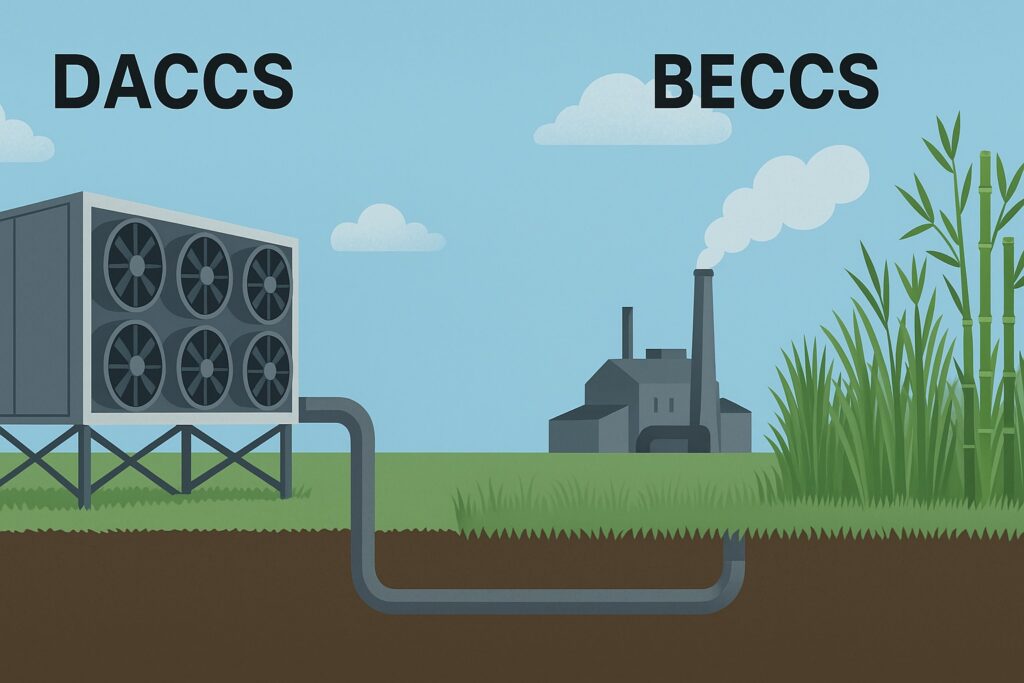
Direct Air Carbon Capture and Storage (DACCS) represents the purest technological concept. It uses chemical adsorbents to extract carbon dioxide directly from the air, theoretically deployable anywhere without reliance on energy sources. However, the concentration of CO₂ in the atmosphere is only 0.04%, making it exceedingly thin. To capture one ton of carbon, thousands of tons of air must be processed, consuming vast amounts of energy. Currently, DACCS at the experimental scale costs between $400 and $1,000 per ton, and even if it were to drop to $200 in the future, it would still be an expensive technology. Its advantages lie in flexibility and decentralisation; however, its efficiency and cost are far from ideal.

Bioenergy with carbon capture and storage (BECCS) operates on a more natural principle. It utilises plants that absorb carbon dioxide during their growth, then burns this biomass for power generation while capturing carbon emissions from the flue gases. Since the concentration of CO₂ in combustion gases can reach 10% to 15%, hundreds of times higher than in the air, carbon capture efficiency significantly improves, with costs around $100 to $200 per ton. More importantly, it can simultaneously generate electricity. Fast-growing plants such as bamboo, elephant grass, and reeds absorb carbon rapidly during their growth phase; once harvested, burned, and captured, the land can be replanted, creating a continuous ‘negative emissions cycle’. Such power plants can operate during periods without wind or sunlight, maintaining grid stability, and represent truly ‘dispatchable’ green energy.

In comparison, DACCS is flexible but expensive, while BECCS is efficient but requires land. DACCS is suitable as a decentralised compensation method, whereas BECCS can become part of the grid, producing energy while reducing carbon. In the medium to short term, the latter is more realistically feasible. To achieve the final 5% of net zero, rather than investing astronomical sums in building super grids, it may be more prudent to allow BECCS to engineer a solution to bridge the gap.

As for energy storage, short-term power can be managed by technologies such as lithium batteries, thermal bricks, gravity storage, and flywheels; however, to address seasonal long-term fluctuations, green hydrogen and BECCS are more effective partners. Hydrogen can be stored long-term and activated quickly, while BECCS provides both power supply and carbon capture functions. Together, they form the infrastructure for ‘deep decarbonisation’.

Of course, the scientific community has yet to reach a consensus. Some experts believe that CCS is the key piece of the net-zero puzzle, but it is not yet time for large-scale promotion; others argue that as long as energy storage technology is robust enough, CCS is entirely unnecessary. However, in high-energy-consuming industries such as steel, cement, chemicals, and aviation, carbon emissions are nearly impossible to eliminate. To truly bring the planet to zero, carbon capture may be the only fallback and the last hope.

Carbon Capture and Power Generation: The Final Piece to Net Zero Read More »

The End of Hydrogen Cars

Hydrogen cars are dead. Not in the future, but right now.

For over a decade, they have been marketed as the symbol of ‘ultimate zero emissions’, yet the reality is harsh: the technology is inefficient, costs are exorbitant, and infrastructure is lacking, leading even supporters to quietly withdraw. Hydrogen stations across Europe are closing one after another, and car manufacturers are retreating in turn. This is no coincidence; it is the inevitable outcome of scientific and economic principles.

Hydrogen atoms are too small to manage. They can penetrate metals and escape through seams. To store hydrogen safely, it must be kept at seven hundred bar of high pressure or at minus one hundred ninety degrees Celsius. Each step consumes energy and incurs costs. From electrolysis to produce hydrogen, to compression, transportation, and then converting it back to electricity in fuel cells, the efficiency often falls below forty percent. Under the same energy input, battery electric vehicles can travel two to three times the distance. Hydrogen cars are on a long, irreversible path of energy loss.

Infrastructure is their Achilles’ heel. Without hydrogen stations, people won’t buy the cars; without buyers, stations won’t be built, creating an inescapable vicious cycle. Electric vehicles, however, are different. They can be charged at home using a standard outlet, and even slow ‘three-prong charging’ is sufficient for daily commutes. Communities, parking lots, and supermarkets are installing charging points, and the power grid has become a natural support. This is why electric vehicles have avoided the ‘chicken and egg’ dilemma faced by hydrogen cars, allowing users and infrastructure to grow in tandem.

Some still argue that hydrogen energy is not without prospects, merely waiting for the right time. This statement is half right and half wrong. The stage for hydrogen energy is not on the roads, but in industry. Steelmaking, chemicals, and fertilizers require high temperatures and reducing environments that batteries cannot replace; hydrogen remains indispensable. It can also serve as long-term energy storage, support the power grid, and back up shipping and rail. However, these applications are far from public view and cannot sustain the myth of a ‘hydrogen car revolution’.

The reality of the automotive industry is stark. As Toyota, Hyundai, and Stellantis successively scale back or terminate their hydrogen car programs, the market has rendered its final verdict. Physics will not yield, and economics is unforgiving. Hydrogen cars have died due to lofty ideals, low efficiency, and a harsh reality. This is no one’s fault, but rather the order of natural laws.

The problem lies in the fact that policy often lags behind science. If governments, legislators, and civil servants lack a basic understanding of technology or only heed lobbying and rumors, erroneous industrial strategies will proliferate. Public funds are wasted, resources misallocated, and society as a whole pays the blind price. To have effective industrial policy, leaders must understand science or at least be willing to listen to experts. Otherwise, the next tragedy of hydrogen cars will likely repeat itself.

The End of Hydrogen Cars Read More »

Scroll to Top