Science & Tech

How weather forecasting, atmospheric science, and digital infrastructure shape policy and daily life. Reporting blends WooSee’s own weather work with broader UK-relevant tech analysis.

Rust and Sand: Solutions for Energy Stability

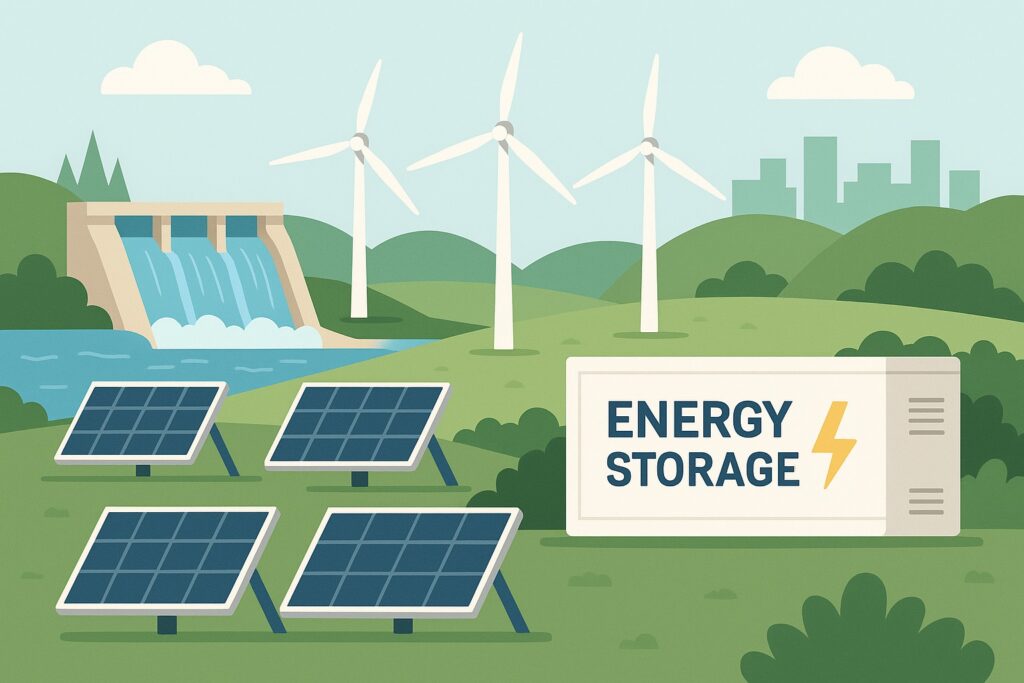
In high-latitude countries such as Canada, the Nordic nations, and the United Kingdom, winter days are often characterized by sparse sunlight, with overcast skies leading to prolonged periods without sunshine. During these times, wind and solar energy can experience significant shortfalls, creating what can be described as an “energy drought”. Such conditions may persist for one or two weeks, rapidly amplifying the gap in renewable energy supply. To transition towards a truly stable green energy society, addressing this darkest and most challenging period is paramount.

While lithium batteries are mature technology, they can only manage short-term fluctuations, typically sustaining energy for just a few hours. To extend this duration to several days, costs escalate linearly, making them unsuitable for supporting prolonged energy lulls. Other alternatives also come with limitations: pumped hydro storage depends on geographical features, liquid air and compressed air storage have relatively low efficiency, green hydrogen suffers from significant conversion losses, and high-temperature thermal storage requires additional equipment. No single technology can independently support the entirety of a low-energy valley; only through a combination of various solutions can we uphold the future power system.

Iron-air batteries deserve attention for their potential to fill this energy gap using a remarkably simple method. During discharge, iron oxidizes, and during charging, rust is reduced, creating a cyclical energy storage process. The materials are inexpensive, safe, and readily available, allowing for continuous energy release over several days. While they do not match the speed of lithium batteries, their endurance can effectively compensate for the weakest segments of renewable energy supply, with American power companies already deploying demonstrations.

The sand battery, promoted in Finland in recent years, is equally significant. This sand consists of specially graded silica that can be heated to several hundred degrees and retain heat for extended periods, providing regional heating and alleviating the winter load on the power grid at a low cost. While it stores heat rather than electricity, it plays a crucial role during the long winter months.

However, even with a plethora of energy storage solutions, the power grid requires additional pillars to stabilize its foundation. Cross-border grid interconnections can introduce wind and solar energy from other regions during local shortages; the “over-building” of renewable energy ensures smooth transitions during minor daily dips while injecting substantial amounts of inexpensive electricity into storage during favorable weather. Nuclear power provides year-round stability, while green hydrogen supports long seasonal gaps. Additionally, BECCS (bioenergy with carbon capture and storage) and gas with carbon capture and storage (CCS) can offer dispatchable, balanced low-carbon backup power when necessary, ensuring grid stability even in the worst weather conditions.

When the direction is clear, even rust and sand can become forces for saving the planet.

Rust and Sand: Solutions for Energy Stability Read More »

Humanity’s Return to the Moon: The Significance of Artemis II

The last time humanity ventured beyond low Earth orbit was during the Apollo era in 1972. Over half a century later, NASA is set to return to deep space with Artemis II, executing its first crewed lunar flyby mission, scheduled to launch no earlier than February 8. At first glance, this is not a moon landing; in reality, this step is more crucial, as it determines whether humanity retains the capability to safely and controllably leave Earth and enter deep space.

The mission objectives of Artemis II are clear: to comprehensively validate crewed deep space systems without the pressure of a landing. Astronauts will travel aboard the Orion spacecraft, flying over the far side of the Moon before returning to Earth at high speed. Life support, communication delays, radiation exposure, and thermal protection will all be tested with human participants. This is not a symbolic flyby; it is a preparation for future moon landings.

The importance of this step lies in the fact that a crewed lunar flyby itself represents a significant technical threshold: the entire system must operate independently over hundreds of thousands of kilometers for an extended period. If problems arise, there is almost no room for immediate remediation. The ability to complete the round trip reliably will directly determine whether a moon landing is merely a high-risk attempt or can be institutionalized and replicated as an engineering capability.

Meanwhile, China remains committed to achieving a crewed moon landing around 2030, with a new generation of crewed spacecraft and heavy rockets being developed in tandem. However, the critical crewed lunar flyby test has yet to materialize, and the practical operation of deep space life support, prolonged radiation exposure, and the overall crewed system in a deep space environment remains largely theoretical and grounded in ground verification. Whether this can reliably translate into flight capability awaits the first crewed deep space mission to provide evidence.

It is noteworthy that while Artemis II is led by the United States, it is not solely a national endeavor. Europe plays a significant role in the mission, providing the Orion spacecraft with a critical service module responsible for propulsion, power supply, and some life support functions. This indicates that Europe is not attempting to establish an independent lunar system but is instead choosing to deeply integrate into the U.S. crewed deep space architecture, exchanging technical participation for a long-term seat at the table, reflecting its limitations in strategic autonomy.

International cooperation extends beyond space agencies and permeates the supply chain. The British engineering firm John Crane is supplying 32 precision filters for Artemis II, designed to eliminate fuel bubbles and prevent cavitation in the propulsion system. These filters, made from titanium and precision steel mesh, are among the key components for the proper functioning of the Orion service module’s propulsion system. The company has been involved in manufacturing the same hardware since the Artemis I mission and will now support the crewed mission.

On a broader scale, the Moon is no longer merely a scientific symbol; it involves deep space communication nodes, energy utilization, resource positioning, and the establishment of future space governance. Those who can reliably travel to and from the Moon will have greater capacity to lead collaborative frameworks and set technical standards. Although Artemis II appears understated, it actually marks a clear starting line for a new round of space competition.

Humanity’s return to the Moon is no longer a question of who plants a flag first, but rather who can transform high risks into repeatable operational capabilities. This competition is not about declarations and slogans; it is about systematically reducing uncertainty through engineering prowess.

Humanity’s Return to the Moon: The Significance of Artemis II Read More »

The Rapid Rise of Electric Trucks

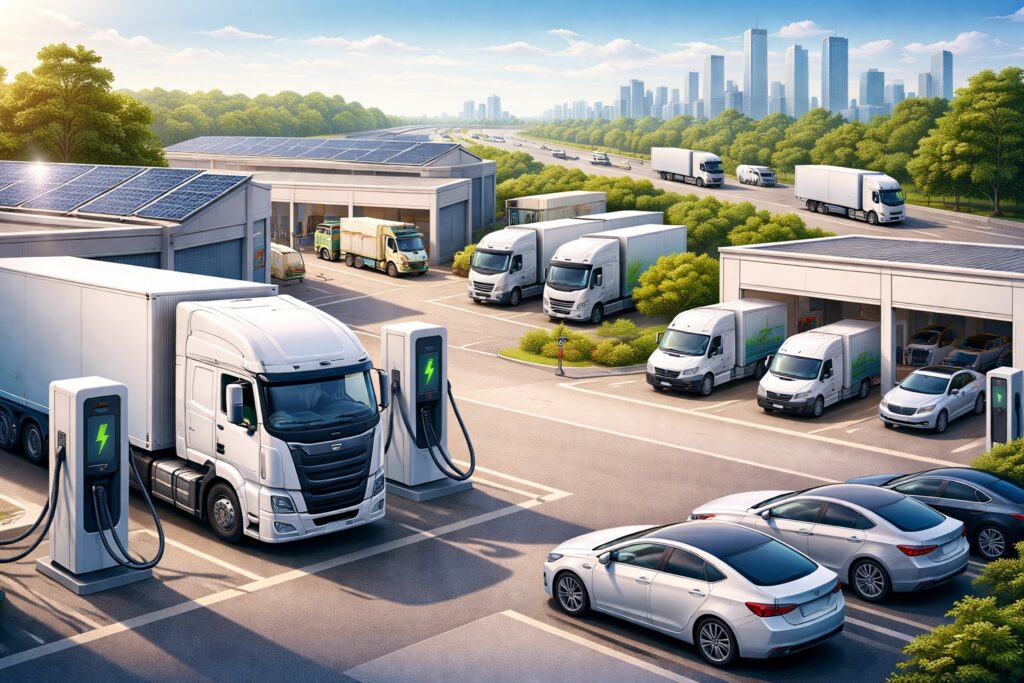
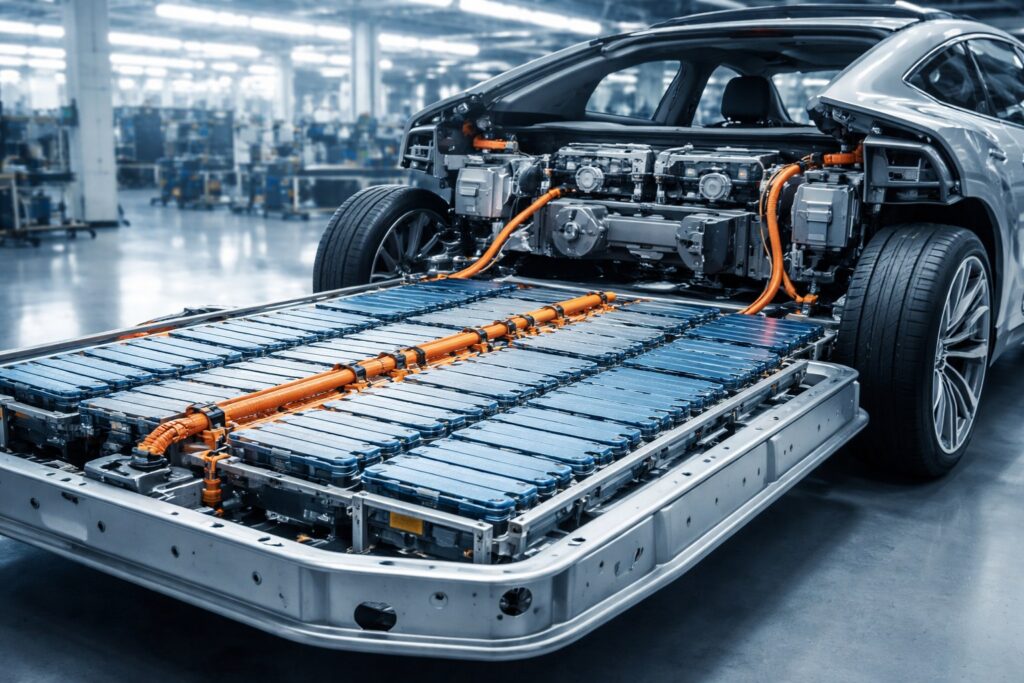
When discussing the electrification of transportation, many instinctively assume that private cars will lead the way. However, if we set aside emotions and focus solely on the numbers, the reality is quite the opposite: it is trucks that will complete the transition first, and they will do so more swiftly and decisively.

The purchase of private cars is often intertwined with emotions and identity. Factors such as appearance, brand, and engine sound frequently overshadow rational calculations. A car that travels 20,000 kilometers a year may incur significant fuel costs, yet many individuals still find this “acceptable.” Even if electric vehicles appear to be more economical on paper, this may not create sufficient pressure to compel a switch.

In stark contrast, trucks are not consumer goods; they are production tools. The sole purpose of a truck is to deliver goods on time and at the lowest possible cost. The annual mileage of a truck often exceeds that of a private car by several times, meaning that fuel and maintenance costs constitute a much larger portion of the total expenses compared to the purchase price.

For a truck that travels 80,000 kilometers a year, the difference in cost between diesel and electricity can accumulate to around HKD 100,000 annually. Over five years, the savings in fuel and maintenance can offset the higher purchase price of an electric truck, often leaving a surplus. This is not merely an environmental bonus; it fundamentally alters the payback period and cash flow in hard numbers. CFOs are not swayed by engine sounds; they focus solely on the accounts.

Moreover, trucks have shorter replacement cycles. Many commercial trucks approach their economic lifespan after about five years. Each vehicle replacement presents an opportunity to recalculate costs. As long as new technology offers advantages in total costs over five years, entire fleets will swiftly transition without needing to wait for societal consensus.

The usage patterns of trucks also make them more suitable for electrification. Fixed routes, designated warehouses, and set return times mean that charging can be concentrated. For companies, building their own charging facilities is not a burden but a calculable infrastructure investment. In contrast, the highly dispersed nature of private cars, which rely on public charging, slows down the pace of transition.

Different types of trucks will transition at varying speeds. Urban delivery vehicles, garbage trucks, and construction vehicles have low range requirements but place a high premium on cost and durability. The maturation of sodium-ion batteries perfectly addresses these needs. Once battery costs are further reduced, the transition for such trucks will accelerate even more.

The real challenge lies with long-haul heavy trucks. These vehicles travel hundreds of kilometers daily and are extremely sensitive to weight, range, and refueling time. While existing lithium battery technology is not unusable, it is barely adequate: larger batteries reduce cargo capacity, and faster charging adversely affects battery life. However, as solid-state batteries gradually enter the market, their potential for high energy density, rapid charging capabilities, and safety margins directly address the pain points of long-haul trucks, providing genuinely viable technological conditions for comprehensive electrification.

The electrification of transportation has never been a moral crusade; it is fundamentally an arithmetic problem. The transition of private cars depends on public sentiment, while the transition of trucks relies solely on the numbers. When high mileage meets low operational costs, combined with rapidly evolving battery technology, the outcome is not merely a gradual shift in private cars but potentially a vigorous revolution in electric trucks.

The Rapid Rise of Electric Trucks Read More »

The Logic Behind Saudi Arabia’s Solar Energy Development

Saudi Arabia is the world’s largest oil exporter and the second-largest crude oil producer. Its core advantage lies not only in the abundance of oil but also in its low extraction costs. Industry estimates suggest that the production cost of Saudi crude oil is around $8 to $10 per barrel; in contrast, the cost of U.S. shale oil can reach $40 to $60 per barrel. Globally, Saudi oil is among the cheapest to produce.

Thus, when Saudi Arabia announced plans to add approximately 40 GW of solar power capacity over the next decade, many were taken aback: why, with the world’s cheapest oil, would it not simply burn oil for electricity but instead shift rapidly to solar energy?

The answer lies in economics. What does 40 GW represent? Currently, the total solar power capacity of the United Kingdom is about 15 GW. In other words, Saudi Arabia’s single-country expansion plan is nearly two and a half times the total existing solar capacity of the UK. This is not a symbolic investment but a significant commitment to reshaping its energy structure.

The crux of the matter is that ‘low extraction costs’ do not equate to ‘low usage costs.’ Oil is an international commodity, and its price is determined by global markets, irrespective of how cheaply it can be extracted. Even if Saudi oil can be extracted for $10 per barrel, burning it for electricity means forgoing the opportunity cost of exporting that barrel for revenue on the international market. This is not about saving money; it is about earning less.

Solar energy, on the other hand, is fundamentally different. Once a solar power station is built, the marginal cost of electricity generation approaches zero, consuming no exportable resources and remaining unaffected by fluctuations in oil prices. For Saudi Arabia, using solar power effectively liberates its most valuable oil from the lowest return applications.

Additionally, there is a practical factor: peak electricity demand in Saudi Arabia coincides with daytime and the scorching summer months, primarily driven by air conditioning needs, resulting in a generation curve that aligns closely with solar energy production. Under these conditions, large-scale solar power requires little reliance on expensive long-duration storage, further reducing system costs. The outcome is that in a desert nation, solar energy is not only environmentally friendly but also the most cost-effective investment.

This encapsulates the fundamental logic of the situation. Saudi Arabia is not abandoning oil; rather, it is reallocating its use. Oil is best suited for export; electricity should be produced locally at the lowest cost. When the world’s lowest-cost oil producer makes such a choice, those still skeptical about energy transition are left with the challenge of understanding this economic calculus.

The Logic Behind Saudi Arabia’s Solar Energy Development Read More »

The Real Impact of Electric Vehicles on Oil Demand

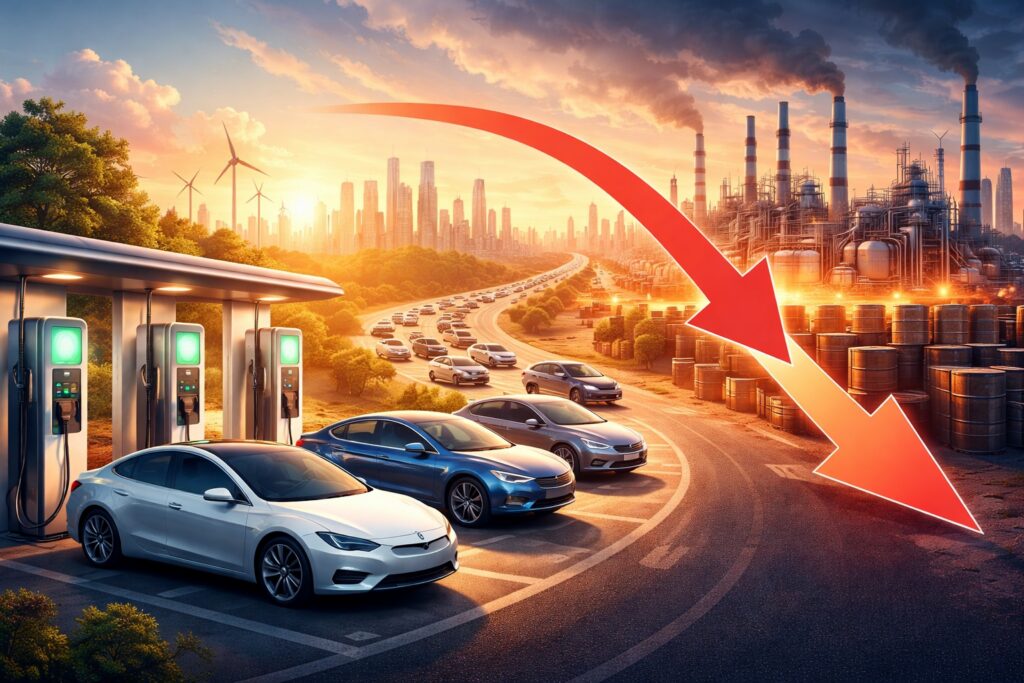
Many still regard electric vehicles as a “future technology,” believing that their impact on the oil market is still a distant concern. However, reality has already outpaced these predictions. By 2025, the newly added electric vehicles alone will be sufficient to cause a global decline in oil demand by approximately 0.5% annually, translating to a reduction of nearly 200 million barrels of oil each year. In a world that consumes about 38 billion barrels of oil annually, this is not a marginal change but a clear signal that demand structures are beginning to shift.

More importantly, this impact will not dissipate; it will accumulate. Electric vehicles are not a one-off policy stimulus but durable goods. A typical gasoline vehicle consumes about 10 barrels of oil each year; when it is replaced by an electric vehicle, this demand will continue to disappear over the next decade or more. The approximately 20 million electric vehicles sold globally in 2025 will not merely reduce oil consumption for that year but will lock in a trajectory of declining demand for many years to come.

This transition is crucially linked to the structure of oil usage. Land transportation currently consumes about half of the world’s oil, with private cars and light commercial vehicles accounting for the largest share and being the most easily electrified segment. Electric vehicles are not infiltrating the oil market from the periphery but are directly targeting its core, most stable sources of demand. When this half of the demand begins to loosen, the long-term balance of the entire market will be rewritten.

Official scenario analyses also corroborate this direction. The International Energy Agency’s assessments indicate that under the continuation of existing policies, the global electric vehicle fleet could avoid the consumption of approximately 1.8 billion barrels of oil annually by 2030; by 2035, this figure will rise to about 3.6 billion barrels. If the emission reduction commitments announced by various countries are fully realized, the annual reduction by 2035 could even reach over 4 billion barrels.

Putting these numbers back into the overall context makes their significance clear. Based on the global oil demand of approximately 38 billion barrels annually, road electrification alone could reduce annual demand by nearly 10% by 2035. This is no longer a fluctuation in a specific year or region but a fundamental challenge to the long-term prospects of the oil industry. The real acceleration is likely to occur after 2035, when multiple major economies have closed the policy gates. The European Union and the United Kingdom have already set timelines to ban the sale of most new gasoline and diesel cars, and the oil demand suppressed by the proliferation of electric vehicles will only further accelerate the decline.

Some may point out that aviation, shipping, and petrochemicals still heavily rely on oil, and electric vehicles cannot “eliminate” oil. While this statement is not incorrect, it overlooks a more pressing issue: the oil market does not need to be eradicated; losing its growth engine is sufficient to change everything. When the largest, most stable, and most predictable sources of demand begin to contract year by year, expectations for oil prices, investment returns, and capacity planning will inevitably need to be recalibrated.

Therefore, the real question worth asking today is no longer whether “electric vehicles will affect oil demand in the future,” but rather: when electric vehicles are already suppressing demand by hundreds of millions of barrels annually and will accelerate further after 2035, why do some still choose to pretend that none of this has happened?

The Real Impact of Electric Vehicles on Oil Demand Read More »

Nuclear Fusion Cannot Save the Earth

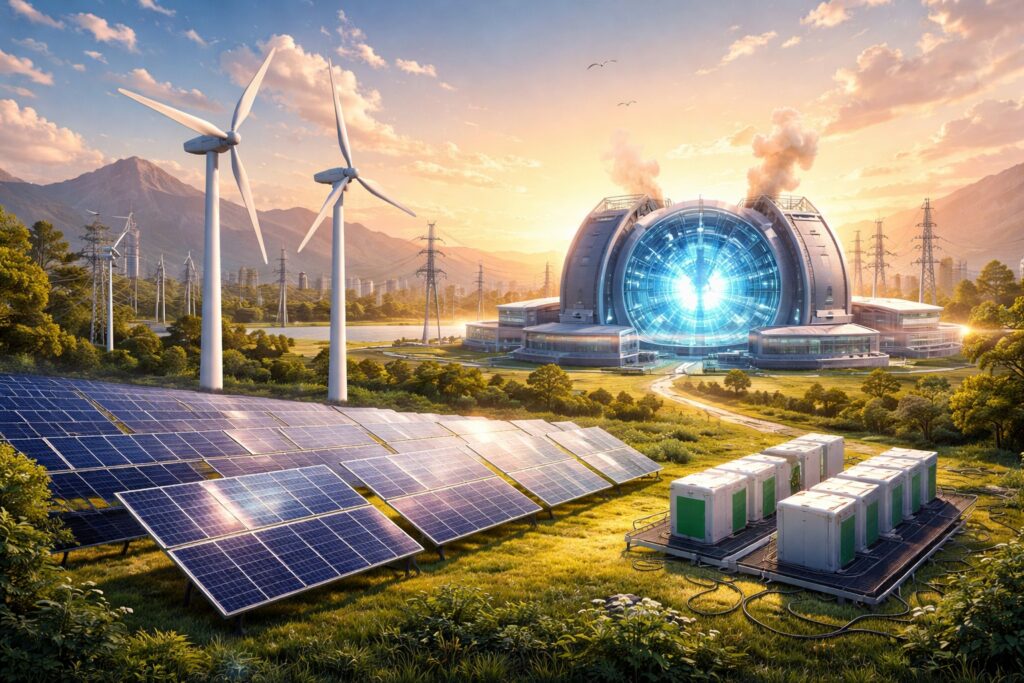
In recent discussions about energy transition, nuclear fusion is often heralded as the ultimate solution. The narrative is largely the same: in ten to eight years, humanity will master nearly free and inexhaustible clean energy, rendering the costs incurred today for solar, wind, grid, and energy storage merely a waste of a transitional period. This vision may sound rational, but it is, in fact, a form of escapist optimism. Nuclear fusion is not a myth, but using it as a reason to delay action is a serious misjudgment of the climate crisis.

The harsh reality of climate change lies in its accounting of cumulative emissions rather than final answers. Every ton of carbon dioxide emitted over the next twenty years will permanently remain in the climate system. Even if nuclear fusion matures in the 2040s, it cannot reverse the consequences of continued fossil fuel combustion during this time. Placing hope in yet-to-emerge technology is akin to choosing inaction during the most critical window for emission reductions; this is not prudence but gambling.

Moreover, there is the matter of cost and reality. Even with the most promising high-field tokamak designs, nuclear fusion, in the best-case scenario, merely brings electricity generation costs closer to those of modern nuclear fission or gas plants with carbon capture. It cannot compete with solar and wind on price, nor can it spread as rapidly as renewable energy. In other words, even if nuclear fusion succeeds, it will at best be a small, expensive, and stable supplementary power source, rather than the mainstay for global emission reductions.

Yet, some commit another logical fallacy, believing they can ‘forego renewable energy now and switch to nuclear fusion later.’ Energy systems in reality do not operate this way. Solar panels and wind turbines have lifespans of about twenty-five to thirty years, perfectly covering the transitional period until nuclear fusion might mature. Even if fusion does become a reality, the renewable energy deployed today will simply enter a phase of replacement and upgrading, rather than being wasted. There is no such thing as an energy transition that involves a complete halt followed by a leap to the finish line.

The issue extends beyond technology to opportunity costs. Every dollar of public resources, policy attention, and political energy excessively wagered on the distant prospect of nuclear fusion means less available for the most urgent tasks at hand: expanding the grid, deploying energy storage, promoting electrification of buildings and transport, and dismantling the systemic privileges of fossil fuels. These tasks do not require scientific breakthroughs; they only need political will. Packaging delay as foresight is the most misleading aspect of the nuclear fusion narrative.

A deeper danger lies in the psychological realm. Nuclear fusion provides decision-makers with a comfortable excuse; as long as they believe in the future of ultimate technology, all unpopular reforms can be postponed. This comfort may be friendly to voters but is meaningless to the climate system. The Earth will not slow its warming simply because humanity makes progress in laboratories; it only responds to whether emissions are genuinely declining.

Stating that nuclear fusion cannot save the Earth does not deny its research value. If it matures by the middle of this century, it could indeed become a piece of the low-carbon energy puzzle, filling gaps that renewable energy cannot cover. However, using future possibilities as a reason for inaction today is the greatest error. The truly enlightened choice is to vigorously advance already available renewable energy that can reduce emissions immediately while allowing nuclear fusion to develop gradually in the background. Saving the Earth has never been about waiting for a miracle; it is about bearing the costs now.

Nuclear Fusion Cannot Save the Earth Read More »

The Crisis of Coral Bleaching and Marine Ecology

The sea is silent, yet it is fading. For the outside world, coral bleaching remains an abstract climate term; for certain island nations and coastal regions, it is an economic reality unfolding before their eyes. As color disappears, what vanishes is not merely a scenic view, but an entire system upon which livelihoods depend.

Corals are not stones; they are living organisms. They rely on symbiotic algae within them for energy and color. When ocean temperatures remain elevated for extended periods, even by just 1–2°C, corals expel these algae, entering a state of bleaching. While bleaching does not necessarily lead to immediate death, under the backdrop of recurring high temperatures, corals often do not survive long enough to recover, leaving behind only a bleached skeleton.

The issue lies not in any single extreme heat event, but in the fact that the baseline temperature of the oceans has already shifted upwards. Ocean heatwaves that occurred once in several decades have now become frequent in tropical and subtropical waters. Corals have lost their window for recovery, transforming bleaching from an occasional incident into a long-term condition. This is not a warning; it is a process that has already been set in motion.

This shift first impacts places that treat nature itself as a product. Take the Maldives, for example, where the allure of diving and snorkeling is built upon living corals; in the Great Barrier Reef, bleaching is no longer an occasional news item but a reality of gradual decline; in the Caribbean, multiple countries are simultaneously experiencing extensive bleaching, affecting diving, fishing, and coastal protection; in Pacific island nations like Fiji and Palau, coral degradation combined with rising sea levels directly undermines the foundations of tourism and habitation. Across different locations, a single causal chain repeats: rising sea temperatures lead to the decline of corals.

When bleaching occurs, the first to leave are not tourists, but fish. Without corals, fish lose their habitats, and the food chain quickly breaks down. The seabed becomes monotonous, colors fade, and the appeal of dive sites diminishes. This is not merely a marketing issue or a service problem; it is the product itself that is disintegrating. Marketing can package experiences, but it cannot manufacture ecology.

The deeper issue is that the consequences of coral bleaching extend beyond tourism. Global coral reefs occupy less than 1% of the ocean floor yet support about a quarter of marine species. They serve as nurseries for fish and are pivotal to the entire marine ecosystem. When corals collapse, the impacts ripple outward along the food chain, leading to declines in fisheries, reduced incomes for coastal communities, and subsequent pressures on food security.

Corals also act as natural breakwaters. Living corals can absorb the energy of waves, protecting low-lying coasts. Bleaching and death weaken this barrier, exacerbating coastal erosion and making islands more susceptible to storms and rising sea levels. Climate risks thus transform from abstract concepts into tangible infrastructure and fiscal pressures.

Some hold out hope for restoration. The problem is that restoration requires decades, and the prerequisite is that sea temperatures must cool. Before warming is brought under control, restoration resembles a high-risk gamble. Once natural assets become liabilities, the accounts will not wait for ideal conditions to materialize.

The cruelest aspect of climate change lies not in the catastrophic moments it brings, but in its slow and persistent withdrawal of the supporting systems. As corals turn white, paradise does not merely become less beautiful; it begins to lose its reason for existence.

The Crisis of Coral Bleaching and Marine Ecology Read More »

The Truth About Electric Vehicle Battery Longevity

Many people still hold the belief that electric vehicle batteries need to be replaced after a few years, incurring high costs and risks, much like smartphone batteries. This impression has persisted for years, but it is fundamentally based on a flawed analogy. The misunderstanding surrounding electric vehicle batteries does not stem from a lack of data, but rather from a tendency to compare them to smartphones.

First, it is crucial to clarify a key fact: the batteries used in smartphones and electric vehicles are based on different chemical compositions. Modern smartphones primarily use LCO (lithium cobalt oxide) batteries. The main advantage of LCO is its high energy density, allowing for thin and lightweight designs that meet the extreme size and weight demands of smartphones. However, this comes at a clear cost—structural stability is lower, making it unsuitable for prolonged, high-cycle use.

This is not a mistake, but rather a product strategy. Smartphones are designed to be replaced every few years, with batteries optimized for immediate performance rather than a lifespan of twenty years. Daily charging from low to full, repeatedly completing full charge-discharge cycles, combined with minimal active cooling, naturally accelerates battery aging. Manufacturers are well aware of this, hence they offer paid battery replacement options as part of the product lifecycle.

In contrast, electric vehicles take a completely opposite approach. The mainstream cathode chemistry for vehicle batteries is NMC (nickel manganese cobalt) or LFP (lithium iron phosphate). The commonality between these two is not extreme energy density, but rather stability, durability, and the ability to withstand long-term cycles. Particularly with LFP, while the range performance may not be the most impressive, its longevity and safety reflect the engineering mindset of automakers: they prefer to sacrifice some performance for a longer lifespan.

In addition to the different chemistry, electric vehicles also have a layer of protection that smartphones lack. The entire battery pack is equipped with a comprehensive thermal management system, maintaining temperature within an ideal range over the long term; the battery management system deliberately limits the upper and lower limits of charge and discharge. The 100% displayed on the dashboard does not indicate complete depletion; similarly, the 0% displayed does not represent an absolute limit. These invisible conservative designs are the reasons why batteries can age gradually rather than deteriorate rapidly.

The usage patterns also differ significantly. Smartphones typically complete a full cycle almost every day; electric vehicles, for the most part, only undergo partial charge and discharge, such as charging from 40% to 80%. For the battery, this constitutes gentle operation, causing far less damage to the cathode structure compared to the ‘deplete and recharge’ rhythm of smartphones.

These differences are already reflected in real-world data. Research from Geotab, which analyzed a large number of electric vehicles in operation, found that the average capacity degradation rate of modern electric vehicle batteries is only about 1-2% per year. At this rate, a battery would still be practically usable after 20 years. In many cases, it is the aging of the vehicle body, technological obsolescence, or disproportionate maintenance costs that lead to replacement, while the battery itself can continue to function.

Therefore, the notion that ‘the greatest risk of electric vehicles is the battery’ is largely a psychological projection. People mistakenly apply their experiences with smartphone batteries to a completely different engineering product. Smartphone batteries have short lifespans because they are designed to be short-lived; electric vehicle batteries last long not as a miracle but as a result predetermined by their chemical choices from the outset.

Once this point is understood, battery anxiety loses its foundation. What is likely to be replaced first is often not the old battery, but the entire vehicle.

The Truth About Electric Vehicle Battery Longevity Read More »

Solar Energy and Battery Storage at Night

Many people still cling to an outdated notion: when the sun sets, solar energy disappears. This judgment is no longer valid in today’s context. The true transformation of energy reality is not solely due to solar panels, but also to batteries. When batteries become affordable, the sunlight that is not fully utilized during the day can be stored and released steadily at night.

The decline in battery prices is the starting point of this entire narrative. Since 2010, the cost of lithium batteries has plummeted by 90%, and there appears to be no end in sight. Several battery manufacturers and research institutions anticipate that, with process simplification, reduced material usage, and ongoing scale expansion, battery costs will continue to decline significantly.

As a result, solar energy combined with battery storage has become economically viable. Based on recent actual projects, the overall generation cost of such systems generally falls between $60 and $80 per MWh. In contrast, the comprehensive cost of newly built natural gas power plants, even without accounting for carbon taxes and other social costs, remains between $90 and $120 per MWh, and is entirely subject to international natural gas prices and geopolitical factors.

This transition is particularly crucial for subtropical regions. The disparity in solar energy generation between winter and summer is relatively small, and output is stable. With several hours of storage, it can adequately meet daily electricity demands. In high-latitude countries like the UK, batteries are equally indispensable, albeit for slightly different purposes. In addition to solar energy, they complement wind power: when strong winds generate excess electricity in the dead of night, causing electricity prices to drop to negative levels and leading to forced curtailment of wind energy, batteries become a key tool for storing surplus wind energy for peak demand usage.

Many still dismiss the transition with the phrase ‘renewable energy depends on the weather,’ but this statement overlooks the existence of energy storage. As battery costs continue to decline, energy systems are no longer constrained by immediate weather conditions; rather, they depend on overall resource availability and dispatch capability. In a world abundant with wind and sunlight, the truly unstable factors are the prices and supply of fossil fuels.

The idea that ‘there is solar energy at night’ is not just a catchy phrase; it is a conclusion naturally derived from cost curves and system design. When solar and wind energy are paired with long-duration batteries, they become cheaper and more controllable than newly constructed fossil fuel power plants. The question is no longer ‘is it feasible?’ but rather ‘why resist it?’

Solar Energy and Battery Storage at Night Read More »

The Best of Times: Humanity Enters Sustainable Development Era

We often assume that the next generation will face a world fraught with crises and uncertainties. Yet, looking through the lens of history, today marks the first time humanity genuinely possesses the capability to embark on a path toward sustainable development. This is not blind optimism; rather, it is a recognition that reality is quietly reshaping the global order.

First, it is essential to understand that humanity has never lived in a sustainable era. The low emissions of ancient times were achieved through poverty and short lifespans; modern prosperity has come at the cost of pollution and disease. London once suffered under a toxic fog, and Prague was long shrouded in industrial smog, with children frequently succumbing to simple infections. In our nostalgia, we recall tranquility and beauty, forgetting the hardships endured by our ancestors.

Today’s world is starkly different. In the UK, a quarter of electricity is generated from renewable sources by the time children are born; this proportion continues to rise as they progress through school, and by the time they reach adulthood, green energy may well become the norm. They need not be persuaded or engaged in debate—clean energy has already become an integral part of life.

Changes are also evident on the streets and in households. Electric vehicles are rapidly becoming commonplace, while diesel cars are gradually disappearing; heating methods are shifting from gas to electricity; and systemic carbon emissions are declining year by year. Children are growing up in a more efficient and cleaner infrastructure, naturally adopting lifestyles distinct from those of previous generations. This is not due to any particular environmental consciousness on their part, but rather because the very nature of their lives makes it easy to do so.

The anxieties of adults largely stem from the tug of memory. We have experienced surging oil prices and energy crises, witnessed cities cloaked in smog, and doubted the reliability of green technologies. These shadows make it difficult for us to believe that transformation has become a reality. However, the new generation bears no such burdens; for them, green is not an adventure but a norm; it is not a vision but a matter of infrastructure.

As a result, society will inevitably change alongside them. When voters grow up in a low-carbon world, they will naturally support faster emissions reductions, greater efficiency, and safer energy systems. What they advocate is not a revolution but an extension of existing models that are already functioning.

The real question has never been whether children are ‘green’ enough. Rather, it is whether we can solidify this emerging sustainable system before they come of age. With technology maturing, costs declining, and alternatives becoming available, history has finally presented us with a path that reconciles prosperity and sustainability.

Indeed, this is the best of times, not because there are no challenges, but because solutions are finally within our grasp. The next generation will grow up in a cleaner, more stable, and safer world, and we bear the responsibility to ensure that this path is not overturned.

The Best of Times: Humanity Enters Sustainable Development Era Read More »

Scroll to Top