HK Affairs

The 1962 Exodus to Hong Kong: How a Famine Broke the Unwritten Border Pact

The 1962 Exodus to Hong Kong: How a Famine Broke the Unwritten Border Pact

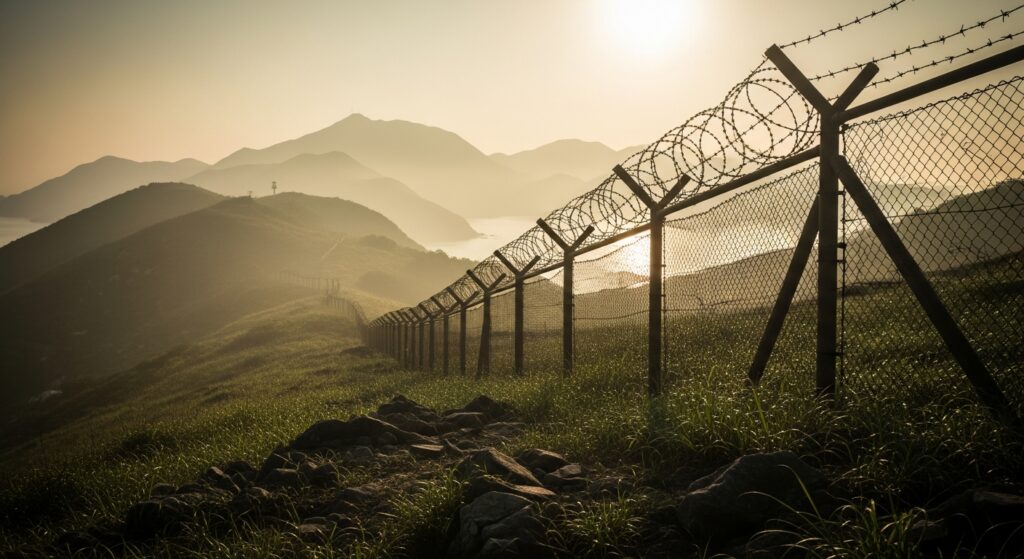
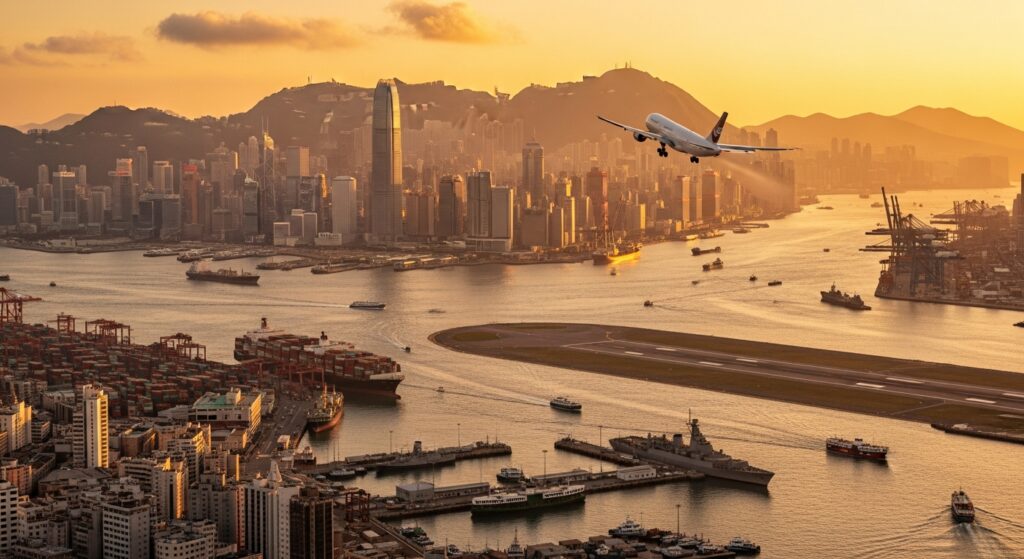
In the spring of 1962, along the hills, rivers and bays that link southern Guangdong to Hong Kong, one of the most harrowing scenes in modern Chinese history unfolded. Tens of thousands of ordinary people, carrying whatever they could, climbed over barbed wire and swam across dark bays in the most primitive ways imaginable, risking drowning, shark attacks and bullets from border guards to reach this small patch of British-administered territory. The geographic scope alone was staggering: people came from 62 different counties and cities — Huiyang, Dongguan, Guangzhou, Nanhai, Taishan, Haifeng, Chao’an — each name marking a family pushed to the edge.

They were not fleeing war, or an enemy state. They were fleeing their own government.

What drove them to the border was the Great Famine of 1959 to 1961. The Great Leap Forward and the People’s Commune movement tore the agricultural system apart: grain output collapsed, and an estimated tens of millions died of starvation, with rural Guangdong among the worst-hit regions. In Chinese official historiography, this period would later be rebranded as the “three years of natural disaster”, with the blame placed on bad weather and the Soviet withdrawal of aid. Yet the historical record tells a different story. Droughts and floods did occur, but the decisive factor was policy itself. Collectivisation destroyed farmers’ incentives to produce. The backyard steel campaign pulled labour out of the fields. Local cadres, under pressure to meet production quotas, inflated harvest figures at every level, which in turn justified excessive state procurement. Granaries were emptied; peasants were left with nothing. The “natural disaster” was, in substance, a man-made one recorded under the name of nature.

Across the Shenzhen River, however, life in Hong Kong continued as normal. Markets had food; families ate. On one side of the boundary lay hunger; on the other, daily routine. No propaganda was needed to make the contrast land. For countless people in Guangdong, Hong Kong was not only a place to survive — it was the only place left where one could reclaim a sense of human dignity.

Those who fled were not the old and infirm but mostly adults between 19 and 40: farmers, factory workers, students. They moved not as lone adventurers but as families, clans and networks of fellow villagers, coordinating routes, pooling information, and looking out for one another. Some crossed mountain ranges and waded through the Shenzhen River. Others took to the sea, plunging into Mirs Bay or Deep Bay and swimming south toward an invisible line they had staked their lives on. The dangers were concrete: drowning, gunfire, sharks, cliffs. The New York Times reported on 1 May 1962 that some had drowned en route, their names lost to the current.

To understand the Hong Kong government’s response, it is not enough to look only at those few months of 1962. From the early 1950s onwards, the border had been running on an unwritten, two-track arrangement. Those who reached the urban areas, had relatives to lean on, and were capable of work could quietly obtain a Hong Kong identity card. Those intercepted at the boundary were repatriated. This was colonial realism in the Cold War: with roughly a hundred to two hundred successful crossings a day, the city could absorb the inflow, and its fast-growing industries needed the labour. A blind eye was the sensible policy.

The 1962 wave shattered that equilibrium. At the peak, thousands were arriving each day — far beyond what the urban areas could absorb. Premier Zhou Enlai personally ordered the Guangdong provincial leadership to take charge on the ground in Bao’an. The authorities deployed more than 10,000 troops and police, setting up interception stations along transport routes and border zones in coordination with the Hong Kong side. In the end, 51,395 people were sent back. Hong Kong itself hardened its stance on 6 May with an order to repatriate all those caught, and on 14 May formally adopted a “catch and return” policy — even those who had already entered the city would be sent back, without review. This was an emergency measure for a crisis that had outgrown the old understanding, not a new norm.

The reaction of Hong Kong society, however, was an entirely different matter. From 12 May 1962, Ming Pao ran the story day after day on its front page, forcing the city to confront the humanitarian crisis at its doorstep. Along the barbed-wire fence, ordinary residents organised themselves to hand food, clothing and water to those being held. A colonial government chose catch-and-return; the people of the colony chose to pass rice balls through the wire. That image captured the truest face of Hong Kong in that era.

After the crisis subsided, the old two-track arrangement quietly resumed. Through the late 1960s and early 1970s, as Hong Kong’s industries in textiles, plastics, toys and electronics expanded rapidly, those who made it to the urban areas continued to find work — and, more often than not, identity cards. The 1971 Immigration Ordinance formalised a crucial rule: any non-locally-born ethnic Chinese who had lived in Hong Kong continuously for seven years could obtain permanent resident status. It offered a legal path to regularisation for those already settled in town.

Only in November 1974 did the colonial government put a name to what had been running for more than two decades, formalising it as the Touch Base Policy. Those who reached the urban areas south of Boundary Street in Kowloon and made contact with relatives could register as Hong Kong residents; those intercepted at the frontier would be returned. At the same time, border enforcement was significantly tightened, making it harder, not easier, to reach the city. In other words, 1974 did not loosen the door — it gave the rule a name and pushed the door a little further shut. By the end of the decade, reform and opening in the mainland had set off another surge: in 1979 alone, security forces intercepted around 90,000 crossers, and an estimated 100,000 more are thought to have made it into the urban areas. On 23 October 1980, the Legislative Council abolished the Touch Base Policy and replaced it with “catch and immediately deport”. Those who had already arrived were given a three-day grace period, from 24 to 26 October, to register at the Victoria Barracks in Admiralty. Chief Secretary Jack Cater had estimated around 15,000 would come forward; the registration centre ran 24 hours a day. In the end, only about 6,900 registered. A border arrangement that had run for nearly three decades had come to a quiet close.

Seen structurally, the 1962 exodus was a comparative experiment between two systems along the same stretch of border. On one side, a system that had to deploy troops to keep its own people from leaving. On the other, a place that drew them with no propaganda at all, only the prospect of an ordinary life. The hungry cast the most honest vote with their feet — a vote that was interrupted in 1962, quietly honoured again soon afterwards, and only truly shut out in 1980. Hong Kong’s border policy, notably, never went to extremes; it oscillated between humanitarian tolerance and administrative control, never fully opening the door and never fully sealing it.

What makes this history important is not the numbers themselves but a plain fact it reveals: when a society cannot feed its own people and will not let them leave, every crossing at the border becomes a concrete verdict on the system being escaped. Those who climbed over the wire in the spring of 1962 were not a Cold War footnote. They were the final, human imprint of a famine recorded in the archives as a natural disaster — and a formative moment in the making of the Hong Kong we know today.

A large part of present-day Hong Kong was built, brick by brick, by those who risked everything to cross that border and by the generations that followed. The fate of a city is often written along its frontier.

The 1962 Exodus to Hong Kong: How a Famine Broke the Unwritten Border Pact Read More »

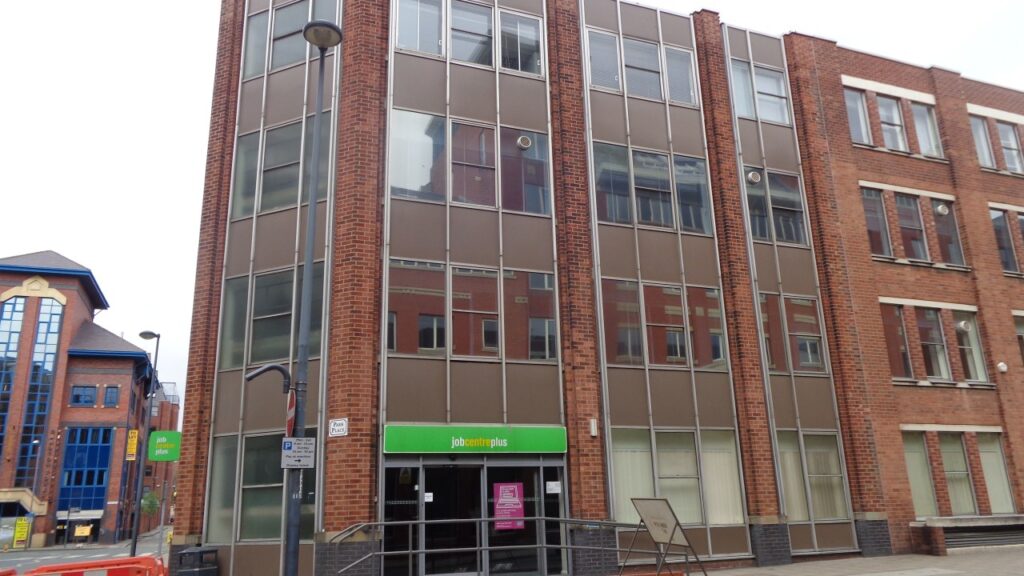
A Jobcentre Plus office on Park Place, Leeds — one of the UK government's employment and benefits service centres.

Settled but Not Automatic: A Guide to UK Public Benefits for Hongkongers

For BN(O) visa holders arriving in the UK, the No Recourse to Public Funds (NRPF) condition attached to their visa means that despite working, paying taxes, and contributing to the Immigration Health Surcharge, they are excluded from most government benefits until they obtain Indefinite Leave to Remain (ILR). This asymmetry is a structural feature of the UK immigration system: before ILR, migrants are contributors to the system rather than recipients of it. Settlement is the threshold that changes this. This article outlines the main benefits available after ILR, to help readers understand what exists and on what terms. Whether to claim any of them is a matter for individuals to decide.

Child Benefit is among the first benefits that families with children tend to look into after settlement. Once ILR is granted and residency conditions are met, eligible claimants can receive £25.60 per week for a first child and £16.95 per week for each additional child in 2025/26. Higher earners should note that if either parent’s annual income exceeds £60,000, a portion must be repaid through the tax system, and the benefit is fully clawed back once income exceeds £80,000. In practice, Child Benefit is most relevant to middle and lower income households.

On childcare, the system operates in layers. All three and four year olds in England are entitled to 15 hours per week of government-funded early education regardless of their parents’ immigration status — this universal entitlement is unaffected by NRPF. After ILR, working parents who each meet a minimum earnings threshold can access a combined 30 hours per week of funded childcare. Separately, eligible working families can also apply for Tax-Free Childcare, under which the government contributes £2 for every £8 spent on childcare, up to £2,000 per child per year, or £4,000 for a disabled child. Tax-Free Childcare can be used alongside the 30-hour entitlement and may be worth considering for dual-income households with significant childcare costs.

For those who become unemployed or fall into low income after settlement, Universal Credit (UC) is the main means-tested support available. However, a key restriction applies: households with savings or assets exceeding £16,000 — including accounts held overseas — are not eligible, and those with between £6,000 and £16,000 receive a reduced amount. Many Hongkongers who arrived with substantial savings to fund their early years in the UK may find that this threshold effectively excludes them, at least until their assets fall below the limit.

Those with a sufficient National Insurance contribution record have a separate option in New-Style Jobseeker’s Allowance (New-Style JSA). Unlike UC, New-Style JSA is contribution-based rather than means-tested, meaning that savings and assets do not affect eligibility. It can be claimed for up to 182 days following unemployment and is currently paid at £89.05 per week. BN(O) holders who have been in employment in the UK for a number of years may qualify, though eligibility depends on individual contribution records.

Council Tax Reduction is a locally administered support available after ILR. Eligibility and award amounts vary by council and are assessed against household income. Given that council tax represents a significant fixed cost for most UK households, it may be worth checking eligibility with the relevant local authority.

The Winter Fuel Payment is available to those who have reached State Pension age, currently 66. For 2025/26, the government restored automatic payments to pensioners with an annual income below £35,000, at £200 per year for those under 80 and £300 for those aged 80 and above. A common question among Hongkongers, many of whom live in multigenerational households, is whether living with adult children affects eligibility. It does not: the payment is assessed on an individual basis, and residing with family members has no bearing on a pensioner’s own entitlement. Where multiple qualifying individuals share a household, however, the payment is divided rather than paid in full to each person.

Looking further ahead, the State Pension is an entitlement that BN(O) migrants accumulate incrementally through their working years in the UK. Each year of National Insurance contributions counts as a qualifying year. A minimum of 10 qualifying years is required to receive any State Pension, while the full amount — currently £221.20 per week — requires 35 qualifying years. For those planning to remain in the UK long term, building up a National Insurance record is a consideration worth factoring into financial planning from an early stage.

ILR opens the door to the UK’s benefit system, but each benefit carries its own eligibility criteria, income and asset tests, and application processes. None is automatic simply by virtue of having settled status. It is also worth noting that the government is currently consulting on the concept of Earned Citizenship, which may tie future naturalisation eligibility or timelines to an applicant’s record of contributions and integration. Whether having claimed public funds could affect a future citizenship application remains unclear pending further policy detail. Those with a long-term aim of naturalising as British citizens may wish to monitor how these proposals develop.

Settled but Not Automatic: A Guide to UK Public Benefits for Hongkongers Read More »

Scroll to Top