Author name: 胡思

The Absurdity of UK Council Tax: Lessons from Thatcher to Hong Kong

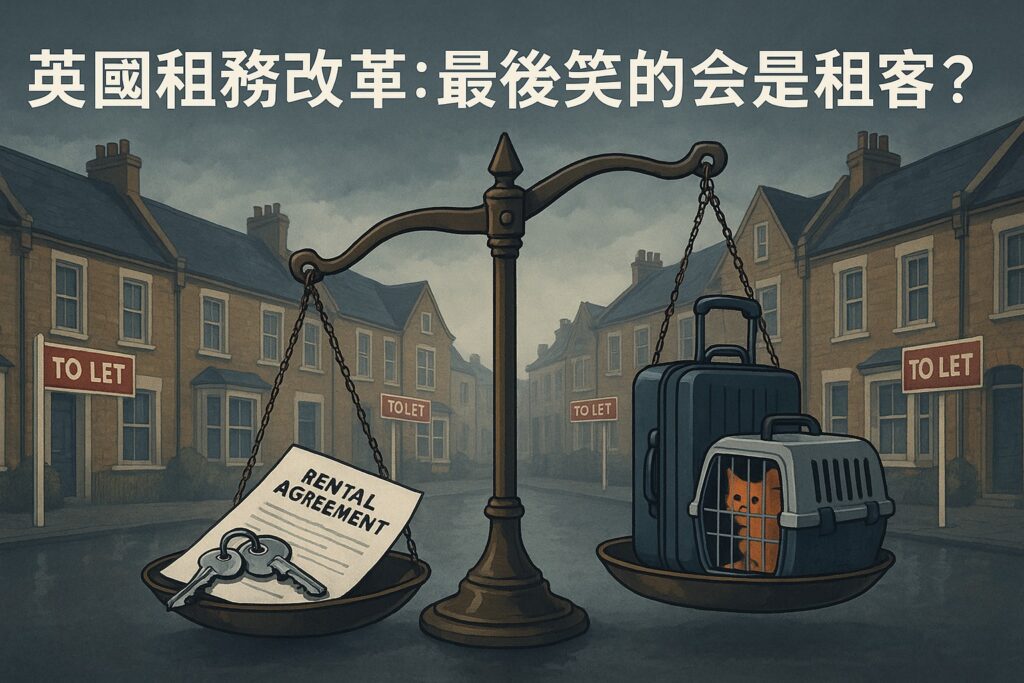
nThe UK’s Council Tax is a historical mistake born out of political chaos in the early 1990s. The system was introduced after Prime Minister Margaret Thatcher’s imposition of the Poll Tax, which sparked nationwide protests and riots. Her policy not only destroyed her own reputation but also led to the loss of a parliamentary seat for then Conservative Party Chairman Lord Chris Patten in the 1992 election. Patten, who later became the last Governor of Hong Kong, witnessed how a tax system could become a fatal burden for the ruling party. To quell public anger, John Major’s government hastily introduced the Council Tax in 1993 to replace the Poll Tax. While the new system stopped the political hemorrhaging, it was a rushed and compromised solution that sowed the seeds for future chaos.n

nThe biggest issue with the Council Tax is its outdated tax base. Property valuations in England are still based on 1991 figures and have not been updated for over thirty years. While property prices across the country have changed dramatically, taxes are still calculated using Cold War-era numbers. According to analysis by the Financial Times, more than half of all homes in the UK are incorrectly categorized in tax bands. As a result, multi-million-pound London apartments and ordinary homes in the North often pay similar tax amounts. This design not only violates the principle of fairness but also distorts the financial foundation of local governments.n

nRegional disparities further exacerbate this injustice. Residents in Burnley pay 4.5% of their income on Council Tax annually, while in Westminster, London, it’s only 0.1%. Poorer areas bear a heavier burden, while wealthier areas pay less. Worse still, poorer counties often require more social services spending—from elder care to public housing maintenance—while wealthier counties can supplement their finances with parking fees, fines, and commercial activities. The central government should balance these disparities through grants, but over the past decade, funding for local governments in the UK has been significantly cut, worsening this fiscal inequality. Consequently, poorer areas face the dual pressures of higher tax rates and reduced public services.n

nThe root of the problem lies in the misaligned system design. Council Tax uses property values as a long-term tax base but ignores the structural imbalances caused by asset accumulation and land scarcity. Low-income families, living in lower-value areas, end up paying relatively more, while the wealthy, owning high-value properties, enjoy implicit subsidies. Economists widely agree that the UK needs a wealth tax based on land or property net value to replace it. This would not only align tax burdens with wealth but also improve housing market efficiency and reduce regional distortions.n

nIn contrast, Hong Kong’s ‘Rates and Government Rent’ system, also originating from British colonial times, is fairer. Rates are reassessed annually based on property rental value, and government rent is adjusted according to land value. This means tax amounts are updated with market changes, making the tax burden more reflective of the actual economic situation. Even with Hong Kong’s volatile property prices, the tax system itself retains a self-correcting feature. By comparison, the UK’s Council Tax remains stuck in a static 1991 world, leaving taxpayers with a system disconnected from reality, lacking transparency and legitimacy.n

nThe Blair government once abandoned revaluation due to fear of public backlash, and now Chancellor Jeremy Hunt is similarly reluctant to address this ‘political minefield’. However, continued delay will only further undermine the system. Council Tax not only weakens local finances but also erodes public trust in fairness. If the UK is to truly rebuild the justice of its tax system, it must bravely move away from this 30-year-old temporary compromise and push for a new wealth-based local tax system. Only then can local governance return to a path of fairness and reality.n

The Absurdity of UK Council Tax: Lessons from Thatcher to Hong Kong Read More »

Earned Settlement: Fair or Feasible, But Not Both

nThe concept of ‘earned settlement’ suggests that permanent residency can be exchanged for tax contributions, which sounds fair: the more taxes one pays, the more benefits one receives. However, upon closer examination of the UK’s tax system and public expenditure structure, this idea proves neither fair nor feasible. If only certain taxes are considered, the system would penalize immigrants who contribute in other ways; if all taxes and indirect benefits are included, the complexity becomes unmanageable. Ultimately, the system risks either being biased or becoming mired in bureaucratic quagmire.n

nThe fiscal contributions of immigrants extend beyond income tax and National Insurance. Anyone living in the UK pays council tax, fuel duty, vehicle tax, and VAT on every purchase. Although VAT is collected by businesses, the ultimate burden falls on consumers, meaning every purchase represents a tangible tax contribution. If the system only accounts for income and employment taxes, it overlooks this most common and stable source of revenue. In theory, fairness would require considering VAT; in practice, this is nearly impossible. The standard VAT rate is 20%, but energy and heating are taxed at 5%, and food and books are zero-rated, with some services exempt or outside the tax net. To track five years of tax burden accurately would require everyone to record every receipt via an app from now on. Omitting it would be unfair; including it would be unfeasible.n

nAnother often overlooked item is employer National Insurance contributions. Employers must pay an additional 15% on employee salaries. While nominally borne by companies, economically, part of this cost is passed on to wages and prices. If the system only accounts for the employee’s contributions, it underestimates the immigrant’s overall tax contribution.n

nFocusing solely on salary income as a measure of contribution can mislead policy direction. The vibrancy of the UK economy stems from innovation and entrepreneurship, not just salaried workers. Many immigrants start companies, initially drawing modest salaries, yet they pay corporate taxes, employ local staff, and drive investment and employment. A system that rewards stable employment while ignoring entrepreneurial risks and long-term benefits effectively penalizes the most dynamic individuals. True contributions should encompass value and opportunity creation, not just short-term figures on a tax bill.n

nIndirect contributions should not be overlooked either. Immigrants’ consumption supports the retail, hospitality, transport, and energy markets; their labor fills shortages in healthcare, construction, and logistics sectors. Their spending and employment activities create a multiplier effect, with each transaction generating ripple benefits throughout society. These induced effects, although not individually recorded, are the lifeblood of local economies. Focusing solely on tax records when discussing contributions inevitably leads to distorted conclusions.n

nConversely, calculating ‘costs’ is even more challenging. Public services are not billed per individual: visiting a GP, police or fire services, and using roads and streetlights are shared by all. Education is similar. The state provides education for children as a long-term investment in society. Charging these costs to parents would negate the nature of public education; charging them to children would absurdly require them to ‘repay’ their schooling upon adulthood. Public services cannot be accounted for on an individual ledger without undermining the social contract.n

nIf policy insists on annually offsetting contributions against costs, the consequences could be dire. Families might delay having children for fear of ‘burdening the social ledger’; young people pursuing further education or entrepreneurship might see their short-term income decline and be deemed ‘ineligible’; women taking maternity leave or caring for family might be misjudged as ‘low contributors’. Such a system would not only be unfair but would also undermine sustainable demographic and economic development.n

nThe more immediate issue is the administrative burden. Even if the current system functions, implementing earned settlement would instantly double the workload of the Home Office. Personal tax returns, employer contributions, household expenses, and welfare records would all require cross-checking, causing administrative costs to skyrocket, ultimately borne by taxpayers and applicants alike. What appears to pursue fairness in reality increases waste and delays, entangling the system in further complexity.n

nA truly fair and sustainable system should be based on simple, objective, and verifiable criteria—legal residence duration, law-abiding record, English proficiency, and self-sufficiency—rather than a pseudo-precise tax algorithm to determine who ‘deserves to stay’. Fairness lies not in exhaustive calculations but in equal treatment.n

nFor earned settlement to be fair, it must include all taxes and indirect contributions; to be feasible, it can only selectively account, thereby losing fairness. The two cannot coexist. Rational policy should acknowledge the essence of the social contract: everyone contributes and benefits at different stages. Only by replacing political slogans with calm and reason can a stable and enduring immigration system be established.n

Earned Settlement: Fair or Feasible, But Not Both Read More »

Reassessing Electric Vehicles: Data and Lifecycle Analysis Speak Volumes

nIn the UK, outdated perceptions of electric vehicles (EVs) persist: limited range, inconvenient charging, and high prices. While these views may have been valid a decade ago, they are now far removed from reality. Recent advancements in battery technology, increased charging network density, and revamped government subsidy policies have transformed the market landscape. Discussions about EVs can no longer remain one-dimensional; they must be based on data, cost, and lifecycle emissions. This energy transition has moved from an idealistic phase to a pragmatic reality.n

nFirst, range is no longer the Achilles’ heel of EVs. Mainstream models now typically achieve a tested range of 200 to 300 miles, with some high-performance models exceeding 400 miles. For instance, the Mercedes-Benz EQS 450+ boasts an official WLTP range of 453 miles, enough to cover the journey from London to Edinburgh. This progress is not coincidental but results from increased battery energy density, aerodynamic design, and advanced thermal management technologies. According to National Grid data, the average daily driving distance for UK motorists is just 7 miles. For most people, EV range is more than sufficient, and “range anxiety” reflects psychological inertia rather than the current technological state.n

nRegarding price, policy changes are gradually lowering barriers. From July 2025, the UK government will introduce a new round of the Electric Car Grant, offering up to £3,750 for new EVs priced under £37,000. After subsidies, many entry-level crossovers and hatchbacks are priced between £26,000 and £30,000, comparable to petrol cars. Some brands further reduce monthly payments to levels similar to fuel vehicles through salary sacrifice or long-term leasing schemes. This is not merely a marketing strategy but the result of policy, supply chain, and economies of scale working in concert. When purchase decisions are based on a “three-year total cost of ownership” rather than a simple price comparison, the appeal of EVs becomes more apparent.n

nThe cost advantage of using EVs is even more direct. For owners who can charge at home, adopting night-time low electricity rates reduces per-mile electricity costs to about one-sixth of petrol. Additionally, the simpler structure of EVs, with no engine, gearbox, or oil system, results in significantly lower maintenance needs and long-term servicing costs compared to fuel vehicles. When fuel, maintenance, taxes, and low-emission zone exemptions are considered, the overall cost of EVs is often more economically viable. Even for those relying primarily on public charging, the cost difference remains, albeit with slightly smaller savings.n

nCharging infrastructure is also rapidly expanding. By the third quarter of 2025, the total number of public charging points across the UK is expected to reach 86,000, spread over more than 43,000 locations, with an annual growth rate exceeding 20%. The proportion of fast and ultra-fast chargers is increasing, reducing waiting times and enhancing availability. For residents without private parking, the prevalence of roadside lamp post charging and community car park facilities makes daily recharging less challenging. While some areas still face uneven distribution, the overall trend indicates that charging convenience is steadily catching up with traditional refueling methods.n

nFinally, the most misunderstood aspect—environmental benefits. Critics often focus solely on the carbon emissions during battery production, overlooking lifecycle emissions. According to research by the International Council on Clean Transportation (ICCT), EVs in Europe emit about 70% less greenhouse gases over their entire lifecycle compared to petrol cars. The UK Energy Trust estimates that the overall emissions of a typical EV are about one-third of those of a fuel vehicle. This is because EVs have zero tailpipe emissions during operation, significantly reducing carbon emissions and improving urban air quality. As the share of renewable energy in the grid continues to rise, the environmental advantages of EVs will become even more pronounced.n

nThe persistence of myths surrounding EVs is not due to technological limitations but to outdated perceptions. Old reports emphasize anxiety and inconvenience, ignoring the fundamental changes of recent years. Today, with policy subsidies, improved range, simplified maintenance, and enhanced infrastructure, EVs have evolved from an emerging technology to a viable option. They are no longer a symbol of luxury but a crucial tool in transitioning to a low-carbon economy. The real question is not “if” but “when” to fully embrace this energy transition.n

Reassessing Electric Vehicles: Data and Lifecycle Analysis Speak Volumes Read More »

The Inevitable Return to Europe: Timing and Implementation Challenges

nThe costs of Brexit are gradually becoming apparent. Starting in October, British travelers entering the EU will be subject to the Entry/Exit System (EES) for fingerprint and facial recognition registration. This is not a punishment from the EU but a direct consequence of Brexit: British citizens have lost the right to free movement, resulting in additional scrutiny and procedural delays. The slogan “take back control of our borders” has now become a symbol of restricted freedom of movement. Sovereignty has returned, but convenience has not.n

nThe economic impact is even more fundamental. According to estimates by the Office for Budget Responsibility (OBR), Brexit has reduced the UK’s long-term GDP by about 4%. The shrinking economic size has led to a significant decrease in tax revenue, weakening the government’s discretionary resources. The anticipated trade dividends and investment boom have not materialized; instead, there are higher import and export costs and declining business confidence. As a result, the Treasury has been forced to raise taxes and cut spending, increasing pressure on public services and stalling economic growth. Brexit, once portrayed as a path to prosperity, has now become synonymous with long-term constraints.n

nThe institutional burden has also expanded. The UK must now handle regulatory, trade negotiations, subsidies, and border functions previously managed by the EU, leading to a rapid expansion of the central government. The number of civil servants has increased significantly in recent years, especially in customs and border surveillance departments. Although functions have increased, efficiency has not improved. More bureaucracy brings higher costs but fails to deliver greater efficiency. This administrative expansion reveals another side of Brexit: in maintaining an independent system, the UK has become a heavier and slower state apparatus.n

nImmigration and border policies further highlight the isolationist dilemma. After exiting the Dublin III Regulation, the UK lost the mechanism to return asylum seekers to the first country of entry. This has left the government unable to effectively manage cross-border applications, turning the “small boat arrivals” into an unsolvable political issue. New policies are repeatedly overturned by courts, reflecting a governance vacuum lacking institutional support. This is not a singular failure of the ruling party but a structural outcome of the UK’s withdrawal from the European cooperative network.n

nEconomic pressures and institutional fractures have reignited discussions on rejoining Europe. The business community broadly advocates for re-aligning with EU frameworks to reduce trade friction and restore market confidence. The Liberal Democrats support rejoining the single market as the first step to economic recovery; the Green Party goes further, advocating for eventual full EU membership. While the Labour Party remains cautious, public opinion is rapidly shifting. A YouGov survey shows that over half of Britons believe Brexit was a mistake, with a majority supporting rejoining the EU.n

nRejoining Europe is no longer an emotional issue but a pragmatic choice. The economic contraction, declining tax revenues, and rising administrative costs caused by Brexit are gradually eroding the UK’s global competitiveness. The question is no longer whether to return to Europe, but when and how. If the UK can proactively design a cooperative framework, it can still find a balance between sovereignty and integration; if it continues to delay, it will ultimately have to accept Europe’s terms passively. The path to rejoining may be difficult, but it is transitioning from a political debate to a historical inevitability.n

The Inevitable Return to Europe: Timing and Implementation Challenges Read More »

Farage’s Leadership Could Lead to UK’s Self-Destruction

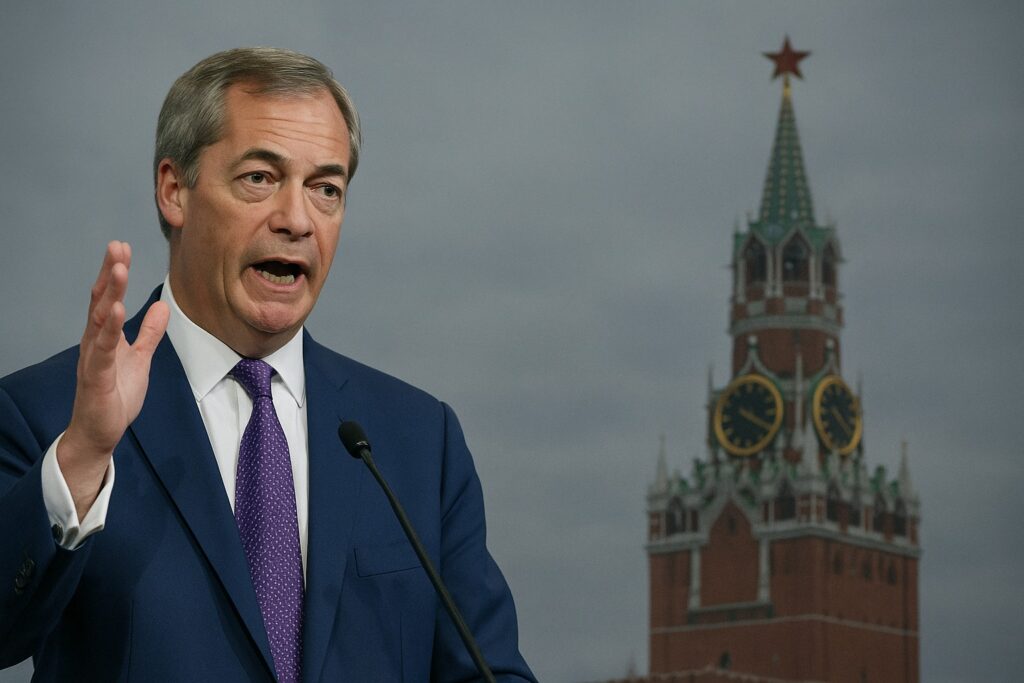
nRecent national polls indicate that Reform UK is now leading the Labour Party in terms of support. The latest Ipsos survey shows Reform UK with a 34% approval rating, leading by approximately nine percentage points. Voter disillusionment with the traditional two major parties’ long-standing inability to reform has allowed Farage to rise as an ‘anti-establishment’ figure. However, his proposals do not aim to reshape the UK but to dismantle it. Should Reform UK truly come to power, the country could face not only economic turmoil but also the collapse of its foundational structures.n

nFarage has publicly praised former Prime Minister Liz Truss’s ‘mini-budget’ of 2022, calling it ‘the best Conservative budget since 1986.’ This statement was widely criticized at the time. The budget led to market panic, a sharp drop in the pound, soaring bond yields, and ultimately forced Truss to resign. This history reveals Farage’s economic perspective: he advocates for unfettered tax cuts and market liberalization, even though such approaches have been proven to undermine confidence. Now, he is campaigning for power with similar slogans, and the risks are evident.n

nMore destructive is his advocacy for the UK to withdraw from the European Convention on Human Rights (ECHR). This is not merely a diplomatic or legal stance but could be the catalyst for the disintegration of the United Kingdom of Great Britain and Northern Ireland. The Belfast Good Friday Agreement, which is central to Northern Ireland’s peace, is underpinned by the ECHR. Withdrawal would destabilize the agreement’s legal foundation, potentially reigniting local conflicts. Scotland has already expressed a desire to remain within the human rights framework and the EU. If London proceeds unilaterally, calls for independence will inevitably grow louder. The UK’s unity could first fracture in Northern Ireland, then spread to Scotland, ultimately tearing the nation apart.n

nExiting the ECHR would also bring UK judicial and economic cooperation with the EU and the European Free Trade Association to a near standstill. According to the terms of the UK-EU Trade and Cooperation Agreement, if the UK ceases to adhere to the human rights convention, the EU could terminate judicial cooperation, policing collaboration, and data sharing. This would increase cross-border trade risks, double legal costs, and disrupt logistics and supply chain operations. Businesses would face higher insurance and contract risks, leading to increased import costs. Ultimately, ordinary households would suffer, as inflationary pressures would become harder to alleviate. The UK would become isolated within the European economic system, with rising prices and declining investment confidence occurring simultaneously.n

nIn terms of economic policy, many of Reform UK’s proposals have been criticized by the Independent Fiscal Studies (IFS) as ‘unfunded commitments.’ Farage claims he will significantly cut taxes, reduce ‘wasteful’ spending, limit legal immigration, and restructure the central bank system, yet he has not explained the source of funding. Such baseless promises are likely to trigger market panic. If the government ultimately relies on borrowing to fill the gap, its credibility will inevitably decline. Bond yields would rise, currency devaluation would occur, and inflation would worsen, replaying the crisis of the Truss era. It seems Farage has not learned from the lessons of the mini-budget.n

nEqually dangerous is Reform UK’s regression in energy and infrastructure. Farage advocates abolishing the net-zero emissions target and halting the HS2 high-speed rail project, even if the latter is near completion. This means abandoning long-term growth and industrial modernization. Renewable energy and infrastructure investment are key engines for job creation and regional development, yet they have become casualties of political slogans. Investors, faced with policy reversals, will inevitably withdraw and wait. Since Brexit, the UK’s potential GDP has already fallen by about four percentage points. If compounded by such misguided policies, the economic outlook will become even bleaker.n

nReform UK’s immigration policy exposes its contradictions. They claim to ‘expel illegal immigrants’ and ‘tighten legal immigration,’ yet overlook the UK’s heavy reliance on overseas personnel in healthcare, research, and higher education. Nearly one-fifth of NHS staff are foreign nationals, and tuition fees from international students are crucial for university operations. If Reform UK governs and tightens entry comprehensively, healthcare and education will inevitably face staffing crises, and local economies will suffer a chain reaction. The result will be that legal immigrants are wrongly targeted, while the issue of illegal immigration remains unresolved.n

nOverall, Farage’s political project is neither pragmatic nor stable. While he uses ‘taking back control’ as a slogan, in reality, he is promoting a self-dismantling process from institutions, the economy, to national structure. Exiting the ECHR could lead to the disintegration of the United Kingdom, unfunded policies would trigger fiscal and inflation crises, reversing energy transition and infrastructure investment would weaken productivity, and tightening immigration would destroy public services. True national sovereignty lies not in building walls but in maintaining an open, stable, and credible system. If Farage’s path becomes reality, the UK will embark on a self-destructive journey amid the drumbeats of populism.n

Farage’s Leadership Could Lead to UK’s Self-Destruction Read More »

The New Energy Order: From Trump’s Misjudgment to a Green Leap Forward

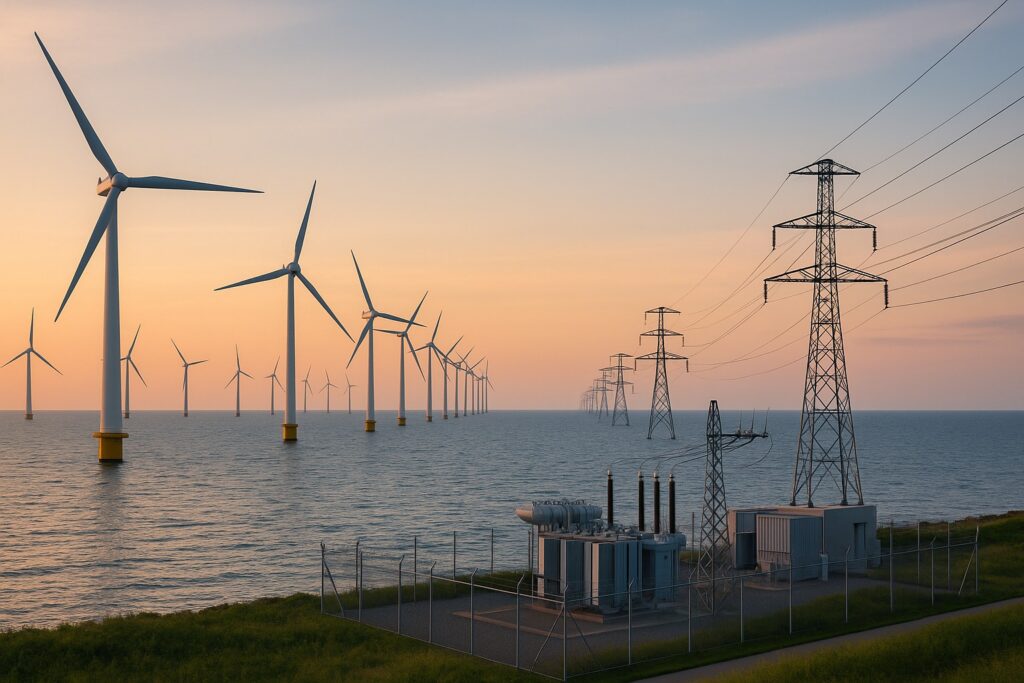
nThe global energy landscape is quietly being reshaped. In the first half of 2025, wind and solar power generation surpassed coal for the first time, marking a watershed moment in the history of human energy. According to the latest report from the energy research organization Ember, global electricity demand is growing by about 2.6% annually, while the total contribution from wind and solar meets 109% of this new demand. In other words, all growth in global electricity is now coming from renewable energy. This is the result of years of policy promotion, technological maturity, and cost reduction, revealing a critical turning point: energy growth is no longer at the expense of carbon emissions.n

nHowever, at this historic moment, former U.S. President Donald Trump criticized China at the United Nations General Assembly for having “almost no wind farms” while “selling wind turbines worldwide.” Although his remarks drew applause, they were completely detached from reality. China is not only the world’s largest wind energy market, with wind power installations accounting for about 40% of the global total, but also a leader in solar manufacturing, controlling more than 80% of production capacity. Trump’s criticism reflects the simplification and misguidance of political rhetoric, obscuring the real issue: the world is indeed overly reliant on Chinese supply. With China’s monopolistic advantage in photovoltaics, batteries, and wind turbine components, geopolitical risks and industrial security have become concerns for the global green energy transition.n

nOver the past decade, China has driven a cost revolution in renewable energy. Due to large-scale production and supply chain integration, the prices of wind turbines and solar panels have fallen globally by 60% to 80%, making renewable energy economically competitive with coal for the first time. However, the side effects of centralized production are becoming increasingly apparent. If Sino-Western relations deteriorate, exports are restricted, or transportation is disrupted, global projects will face delays and price increases. The International Energy Agency warns that to maintain the net-zero path by 2030, global photovoltaic capacity must still double, and supply chain concentration could slow progress. Thus, de-risking has become a new consensus among countries—not decoupling from China, but establishing more production bases in Europe, India, Southeast Asia, and the Americas to make manufacturing more dispersed and resilient.n

nThe rise of renewable energy also exposes bottlenecks within power systems. The output of wind and solar is limited by weather and time of day, and if grid and storage infrastructure do not keep pace, a paradox of “having power but unable to deliver it” will arise. The growth of wind and solar in China and India is sufficient to offset demand expansion, but in Europe and the U.S., due to insufficient hydropower and aging grids, there is still a short-term reliance on fossil fuels. The real challenge is not whether more wind turbines and panels can be built, but whether the grid can be upgraded in parallel, with investments in storage and cross-regional dispatch to ensure stable and reliable green energy supply.n

nIn contrast, many developing countries are taking a completely different path. For them, green energy is not a supplement but a starting point. In Chad, sub-Saharan Africa, where the national electrification rate is only about 6%, the recently launched Noor Chad solar power plant and microgrid project is expected to provide stable electricity to approximately 274,000 households for the first time. For villages long reliant on diesel generators, this is not just an energy revolution but a social leap. Solar energy is much cheaper and quicker to deploy than building refineries, laying pipelines, or setting up gas stations. Similarly, Argentina is benefiting from the transition, with its wind and solar installations doubling in just five years, becoming a new engine for attracting foreign investment and creating jobs.n

nThese examples prove that energy transition is not the preserve of wealthy nations. For developing countries, green energy represents a leapfrogging opportunity—it allows them to skip the fossil fuel era and directly enter a low-carbon economy. If the international community can provide financing, technology, and insurance support, these emerging markets could become new drivers of global energy growth. The equitable distribution of green energy also helps reduce reliance on Chinese manufacturing, achieving a truly multipolar energy order.n

nTrump’s misjudgment may seem absurd, but it inadvertently reminds the world: if the energy transition is overly concentrated in a single country, its achievements will ultimately be fragile. The future green era cannot rely solely on one supplier or one continent. The surpassing of coal by renewable energy is just the beginning. The real turning point is whether the world can establish a safer, more diversified, and fairer energy system. As wind and sunlight illuminate the globe, whether they can simultaneously brighten the future for all will determine the sustainability of this revolution.n

The New Energy Order: From Trump’s Misjudgment to a Green Leap Forward Read More »

英國最成功政黨的衰落

The Decline of Britain’s Most Successful Political Party

nAt the annual Conservative Party conference in Manchester, party leader Kemi Badenoch unveiled a series of new policies, claiming they would reshape Britain’s future. From withdrawing from the European Convention on Human Rights (ECHR) to cutting foreign aid, abolishing business and stamp duties, retracting the net-zero carbon emissions target, establishing a deportation force, cutting £47 billion in spending, and introducing a ‘first job bonus’, these slogans appear formidable but lack coherent logic and long-term vision. For a party losing public support, such policies seem more like manifestations of political anxiety rather than planned reforms.n

nThe proposal to withdraw from the ECHR is the most destructive. The ECHR is a legal pillar of the Belfast Agreement and a crucial condition of the UK-EU trade agreement. Exiting it would cast uncertainty over Northern Ireland’s peace and trade with Europe. This is not merely a legal issue but a destabilization of constitutional and diplomatic foundations. Under the guise of ‘sovereignty’, the Conservative Party risks dismantling institutions, potentially losing Britain’s credibility as a stable democracy. With Brexit externally and power reduction internally, this political trajectory is hard to reassure.n

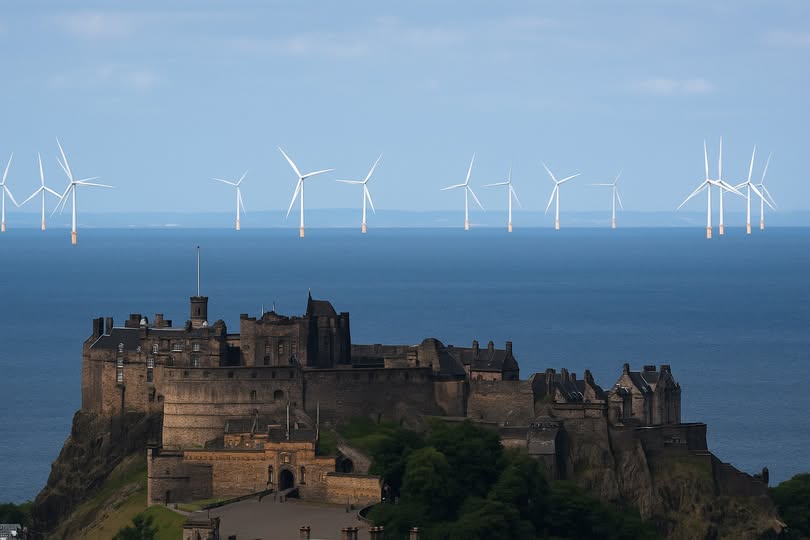
nThe regression in climate policy is even more disappointing. Badenoch claims the net-zero target is too costly, ignoring the sharp decline in renewable energy prices. Offshore wind and solar power are now the cheapest sources of electricity. In the next two years, several large wind farms and solar power stations are set to commence operations in the UK. Had the Conservatives continued to push for transformation, they could have reaped both economic and environmental benefits. Instead, retreating not only misses investment opportunities but also shirks responsibility to future generations. While the world races for green economic leadership, Britain steps backward, which is neither smart nor conservative.n

nToday’s Conservative Party is a far cry from the one familiar to Hong Kongers. The party of Margaret Thatcher, who championed free markets and union reforms, John Major, who maintained a stable European cooperation route, and Chris Patten, who implemented democratic reforms in Hong Kong, represented rationality, pragmatism, and responsibility. The Conservatives have long been the most successful party in British politics, governing for most of the past century. However, under Badenoch’s leadership, it is rapidly losing its centrist stance and sense of reality, pandering instead to right-wing populism. Former party chairman Lord Chris Patten warns that the further right the party leans, the more populist it becomes, the less popular it becomes, and the less popular it becomes, the further right it leans. This vicious cycle is the true reflection of today’s Conservative Party.n

nFiscal and foreign policies appear equally superficial. Badenoch proposes reducing foreign aid to 0.1% of national income, claiming it is a ‘return to national interest’. Yet for a still-wealthy nation like the UK, foreign aid is not just charity but an extension of influence and security. As Britain withdraws from the aid arena, the vacuum will be quickly filled by other countries—such as China. She also claims to cut £47 billion in spending to fund tax reforms and new plans. The problem is that this spending cut promise lacks a solid foundation. Many commentators describe it as ‘almost impossible to fulfill’, and the media points out that the Conservatives have never explained specific reduction methods or funding arrangements. If the basic assumptions are untenable, the entire fiscal blueprint becomes mere rhetoric. While abolishing business and stamp duties is principled, the former can ease the burden on high streets, and the latter can promote housing fluidity and economic vitality. The issue lies not in the concept itself but in the lack of thorough funding planning. Without clear, sustainable solutions, even the best policies will be seen as political rhetoric rather than feasible reforms.n

nThe latest YouGov poll shows the Conservatives and the Liberal Democrats both have 17% support, only five percentage points ahead of the Green Party. For a party that has long dominated British politics, this is a historic low and a warning sign. Voters are not buying into Badenoch’s new policies, responding instead with indifference and detachment. When a major party is marginalized, it is not because it is not radical enough in its reforms, but because it has lost a credible direction. If the Conservatives continue to lean right and cater to extreme voters, they will not gain the support of the Reform Party but will lose centrist voters. The wisest strategy should have been to wait and watch for the Reform Party’s internal divisions and self-destruction; unfortunately, Badenoch has chosen the opposite path, leading the party into a cycle of self-destruction.n

nBadenoch may genuinely believe in ‘brave reform’, but courage is not about going against the tide. When slogans replace reason, short-termism overshadows the long-term, and fantasy obscures reality, politics becomes mere posturing. What Britain needs is leadership that can face facts, make decisive choices, and is willing to cooperate, not politicians who pride themselves on confrontation. If the Conservatives continue accelerating in the wrong direction, they will ultimately lose not just power, but their raison d’être.n

The Decline of Britain’s Most Successful Political Party Read More »

退出歐洲人權公約將令英國長久衰敗

Exiting the ECHR: A Path to Britain’s Long-Term Decline

nA fierce debate has reignited in British politics in recent months. Conservative Party leader Kemi Badenoch announced at the party conference that if they return to power, they will lead the UK out of the European Convention on Human Rights (ECHR), replacing it with a ‘British Bill of Rights.’ Reform UK has long advocated the same stance, claiming that the European Court obstructs the UK’s ability to deport illegal immigrants. Both parties now echo each other, framing the exit from the ECHR as a symbol of ‘reclaiming sovereignty.’ While such rhetoric may resonate with some voters, it risks undermining the foundations of the British system, potentially plunging the United Kingdom into division and isolation.n

nThe ECHR is not a foreign imposition but was drafted under British leadership in the post-war era. Winston Churchill sought to prevent Europe from relapsing into tyranny and conflict, leading to the creation of the convention and the Council of Europe. Should the UK leave now, it would join Russia as the only European country to exit, with Belarus never having joined. Transforming from an advocate to a deserter symbolizes the UK’s abandonment of its post-war legacy and damages its international reputation as a guardian of the rule of law and human rights.n

nTo understand the consequences, one must begin with Northern Ireland. The Belfast Agreement brought Northern Ireland out of thirty years of conflict, establishing a framework for peace and autonomy. The agreement explicitly requires that Northern Irish law fully comply with the ECHR, allowing citizens to appeal injustices to the Strasbourg Court of Human Rights. This is not merely procedural design but a pillar of peace. If the UK exits, the principle of ‘no diminution of rights’ in Northern Ireland will be undermined, and the parity of esteem provisions under the Windsor Framework will become ineffective. The EU could then initiate dispute procedures, and the Irish government, along with nationalist factions, would demand a review of border and constitutional arrangements. Consequently, pressure for a referendum on Irish unification would rapidly increase.n

nFor the ‘United Kingdom of Great Britain and Northern Ireland,’ Northern Ireland is not just a territory but a symbol of ‘union.’ Losing it would destabilize the entire nation. Scottish independence voices have already resurfaced, and Welsh autonomy sentiment is strengthening. If Northern Ireland falls into turmoil, the federal structure will struggle to survive. Maintaining peace in Northern Ireland is not just diplomatic courtesy but a constitutional necessity.n

nThe economic repercussions of leaving the ECHR would also be significant. The UK-EU Trade and Cooperation Agreement stipulates that if either party is no longer bound by the convention, judicial and police cooperation can be immediately suspended. This would freeze Europol data sharing, cross-border extradition, and criminal intelligence. More importantly, once trust is lost, European businesses will reassess the legal stability of the UK, leading to increased trade barriers, supply chain delays, regulatory overlaps, and soaring compliance costs. Research from the London School of Economics indicates that non-tariff barriers post-Brexit have already significantly increased UK food prices. If judicial cooperation breaks down again, imported food inflation will worsen. When milk and bread on supermarket shelves become 10% more expensive, the sweetness of political slogans will turn into the bitterness of everyday life.n

nThe economy is just the beginning; more severe is the erosion of the rule of law and international reputation. The European Court of Human Rights has been the last resort for UK citizens facing government actions. Many controversial cases—detention rights, freedom of speech, family reunification—have required government compliance due to Strasbourg’s oversight. If the UK exits, it will become a defendant in its own court. Government power will lose external constraints, and judges will struggle to maintain independent scrutiny. In the long run, this will weaken public trust in the judicial system and cause foreign investors to doubt the legal protections of London’s financial center. When international businesses no longer trust that contracts will be fairly adjudicated, capital will quietly depart.n

nSome argue that leaving the ECHR would ‘regain border control,’ but this is merely a populist illusion. The crux of immigration issues lies in policy and enforcement, not the convention itself. Blaming all difficulties on the human rights court is merely a distraction. True sovereignty comes from trustworthiness and self-discipline, not arbitrary treaty-breaking. If the UK is unwilling to adhere to its own designed system, how can the outside world trust its treaty commitments?n

nThe rights protected by the ECHR—life, liberty, fair trial, speech, and belief—form the baseline of modern civilization. These principles are not imposed by Europe but are extensions of the British legal tradition. The convention provides everyone with tools to counterbalance public power, ensuring the state is under the law, not above it. Withdrawing from this system weakens not only individual protections but also society’s belief in fairness.n

nNorthern Ireland’s existence reminds us that the UK’s union is not natural but maintained by systems, trust, and consensus. The current withdrawal proposals by the Conservative Party and Reform UK effectively challenge these foundations. When peace structures are loosened, trade agreements are torn apart, and international trust is eroded, the United Kingdom will no longer have ‘union’ to speak of. This is not the rebirth of sovereignty but the beginning of a gradual national disintegration.n

nThe UK can reform and introspect, but not at the cost of destroying its institutions. Exiting the ECHR may earn short-lived applause but will lead to long-term decline. A truly strong nation is not an isolated one but one that seeks balance between freedom and responsibility. Today’s choices will determine whether tomorrow’s Britain is a robust United Kingdom or a fragmented island.n

Exiting the ECHR: A Path to Britain’s Long-Term Decline Read More »

Scroll to Top