Author name: 胡思

South Wales Metro: Reviving Productivity in the Valleys

South Wales Metro: Reviving Productivity in the Valleys

The South Wales Metro serves not just a single city, but an entire region of suburbs historically trapped in stagnation: the South Wales Valleys. These valley towns, located north of Cardiff, include Merthyr Tydfil, Rhondda, Treherbert, Aberdare, Pontypridd, Caerphilly, and Rhymney. They thrived during the coal industry boom but were left behind as coal mining declined.

These areas have long been labeled as “low productivity regions,” but the issue lies not with the people, but with transportation. Sparse schedules and high costs of delays deter employers from hiring those who “live too far away,” while employees hesitate to seek jobs across districts. Although the straight-line distance may be short, commuting times can be lengthy, resulting in a natural contraction of the labor market, with opportunities lost to time.

The South Wales Metro aims to reframe these valleys as part of the Cardiff metropolitan area. Unlike London or Manchester, which radiate outward from a single city, it seeks to stitch together a loose, fragmented suburban network. The focus is not on speed but on frequency and reliability. When rail services are as dependable as the metro, people can confidently invest their time in work and life.

Such a transformation will directly reflect on productivity. An expanded commuting radius naturally increases the pool of human resources available to businesses; enhanced labor mobility improves the efficiency of job and skill matching; for small and medium enterprises, punctuality and reliability are competitive advantages. Productivity is never an abstract concept; it is the cumulative result of whether one can arrive on time each day.

Changes in usage patterns are equally important. The introduction of tap-in gates means that taking the train no longer requires prior research into ticket types and time slots; boarding, alighting, and automatic fare calculation become seamless. When rail travel shifts from a “planned” mode of transport to an everyday tool, actual usage rates naturally rise, thereby enhancing labor market fluidity.

On a technical level, the introduction of tram-trains allows this system to connect not only towns but also to penetrate communities. It can operate on existing railways and extend into urban activity zones, reducing friction from the last mile. For the valley towns, this often proves crucial for truly unlocking labor potential.

This project has reached its current stage due to historical context. During the UK’s EU membership, the preliminary planning and some infrastructure of the South Wales Metro received structural funding support. The underlying logic is straightforward: to enhance regional productivity, transportation infrastructure must come first.

The South Wales Metro is not a project completed overnight but is being advanced in phases. New trains, increased service frequency, and ticketing integration have gradually been implemented in recent years; with the introduction of tram-trains, the system’s critical capabilities are expected to fully materialize around 2026.

With the railways operational, whether South Wales can truly turn the tide remains to be seen. However, at least this time, the issues are no longer attributed to individuals but are beginning to be addressed as structural problems.

South Wales Metro: Reviving Productivity in the Valleys Read More »

A Turbulent Christmas Eve in 2025

Christmas Eve should be a moment to lay down arms and light candles; yet, on the world map of 2025, red dots remain densely clustered. The fires of conflict have not ceased for the holiday, nor has hatred cooled in the face of goodwill. This year, conflicts not only persist but intertwine and expand in various corners, creating a disturbing global tableau.

The war in Europe shows no signs of abating. The grinding conflict between Ukraine and Russia has entered its fourth winter. While territorial advances are limited, the costs continue to escalate. Militarily, it is a stalemate; economically, a burden; and politically, a test of patience. Sanctions and counter-sanctions are in play, and European energy security has transformed from a mere pricing issue into a long-term shadow of supply and risk. This war has long ceased to be merely a bilateral dispute; it is a pressure test for the entire European security order.

The wounds in the Middle East are even more grievous. The Gaza issue remains unresolved, with ceasefire windows being brief and fragile, and reconstruction negotiations repeatedly interrupted by new rounds of conflict. The security risks in the Red Sea have spilled over into global trade: shipping companies are rerouting, leading to increased time and costs; insurance premiums are rising, and markets are pricing in worst-case scenarios. While the fighting is concentrated in one area, the costs are being pushed onto businesses and families worldwide.

The turmoil in Latin America may not manifest through tanks, yet it similarly stirs great power confrontations. Venezuela’s internal legitimacy crisis remains unresolved, with the economy suffering long-term losses, and the regime increasingly inclined to adopt a hardline external stance to deflect internal pressures. More critically, the long-standing standoff with the United States continues: sanctions and exemptions are repeatedly adjusted, energy issues are highly politicized, and diplomatic communications fluctuate between warmth and coldness. This is not a traditional war but a form of low-intensity conflict: capital retreats, risk premiums rise, and refugee flows are sufficient to drag down the entire region’s development prospects.

The fires of war in Africa are often the least visible, yet the most brutal. The civil war in Sudan has nearly paralyzed the state machinery, with food shortages, disease, and displacement overlapping to create a structural humanitarian crisis. The struggle for influence by external powers makes ceasefires more difficult; the fragmentation of armed groups pushes peace further away. This is not a tragedy that can be encapsulated by the term ‘civil war,’ but rather a chain reaction following governance collapse.

The situation in Central Africa is also deteriorating. The long-standing tensions between Rwanda and the Democratic Republic of the Congo persist, with periodic escalations in armed conflict in the east, intertwining mineral interests and ethnic fears. When such conflicts are viewed as a ‘tolerable norm,’ the suffering of civilians becomes a tragedy managed by statistics, with the world only briefly looking up when numbers spike.

Asia is similarly unsettled. Myanmar’s civil war is marked by a tug-of-war among multiple armed factions, continuously eroding the social foundation, with the costs borne by civilians accumulating year by year. Meanwhile, border conflicts between Thailand and Cambodia have seen substantial escalation in 2025, as historical disputes combine with national sentiments and domestic politics, making previously manageable frictions harder to cool.

A common feature of the conflicts in 2025 is that war is no longer confined to the battlefield. Cyberattacks, information warfare, and the weaponization of sanctions have made non-military means the norm. The lines between front and rear have blurred, with energy, food, shipping, and finance all caught up in the fray; no society can truly remain untouched.

Yet, the meaning of Christmas Eve lies in not bowing to reality. History repeatedly reminds us that war is not inevitable, and peace is not a gift from above. It requires institutions, patience, and honest compromise. Whether 2026 can be better does not depend on the eloquence of well-wishes, but on whether all parties are willing to view de-escalation as courage, to treat ceasefires as starting points, and to see reconstruction as a shared interest.

The candlelight may be weak, but it can illuminate the way. May 2026 see fewer frontlines and more negotiation tables; less hatred and more restraint. Peace is not a slogan but a decision that must be repeatedly chosen.

A Turbulent Christmas Eve in 2025 Read More »

The Political and Architectural Allegory of the Scottish Parliament

The Political and Architectural Allegory of the Scottish Parliament

In the political landscape of the United Kingdom, London has never been the sole centre. At the eastern end of Edinburgh, beneath Arthur’s Seat and opposite Holyrood Palace, stands a building that is bizarre in shape, fragmented in lines, yet highly symbolic. It quietly embodies Scotland’s three-century quest for ‘devolution’. This is not an ordinary local council; it is a constitutionally recognised national parliament—the Scottish Parliament.

Scotland’s incorporation into the United Kingdom was not an overnight affair. In 1603, King James VI of Scotland ascended to the English throne, forming a ‘Union of the Crowns’, while both countries retained their own parliaments and legal systems. The true merger occurred in 1707 with the passage of the Acts of Union, which merged the Scottish and English parliaments into the Parliament of Great Britain, centralising sovereignty in Westminster. Although Scotland retained its legal system, church, and education system, political decision-making power was removed from Edinburgh. This state of ‘retained institutions, withdrawn power’ created a sense of unease for the next three centuries.

By the end of the 20th century, this tension was finally addressed. In 1997, the Labour government held a referendum asking whether Scotland should establish a devolved parliament and grant it limited tax powers. The results were clear and emphatic: over 70% supported the establishment of a parliament, and nearly 60% backed tax powers. The following year, the Scotland Act was passed, and in 1999, the Scottish Parliament officially returned to Edinburgh. This was not independence, but ‘devolution’—a system that acknowledges the reality of multi-layered governance within a single sovereign state.

The logic of power in the Scottish Parliament is fundamentally different from that of local governments in England. It operates not on a ‘central grant of permissions’ basis, but rather on the principle that ‘everything is devolved except reserved matters’. Reserved matters include core sovereign domains such as foreign affairs, defence, immigration, macroeconomics, and monetary policy; all other areas, such as education, healthcare, transport, housing, local government, environment, and criminal justice, are legislated and executed by Scotland itself. This has enabled Scotland to implement free university education, prescription-free medications, and a public health and energy policy distinct from that of England. This is not symbolic autonomy, but substantive governance.

The institution that embodies this system is a building that also rejects tradition. The Scottish Parliament building, designed by Spanish architect Enric Miralles, was inaugurated in 2004. It lacks grand domes and classical colonnades, instead featuring an asymmetric structure, fragmented lines, and a mix of wood and stone. The exterior’s ‘panels’ have been described as inverted boats and abstract human figures, symbolising the people; the entire building opens up to the city rather than towering over it. Critics have labelled it expensive, chaotic, and difficult to understand, but like Scotland’s constitutional status, it was never intended to please those accustomed to simple answers.

This parliament is not out of reach. It has long offered free tours led by trained guides who explain the workings of the parliament, the architectural philosophy, and the political context. Visitors can enter the debating chamber, sit in the public gallery, and observe how a devolved government discusses public affairs up close. These tours are not merely sightseeing; they serve as a concrete and honest form of civic education. For anyone concerned about the future of the UK and how ‘devolution’ and ‘unity’ can coexist, spending an hour here is worthwhile.

The Scottish Parliament reminds us that the UK is not a nation of a single rhythm, but a composite upheld by historical compromises. Power is not merely concentrated or fragmented; there remains space for institutional design in between. The issue is not whether the system is perfect, but whether it allows different regions to respond to their own issues in their own ways. This building stands at the foot of a hill—not high, but very real.

The Political and Architectural Allegory of the Scottish Parliament Read More »

Only Six Great-Grandchildren per Hundred: South Korea and Hong Kong

When a society reaches the point where only six great-grandchildren remain for every hundred people after four generations, the issue is no longer merely low fertility rates; rather, it indicates a collapse in population structure. South Korea is currently in this state. However, what should truly alarm Hong Kong residents is not how extreme South Korea’s situation is, but rather that Hong Kong’s fertility rate has actually reached the same level as South Korea’s, with remarkably similar underlying causes.

The problems in South Korea are not particularly mysterious. It is not that young people suddenly dislike having children, nor is it a collective collapse of values; rather, the system has turned childbirth into a high-risk endeavor. For women, having a child often means a disruption in their careers. Long working hours, a culture of overtime, and promotions predicated on full-time commitment make it nearly impossible to balance parenting with professional development. Once a woman becomes a mother, her income, future prospects, and retirement security may suffer long-term losses. This is not a temporary inconvenience but a downhill path predetermined by the system.

The costs of education and child-rearing further amplify these risks. South Korea’s intense competition for educational advancement, with limited spots in prestigious schools and high returns on investment, has led to a tutoring arms race. Parents, even when aware that overall societal efficiency may not improve, dare not withdraw from this competition, as the cost of doing so would fall squarely on their children. In such an environment, having one child is already a struggle, while having a second is akin to voluntarily diluting resources. Low birth rates are not a moral choice but rather the result of rational calculations.

The rapid decline of marriage exacerbates the situation. In South Korea, childbirth is heavily dependent on marriage; as the younger generation becomes wary of the economic and gender risks associated with marriage, fertility naturally plummets. Coupled with the population inertia left by decades of official anti-natalist policies, even recent government subsidies have struggled to reverse the overall trend.

All of this is not unfamiliar to Hong Kong. Today, Hong Kong’s fertility rate is nearly as low as South Korea’s, and in many critical aspects, Hong Kong is even at a greater disadvantage.

First, the career penalties are equally present. Hong Kong’s long working hours, fast pace, and fierce competition are extremely unfriendly to caregiving responsibilities. While there is talk of family-friendly policies, sustainable flexible work arrangements and childcare support are severely limited. For many women, having children similarly means a decline in income, uncertain futures, and even marginalization in the job market. The system has not made room for parenting, leaving individuals with no choice but to retreat.

The pressures of housing and education serve as amplifiers in Hong Kong. Persistently high property prices and rents have turned living space itself into a scarce resource, inherently diminishing the desire to raise children. In terms of education, although there are no extreme cases of overnight tutoring like in South Korea, the system of prestigious schools, disparities between district schools, extracurricular activities, and a culture of not falling behind at the starting line compel families to invest significant amounts of money and time. While having one child may be manageable, having two quickly becomes a risk management issue.

Marriage and childbirth in Hong Kong are also highly intertwined. When marriage entails long-term financial commitments, housing pressures, and a decline in quality of life, and the system fails to share the risks of child-rearing, young people naturally choose to delay or even forgo marriage and children. This is not a denial of family values but a rational response to an uncertain future.

The fundamental issue is that, whether in South Korea or Hong Kong, child-rearing is almost entirely viewed as a private responsibility. Childcare, caregiving, education, and housing are primarily borne by families themselves, with the government’s role largely limited to sporadic subsidies rather than structural reform. The result is that each family must bear all the risks alone, and under such a system, having fewer or no children becomes the safest choice.

South Korea is not an exception but rather a magnifying glass. It reveals that when the system long ignores the real costs of childbirth, population does not merely decline gradually; it can suddenly collapse at a certain point. Once the critical threshold is breached, school closures, community aging, and youth outflow will create a self-reinforcing vicious cycle.

Today, Hong Kong stands at the same fertility rate level as South Korea, yet it still tends to attribute the problem to individual choices or values. This is the real danger. Population issues are never emotional but are the result of systemic factors. If we do not address working hours, housing, childcare, and career penalties head-on, South Korea’s present may very well be a rehearsal for Hong Kong’s future.

Only Six Great-Grandchildren per Hundred: South Korea and Hong Kong Read More »

Labour Leaders Advocate Rejoining European Customs Union

Recently, a term that had been deliberately set aside after Brexit has resurfaced in British politics: customs union. Health Secretary Wes Streeting publicly stated that the UK should no longer consider rejoining the EU customs union as a taboo. This remark is particularly striking as it exposes a harsh reality: under the Labour Party’s current three red lines, the institutional friction between the UK and the EU cannot be genuinely repaired.

This is not the first time senior Labour figures have signaled a similar message. Deputy Prime Minister and Justice Secretary David Lammy has indicated that establishing closer economic ties with the EU is a pragmatic choice. He specifically mentioned Turkey as an example: although Turkey is not an EU member, it is within the customs union and ‘seems to be benefiting from it, with its economy continuing to grow.’ The implication here is quite clear.

Many still question: Did not the UK sign a free trade agreement with the EU? The issue lies precisely here: free trade agreements address ‘whether there are tariffs’ but do not resolve ‘how to cross borders.’ Rules of origin, repeated customs declarations, compliance documents, and border checks create a set of invisible yet costly non-tariff barriers. For industries reliant on just-in-time logistics, such as automotive, chemicals, food, and pharmaceuticals, these frictions are the key factors that slow down investment and compel companies to rethink their operations.

The substantial benefit of a customs union lies in the removal of these institutional frictions all at once. Member states do not need to provide proof of origin, goods do not require repeated customs declarations, and borders become almost a formality. This is not an abstract system but rather a reflection of time and costs manifested daily at Dover, in warehouses, and on supply chain ledgers. The simpler the system, the higher the competitiveness.

Of course, rejoining the customs union is not without its costs: the UK would lose its independent tariff policy space and may have to restart trade negotiations with countries like Australia, New Zealand, the United States, and India with which it has already signed trade agreements. However, in terms of scale, proximity, and industrial structure, the EU remains the UK’s largest, closest, and most complementary trading partner, far outweighing any single country. Most trade agreements the UK has signed in recent years have limited economic benefits and cannot offset the long-term losses caused by the decline in trade with the EU. The costs of institutional friction accumulate daily in reality.

Labour officials are not the first to propose this route. The Liberal Democrats have long advocated that the UK should rejoin the EU customs union, while the Green Party has gone further, openly calling for rejoining the EU. These past proposals were seen as fringe voices, but they are gradually moving towards the mainstream for a simple reason: politicians are finally catching up with public opinion.

The resurgence of the customs union is not a nostalgic political move but an attempt at institutional repair. It may not be the endpoint, but it is likely the only halfway house that can materially improve the functioning of the UK economy without restarting a referendum or fully returning to the single market. Whether the UK is willing to acknowledge this is the real question worth observing.

Labour Leaders Advocate Rejoining European Customs Union Read More »

The Best of Times: Humanity Enters Sustainable Development Era

We often assume that the next generation will face a world fraught with crises and uncertainties. Yet, looking through the lens of history, today marks the first time humanity genuinely possesses the capability to embark on a path toward sustainable development. This is not blind optimism; rather, it is a recognition that reality is quietly reshaping the global order.

First, it is essential to understand that humanity has never lived in a sustainable era. The low emissions of ancient times were achieved through poverty and short lifespans; modern prosperity has come at the cost of pollution and disease. London once suffered under a toxic fog, and Prague was long shrouded in industrial smog, with children frequently succumbing to simple infections. In our nostalgia, we recall tranquility and beauty, forgetting the hardships endured by our ancestors.

Today’s world is starkly different. In the UK, a quarter of electricity is generated from renewable sources by the time children are born; this proportion continues to rise as they progress through school, and by the time they reach adulthood, green energy may well become the norm. They need not be persuaded or engaged in debate—clean energy has already become an integral part of life.

Changes are also evident on the streets and in households. Electric vehicles are rapidly becoming commonplace, while diesel cars are gradually disappearing; heating methods are shifting from gas to electricity; and systemic carbon emissions are declining year by year. Children are growing up in a more efficient and cleaner infrastructure, naturally adopting lifestyles distinct from those of previous generations. This is not due to any particular environmental consciousness on their part, but rather because the very nature of their lives makes it easy to do so.

The anxieties of adults largely stem from the tug of memory. We have experienced surging oil prices and energy crises, witnessed cities cloaked in smog, and doubted the reliability of green technologies. These shadows make it difficult for us to believe that transformation has become a reality. However, the new generation bears no such burdens; for them, green is not an adventure but a norm; it is not a vision but a matter of infrastructure.

As a result, society will inevitably change alongside them. When voters grow up in a low-carbon world, they will naturally support faster emissions reductions, greater efficiency, and safer energy systems. What they advocate is not a revolution but an extension of existing models that are already functioning.

The real question has never been whether children are ‘green’ enough. Rather, it is whether we can solidify this emerging sustainable system before they come of age. With technology maturing, costs declining, and alternatives becoming available, history has finally presented us with a path that reconciles prosperity and sustainability.

Indeed, this is the best of times, not because there are no challenges, but because solutions are finally within our grasp. The next generation will grow up in a cleaner, more stable, and safer world, and we bear the responsibility to ensure that this path is not overturned.

The Best of Times: Humanity Enters Sustainable Development Era Read More »

The Trust Gap in Tap Water Between the UK and Hong Kong

In both the UK and Hong Kong, tap water is available, yet the cultural practices surrounding its consumption differ significantly. While Britons drink directly from the tap, Hongkongers are taught from a young age to boil water for safety. Many Hongkongers who move to the UK initially continue to boil their water, but over time, they often begin to waver: their British counterparts drink tap water without issue, and they themselves consume it regularly when dining out. The issue lies not in the water itself, but in the underlying systems.

The UK’s water supply system is designed with the assumption that water is safe to drink immediately. Water companies must consistently meet stringent microbiological and chemical standards, with clear protocols for sampling, monitoring, and accountability. Chlorine is used to suppress bacteria rather than for excessive disinfection, aiming for safety rather than merely providing a sense of reassurance. The risk is managed at the system level, rather than being left to individual users.

In contrast, Hong Kong’s system operates on an opposite logic. Although the treatment level at water plants is high, the system assumes that once water enters a building, residents will boil it again. This assumption allows for risks to persist in the later stages. Issues such as aging buildings, mixed materials in internal pipes, and varying retention times in rooftop or underground tanks lead to inconsistent management quality. These problems are not addressed by the system but are instead left to households to mitigate with an electric kettle.

Thus, boiling water in Hong Kong is not necessarily due to unsafe source water, but rather because the system places the ultimate responsibility on residents. While boiling can kill bacteria, it does not eliminate metals or chemicals. Over time, through experience and public education, the act of boiling has been simplified to a universal answer, becoming an instinctive response.

However, this instinct is contradicted daily—especially in restaurants. In the UK, whether at a café, pub, or formal restaurant, when one requests tap water, what is served is cold water directly from the tap, unboiled and untreated. This practice is common among both Britons and Hongkongers living in the UK. Few question whether the water has been boiled, as in public settings, people implicitly trust the system to manage the risks.

This reality is both harsh and honest. If one can accept drinking tap water in restaurants or in environments controlled by third parties, it becomes difficult to rationally maintain the belief that ‘boiling water at home is essential for safety.’ The restaurant’s plumbing may not be newer than one’s own, nor is the distance the water travels necessarily shorter; the only difference lies in psychological positioning—whether one trusts the system.

Ultimately, the decision to boil water is no longer merely a health issue but a matter of trust. The UK has institutionalized risk, while Hong Kong has personalized it. When daily behaviors consistently affirm the trustworthiness of a particular system, habits will inevitably change; if they do not, what remains is merely emotional inertia.

The system determines not only whether water can be consumed directly but also whether individuals are willing to set aside their electric kettles.

The Trust Gap in Tap Water Between the UK and Hong Kong Read More »

The Significance of Winter Solstice and Hope for Spring

On December 21, 2025, the winter solstice will occur at 23:03 in Hong Kong and at 15:03 (GMT) in the United Kingdom. Despite the different local times due to time zones, the significance of this astronomical moment remains the same: the longest night and the shortest day in the Northern Hemisphere mark a pivotal turning point.

The winter solstice is not a festive concept but a precise astronomical moment. When the sun reaches the Tropic of Capricorn, the Northern Hemisphere is tilted furthest away from the sun, resulting in the lowest solar altitude at noon and the shortest daylight hours. The Latin term ‘solstice’ literally means ‘sun standing still,’ as during these days, the sun’s position at sunrise and sunset hardly shifts southward, as if it momentarily pauses before beginning its journey back north.

This phenomenon recurs in nearly all civilizations for a simple reason. In an era devoid of electricity, heating, and global logistics, the length of daylight directly affected survival. Shorter days meant harsher cold and faster depletion of food supplies; however, after the winter solstice, even a few extra seconds of sunlight each day signify that the worst has passed. Light begins to return.

Astronomically, the winter solstice is the shortest day of the year, but this does not mean that sunrise will immediately occur earlier. In fact, the latest sunrises typically happen one to two weeks after the solstice. This is due to the so-called Equation of Time: our clocks assume a uniform solar movement, but the Earth’s elliptical orbit and axial tilt cause the sun’s actual position in the sky to fluctuate. Consequently, while the total daylight hours begin to increase, the mornings continue to be delayed.

As for temperatures, the logic is different. On average, January is the coldest month in both Hong Kong and the UK. This is not an astronomical issue but a physical one. The land and oceans possess significant heat capacity and inertia; even with increasing sunlight after the winter solstice, the surface continues to release previously accumulated heat, resulting in a net energy deficit. It takes time for the absorbed solar energy to consistently exceed the heat loss before temperatures truly begin to rise, which naturally lags behind changes in daylight by several weeks.

This is precisely what makes the winter solstice so worth contemplating. It reminds us that turning points often manifest at a structural level before they are felt. When you sense the cold deepening, the direction has already reversed; when the world seems stagnant, light is already on its way back.

‘The winter solstice has arrived; is spring far behind?’ This is not a poetic phrase but a calm judgment. The night will not be longer than today. True spring requires time, but the worst conditions for sunlight have already become a thing of the past.

The Significance of Winter Solstice and Hope for Spring Read More »

Is London Really Declining? The Data Says Otherwise

If one were to rely solely on social media, it might seem that London is descending into chaos: rampant crime, cultural fragmentation, air pollution, and urban decay. This narrative has been repeated so often that even many Hongkongers living in the UK have begun to question whether their chosen city is indeed on a downward trajectory. However, when one removes the emotional lens and returns to the data and long-term trends, the answer becomes quite clear.

Let us first address the often exaggerated issue of crime. While London has indeed seen an increase in street thefts, particularly mobile phone snatchings, the international context paints a different picture. In 2024, London’s homicide rate is projected to be approximately 1.2 per 100,000 people, lower than that of Paris, only a third of Berlin’s, and about a quarter of New York’s. Gun crime in London is exceedingly rare. To label such a city as experiencing ‘out-of-control crime’ is not merely pessimistic; it is inaccurate.

Another popular narrative suggests that London’s multiculturalism is the ‘source of disorder.’ With a Muslim mayor, the city is often depicted as having no-go zones and veering towards extremism. Yet, research over the past decade has shown that London is one of the major Western cities with the lowest levels of ethnic segregation. People from diverse backgrounds are highly integrated in schools, communities, and workplaces, lacking the structural divides seen in Paris or some American cities. This high level of integration has, in fact, become a source of the city’s resilience.

The transformation in education illustrates this point most clearly. In the 1980s, London’s public schools were seen as symbols of failure; today, they rank among the best-performing school groups in the country. This is no coincidence, but rather a result of immigrant families’ strong commitment to education, combined with the long-term effects of institutional reforms. Diversity has not undermined London; it has reshaped it.

As for air pollution, many still cling to impressions from over a decade ago, believing London to be grey and choking. However, data indicates a structural improvement. Compared to 2016, air pollution levels in central London have decreased by approximately 65%. This is not a short-term fluctuation, but the result of years of transport and emissions policies. Today’s London boasts significantly better air quality than a decade ago, contradicting claims of it ‘getting worse.’

Another key indicator of urban functionality is transport infrastructure. Since its full opening, the Elizabeth Line has rapidly become one of the busiest and most reliable railways in the UK. It prioritizes frequency, directness, and reliability over speed, fundamentally altering the city’s sense of distance. Areas once considered too far for commuting are now naturally included within commuting ranges, expanding the recruitment scope for businesses and making residents’ lives more predictable. The success of such infrastructure is often understated, yet it profoundly impacts a city’s actual competitiveness.

This appeal is also reflected in tourism figures. London remains one of the world’s most popular tourist destinations, attracting 21 million international visitors annually in recent years. Hotels, theatres, museums, dining, and retail continue to benefit, indicating that travelers from around the globe have not been deterred by claims of ‘London in decline.’

It is against this backdrop that many Hongkongers have chosen to settle in London in recent years. This is not a romantic notion but a decision made after careful comparison. What London offers is not just job opportunities but a relatively stable, predictable, and inclusive urban structure for newcomers: the depth of education, healthcare, rule of law, and job market are all practical factors that influence life trajectories.

Of course, London’s success has not come without costs. Property prices have effectively tripled since the 1990s, making housing burdensome; the population has risen to over 9.1 million, with supply long failing to meet demand; Brexit and missteps by the central government have also slowed overall economic growth. These issues are real and warrant serious criticism. However, they describe an expensive yet successful global city, not one in disintegration.

Today, London remains a city capable of attracting talent, accommodating contradictions, and continuously renewing itself. Many Hongkongers have chosen to stay after recognizing this reality. Rather than being led by the grim narratives online, it is better to return to the data and the reality itself. The answer has always been quite clear.

Is London Really Declining? The Data Says Otherwise Read More »

Inefficiency and Transformation of Energy Demand

We tend to view rising energy demand as an inevitable result of economic development: population growth, improved living standards, and more complex industries naturally lead to increased energy consumption. However, recent scenario analyses by the International Energy Agency (IEA) repeatedly highlight a counterintuitive conclusion: in a highly electrified world with significantly improved efficiency, the total amount of final energy required globally may actually decrease, even as the economy continues to grow. This is not achieved through austerity, but by replacing an extremely inefficient system with a far more efficient one.

The core issue in today’s energy landscape is “too much waste.” We burn fossil fuels in large quantities and convert high-temperature, high-pressure energy into power or heat, resulting in staggering losses. Take heating as an example: the efficiency of natural gas water heaters typically ranges from 70% to 90%, with a significant portion of the generated heat wasted through the flue. Heat pumps operate on a fundamentally different logic; they do not create heat but rather transfer it, extracting warmth from the air or ground to bring indoors. For every unit of electricity consumed, they can provide 3 to 4 units of heating service. The heating remains unchanged, yet the energy required is reduced by more than half.

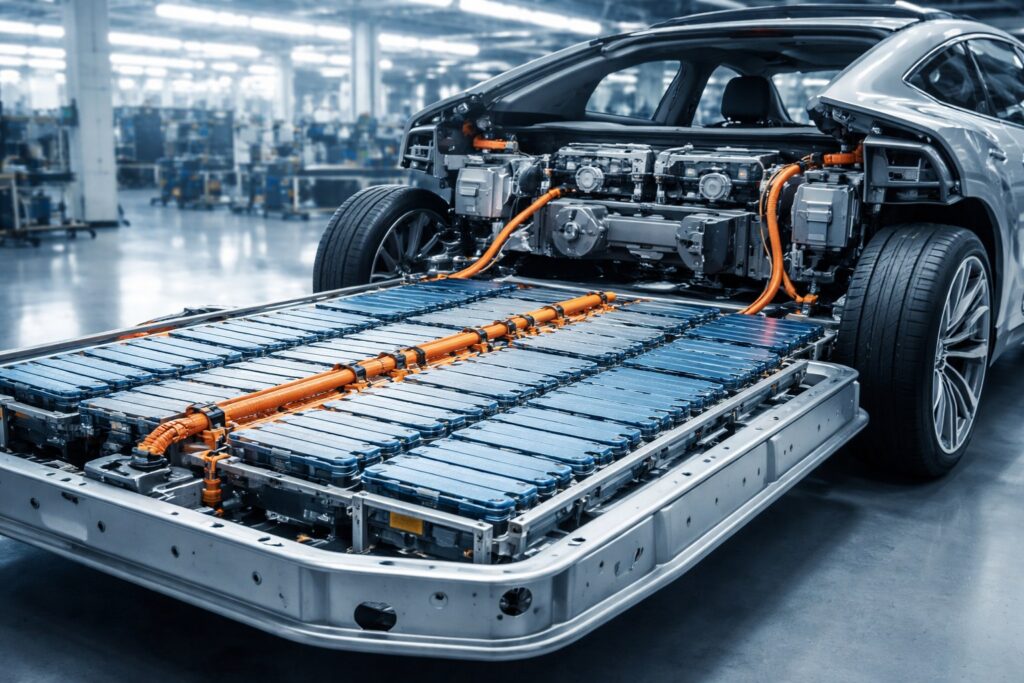
The same principle applies to transportation. The efficiency of internal combustion engine vehicles is constrained by thermodynamic limitations, with most gasoline burning off as waste heat and noise. Only a small fraction of the energy actually propels the vehicle forward. Electric vehicles circumvent this issue, as electrical energy is almost directly converted into mechanical power. Consequently, for the same distance traveled, an electric vehicle often requires only one-third, or even less, of the energy consumed by a gasoline vehicle. This is simply a matter of basic physical laws.

The kitchen serves as a microcosm of this phenomenon. Gas stoves disperse flames, with nearly all the heat wasted outside the pot; in contrast, induction cookers generate heat directly at the bottom of the pot, concentrating the heat. When cooking the same meal, the difference in ‘useful energy’ consumed between gas and electricity is substantial. These seemingly trivial daily scenarios collectively reflect the energy structure of society as a whole.

In addition to these three commonly cited examples, there are many other factors quietly reshaping energy demand. Lighting is a typical case; during the era of incandescent bulbs, most electricity was wasted as heat, but LED bulbs have nearly eliminated this waste, leading to a continuous decline in the proportion of electricity consumed for lighting and permanently lowering demand.

Industrial sectors also contain numerous overlooked efficiency gains. Electric motors are already more efficient than combustion engines, but when paired with variable frequency drives, they can precisely adjust power output according to actual loads, avoiding idling and excessive consumption. This can save electricity costs for factories and significantly reduce the demand for primary energy across the entire economy.

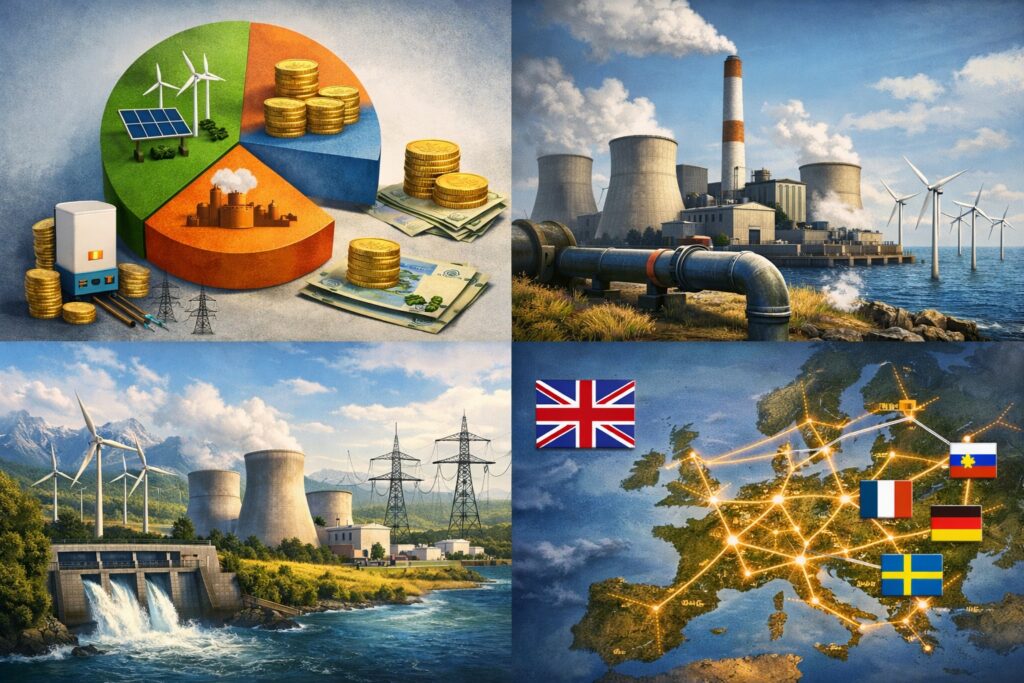
More importantly, electrification not only enhances end-use efficiency but also drastically reduces waste within the energy supply chain itself. Today, as much as 40% of the weight of goods transported globally by sea consists of coal, oil, and natural gas. A vast amount of shipping, fuel, labor, and time is expended merely to transport ‘fuel itself’ from one continent to another. This does not even account for the energy losses involved in liquefied natural gas cooling and regasification, as well as the energy consumed during the extraction, refining, and storage of oil. In a world dominated by electricity, energy is increasingly produced locally and transmitted via the grid, allowing for a significant reduction, or even elimination, of this lengthy and inefficient fuel logistics chain.

The IEA’s scenario models indicate that under a strong decarbonization pathway, global final energy demand may actually decline due to these efficiency differences being systematically aggregated. People’s lives do not become poorer; the levels of service for transportation, heating, lighting, and production do not diminish, yet the energy required to provide these services is significantly lower than in the past. There is no doubt that electricity demand will rise; however, ‘total energy’ and ‘electricity consumption’ are not the same thing.

We are currently living in a highly inefficient transitional era, using vast amounts of energy to compensate for outdated systems and technologies. As heat pumps, electric vehicles, and efficient motors gradually become mainstream, energy demand may decline even as the economy continues to grow. The issue has never been how much energy humanity requires, but rather whether we are still willing to use it in such an inefficient manner.

Inefficiency and Transformation of Energy Demand Read More »

Scroll to Top