Author name: 胡思

The Painful History of Immigration in Britain

When examining British history from its origins, immigration is not merely an episodic occurrence during certain periods; rather, it is a fundamental means by which this island has been continuously reshaped. The difference lies in whether immigrants arrived with luggage or with legions.

The earliest inhabitants of Britain were Neanderthals, who roamed the region intermittently between 400,000 and 40,000 years ago. They became extinct across Europe around 40,000 years ago, leaving no continuous population. Today, the genetic contribution of Neanderthals in modern Britons is minimal, representing traces left by earlier mixed populations on the European continent rather than a local continuity.

Modern humans began to settle in Britain approximately 10,000 to 8,000 years ago. After the Ice Age, Britain was still connected to Europe, allowing hunter-gatherers to move freely. Around 4000 BC, Neolithic farmers migrated from Europe, introducing agriculture and settled life; by around 2500 BC, the population associated with the Bell Beaker culture, which arrived with bronze technology, had genetically replaced much of the original population on the island. Before written records, Britain had already experienced multiple instances of population replacement.

From 800 BC to the 1st century AD, tribal societies emerged on the island, collectively referred to as the Celts. However, the Celts were not a single ethnic group but rather a linguistic and cultural sphere, already the result of multiple waves of migration and mixing. They are often mistakenly identified as ‘the earliest Britons’ simply because there were no stronger newcomers before the arrival of the Romans.

Beginning in AD 43, Roman legions entered Britain. Politically, this was a military occupation, but in terms of population and institutions, it was still a form of immigration: soldiers, bureaucrats, merchants, and their families settled long-term, establishing cities, roads, laws, and tax systems. Local residents were incorporated into the imperial system but remained on the margins of power. After the Roman withdrawal in the early 5th century, a power vacuum was left behind.

From the 5th to the 7th century, the Anglo-Saxons gradually settled in Britain. They came from what is now northern Germany, Denmark, and the Netherlands, and their arrival was not a brief invasion but a migration of families. Language, land tenure, and laws were completely rewritten, giving rise to the term ‘England,’ while the original inhabitants were progressively marginalized.

From the 8th to the 10th century, Vikings from Scandinavia entered Britain via the North Sea and the eastern coast, engaging in raiding, trade, and settlement, even establishing their own rule. By the early 11th century, they had been absorbed into local society. The Norman Conquest of 1066 represented an elite-level immigration, with the ruling class from northern France taking over land, military, and legal systems, relegating English to a lower-class language for centuries.

From the medieval period to the early modern era, the flow of people between Britain and the European continent never ceased. Merchants, craftsmen, scholars, and mercenaries frequently moved back and forth. In the 16th and 17th centuries, a significant influx of Protestant refugees, such as the Huguenots, migrated from France and the Low Countries, reshaping the handicraft industries of London and southeastern England. During the same period, Britain began to export large numbers of people to North America and the Caribbean, gradually becoming a country of emigration.

In the 18th and 19th centuries, imperial expansion sent populations, institutions, and military forces around the world; by the mid-20th century, as the empire receded, immigration began to reverse. After 1948, immigrants from the Caribbean and South Asia were brought in to help rebuild post-war Britain, yet they were often viewed as temporary residents. The subsequent ‘Windrush scandal’ revealed not only administrative failures but also systemic neglect.

Entering the 21st century, new immigrants from Hong Kong began arriving in Britain after 2021. They came legally to fill labor and professional gaps but faced tightening policies and shifting public sentiment. Although times and languages have changed, the structural logic remains the same.

A clear understanding of this timeline leads to a rather calm conclusion: Britain has never been a static nation-state but rather a result of layers upon layers of migration. Immigration is not an exception; it is Britain itself. The recurring bloodshed and tears do not stem from the arrival of people but from the timing of power’s exclusion.

The Painful History of Immigration in Britain Read More »

Wind Power’s Curtailment and Future Energy Transition

When discussing wind power, critics often point to the same scenario: strong winds but stationary turbines, leading to electricity being ‘wasted’. Consequently, some conclude that this reflects a failure of the system, a misallocation of investment, or even that no further wind turbines should be built. This perspective, while seemingly intuitive, overlooks the fundamental logic of energy transition.

Let us first lay the facts on the table. The so-called curtailment of wind power does not mean that the electricity is unwanted; rather, it occurs when generation exceeds the immediate transmission capacity of the grid, necessitating a limitation on output. In the context of the UK in 2025, the curtailed wind power is expected to account for about 10% of the total potential wind generation for the year. In other words, nearly 90% of wind power will still be successfully delivered to the grid and utilized. To base the success or failure of energy policy on this transitional 10% is to miss the point entirely.

Understanding this issue is not difficult. Imagine the energy system as akin to constructing a building. Many large residential projects often begin with road construction, laying pipes, and pulling cables, even before the houses are built. In the short term, the roads may be empty and the lines underutilized, but no one would accuse this of being wasteful. Without these preparatory works, the houses could not possibly come into existence.

The relationship between the grid and wind power is similar. Wind turbines can be constructed quickly, while grid upgrades progress more slowly; thus, the two cannot be perfectly synchronized in timing. As the penetration of renewable energy begins to rise, transmission bottlenecks will inevitably emerge first. This is not an error but rather a structural friction that arises once the transition reaches a certain scale.

More importantly, wind power curtailment is a transitional issue. The limitations seen today along the North Sea coast or in certain areas of Scotland are not the norm for the system; they are highly concentrated in specific locations and times. With the strengthening of transmission lines, enhanced inter-regional transport capacity, and the gradual maturation of energy storage and demand management, these bottlenecks will be systematically resolved. Looking back a decade from now, today’s curtailment will merely be an inconvenience during a construction phase, not a long-term loss.

Some have thus argued: since curtailment occurs, we should not build more wind turbines. This reasoning completely reverses the causal relationship. Without a sufficient amount of wind power, there is no economic value in upgrading the grid. Investments in the grid often run into billions of pounds and cannot occur in a vacuum; they require clear and sustained demand signals. If the scale of wind power is insufficient, grid expansion will only become an idle asset, yielding no returns and making it difficult to achieve political and social consensus.

The true logic should be: wind power must come first, making grid upgrades worthwhile. When both wind power and the grid are gradually perfected, cheap, stable, and zero-fuel-cost renewable energy will transition from being a ‘supplementary option’ to the norm of the system. To demand zero curtailment before the grid is adequately established is, in itself, an unrealistic expectation.

From a broader perspective, the benefits brought by wind power have long surpassed the approximately 10% of curtailed output. It lowers overall generation costs, reduces reliance on fossil fuels, and provides a clear and credible investment direction for future grid upgrades. Focusing solely on curtailment while ignoring the nearly 90% of stable power supply is neither rational nor honest.

The real waste is not the temporarily unused wind, but rather the fear and misunderstanding that halt the progress that should continue.

Wind Power’s Curtailment and Future Energy Transition Read More »

Cross-Party MPs Write to Home Office on BN(O) Settlement

A group of cross-party members of the UK Parliament, alongside over thirty MPs from both Houses, have written to the Home Secretary, expressing concerns that the new Earned Settlement proposal may prevent the majority of BN(O) visa holders from obtaining the originally promised settled status.

The government plans to launch a public consultation by the end of 2025, proposing higher income and English language requirements, claiming it aims to promote “economic independence and social integration.” However, MPs and civil society groups worry that these new stipulations effectively represent a ‘moving of the goalposts’ for BN(O) applicants, particularly at a critical juncture when many Hongkongers are nearing the five-year threshold for settlement under the original terms.

The public consultation regarding Earned Settlement is currently ongoing, and I will share the official consultation link in the first comment. The results of this consultation will directly impact the future eligibility criteria for BN(O) applicants seeking ILR (Indefinite Leave to Remain) and settled status, making it worthwhile for those who have not yet responded to take a few minutes to review and submit their opinions.

Dear Home Secretary,

As a group of concerned parliamentarians, we are writing to you regarding the eligibility issues faced by British Nationals (Overseas) (BN(O)) Hongkongers applying for settled status in the UK. While we welcome the government’s announcement on November 20, 2025, to maintain the five-year pathway to ILR for BN(O) visa holders, the introduction of mandatory ILR requirements has left many BN(O) individuals feeling anxious about their future.

A survey conducted by the UK charity Hong Kong Watch, weighted by population, reveals that only 12% of BN(O) individuals are confident they can meet the proposed income and language requirements to secure ILR. More concerning is that, as children must be included in their parents’ applications or already have settled status to qualify, as many as 98% of BN(O) children may face delays in obtaining settled status.

Delays in settled status for BN(O) children could have significant implications for their education. Without ILR, they cannot enroll in UK universities as home students; furthermore, they are excluded from overseas study opportunities due to lack of consular protection and other visa restrictions. Many of our BN(O) constituents are under severe financial pressure, unable to afford international tuition fees for their children, who are thus forced to delay or even abandon their educational and career aspirations.

We are also deeply concerned about the situation of retired BN(O) individuals. Without settled status in the UK, they cannot access their Mandatory Provident Fund (MPF) retirement savings from Hong Kong, leaving their financial futures fraught with uncertainty.

The BN(O) visa represents a tailored humanitarian pathway, distinct from other economic immigration routes. As a low-income, high-asset group, BN(O) individuals often rely on personal savings, interest, and dividends to support their new lives in the UK. Initially, the government allowed them to contribute to British society in diverse roles, such as students, community volunteers, caregivers, and retirees. Introducing new requirements now would disproportionately impact BN(O) families, severely disrupting the lives of over 200,000 Hongkongers who have come to view the UK as home, and would undermine the government’s commitment to welcoming these British nationals back.

We appreciate the open and proactive communication from Lord Hanson of Flint, the Minister of State for the Home Office, on this issue. We trust that the UK government will continue to support BN(O) individuals and respect the unique humanitarian purpose of this scheme. In this spirit, we urge the government to fully exempt BN(O) individuals from income requirements and to provide transitional arrangements for the language requirements for those already on the path to application.

Sincerely,

Emily Darlington MP, Chair of the APPG on Hong Kong, Milton Keynes Central (Labour)

Bobby Dean MP, Vice Chair of the APPG on Hong Kong, Carshalton and Wallington (Liberal Democrats)

Alistair Carmichael MP, Vice Chair of the APPG on Hong Kong, Orkney and the Shetlands (Liberal Democrats)

Lord Alton of Liverpool, Vice Chair of the APPG on Hong Kong (House of Lords, Crossbench)

Lord Shinkwin, Vice Chair of the APPG on Hong Kong (House of Lords, Conservative)

Baroness Bennett, Vice Chair of the APPG on Hong Kong (House of Lords, Green Party)

James Naish MP, Rushcliffe (Labour)

Charlotte Nichols MP, Warrington North (Labour)

Dr Ellie Chowns MP, North Herefordshire (Green Party)

Jo Platt MP, Leigh and Atherton (Labour and Co-operative)

Will Forster MP, Woking (Liberal Democrats)

Adrian Ramsay MP, Waveney Valley (Green Party)

Graeme Downie MP, Dunfermline and Dollar (Labour)

Mark Sewards MP, Leeds South West and Morley (Labour)

Carla Denyer MP, Bristol Central (Green Party)

Chris Hinchliff MP, North East Hertfordshire (Labour)

Rachael Maskell MP, York Central (Labour and Co-operative)

Dr Scott Arthur MP, Edinburgh South West (Labour)

Gareth Thomas MP, Harrow West (Labour)

Sarah Hall MP, Warrington South (Labour)

Danny Beales MP, Uxbridge and South Ruislip (Labour)

David Baines MP, St Helens North (Labour)

Sian Berry MP, Brighton Pavilion (Green Party)

Sarah Champion MP, Rotherham (Labour)

Michael Wheeler MP, Worsley and Eccles (Labour)

Cat Smith MP, Lancaster and Wyre (Labour)

Martin Rhodes MP, Glasgow North (Labour)

Luke Taylor MP, Sutton and Cheam (Liberal Democrats)

Graham Stringer MP, Blackley and Middleton South (Labour)

Yuan Yang MP, Earley and Woodley (Labour)

Marie Rimmer MP, St Helens South and Whiston (Labour)

Sarah Edwards MP, Tamworth (Labour)

Juliet Campbell MP, Broxtowe (Labour)

Christine Jardine MP, Edinburgh West (Liberal Democrats)

Nadia Whittome MP, Nottingham East (Labour)

Tom Tugendhat MP, Tonbridge (Conservative)

Cross-Party MPs Write to Home Office on BN(O) Settlement Read More »

Lessons from the UK’s 2019 Constitutional Crisis

In 2019, the United Kingdom found itself on the brink of constitutional crisis. Many began to ask a question that had previously only appeared in political science textbooks: can a democracy without a written constitution withstand moments of power abuse? At the heart of that crisis was the government’s attempt to achieve politically motivated ends that contravened the spirit of democracy through ostensibly legal means.

The catalyst for the situation was Prime Minister Boris Johnson’s suggestion to suspend Parliament. The stated reason was to prepare for a new parliamentary session, but the actual effect was to render Parliament unable to convene, legislate, or oversee the government ahead of the Brexit deadline. This was not a traditional coup; there were no military forces or violence involved. However, this made it even harder to identify in real time. Commentators at the time described it as a “constitutional coup” or a “coup without tanks,” referring not to a violent seizure of power but to the executive’s attempt to temporarily shut down the democratic system at a critical moment.

The backlash was intense because it touched directly on the core principle of the UK’s constitutional framework: parliamentary supremacy. In the British constitutional tradition, Parliament is the supreme legislative body, and the legitimacy of the government derives from Parliament, not the other way around. Suspending Parliament is not inherently taboo, but if it prevents Parliament from fulfilling its functions for an extended period during a significant national decision, it effectively reverses the source of power, placing the executive above Parliament. This is why the event was viewed as a constitutional crisis rather than merely a political maneuver.

The crisis was ultimately resolved not in the streets but in the courts. The UK’s common law system has long maintained a high degree of restraint regarding royal prerogative, but this time, the judges could no longer avoid the issue. The Supreme Court unanimously ruled that the suspension effectively hindered Parliament from performing its constitutional functions, and the government failed to provide a reasonable explanation, rendering it illegal. The significance of this ruling was not merely to negate a single suspension but to clearly declare for the first time that any power that effectively undermines Parliament is not permissible under the law.

One critical hypothetical scenario that warrants reflection is what would have happened if the Prime Minister had refused to accept the ruling, insisted on continuing the suspension, and even ignored the court’s order. The answer is that the country would have immediately entered a state of genuine constitutional collapse. Judicial rulings would lose their efficacy, the rule of law would cease to exist; Parliament would be closed, and the democratic system would be inoperable; the monarchy would be forced into political confrontation, and the legitimacy of the entire system would rapidly disintegrate. Only at that moment would it truly meet the substantive definition of a coup.

For this reason, the survival of the system hinged on whether that final step was crossed. The government ultimately complied with the ruling, and Parliament reconvened immediately, avoiding a situation where the ruling was rejected or an alternative authority was established. It was at this moment that the UK averted a genuine institutional rupture. This was not because the system was perfect, but because key actors within the system chose to adhere to the system itself.

In the aftermath of the storm, British democracy became clearer and more robust. The courts drew a red line, indicating that suspension is not a political weapon; Parliament reaffirmed itself as the source of power rather than an executive appendage; and the public also saw for the first time that democracy is not merely a one-time election but a system that requires continuous operation and can self-correct in times of crisis. The UK may not have avoided the precipice entirely, but this experience made the baseline of democracy unprecedentedly clear.

Lessons from the UK’s 2019 Constitutional Crisis Read More »

Choosing New Electric Cars Under £25,000

The key to whether electric vehicles can truly enter the mainstream market lies not in flagship models, but in whether prices return to levels acceptable for the average household. In the past year, many new electric vehicles have seen starting prices drop below £25,000, signaling to prospective buyers that the time to consider a purchase has arrived.

Among the options available, the Dacia Spring is currently the cheapest, with a starting price of approximately £15,990. This vehicle does not attempt to please everyone; its limited range and moderate power are clear indicators of its intended use: short urban commutes. The low price point means a low barrier to entry, making it an attractive option for families in need of a ‘second car’ or a vehicle solely for commuting.

The Citroën ë-C3 starts at around £19,995 and has a distinctly different positioning. It is not designed to be the cheapest but rather to be the ‘most like a normal petrol hatchback electric vehicle.’ The ride comfort, cabin space, and overall proportions closely resemble traditional hatchbacks, making it appealing for users who do not wish to alter their lifestyle habits by switching to electric.

The Fiat 500e has a starting price of about £20,995. Its appeal lies not in value for money but in emotional connection and design. This car is clearly aimed at urban living; while space is limited, its attractive exterior and superior interior quality compared to many competitors in the same price range are noteworthy. The market’s acceptance of this model indicates that emotional factors still play a significant role, even in discussions about affordable electric vehicles.

The Renault 5 E-Tech Electric currently starts at approximately £22,985 in the UK. This vehicle garners attention not because it is the cheapest but because it represents a direction for the market. The return of a classic name, combined with relatively restrained pricing, sends a clear message: electric vehicles are no longer merely showcases of new technology but can once again become familiar small cars for the masses.

The Hyundai Inster starts at around £23,755. Compared to other options, it is slightly more ambitious in terms of range and equipment, attempting to provide a bit more reassurance of ‘normal use’ while still maintaining an acceptable price point. The existence of such models indicates that the market is beginning to feature diverse affordable electric vehicles rather than a single template.

Feeling intrigued? How would you choose?

Choosing New Electric Cars Under £25,000 Read More »

Unilever: The Invisible Giant of British Daily Life

We use its products daily, yet often remain unaware of their British origins. From washing our faces and hair in the morning to cooking, doing laundry, cleaning our homes, and even enjoying desserts at night, Unilever’s influence is likely present. This is not mere rhetoric but a reality: the company has permeated daily life, yet most people do not equate it with a ‘British enterprise.’

Headquartered in London, Unilever is a multinational company listed on the British stock market and regulated by British capital markets. Its market capitalization has hovered around £100 billion in recent years, consistently ranking among the top five companies by market value in the UK, alongside major banks and energy giants. In other words, it is not a marginal old enterprise but a core member of the British capital market.

To understand how Unilever has achieved this status, one must consider its extensive portfolio of everyday brands, most of which people use daily without necessarily realizing they belong to the same group. In personal care, brands such as Dove, Lux, Lifebuoy, Rexona, Axe, or Lynx dominate the bathrooms and washrooms of many countries. In laundry and home cleaning, high-frequency products include OMO, Persil, Surf, Domestos, and Cif. In food and condiments, there are Knorr, Hellmann’s, and Maille. Unilever’s ice cream business is a traditional stronghold, with Wall’s, Magnum, Cornetto, and Ben & Jerry’s leading in various markets. The commonality among these brands lies not in their trendiness or buzz but in their long-term, repeated use once they enter households.

This aspect is easily overlooked because of Unilever’s understated presence. It does not sell technological visions, does not discuss disrupting the future, and rarely becomes the center of political or industrial controversies. Instead, it focuses on low-priced, high-frequency, and indispensable necessities. Products like shampoos, soaps, laundry detergents, cleaning supplies, and seasonings may seem unremarkable, but their demand is nearly constant. This is the fundamental reason behind its ability to maintain a substantial market value over the long term.

In addition to its corporate headquarters in London, Unilever retains several important physical locations in the UK. The most historically significant is Port Sunlight, located on the Wirral Peninsula in northwest England. This site has been operational for over a century and was once not just a factory but a complete corporate community. Today, Port Sunlight remains an important manufacturing and R&D base, rather than merely a historical relic. In northern England, including the Leeds area, there are also production facilities related to food and condiments, supported by various R&D, packaging, and logistics centers that underpin its highly efficient supply chain.

Unilever’s business logic is distinctly ‘British.’ It does not pursue explosive growth but rather seeks predictable cash flow; it relies not on one-off purchases but on long-term habits; it does not need consumers to identify with the company itself, only to have basic trust in its brands. Consequently, it may not shine particularly brightly during economic booms but demonstrates remarkable resilience during downturns. People might delay changing cars or smartphones, but they will not stop washing clothes, cooking, and cleaning their homes.

Because of its highly localized branding, many consumers in Asia, Africa, and even Europe do not care that Unilever is a British company. This, in fact, underscores its success: it no longer needs nationality as a selling point. There are few multinational companies that can achieve this.

Looking back, Unilever may not be the most exciting or talked-about British company, but it is undoubtedly the one most closely aligned with everyday life. With a market value of £100 billion, it has long maintained a leading position in the UK stock market while choosing to exist quietly within every household. This reminds us that a company’s ultimate success does not necessarily come from being seen, but rather from being needed every day.

Unilever: The Invisible Giant of British Daily Life Read More »

The Physics Behind Curling’s Unique Dynamics

The Winter Olympics are in full swing, and amidst a host of events defined by speed and explosive power, curling stands out as an anomaly: its pace is slow, movements are restrained, and it appears devoid of dramatic tension. However, after watching a few matches, one realizes that this sport is exceptionally ruthless, as each stone cannot be remedied once thrown, and nearly all outcomes are determined at the moment of release.

To understand why the physics of curling is so crucial, one must first clarify the rules and scoring. Curling matches are calculated in ‘ends’, with each team throwing 8 stones, for a total of 16. After all stones are thrown, only one team can score: the team whose stones are closest to the center of the house scores, and the number of points is equal to the number of that team’s stones that are closer to the center than the opponent’s closest stone. In other words, it is not simply about having more stones in the house; rather, the order of distance determines everything. A stone that is 10 centimeters off can turn a score from 2 points to 0 points.

Thus, curling is never just about ‘pushing the stone’; it is an art of path control. Many people, upon first seeing curling, wonder why the stone, which appears to be sliding straight, curves to one side at the end. The intuitive answer is often ‘because of the spin’, with some even likening it to a bending soccer ball, but this is not entirely accurate. The curvature of the curling stone does not stem from aerodynamics, but rather from subtle asymmetries in the friction with the ice surface.

The bottom of a curling stone is not flat; it features a narrow band that makes contact with the ice, meaning only this edge is in contact with the surface. The ice used in competitions is not as smooth as a mirror; it is sprinkled with countless tiny droplets that form bumps, referred to as ‘pebble’ in the industry. The stone actually slides on top of these minuscule ice particles, rather than across the entire ice surface.

As the stone moves forward with a slight spin, the ice particles it first contacts are compressed and rubbed, causing a slight increase in temperature; the ice it contacts later is no longer in its original state. This difference in contact states creates a slight increase in friction on the side where the stone is spinning. The difference is minimal, almost imperceptible in real time, but accumulates over the course of several seconds or even tens of seconds, ultimately pulling the stone towards the side of the spin, resulting in the unique and predictable curving path of curling.

The role of sweeping is often misunderstood as simply ‘brushing hard to make the stone go further’. In reality, sweeping is more about controlling the outcome rather than merely pursuing distance. Rapid sweeping raises the temperature of the ice surface momentarily, creating a very thin layer of water while smoothing the tips of the pebble, altering the friction distribution between the stone and the ice. The result is not merely faster or slower; it is about how much or how little the stone curves and when it curves. In high-level competitions, sweeping is often employed to pull back a shot that would otherwise score negatively into a scoring position.

Even within the same Winter Olympics, the conditions of the ice can vary slightly from match to match and time to time. Factors such as venue humidity, ice temperature, water distribution, and wear from previous matches can all affect the state of the pebble, thereby altering the friction characteristics. Top teams repeatedly practice their shots before the match, not relying on intuition but recalibrating to the physical conditions of the ice that day.

Even the material of the curling stones is a serious scientific choice. Competition stones are almost exclusively made from a specific type of granite, not out of tradition but because of its dense crystalline structure and extremely low water absorption rate, allowing it to maintain a stable shape under repeated impacts and long-term friction. If the stones absorb water or develop micro-cracks, the behavior of the contact ring will change over time, leading to a collapse in the predictability of the entire sport.

Curling may appear slow, but it merely stretches extremely small physical effects to a scale observable by the human eye. A bit more spin or half a second less of sweeping may only differ in the third decimal place of the friction coefficient, yet it is enough to turn a scoring shot into a non-scoring one. This is not a slow sport; it is one that demands extreme precision. The next time you watch curling at the Olympics, remember that the elegant arc is underpinned by a comprehensive set of physical laws, operating quietly and accurately.

The Physics Behind Curling’s Unique Dynamics Read More »

Solihull: A Rational Choice for Hong Kong Immigrants

Choosing a location for immigration is not about seeking the most vibrant areas but rather calculating the long-term risks and rewards of living. Solihull has increasingly attracted Hong Kong residents precisely because it occupies a key position: close enough to the core city while avoiding its structural issues.

First, consider transportation. Solihull is located just a short distance from Birmingham Airport, with a drive from the city center or major residential areas taking approximately ten minutes. Although there are currently no direct flights to Hong Kong, connections to major European cities and flights to Asia via the Middle East are quite convenient, making the airport highly accessible.

The under-construction HS2 high-speed rail station, Birmingham Interchange, is also nearby, with a travel time of less than fifteen minutes. Once operational, the HS2 will allow passengers to reach London Old Oak Common in about 38 minutes. This means that Solihull is no longer just a peripheral town of Birmingham but a key node in the national high-speed rail network, fundamentally reshaping travel times.

However, what truly attracts Hong Kong immigrants to Solihull goes beyond transportation. It is close to Birmingham but does not equate to being part of the inner city. Residents can access the job market, commercial amenities, and higher education resources of a large city while avoiding the common issues of high density, traffic congestion, noise, and security pressures often found in urban centers. This state of being ‘close to the city but not in the city’ is often more important for families, especially those with children, than mere commuting times.

Solihull itself is also one of the important employment areas in the UK, with a concentration of high-tech and manufacturing jobs, as well as large exhibition and conference facilities, allowing local employment to not rely entirely on Birmingham city center. Additionally, the area boasts a high ratio of greenery and open spaces, with ample parks, woodlands, and walking paths, providing residents with easy access to nature, which has a profound impact on long-term well-being. Furthermore, the overall stability of school choices, mature community structures, and relatively low resident turnover contribute to a clear living order.

From a broader perspective, Hong Kong residents have historically excelled at choosing their settlement locations. In previous waves of immigration, they often did not chase the most famous or highest-priced cities but instead opted for areas with clear transportation, stable structures, and sustainable living. Solihull perfectly aligns with this judgment logic: it does not attract attention through short-term trends but rather excels in location, structure, and long-term viability.

Choosing Solihull is not about promises of surprises but about minimizing the uncertainties of life while retaining the ability to connect outward. For immigrant families who understand how to assess risks, this is a calculated choice rather than an emotionally driven one.

Solihull: A Rational Choice for Hong Kong Immigrants Read More »

Will AI Surpass Humans in Twenty Years?

The question of whether artificial intelligence will surpass humans within twenty years has shifted from science fiction to a pressing topic of discussion among researchers, industry leaders, and policymakers. The real divide lies not in whether it will happen, but in the standards for ‘surpassing’ and who is qualified to make that judgment.

One of the most prominent warners is Geoffrey Hinton. As a pioneer of deep learning and former chief researcher at Google, he is not a mere observer but an architect of the neural network revolution. In recent years, Hinton has publicly acknowledged that he underestimated the speed of technological advancement. He previously believed that humanity had a buffer of 30 to 50 years, but now he considers it realistically possible for AI to reach or exceed human levels in most cognitive tasks within the next 10 to 20 years. His timeline is based on an engineering intuition regarding model scale, emergent capabilities, and self-learning potential, rather than abstract philosophy.

In contrast stands Yann LeCun. Also one of the three giants of deep learning and currently the chief AI scientist at Meta, LeCun emphasizes that today’s AI is fundamentally still a high-level statistical tool, lacking a true understanding of the physical world, causal relationships, and common sense. In his view, unless a groundbreaking theoretical breakthrough occurs, the so-called general artificial intelligence remains ‘decades away’ and may not be achievable through existing pathways alone. He does not provide a specific year but offers a clear negation condition.

At the forefront of industry is Sam Altman. As the CEO of OpenAI, his role is not to define intelligence but to drive capabilities into practical applications. Altman avoids claiming a specific year for when AI will ‘surpass humans,’ but he paints a shorter timeline: within the next 5 to 10 years, AI will be capable of causing irreversible impacts on the labor market and institutional structures in fields such as scientific research, programming, medical assistance, and administrative decision-making. This perspective focuses on when the effects will become undeniable.

The most definitive in terms of timeline is futurist Ray Kurzweil. As an inventor who has long studied computational trends and a former engineer at Google, he predicts that around 2045, machine intelligence will fully surpass human intelligence, triggering what is known as the ‘singularity.’ His judgment is based on extrapolations of exponential growth in computing power, cost, and data scale, which supporters view as a calm mathematical inference, while critics argue that social, energy, and political frictions do not exhibit exponential growth.

When these viewpoints are juxtaposed, a clear structure emerges: Hinton points to a mid-term risk window within twenty years, Altman describes institutional impacts already occurring within ten years, Kurzweil provides a long-term endpoint, while LeCun warns that the entire trajectory may overestimate existing technologies.

Thus, the notion of ‘AI surpassing humans within twenty years’ may not represent a singular moment but rather a cumulative series of critical points. By the time society semantically acknowledges ‘surpassing,’ the scales of power, efficiency, and decision-making may have already tipped.

Will AI Surpass Humans in Twenty Years? Read More »

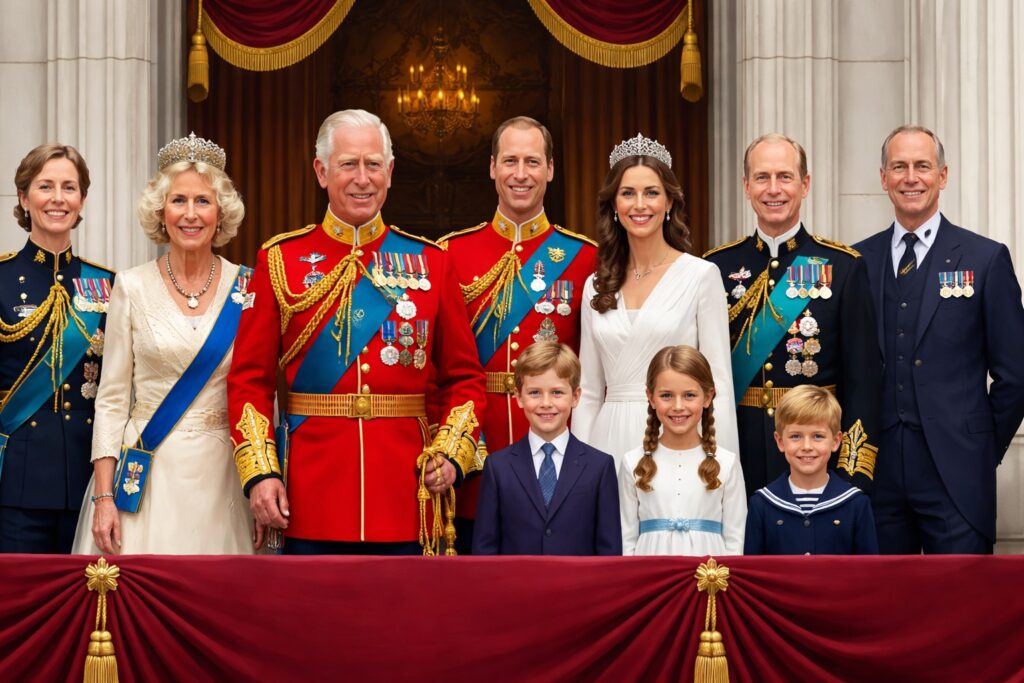
The Mystery of the British King’s Identity

Matthew Goodwin is a British political scholar who has recently become a significant figure in right-wing populist discourse and is currently representing the Reform Party in an upcoming parliamentary by-election. He has long studied national identity and voter behavior, but his recent public statements increasingly blur a critical line: whether ‘British’ and ‘English’ pertain to legal and civic identity or must be linked to bloodlines, generational continuity, and ethnic origins. This rhetoric shifts the discussion of identity from a systemic issue to one of genealogical scrutiny.

If we follow Goodwin’s line of reasoning on identity, British society would arrive at a superficially consistent yet absurd conclusion: being British or English is no longer merely a legal status but a qualification that requires verification through bloodlines and generations. A person born in the UK, educated in the UK, and legally possessing nationality could still be questioned about their true belonging to this country if they do not have ‘enough generations’ behind them.

However, applying this standard seriously to the UK itself would lead to immediate self-destruction. The first to fail this test would be none other than the current King Charles III. The modern British monarchy has never been composed of so-called ‘native English blood.’ The House of Windsor originated from the German House of Saxe-Coburg and Gotha, which only changed its name during World War I to align with the political and social climate. The name changed, but not the blood.

Further dissecting King Charles’s lineage makes the issue even clearer. His father, Prince Philip, was born in Greece, and his family, the House of Glücksburg, originates from northern Germany, later becoming central to the Danish and Greek royal families. On his mother’s side, Queen Elizabeth II also traces her ancestry back to German royalty. Additionally, the intermarriages among European royal families over centuries for diplomatic and power balance reasons mean that King Charles’s genealogical network spans Germany, Denmark, Greece, Russia, France, and the Netherlands. Crucially, of King Charles III’s eight great-grandparents, only one is Scottish, and another can barely be considered English; the rest all hail from continental royal bloodlines, almost none meeting the so-called ‘native English blood’ standard.

Historically, no one in Britain has ever denied the British identity of the royal family due to ‘impure’ bloodlines. The reason is simple: British has never been a biological concept. It is a political and legal identity based on systems, civic rights, responsibilities, and constitutional roles, rather than where one’s ancestors lived generations ago. Britain itself is constituted by multiple waves of immigration, conquest, and integration; if bloodlines were used to validate belonging, the very existence of Britain as a nation would be impossible.

As for English, the controversy is even more bizarre. Britain is a country composed of four nations: English, Welsh, Scottish, and Northern Irish. Normally, if a person is British, they would naturally correspond to one of these identities. However, Reform Party member Suella Braverman has stated that even though she was born in Britain, she does not describe herself as English because her family has not been ‘generations in England,’ only identifying as British. This statement effectively transforms English from a geographical and cultural identity into a qualification based on deep genealogical thresholds.

The greatest problem with Goodwin’s narrative is that it undermines the fundamental logic of modern nationhood. Once national identity becomes a contest of bloodlines, the boundaries will continually narrow, leaving some forever deemed ‘not pure’ and others ‘not qualified.’ And when even King Charles fails this standard, it clearly indicates that the issue lies not with individuals but with the standards themselves.

Thus, the question ‘Is the British King not British?’ is not a provocation but a mirror reflecting absurdity. What it reveals is not the royal bloodline but an attempt to redefine the nation through the lens of genealogy.

The Mystery of the British King’s Identity Read More »

Scroll to Top