Author name: 胡思

The Evolution of Hongkongers’ Right of Abode in the UK

The term “the empire on which the sun never sets” is not merely rhetorical; it is a historical fact. At its peak in the early 20th century, the British Empire governed approximately 24% of the world’s land area and accounted for about 23% of the global population, making it the largest empire in human history. The operation of the empire was quite straightforward: it integrated people scattered across the globe into a single political system through a set of legal identities. The history of British identity for Hongkongers is a microcosm of how the colonial power gradually withdrew its responsibilities as the empire receded.

Before the emergence of modern nationality systems, there was no concept of “nationality” as we understand it today within the empire. From the 19th century to the early 20th century, the basic legal status was that of a British subject, centered on loyalty to the Crown rather than residence or immigration rights. The post-war British Nationality Act of 1948 institutionalized this imperial subject relationship, creating Citizens of the United Kingdom and Colonies (CUKC). Within this framework, Hongkongers and British residents were nominally part of the same nationality; at least at the outset, there was no deliberate distinction between the rights of “home” and “colonial” subjects.

The real turning point occurred in the 1960s. With an increase in immigration from colonies and the Commonwealth, domestic political pressure in the UK surged. The government did not outright deny imperial nationality but chose to gradually sever the link between “nationality” and “right of abode” through immigration law. The Commonwealth Immigrants Act of 1962 was the first to impose work and entry restrictions on Commonwealth and colonial citizens; the Commonwealth Immigrants Act of 1968 further established birth or blood ties to the UK as substantive thresholds; finally, the Immigration Act of 1971 formally introduced the concept of right of abode, restricting it to a very small number of individuals with “close ties to the UK.”

These three pieces of legislation collectively achieved a critical severance. While the identity of CUKC still existed, it no longer came with the right to settle in the UK for the majority of colonial residents. Hongkongers did not suddenly lose their right of abode on a specific day; rather, they were gradually excluded at three key junctures: 1962, 1968, and 1971.

The British Nationality Act of 1981 provided a systematic summary of this reality. It was not a repair but a rewrite, formally ending CUKC and establishing a tiered nationality structure, the core principle of which was to concentrate the right of abode within the narrowest category of British citizens. The six types of British nationality recognized under British law thereafter were gradually organized and supplemented within this framework, including the later-established British National (Overseas) (BN(O)) specifically for Hongkongers.

Under this system, the most complete identity is that of a British citizen, which generally comes with the right of abode. The other five types are historical remnants or transitional identities, including British Overseas Territories Citizen (BOTC), British Overseas Citizen (BOC), British subject, British National (Overseas) (BN(O)), and British protected person. All six belong to the British nationality system, but there are significant differences in rights; most of the latter do not automatically confer the right of abode.

The British Nationality Act of 1981 established British Dependent Territories Citizen (BDTC) as a new status for colonial residents. Subsequently, BDTC was renamed British Overseas Territories Citizen (BOTC) in line with the political and legal terminology adjustment as colonies were referred to as “overseas territories.” Today, BOTC primarily consists of residents from overseas territories still under British sovereignty, such as Gibraltar, Bermuda, the Cayman Islands, and the British Virgin Islands. After 2002, the UK allowed most BOTCs to also become British citizens, so many overseas territory residents today effectively hold the right of abode.

British Overseas Citizen (BOC) represents a “residual status” in the decolonization process. These individuals were often originally CUKC but, after 1981, neither belonged to the UK nor any overseas territory, such as certain East African Asian communities. Legally, they still hold British nationality, but in practice, they have no place to settle. As for British subject and British protected person, only a very small number remain today, mostly remnants of early imperial arrangements, with almost no new additions, resembling historical traces that have not been fully cleared from the legal framework.

The transition of Hongkongers’ identity falls precisely within this tiered system. After 1981, Hong Kong residents automatically became BDTC from their original CUKC status. With the arrangements for the transfer of sovereignty confirmed, the UK established a specific export applicable only to Hong Kong: BN(O), or British National (Overseas). Through registration, eligible Hong Kong BDTCs could obtain BN(O) status. The two could coexist before 1997; however, with the transfer of sovereignty, the BDTC status linked to Hong Kong was terminated in 1997, while those who had registered retained their BN(O) status. Some individuals who might have become stateless were converted to BOC to avoid a legal vacuum.

Beyond this main narrative, the UK also made a one-time limited exception. The British Nationality (Hong Kong) Act of 1990 established a so-called right of abode scheme, capped at 50,000 individuals, including their spouses and minor children, affecting approximately 220,000 people in total. This was not a universal arrangement but a highly selective political solution. The selected individuals primarily came from the government, disciplined forces, professional sectors, and those deemed to hold “key positions,” aimed at stabilizing the administrative and economic systems before 1997. In these families, the first generation directly obtained British citizenship, and their spouses and minor children could register together; subsequent generations born later depended on whether their parents’ status could be inherited; otherwise, they would still need to follow normal residency, settlement, and naturalization procedures.

For the vast majority of Hongkongers, the real turning point came in 2021. The introduction of the BN(O) visa clarified the system for the first time: BN(O) is no longer merely “passport holders without residency rights” but a pathway to gradually obtain permanent residency and British citizenship through a period of residence and compliance with the law. This is not a return of old imperial rights but a clear, accumulative, and achievable transition pathway under a modern immigration system.

When viewed together, the logic is remarkably consistent. The UK first incorporated people through imperial nationality, then gradually withdrew the right of abode through immigration law; by the British Nationality Act of 1981, the tiered outcome was solidified; for Hong Kong, it transitioned first through BDTC and then BN(O), with the right of abode scheme serving as an exception only in very limited circumstances; it was not until 2021 that the BN(O) visa provided a systematic pathway for a portion of individuals to regain residency rights and citizenship. This is not an emotional story but a calm and clear institutional history.

The Evolution of Hongkongers’ Right of Abode in the UK Read More »

Is Tea Drinking a Culture or a Bad Habit?

Sitting down for dim sum and rinsing bowls before ordering is almost a reflex for Hongkongers. However, the question is straightforward: Are the utensils served to customers clean before they arrive at the table? If the answer requires customers to intervene, is this a cultural practice or a concession to basic standards?

From a scientific perspective, the hot water in tea houses typically reaches only 60 to 70 degrees Celsius, far below the temperature required for effective disinfection. At best, it removes surface stains but has little effect on bacteria. The action provides psychological comfort rather than genuine hygiene assurance.

The issue lies not on the table but in the kitchen. The safety of utensils is determined by the washing, disinfection, and storage processes, not by the final rinse performed by customers. When the assumption that ‘customers will wash their own utensils’ becomes the norm, restaurants are naturally incentivized to cut corners in their back-end processes: disinfection times can be shortened, and standards can be lowered, because the final sense of security has been outsourced to the diners.

The result is a lowering of overall standards. Ironically, those who insist that ‘clean utensils are the restaurant’s responsibility’ are the ones who suffer the most. Their refusal to rinse is not due to laziness but based on a reasonable premise: they are paying for food and drink, not to act as cleaners. Yet in a system that tacitly assumes customers will self-rescue, this insistence becomes a risk.

In fact, if one discovers that the utensils are unclean, the correct response is not to quietly rinse them but to demand an immediate replacement from the staff, escalate the issue to a manager if necessary, or even file a complaint with health authorities or relevant departments. Only by returning the issue to the institutional level and demanding that restaurants fulfill their responsibilities can standards be corrected. Otherwise, every instance of ‘let it go’ self-remedy only endorses negligence.

Thus, a responsibility that should be borne by professional institutions has quietly shifted to individual choice. This is neither mutual assistance nor virtue, but a misallocation of responsibility. In other cities, utensils must be ready for immediate use upon serving, and customers should not have to intervene; efficiency issues should be resolved through equipment and processes, not by assuming customers will fill the gaps.

When a habit that has little practical effect is taken for granted by the entire industry, it ceases to be a culture and becomes a bad habit.

Is Tea Drinking a Culture or a Bad Habit? Read More »

The Choice of Stable Population

The initial proposal of the system sparked intense social reactions.

Within three months of the announcement, multiple cities witnessed protests and conflicts. The core demand of the protesters was straightforward: any arrangement requiring citizens to relinquish political rights should not be packaged as a voluntary option. Some demonstrations escalated into riots, leading to multiple parliamentary suspensions and a surge in constitutional court applications for judicial review of the law’s constitutionality.

The government did not retract the proposal.

Six months later, the constitutional amendment was passed. The language of the provisions was brief and neutral, avoiding any value judgments, and merely establishing institutional definitions and boundaries.

The term ‘productive population’ refers to citizens who continue to participate in the labor market, bear economic risks, and fully exercise their political rights.

The term ‘stable population’ refers to citizens who voluntarily exit the labor market, accept basic living guarantees, and voluntarily refrain from participating in political decision-making.

The provisions also clearly stated that individuals could freely switch between the two identities.

Any citizen may voluntarily become a stable population;

Any stable population may also choose to return at any time to become a productive population;

Any choice shall not constitute a penalty or punishment.

The final clause, which sparked the most controversy, stated:

This system is a concrete practice of democratic centralism, ensuring the stability and continuity of political decision-making.

After the constitutional amendment was passed, protests gradually subsided. The reasons were not officially recorded.

In the second year of implementation, Zhao Mingxiu entered the identity transition explanation department.

From the outset, his responsibilities did not include review or discretion. He did not judge who was suitable to become a stable population nor assess who should return. His sole task was to read the terms in full before the identity transition occurred and confirm the other party’s understanding.

Understanding does not equate to agreement.

Therefore, there were no tests, no scores, and no psychological evaluations in the process. Only one fixed question was asked.

‘Do you understand that this is your own choice?’

If the applicant answered ‘yes’, the process would continue.

For seven years, Zhao Mingxiu read the same set of words over ten thousand times.

‘Upon becoming a stable population, you will receive a basic housing unit.’

‘The housing is for use only, not transferable, and does not count as personal assets.’

‘You will receive a fixed living allowance sufficient to cover daily meals, public transport, and basic entertainment.’

‘You will have complete medical coverage without additional premiums.’

‘You will receive an annual allowance for clothing and durable goods updates.’

At this point, most people would nod in agreement.

He would then continue.

‘At the same time, you will no longer be classified as part of the productive population.’

‘You will not participate in elections, be elected, engage in referendums, or any policy consultations.’

‘You may still choose to return at any time to become a productive population.’

Almost every time, someone would pause here.

‘What happens after I return?’ the applicant would ask.

Zhao Mingxiu would switch screens and read another set of terms.

‘Once you return, your identity as a stable population will terminate immediately.’

‘The basic housing usage rights will end within thirty days.’

‘The living allowance will cease.’

‘You will be reintegrated into the labor market and general social security regulations.’

Some would ask more specific questions.

‘Do I have to find a new job?’

‘What if I can’t find one?’

‘How does healthcare work?’

He would answer each question in a neutral tone, without emphasis.

‘You will need to regularly submit job search records.’

‘If you do not meet the minimum job search requirements, social assistance may be suspended.’

‘Healthcare will revert to the general insurance system, and you will need to bear some costs during unemployment.’

These explanations were not warnings, merely procedures.

Applicants would typically fall silent for a moment.

‘So returning does not mean going back to my original life?’ someone would ask.

‘No,’ Zhao Mingxiu replied, ‘it means starting to compete again.’

Most people would nod, indicating their understanding, and then choose to become part of the stable population.

In the early stages of the system’s operation, some individuals did indeed return. The proportion was low, but sufficient to form a sample. Data indicated that among those who chose to return, over 70% reapplied to become stable population within three months. The most frequently cited reasons in the comments were: uncertainty, fatigue, and high costs.

By the sixth year, the return rate stabilized at below 1%.

This was not due to difficulty. All return processes could be completed online, requiring no justification or review. It was simply that most individuals chose to close the page after reading the terms.

The proportion of stable population continued to rise.

The proportion of productive population declined.

The social conflict index decreased.

Economic fluctuations became more stable.

Voter turnout increased.

Policy documents described this phenomenon as a mature stage of democratic centralism. The population participating in politics decreased, but the risk and responsibility represented by each vote simultaneously increased.

In the seventh year, the administrative unit issued a brief announcement.

In light of the fact that the system has been fully understood by society, the identity transition explanation process will be fully online, with no on-site personnel for explanations.

The announcement did not provide a reason.

Internal data showed that the reading completion rate for the transition terms was nearing 100%. Most users could accurately recite the content without prompting.

When Zhao Mingxiu received the notification, he was not surprised.

His position was not marked for elimination but rather as ‘completion of phase tasks.’

The system displayed new options for him.

You currently belong to the productive population.

You may continue to participate in labor and political decision-making.

Or voluntarily transition to stable population.

The interface was identical to the one he had shown to others for many years.

That day, he sat alone in the explanation room for the last time. The standard terms still displayed on the wall. These sentences no longer needed to be read aloud. The entire society could recite them.

The next day, he logged into the system.

The online transition interface had no explanations, only two options left.

Become a stable population

Or

Remain a productive population

He clicked on ‘return explanation.’

The screen displayed:

You have not yet transitioned, no need to return.

He returned to the main screen and chose ‘Become a stable population.’

The system did not require him to confirm understanding again, nor did it ask him to reread the terms.

The screen displayed only one line of text.

Transition complete.

The new address and benefit effective date were updated immediately. The political rights status was displayed as ‘not activated.’

He closed the system and left the building.

The streets were quiet. Election campaigns were still ongoing, but there was no longer a need to explain to everyone.

Democracy still existed.

It had simply become a professional activity.

And Zhao Mingxiu, like most people, chose not to participate after fully understanding all of this.

The Choice of Stable Population Read More »

Why UK Electricity Costs Are Four Times Gas Prices

In the UK, electricity prices have long been significantly higher than gas prices, often approaching four times the latter. At first glance, this may seem like a mere case of ‘expensive energy’, but when compared to other European countries, the issue becomes particularly pronounced. In most European nations, residential electricity prices are typically only about double that of gas, with the highest being close to three times; the UK’s long-standing rates of over three times, even nearing four, represent a clear anomaly rather than an international norm.

This discrepancy is not an inevitable result of energy itself, but rather the consequence of two structural factors: policy costs are almost exclusively added to electricity prices, and the electricity system’s heavy reliance on gas. This combination has caused the UK’s pricing structure to diverge increasingly from its European peers, thereby hindering energy transition efforts.

First, let us examine the structure of the bills. Taking recent price caps as an example, residential electricity costs around 28–30 pence per kilowatt-hour, while gas is about 7–8 pence. Of the electricity bill, approximately 20%–25% consists of policy costs, whereas gas incurs only about 5%. These costs include historical burdens from renewable energy subsidies, capacity markets, energy efficiency programs, smart meter rollouts, and welfare expenditures such as the Warm Home Discount. The key point is that these costs are primarily paid through electricity bills rather than general taxation, which systematically elevates electricity prices. If we assume that all policy costs were completely removed from energy bills, the price ratio of electricity to gas could drop to around 3.3 times. In other words, a significant portion of the nearly fourfold difference is merely a result of bill design.

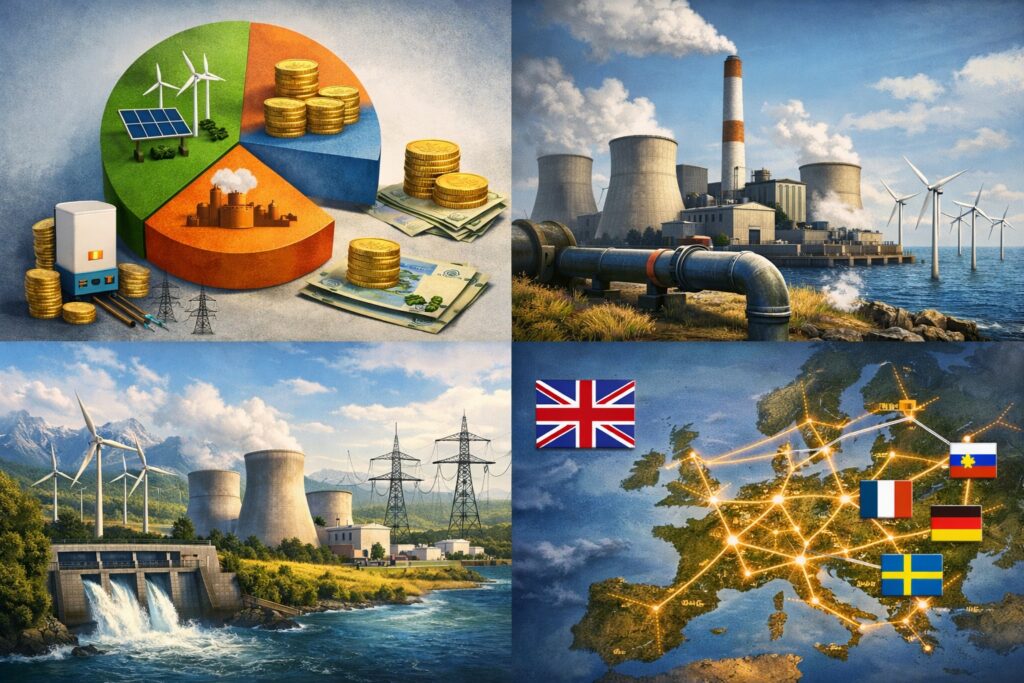
However, even if the ratio were reduced to 3.3 times, the UK would still be higher than most European countries. The reason lies in a deeper structural issue: the UK’s excessive dependence on gas for electricity generation. Compared to continental Europe, the UK has virtually no large-scale hydropower, a historically low proportion of nuclear power, and is an electricity grid island with limited cross-border interconnection capabilities. France can rely on nuclear power, the Nordic countries have hydropower, and Germany and the Netherlands have dense interconnections with neighboring countries for mutual adjustment. When wind resources are insufficient or after sunset, the most common marginal power source in the UK remains gas generation.

Moreover, the marginal pricing mechanism means that the most expensive, yet still necessary, gas plants determine the entire market price for electricity. Even though the actual costs of wind, solar, or nuclear power are lower, retail electricity prices are still driven by gas prices. Other European countries employ similar mechanisms, but due to a more diverse energy mix and larger grids, their dependence on gas is not as concentrated, leading to naturally lower electricity prices.

The problem is that this pricing structure directly contradicts energy transition goals. The government encourages households to switch to heat pumps, electric vehicles, and electric cooking; yet, the energy bills clearly send the opposite signal—electricity is expensive, gas is cheap. For households, the payback period for investing in heat pumps is extended; for businesses, high electricity prices erode competitiveness; and for the entire system, the cleanest energy sources are penalized by price.

Looking ahead, the situation is not without room for improvement. As the UK continues to increase renewable energy, extend nuclear power supply, and strengthen storage and grid interconnections, the time during which gas serves as the marginal power source will gradually shorten. Simultaneously, if policy and welfare expenditures are removed from electricity prices, the ratio of electricity to gas could still be further reduced. However, the prerequisite is to acknowledge a reality: energy transition is not just a matter of construction, but also of pricing and institutional issues.

As long as electricity prices continue to bear excessive non-electric public responsibilities and gas continues to dominate electricity price formation, the UK will find itself simultaneously advocating for carbon reduction while using prices to obstruct transition. To enable genuine transformation, the first step is not mere slogans, but to allow prices to reflect reality.

Why UK Electricity Costs Are Four Times Gas Prices Read More »

A Clean Energy World is a More Peaceful World

Looking back at modern history reveals an uncomfortable yet undeniable truth: most wars have, at their core, been about the plunder or control of fossil fuels. The slogans may vary and the justifications may be grand, but energy is almost never absent from the equation. Oil and gas are not merely commodities; they are integral to national power, diplomacy, and military strategy. Those who control production sites and supply lines hold the negotiating leverage and can even turn energy into a weapon.

A prime example of this is the expansion of the Japanese military during World War II. Japan, lacking domestic oil supplies, found its military machine nearly immobilized after the United States and Britain imposed an oil embargo. The strategic necessity of advancing into Southeast Asia to seize the oil fields of the Dutch East Indies became apparent. The attack on Pearl Harbor was not an isolated incident but a fierce response to being choked off from energy supplies. From the outset, the Pacific War was deeply marked by the shadow of oil.

The post-war history did not fundamentally change this dynamic. The Gulf War of 1991 was ostensibly about sovereignty disputes, but what truly concerned the West was the oil supply from the Persian Gulf. By the time of the Iraq War in 2003, the official narrative shifted from weapons of mass destruction to counter-terrorism, yet the fate of oil fields and energy contracts post-war made everything clear. More recently, the Russia-Ukraine war has seen the battlefield in Ukraine, yet energy shocks have reverberated throughout Europe, with gas pipelines, supply rights, and prices becoming crucial elements of strategic contention.

The common thread in these conflicts is not ethnicity or ideology but the high concentration, irreplaceability, and plunderability of fossil fuels. The distribution of underground resources is extremely uneven; some regions have them while most do not, creating a naturally one-sided and fragile dependency. Once supply is cut off, economies and societies are immediately impacted, making war an extreme yet realistic option.

Renewable energy disrupts this logic. A frequently underestimated yet critical fact is that under renewable energy conditions, the vast majority of countries in the world can actually meet their energy needs domestically. The geographical distribution of sunlight and wind is far more equitable than that of oil and gas. Only a few small, densely populated city-states or micro-island nations struggle to achieve high energy self-sufficiency. They are exceptions rather than the norm.

However, this does not imply that countries will become isolated energy islands. On the contrary, clean energy fosters multi-directional interdependence rather than new forms of dependency. Different regions experience varying sunlight, wind patterns, and seasonal peaks, allowing countries to support each other through cross-border power grids, regional dispatching, and energy storage systems. This creates a relationship that is equal and networked, unlike the control structures of the fossil fuel era where some have and others do not.

Such interdependence inherently reduces the incentives for war. You can blockade oil ports or bomb pipelines, but you cannot block sunlight and wind; you can occupy oil fields, but you cannot occupy an entire sky. Energy transitions from being a plunderable prize back to a decentralized public infrastructure, naturally diminishing the role of military power within it.

The stability of energy prices should not be underestimated either. Fossil fuel prices are extremely sensitive to wars, sanctions, and coups; energy inflation often first impacts livelihoods, then destabilizes regimes, and ultimately spills over into external conflicts. Renewable energy requires high upfront investment, but once established, its marginal costs approach zero, leading to stable price trends. Stable energy means stable social expectations, which translates to fewer political risks.

When the world no longer fights over the plunder of fossil fuels, wars will naturally lose one of their most common and realistic justifications. A clean energy world may not be perfect, but it is indeed a world closer to peace.

A Clean Energy World is a More Peaceful World Read More »

The PIV System: A Solution for Mold in UK Rentals

In the UK, discussions about mold in rental properties often devolve into a standoff. Landlords attribute the issue to tenant behavior, while tenants point to structural problems, leading to a blame game that fails to resolve the underlying issues. Mold continues to thrive in corners, and ceilings remain stained, with no conclusion in sight.

From a physical perspective, the causes of mold are quite straightforward: it is not a matter of insufficient warmth, but rather excessive moisture. When air does not circulate, humidity will linger indoors, ultimately settling in the coldest and most concealed areas. This situation is influenced both by the occupants’ ventilation habits and the property’s ability to accommodate real-life usage patterns; merely blaming one party will not yield a genuine solution.

It is in this context that Positive Input Ventilation (PIV) emerges as a particularly pragmatic solution. It does not concern itself with who is right or wrong; it simply addresses one issue: removing moisture. The system is typically installed in the loft, where it continuously and quietly introduces filtered air into the home, creating a slight positive pressure that gradually expels stale air and humidity. Mold thrives in consistently high-humidity environments, and PIV effectively eliminates this condition.

Many mistakenly believe that loft air is humid; in fact, the opposite is true. Outdoor air in winter may show high humidity levels, but its actual water content is low. Upon entering a well-ventilated loft, the temperature rises slightly, causing the air to become drier. In contrast, the moisture generated indoors from breathing, bathing, cooking, and drying clothes is the true source of humidity. The role of PIV is simply to dilute this moisture over time, thereby reducing average humidity levels.

For landlords, the key value of PIV lies in its assumption that tenant behavior will not change. It is common for windows to remain closed in winter and for clothes to be dried indoors, a practice that is nearly impossible to prohibit. PIV transforms ventilation into an automatic background condition rather than a habit that requires conscious effort. Installed in the loft and operating continuously, the system is not easily turned off by tenants, preventing the accumulation of moisture over time.

Concerns about heating costs are largely unfounded. The airflow from PIV is minimal, with the increased thermal load typically amounting to just a few dozen pounds per year; electricity costs are also very low, often only a few pounds annually. Noise is similarly not an issue; when properly installed, the system is virtually silent indoors. Maintenance is straightforward, requiring only periodic checks or replacements of basic filters, with no need for HEPA filters or desiccants.

Currently, the market price for supply and installation is around £900. This is not a lavish upgrade but rather a practical cost to reduce hassle. Compared to the ongoing expenses of dealing with mold, repainting, or even entering into rental disputes, this amount is not exorbitant.

Of course, PIV is not a panacea. It cannot replace extractor fans in bathrooms and kitchens, nor can it address leaks or obvious structural defects. Its effectiveness also diminishes in summer. While Mechanical Ventilation with Heat Recovery (MVHR) is theoretically superior, its cost, installation requirements, and airtightness standards far exceed the realities of most rental properties.

Ultimately, the value of PIV lies not in the sophistication of its technology but in its practicality. When disputes over ‘tenant behavior’ versus ‘structural issues’ yield no resolution, PIV offers not a judgment but a pragmatic engineering solution that mitigates risk.

The PIV System: A Solution for Mold in UK Rentals Read More »

The Mineral Myth of Electric Vehicles: Who Exaggerates Pollution?

The assertion that “electric vehicles require extensive mining, leading to greater pollution than gasoline cars” has emerged repeatedly in recent years. While it may sound like a rational inquiry, it does not withstand scrutiny. This statement captures a fragment of truth—electric vehicles do indeed require minerals such as lithium, nickel, and cobalt—but it misrepresents the overall narrative.

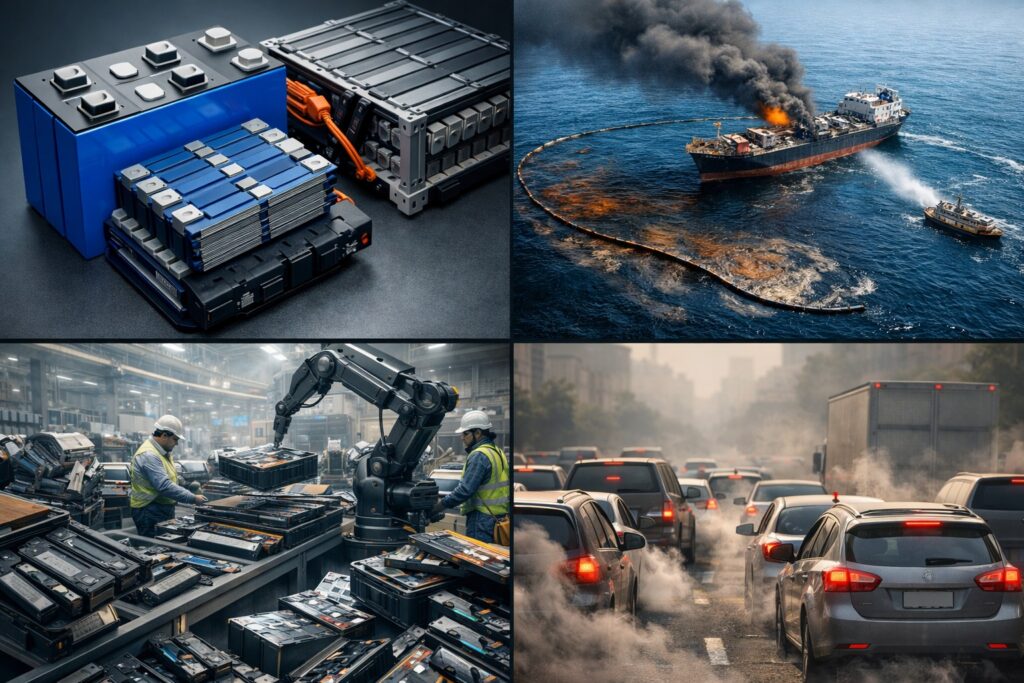
To clarify the facts: the pollution associated with electric vehicles primarily occurs during the production phase, particularly in battery manufacturing. Mining, smelting, and processing undeniably generate emissions, a fact that cannot be denied. However, internal combustion engine vehicles are not free from mining either. A gasoline car, from its inception to its disposal, requires substantial amounts of steel, aluminum, and copper, relying on a vast and perpetually operational system: oil exploration, drilling, pipelines, tankers, refineries, and gas station networks. The pollution from these processes is dispersed over time and space, gradually becoming taken for granted.

The real difference lies in the distinction between “one-time” and “ongoing” inputs. This can be elucidated with numbers rather than adjectives.

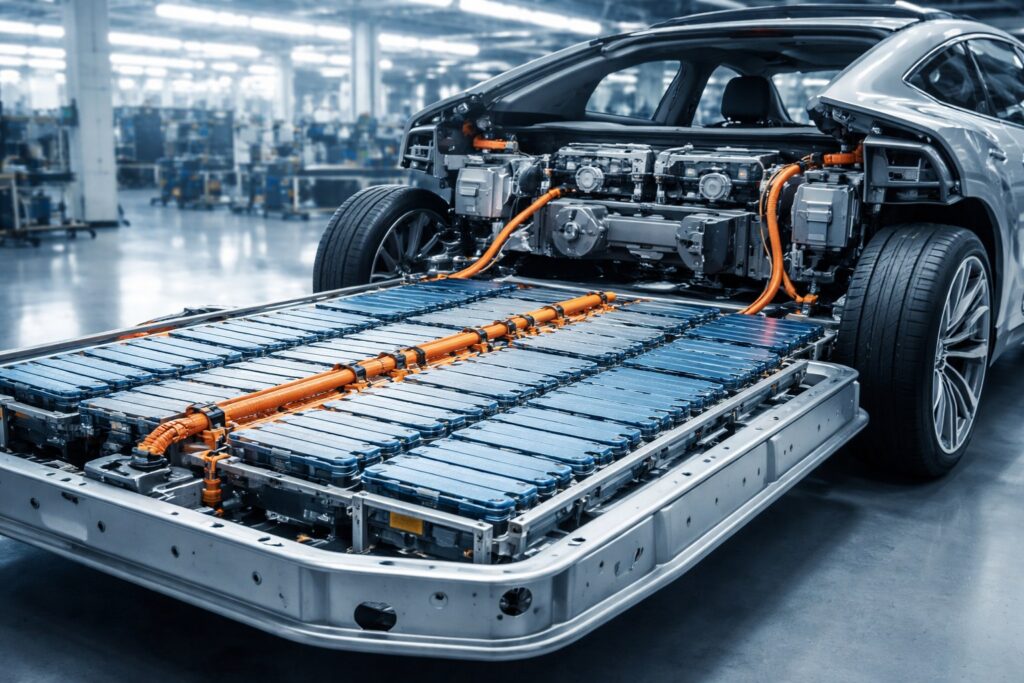
Take a mid-sized electric vehicle equipped with a 60 kWh LFP (lithium iron phosphate) battery as an example. The battery contains approximately 6 kilograms of lithium, 41 kilograms of iron, and 70 kilograms of phosphate (PO₄). These minerals are extracted in a one-time input before the vehicle is produced, used over a decade, and can subsequently be recycled, rather than requiring continual mining for every kilometer driven.

In contrast, a similarly sized NMC (nickel manganese cobalt) battery, while structurally different, presents a similar scale. Based on current high-nickel formulations, a 60 kWh NMC battery contains about 9 kilograms of lithium, 33 kilograms of nickel, 5 kilograms of cobalt, and approximately 18 kilograms of manganese and other metals such as aluminum and copper. In total, this amounts to “tens of kilograms” of metallic materials, rather than an infinitely expanding demand for minerals.

Applying the same metric to gasoline vehicles reveals a stark imbalance. A gasoline car driven for 150,000 kilometers, with a fuel consumption of 6.3 liters per 100 kilometers, will consume approximately 9,450 liters of gasoline over its lifetime. This gasoline corresponds to the extraction and refining of about 20,000 liters of crude oil, which weighs approximately 17,000 kilograms. This is not a one-time input; rather, it is burned, emitted, and dissipated gradually throughout the vehicle’s lifespan.

Thus, the comparison becomes quite direct:

Electric vehicles are often exaggerated for their one-time input of tens of kilograms of recyclable metals;

Gasoline vehicles, on the other hand, habitually overlook the thousands of kilograms of unrecoverable crude oil consumed throughout their entire lifecycle.

To frame these two within the same context of “which is more polluting” is inherently misguided.

Examining the entire lifecycle, even when accounting for the carbon emissions from mining and manufacturing, electric vehicles in the current power structures of Europe or the UK exhibit lower total emissions after driving several tens of thousands of kilometers compared to their gasoline counterparts; the longer they are driven, the greater the disparity. The reason is simple: the electricity grid is decarbonizing, while the emissions pathway of gasoline vehicles remains fixed, perpetually reliant on the combustion of fossil fuels.

Some argue that it is not just carbon dioxide, but also air and water pollution. While this assertion sounds comprehensive, the conclusion remains the same. The air pollution from internal combustion engine vehicles is immediate, dispersed, and close to populations: nitrogen oxides, volatile organic compounds, and PM₂.₅ are emitted with every kilometer driven on urban streets, directly posing public health risks. Electric vehicles produce no tailpipe emissions while in operation; even if some electricity still derives from fossil fuels, the pollution is concentrated at fixed power plants, which can be regulated and improved, representing a fundamentally different nature.

Water pollution is similarly structured. The extraction of lithium and other battery minerals can indeed exert pressure on local water resources, a reality the electric vehicle industry must confront. However, the water pollution from the oil system is long-term and systemic: oilfield wastewater, pipeline leaks, oil tanker accidents, and refinery emissions. Any significant oil spill can cause damage to oceans and groundwater lasting for decades. This is not an occasional accident, but an inherent risk within the fossil fuel system.

At this point, there is often a follow-up question: “What happens when batteries are discarded?” The reality is clearer than imagined. Current recycling technologies allow for recovery rates of over 90% for metals such as cobalt, nickel, and copper, with lithium recovery rates also reaching between 70% and 90%. The metals can be retained and reused; however, once 17,000 kilograms of crude oil is burned, it is impossible to recover even a gram.

Another frequently overlooked comparison is that we use products containing lithium and various metallic minerals daily. Mobile phones, laptops, tablets, and Bluetooth headphones all contain lithium, nickel, cobalt, and copper, yet few question whether using a phone is environmentally unfriendly. The reason is intuitive: the materials are one-time inputs and can be recycled; the real source of ongoing pollution is the energy consumed daily. This common understanding is uncontroversial in consumer electronics but is suddenly dismissed when it comes to electric vehicles, revealing a double standard.

Moreover, battery technology is still evolving. Sodium-ion batteries, which do not require lithium, nickel, or cobalt, have begun to enter the market and have the potential to replace LFP in certain applications. Looking further ahead, if solid-state batteries can mature, they may gradually replace current NMC technologies. In other words, the dependence of electric vehicles on critical minerals is a declining variable, not a fixed burden.

Of course, electric vehicles are not perfect. They still produce particulate pollution from tire wear and do not address urban structural issues such as traffic congestion. However, these problems also exist with gasoline vehicles, which additionally incur pollution from engines and exhaust systems. Electric vehicles are not a panacea, but they outperform internal combustion engine vehicles on nearly every quantifiable environmental metric.

To magnify “tens of kilograms of recyclable metals” while ignoring the daily combustion of “thousands of kilograms of unrecoverable crude oil” is not a rational comparison; it is a narrative that allows for the comfortable maintenance of the old system. What truly deserves scrutiny is not how many minerals electric vehicles consume, but why we are still willing to accept a transportation method that inevitably continues to burn, emit, and carries the risk of oil spills.

The Mineral Myth of Electric Vehicles: Who Exaggerates Pollution? Read More »

Lessons from the UK Electoral Reform Debate

In 2011, the United Kingdom held what appeared to be a technical referendum, but was fundamentally about democracy: whether to replace the long-standing First Past The Post (FPTP) system with Alternative Voting (AV). Nearly 70% of voters opposed the change. The reasons varied; some found the system too complex, others felt reform was not urgent, and some simply wanted to send a message to the then-coalition government. Consequently, electoral reform was rejected, leaving the old system intact.

This referendum was not coincidental. Following the 2010 general election, the UK experienced a hung parliament, with the Liberal Democrats becoming a crucial minority partner in a coalition with the Conservatives. As part of a political bargain, the long-sought electoral reform by the Liberal Democrats finally led to a nationwide vote. AV was not a proportional representation system; it merely required voters to rank candidates, ensuring that the eventual winner secured majority support after transfers of votes. It was seen as a moderate, conservative reform that would hardly shake the foundations of the two major parties.

However, the referendum process quickly deteriorated. The Conservative leadership opposed AV almost entirely, portraying it as an expensive and unnecessary experiment; the Labour Party was divided and failed to articulate a clear stance; and those in favor of reform could not convincingly link the system to the interests of ordinary voters. Ultimately, the referendum became an outlet for dissatisfaction with the government rather than a rational choice about the democratic system.

The consequence of rejecting AV is that the UK continues to use FPTP in its entirety. Under this system, a candidate only needs to secure the most votes to win, without the necessity of a majority. In constituencies with multiple parties competing, the threshold for victory can be astonishingly low. A concrete example emerged in the 2015 general election in Belfast South, where the winning candidate received only about 24.5% of the vote, yet was legally elected as a Member of Parliament. In other words, over three-quarters of voters opposed him, yet he still represented the entire constituency.

This is not a failure of the system, but rather a reflection of its operational mechanics. FPTP simplifies elections to a ‘who gets the most votes’ approach, deliberately ignoring ‘whether there is majority support.’ When a candidate can win with less than a quarter of the votes, the election outcome naturally carries a strong element of randomness. Minor shifts in vote distribution, strategic voting, or even the order of candidates on the ballot can determine the final result. The outcome may appear decisive, but in reality, it is weak, which is at the heart of the democratic deficit.

The long-term implications of this system are even more profound. Political parties concentrate resources on a few marginal constituencies, taking for granted the voters in numerous safe seats; voters are forced to ‘vote with tears,’ selecting the least objectionable candidate rather than one they genuinely support; new parties, even when achieving significant national support, struggle to translate that into corresponding seats. Consequently, politics becomes closed off, though not necessarily stable.

It is noteworthy that societal attitudes have shown a clear shift. Recent national polls indicate that the proportion of voters supporting proportional representation (PR) has consistently surpassed those favoring the maintenance of FPTP. For instance, in YouGov surveys, results have repeatedly hovered around similar figures: approximately 45% of respondents support introducing some form of proportional representation, while only about 28%-30% wish to continue using FPTP, with the remainder undecided. In other words, opposition to the current system is no longer limited to a minority of reformists, but rather constitutes a relative majority of voters.

The significance of these figures lies not in the fluctuating public opinion at any given moment, but in the direction of that opinion. During the 2011 referendum, electoral reform was still seen as a niche issue; over a decade later, as party fragmentation increases and election results become increasingly distorted, voters are beginning to directly attribute their dissatisfaction to the system itself. The resurgence of interest in proportional representation is not due to its perfection, but because the flaws in the current situation have become impossible to ignore.

Looking back at 2011, many believed they were merely rejecting an imperfect proposal, with the expectation that discussions could resume later. However, politics does not evolve automatically. A ‘not urgent’ rejection often means a long-term lockout. The rising support for PR today is, in fact, a belated reflection on the previous ‘wait and see’ approach. Democratic systems can be imperfect, but when one is aware of the flaws yet chooses not to change, the repercussions will only deepen.

Lessons from the UK Electoral Reform Debate Read More »

The Truth About Electric Vehicle Battery Longevity

Many people still hold the belief that electric vehicle batteries need to be replaced after a few years, incurring high costs and risks, much like smartphone batteries. This impression has persisted for years, but it is fundamentally based on a flawed analogy. The misunderstanding surrounding electric vehicle batteries does not stem from a lack of data, but rather from a tendency to compare them to smartphones.

First, it is crucial to clarify a key fact: the batteries used in smartphones and electric vehicles are based on different chemical compositions. Modern smartphones primarily use LCO (lithium cobalt oxide) batteries. The main advantage of LCO is its high energy density, allowing for thin and lightweight designs that meet the extreme size and weight demands of smartphones. However, this comes at a clear cost—structural stability is lower, making it unsuitable for prolonged, high-cycle use.

This is not a mistake, but rather a product strategy. Smartphones are designed to be replaced every few years, with batteries optimized for immediate performance rather than a lifespan of twenty years. Daily charging from low to full, repeatedly completing full charge-discharge cycles, combined with minimal active cooling, naturally accelerates battery aging. Manufacturers are well aware of this, hence they offer paid battery replacement options as part of the product lifecycle.

In contrast, electric vehicles take a completely opposite approach. The mainstream cathode chemistry for vehicle batteries is NMC (nickel manganese cobalt) or LFP (lithium iron phosphate). The commonality between these two is not extreme energy density, but rather stability, durability, and the ability to withstand long-term cycles. Particularly with LFP, while the range performance may not be the most impressive, its longevity and safety reflect the engineering mindset of automakers: they prefer to sacrifice some performance for a longer lifespan.

In addition to the different chemistry, electric vehicles also have a layer of protection that smartphones lack. The entire battery pack is equipped with a comprehensive thermal management system, maintaining temperature within an ideal range over the long term; the battery management system deliberately limits the upper and lower limits of charge and discharge. The 100% displayed on the dashboard does not indicate complete depletion; similarly, the 0% displayed does not represent an absolute limit. These invisible conservative designs are the reasons why batteries can age gradually rather than deteriorate rapidly.

The usage patterns also differ significantly. Smartphones typically complete a full cycle almost every day; electric vehicles, for the most part, only undergo partial charge and discharge, such as charging from 40% to 80%. For the battery, this constitutes gentle operation, causing far less damage to the cathode structure compared to the ‘deplete and recharge’ rhythm of smartphones.

These differences are already reflected in real-world data. Research from Geotab, which analyzed a large number of electric vehicles in operation, found that the average capacity degradation rate of modern electric vehicle batteries is only about 1-2% per year. At this rate, a battery would still be practically usable after 20 years. In many cases, it is the aging of the vehicle body, technological obsolescence, or disproportionate maintenance costs that lead to replacement, while the battery itself can continue to function.

Therefore, the notion that ‘the greatest risk of electric vehicles is the battery’ is largely a psychological projection. People mistakenly apply their experiences with smartphone batteries to a completely different engineering product. Smartphone batteries have short lifespans because they are designed to be short-lived; electric vehicle batteries last long not as a miracle but as a result predetermined by their chemical choices from the outset.

Once this point is understood, battery anxiety loses its foundation. What is likely to be replaced first is often not the old battery, but the entire vehicle.

The Truth About Electric Vehicle Battery Longevity Read More »

Leeds: Europe’s Largest City Without Urban Rail

Leeds has once again been reminded of its awkward position on the European urban map: with a population nearing 800,000 and a metropolitan area exceeding 2 million, it still lacks any form of urban tram or metro system. This is not due to a lack of planning, but rather a series of delays in implementation. Following the latest government review, the tram project, which has been under discussion for decades, has been postponed yet again, with completion now pushed to the late 2030s.

This is not the first time such delays have occurred. The concept of an urban rail system for Leeds was proposed as far back as the late 20th century, with attempts at a Supertram and a bus rapid transit alternative, both of which ultimately failed. The current iteration, known as the West Yorkshire Mass Transit System, aims to connect Leeds with Bradford, but its scale, technology, and demand are hardly novel. The only fresh aspect is the reasoning behind the delays.

The official explanation is ‘caution.’ The central government has required local authorities to resubmit more comprehensive plans, including strategic business cases, preliminary business cases, and final business cases, with each phase needing approval before moving to the next. In other words, planning can no longer proceed in parallel with construction; it must pass through layers of scrutiny. While this is ostensibly to mitigate risks, the practical effect is singular: time continues to slip away.

The issue lies not in the thickness of the documents but in the distribution of power and resources. The West Yorkshire Combined Authority is not lacking in technical capability or demand data; rather, it lacks financial autonomy and decision-making power. It cannot independently incur debt or secure multi-year funding, and must continuously apply to Westminster, rewriting plans according to the central government’s pace.

This has led to an absurd situation: a tram system that has been discussed for over 30 years is still being asked in 2025 to prove its ‘worth.’ Business cases have been drafted repeatedly, routes redrawn time and again, yet the only constant is that the tracks have yet to be laid down.

Such systemic delays are not unique to Leeds but are symptomatic of local infrastructure issues across the UK. Local governments bear the responsibilities, yet the power lies elsewhere; the need is urgent, yet resources are controlled by the central government. The result is that cities most in need of public transport upgrades find it hardest to initiate projects. The longer the delays, the higher the costs, and with shifting political winds, the process must start anew.

Looking across Europe, it is almost the norm for large cities to have urban rail systems. This is not because they are wealthier, but because decision-making levels are closer to the cities themselves. Leeds’ predicament illustrates that the so-called ‘Northern Powerhouse’ will never materialize if it remains mired in slogans and approval processes.

Today, Leeds’ greatest issue is not a lack of planning but being trapped within it. When a city must continually prove its worthiness for basic public transport, the problem transcends transportation; it lies within the system itself.

Leeds: Europe’s Largest City Without Urban Rail Read More »

Scroll to Top