Author name: 胡思

Nuclear Cargo Ships: The Technology Is Ready. The World Is Not.

Nuclear Cargo Ships: The Technology Is Ready. The World Is Not.

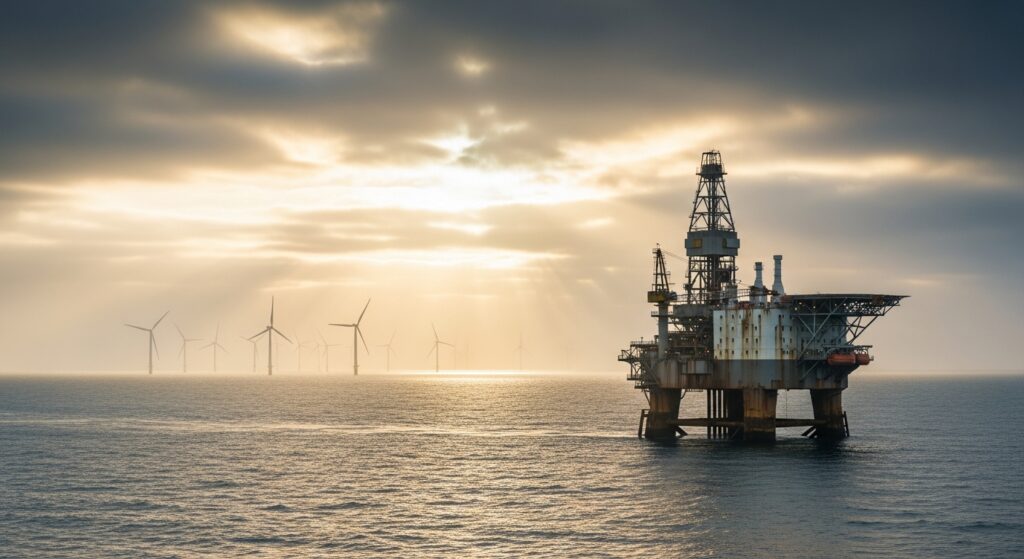
International shipping produces roughly one billion tonnes of carbon dioxide each year, accounting for nearly three percent of global greenhouse gas emissions. The International Maritime Organization has set a target of net zero by 2050. Yet the deep-sea cargo vessels that carry the bulk of world trade are among the hardest transport systems to decarbonise. Batteries lack the energy density for transoceanic voyages. Hydrogen bunkering infrastructure barely exists. Liquefied natural gas buys time but does not solve the problem. Into this gap, an idea from the mid-twentieth century has returned: nuclear propulsion.

Nuclear power at sea is not a new concept. Russia has operated nuclear-powered icebreakers on Arctic routes for decades. The United States Navy has run nuclear-powered carriers and submarines safely for longer still. The real question has never been whether the technology works. It is whether a commercial shipping fleet can be built around it. When the United States launched the NS Savannah in 1959, followed by Germany’s Otto Hahn and Japan’s Mutsu, all three vessels ultimately retired early — not because their reactors failed, but because ports refused to accept them and operating costs could not be justified commercially. A ship that functions and a shipping system that works are two entirely different things.

The current wave of interest is driven by the maturation of small modular reactor technology. SMRs are compact, factory-manufactured, and designed with greater inherent safety than conventional reactors, making them far more practical for integration into a ship’s engine room. China’s state-owned Jiangnan Shipyard has announced plans for a 25,000-TEU nuclear container vessel powered by a thorium molten-salt reactor — which, if built, would be the first of its kind in commercial history. HD Hyundai in South Korea is collaborating with classification society ABS on a conceptual design for a 16,000-TEU vessel driven by a 100-megawatt SMR. Research by Lloyd’s Register and Seaspan estimated that nuclear-powered containerships could eliminate bunker costs entirely and outperform both conventional and green-fuelled competitors over a vessel’s full operating life.

The obstacle is structural rather than technical. Putting a nuclear-powered merchant ship into service requires far more than a working reactor. Ports need to install specialist facilities and overhaul security protocols. Insurers need a functioning nuclear liability framework. Regulators across multiple jurisdictions need to agree on who approves a vessel flagged in one country and calling at ports in several others. In June 2025, the IMO’s Maritime Safety Committee approved amendments to the SOLAS Convention that for the first time open the door to SMR applications in commercial shipping. That is a step forward, but it remains the beginning of a process rather than a completed framework. No country or international body has yet produced a comprehensive licensing regime for nuclear-propelled merchant vessels.

This is a classic coordination failure. Shipping companies will not order nuclear vessels because no ports will accept them. Ports will not invest in receiving facilities because no nuclear ships are coming. Insurers will not develop products because there is no operating risk data. Regulators will not legislate because there are no applications to process. Every party is waiting for someone else to move first.

There is also an unexpected competitor. The artificial intelligence boom has generated enormous demand for land-based electricity, and the world’s largest technology companies are committing tens of billions of dollars to secure SMR capacity for data centres. The maritime industry cannot match that scale of capital mobilisation, and risks being crowded out of the supply chain for the very technology it needs.

Decarbonising shipping has no single solution. Green methanol, liquid ammonia, and battery power each find a role on shorter or specialised routes. But for the transoceanic trade lanes that carry the majority of global commerce, nothing else approaches nuclear fuel in terms of energy density. The promise of nuclear propulsion is genuine: zero carbon at sea, years of operation without refuelling, and more cargo space freed from the constraints of fuel storage. The distance between that promise and commercial reality, however, is filled by an entire ecosystem of infrastructure, regulation, and public acceptance that does not yet exist. The technology has arrived. The world is not ready for it.

Nuclear Cargo Ships: The Technology Is Ready. The World Is Not. Read More »

The Truth About Chocolate: Are You Eating Real Chocolate?

The Truth About Chocolate: Are You Eating Real Chocolate?

When everyone has accepted that wife cakes contain no wives and pineapple buns have no pineapple, can we also accept that chocolate might not contain chocolate? Let us play a little quiz: Do the following three snacks count as chocolate?

• Toffee Crisp?

• Oreo?

• White KitKat?

Stay tuned for the answers at the end.

Recently, some Britons complained that the chocolate bars they consumed felt as soft as a Victorian Sponge Cake, even escalating their grievances to the Chancellor of the Exchequer! At first glance, this seems exasperating, but upon closer inspection, it serves as a humorous indictment of inflation, cost-cutting, and the phenomenon of sugar-coating. With the rising prices of cocoa beans, sugar, and dairy products, manufacturers have begun to reduce cocoa content or substitute part of the cocoa butter with vegetable fats to control retail prices. The result is a product that looks like chocolate and tastes like chocolate, yet legally does not qualify as chocolate.

Earlier, the BBC reported that Toffee Crisp and McVitie’s Penguin can no longer be legally labeled as chocolate. For chocolate lovers in the UK, this is akin to a national snack being stripped of its ‘chocolate identity.’ The reason is straightforward: their cocoa content is too low to meet regulatory standards, forcing them to be rebranded as ‘chocolate flavour coating’ or ‘chocolatey,’ honestly and helplessly informing consumers: ‘I try to be like chocolate, but I am not.’

What constitutes real chocolate? In the UK and the EU, chocolate is defined by specific regulations:

• Dark chocolate: at least 35% total dry cocoa solids, at least 18% cocoa butter, and at least 14% fat-free cocoa solids.

• Milk chocolate: at least 25% total dry cocoa solids, at least 14% dry milk solids, at least 3.5% milk fat, and approximately 25% total fat.

• White chocolate: at least 20% cocoa butter, at least 14% total milk solids, and at least 3.5% milk fat.

In simple terms, the essence of chocolate lies not in its ‘flavour’ but in its cocoa butter and cocoa solids. No matter how much sugar, milk powder, or vegetable oil is added, they remain mere ‘chocolate imitators’—they may taste like chocolate but do not legally qualify as such. However, in Hong Kong, there are no specific minimum requirements regarding the composition of a product to be labeled as chocolate. The Hong Kong Consumer Council’s chocolate tests reference international food codex or EU/foreign standards to interpret what constitutes real chocolate or cocoa content, rather than defining it based on local criteria.

Oreo is the master of masquerading as chocolate. Regular Oreo cookies contain only cocoa powder with an extremely low cocoa butter content, thus not qualifying as chocolate legally. Even the Oreo chocolate-flavored filling is merely a ‘chocolate-flavoured product.’ Ironically, if you encase an Oreo in real chocolate, it becomes closer to actual chocolate than when eaten alone—philosophically termed ‘becoming real when surrounded.’

White KitKat appears to be white chocolate, but its legality as white chocolate depends on the cocoa butter content. Most standard white KitKats meet the criteria to be called white chocolate; however, if special or promotional versions use a significant amount of vegetable fat instead of cocoa butter, they cannot be classified as true white chocolate and can only be labeled as ‘white chocolate-flavoured coating.’

While the market may offer chocolate substitutes that taste decent, they do not meet the legal definitions in the UK and EU; true chocolate not only boasts a rich flavor but also possesses a legitimate composition of cocoa butter and cocoa solids. As savvy consumers, reading packaging and ingredient lists is essential to distinguish between ‘real chocolate’ and ‘fake chocolate.’ Remember, black does not always mean real chocolate, sweetness does not equate to chocolate, and packaging often conveys more honesty than taste. The next time you stroll through the chocolate aisle at the supermarket, take a moment to discern whether what you hold is genuine chocolate or merely a ‘chocolate experience.’

Moreover, while many Hong Kong expatriates in the UK lament the lack of culinary delights, they can take solace in the fact that the UK has stricter standards on food labeling, making it easier to know what one is actually consuming, even if it may not be particularly appetizing.

If you crave chocolate but hesitate to spend a few pounds on real chocolate, ask yourself: if wife cakes can lack wives and pineapple buns can lack pineapple, why can’t chocolate lack chocolate?

Finally, as I reveal the answers, I have also compiled a guide to distinguishing real from fake chocolate, which can be found in the attached image.

The Truth About Chocolate: Are You Eating Real Chocolate? Read More »

Do You Really Need to Shower Every Day? The Science, History and Culture Behind Bathing Habits

Do You Really Need to Shower Every Day? The Science, History and Culture Behind Bathing Habits

For most people in Hong Kong, showering every day is simply a given. The city’s summers are brutally hot and humid, and a short walk outside is enough to leave you drenched in sweat. The idea of skipping a daily shower feels, to many Hongkongers, almost unthinkable. Yet those who have moved to the United Kingdom often notice something surprising: British colleagues, neighbours, and friends do not necessarily shower every day, and they see nothing unusual about it. Is this a cultural blind spot, or is there a rational case to be made?

The answer turns out to be more nuanced than instinct might suggest.

Climate is the most obvious factor. Hong Kong summers regularly exceed 30 degrees Celsius, with relative humidity frequently above 80 percent. The body sweats continuously, and when that sweat interacts with bacteria on the skin, body odour follows almost inevitably. Under those conditions, a daily shower is not merely a habit — it is a practical response to the environment. Britain is a different story. Average summer temperatures across much of England sit between 17 and 20 degrees Celsius, and the air is considerably drier. The body simply sweats far less, and the physiological argument for daily bathing becomes correspondingly weaker.

History adds another layer to this. For much of European history, bathing was neither easy nor frequent. Clean water required effort to obtain, heating it was expensive, and dedicated bathing facilities were rare outside the wealthiest households. The widespread use of perfume across European courts and aristocratic society was, in part, a response to this reality — a way of managing odour rather than eliminating it. The French court is often cited as an extreme example, with bathing reportedly a monthly affair at best. What looks from a modern perspective like a failure of hygiene was, in context, a rational adaptation to the available infrastructure.

The turning point came with the great epidemic crises of the 19th century. Cholera and typhoid swept through Britain’s rapidly industrialising cities, killing tens of thousands and forcing a reckoning with public sanitation. Victorian reformers drew a direct line between cleanliness and disease prevention, and a wave of public investment followed — in sewers, in water supply, and in public bathhouses. Bathing gradually shifted from a luxury to a civic duty. Crucially, however, the goal of this movement was to prevent infection, not to establish a once-a-day showering norm.

That norm came later, driven largely by commerce. The 20th century expansion of the soap and personal care industry brought with it advertising that firmly linked daily bathing to respectability, modernity, and social acceptance. The message was simple: clean people shower every day. This framing proved especially effective in Asian cities, where rapid urbanisation, hot climates, and consumer culture reinforced one another. In Hong Kong, Japan, and South Korea, daily bathing became deeply embedded not just as a habit but as an expression of personal standards.

Dermatology, however, offers a more complicated picture. The skin is home to a diverse microbiome — communities of bacteria, fungi, and other microorganisms that help maintain the skin’s natural acidity and defend against pathogens. Frequent washing with soap can strip away the skin’s natural oils and disturb this microbial balance, potentially leading to dryness, irritation, and conditions such as eczema. Several dermatologists now suggest that for people living in temperate climates with moderate activity levels, showering every other day — or focusing only on areas that actually need cleaning — is sufficient to maintain good hygiene without compromising skin health.

Whether you need to shower every day is therefore not a moral question but a practical one, shaped by climate, physical activity, skin type, and personal circumstance. Hongkongers shower daily for good reason: the climate demands it. Britons who shower less frequently are not being unhygienic — they are following habits shaped by an entirely different set of environmental conditions. When the two cultures meet, the sense of strangeness runs both ways, and neither side is wrong.

Hygiene standards, in the end, are always a product of the environment that created them.

Do You Really Need to Shower Every Day? The Science, History and Culture Behind Bathing Habits Read More »

UK Electricity Is the Cheapest in Europe — If You Know How to Use It

UK Electricity Is the Cheapest in Europe — If You Know How to Use It

When people talk about British electricity bills, the conversation usually goes one way: expensive. The Ofgem price cap sits at nearly 25p per kilowatt-hour, higher than Hong Kong, France and Spain. That figure is accurate, but using it to compare electricity costs across countries is a fundamental misreading of how the UK energy market works.

Britain’s electricity market has been fully liberalised since the 1990s and is among the most open retail energy markets in the world. Households are free to choose their supplier and tariff — the Ofgem price cap exists solely to protect consumers who never actively shop around, not to represent the best available option. Treating the cap as a proxy for “UK electricity prices” is like using the most expensive item on a supermarket shelf to represent what people actually pay for groceries.

Households who understand the market pay 5.5p per kilowatt-hour for overnight electricity between 23:30 and 5:30 — the confirmed rate from 1 April for new customers on Octopus Energy’s Intelligent Go (IOG) tariff. Existing customers, depending on region and tariff version, can pay as little as 3.49p to 5.2p per kilowatt-hour. Put these numbers alongside the rest of Europe and they become almost implausible: France’s cheapest fixed off-peak rate (Heures Creuses) sits at around 13p, Germany at 15–18p, Spain at 14–18p, and even Norway — famous for its cheap hydropower — sees households paying 10–12p per kilowatt-hour overnight once VAT and grid fees are included. On the measure that actually matters — the all-in price a consumer pays during fixed overnight hours — IOG is the cheapest in Europe, without exception.

This is not a government subsidy. Octopus uses artificial intelligence to coordinate the charging of over 150,000 electric vehicles, absorbing surplus electricity from the grid during the small hours when demand is lowest and generation is highest. The structural oversupply of overnight electricity — driven largely by Britain’s rapidly expanding offshore wind fleet, the largest in Europe — becomes a direct benefit to customers, while simultaneously helping to balance the grid. It is a privately funded virtual power plant, built on market design rather than public money.

IOG is specifically designed for households who can charge an electric vehicle at home. Those without home charging — whether renting, without a driveway, or simply not yet EV owners — are not without options. Octopus’s Cosy tariff offers heat pump owners several fixed cheap slots each day. The Agile tariff passes through half-hourly wholesale prices directly to customers, meaning that during periods of high wind or excess solar generation, the rate can fall close to zero or even turn negative. E.ON, EDF and other suppliers offer their own competitive overnight tariffs. The market is genuinely competitive, and the options extend well beyond a single product.

Whichever tariff a household chooses, a home battery system increasingly makes the economics even more compelling. As LFP battery technology has matured, prices have fallen sharply. A 10–16 kilowatt-hour home battery with inverter can now be supplied and installed for a few thousand pounds. Charged overnight at the cheapest tariff rate and discharged during the day, the system effectively replaces daytime grid electricity — bought at around 25p — with overnight electricity bought at a fraction of that price. At 5.5p overnight against 25p daytime, payback periods of four to six years are achievable, against a battery lifespan of fifteen years or more.

Britain does not have France’s nuclear fleet or Norway’s mountain reservoirs. What it has is wind — abundant, structural, and growing — and a market architecture designed to translate that resource into tangible savings for engaged consumers. The question was never whether UK electricity is expensive. The question is whether you have taken the time to understand your choices.

UK Electricity Is the Cheapest in Europe — If You Know How to Use It Read More »

Building an App Is No Longer a Coder's Game

Building an App Is No Longer a Coder’s Game

Not long ago, writing software was a discipline with a steep price of entry. You had to memorise syntax, wrestle with pointers and memory management, and stare at a black terminal screen until the machine did what you wanted — or didn’t. The learning curve was punishing enough to deter most people from ever starting. Being a software engineer meant years of training, not an afternoon of curiosity.

That barrier has largely collapsed.

AI coding assistants have fundamentally changed the rules. You no longer need to memorise function names or recite syntax from memory. You do not even need to fully understand every line of code your programme contains. What you need is the ability to describe clearly what you want to build — and the AI will generate the code, identify the bugs, and explain the logic. Tools like Claude Code and GitHub Copilot have made articulating requirements the core skill of software development, displacing the act of writing code itself.

That said, some foundational knowledge still matters. You need to understand basic terminal commands, how computer systems are structured, what data structures are, and the elementary logic behind algorithms. More importantly, you need to learn how to communicate effectively with AI agents — setting out goals precisely, recognising when something has gone wrong, and knowing when to rephrase a question. This is less about programming in the traditional sense and more about thinking clearly and breaking problems down. A secondary school student with genuine curiosity and a well-structured mind can operate comfortably within this framework.

The second enabler is the commoditisation of cloud computing. A decade ago, deploying an application meant buying physical servers, managing power and cooling, and configuring firewalls — hardware costs alone were a significant barrier. Today, AWS, Google Cloud, and Microsoft Azure have turned that entire infrastructure layer into an on-demand rental service. A virtual server can be spun up in minutes, billed by usage, and shut down when no longer needed. Small projects can cost just a few dollars a month, or nothing at all. The cloud has erased the resource gap between the individual developer and the large enterprise. Anyone with an idea can run it on the same class of infrastructure as a multinational corporation.

A third piece of the puzzle is Tailscale. Built on the WireGuard protocol, it creates a secure private network across all your devices — whether you are at the office, at home, in a café, or on a moving train — without complex configuration. In the past, accessing a remote development environment required either a cumbersome VPN setup or exposing everything to the public internet. Tailscale removes that friction almost entirely. Working from anywhere has stopped being a slogan.

This is precisely the setup the author uses: Claude Code as the primary AI coding assistant, AWS for deployment, and Tailscale to stitch the working environments together. The workflow moves seamlessly between office, home, and café without specialised equipment or an IT team. The author’s iPhone weather application, WITAL.AI, was written entirely by AI agents — not a single line of code was typed by hand. Five years ago, this kind of setup would have been the preserve of well-resourced technology companies. Today, one person at a kitchen table can pull it off with ease.

Which makes certain things look rather unnecessary. If parents genuinely believe their children have talent and ideas, the most meaningful thing they can do is step back and let them build. The tools are all there. The barrier is low enough that it barely exists. Commissioning a professional firm to develop something polished, then presenting it under a child’s name, is not a vote of confidence in that child — it is a shortcut that substitutes money for ability. A secondary school student with real passion for technology and a clear idea of what they want to create can take that idea all the way to a working product entirely on their own.

The democratisation of technology is not a new story, but the pace and scale of this particular wave are unprecedented. What the collapse of barriers produces is not merely more developers — it produces an entirely different mode of creation. Concepts are worth more than code. Expression matters more than memorisation. And genuine creativity may be the only thing that remains stubbornly difficult to automate.

Building an App Is No Longer a Coder’s Game Read More »

Why Don't British People Use Umbrellas?

Why Don’t British People Use Umbrellas?

For Hong Kong immigrants living in the UK, the sight can be quietly baffling: the sky is grey, a light rain is falling, and yet the British people around them walk on without a care, heads bare, not even bothering with a hood. In Hong Kong, reaching for an umbrella at the first sign of rain is pure instinct. In Britain, people seem almost immune to it. This is not simply a difference in personal habit — there is a coherent logic behind it, shaped by climate, infrastructure, history, and culture.

The rain itself is fundamentally different. Hong Kong rain arrives fast and falls hard. Within minutes, streets can flood and anyone caught without an umbrella is soaked through. British rain is something else entirely. Most of the time it is a drizzle — so fine it feels closer to mist than rain, drifting rather than falling, slow to penetrate fabric. There is even a cultural phrase for it: “It’s only drizzle.” That dismissiveness is telling. For the British, this kind of rain simply does not register as a problem worth solving.

Wind, however, is the more important factor. Britain sits on the edge of the Atlantic, exposed to the prevailing westerlies year-round. Winds are unpredictable and gusts are common. In these conditions, an umbrella becomes less a tool of protection and more a liability. Open one and it may invert within seconds, or the frame may snap entirely. The bins along London streets tell the story — bent and broken umbrellas are a regular sight, casualties of a single gust. Many British people have simply concluded that fighting the wind with an umbrella is more undignified than getting a little wet.

The practical alternative is the waterproof jacket. A good one repels both wind and rain, leaves both hands free, takes up no space on the Tube, and will not be destroyed by a sudden squall. It is the rational solution to the specific conditions Britain presents, and it explains why outdoor and hiking brands do such brisk business in a country with no mountains nearby.

How people travel also shapes how much the rain matters. In rural and suburban Britain, the car is dominant. Many journeys involve nothing more exposed than a short walk from a front door to a car, and from a car park to an entrance. The cumulative time spent outdoors in the rain can be remarkably small. Hong Kong operates on an entirely different model. The city runs on public transport, and getting around means walking — to bus stops, MTR stations, through covered walkways that nonetheless have gaps. Exposure to the elements is unavoidable, and an umbrella is as essential as a phone.

Hong Kong’s relationship with rain also carries a historical weight that has no equivalent in Britain. In the 1990s, Hong Kong suffered from significant acid rain, driven by industrial emissions from across the border. Rainwater became genuinely harmful — corrosive to skin and damaging to clothing. That era conditioned an entire generation to treat rain as something to be blocked rather than tolerated. The acid rain problem has eased since, but the habit of caution it produced has not.

The city’s physical form adds another dimension. Hong Kong is dense with high-rise buildings, and when rain falls across that kind of vertical landscape, it does not stay clean for long. Water picks up grime as it runs down facades and bounces off ledges and canopies before reaching street level. The rain that hits a pedestrian in Mong Kok has travelled a long way and touched a lot of surfaces. In that context, an umbrella is not just about staying dry — it is about staying clean.

Cultural attitude completes the picture on the British side. Generations of living with persistent, unremarkable rain have produced a studied indifference to bad weather. The British talk about weather constantly — not because they find it dramatic, but because it is so relentlessly present that it has become the default small talk, a social ritual rather than a genuine complaint. Getting caught in a bit of drizzle is not seen as a hardship. It is simply Tuesday.

For Hong Kong people settling in Britain, this difference can take time to internalise. The umbrella habit was not arbitrary — it was built by monsoon rains, acid rain, high-rise grime, and a transit-dependent city that puts people outdoors in all conditions. In Britain, the rain is lighter, the wind is stronger, the car is closer, and the cultural bar for what counts as bad weather is set considerably higher. Both responses are logical. The conditions that produced them are just very different.

Why Don’t British People Use Umbrellas? Read More »

Spain and Italy Took Different Paths on Energy. The Results Are In.

Spain and Italy Took Different Paths on Energy. The Results Are In.

In 2019, Spain and Italy stood at roughly the same starting point. Both countries had similar shares of renewables in their electricity mix, and both relied heavily on natural gas to set the wholesale price. In the years that followed, they made sharply different choices. Looking back now, this is not merely a policy comparison — it is one of the clearest natural experiments in European energy history.

Spain accelerated. Over the past five years, it added more than 40 gigawatts of wind and solar capacity, more than any EU country except Germany, whose electricity market is nearly twice the size. By 2024, renewables accounted for around 57% of Spain’s electricity generation. More importantly, the share of hours in which gas set the wholesale price fell from 75% in 2019 to just 19% by 2025. Spain’s electricity price has, to a significant degree, decoupled from the volatility of global gas markets. The Bank of Spain estimates that wholesale prices would have been around 40% higher today had wind and solar capacity remained at 2019 levels.

Italy took the opposite route. Its share of renewables has grown modestly, but gas has retained — and in some respects tightened — its grip on the electricity system. Italy’s foreign energy dependence stands at roughly 75%, the highest among major European economies. That structural reliance on imported gas means Italian power prices remain acutely sensitive to any disruption in supply or spike in commodity markets. In the first four months of 2025, Italy’s average wholesale electricity price reached €136 per megawatt-hour, compared to €81 in Spain — a gap of nearly 70%. This is not a temporary divergence. It is a structural one.

The consequences extend well beyond household electricity bills. Energy costs are a direct input into industrial competitiveness. Spain’s manufacturing sector has benefited visibly from cheaper power, while Italian industry continues to absorb costs that its Spanish counterparts no longer face at the same scale. Energy policy, in this sense, quietly rewrites a country’s industrial geography.

The underlying logic is not complicated. European electricity markets are priced at the margin — the most expensive generator operating at any given hour sets the price for everyone. As wind and solar flood the grid with low-cost electricity, gas-fired plants are pushed further to the margins, setting the price less often. Spain has exploited this mechanism deliberately and at scale. Italy has not, and continues to pay accordingly.

Spain is not without its own vulnerabilities. Grid investment has lagged badly behind the pace of renewable buildout — during the five years to 2024, Spain spent just 30 cents on grid infrastructure for every euro invested in renewables, against a European average of 70 cents. A major blackout in April 2025 laid bare the consequences, with balancing costs spiking sharply in the months that followed. The problem, however, is one of infrastructure rather than direction of travel. It has solutions. Italy’s predicament is more fundamental.

For the United Kingdom, this story is not a distant one. Britain possesses some of the finest offshore wind resources in the world and could, in principle, have followed a trajectory closer to Spain’s. Instead, the 2023 AR5 offshore wind auction ended with zero bids from the sector after the government refused to raise the administrative strike price cap despite surging construction costs. Given the typical three-to-four-year build timeline for offshore wind projects, the capacity that should have been secured in that round would have been coming online in 2026 and 2027 — precisely now. What was lost was not abstract future capacity. It was electricity that British households and businesses would already be using. The cost of that decision continues to be paid, quietly, on every energy bill.

Spain and Italy Took Different Paths on Energy. The Results Are In. Read More »

Not Romance, But Physics: Why Rainbows Are Everywhere in Britain

Not Romance, But Physics: Why Rainbows Are Everywhere in Britain

Visitors to Britain are often struck by how frequently rainbows appear in the sky. Locals barely look up. The difference is not a matter of temperament — it is the entirely predictable result of physics, geography, and climate combining in a remarkably consistent way.

A rainbow forms when sunlight enters spherical raindrops suspended in the air. The light reflects off the inner surface of each droplet and refracts as it enters and exits, with different wavelengths bending at slightly different angles. This separates white light into its spectral colours, projecting them as an arc across the sky. For a rainbow to be visible, the observer must stand with their back to the sun and face the rain. Critically, the sun must sit below roughly 42 degrees above the horizon — any higher, and the rainbow falls below the line of sight.

Britain lies between 50 and 58 degrees north latitude. At this position, the sun remains relatively low in the sky for much of the year, particularly in spring and autumn. This means the geometric conditions for rainbow visibility are met across a longer window of the day than in lower-latitude countries. In the tropics, where the midday sun climbs steeply overhead, rainbows may form but frequently fall beneath the horizon, invisible to anyone standing on the ground.

Geometry alone, however, does not explain the frequency. Britain also needs rain — and it has plenty. The North Atlantic Current keeps the climate mild and moist, while prevailing westerly winds drive a continuous flow of humid air off the ocean. Crucially, British rainfall tends to arrive as showers rather than prolonged downpours. Cloud systems move quickly across the country, meaning that rain often clears within minutes, followed immediately by direct sunlight. It is precisely this rapid alternation of rain and sunshine that creates ideal rainbow conditions. Steady, overcast rain produces no rainbows at all.

Topography adds a further dimension. The uplands of western Britain force Atlantic air masses to rise, generating orographic rainfall along the western coasts and hills. As rain clouds push eastward over the ridgelines and sunlight returns from the west, a rainbow becomes almost inevitable for anyone looking in the right direction. The western coasts of Scotland and Ireland rank among the most rainbow-frequent locations in all of Europe — a consequence of geography, not luck.

The British habit of glancing skyward after a shower is not merely optimism. It is a reasonable inference drawn from experience: when the clouds part and the sun reappears, the conditions for a rainbow are almost always already in place.

Not Romance, But Physics: Why Rainbows Are Everywhere in Britain Read More »

Saving Developers, Costing Everyone: The Thirteen-Year Delay in Britain's Zero-Carbon Homes

Saving Developers, Costing Everyone: The Thirteen-Year Delay in Britain’s Zero-Carbon Homes

In March 2026, the UK government formally announced the details of the Future Homes Standard, requiring all new homes in England where construction begins after March 2028 to be fitted with rooftop solar panels covering the equivalent of at least 40% of the building’s floor area, alongside low-carbon heating systems such as heat pumps and significantly improved insulation. The government estimates that homes built to the new standard will save households up to £830 a year on energy bills and produce more than 75% less carbon than those built under the 2013 regulations. The announcement is welcome. But it invites an equally important question: why are we only getting here now?

The answer begins in 2006, when Gordon Brown, then Chancellor of the Exchequer, announced that Britain would become the first country in the world to require all new homes to meet a zero-carbon standard. From 2016, every new dwelling would need to generate as much energy on-site — through solar, wind, or other renewables — as it consumed in heating, hot water, lighting and ventilation, supported by tighter fabric efficiency requirements. The housebuilding industry had nearly a decade to prepare.

It never happened. In July 2015, with just months to go before implementation, Chancellor George Osborne quietly scrapped the policy in a productivity document titled Fixing the Foundations, citing the need to reduce the regulatory burden on developers. Housebuilders, planners and green groups condemned the decision, but it stood. Property developers have long been among the most significant donors to the Conservative Party, and the structural relationship between the industry and the party ensured that the lobbying pressure to relax building standards never fully abated.

Cancelling a building standard does not eliminate costs. It merely shifts them — to a later date, and to different people. Meeting zero-carbon requirements at the point of construction would have added roughly 1 to 2% to the cost of a new home, recoverable through energy bill savings within a few years. Retrofitting an existing home to an equivalent standard, by contrast, is estimated to cost between £17,000 and £24,000 per household — three to five times more expensive. And that is when retrofitting is even possible.

In practice, retrofitting is often far from straightforward, and sometimes not feasible at all. Gas boilers and heat pumps operate on fundamentally different principles: boilers drive water at high temperatures through narrower pipes, while heat pumps work at lower flow temperatures and require wider pipework to deliver equivalent warmth. This means that the existing pipe network in a gas-heated home is frequently inadequate for a heat pump, necessitating partial or complete replacement. Some pipework may need to be rerouted along external walls, raising both cost and aesthetic concerns. In many cases, installing an outdoor heat pump unit or modifying external walls requires planning permission — a process that is uncertain in outcome and often prohibitive in conservation areas or listed buildings. Where the layout of a home simply does not accommodate the space or structural changes required, retrofitting may be technically impossible regardless of budget. Getting it right in the first place and trying to correct it afterwards are not the same problem.

Developers, for their part, were not as shrewd as they imagined. A new home built with a heat pump from the outset requires no gas connection at all — eliminating the cost of laying pipework to the property entirely. More significantly, the UK will eventually need to decommission its gas network. The cost of dismantling and retiring that infrastructure will fall on whoever is still using it. Every new home connected to the gas grid today is adding to the size of a system that society will one day have to wind down. Developers saved themselves a modest upfront cost and passed a far larger long-term burden onto households and the public.

The scale of that burden is not abstract. The Energy and Climate Intelligence Unit has estimated that by the end of 2020, the cumulative cost of the additional energy wasted by homes built without zero-carbon standards since 2016 exceeded £2 billion. Occupants of new homes built from the start of 2016 are expected to pay nearly £3,000 more in heating costs by 2030 than they would have under the cancelled policy. The government itself has acknowledged that more than one million homes were built to substandard specifications following the 2015 decision, leaving their occupants exposed when energy prices surged after Russia’s invasion of Ukraine in 2022.

But the consequences of higher gas demand do not fall only on those in new-build homes. Gas is a unified market: more demand means higher prices, and higher prices are paid by everyone. Millions of homes that should have been built to higher efficiency standards continue to draw on the gas network, keeping aggregate demand — and prices — elevated across the board. The conflict in the Middle East has again demonstrated how structurally exposed the UK remains to global energy markets. When Energy Secretary Ed Miliband announced the Future Homes Standard, he was explicit: breaking dependence on fossil fuel markets is the only durable protection against geopolitical price shocks. The energy efficiency of Britain’s housing stock is not a private matter between homeowners and their utility bills. It is a systemic risk shared across the entire economy.

The Future Homes Standard is a correction, and a necessary one. But its reach is limited to homes not yet built. Britain’s existing housing stock is among the oldest and least energy-efficient in Europe, and the path to retrofitting it is expensive, technically constrained, and in many cases blocked by the design of the homes themselves. The standard announced this week fills a gap that should never have existed. A decision taken in 2015 under the banner of deregulation has cost Britain thirteen years, shifted billions of pounds from developers’ construction budgets onto household energy bills, and locked a generation of homeowners into a problem that, for some, may never be fully solved.

Saving Developers, Costing Everyone: The Thirteen-Year Delay in Britain’s Zero-Carbon Homes Read More »

Drill, Baby, Drill? Why the North Sea Tax Revenue Argument Doesn't Add Up

Drill, Baby, Drill? Why the North Sea Tax Revenue Argument Doesn’t Add Up

Conservative leader Kemi Badenoch, shadow energy secretary Claire Coutinho, and Reform UK’s Nigel Farage have all been vocal in calling on the government to reopen North Sea oil and gas drilling. Coutinho claimed on social media that Labour is turning down £25 billion in tax revenue by blocking new licences. Badenoch put it more bluntly: drilling in the North Sea is the answer to the energy crisis.

Intuitively, the argument has appeal. The North Sea genuinely was a fiscal goldmine for the UK. Since commercial production began in the 1970s, revenues peaked at over £12 billion in 1984-85, representing more than 3% of GDP. They hit a fresh cash high of £12.4 billion in 2008-09, and surged again to £9 billion in 2022-23 as the Ukraine war drove up energy prices and the then-Conservative government introduced the Energy Profits Levy. Over fifty years, the North Sea contributed well over £300 billion to the Treasury. The claim that North Sea oil built British prosperity is not wrong.

The problem is that this is the North Sea of fifty years ago, not today’s.

The basin was once rich enough that drilling almost anywhere yielded results and the tax base was enormous. Today it is an ageing basin with around 90% of its reserves already extracted. Production stands at roughly a fifth of its 2000 peak and continues to fall. The Office for Budget Responsibility projects that North Sea tax revenues will drop from around £6 billion in 2024-25 to just £100 million by 2030-31. That trajectory was locked in long before Labour took office.

More paradoxically, issuing new licences would actually reduce tax revenues in the short term. This follows from a fiscal mechanism that rarely gets mentioned. Under the current UK regime, oil and gas companies enjoy up to 91% tax relief on new investment, across ring-fence corporation tax, the supplementary charge, and the investment allowances within the Energy Profits Levy. Every new licence triggers large upfront capital expenditure that can be immediately offset against tax liabilities. New licences generate more tax deductions, not more tax receipts.

The long-term picture is worse still. When a field reaches the end of its life, the operator must decommission it — a costly process. The North Sea Transition Authority estimates the total decommissioning bill for existing UK infrastructure at £41 billion. Under UK tax law, companies can carry back decommissioning costs almost indefinitely against past profits, triggering repayments to the Treasury. HMRC estimates the total cost to the public purse at around £11.7 billion in present value terms. The profits go to private companies; the closure bill falls on taxpayers. Analysis of proposed new fields such as Rosebank suggests that once all tax reliefs and decommissioning liabilities are factored in, the net fiscal benefit to the UK could be negative.

On energy bills, the Conservative and Reform argument is equally unconvincing. Once extracted, oil and gas are sold at international market prices. North Sea output is far too small to move global prices. Even Coutinho herself, when she was Energy Secretary in 2023, admitted that new licences would not necessarily bring energy bills down.

Addressing the energy crisis is not a question of squeezing more supply from an exhausted basin. The more durable answer lies in reducing demand for oil and gas in the first place. Solar and wind power are not priced by events in the Middle East. The more households switch from gas boilers to heat pumps, and from petrol cars to electric vehicles, the less exposed the country becomes to volatile fossil fuel markets. Drilling in the North Sea would not lower bills, would reduce tax revenues in the short term, and would ultimately transfer decommissioning liabilities onto the public. The question worth asking is not whether to drill — but why.

Drill, Baby, Drill? Why the North Sea Tax Revenue Argument Doesn’t Add Up Read More »

Scroll to Top