Author name: 胡思

Optimal Timing for Using Heat Pumps

In recent years, many new homes in the UK have standardised heat pumps as part of their configuration, and numerous households have replaced their existing gas water heaters with government subsidies. However, the issue arises when many individuals, after installation, remain on standard electricity tariffs and continue to operate under the habits established during the gas era. Consequently, their electricity bills appear more expensive than when they used gas, leading to doubts about the cost-effectiveness of heat pumps. This is not a problem inherent to the heat pumps themselves, but rather a result of incorrect tariff choices and operational methods. By selecting the appropriate time-of-use tariffs and adjusting the operational timings of the heat pumps, the cost structure can be completely rewritten.

The reasoning is quite straightforward. The actual energy efficiency of heat pumps during heating can often reach three to four times that of gas water heaters; in other words, the same unit of electricity can yield three to four units of heat. When combined with time-of-use tariffs, the price advantage becomes significant. For instance, with Octopus Intelligent Go, off-peak hours typically run from 23:30 to 05:30, with rates as low as 7p/kWh, while other periods can soar to 29.5p/kWh, a difference of over four times. By scheduling major electricity consumption during off-peak hours, many users can reduce their average electricity price to below approximately 15p/kWh, resulting in the actual cost of using heat pumps being roughly half that of gas water heaters.

Starting with hot water settings, during off-peak tariff periods, the target temperature for hot water can be set to 52°C, allowing the heat pump to heat an entire tank of water at the cheapest rate. During normal or peak periods, the target temperature can be lowered to 48°C, serving merely to maintain warmth rather than reheat. This ensures that the most energy-intensive part of the process almost entirely avoids high electricity price periods.

For heating, the ground floor living and dining areas can be regarded as the main heat storage zones for the entire house, as these spaces typically have larger volumes and the highest thermal capacity in their walls and floors. The settings can be quite simple: set the TRVs of all radiators on the ground floor to 5, allowing these areas to absorb heat fully when needed; while bedrooms and other rooms can be set to 2 or 3 to limit temperature rises at night, avoiding sleep disturbances. Simultaneously, during off-peak hours, the target room temperature for the entire house can be set to 23°C, compelling the heat pump to operate intensively and ‘charge’ the house with heat; during other periods, the target temperature can be lowered to 19°C, allowing the stored heat to gradually release, thus reducing the need to restart the heat pump during the day or morning.

Under this usage, there is no need to overly fixate on COP or SCOP. While these metrics are certainly important for comparing equipment, the differences in electricity prices often prove more decisive on actual bills. When off-peak rates are significantly lower than during other periods, allowing the heat pump to operate as much as possible during cheaper times, even at the cost of slight efficiency losses, the overall costs remain lower. For heat pump users, as long as they select the right tariffs and use the right timings, heat pumps will often be a far superior choice compared to gas water heaters.

Optimal Timing for Using Heat Pumps Read More »

The Economic Benefits of Replacing Printers Early

Many households are aware that inkjet printers become increasingly expensive over time, yet they continue to endure the costs, primarily because the machine is still functioning, making replacement seem wasteful. However, a thorough cost analysis reveals that the real waste often lies in prolonging usage.

To provide some context, ink tank printers have only recently become mainstream. Over a decade ago, the home and small office market predominantly offered cartridge options. In recent years, with improved designs, enhanced reliability, and simplified refill systems, ink tanks have rapidly gained popularity, particularly in multifunction devices that combine printing, scanning, and automatic document feeding. Many households today are still using products based on the previous generation’s logic.

For a clearer comparison, let’s examine the differences using specific examples. Take two all-in-one inkjet printers of the same brand and class: a traditional cartridge model typically costs around $900 in Hong Kong, while the corresponding ink tank version is priced at approximately $2,000, with nearly identical functionalities. At first glance, the ink tank model appears to be $1,100 more expensive, but the real distinction lies in the consumables.

In the case of the cartridge printer, a black ink cartridge costs about $120 and has a nominal yield of around 300 pages; the three color cartridges also cost about $120 each, with the same yield. The cost per black-and-white page is nearly $0.40, and when printing in color, with both black and color inks being consumed simultaneously, the cost per page rises to about $1.60. Moreover, if any one color runs out, many models will refuse to print, often resulting in even higher actual costs.

Conversely, the ink tank printer operates quite differently. A bottle of black ink costs about $120 and can print 6,000 pages, resulting in a cost of just $0.02 per page. The three color inks together cost around $300 and can also print 6,000 pages, making the cost per color page approximately $0.05. Even when accounting for black ink, the total cost for color pages is only about $0.07. This is not merely a slight reduction; it represents a significant difference in cost structure.

Many may wonder why ink tanks can be so much cheaper. The key lies not in the quality of the ink but in the operational design. Cartridges are not just simple ink containers; they are highly engineered consumables that incorporate nozzles, sensors, and chips to monitor usage, restrict substitutes, and even halt printing before the ink is entirely depleted. Each time a cartridge is replaced, it is essentially a purchase of a set of precision components, not just ink. The ink itself is a minor part of the cost; the rest comprises plastic, electronic components, packaging, and brand premiums.

In contrast, ink tank systems separate these components. The print head and control system are fixed within the printer itself, representing a one-time investment; only pure ink is replenished in simple bottles, devoid of chips, nozzles, or complex packaging. This separation of hardware and consumables naturally reduces costs to their most basic form. This design difference is the fundamental reason for the cost disparity of over tenfold per page between the two systems.

The break-even point becomes quite clear. The price difference between the two machines is $1,100. If primarily printing black-and-white documents, savings per page amount to about $0.38, requiring approximately 2,900 pages to break even. For frequent color printing, savings per page are around $1.53, leading to a break-even point of only about 720 pages. Considering a more realistic mixed usage scenario of 80% black-and-white and 20% color, the average savings per page is about $0.61, resulting in a break-even of approximately 1,800 pages.

Translating page numbers into time makes the conclusion even more intuitive. Printing 100 pages a month would yield a break-even period of about 18 months; for households with students or those working from home, monthly printing of 200 pages is not uncommon, reducing the break-even period to around 9 months. Remarkably, all of this often occurs before the old machine has even broken down.

The key factor is not the brand or a specific model but rather the system in place. Cartridges represent a design that packages high-priced hardware as consumables, compelling repeated purchases; ink tanks shift costs forward, resulting in long-term low consumption. When the market has completed this transition, remaining within the old system and continuing to pay is, in itself, a form of invisible waste.

Thus, replacing a printer early is not a blind chase for the new but rather a means of stemming financial losses. The real question should not be whether the machine is still functional, but rather how much longer one intends to pay for an outdated cost structure.

The Economic Benefits of Replacing Printers Early Read More »

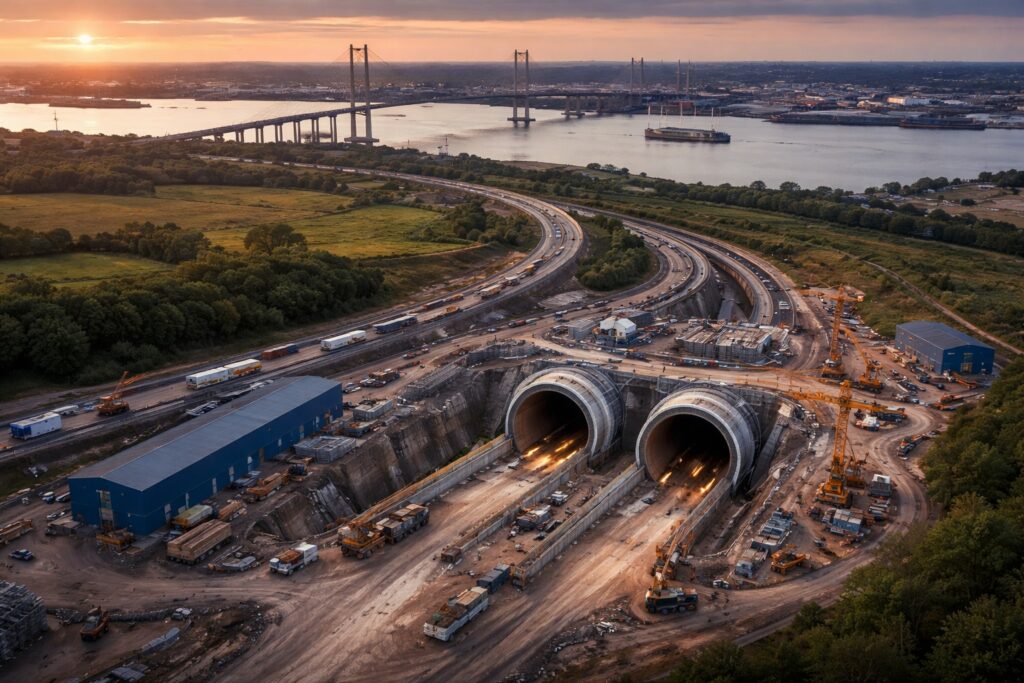
The Cost of the Lower Thames Crossing Project

The Lower Thames Crossing project is ostensibly a straightforward infrastructure initiative: to construct a new road crossing between Kent and Essex to alleviate the already overloaded Dartford crossing. This is not a grand vision project, but rather a remedial construction intended to fix a long-failing transport hub. Yet, the UK has a notorious reputation for failing to expedite the completion of tasks that have been long acknowledged as necessary.

The project itself is not complex. Designed with six lanes in total, three in each direction, it falls under the national trunk road category, managed by the motorway system, and is not intended for urban commuting but rather serves as a backbone route primarily for freight and long-distance transport. Its function is unequivocal: it does not aim to increase traffic flow but to clear the existing, gridlocked traffic. This is a tunnel designed for logistics, not for political posturing.

Consequently, its economic impact is quite direct. The Dartford crossing has long exceeded its design capacity; even a minor incident can trigger a cascading paralysis of the entire southeastern road network. Delays for freight vehicles, inaccurate deliveries, and wasted driver hours force businesses to either absorb costs or pass them on. For industries reliant on ports, warehousing, and road transport, this is not merely inconvenient; it represents a daily structural loss. The Lower Thames Crossing promises more stable and predictable transport times, which is precisely what modern supply chains value most.

UK politicians frequently discuss the need to rebuild manufacturing and enhance export competitiveness, but if the most critical logistics bottleneck in the southeast remains in disrepair, even the most attractive industrial policies will remain mere words on paper. This tunnel may lack symbolic grandeur, but it represents a vital segment of the economic bloodstream.

What is truly striking is the cost incurred even before construction has officially begun. Public records reveal that the planning and consultation phases alone have consumed an astonishing amount of public funds. The cost of planning applications and related documentation approaches £300 million; preparations for the development consent order account for approximately £267 million; multiple rounds of public consultation, environmental assessments, and studies have consumed around £27 million. In total, just for preliminary documentation, research, and procedures, over £450 million has already been spent.

To date, before full-scale construction has commenced, the entire project has accumulated costs exceeding £1.2 billion. For comparison, the overall estimated construction cost of this project is around £9 to £10 billion. In other words, before the tunnel has even begun to be excavated, the UK has already spent more than one-tenth of the entire project budget on procedures and documentation. This money has not paved a single meter of road or dug a single shovel of earth, yet it starkly illustrates how the system consumes both time and resources.

Environmental assessments and public engagement are undoubtedly important, but when the system demands over a decade and hundreds of millions of pounds to repeatedly demonstrate that an already overloaded crossing needs to be alleviated, the issue transcends caution and veers into indecision. Ironically, during this period of delay, traffic jams, idling, and detours occur daily, with environmental costs never ceasing, merely dispersed across each silent moment of waiting.

Ultimately, the Lower Thames Crossing will likely be completed. The UK does not lack engineering capability, nor is it truly short of funds. What is genuinely unsettling is a governance model that requires even such a pragmatic six-lane tunnel to be ensnared by documentation for over a decade. While the tunnel may pierce the riverbed, if decision-making remains perpetually mired in procedures, it will not just be transport that suffers.

The Cost of the Lower Thames Crossing Project Read More »

The Lessons from Investing in Venezuelan Oil

A chronological examination of investments in Venezuelan oil reveals a pattern of oversight. The resources were already present, and the risks were apparent; yet investors repeatedly chose to ignore them, naively believing that everything would eventually turn out well.

The first to pay the price were American oil companies. In 2007, amid a wave of nationalization, ConocoPhillips was forced to withdraw from the Orinoco heavy oil project and subsequently sought international arbitration. The tribunal ultimately ruled that Venezuela must compensate approximately $8.7 billion, one of the largest investment arbitration awards in the history of the energy sector. However, a ruling does not equate to cash. Given Venezuela’s long-standing debts and uncertain restructuring prospects, the recovery of this compensation is highly uncertain and can only be pursued through piecemeal methods such as seizing overseas assets, resulting in actual recoveries far below the book figure.

Chevron’s choice reflects another investment mentality. It did not fully withdraw but accepted a passive minority stake, choosing to remain. The outcome was capital lock-up and restricted operational control, with cash flow entirely dependent on sanctions waivers and political winds rather than market performance. Even though it has recently obtained limited operational permits due to diplomatic considerations, it has only managed to maintain production at a minimal level, falling short of normal investment returns. This situation has ceased to be a commercial calculation and has become a political gamble.

After the retreat of Western capital, Chinese investment entered the fray. Beginning in 2008, China provided over $60 billion in loans and investments to Venezuela under a ‘loans-for-oil’ model, in exchange for long-term crude oil supplies and engineering contracts. While this arrangement appeared to hedge against systemic risks, it failed to guard against declining production, aging equipment, and managerial failures. Oil deliveries have consistently fallen short of expectations, and some debts have required extensions or renegotiation. Even after years of debt repayment through oil, estimates still indicate that Venezuela’s unpaid debts to China amount to tens of billions of dollars.

When Donald Trump declared that the U.S. would take over Venezuela and intervene in transitional governance, the uncertainty surrounding Chinese investments was heightened further. Whether existing contracts would be recognized, whether loan arrangements would need rewriting, and whether repayment mechanisms would change all depended on a new round of great power competition. Unfulfilled assets were once again exposed to political risk.

The entire timeline reveals a recurring error: overseas fossil fuel investors systematically underestimate geopolitical risks while naively believing that the worst-case scenarios will not materialize, or that even if they do, they can be mitigated through arbitration, diplomacy, or the passage of time. However, in non-free, non-democratic systems, law is a tool, contracts are merely temporary arrangements, and capital lacks genuine protection.

The structure of the industry further amplifies these risks. Fossil fuels are highly concentrated assets that can be controlled at a single point. Oil fields, mines, and transportation facilities are clearly visible and are the easiest to seize or disrupt. Once a regime shifts or international conflicts escalate, investments have almost no buffer space.

In contrast, domestic clean energy and storage infrastructure present a completely different risk structure. First, they are located within national borders, protected by local rule of law, regulatory frameworks, and defense systems. For external forces to directly disrupt them would require crossing sovereign red lines, which comes at a high cost. Second, and more crucially, they are decentralized. Solar panels are spread across rooftops and sites, onshore wind farms are dispersed over vast areas, and battery storage is deployed at multiple nodes and levels. To inflict substantial damage on these facilities without triggering a full-scale conflict would often require costs and time that far exceed any potential strategic gains.

Bringing the perspective back to national security, the conclusion is quite clear. In an era where energy transition and geopolitical tensions are accelerating, continuing to invest in overseas fossil fuel infrastructure poses not only investment risks but also strategic risks. It ties energy supply, capital security, and diplomatic maneuvering together; once the situation reverses, the costs will not only be borne by companies but will also return to the national level.

The truly rational choice is to gradually cease taking risks with overseas fossil fuels and to concentrate resources on domestic clean energy, grid systems, and storage infrastructure, or to collaborate only with allies that have similar systems and stable relations. This is not idealism but a pragmatic calculation of national security. The lessons from Venezuelan oil serve as a reminder to investors and decision-makers: the most dangerous aspect is not the risk itself, but the illusions surrounding it.

The Lessons from Investing in Venezuelan Oil Read More »

The Future of Agrivoltaics in British Agriculture

British agriculture is facing an unavoidable dilemma: hard work is no longer yielding returns. Recent data reveals that approximately one-third of farms in the UK recorded no profits over the past year. This is not merely a case of individual mismanagement, but a structural issue. Rising costs for energy, fertilizers, and labor, coupled with increasingly erratic weather patterns, have kept agricultural product prices under the thumb of market forces and large retailers, leaving farmers at the most vulnerable point in the supply chain.

In this context, the notion that “if you focus on farming, everything will naturally improve” has lost its persuasive power. The issue lies not in the farmers’ diligence but in the outdated agricultural model itself, which can no longer provide a stable livelihood. Agrivoltaics is being seriously discussed not because it is trendy, but because it addresses a direct and urgent question: how can farms survive in a highly uncertain environment?

Agrivoltaics refers to the practice of farming while simultaneously generating stable income from solar energy on the same piece of land. There are various methods to implement this. For instance, solar panels can be installed in a conventional solar farm layout while also being used for grazing; or dual-sided solar panels can be erected in an east-west orientation, allowing livestock to move between them; or panels can be elevated to create a structure that allows for continued farming underneath, with agricultural machinery able to move freely. In some experimental projects, multiple approaches are employed simultaneously, depending on the terrain, crop types, and business models. The essence of agrivoltaics lies not in its appearance but in whether the land can simultaneously generate agricultural and energy value.

This effectively dismantles the myth of “land grabbing.” For many farms in the UK, the real scarcity is not land but predictable income. The role of agrivoltaics is to introduce a revenue stream that is not entirely synchronized with weather, harvests, or market prices. Solar power generation is based on long-term contracts, providing relatively stable cash flow that can support operations during poor harvests or price downturns.

In practical terms, photovoltaics and agriculture need not be in conflict. For crops, moderate shading can help reduce water evaporation and alleviate stress from extreme heat; for livestock, grazing under panels can simultaneously address weed management and land utilization issues. These are not abstract theories but experiences gradually accumulated in various regions across Europe.

More importantly, there is a transformation in the structure of agricultural risk. Traditional agriculture often places all variables on a single line; if weather patterns deviate or prices drop, the entire year’s earnings can be wiped out. Agrivoltaics provides farms with an additional revenue curve, allowing operations to be less entirely dependent on natural conditions and market sentiment. For farmers who have long struggled on the edge of break-even, this capacity to diversify risk is often more practical than any subsidy.

Looking at the UK as a whole, the energy transition also faces the reality of limited land and significant resistance. If agriculture and energy are pitted against each other, both will suffer. Agrivoltaics offers a way to reconfigure resources: it does not require choosing between food and energy but allows the same piece of land to serve multiple functions.

When one-third of farms are already unprofitable, the question is no longer whether to try new models, but whether they can afford to remain unchanged. The significance of agrivoltaics lies not in its perfection but in its indication of a direction—if British agriculture is to endure, the land itself must begin to learn to do more than one thing.

The Future of Agrivoltaics in British Agriculture Read More »

The Futility of Market Timing in Investing

Almost every investor believes they are not part of the ‘majority’. They think that with a bit more accurate judgment and quicker reactions, they can buy low and sell high, avoiding risks while amplifying returns. The allure of market timing lies in this promise: to profit without enduring volatility. However, reality repeatedly shows that most investors tend to buy at high prices and sell at low ones, straying from the ideal path.

This is not merely a psychological error, but a fundamental logic of market operations. The Efficient Market Hypothesis states that at any given moment, prices reflect all available information. News, data, policy expectations, pessimism, and optimism are all absorbed by countless market participants and reflected in prices. The ‘important information’ you think you’ve just discovered has likely already been digested by the market.

As a result, markets often behave contrary to human intuition. When prices fall, bad news seems particularly abundant; when prices rise, good stories appear especially plausible. Turning points are often not due to sudden reversals in information, but because prices have already anticipated and exhausted expectations. By the time sentiment truly reacts, the optimal moment has long passed.

Behavioral finance further explains why investors act at the wrong times. The pain of loss is significantly greater than the pleasure of gain. A small drop prompts a desire to cut losses, while a rise incites a fear of missing out, leading to chasing prices. Even in a generally efficient market, human irrationality is sufficient to cause investors to repeatedly make the same mistakes.

More cruelly, long-term returns are highly concentrated in a very small number of trading days, which often follow the most panicked and volatile moments in the market. If you attempt to time the market or temporarily exit, you risk missing those critical days that cannot be reclaimed. The Efficient Market Hypothesis does not require you to believe that the market is always correct; it merely reminds you that the cost of avoiding volatility is often higher than enduring it.

Some still believe that with better technology and more accurate judgment, they can successfully time the market. However, if prices already reflect information, this means you must consistently act ahead of the smartest, fastest, and most resourceful individuals in the market. This is not an investment strategy; it is a misjudgment of probabilities.

What is truly costly is not just a single misjudgment, but the repeated transaction costs, tax friction, and emotional toll incurred from attempts at market timing. Market timing may seem proactive, but it effectively hands decision-making power over to fear and greed; long-term investing, which appears passive, is actually a calm acknowledgment of market efficiency.

Therefore, the conclusion must be stated more clearly: timing the market is futile. Not because you are not trying hard enough, but because prices already incorporate all the information you wish to exploit. Since no one can consistently identify the ‘optimal moment’, for long-term investors, this so-called optimal moment has only one answer—it’s always ‘now’.

The Futility of Market Timing in Investing Read More »

The Bayeux Tapestry Returns to Britain: When and Where to See It?

A piece of embroidery nearly 70 meters long and about half a meter wide carries the weight of a pivotal moment in English history. The Bayeux Tapestry is not a tapestry in the traditional sense; rather, it is a narrative embroidery stitched with woolen thread onto linen, completed in the late 11th century. It depicts the events surrounding the Norman Conquest from 1064 to 1066: Harold’s oath, William’s gathering of forces, and the decisive Battle of Hastings. The continuous imagery, accompanied by Latin inscriptions, serves almost as a medieval documentary.

Scholars generally believe that the tapestry was likely created in England and then sent to France, with funding possibly coming from Odo, Bishop of Bayeux, who was William’s half-brother. Its significance lies not in the absolute accuracy of every detail but in how it weaves together themes of legitimacy, religious symbolism, and the narrative of war into a cohesive story. For this reason, the Bayeux Tapestry is not only an artistic treasure but also a political text, remaining an indispensable source for the study of the Norman dynasty.

This national treasure, long housed in Normandy, France, is finally set to return to the UK in a special exhibition. The exhibition will take place at the British Museum in London, running from September 2026 to July 2027. The display will be segmented, adhering to stringent requirements for temperature, humidity, and low light to ensure that this nearly thousand-year-old artifact does not suffer structural damage during the exhibition. Visitors will not only be able to appreciate the overall narrative but also observe the embroidery’s lines, compositional arrangements, and traces left by historical repairs up close.

For many in Hong Kong and the UK, the Bayeux Tapestry is not entirely unfamiliar. It is one of the popular topics frequently featured in the Life in the UK Test, assessing candidates’ understanding of the decisive impact of the Norman Conquest on British history. The names and images that are usually encountered only in revision notes and mock exams will now materialize before them, evoking a sense of ‘seeing the real thing’ and bringing this historical episode from abstract knowledge back to tangible reality.

A practical tip for those planning to visit: become a member of the British Museum. Members can enter ticketed special exhibitions for free and without prior booking, which is a significant advantage for highly sought-after exhibitions. Additionally, members enjoy exclusive time slots with fewer crowds, making for a more relaxed viewing experience compared to public hours.

Moreover, the UK Treasury will provide a government guarantee of £800 million for this loan. This is not a generous arrangement but a practical necessity. Such a significant artifact would be nearly impossible to insure fully against all risks in the commercial market; any incident during transportation or exhibition could lead to liabilities that would nullify any insurance arrangement. The government guarantee serves as a final safeguard for the lending country, ensuring that cultural exchange does not stall due to financial realities.

The return of the Bayeux Tapestry is not merely an exhibition; it is an opportunity to re-understand the origins of Britain. History is not only inscribed in decrees and royal names but also woven into the fabric and threads. Standing before this long scroll, viewers see not just a war that has long ended but how power has been narrated, preserved, and passed down to the present day.

The Bayeux Tapestry Returns to Britain: When and Where to See It? Read More »

Ninety Percent of Fund Managers Underperform Indices

Financial markets excel at generating hope. Every day, fund managers discuss stock selection and strategies with great confidence, suggesting that diligent analysis can help them avoid risks and outperform the market. However, when the time frame is extended to ten or twenty years, the conclusion becomes stark and singular: over ninety percent of fund managers underperform their benchmarks in the long run.

This is not merely a feeling; it is statistical fact. According to the SPIVA report published by S&P Dow Jones Indices, in the U.S. large-cap market, more than 90% of active funds underperformed the S&P 500 index over a 20-year period; even over a 10-year period, the underperformance rate remains close to 85%. Time is not a friend to active funds; rather, it is their adversary. The longer the time horizon, the fewer winners remain.

This phenomenon is not unique to the United States. SPIVA’s European data reveals that approximately 80% of UK equity funds underperformed their benchmark over a 10-year period; in mature markets like the Eurozone and Japan, the long-term underperformance rate generally ranges from 70% to 90%. Even in emerging markets, which are often considered ‘less efficient,’ more than half of active funds still lag behind their indices over a 10-year period. While markets may not be perfect, they are sufficient to pull most investors below the average.

Some may argue that the issue lies not with active management itself but with selecting the wrong funds. However, research from Morningstar indicates that this argument also lacks merit. Statistics show that the likelihood of a fund that was once in the top 25% remaining there five years later is typically below 20%. Good performance is difficult to sustain, while poor performance tends to be remarkably stable. Choices that seem reasonable in hindsight are nearly impossible to identify in advance.

An even harsher statistic is the ‘survivorship rate.’ Long-term tracking by Morningstar shows that after 15 years, only about half of active funds still exist; the rest have either been liquidated, merged, or quietly disappeared. Investors face not only the risk of underperforming indices but also the risk that the funds they select may not survive long enough to deliver long-term returns.

Costs represent the final blow. Active funds typically charge management fees of 1% to 2% annually, coupled with hidden costs from frequent trading, which can erode most returns due to compounding effects. The overall market return is fixed; before costs are deducted, all investors combined equal the market; after costs, active investors are bound to lose. This is not a question of ability but of arithmetic.

It is for this reason that John Bogle proposed a counterintuitive choice: do not attempt to beat the market; instead, own the market directly. Low-cost, broadly diversified, long-term investments in index funds, without predictions or frequent trading, allow time to make the decisions.

The conclusion is, in fact, quite calm. For the average investor, investing is not about proving oneself smarter than fund managers, but rather about avoiding the statistically marked disadvantage. When 90% of professionals cannot consistently outperform indices over the long term, the most rational choice is to refrain from participating in a competition that is destined to yield negative expectations.

Passive index investing is not laziness; it is a clear-eyed recognition of the numbers. The market does not entertain excuses; it merely tallies results.

Ninety Percent of Fund Managers Underperform Indices Read More »

Rolls-Royce: The Core of British Industry Beyond Luxury Cars

For many in Hong Kong, Rolls-Royce is synonymous with luxury automobiles; those with some knowledge of the aviation sector might recognize that the company also manufactures aircraft engines. However, it is only recently that many have discovered that the Rolls-Royce cars seen on the streets are no longer connected to the British Rolls-Royce. The true representative of British industrial strength is Rolls-Royce Holdings, a company that does not produce cars but is deeply involved in global aviation, energy, and nuclear industries.

This distinction itself highlights the issue. Rolls-Royce’s automotive division was sold off in 1998, and today’s Rolls-Royce Motor Cars belongs to the German BMW Group. The British Rolls-Royce has always focused on one thing: high-end engineering. It does not rely on sales volume for survival but thrives on reliability, longevity, and technological barriers.

While aviation engines remain the largest source of revenue, the business model has transformed. Today, engine sales are merely the beginning; the real profits come from service contracts that last for two to three decades. Through real-time data feedback and predictive maintenance, each engine operating in the air becomes a continuously generating asset. This ‘pay-per-flight-hour’ model stabilizes company revenue and makes it more challenging for airlines to switch suppliers.

Beyond aviation, Rolls-Royce plays a crucial role in the energy sector. Its large diesel and gas turbine systems are widely used in data centers, hospitals, ports, and critical infrastructure. In an era where AI and cloud computing are driving electricity demand, these systems are no longer just backup solutions but integral to energy security. Looking further ahead, small modular reactors (SMRs) hold strategic significance—not merely as demonstrations but as standardized, mass-produced, and exportable solutions.

To understand this company, one must look beyond business classifications and consider geographical divisions of labor. Derby serves as the heart of the group, overseeing engine design, assembly, testing, and global maintenance and data monitoring systems. Bristol is a hub for aviation research and development, responsible for core modules of turbofan engines, combustion systems, and future propulsion technologies, serving as the birthplace of the next generation of engines. Sheffield focuses on the most ‘hardcore’ aspects: advanced manufacturing and materials engineering, including nuclear-grade steel, powder metallurgy, and high-precision forging, which support both aviation and nuclear projects. The SMR initiative spans multiple sites across central and northern England, emphasizing the breakdown of nuclear power plants into systems that can be industrially produced.

Overseas, each location serves its purpose. Singapore is the maintenance and service hub for the Asia-Pacific region, while the United States and Germany handle energy and power systems, and Canada participates in nuclear engineering and energy technologies. Regardless of how far the supply chain extends, the critical design rights, system integration, and safety certifications remain firmly in the UK.

From the numbers, this is not a niche enterprise. In a complete fiscal year, the group’s revenue was approximately £17 billion, and it has returned to stable profitability; it employs over 40,000 people globally, many of whom are engineers and highly skilled technicians. These positions are not short-term contracts but require years of training and accumulated industrial capabilities.

What is most noteworthy about Rolls-Royce is not its brand but what it reveals about a reality: the UK has not lost its manufacturing base; it has merely exited low-end competition, concentrating resources on the most difficult industrial sectors to replicate globally. While cars are no longer its face, aircraft engines, energy systems, and nuclear engineering are the true foundations that allow the UK to remain at the forefront of the world.

Rolls-Royce: The Core of British Industry Beyond Luxury Cars Read More »

The Realities and Challenges of Venezuelan Oil

Donald Trump envisioned a military operation to seize Caracas, capture Nicolás Maduro, and declare that the United States would take control of Venezuela. In his narrative, the logic was simple and direct: the world’s largest oil reserves would fall into American hands, granting energy security, geopolitical advantages, and even influence over oil prices. While this rhetoric is appealing and politically mobilizing, it mistakenly treats oil as a treasure chest rather than a complex industrial system that requires long-term operation and cannot simply be turned on and off.

Indeed, Venezuela possesses the largest proven oil reserves globally, but ‘largest’ does not equate to ‘cheapest’ or ‘easiest to profit from.’ Its oil resources are highly concentrated in the Orinoco heavy oil belt, characterized by extra-heavy, high-sulfur, and high-viscosity crude. Transforming this oil from underground into a marketable product necessitates a significant amount of diluents, expensive upgrading facilities, and a stable power, maintenance, and logistics infrastructure. All these conditions are indispensable, yet they have been eroded or entirely collapsed in Venezuela over the past decade. While the reserves are real, their availability and economic viability have been severely constrained from the outset.

Even setting aside technical and cost considerations, safety and order alone are sufficient to deter investment. During the transitional period of external intervention and power restructuring, the most vulnerable aspect is often not the central government but the energy infrastructure. Pipelines, pumping stations, storage tanks, substations, and upgrading plants are all targets for guerrilla warfare and armed sabotage. Such attacks do not need to completely paralyze the industry; their mere recurrence can create long-term uncertainty, driving up insurance, security, and financing costs, rendering any long-term investment return calculations meaningless. For the energy sector, the most challenging aspect is not a single incident but the perpetual unpredictability of interruptions.

Time is also not on Venezuela’s side. Restoring production to a scale that allows for sustainable exports is generally viewed as a multi-year endeavor requiring hundreds of billions of dollars in continuous investment. However, the demand side is undergoing structural changes. Approximately half of global oil demand comes from land transportation, which is facing the most direct and rapid alternatives. Advances in battery technology regarding energy density, lifespan, and cost are accelerating the adoption of electric vehicles.

Simultaneously, the transformation of the power generation sector is altering the entire energy landscape. Solar and wind energy are expanding rapidly worldwide, with new generation capacity hitting record highs each year; nuclear energy is experiencing a revival in several major economies, with both new nuclear power plants and small modular reactors providing stable, low-carbon baseload power to the electricity system. The cheaper and cleaner electricity becomes, the faster electrification occurs, and the smaller the space for fossil fuels in end-demand. These overlapping trends are systematically compressing the long-term growth potential of oil.

Currently, Brent crude oil prices hover around $60 per barrel. This price level is acceptable for low-cost, low-risk oil-producing countries; however, for Venezuela’s heavy oil, which requires massive restoration investments and faces political and security risks, there is virtually no buffer. Even in a more optimistic and politically stable scenario, the breakeven oil price for Venezuelan oil is estimated to be around $40–60 per barrel; however, should the risk premium rise, it could escalate to $60–80 per barrel or even higher. Comparing this range to current oil prices reveals that profit margins are quite limited, clearly disproportionate to the risks involved.

Thus, viewing Venezuelan oil as an energy shortcut fundamentally misjudges long-term, structural industrial and market issues as short-term geopolitical victories. Oil is ultimately not acquired through occupation but through stable order, substantial capital, and prolonged time. And time is increasingly favoring batteries, electric vehicles, wind, solar, and nuclear energy, rather than the high-cost, heavy-oil-dependent Venezuela.

The Realities and Challenges of Venezuelan Oil Read More »

Scroll to Top