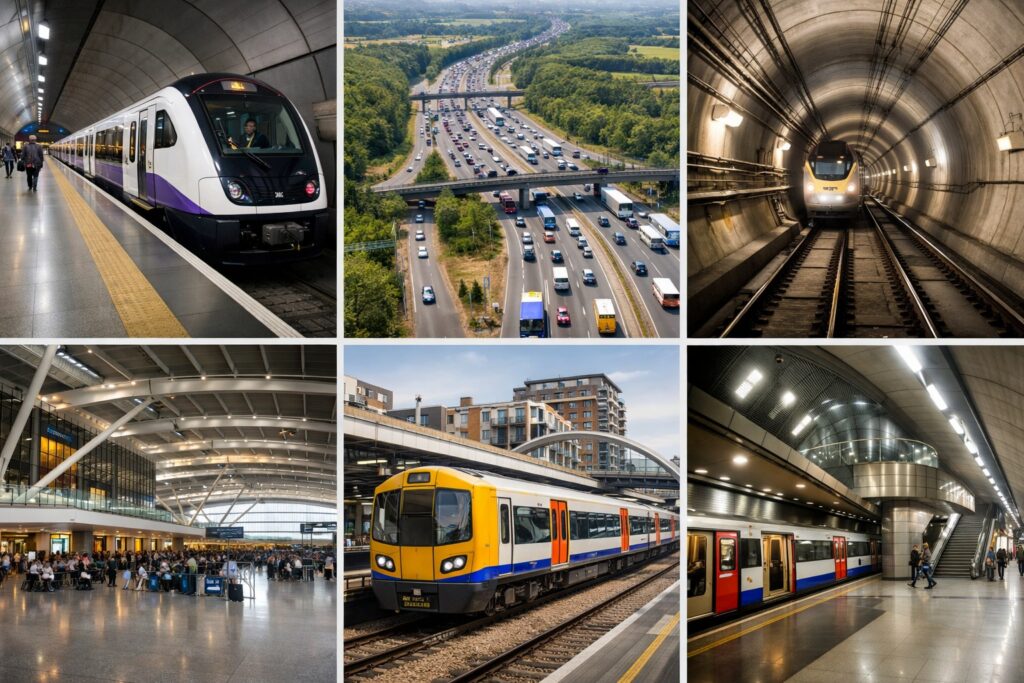
Infrastructure

Britain’s mega-projects, transport networks, and engineered systems. From HS2 and the Tideway sewer to the legacy of Victorian engineers like Brunel, this is how the UK builds and rebuilds its physical state.

UK’s Third Largest Indoor Venue Under Construction in Bristol

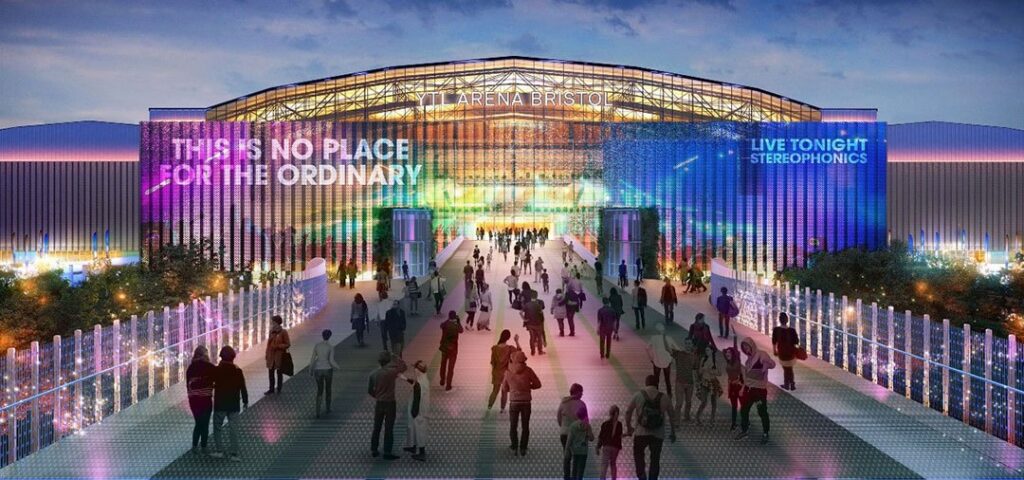
The UK’s third largest indoor performance venue is taking shape in North Filton, Bristol. This is not just a blueprint; it is a project that has been approved and is currently underway.

The YTL Arena, located in northern Bristol, is designed to accommodate 20,000 spectators. In terms of seating capacity, it ranks third among indoor venues in the UK, alongside London’s O2 Arena, and is only surpassed by Manchester’s Co-op Live and Manchester Arena. In other words, one of the four largest indoor performance venues in the UK is not in London or Manchester, but in Bristol.

How significant is a capacity of 20,000? The Hong Kong Coliseum, when full, accommodates only 12,500 people, which is already considered a top-tier venue in Asia, yet it is still markedly smaller than the YTL Arena. This capacity is sufficient to host major global tours, large sporting events, and comprehensive entertainment activities, allowing Bristol to finally meet the criteria to become a ‘first-stop city’ rather than merely an alternative option on tour routes.

The YTL Arena is part of the broader redevelopment of Brabazon, spearheaded by Malaysia’s YTL Corporation. This is not an isolated venue; it is integrated into a long-term urban project that includes residential, commercial, educational, and public spaces. It is currently expected to open around 2028, aligning with the maturation timeline of the entire new district.

Transportation infrastructure is also crucial. The North Filton railway station, which is being developed in tandem with the venue, along with the nearby Bristol Parkway, will connect the national rail network directly to the core of the new district, ensuring that the influx of visitors for large events can be accommodated by the regular transport system rather than relying on temporary arrangements.

The economic benefits are also quite clear. During both the construction and operational phases, the YTL Arena will create thousands of direct and indirect jobs and, through performances, tourism, hotel stays, and dining expenditures, will generate hundreds of millions of pounds in economic activity for North Filton each year. This is not a one-off event; it represents a long-term enhancement of urban functionality.

North Filton is steadily positioning itself at the forefront of the UK’s cultural landscape through its capacity, transportation, and timing.

UK’s Third Largest Indoor Venue Under Construction in Bristol Read More »

Users Abandoning Gas Risks a Costly Transition

The stagnation of gas pipeline networks is not a problem unique to any one country; rather, it is a structural dilemma faced by the entire developed world. Europe, North America, Australia, and Japan—all regions that laid extensive urban gas networks in the 20th century—now find themselves at the same crossroads. The question is not whether to dismantle these systems, but rather when, how, and who will bear the costs.

In a truly decarbonized energy system, the combustion of fossil fuels has no reasonable place. This is not an ideological debate; it is a matter of physical law. Regardless of whether gas is sourced from underground or repackaged as ‘low-carbon’, its combustion inevitably results in greenhouse gas emissions. Fortunately, mature and superior alternatives already exist for residential and commercial buildings: heat pumps can amplify one unit of electricity into three to four units of heat, while induction stoves eliminate indoor pollution, offering efficiency, safety, and health benefits that far surpass those of gas. Energy transition does not mean a reduction in quality of life; rather, it signifies the obsolescence of a technically outdated system.

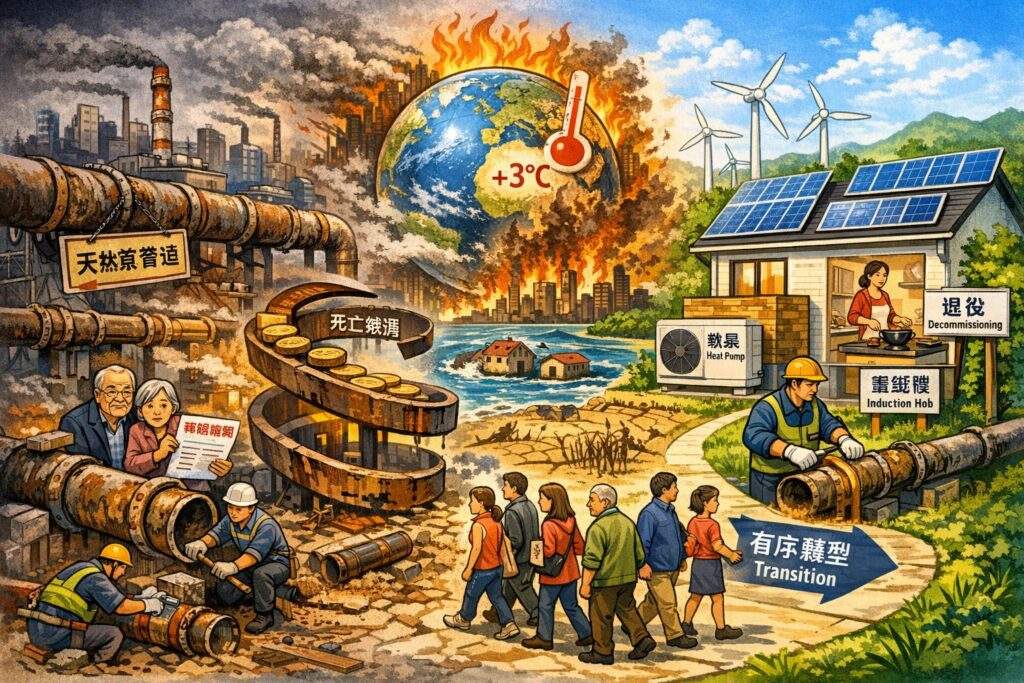
Consequently, the trend of users ‘jumping ship’ is inevitable. As households and businesses gradually shift towards full electrification, they not only save on energy costs per kWh but also avoid the fixed charges embedded in their gas bills that pay for the entire network. The result is that as users decrease, the network costs per household increase; higher costs drive away even more potential users. This death spiral is not a market failure; it is the natural conclusion of infrastructure that has lost its justification for existence.

Some may argue that if this is the case, why not delay the transition as much as possible? However, this is precisely the most dangerous choice. If gas networks are not phased out, humanity must continue to rely heavily on fossil fuels, pushing the global warming trajectory towards 3 °C or even higher. This would not merely represent a failure to meet abstract climate targets; it would lead to concrete and brutal systemic disasters: extreme heat becoming the norm, reduced agricultural yields, disrupted water resources, coastal cities forced to retreat, and the economic and social costs far exceeding the expense of decommissioning any gas pipeline. In contrast, dismantling the network is not radical; it is rational.

The truly challenging issue lies in how to transition fairly. Gas pipelines cannot be shut down overnight, as many households will still depend on them for basic heating and hot water in the short to medium term. If left entirely to market forces, the last remaining users—often the most vulnerable with the least choices—will bear the highest costs. This is why the retirement of gas infrastructure cannot be merely a commercial outcome; it must become a part of public policy. The costs of stranded assets must be paid regardless; the only difference is whether they are distributed in a planned manner or explode uncontrollably later on.

Thus, the conclusion is clear and rational. First, the expansion of gas distribution networks should be halted immediately to avoid creating assets that are bound to be scrapped. Second, a predictable and enforceable decommissioning timetable should be established, synchronizing the sealing and dismantling of pipelines with the rollout of alternatives like heat pumps and building energy efficiency measures. Third, policy tools should be employed to ensure that the costs of transition do not disproportionately burden the last remaining households still using gas.

Gas pipelines must eventually be phased out; this is not an option but a prerequisite. The real choice left is whether to dismantle them in an orderly fashion now or to pay a heavier and more inequitable price after climate chaos ensues.

Users Abandoning Gas Risks a Costly Transition Read More »

South Wales Metro: Reviving Productivity in the Valleys

South Wales Metro: Reviving Productivity in the Valleys

The South Wales Metro serves not just a single city, but an entire region of suburbs historically trapped in stagnation: the South Wales Valleys. These valley towns, located north of Cardiff, include Merthyr Tydfil, Rhondda, Treherbert, Aberdare, Pontypridd, Caerphilly, and Rhymney. They thrived during the coal industry boom but were left behind as coal mining declined.

These areas have long been labeled as “low productivity regions,” but the issue lies not with the people, but with transportation. Sparse schedules and high costs of delays deter employers from hiring those who “live too far away,” while employees hesitate to seek jobs across districts. Although the straight-line distance may be short, commuting times can be lengthy, resulting in a natural contraction of the labor market, with opportunities lost to time.

The South Wales Metro aims to reframe these valleys as part of the Cardiff metropolitan area. Unlike London or Manchester, which radiate outward from a single city, it seeks to stitch together a loose, fragmented suburban network. The focus is not on speed but on frequency and reliability. When rail services are as dependable as the metro, people can confidently invest their time in work and life.

Such a transformation will directly reflect on productivity. An expanded commuting radius naturally increases the pool of human resources available to businesses; enhanced labor mobility improves the efficiency of job and skill matching; for small and medium enterprises, punctuality and reliability are competitive advantages. Productivity is never an abstract concept; it is the cumulative result of whether one can arrive on time each day.

Changes in usage patterns are equally important. The introduction of tap-in gates means that taking the train no longer requires prior research into ticket types and time slots; boarding, alighting, and automatic fare calculation become seamless. When rail travel shifts from a “planned” mode of transport to an everyday tool, actual usage rates naturally rise, thereby enhancing labor market fluidity.

On a technical level, the introduction of tram-trains allows this system to connect not only towns but also to penetrate communities. It can operate on existing railways and extend into urban activity zones, reducing friction from the last mile. For the valley towns, this often proves crucial for truly unlocking labor potential.

This project has reached its current stage due to historical context. During the UK’s EU membership, the preliminary planning and some infrastructure of the South Wales Metro received structural funding support. The underlying logic is straightforward: to enhance regional productivity, transportation infrastructure must come first.

The South Wales Metro is not a project completed overnight but is being advanced in phases. New trains, increased service frequency, and ticketing integration have gradually been implemented in recent years; with the introduction of tram-trains, the system’s critical capabilities are expected to fully materialize around 2026.

With the railways operational, whether South Wales can truly turn the tide remains to be seen. However, at least this time, the issues are no longer attributed to individuals but are beginning to be addressed as structural problems.

South Wales Metro: Reviving Productivity in the Valleys Read More »

Significance of the Central Kowloon Route’s Yau Ma Tei Opening

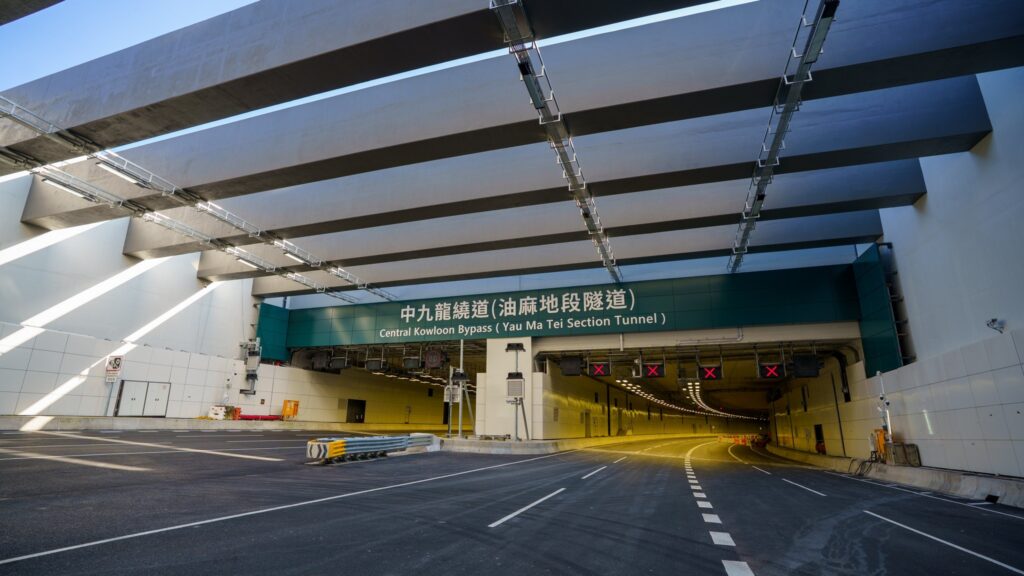
The opening of the Central Kowloon Route’s Yau Ma Tei section marks the completion of a tunnel, but it represents much more: a long-awaited release of pressure from the congested traffic structure in Kowloon. This project is not about speed; rather, it is a fundamental infrastructure initiative aimed at diverting traffic from the surface and redistributing urban space. Though it has taken time, it is progressing in the right direction.

This road was not a spur-of-the-moment decision. The concept of the Central Kowloon Route emerged as early as the 1990s, receiving official approval in 2016 and commencing construction in 2017. Its purpose has always been clear: to serve as a core component of Route 6, connecting Yau Ma Tei, Kai Tak, and Kwun Tong, with future links to Tseung Kwan O. The goal is not merely to alleviate congestion on a single road but to address the structural issues stemming from Kowloon’s long-term reliance on surface roads that interfere with one another.

The true test of engineering capability lies in the Yau Ma Tei section. The tunnel runs beneath a densely populated old district, with residential buildings, major roads, and public facilities above, including the vital Queen Elizabeth Hospital. To avoid impacting the hospital’s sensitive equipment and patient safety, certain blasting operations were strictly limited to designated time slots, with actual operational windows lasting only about 15 minutes. This is not a matter of inefficiency but a reflection of urban realities, where public safety must take precedence over expediency.

Simultaneously, the tunnel had to avoid the MTR structures, with some sections dangerously close to active railways, precluding conventional blasting techniques. Instead, low-vibration, slow methods were employed. This meant that progress could not be hastened by simply adding more workers or shifts; it relied on meticulous planning and disciplined execution.

The surface works were equally challenging. To accommodate the tunnel’s alignment and road restructuring, the multi-storey car park building in Yau Ma Tei, which spans the road and integrates with elevated roads, needed to be demolished. Such old layered infrastructure, once construction begins, triggers a chain reaction affecting not just a single building but also traffic rerouting, structural resets, and community adaptation. Completing this without causing long-term chaos reflects a high level of engineering management maturity.

In terms of outcomes, the opening of this section deserves positive recognition. The Yau Ma Tei section is set to open by the end of 2025, without major safety incidents or catastrophic delays, which is commendable. Regarding costs, the government has yet to release final audit figures, but overall expenses remain broadly within the original estimates, showing no signs of structural overspending.

Of course, this does not mean that Route 6 is complete. The remaining sections connecting Kai Tak, Kwun Tong, and Tseung Kwan O are still under construction, and the full benefits of the corridor will only be realized once it is entirely connected. However, the completion of the Yau Ma Tei section at least proves that the most difficult and error-prone segment has been successfully navigated.

Hong Kong has long been criticized for its slow and expensive infrastructure projects, but the issues often lie not in technology but in trade-offs. The Central Kowloon Route’s Yau Ma Tei section demonstrates that with clear objectives and a willingness to tackle the most challenging aspects, infrastructure can still serve as a tool for repairing urban structures. This opening is not the end but rather a turning point towards the completion of Route 6.

Significance of the Central Kowloon Route’s Yau Ma Tei Opening Read More »

How Crossrail Bridges Hongkongers to Central London

The Elizabeth Line, formerly known as Crossrail 1, has delivered an undeniable performance for London. Since its opening, it has quickly become one of the busiest and most reliable railways in the UK. More importantly, it has fundamentally altered the perception of distance within the city. Areas such as Reading, Slough, and Abbey Wood, once considered ‘too far to live,’ are now naturally included within the daily commuting range. The recruitment radius for businesses has expanded, residents’ daily rhythms have become more predictable, and London has re-learned how to grow outward. Crossrail 1 demonstrates that the value of intercity rail lies not in speed, but in frequency, reliability, and direct access.

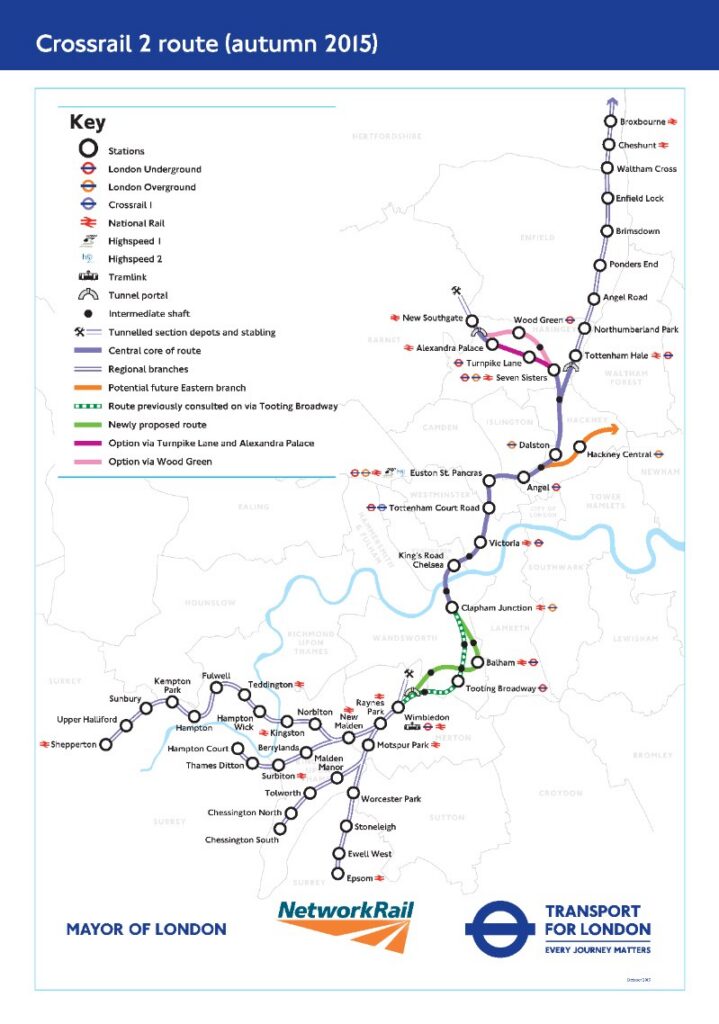
The concept of Crossrail 2 aims to replicate this model. Its origins can be traced back to the 1970s, with a consistent goal: to provide London with a high-capacity north-south backbone to alleviate the long-standing overload on the Victoria and Northern lines. By the 2010s, the route had gradually taken shape. The core section runs through the city centre from Wimbledon via Clapham Junction, Victoria, Tottenham Court Road, and Euston St Pancras; at both ends, branches extend outward. The southwestern terminus includes four major endpoints: Shepperton, Hampton Court, Chessington South, and Epsom; the northeastern end extends to New Southgate and Broxbourne, with potential connections to Hackney Central to the east. The overall design is clear: a high-density main line traversing the city, with multiple branches converging on the outskirts.

This route configuration precisely covers the actual residences of recent Hong Kong migrants. These migrants are concentrated in southwest London, including towns like Kingston upon Thames, New Malden, and Wimbledon. These areas are stable in terms of schools, mature in terms of community, and offer larger living spaces, making them natural choices for family-oriented migrants. However, the transportation reality is also apparent: travel into the city primarily relies on National Rail, which has infrequent services, limited options during peak hours, and delays that can disrupt the entire journey.

The key significance of Crossrail 2 for these communities lies in its ‘mainlining.’ The core section will operate at a frequency close to that of the Underground, with services every few minutes during peak times. For residents along the line, commuting into the city will no longer require checking timetables or enduring the risks of delays and disruptions across the entire network.

As rail services become more frequent, the definition of ‘distance’ is naturally rewritten. Living in southwest London no longer equates to sacrificing urban opportunities, but rather choosing an alternative lifestyle. For dual-income families, there is greater time flexibility; for those needing to frequently travel to the city centre, their employment and development radius is effectively widened.

Overall, this represents the healthiest development path for London. Crossrail 1 connects east to west, while Crossrail 2 fills in the north-south gap, completing the urban framework. For Hongkongers, it offers not speculative dreams, but a tangible prospect of living comfortably without being marginalized. As distance is recalculated, the reasons to stay become more compelling.

How Crossrail Bridges Hongkongers to Central London Read More »

Lessons on Building Safety from the Tai Po Fire

As of November 28, the fire at Wang Fuk Court in Tai Po has claimed 128 lives, left 79 injured, and over 200 missing. This tragedy is not a natural disaster but rather a consequence of lax regulations and engineering failures. The key factor in this disaster was the layer of foam board around the exterior windows, intended to protect the glass from damage during construction, but its flammable nature exposed the entire building to extreme risk.

According to preliminary official investigations, the protective netting was flame-retardant; the issue lay with the highly flammable foam board around the windows and doors. The fire initially ignited in the lower-level scaffolding of Hong Cheung House, rapidly spreading up the exterior walls and affecting multiple floors. The intense heat caused the glass to shatter, allowing flames and thick smoke to pour into the interior, resulting in simultaneous fires at multiple points. The bamboo scaffolding burned through under high temperatures, collapsing and igniting other scaffolding, blocking exits and making it difficult for fire trucks to approach. The extreme temperatures in the fire zone caused constant reignition of embers, repeatedly hindering rescue efforts. The entire incident exemplifies the chain reaction of igniting combustible materials.

The dangers of foam board are well known within the industry. It has a low ignition point, produces toxic smoke, and spreads rapidly when ignited. The problem is not ignorance but a lack of accountability for managing risks. For years, regulations governing external wall maintenance in Hong Kong have been lax, focusing solely on procedural compliance without prioritizing material safety. Contractors follow customary practices, management offices approve based on minimum standards, and various departments limit their oversight to their own areas, with no one considering the overall picture. When there are gaps in the system, dangers seep through.

The 2017 Grenfell Tower fire in London had already highlighted combustible materials on external walls as a fatal weakness for high-rise buildings. In response, the UK tightened regulations and mandated the removal of problematic cladding. Eight years later, Hong Kong has yet to address similar vulnerabilities. A safety culture is not merely a slogan; it requires systemic measures to eliminate all possibilities of combustible materials. As long as foam board is still permitted around windows, any reviews will amount to little more than paper exercises.

The Wang Fuk Court fire is not only a warning for Hong Kong but also for densely populated cities worldwide. To prevent a recurrence of such tragedies, a comprehensive review of the system is essential, allowing the facts to speak for themselves. Hong Kong should establish an independent investigation committee composed of international experts in fire engineering, building safety, and risk science to publicly ascertain the causes of the fire, regulatory gaps, and material policies, and propose reforms applicable locally and in other cities. This is not only about accountability but also about preventing future tragedies.

The fire has finally been extinguished, but the flames of the system continue to burn. History has issued two warnings; if lessons are not learned, the costs will only escalate.

Lessons on Building Safety from the Tai Po Fire Read More »

Bee Network: Manchester’s New Public Transport Model

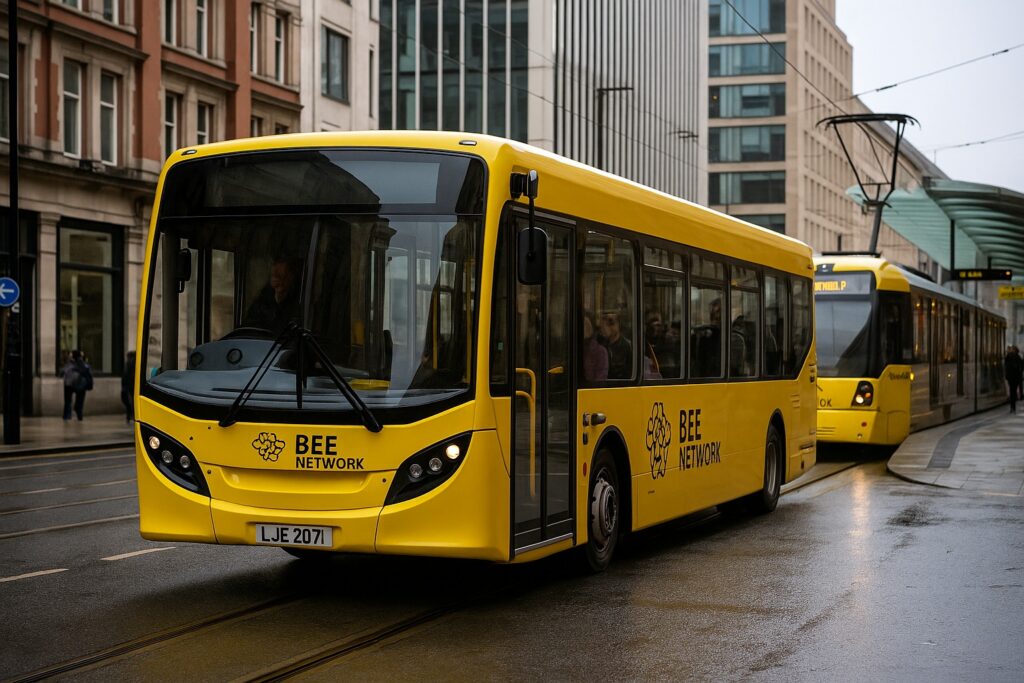
In November, Manchester’s streets are filled with yellow buses, a new symbol of the city. This is not merely a change of contractor; it represents a redefinition of public transport. Since privatization in 1986, bus systems across the UK have become fragmented, with chaotic fares and inconvenient transfers. However, Manchester’s reform, dubbed the ‘Bee Network’, demonstrates that transport can return to its service-oriented roots.

Led by Greater Manchester Mayor Andy Burnham, this transformation began with trials in Bolton and Wigan in 2023, aiming for full coverage of Greater Manchester by early 2025. The government has regained control over routes and fares; while buses remain operated by private companies, they must adhere to franchise agreements and unified standards. For the first time, the city’s public transport operates under a single brand, a single ticket, and a cohesive system. The yellow buses are not just a logo but a representation of a shift in governance logic.

The impact on passengers is immediate. Previously, commuting from the suburbs required purchasing two separate tickets, costing around £6. Now, passengers simply tap their cards at entry and exit, with the system automatically calculating the best fare. Transfers within sixty minutes still cost only £2, and children’s tickets are £1. For families commuting daily, weekly transport expenses have dropped from approximately £35 to around £20. This is not a case of government handouts; rather, it is about integration replacing redundancy and planning replacing competition, enhancing efficiency and saving money.

Convenience is equally evident. In the past, passengers had to figure out which company operated which route; now, one card allows travel throughout the entire area. The light rail and bus systems share a payment system that records transactions automatically and provides transparent settlements, making transfers hassle-free. Citizens are rediscovering the continuity of the city. Stations, routes, and timetables no longer belong to different companies but are part of a collaboratively woven public network.

The future blueprint is even more ambitious. Local railways are set to be fully integrated into the Bee Network by 2030, achieving a unified fare system across the region. Burnham is advocating for an underground tunnel project in the city center, allowing light rail and trains to operate underground, alleviating surface congestion while strengthening connections to the airport and new residential areas. If successful, Greater Manchester’s transport system will not only be cohesive but will also create the first true ‘one city, one network’ in the country.

The success of the Bee Network illustrates that public service and efficiency are not mutually exclusive. When local governments possess determination and vision, market forces can be directed towards the public good. This reform has made Manchester’s transport not only smoother but has also restored the sense of wholeness to the city. Other cities in the UK seeking to rebuild connections and equity should take Manchester as a model, allowing public transport to once again become the pulse of the city.

Bee Network: Manchester’s New Public Transport Model Read More »

Significance of Three Small Nuclear Plants in North Wales

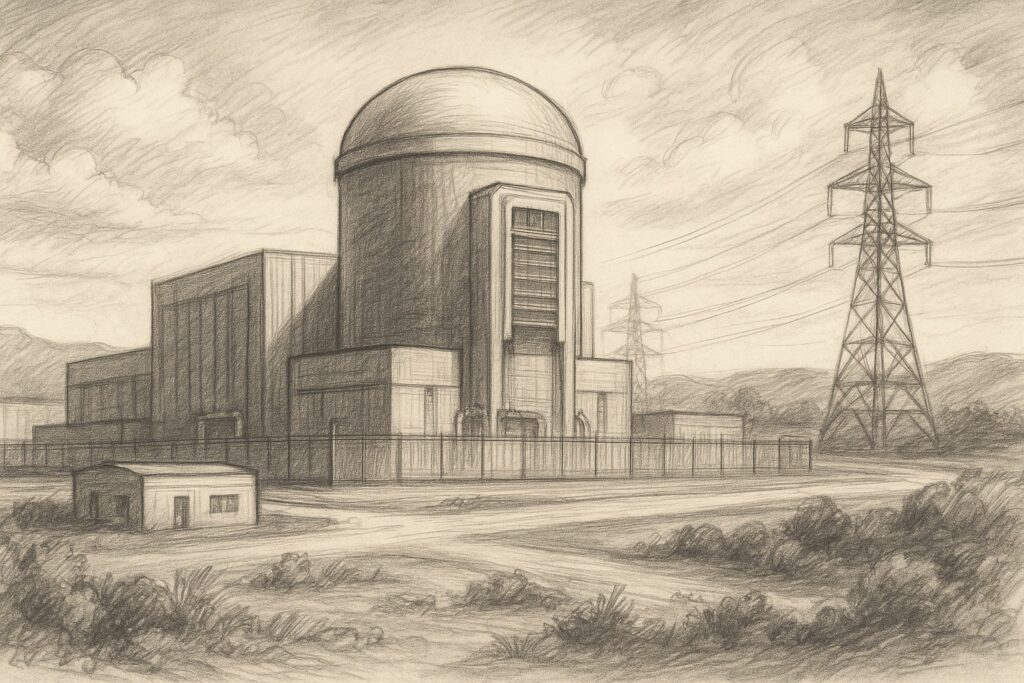
The United Kingdom will construct three small modular reactors (SMRs) in North Wales, marking a significant step in a long-planned initiative. While wind and solar energy have become the cornerstone of the UK’s energy transition, developing rapidly in recent years with substantial cost reductions and record generation levels, a renewable-dominated electricity system still requires a form of long-duration, round-the-clock baseload power. The role of SMRs is crucial in this context. These three reactors are not intended to replace wind and solar but to enable them to become more stable and reliable.

The limitations of renewable energy are not merely theoretical; they are physical realities. The lack of sunlight in winter, extended periods of low wind, and surges in demand during cold snaps all necessitate a power grid capable of continuous operation, providing inertia and voltage support. While batteries are suitable for short-term adjustments, their costs make them impractical for multi-day support; pumped storage is constrained by geography; and hydrogen storage remains immature. This does not negate the value of renewable energy but highlights the need for a dependable ‘stabilizing layer’ that allows wind and solar to confidently occupy a long-term power structure comprising 70% or more.

In this framework, the role of SMRs is to transform nuclear power from a large-scale project requiring a decade to build into a replicable model that can be deployed in five years. They can be rapidly established at the sites of decommissioned power stations, connecting to existing grids without extensive modifications. Their decentralized deployment allows the power system to maintain stable support across various regions. The three SMRs in North Wales are part of the UK’s broader energy infrastructure overhaul, serving as a key complement to make renewable energy more reliable and flexible.

While there are many global SMR designs, only a few have realistic prospects for mass production. General Electric’s BWRX-300 design is the simplest and is widely regarded in engineering circles as having the greatest potential for cost breakthroughs. Rolls-Royce’s SMR employs a pressurized water reactor, featuring a conservative design that aligns with existing regulatory and operational frameworks, offering high modularity and greater acceptance in European and Middle Eastern markets. China’s ACP100 (Linglong One) is currently the world’s first operational SMR, boasting the highest maturity, but its exports are hampered by political factors. Westinghouse’s AP300 is safe and stable, though it lacks strong modularity; Korea’s SMART series has a solid technical foundation but struggles to gain domestic market support, hindering scale formation.

From an engineering perspective, General Electric presents the most groundbreaking option, but in terms of international market and regulatory feasibility, Rolls-Royce holds the most export potential, particularly appealing to Europe, the Middle East, and South America. In terms of maturity, China is currently ahead. The UK’s choice of Rolls-Royce was not because it excelled in every metric, but because it aligns best with the UK’s systems, supply chains, and energy strategies. The pressurized water reactor fits well with the regulatory framework familiar to the UK, while Rolls-Royce has committed to establishing a local modular factory, making SMRs an exportable British product and creating new opportunities for the industry.

However, the limitations of SMRs should not be overlooked. Even with global acceleration, it is estimated that only two to three hundred could be built by 2050, contributing merely 2% to 4% of global electricity, thus unable to become a primary power source. Their importance lies not in their quantity but in their positioning: they fill the last, most challenging segment of maintaining baseload power between renewable energy and the grid, enhancing the overall stability and reliability of the system.

The three SMRs in North Wales represent a starting point for the UK’s energy reform, aimed at providing a more solid foundation for wind and solar energy to occupy a larger share in the future. This pragmatic and steady step also leaves the UK with a potential export pathway. Renewable energy will continue to take center stage, while SMRs will serve as the supporting structure that enables the main players to perform better.

Significance of Three Small Nuclear Plants in North Wales Read More »

Heat Pumps: The Future of Heating in the UK

As winter approaches in the UK, households continue to rely on gas boilers for heating. The process of igniting, heating, and distributing warmth has remained unchanged for half a century. However, heating does not necessarily require fuel combustion. Heat pumps utilize a physical cycle to transfer heat from the outdoors into homes; their principle operates in contrast to that of air conditioners. Because they transport rather than burn, their efficiency can reach three to four times that of modern gas boilers, which have an efficiency of only about 90%. The difference is stark.

To achieve net-zero emissions, the UK must address residential heating. Gas heating emits over 100 million tonnes of carbon dioxide annually, accounting for one-sixth of national emissions. As a fossil fuel, gas inevitably produces greenhouse gases when burned; electricity, on the other hand, increasingly derives from wind and solar power, allowing for a gradual transition to zero carbon. The shift from gas to electricity for heating is a natural progression towards a low-carbon energy system, and heat pumps align perfectly with this direction.

Government policy is also clear: through the Boiler Upgrade Scheme (BUS), households can receive up to £7,500 in subsidies to install heat pumps. Recently, an additional £2,500 subsidy for air-to-air heat pumps was introduced, providing more options for households needing both heating and cooling. Previously, high initial costs deterred many families; now, with subsidies in place, the barriers to transition have significantly lowered.

After adopting heat pumps, many households first notice a cleaner environment. Heat pumps produce no flames or combustion, resulting in zero nitrogen oxide emissions, thereby instantly refreshing both street and indoor air. Safety is another advantage: there are no gas leaks, no explosion risks, and annual gas safety checks are no longer necessary. Furthermore, there are climate benefits: by switching to electric heating, each household directly reduces carbon emissions, contributing tangibly to slowing global warming.

For users, the most crucial factor remains operational costs. Heat pumps utilize locally produced electricity, meaning heating expenses are no longer influenced by international gas prices; once gas is discontinued, there are no standing charges, simplifying bills. With smart tariffs, households can save about £300 annually. Over the years, the cumulative savings become increasingly evident, representing a tangible long-term benefit.

Heat pumps are set to become the standard for future heating. They combine efficiency, cleanliness, safety, and economic viability. Early adoption allows households to reap the benefits sooner; in an era of accelerated energy transition, taking proactive steps is far more rational than waiting for change.

Heat Pumps: The Future of Heating in the UK Read More »

Elizabeth Line Revelation: Cities Should Carry People, Not Cars

When the Elizabeth Line opened, London breathed a sigh of relief. This east-west underground line was originally slated to begin operations in 2018, but its launch was delayed by four years, with costs ballooning from £14.8 billion to nearly £19 billion. Public outrage was palpable, and the media derided it as a “white elephant project.” Two years later, the criticism has faded, and the trains are full. Each day, 800,000 commuters rely on it, re-establishing the city’s core. It turns out that delays can be forgiven, waste can be remedied, but a misguided direction is irretrievable.

The significance of the Elizabeth Line lies not in its new carriages or attractive stations, but in its “capacity.” During peak hours, it operates 24 trains per hour, each carrying about 1,500 passengers, allowing for a total of 36,000 people to be transported in one direction every hour. To achieve the same throughput with cars, assuming 1.2 people per vehicle and 2,000 vehicles per lane per hour, at least 15 to 20 lanes would be required. Imagine a twenty-lane highway cutting through London—green spaces would vanish, homes would be demolished, and noise, pollution, and congestion would ensue. That is not construction; it is self-destruction. Ironically, even if such a monstrosity were built, it would not alleviate congestion—more cars would flood the city until it was paralyzed once again.

The same logic applies to Paris’s RER A line. Double-decker trains can transport 78,000 people per hour; to replace this with cars, over thirty lanes would need to be constructed. Paris prefers to dig underground because they understand: the surface should be reserved for people, not cars. Railways provide concentrated transport, are energy-efficient, space-saving, and reliable. This is not romanticism; it is rationality.

Meanwhile, Americans continue to build roads. Each expansion generates new demand, leading to more cars and greater congestion. Cities become increasingly sprawled, distances grow longer, and taxpayers foot the bill for congestion year after year. Even with the rise of electric vehicles, which can reduce emissions, traffic jams remain unchanged. No matter how clean the vehicle, it still occupies space; no matter how wide the road, it will eventually fill up. When everyone drives, no one can move quickly.

The solution lies in pricing. Driving should incur real costs. Charging by the mile—paying for every mile driven—and adding fees for entering congested areas would ensure that those who use the roads more pay more. This is not a punishment; it is a correction. Roads are a public resource and should not be free. The fees collected should be earmarked for the expansion of subways, buses, and railways, making public transport denser, more punctual, and more convenient, naturally reducing the need for cars.

Public transport is not a welfare program; it is an investment. It enables faster travel and enhances urban efficiency. The success of the Elizabeth Line proves that true modernization lies not on asphalt, but on tracks. Cities should transport people, not pile up cars. Building more lanes will only create greater chaos. Fewer cars mean cleaner air; fewer roads mean more vibrant lives.

With the right direction, time will prove the value. Although the Elizabeth Line was late, its delay was justified. True civilization is not measured by how fast cars can go, but by how well cities can breathe.

Elizabeth Line Revelation: Cities Should Carry People, Not Cars Read More »

Scroll to Top