The stagnation of gas pipeline networks is not a problem unique to any one country; rather, it is a structural dilemma faced by the entire developed world. Europe, North America, Australia, and Japan—all regions that laid extensive urban gas networks in the 20th century—now find themselves at the same crossroads. The question is not whether to dismantle these systems, but rather when, how, and who will bear the costs.
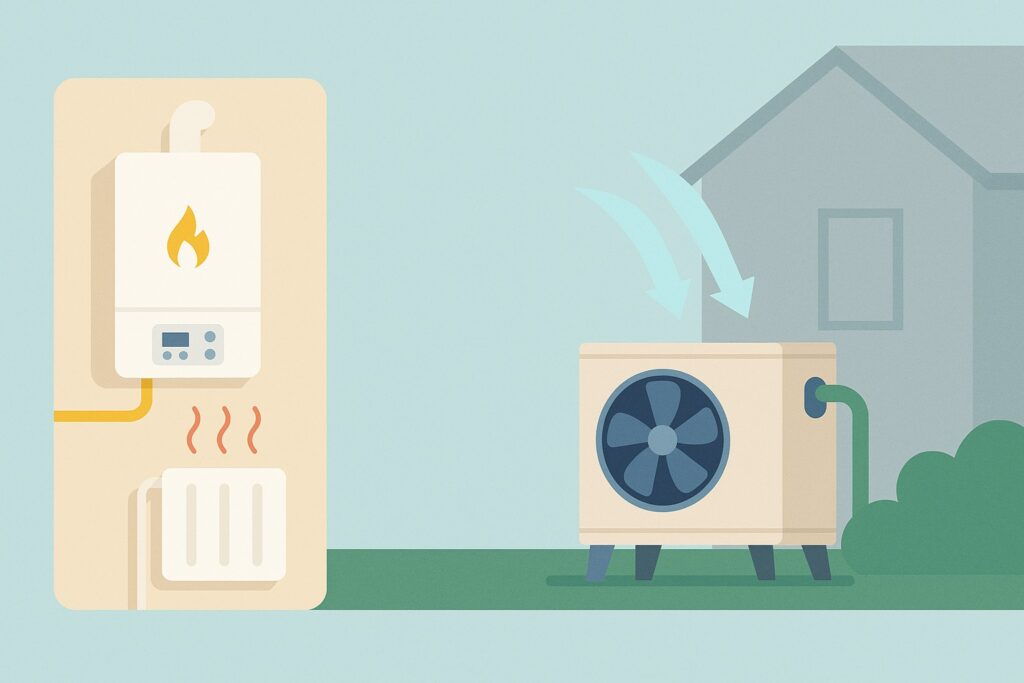
In a truly decarbonized energy system, the combustion of fossil fuels has no reasonable place. This is not an ideological debate; it is a matter of physical law. Regardless of whether gas is sourced from underground or repackaged as ‘low-carbon’, its combustion inevitably results in greenhouse gas emissions. Fortunately, mature and superior alternatives already exist for residential and commercial buildings: heat pumps can amplify one unit of electricity into three to four units of heat, while induction stoves eliminate indoor pollution, offering efficiency, safety, and health benefits that far surpass those of gas. Energy transition does not mean a reduction in quality of life; rather, it signifies the obsolescence of a technically outdated system.
Consequently, the trend of users ‘jumping ship’ is inevitable. As households and businesses gradually shift towards full electrification, they not only save on energy costs per kWh but also avoid the fixed charges embedded in their gas bills that pay for the entire network. The result is that as users decrease, the network costs per household increase; higher costs drive away even more potential users. This death spiral is not a market failure; it is the natural conclusion of infrastructure that has lost its justification for existence.
Some may argue that if this is the case, why not delay the transition as much as possible? However, this is precisely the most dangerous choice. If gas networks are not phased out, humanity must continue to rely heavily on fossil fuels, pushing the global warming trajectory towards 3 °C or even higher. This would not merely represent a failure to meet abstract climate targets; it would lead to concrete and brutal systemic disasters: extreme heat becoming the norm, reduced agricultural yields, disrupted water resources, coastal cities forced to retreat, and the economic and social costs far exceeding the expense of decommissioning any gas pipeline. In contrast, dismantling the network is not radical; it is rational.
The truly challenging issue lies in how to transition fairly. Gas pipelines cannot be shut down overnight, as many households will still depend on them for basic heating and hot water in the short to medium term. If left entirely to market forces, the last remaining users—often the most vulnerable with the least choices—will bear the highest costs. This is why the retirement of gas infrastructure cannot be merely a commercial outcome; it must become a part of public policy. The costs of stranded assets must be paid regardless; the only difference is whether they are distributed in a planned manner or explode uncontrollably later on.
Thus, the conclusion is clear and rational. First, the expansion of gas distribution networks should be halted immediately to avoid creating assets that are bound to be scrapped. Second, a predictable and enforceable decommissioning timetable should be established, synchronizing the sealing and dismantling of pipelines with the rollout of alternatives like heat pumps and building energy efficiency measures. Third, policy tools should be employed to ensure that the costs of transition do not disproportionately burden the last remaining households still using gas.
Gas pipelines must eventually be phased out; this is not an option but a prerequisite. The real choice left is whether to dismantle them in an orderly fashion now or to pay a heavier and more inequitable price after climate chaos ensues.