Infrastructure

Britain’s mega-projects, transport networks, and engineered systems. From HS2 and the Tideway sewer to the legacy of Victorian engineers like Brunel, this is how the UK builds and rebuilds its physical state.

The Remarkable Electrification of Indian Railways

When discussing Indian trains, many still cling to the image of overcrowded roofs. However, over the past decade, the Indian railway system has undergone a radical modernization. The latest official figures indicate that the electrification rate of the main railway lines has surpassed 99%, effectively phasing out diesel locomotives. This level not only far exceeds the UK’s electrification rate of less than 40%, but in proportional terms, it is even higher than that of China, challenging many preconceived notions about India’s infrastructural deficiencies.

Is this assertion exaggerated? The answer is no, provided one understands the statistical scope. The cited 99% refers not to scattered branch lines, but to the main network that carries the vast majority of passenger and freight traffic across the country. In other words, India is not merely symbolically promoting electrification; it has completed a nationwide structural transformation, relegating diesel traction to a secondary role.

The key to India’s rapid achievement lies in its highly centralized strategy. The government has clearly defined electrification as a singular national objective, rather than engaging in repeated discussions about the worthiness of each individual route. The engineering process has been highly standardized, with design, equipment, and construction procedures kept consistent, allowing for significant reductions in unit costs and construction timelines due to the large scale of operations. Simultaneous construction alongside ongoing operations has also mitigated the political and economic resistance that long line closures typically generate.

In contrast, progress in the UK appears to be laborious. The issue is not one of technical inadequacy, but rather the weight of historical burdens. Bridges and tunnels from the Victorian era limit clearance, making the later installation of electrical cables complex and costly. Coupled with years of insufficient investment and fluctuating policies, electrification plans have been repeatedly interrupted, leading to escalating costs and ultimately creating a vicious cycle.

The importance of electrification extends beyond environmental image. Electric traction is more efficient, accelerates faster, and can carry heavier trains, which is particularly crucial for high-frequency services and long-distance freight. Maintenance requirements are also lower, allowing for more controllable long-term operational costs. These factors are foundational for railways to leverage economies of scale as a backbone transportation system.

In the context of climate change, the gap continues to widen. Diesel trains, even with ongoing improvements, still emit carbon dioxide and pollutants directly along their routes, with the associated health and environmental costs borne by society as a whole. Electrified railways, on the other hand, concentrate emissions at the power generation stage, and as the grid gradually decarbonizes, the actual carbon footprint of trains will decline over time, representing a long-term resilient transformation pathway.

The experience of Indian Railways offers more than just technical details; it serves as a reminder from a perspective standpoint. Developing countries are not destined to lag behind; when the direction is clear and execution is decisive, the pace of progress often exceeds existing expectations. For the outside world, it may be even more crucial to maintain an open and updated outlook, continuously monitoring the actual advancements in these countries. Sometimes, the speed of change in the world is far quicker than we are accustomed to imagining.

The Remarkable Electrification of Indian Railways Read More »

Concerns Over Smart Green Public Transport System

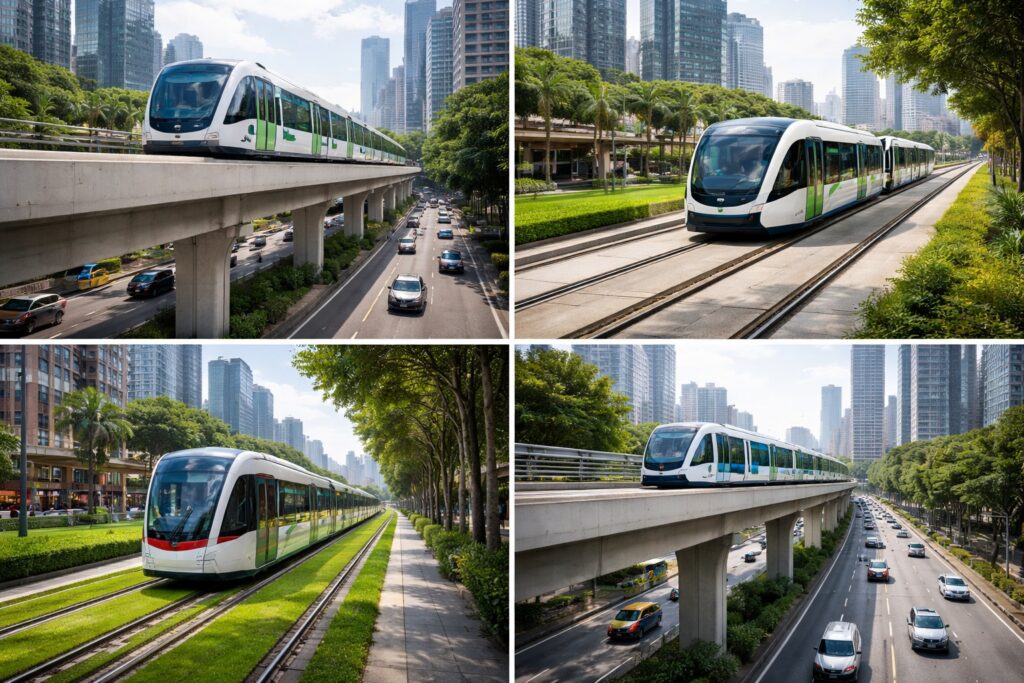
The issue begins with the name. Taiwan refers to it as the “MRT,” while mainland China calls it “rail transit,” succinctly conveying the system’s nature. In contrast, Hong Kong’s “Smart Green Public Transport System” comprises ten characters and still lacks a concise, catchy, and recognizable name in Chinese. Although official documents use the English abbreviation SGMTS, this acronym is hardly known among the public; most citizens have neither heard of it nor can they immediately grasp what it refers to. In everyday discussions, people still rely on place names or old terms as substitutes. This is not merely a matter of linguistic habit but a failure in policy communication: if a public transport system cannot naturally enter everyday language, it reflects a vague positioning from the outset.

Setting aside the naming issue, let us return to the engineering reality. Whether it is the cloud bus or the smart rail, both have not escaped the fundamental requirements of heavy civil engineering. Dedicated right-of-way, roadbed, and bridge piers are often still indispensable. The so-called innovation mainly lies in not using steel tracks, opting instead for rubber wheels or guided systems. However, the absence of steel tracks complicates the distribution of loads over long distances, limits axle loads, makes it difficult to extend carriages, and hinders the increase of service frequency. The capacity ceiling is locked in at the design stage; to catch up with light rail standards, higher specifications for right-of-way isolation and signaling systems would be necessary, which would, in turn, negate the original rationale for their existence.

The problems posed by rubber wheels extend far beyond capacity. Firstly, there is pollution. Tire wear releases a significant amount of micro-particles, which are a major non-exhaust pollutant in urban air; steel wheels on steel tracks can almost be ignored in this regard. Secondly, there are costs. Rubber wheels wear out quickly and require frequent replacement, which not only increases material and labor costs but also raises the frequency of downtime and maintenance, thereby elevating the lifecycle costs of the entire system over the long term. These are not hypothetical calculations but realities that have repeatedly emerged in several cities after years of operation.

Some argue that rubber wheels have a traction advantage on steep gradients. This is valid but applies only to a few specific terrains. If the route is primarily flat, the higher rolling resistance of rubber wheels will only lead to greater energy consumption and faster wear, without any compensatory performance benefits, while imposing an additional burden on the entire system over the years.

As for replacing overhead cables or the third rail with batteries, this seems fundamentally misguided. Public transport with fixed routes is ideally suited for centralized power supply. Carrying energy onboard for extended periods leads to aging over time and increases vehicle weight, directly compressing passenger capacity. In each journey, part of the energy is merely used to propel the battery itself, naturally reducing efficiency. This is not a transitional stopgap but a design choice that complicates an already mature problem.

What is truly alarming is the inversion of the entire narrative direction. The essence of public transport has never been about looking “new”; rather, it is about whether it can reliably, abundantly, and sustainably transport passengers in high-density urban areas. If a proposal cannot demonstrate clear advantages in capacity, efficiency, and cost, relying instead on adjectives like “smart” and “green” to hold its ground, it resembles a policy narrative rather than an engineering solution.

When a system cannot be succinctly described in one or two words, fails to allow citizens to intuitively understand “how it is better than existing options,” and even technically compromises in many areas, the problem is not merely a selection error but a deviation in decision-making logic itself. Public transport is not a stage for showcasing creativity; it is the foundation upon which a city can function normally. If that foundation relies on packaging for support, it will inevitably reveal structural voids.

Concerns Over Smart Green Public Transport System Read More »

Traffic Lights and Design Logic in UK Roundabouts

For many first-time drivers in the UK, one perplexing feature is the presence of traffic lights at roundabouts. For drivers from Hong Kong, the confusion is often compounded by the dense and overlapping lines on the road, which can appear chaotic and leave them uncertain about which lane to take.

This unease is understandable. Hong Kong drivers are accustomed to simple, single-flow intersections; when faced with the multi-lane, spiral, and segmented traffic light-controlled roundabouts of the UK, they may instinctively react to the complexity with a sense of disorder. However, the issue lies not in the number of lines but in a lack of education on how to interpret them. The overlapping dashed lines are not mere decoration; they clearly indicate which lane you are in and where you will be naturally guided to exit, eliminating the need for abrupt lane changes mid-way.

Another key reason for the existence of traffic lights is often overlooked: they are not intended to ‘stop traffic’ but rather to allocate it. Roundabouts without traffic lights may seem to allow free passage, but they can easily lead to structural imbalances. If one direction experiences a continuous flow of traffic, downstream entrances may have no gaps to merge into, causing traffic jams that can spill over and paralyze surrounding roads. By introducing traffic lights, engineers can enforce time-based traffic flow, ensuring that each direction receives a basic and predictable release period, thus distributing traffic more evenly across the junction.

Consequently, at roundabouts with highly asymmetrical traffic flows or those directly connecting to major roads, traffic lights serve as a tool to maintain overall throughput rather than being an obstacle. They sacrifice local, momentary free flow in exchange for the stability of the entire road network. For drivers, red lights may seem superfluous; for the system, however, they act as a safety valve to prevent queue chaos.

In fact, this encapsulates the logic of British road engineering: traffic lights govern temporal order while road markings manage spatial order. Together, they deconstruct potential conflicts that would otherwise occur simultaneously into sequential driving paths. While this may initially appear complex, it effectively offloads the most challenging judgments to design, rather than leaving drivers to navigate uncertainties at the junction. Once drivers understand the meaning of each set of dashed lines and select the correct lane before entering, the entire roundabout can operate surprisingly smoothly.

Looking back at Hong Kong, it is not entirely stagnant. In recent years, several roundabouts have gradually transformed into ‘spiral junctions’, attempting to guide vehicles to naturally shift outward along the lanes, thereby reducing lane cutting and abrupt lane changes. However, the problem lies in the fact that this transformation is often only partially completed: the old driving intuition of ‘fast inside, slow outside’ still persists, while the new markings suggest a different driving logic. As a result, some drivers insist on staying in the inner lane while others follow the new markings to the outer lane, leading to collisions between two conflicting understandings at the same junction, making accidents and friction inevitable.

The experience of the UK clearly illustrates that for spiral junctions to function effectively, traffic lights are often an indispensable element to balance the flow of traffic between different directions. An incomplete system will only create more grey areas. The problem has never been about whether the design is too complex, but whether the city has the resolve to complete that complexity in one go, rather than leaving drivers to guess under half-new, half-old rules.

Traffic Lights and Design Logic in UK Roundabouts Read More »

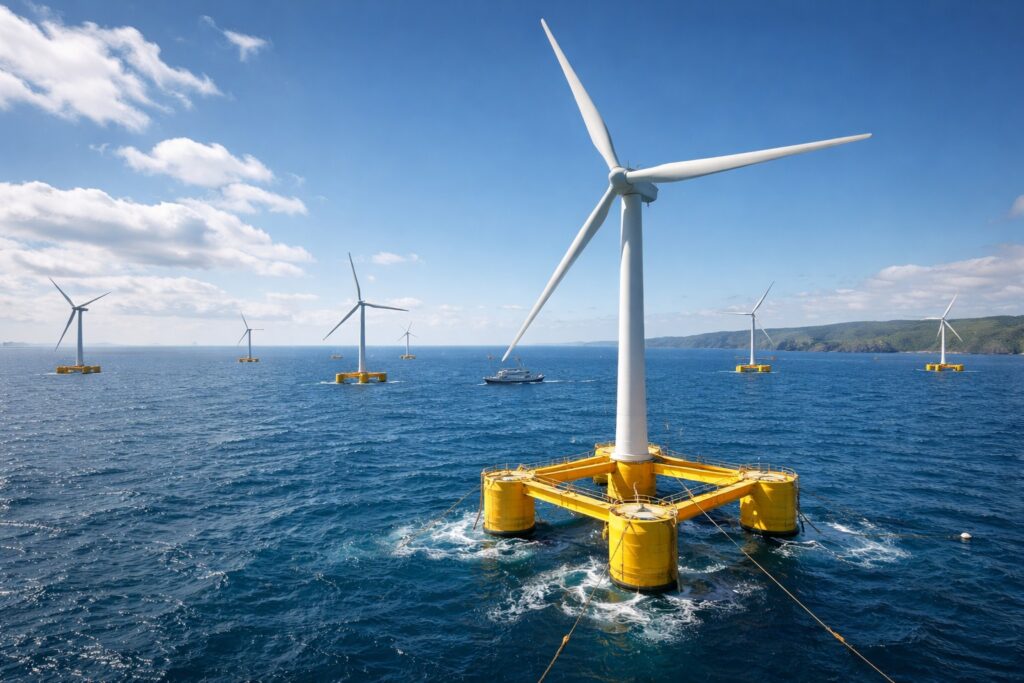
UK Offshore Wind Auction Sets Record, Reduces Energy Costs

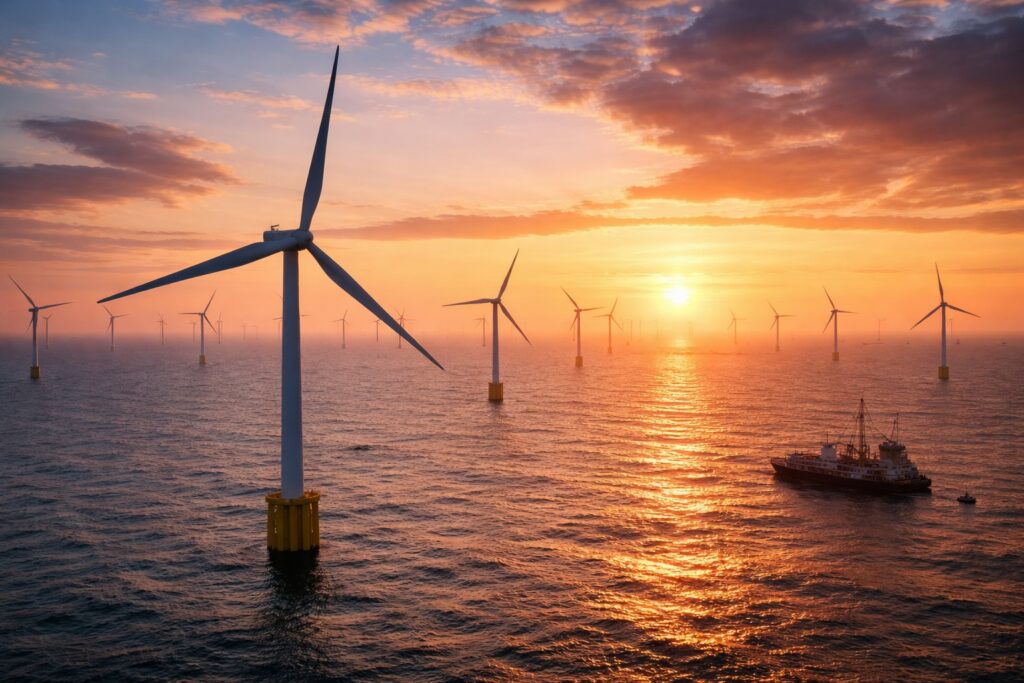
The UK government recently announced the results of its latest round of offshore wind Contracts for Difference (CfD) auctions, which set a new record in scale. This auction awarded approximately 8.4 GW of offshore wind capacity, covering several large projects across England, Wales, and Scotland, with a contract duration of twenty years and a winning bid price of around £90/MWh. The government estimates that these projects will provide electricity for over ten million households and attract private investments amounting to tens of billions of pounds. After years of fluctuating energy policy, this outcome at least establishes a clear direction for the UK’s electricity sources over the next decade and beyond.

To meet future energy needs, if new offshore wind farms are not constructed, the UK’s only viable alternative would be new gas-fired power plants. However, this is not a ‘cheaper or quicker’ option. According to estimates from both official sources and industry, the long-term generation costs of new gas plants generally reach £130–£150/MWh under current gas prices and interest rate conditions, significantly higher than the winning bid price from this wind auction. This does not even account for the greenhouse gas emissions from burning natural gas, nor the health and environmental damages caused by nitrogen oxides and other air pollutants. These costs are not reflected in electricity prices but are borne by society as a whole through healthcare expenditures, environmental degradation, and future emission reduction pressures, representing long-ignored external costs.

Time is also a critical factor. There has been a long-standing global shortage of large gas turbines, with delivery often taking four to six years from order placement. Coupled with design, planning approvals, financing, and construction, the timeline from policy decision to actual operation for new gas plants can easily approach ten years. In contrast, offshore wind projects have established processes, with many capable of being completed in phases and connected to the grid within the next three to four years, providing a more practical solution to short- and medium-term electricity supply pressures.

The cost of energy security is not an abstract concept for the British public; it is a lived experience. In the early stages of Russia’s illegal invasion of Ukraine, the European gas market experienced severe turbulence, leading to a sharp rise in UK wholesale electricity prices, which peaked at historic highs. This ultimately translated into significant increases in household electricity bills and prompted the government to deploy hundreds of billions of pounds in public resources to urgently subsidize energy bills. This shock clearly illustrates that as long as the electricity system remains heavily reliant on imported oil and gas, prices will inevitably be affected by foreign conflicts, sanctions, and geopolitical tensions. Offshore wind harnesses local natural resources, eliminating the need for imported fuels that could be subject to embargoes or extortion; with each new wind farm, this structural risk diminishes.

For this reason, some political factions appear particularly regressive on this issue. The Conservative Party and Reform UK remain entrenched in the outdated narrative of ‘gas is reliable, wind is unstable,’ portraying offshore wind as expensive, slow, and impractical, while conveniently ignoring the reality of gas plants’ ten-year construction cycles, long-term turbine supply shortages, and the complete price volatility during energy crises. They also overlook the fact that gas generation shifts pollution and climate risks onto society. This stance is not a pragmatic conservatism but a refusal to acknowledge that the world has changed.

The true significance of this offshore wind auction lies in its response to real conditions rather than emotions or nostalgic imaginings. By replacing the slow-to-build, highly volatile, greenhouse gas-emitting, and fuel-import-dependent gas solution with local electricity that can be completed more quickly, has predictable costs, lower risks, and less pollution, the long-term benefits include reduced electricity prices and enhanced energy security. To dismiss such a choice as ‘radical’ is, in itself, the most irresponsible stance regarding the future of the UK.

UK Offshore Wind Auction Sets Record, Reduces Energy Costs Read More »

The Future of High-Speed Rail and Its Alternatives

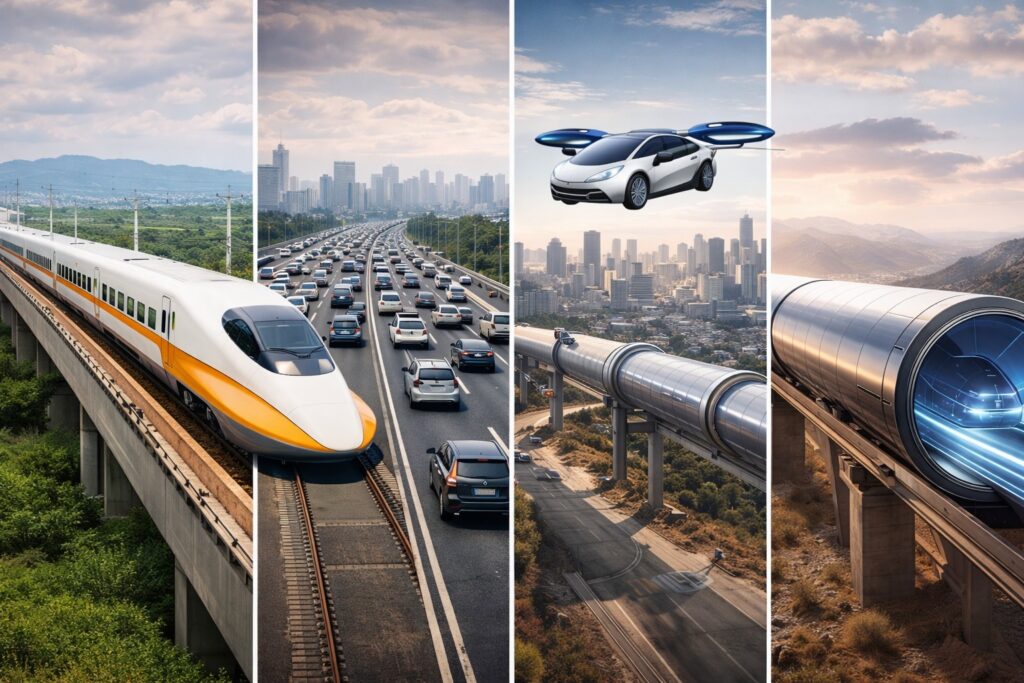
Every few years, someone declares that high-speed rail is on the verge of becoming obsolete. The arguments are often compelling: autonomous driving will make roads smarter, flying cars could alleviate traffic from above, and Hyperloop might propel people through vacuum tubes at incredible speeds. The question, however, is not whether these technologies can be developed, but whether they can operate sustainably, reliably, and affordably on a civilizational scale.

Let us first consider autonomous driving. Removing the driver does not widen the roads. The true limitation of transportation systems has never been response speed, but rather throughput. A dual-track high-speed rail can transport 10,000 people per hour in one direction during peak times, a standard performance for a mature system. To accommodate the same flow of people on highways, assuming autonomous driving is highly developed and each vehicle averages 1.5 passengers, a single lane of a highway would only support about 3,000 people per hour, all while ignoring the space taken by heavy vehicles, merging from side roads, deceleration at exits, speed differentials, and accident risks.

In other words, to match the capacity of high-speed rail, one would need to construct ten or more additional lanes, not just a few extra tracks. This is not merely a technical issue but also a matter of cost and environmental impact. The extensive land acquisition, bridges and elevated structures, sound barriers and drainage systems, along with long-term maintenance and management, all represent significant expenses and ecological damage. In contrast, high-speed rail requires only a controlled corridor, which occupies far less land and causes less environmental fragmentation than an equivalent highway network. If roads were to replace high-speed rail, the costs would not increase linearly but would spiral out of control.

The concept of flying cars requires a reality check. They are not competitors to high-speed rail but could only serve as ‘air taxis.’ This is evident when examining energy consumption. High-speed rail, relying on steel wheels on steel tracks with centralized traction, has an extremely low energy consumption of about 0.05 kWh per passenger per kilometer. In contrast, flying taxis must continuously counteract gravity, and vertical takeoff and landing are inherently energy-intensive activities. Based on existing eVTOL prototypes and public estimates, even at ideal passenger loads, their energy consumption is approximately 1.5 to 2 kWh per passenger per kilometer, which is 30 to 40 times that of high-speed rail. Such energy levels dictate that they can only be used for urgent needs or high-value transport, and cannot serve as the backbone of mass transit. Treating flying taxis as mainstream is merely institutionalizing energy waste.

As for Hyperloop, which seems the most advanced, it is actually the least viable. The issues lie not only in the high costs of vacuum tubes but also in the structural disadvantages regarding capacity and energy consumption. A high-speed train can carry between 800 and 1,200 passengers with trains running every few minutes, resulting in naturally high throughput. Most Hyperloop designs utilize small capsules that carry about 20 to 30 people. Even if they could run every two minutes, they would only transport 600 to 900 passengers per hour in one direction. To replace a high-speed rail line, one would need to construct over ten parallel tubes.

Moreover, each tube must maintain near-vacuum conditions over the long term. Considering a tube several hundred kilometers long and a few meters in diameter, the volume would be in the millions of cubic meters, meaning any minor leak necessitates continuous pumping to compensate. The more tubes there are, the more seams there are, making thermal expansion and contraction, ground subsidence, and material fatigue increasingly difficult to manage. Energy and maintenance costs will only accumulate, not offset. The result is that to allow a few people to travel faster, one would incur higher construction and operational costs than high-speed rail, yet still fail to match its capacity and reliability.

When these three ‘alternative solutions’ are assessed together, the conclusion is quite clear. High-speed rail will not become obsolete not because it is conservative, but because it has achieved an irreplaceable balance among cost, energy, capacity, and safety that remains unmatched. Autonomous driving is suitable for urban and last-mile transport, flying taxis are only appropriate for emergencies and high-value scenarios, and Hyperloop remains at a stage where engineering calculations do not add up. A truly mature transportation system does not replace infrastructure with fantasies but allows each technology to play its role. What will become outdated is not high-speed rail, but those future visions that refuse to confront scale and reality.

The Future of High-Speed Rail and Its Alternatives Read More »

Optimal Timing for Using Heat Pumps

In recent years, many new homes in the UK have standardised heat pumps as part of their configuration, and numerous households have replaced their existing gas water heaters with government subsidies. However, the issue arises when many individuals, after installation, remain on standard electricity tariffs and continue to operate under the habits established during the gas era. Consequently, their electricity bills appear more expensive than when they used gas, leading to doubts about the cost-effectiveness of heat pumps. This is not a problem inherent to the heat pumps themselves, but rather a result of incorrect tariff choices and operational methods. By selecting the appropriate time-of-use tariffs and adjusting the operational timings of the heat pumps, the cost structure can be completely rewritten.

The reasoning is quite straightforward. The actual energy efficiency of heat pumps during heating can often reach three to four times that of gas water heaters; in other words, the same unit of electricity can yield three to four units of heat. When combined with time-of-use tariffs, the price advantage becomes significant. For instance, with Octopus Intelligent Go, off-peak hours typically run from 23:30 to 05:30, with rates as low as 7p/kWh, while other periods can soar to 29.5p/kWh, a difference of over four times. By scheduling major electricity consumption during off-peak hours, many users can reduce their average electricity price to below approximately 15p/kWh, resulting in the actual cost of using heat pumps being roughly half that of gas water heaters.

Starting with hot water settings, during off-peak tariff periods, the target temperature for hot water can be set to 52°C, allowing the heat pump to heat an entire tank of water at the cheapest rate. During normal or peak periods, the target temperature can be lowered to 48°C, serving merely to maintain warmth rather than reheat. This ensures that the most energy-intensive part of the process almost entirely avoids high electricity price periods.

For heating, the ground floor living and dining areas can be regarded as the main heat storage zones for the entire house, as these spaces typically have larger volumes and the highest thermal capacity in their walls and floors. The settings can be quite simple: set the TRVs of all radiators on the ground floor to 5, allowing these areas to absorb heat fully when needed; while bedrooms and other rooms can be set to 2 or 3 to limit temperature rises at night, avoiding sleep disturbances. Simultaneously, during off-peak hours, the target room temperature for the entire house can be set to 23°C, compelling the heat pump to operate intensively and ‘charge’ the house with heat; during other periods, the target temperature can be lowered to 19°C, allowing the stored heat to gradually release, thus reducing the need to restart the heat pump during the day or morning.

Under this usage, there is no need to overly fixate on COP or SCOP. While these metrics are certainly important for comparing equipment, the differences in electricity prices often prove more decisive on actual bills. When off-peak rates are significantly lower than during other periods, allowing the heat pump to operate as much as possible during cheaper times, even at the cost of slight efficiency losses, the overall costs remain lower. For heat pump users, as long as they select the right tariffs and use the right timings, heat pumps will often be a far superior choice compared to gas water heaters.

Optimal Timing for Using Heat Pumps Read More »

The Cost of the Lower Thames Crossing Project

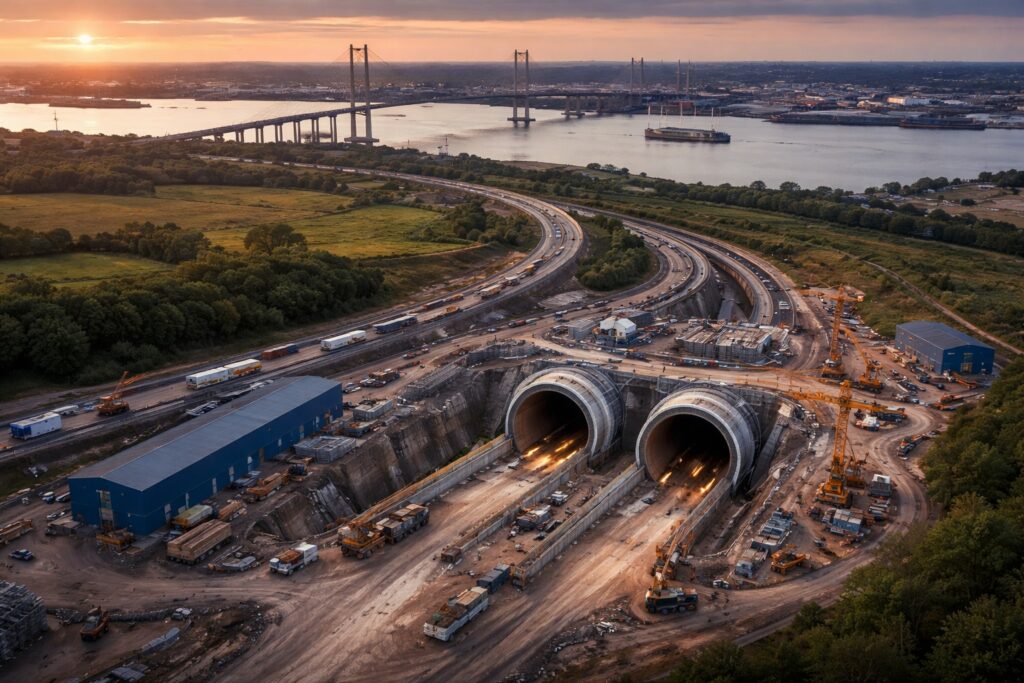
The Lower Thames Crossing project is ostensibly a straightforward infrastructure initiative: to construct a new road crossing between Kent and Essex to alleviate the already overloaded Dartford crossing. This is not a grand vision project, but rather a remedial construction intended to fix a long-failing transport hub. Yet, the UK has a notorious reputation for failing to expedite the completion of tasks that have been long acknowledged as necessary.

The project itself is not complex. Designed with six lanes in total, three in each direction, it falls under the national trunk road category, managed by the motorway system, and is not intended for urban commuting but rather serves as a backbone route primarily for freight and long-distance transport. Its function is unequivocal: it does not aim to increase traffic flow but to clear the existing, gridlocked traffic. This is a tunnel designed for logistics, not for political posturing.

Consequently, its economic impact is quite direct. The Dartford crossing has long exceeded its design capacity; even a minor incident can trigger a cascading paralysis of the entire southeastern road network. Delays for freight vehicles, inaccurate deliveries, and wasted driver hours force businesses to either absorb costs or pass them on. For industries reliant on ports, warehousing, and road transport, this is not merely inconvenient; it represents a daily structural loss. The Lower Thames Crossing promises more stable and predictable transport times, which is precisely what modern supply chains value most.

UK politicians frequently discuss the need to rebuild manufacturing and enhance export competitiveness, but if the most critical logistics bottleneck in the southeast remains in disrepair, even the most attractive industrial policies will remain mere words on paper. This tunnel may lack symbolic grandeur, but it represents a vital segment of the economic bloodstream.

What is truly striking is the cost incurred even before construction has officially begun. Public records reveal that the planning and consultation phases alone have consumed an astonishing amount of public funds. The cost of planning applications and related documentation approaches £300 million; preparations for the development consent order account for approximately £267 million; multiple rounds of public consultation, environmental assessments, and studies have consumed around £27 million. In total, just for preliminary documentation, research, and procedures, over £450 million has already been spent.

To date, before full-scale construction has commenced, the entire project has accumulated costs exceeding £1.2 billion. For comparison, the overall estimated construction cost of this project is around £9 to £10 billion. In other words, before the tunnel has even begun to be excavated, the UK has already spent more than one-tenth of the entire project budget on procedures and documentation. This money has not paved a single meter of road or dug a single shovel of earth, yet it starkly illustrates how the system consumes both time and resources.

Environmental assessments and public engagement are undoubtedly important, but when the system demands over a decade and hundreds of millions of pounds to repeatedly demonstrate that an already overloaded crossing needs to be alleviated, the issue transcends caution and veers into indecision. Ironically, during this period of delay, traffic jams, idling, and detours occur daily, with environmental costs never ceasing, merely dispersed across each silent moment of waiting.

Ultimately, the Lower Thames Crossing will likely be completed. The UK does not lack engineering capability, nor is it truly short of funds. What is genuinely unsettling is a governance model that requires even such a pragmatic six-lane tunnel to be ensnared by documentation for over a decade. While the tunnel may pierce the riverbed, if decision-making remains perpetually mired in procedures, it will not just be transport that suffers.

The Cost of the Lower Thames Crossing Project Read More »

Leeds: Europe’s Largest City Without Urban Rail

Leeds has once again been reminded of its awkward position on the European urban map: with a population nearing 800,000 and a metropolitan area exceeding 2 million, it still lacks any form of urban tram or metro system. This is not due to a lack of planning, but rather a series of delays in implementation. Following the latest government review, the tram project, which has been under discussion for decades, has been postponed yet again, with completion now pushed to the late 2030s.

This is not the first time such delays have occurred. The concept of an urban rail system for Leeds was proposed as far back as the late 20th century, with attempts at a Supertram and a bus rapid transit alternative, both of which ultimately failed. The current iteration, known as the West Yorkshire Mass Transit System, aims to connect Leeds with Bradford, but its scale, technology, and demand are hardly novel. The only fresh aspect is the reasoning behind the delays.

The official explanation is ‘caution.’ The central government has required local authorities to resubmit more comprehensive plans, including strategic business cases, preliminary business cases, and final business cases, with each phase needing approval before moving to the next. In other words, planning can no longer proceed in parallel with construction; it must pass through layers of scrutiny. While this is ostensibly to mitigate risks, the practical effect is singular: time continues to slip away.

The issue lies not in the thickness of the documents but in the distribution of power and resources. The West Yorkshire Combined Authority is not lacking in technical capability or demand data; rather, it lacks financial autonomy and decision-making power. It cannot independently incur debt or secure multi-year funding, and must continuously apply to Westminster, rewriting plans according to the central government’s pace.

This has led to an absurd situation: a tram system that has been discussed for over 30 years is still being asked in 2025 to prove its ‘worth.’ Business cases have been drafted repeatedly, routes redrawn time and again, yet the only constant is that the tracks have yet to be laid down.

Such systemic delays are not unique to Leeds but are symptomatic of local infrastructure issues across the UK. Local governments bear the responsibilities, yet the power lies elsewhere; the need is urgent, yet resources are controlled by the central government. The result is that cities most in need of public transport upgrades find it hardest to initiate projects. The longer the delays, the higher the costs, and with shifting political winds, the process must start anew.

Looking across Europe, it is almost the norm for large cities to have urban rail systems. This is not because they are wealthier, but because decision-making levels are closer to the cities themselves. Leeds’ predicament illustrates that the so-called ‘Northern Powerhouse’ will never materialize if it remains mired in slogans and approval processes.

Today, Leeds’ greatest issue is not a lack of planning but being trapped within it. When a city must continually prove its worthiness for basic public transport, the problem transcends transportation; it lies within the system itself.

Leeds: Europe’s Largest City Without Urban Rail Read More »

The Infrastructure Misjudgments of the UK Treasury

Recent declassified documents reviewed by the Financial Times reveal that in the 1990s, the UK Treasury explicitly judged that the Elizabeth Line “would never be built.” The reasons cited are all too familiar: exorbitant costs, overestimated demand, and the impossibility of private funding bearing the risks. Thirty years later, not only has this railway been completed, but it has also quickly become one of London’s busiest transport arteries. This stark contrast is not merely a single misjudgment but a reflection of systemic thinking.

The Elizabeth Line is not an isolated case. The planning history of the M25 motorway is equally revealing. At the time, there was a serious official viewpoint that the entire orbital motorway around London only required dual carriageways, based on the assumption that car growth would slow, cross-traffic would be limited, and that roads themselves would not create new demand. These assumptions seemed prudent and even rational at the time, yet they overlooked structural changes such as urban expansion, longer commuting distances, and the rapid growth of logistics activities. Today, the M25 is chronically congested, serving as the best counter-evidence to the underestimated demand of that era.

The same logic of “better to underestimate than to err” has repeatedly appeared in the history of UK infrastructure. The Channel Tunnel faced fierce criticism during its conception and promotion phases, labeled as a financial black hole, with opponents questioning its ability to break even and fearing the political repercussions of failure. Initially, the tunnel did indeed face financial difficulties, but as freight demand increased, air travel became restricted, and supply chains were restructured, its strategic value far exceeded any early models could have predicted.

Heathrow’s Terminal 5 reveals another misjudgment. Many at the time believed that air travel growth was unsustainable, predicting that the new terminal would remain underutilized and exacerbate environmental pressures. In reality, the terminal opened at full capacity, and the UK has long been constrained by insufficient airport capacity, hampering economic growth and international connectivity. The issue has never been about building too much, but rather about building too late.

The stories of the Overground and Jubilee Line further illustrate the blind spots of traditional fiscal assessments. The former was seen as a fragmented and marginal railway network prior to its overhaul, with returns difficult to quantify and lacking a grand narrative, thus long overlooked as a priority project. However, after service improvements and system integration, ridership surged, reshaping commuting patterns and community structures. The latter faced criticism when extended to Canary Wharf as a gamble on an unproven financial district, yet it was precisely because of the railway’s arrival that the area was able to take shape. Urban development often requires infrastructure to precede demand, rather than waiting for it to prove itself.

The book “Why Westminster Works and Why It Doesn’t” provides a crucial institutional explanation for this series of phenomena. It points out that the UK’s governance system is highly centralized around the Treasury, which wields significant horizontal influence; nearly all large, cross-departmental, long-term policies must pass through its scrutiny. This system operates effectively in avoiding immediate errors and maintaining procedural order, but it simultaneously creates a structural bias: it prioritizes risks that can be immediately held accountable while struggling to address dispersed, delayed, and difficult-to-attribute long-term costs.

The book does not blame officials for incompetence; on the contrary, it describes a system dominated by highly educated and analytically capable bureaucrats. The issue lies not in their irrationality but in the system encouraging them to use models, procedures, and audit standards to avoid mistakes rather than to take on the risks that require political judgment across generations and are fraught with uncertainty. In such an environment, “doing nothing” is often safer than “doing something wrong,” while the costs of delay are rarely formally calculated.

This encapsulates the true meaning of “better to do nothing than to do wrong.” It is not laziness or conspiracy, but rather a highly rational yet systematically underestimation of the future. However, the history of infrastructure repeatedly demonstrates that what is truly expensive is not erroneous investments but prolonged hesitation. When roads, railways, and airports are finally forced to be built, the costs are already higher, and the options are fewer.

If the UK genuinely wishes to break this cycle, the reform must extend beyond a single railway or motorway; it must encompass the entire culture of public investment. Infrastructure assessments need to incorporate the costs of inaction, systemic effects, and the long-term demand they induce into their core considerations, allowing “doing versus not doing” to be measured on the same timescale. Otherwise, “better to do nothing” will remain the safest choice, but it will also continue to be the UK’s most costly habit.

The Infrastructure Misjudgments of the UK Treasury Read More »

The Real Challenges of the Somerset Tidal Lagoon

The West Somerset Lagoon is a large tidal lagoon power generation project planned for the southwestern coast of the UK, situated between Minehead and Watchet along the Bristol Channel. The concept involves constructing a curved breakwater near the shore to enclose a body of water, utilizing the difference in water levels between the lagoon and the open sea during tidal changes to drive turbines for electricity generation. It falls under tidal range generation rather than tidal stream generation, relying on sea level fluctuations rather than water flow speed. The project’s proponents have attached an appealing label: an installed capacity of approximately 2.5 GW, an annual generation of about 6.5 TWh, zero carbon emissions, and independence from weather conditions, with a theoretical lifespan exceeding a century.

Such claims resonate because they hit the pain points of the UK’s energy transition. As the proportion of wind and solar power continues to rise, the grid is becoming increasingly unstable; the greatest strength of tidal energy is its high predictability. Tidal changes are determined by astronomical factors, allowing generation periods to be scheduled years in advance, unaffected by calm winds or cloudy days. For a grid that requires long-term planning for backup capacity, this certainty is inherently valuable.

However, when one examines the physical realities, the project’s role becomes clearer and less ideal. Tides do not follow a daily cycle but rather a semi-diurnal pattern, with a cycle of approximately 12 hours and 25 minutes. The lagoon generates electricity for about 10 to 14 hours each day, but not continuously; instead, it is divided into four segments and shifts backward each day. Today, it may generate in the evening, but a few days later, it may shift to late at night. This means it cannot naturally align with human peak electricity usage times, remaining fundamentally a high-quality but rhythmically fixed intermittent power source.

Some have suggested that by integrating battery storage, this rhythm could be ‘smoothed out’, making tidal power as stable as nuclear energy. While this is not impossible from an engineering perspective, it is economically prohibitive. To convert the lagoon’s output into nearly round-the-clock supply would require tens of GWh of storage, and batteries have a lifespan of only about ten years, far short of the lagoon’s claimed lifespan of 120 years. The result would be an already capital-intensive project compounded by another capital black hole that requires frequent replacements.

What truly weighs down this proposal is its financial structure. The characteristics of a tidal lagoon involve extremely high upfront costs, a long construction period, and indivisibility. This means it is nearly impossible to finance through competitive Contracts for Difference (CfD) and must rely on a Regulated Asset Base (RAB) model, which incorporates some construction risks into electricity prices to secure lower financing costs. In institutional terms, it resembles nuclear power rather than typical renewable energy projects. Discussions inevitably turn to Sizewell C, as both share similar risk-bearing mechanisms.

However, the key difference lies in necessity. The government’s decision to advance Sizewell C stems from the current scarcity of low-carbon power sources that do not rely on weather or storage and can provide long-term continuous supply. Nuclear power is not an ideal solution but is viewed as temporarily indispensable. In contrast, the Somerset tidal lagoon offers predictable intermittency, a function that could theoretically be replaced by a combination of offshore wind, storage, demand management, and transmission upgrades. This is not a matter of technical superiority but rather a question of policy prioritization.

Adding to this are considerations of environmental impact and irreversibility, making the issue even sharper. Once the lagoon is constructed, there is virtually no turning back. The impacts on sediment, ecology, and coastal dynamics must be rigorously verified in advance, rather than remedied afterward. The true risk of such projects has never been about whether they will generate power, but rather whether the costs of a mistaken judgment are bearable.

Therefore, the Somerset tidal lagoon is neither a castle in the air nor a panacea. It possesses unique value, but only if positioned correctly as a piece of the energy grid puzzle, rather than being expected to serve as a substitute for nuclear power. The energy transition has never been about choosing the most appealing narrative, but rather about selecting the least bad order under real-world conditions. If the tidal lagoon is to endure, it must first be viewed with a clear and rational perspective.

The Real Challenges of the Somerset Tidal Lagoon Read More »

Scroll to Top