Infrastructure

Britain’s mega-projects, transport networks, and engineered systems. From HS2 and the Tideway sewer to the legacy of Victorian engineers like Brunel, this is how the UK builds and rebuilds its physical state.

Heat Pumps: The Future of Heating in the UK

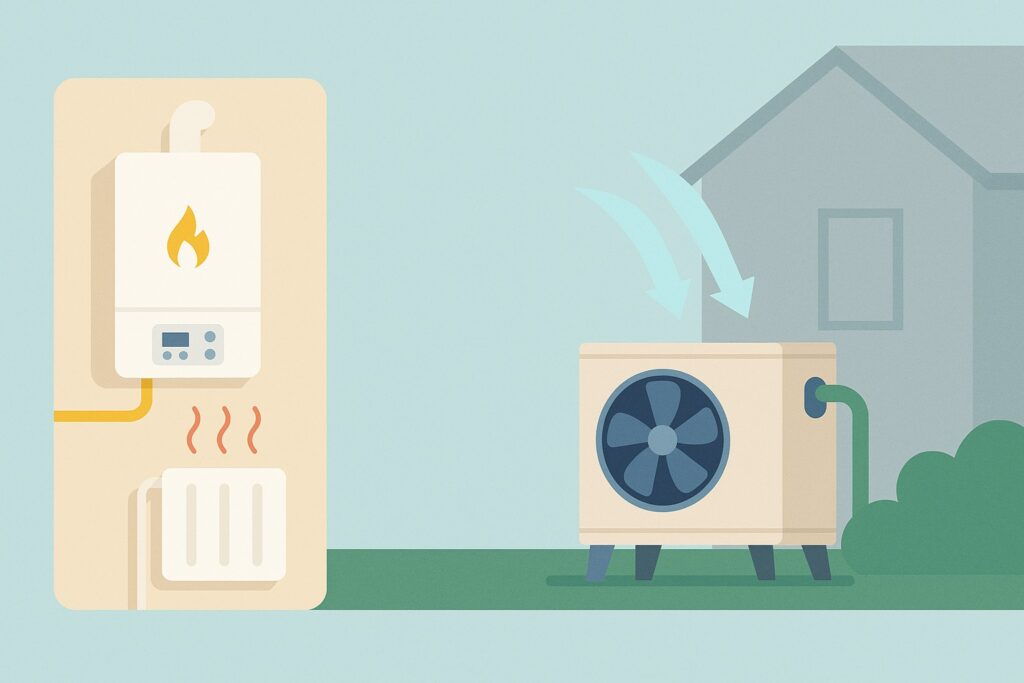
As winter approaches in the UK, households continue to rely on gas boilers for heating. The process of igniting, heating, and distributing warmth has remained unchanged for half a century. However, heating does not necessarily require fuel combustion. Heat pumps utilize a physical cycle to transfer heat from the outdoors into homes; their principle operates in contrast to that of air conditioners. Because they transport rather than burn, their efficiency can reach three to four times that of modern gas boilers, which have an efficiency of only about 90%. The difference is stark.

To achieve net-zero emissions, the UK must address residential heating. Gas heating emits over 100 million tonnes of carbon dioxide annually, accounting for one-sixth of national emissions. As a fossil fuel, gas inevitably produces greenhouse gases when burned; electricity, on the other hand, increasingly derives from wind and solar power, allowing for a gradual transition to zero carbon. The shift from gas to electricity for heating is a natural progression towards a low-carbon energy system, and heat pumps align perfectly with this direction.

Government policy is also clear: through the Boiler Upgrade Scheme (BUS), households can receive up to £7,500 in subsidies to install heat pumps. Recently, an additional £2,500 subsidy for air-to-air heat pumps was introduced, providing more options for households needing both heating and cooling. Previously, high initial costs deterred many families; now, with subsidies in place, the barriers to transition have significantly lowered.

After adopting heat pumps, many households first notice a cleaner environment. Heat pumps produce no flames or combustion, resulting in zero nitrogen oxide emissions, thereby instantly refreshing both street and indoor air. Safety is another advantage: there are no gas leaks, no explosion risks, and annual gas safety checks are no longer necessary. Furthermore, there are climate benefits: by switching to electric heating, each household directly reduces carbon emissions, contributing tangibly to slowing global warming.

For users, the most crucial factor remains operational costs. Heat pumps utilize locally produced electricity, meaning heating expenses are no longer influenced by international gas prices; once gas is discontinued, there are no standing charges, simplifying bills. With smart tariffs, households can save about £300 annually. Over the years, the cumulative savings become increasingly evident, representing a tangible long-term benefit.

Heat pumps are set to become the standard for future heating. They combine efficiency, cleanliness, safety, and economic viability. Early adoption allows households to reap the benefits sooner; in an era of accelerated energy transition, taking proactive steps is far more rational than waiting for change.

Heat Pumps: The Future of Heating in the UK Read More »
Elizabeth Line Revelation: Cities Should Carry People, Not Cars

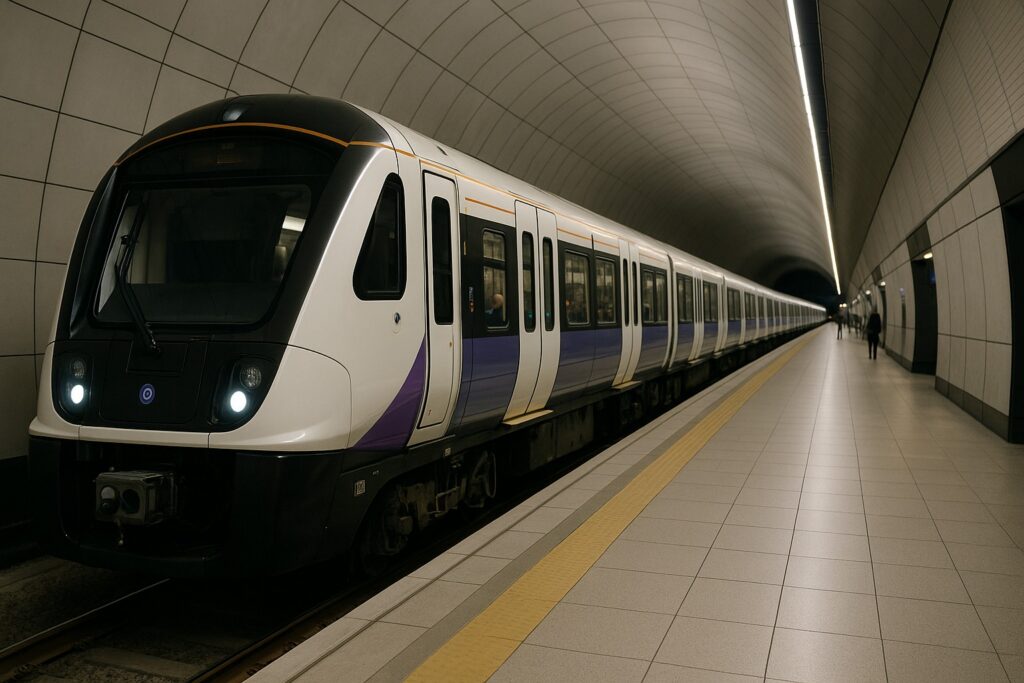
When the Elizabeth Line opened, London breathed a sigh of relief. This east-west underground line was originally slated to begin operations in 2018, but its launch was delayed by four years, with costs ballooning from £14.8 billion to nearly £19 billion. Public outrage was palpable, and the media derided it as a “white elephant project.” Two years later, the criticism has faded, and the trains are full. Each day, 800,000 commuters rely on it, re-establishing the city’s core. It turns out that delays can be forgiven, waste can be remedied, but a misguided direction is irretrievable.

The significance of the Elizabeth Line lies not in its new carriages or attractive stations, but in its “capacity.” During peak hours, it operates 24 trains per hour, each carrying about 1,500 passengers, allowing for a total of 36,000 people to be transported in one direction every hour. To achieve the same throughput with cars, assuming 1.2 people per vehicle and 2,000 vehicles per lane per hour, at least 15 to 20 lanes would be required. Imagine a twenty-lane highway cutting through London—green spaces would vanish, homes would be demolished, and noise, pollution, and congestion would ensue. That is not construction; it is self-destruction. Ironically, even if such a monstrosity were built, it would not alleviate congestion—more cars would flood the city until it was paralyzed once again.

The same logic applies to Paris’s RER A line. Double-decker trains can transport 78,000 people per hour; to replace this with cars, over thirty lanes would need to be constructed. Paris prefers to dig underground because they understand: the surface should be reserved for people, not cars. Railways provide concentrated transport, are energy-efficient, space-saving, and reliable. This is not romanticism; it is rationality.

Meanwhile, Americans continue to build roads. Each expansion generates new demand, leading to more cars and greater congestion. Cities become increasingly sprawled, distances grow longer, and taxpayers foot the bill for congestion year after year. Even with the rise of electric vehicles, which can reduce emissions, traffic jams remain unchanged. No matter how clean the vehicle, it still occupies space; no matter how wide the road, it will eventually fill up. When everyone drives, no one can move quickly.

The solution lies in pricing. Driving should incur real costs. Charging by the mile—paying for every mile driven—and adding fees for entering congested areas would ensure that those who use the roads more pay more. This is not a punishment; it is a correction. Roads are a public resource and should not be free. The fees collected should be earmarked for the expansion of subways, buses, and railways, making public transport denser, more punctual, and more convenient, naturally reducing the need for cars.

Public transport is not a welfare program; it is an investment. It enables faster travel and enhances urban efficiency. The success of the Elizabeth Line proves that true modernization lies not on asphalt, but on tracks. Cities should transport people, not pile up cars. Building more lanes will only create greater chaos. Fewer cars mean cleaner air; fewer roads mean more vibrant lives.

With the right direction, time will prove the value. Although the Elizabeth Line was late, its delay was justified. True civilization is not measured by how fast cars can go, but by how well cities can breathe.

Elizabeth Line Revelation: Cities Should Carry People, Not Cars Read More »

Scroll to Top