Author name: 胡思

Concerns Over Smart Green Public Transport System

The issue begins with the name. Taiwan refers to it as the “MRT,” while mainland China calls it “rail transit,” succinctly conveying the system’s nature. In contrast, Hong Kong’s “Smart Green Public Transport System” comprises ten characters and still lacks a concise, catchy, and recognizable name in Chinese. Although official documents use the English abbreviation SGMTS, this acronym is hardly known among the public; most citizens have neither heard of it nor can they immediately grasp what it refers to. In everyday discussions, people still rely on place names or old terms as substitutes. This is not merely a matter of linguistic habit but a failure in policy communication: if a public transport system cannot naturally enter everyday language, it reflects a vague positioning from the outset.

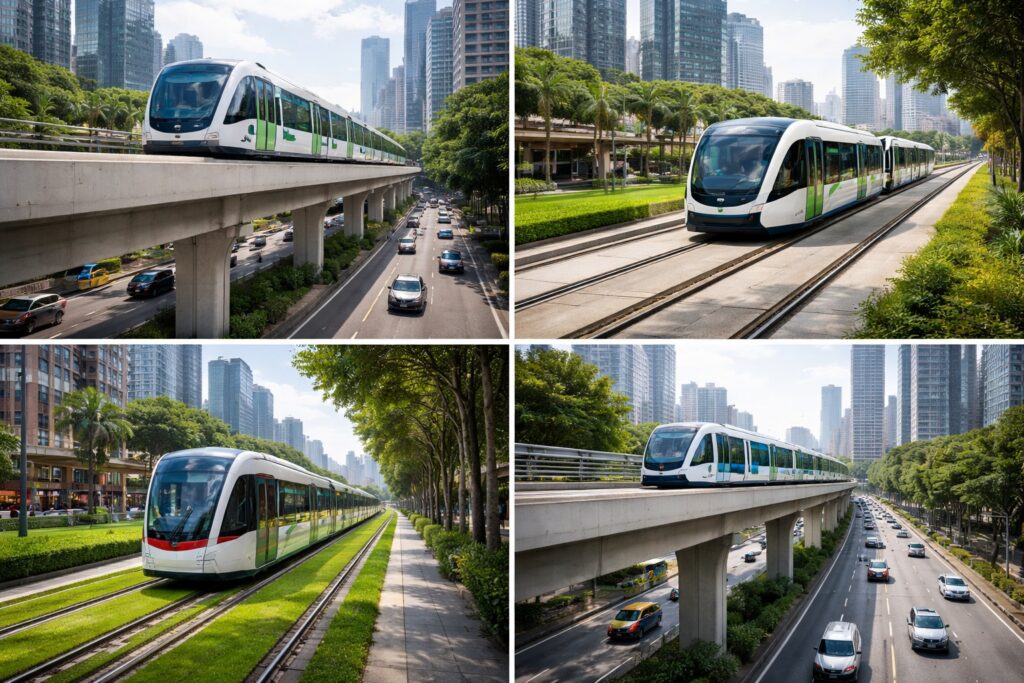
Setting aside the naming issue, let us return to the engineering reality. Whether it is the cloud bus or the smart rail, both have not escaped the fundamental requirements of heavy civil engineering. Dedicated right-of-way, roadbed, and bridge piers are often still indispensable. The so-called innovation mainly lies in not using steel tracks, opting instead for rubber wheels or guided systems. However, the absence of steel tracks complicates the distribution of loads over long distances, limits axle loads, makes it difficult to extend carriages, and hinders the increase of service frequency. The capacity ceiling is locked in at the design stage; to catch up with light rail standards, higher specifications for right-of-way isolation and signaling systems would be necessary, which would, in turn, negate the original rationale for their existence.

The problems posed by rubber wheels extend far beyond capacity. Firstly, there is pollution. Tire wear releases a significant amount of micro-particles, which are a major non-exhaust pollutant in urban air; steel wheels on steel tracks can almost be ignored in this regard. Secondly, there are costs. Rubber wheels wear out quickly and require frequent replacement, which not only increases material and labor costs but also raises the frequency of downtime and maintenance, thereby elevating the lifecycle costs of the entire system over the long term. These are not hypothetical calculations but realities that have repeatedly emerged in several cities after years of operation.

Some argue that rubber wheels have a traction advantage on steep gradients. This is valid but applies only to a few specific terrains. If the route is primarily flat, the higher rolling resistance of rubber wheels will only lead to greater energy consumption and faster wear, without any compensatory performance benefits, while imposing an additional burden on the entire system over the years.

As for replacing overhead cables or the third rail with batteries, this seems fundamentally misguided. Public transport with fixed routes is ideally suited for centralized power supply. Carrying energy onboard for extended periods leads to aging over time and increases vehicle weight, directly compressing passenger capacity. In each journey, part of the energy is merely used to propel the battery itself, naturally reducing efficiency. This is not a transitional stopgap but a design choice that complicates an already mature problem.

What is truly alarming is the inversion of the entire narrative direction. The essence of public transport has never been about looking “new”; rather, it is about whether it can reliably, abundantly, and sustainably transport passengers in high-density urban areas. If a proposal cannot demonstrate clear advantages in capacity, efficiency, and cost, relying instead on adjectives like “smart” and “green” to hold its ground, it resembles a policy narrative rather than an engineering solution.

When a system cannot be succinctly described in one or two words, fails to allow citizens to intuitively understand “how it is better than existing options,” and even technically compromises in many areas, the problem is not merely a selection error but a deviation in decision-making logic itself. Public transport is not a stage for showcasing creativity; it is the foundation upon which a city can function normally. If that foundation relies on packaging for support, it will inevitably reveal structural voids.

Concerns Over Smart Green Public Transport System Read More »

Nottingham: An Underrated British City Chosen by Hongkongers

When it comes to relocating to the UK, Hongkongers often first think of London, Manchester, or Birmingham. However, an increasing number are turning their attention to Nottingham in the East Midlands. Although it may not be widely known, it excels in practicality; it is unpretentious yet remarkably complete. Consequently, Nottingham has become a popular choice for many Hong Kong families moving to the UK in recent years.

This is not merely based on impression. According to data from the UK Home Office on BN(O) visa applications and residential distribution compiled by local governments, the East Midlands has consistently been one of the main areas for Hongkongers settling outside London, with Nottingham frequently cited as the most mentioned city. Various real estate studies also indicate that Nottingham is a medium-sized city experiencing a significant net inflow of Hongkongers. The reasons behind this are straightforward: housing prices and rents remain affordable, job and educational resources are ample, and there is a balance between living costs and urban convenience that many immigrant cities have lost.

A prime example is its public transport system. With a population of around 330,000, Nottingham boasts a mature and highly utilized tram network, which is rare in the UK. The Nottingham Express Transit is not a symbolic project; it genuinely serves a commuting function, connecting major residential areas, universities, hospitals, and the city center. For many families from Hong Kong, accustomed to public transport, this urban structure, which does not rely heavily on private cars, is inherently appealing.

Education is also a crucial pillar for Nottingham. The University of Nottingham is a member of the prestigious Russell Group, consistently ranking among the top research universities in the UK, excelling in fields such as medicine, pharmacy, engineering, life sciences, and social sciences. Another institution, Nottingham Trent University, specializes in design, business, and applied disciplines, attracting a large number of local and international students. Both universities not only bring a youthful population and international atmosphere to the city but also provide stable demand for the job and rental markets, which is particularly important for families planning to settle long-term rather than just transition temporarily.

Culturally, Nottingham is inextricably linked to Robin Hood. This legendary figure, known for robbing the rich to give to the poor, has become part of the city’s spirit: maintaining distance from power and remaining vigilant against injustice. This ethos is somewhat reflected in the city’s emphasis on public spaces and services, characterized by a lack of ostentation and a focus on pragmatism.

On a more everyday level, Nottingham also has a distinct football identity. Nottingham Forest has won the European Cup twice but has also experienced prolonged periods of decline. It is not a representative of money-driven football but rather a club supported by history, community, and loyalty, mirroring the character of the city itself. For many newcomers, this football culture, which retains local identity, makes integration easier.

Walking through Nottingham, one does not sense a desperate need for the city to prove itself. The castle overlooks the city, trams traverse the squares, and students, families, and long-time residents share a common rhythm. It lacks the oppressive atmosphere of London and the disorder found in some former industrial cities; everything appears measured and rational.

Perhaps for this reason, Nottingham rarely appears on travel lists but increasingly shows up on the relocation lists of Hong Kong immigrant families. The competition among British cities has never been about fame but rather about whether life can be sustainably established. In this regard, Nottingham provides a clear and honest answer.

Nottingham: An Underrated British City Chosen by Hongkongers Read More »

The Myth and Reality of Carbon Offsetting

Many people first encounter the concept of “carbon offsetting” not through climate reports, but at the checkout page when purchasing airline tickets. A small box pops up: for just a little extra money, you can offset the carbon emissions of your flight. This design appears considerate, yet its actual effect is highly misleading. It suggests that emissions can be immediately “remedied”; as long as one is willing to pay, they can continue to fly guilt-free. This sense of reassurance is more psychological comfort than a genuine reduction in carbon emissions; worse still, it can lead people to mistakenly believe that by opting in every time, they can fly more often.

The primary issue with carbon offsetting is that it attempts to counterbalance immediate, certain, and irreversible emissions with uncertain promises of future action. Take the most common example of tree planting: the carbon absorbed by trees is merely temporarily stored within the biomass. Trees age, decay, and can be destroyed in wildfires; in a world where warming is intensifying, these risks are only increasing. More critically, there is currently no technology that can guarantee that this carbon will not re-enter the atmosphere in the future.

Strictly speaking, not all carbon absorption by the biosphere is meaningless. In climate policy, there exists the category of LULUCF (Land Use, Land Use Change, and Forestry): when land use undergoes long-term, institutional, and nearly irreversible changes—such as converting agricultural land into legally protected long-term forest—the stability of its carbon storage is relatively high, and it has a reasonable place in national carbon accounting. However, the projects offered by aviation carbon offsets rarely involve genuine permanent changes in land use, let alone decades of institutional guarantees.

In recent years, some carbon offsets have shifted focus from tree planting to claiming investments in solar or wind energy. On the surface, this seems more reliable than biospheric carbon absorption, as it directly replaces fossil fuel power generation. However, the fatal flaw of such projects lies in their inability to prove “additionality.” Renewable energy has become the cheapest new power option in most countries, supported by policies, subsidies, and financing; many projects would have been built regardless. If solar and wind farms would still emerge without the purchase of carbon offsets, then the so-called “offsetting” merely claims credit on paper without delivering any additional emissions reductions.

Theoretically, the only true method to counterbalance fossil fuel emissions is to return carbon dioxide to geological layers, permanently sequestering it underground. However, the costs of geological carbon sequestration are exorbitant, far beyond the few pounds presented at the airline checkout page. For this reason, it has never been an option in the carbon offset box for airlines.

Consequently, the carbon offset options on airline tickets not only fail to help but may actually be counterproductive. When passengers believe they have “paid to address” emissions, flying ceases to be viewed as a high-carbon behavior that requires moderation, instead becoming a morally cleared choice. The result is not a reduction in flights, but rather a more comfortable and frequent flying experience, with even less pressure to confront the real need for emissions reductions. This design does not facilitate any structural change; it merely exchanges psychological comfort for continued behavior, allowing high-carbon activities to expand under the guise of seeming responsibility.

The Myth and Reality of Carbon Offsetting Read More »

UK Set to Become Electric Vehicle Battery Powerhouse

When it comes to electric vehicles, the UK has long been seen as a laggard, with production capacity trailing behind China and progress lagging behind continental Europe. However, by 2026, this assessment will clearly be outdated. With several battery gigafactories either commencing or nearing production, the UK is on the verge of being able to supply batteries for hundreds of thousands of electric vehicles annually. Based on current calculations, its battery supply potential has even begun to exceed the actual annual output of the UK’s automotive sector in recent years. The question is no longer whether there will be enough batteries, but whether vehicle production capacity can keep pace.

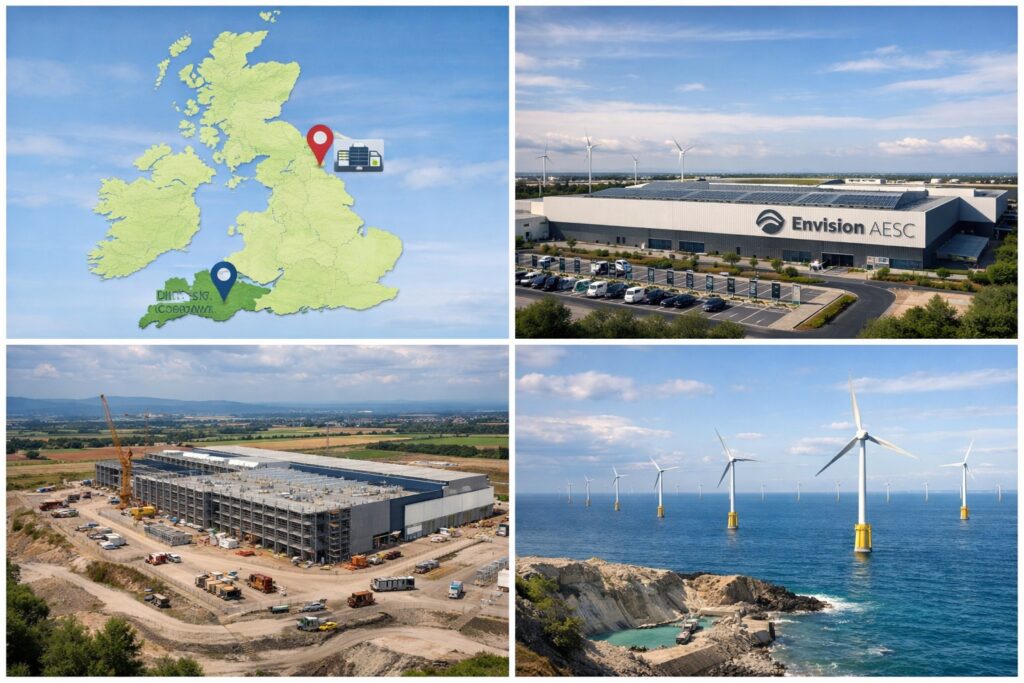
The first pillar is the new gigafactory in Sunderland, expanded by Envision AESC, which is set to begin production around the end of 2025, with an annual capacity nearing 16 GWh. Calculating based on mainstream electric vehicles requiring approximately 60 to 80 kWh batteries each, this single factory could support around 200,000 electric vehicles (the actual figure will depend on vehicle models and battery sizes). More importantly, the power structure it relies on is already highly decarbonized. The UK’s offshore wind power ranks among the best globally, meaning that a battery produced in the UK inherently has a lower carbon footprint, which will translate into substantial competitiveness under Europe’s increasingly stringent lifecycle carbon accounting.

The second pillar is larger in scale and has more structural impact. The gigafactory being constructed by Agratas, a subsidiary of Tata Group, is designed for an annual capacity of approximately 40 GWh and is expected to commence production in 2026 or 2027. Once it enters stable mass production, this factory could theoretically supply batteries for around 250,000 to 300,000 electric vehicles, propelling the UK’s battery supply from a single project to a true scale operation.

The third tier involves medium-sized enterprises and subsequent expansions. New-generation battery manufacturers like Volklec are advancing along a path of initially small-scale production, followed by a move towards higher capacities, with a long-term goal of establishing factories at around the 10 GWh level (dependent on financing and customer orders). While this capacity may not significantly alter the total output, its significance lies in enhancing supply chain flexibility and connecting with the UK’s unique industrial translation capabilities, allowing laboratory results to avoid complete reliance on overseas mass production.

The UK’s battery landscape is also extending upstream and downstream. On the upstream side, Cornish Lithium is spearheading lithium mining and geothermal brine lithium extraction projects in Cornwall, attempting to establish a limited but strategically significant domestic lithium supply. In terms of technology, research teams represented by the University of Cambridge are at the forefront of sodium-ion battery research. Sodium is abundant and inexpensive, and while its energy density remains lower than that of lithium batteries, it offers a viable alternative route for small vehicles and energy storage, reducing dependence on a single chemical system.

Moreover, the UK’s advantages in this industry do not stem from a single segment but rather from a comprehensive combination. The highly decarbonized power structure provides a low-carbon advantage during the production phase; a robust research system ensures a continuous stream of new technologies; and industrialization platforms like the UK Battery Industrialisation Centre push laboratory results towards mass production processes, mitigating commercialization risks. Coupled with a relatively stable and predictable regulatory environment, these factors combine to enable the UK to not necessarily pursue the lowest costs, but to possess resilience in long-term competition.

When combining production capacities, the approximately 15.8 GWh from Sunderland, along with around 40 GWh from the Agratas factory, suggests that the UK could realistically approach an annual production capacity of over 50 GWh by the mid to late 2020s. Based on an average of 70 kWh per vehicle, this corresponds to a theoretical supply capacity of 700,000 electric vehicles or more annually, surpassing the actual annual output of the UK automotive sector in recent years. In terms of quantity, batteries are shifting from being a constraint to becoming a prerequisite.

For this reason, the next steps in policy are quite clear. Currently, UK-manufactured cars exported to the EU still face around a 10% tariff, but this is not an immutable fate; rather, it is a result of ongoing negotiation space. If the UK wishes to truly convert its battery advantages into manufacturing scale, exports, and jobs, there is ample reason to reach a more pragmatic arrangement with the EU as soon as possible. Otherwise, while batteries are already ahead, the entire industry may find itself stuck at the border.

UK Set to Become Electric Vehicle Battery Powerhouse Read More »

The Policy Trade-offs of New Bus Seatbelt Regulations

Starting January 25, 2026, Hong Kong will officially implement new bus seatbelt regulations: all drivers and passengers must wear seatbelts if seats are equipped with them. From the same date, all newly registered public and private buses must have seatbelts installed in all passenger seats. The most common question raised following this announcement is: if seatbelts are so important, why are standing passengers still allowed? Does this not create a contradiction?

This arrangement is not contradictory but rather a clear policy trade-off. The government has not mandated an immediate overhaul of all buses nor has it blurred responsibility; instead, it has drawn a line with a straightforward principle: if a seat has a seatbelt, it must be used. New vehicles will comply immediately, while older ones will transition as their fleets are updated; the responsibility of behavior is clear, and enforcement will leave no gray areas.

When viewed in an international context, this becomes easier to understand. In the UK, local buses generally do not come equipped with seatbelts, whether in urban areas or on A-roads and dual carriageways where double-decker buses operate. The design of the bus cabins allows for standing passengers. Since the system accepts standing, the safety logic does not center on ‘fixed passengers’ but relies on handrails, grab handles, non-slip flooring, and driving regulations to manage risks. Only long-distance coaches or tourist buses, which do not permit standing and operate at higher speeds, require seatbelts to be installed and used. In other words, the UK does not have a system of ‘seatbelts available but not used’; rather, local buses simply do not install them from the outset.

Many might naturally think of a ‘seemingly more precise’ solution: since the risk of overturning is higher on the upper deck, should regulations only apply to that level while allowing the lower deck to remain unbuckled? This idea is tempting, but it presents more issues in practice. First, the lower deck is not a low-risk area. In high-speed sudden stops or frontal or side collisions, lower deck passengers can also be thrown forward by inertia, colliding with railings, stairs, or the seats in front; seatbelts protect against ‘secondary impacts’, not just overturning. Second, layered regulations would create distorted incentives—passengers would concentrate on the lower deck to avoid buckling up, leading to more chaos at entry and exit points and in the front section of the bus. Furthermore, the lines of enforcement and responsibility would become blurred: disputes over who sits where and whether they have just changed seats would only increase. The result would not be greater safety but rather more disorder.

Therefore, the real issue the policy must address is not ‘upper deck or lower deck’ but whether different standards of responsibility can coexist for the same type of seating. If it is already acknowledged that seatbelts can effectively reduce the high-consequence risks associated with sudden stops and collisions, then the principle of ‘all seats equipped with seatbelts must be used’ is, in fact, the cleanest, most enforceable, and fairest approach.

Public policy has never aimed for zero risk but rather to avoid preventable severe consequences. Standing passengers belong to a different risk model, which can only be mitigated through system design; once seats are equipped with seatbelts, they inherently meet the conditions for significantly reducing high-consequence risks, thus necessitating legal intervention.

Finally, on a personal level, starting January 25, 2026, the rules are quite simple: if you are seated in a seat equipped with a seatbelt, the law requires you to buckle up. This is not a suggestion but an obligation. If you are unwilling to wear a seatbelt, the system does not force you to sit down—you can choose to stand and accept a different kind of risk. Public policy has made a trade-off between safety and practical operation; what remains is whether each passenger will comply with the law and whether they are willing to buckle up that low-cost seatbelt, which could potentially save their life.

The Policy Trade-offs of New Bus Seatbelt Regulations Read More »

Strategic Voting in the UK General Election

The current system used by the UK House of Commons is the First Past the Post (FPTP) electoral system. In each constituency, only one representative is elected, with the candidate receiving the most votes declared the winner, regardless of whether they achieve a majority. While this system appears straightforward, it is predicated on a harsh reality: it only acknowledges the first-place candidate, rendering all other votes, regardless of their margins, ineffective in translating into any parliamentary seats.

Under this system, the efficacy of votes is not uniform. If a voter’s preferred candidate consistently ranks third, fourth, or lower in their constituency, their votes are unlikely to alter the outcome or influence the distribution of power in Parliament. This is not a negation of voter intent but rather a consequence of the operational mechanics of the system. Whether a vote is deemed ‘effective’ hinges solely on its ability to change the identity of the first-place candidate.

Consequently, although ballots often list multiple candidates, creating an illusion of ample choice, in reality, only two candidates typically matter. Elections do not involve a fair competition among several options but rather a contest between the two candidates with the highest chances of winning. The presence of other names serves more as a symbol or diversion, having limited impact on the final result.

This also explains why voting is practically compelled to transform into a strategic choice. When the outcome is determined solely between two individuals, voters’ considerations shift from ‘whom do I prefer?’ to ‘who is likely to win?’ and ‘do I want that person to win?’ Thus, voting may not necessarily express support; it can also signify clear opposition.

If you are certain you do not want a particular candidate to win, the most effective strategy is often not to vote for the candidate whose views align most closely with yours but rather to deliberately vote for their main opponent, even if that person is not your first choice. This form of strategic voting may seem disingenuous, but it merely acknowledges that the system counts only wins and losses, not motivations.

The challenge lies in the fact that this calculation heavily relies on information. In constituencies with highly fragmented parties and multiple contenders, who the ‘top two’ candidates are may not be clear. Insufficient polling, variations in local mobilization, and last-minute changes can all lead to misjudgments. The system forces voters to engage in precise calculations, yet it may not provide sufficient reliable clues.

From a design perspective, proportional representation clearly better reflects the true will of the electorate. Under such a system, voters can confidently support the parties or candidates they genuinely endorse, as every vote translates proportionally into seats, eliminating the need to guess who might win or who could block whom. Voting becomes an expression of preference rather than a game of strategy. Unfortunately, systemic change is not immediate; for the foreseeable future, the UK must continue to operate under the First Past the Post system.

Understanding this is not an encouragement of cynicism but rather a call to avoid naivety. Under the current system, the power of a vote lies not in what you wish to express but in where you place your vote. You can cast a vote in favor or against; however, if you refuse to calculate, you will ultimately be calculated for by the system.

Strategic Voting in the UK General Election Read More »

Why Copying the U.S. Constitution Fails to Establish Democracy

Since the 19th century, many newly independent countries have viewed the U.S. Constitution as a blueprint for democratic success. The principles of separation of powers, presidential systems, federal structures, and written constitutions appear rational and modern, carrying the aura of success. However, history repeatedly shows that this path often fails to lead to stable democracy, instead sliding towards authoritarianism. The issue lies not in the quality of the U.S. Constitution itself, but in the misunderstanding that it can be directly transplanted as a plug-and-play democratic system.

This phenomenon of ‘institutional transplantation’ is particularly evident in Latin America. Mexico’s 1824 Constitution incorporated American experiences in its federal structure and executive design, formally establishing a republic. Yet, for over a century, it experienced cycles of strongman politics, military interventions, and constitutional interruptions. Argentina’s 1853 Constitution openly modeled itself on the United States, designing a centralized presidential system, which resulted in prolonged cycles of coups and military rule. The institutions existed, but democracy never took firm root.

By the 20th century, the trend of imitation continued. The Philippines established a presidential republic under American influence, with a complete constitutional text and an electoral system in place, yet it could not prevent Ferdinand Marcos from imposing martial law under the guise of ‘constitutionalism’, turning the system into a tool for personal rule. Brazil similarly adopted a system design highly reminiscent of the United States, but oscillated between elected governments and military intervention for decades. The commonality among these countries is not that their constitutions were insufficiently progressive, but that the institutional capacity and political culture supporting democratic operations were not developed in tandem.

Ultimately, a constitution is merely a framework for power, not democracy itself. The U.S. Constitution functions not because of any inherent magical power in its text, but because it is built upon long-accumulated political habits. Traditions of local autonomy, an instinctive wariness of power, the professionalization of the judiciary and bureaucracy, and the self-restraint of losers in accepting electoral outcomes are crucial conditions that do not automatically emerge simply from being written into a constitution. When these foundations are weak, the constitution can easily be manipulated, becoming a legitimate facade for power expansion.

Presidential systems inherently carry structural risks. Executive and symbolic power is concentrated in one individual, and elections often present a zero-sum competition where the winner takes all. In contexts where party systems are weak, society is highly fragmented, and the legislature and judiciary are not yet mature, presidents can easily equate ‘popular mandate’ with unlimited power, viewing opposition as enemies rather than legitimate competitors. Once checks and balances fail, political crises can swiftly escalate into extraordinary measures, even providing excuses for military intervention in politics.

These failures are not merely stories from other countries. Even the United States itself is not inherently immune to authoritarian backsliding. If institutions are taken for granted, if political norms continue to erode, and if the populace no longer actively defends the rule of law, checks and balances, and electoral outcomes, then a presidential system can similarly become a conduit for power concentration. Two and a half centuries of democratic history can be viewed as a deep institutional accumulation, or merely as a series of fortunate escapes from collapse.

As the 18th-century politician John Philpot Curran stated in a speech in 1790, the condition for the existence of freedom is eternal vigilance. This sentiment is often distilled into the phrase ‘Eternal vigilance is the price of liberty’: the cost of freedom is perpetual awareness.

Why Copying the U.S. Constitution Fails to Establish Democracy Read More »

The Financial Impact of Increased Civil Servants Post-Brexit

Brexit is often framed as an opportunity to streamline government and reduce regulation, yet the reality has been quite the opposite. Since the referendum in 2016, the number of full-time equivalent civil servants in the UK central government has risen from approximately 380,000 to over 510,000, an increase of more than 130,000. Multiple research institutions have pointed out that, after accounting for the pandemic, around 100,000 of these positions are directly or indirectly related to the new systems, border controls, regulations, and negotiations that emerged post-Brexit. This is not a result of improved administrative efficiency, but rather a structural cost incurred from exiting a common system that necessitates compensatory staffing.

The issue is not merely one of having more personnel; it is that this influx represents a permanent increase in ongoing expenditure. When calculating the total cost of civil servants, one must consider not only salaries but also employer national insurance contributions, pension liabilities, office rentals, IT systems, cybersecurity, training, and management costs. Even under conservative assumptions, the annual cost per civil servant is estimated to be between £50,000 and £60,000. If we consider the 100,000 staff related to Brexit, the additional ongoing expenditure reaches £5 billion to £6 billion per year, and this is not a one-off cost but rather a recurring burden embedded in government spending.

One of the most expensive and difficult-to-reverse areas is border control and immigration. Prior to Brexit, the UK did not require complete third-country checks on goods and people from the EU; post-Brexit, customs declarations, rules of origin, plant and animal health inspections, border IT systems, port infrastructure, and additional border and immigration officials have all become the norm. The Home Office and HM Revenue and Customs have maintained high staffing levels to manage the new visa system, residency approvals, customs clearance, and compliance enforcement. These costs are reflected not only in salaries but also in the expensive construction and maintenance of border systems, making this one of the heaviest burdens on public finances post-Brexit.

Another underestimated source of expenditure is the regulation of food, pharmaceuticals, and agriculture. Previously centralized by the EU, food safety assessments, drug approvals, agricultural subsidies, and environmental compliance have all returned to domestic management post-Brexit. In the pharmaceutical sector, the UK must establish parallel approval and regulatory capabilities to the EU, which, even if the outcomes often align, still requires a complete set of independent personnel and procedures. The same applies to food and agriculture, where health inspections, subsidy management, standard-setting, and enforcement demand additional long-term human resources. These tasks are not an expansion of policy choices but rather an unavoidable duplication resulting from institutional fragmentation.

In addition, there are layers of Brexit-related expenditures that are less frequently mentioned but equally resource-intensive. Legally, a significant number of regulations that were previously EU-based need to be transposed, amended, and maintained over the long term, requiring specialized legal and policy personnel. In trade, the UK must independently maintain rules of origin verification, trade remedies, subsidy regulation, and dispute resolution mechanisms, even if actual cases are few; the system itself must still exist in its entirety. Furthermore, the government must continue to provide businesses with guidance on Brexit compliance, support hotlines, and transitional arrangements. These seemingly scattered tasks cumulatively represent a long-term burden on both human resources and finances.

When these expenditures are distributed at the household level, the picture becomes clearer. With approximately 27 million households in the UK, the annual Brexit-related personnel expenditure of £5.5 billion translates to about £200 per household each year. This amount will not appear on tax bills as a ‘Brexit cost’; instead, it will be absorbed indirectly through tax pressure, dilution of public service resources, or the squeezing of other budget items.

It is noteworthy that the government often attributes the rise in civil servant numbers to the pandemic while downplaying the long-term impact of Brexit. The pandemic has led to a temporary spike, which theoretically can recede; however, the effects of Brexit are permanent and recurring. As long as the UK chooses to operate independently in institutional terms, it will require more personnel and financial resources in the long term to accomplish tasks that could have been shared within a common system.

Whether Brexit was worth it remains a matter of political division; however, from an administrative and financial perspective, the accounts are quite clear. Approximately 100,000 new civil servants and billions of pounds in annual ongoing expenditure ultimately fall on every household. This may not be the most prominent page in the Brexit narrative, but it is likely the most enduring and hardest to ignore.

The Financial Impact of Increased Civil Servants Post-Brexit Read More »

The Mystery of Alien Disappearance and Humanity’s Future

The universe is vast, and with so many stars, it seems improbable that we are alone. Yet, despite extensive searches, we see no evidence of extraterrestrial civilizations. This discrepancy forms the crux of the Fermi Paradox: if civilizations are not rare, then where has everyone gone?

In discussions of this issue, the Drake Equation is often invoked. Its significance lies not in providing answers but in highlighting the vast uncertainties involved. Each parameter can fluctuate by several orders of magnitude, leading estimates of communicable civilizations in the Milky Way to range from nearly zero to thousands. Consequently, some argue that the universe is inherently quiet, while others suggest that this silence itself is anomalous.

However, the true sharpness of the Fermi Paradox lies not just in ‘how many civilizations’ exist, but in another often underestimated factor: time and expansion.

Consider a highly conservative, even benevolent assumption. Imagine a technological civilization that did not emerge in the early universe but appeared merely 10 million years ago. Relative to the universe’s age of approximately 13.8 billion years, this is less than a thousandth of a moment. Further assume that its expansion capability is not aggressive, with interstellar travel at only one-tenth the speed of light, far below the typical settings found in science fiction.

Under these conditions, the results remain astonishing. At 0.1c, 10 million years is sufficient to traverse about 1 million light-years. This means that within a sphere of 1 million light-years radius from its home planet, all potentially habitable planets should theoretically have been explored, colonized, or at least marked by clear traces. For comparison, the entire Milky Way has a diameter of only about 100,000 light-years. In other words, such a ‘not too early, not too fast’ civilization would have long had the capability to cover the entire galaxy, even spilling over into nearby galactic clusters.

This calculation does not require assumptions of faster-than-light travel, a unified galactic empire, or that every star is inhabited by aliens. As long as a civilization crosses a certain technological threshold and possesses the basic motivation for survival, its expansion is almost a matter of time. This aligns perfectly with human historical experience: from migrations out of Africa to the expansion of agricultural societies, and from modern transcontinental colonization to globalization, technological civilizations have never been static.

Thus, the true unsettling aspect of the Fermi Paradox is that even if such a civilization has existed only once, we should have already seen it. Anomalies in infrared radiation, traces of stellar energy use, artificial astronomical structures, or even just the debris of probes scattered across interstellar space would suffice to reveal its presence. Yet what we observe is a clean and indifferent universe.

This reality pushes the question directly towards the ‘Great Filter’ theory. If civilizations tend to expand, yet the universe remains so silent, the most reasonable explanation is not that civilizations do not arise, but that most cannot survive long enough. Perhaps they went extinct before mastering interstellar capabilities; perhaps internal risks erupted after rapid expansion; or perhaps the average lifespan of civilizations is simply too short to leave any observable traces.

Bringing this reasoning back to humanity makes the implications sharp. Nuclear weapons, biotechnology, artificial intelligence, and climate disorder are all byproducts of civilizations gaining immense power in a short time. They are not external threats but rather the internal injuries of civilization growth. If the Great Filter is indeed ‘failing to learn self-restraint before expansion,’ then the silence of the universe is likely not a coincidence but a statistically inevitable outcome.

Thus, the Fermi Paradox is not merely an intriguing question of astronomy but a civilization-level arithmetic problem. Given time, civilizations will expand; if we see no traces of such expansion, we must question whether civilizations can endure the test of their own power. The issue has never been just ‘where are the aliens?’ but rather ‘why has no civilization succeeded in reaching a point where we can observe them?’

And this question quietly points towards our future.

The Mystery of Alien Disappearance and Humanity’s Future Read More »

Traffic Lights and Design Logic in UK Roundabouts

For many first-time drivers in the UK, one perplexing feature is the presence of traffic lights at roundabouts. For drivers from Hong Kong, the confusion is often compounded by the dense and overlapping lines on the road, which can appear chaotic and leave them uncertain about which lane to take.

This unease is understandable. Hong Kong drivers are accustomed to simple, single-flow intersections; when faced with the multi-lane, spiral, and segmented traffic light-controlled roundabouts of the UK, they may instinctively react to the complexity with a sense of disorder. However, the issue lies not in the number of lines but in a lack of education on how to interpret them. The overlapping dashed lines are not mere decoration; they clearly indicate which lane you are in and where you will be naturally guided to exit, eliminating the need for abrupt lane changes mid-way.

Another key reason for the existence of traffic lights is often overlooked: they are not intended to ‘stop traffic’ but rather to allocate it. Roundabouts without traffic lights may seem to allow free passage, but they can easily lead to structural imbalances. If one direction experiences a continuous flow of traffic, downstream entrances may have no gaps to merge into, causing traffic jams that can spill over and paralyze surrounding roads. By introducing traffic lights, engineers can enforce time-based traffic flow, ensuring that each direction receives a basic and predictable release period, thus distributing traffic more evenly across the junction.

Consequently, at roundabouts with highly asymmetrical traffic flows or those directly connecting to major roads, traffic lights serve as a tool to maintain overall throughput rather than being an obstacle. They sacrifice local, momentary free flow in exchange for the stability of the entire road network. For drivers, red lights may seem superfluous; for the system, however, they act as a safety valve to prevent queue chaos.

In fact, this encapsulates the logic of British road engineering: traffic lights govern temporal order while road markings manage spatial order. Together, they deconstruct potential conflicts that would otherwise occur simultaneously into sequential driving paths. While this may initially appear complex, it effectively offloads the most challenging judgments to design, rather than leaving drivers to navigate uncertainties at the junction. Once drivers understand the meaning of each set of dashed lines and select the correct lane before entering, the entire roundabout can operate surprisingly smoothly.

Looking back at Hong Kong, it is not entirely stagnant. In recent years, several roundabouts have gradually transformed into ‘spiral junctions’, attempting to guide vehicles to naturally shift outward along the lanes, thereby reducing lane cutting and abrupt lane changes. However, the problem lies in the fact that this transformation is often only partially completed: the old driving intuition of ‘fast inside, slow outside’ still persists, while the new markings suggest a different driving logic. As a result, some drivers insist on staying in the inner lane while others follow the new markings to the outer lane, leading to collisions between two conflicting understandings at the same junction, making accidents and friction inevitable.

The experience of the UK clearly illustrates that for spiral junctions to function effectively, traffic lights are often an indispensable element to balance the flow of traffic between different directions. An incomplete system will only create more grey areas. The problem has never been about whether the design is too complex, but whether the city has the resolve to complete that complexity in one go, rather than leaving drivers to guess under half-new, half-old rules.

Traffic Lights and Design Logic in UK Roundabouts Read More »

Scroll to Top