Author name: 胡思

Are Hong Kongers the Largest Buyers of UK Property? The Truth May Surprise You

nA chart circulating online presents striking figures: Hong Kong ranks first. Some have hastily concluded that Hong Kongers are the largest buyers of UK property.n

nThis conclusion is premature.n

nThe data originates from the UK’s HM Land Registry, which tracks properties in England and Wales held under the names of overseas companies—not individuals or passport holders, but based on company registration. As of 2025, there are approximately 202,568 property registrations held by overseas companies, with about 27,898 registered to Hong Kong companies, accounting for 13.8%, the highest proportion.n

nNote carefully: these are Hong Kong companies, not Hong Kong people.n

nIn recent years, many Hong Kongers moving to the UK with BN(O) visas have indeed purchased properties. Many families, lacking local credit histories, struggle to secure mortgages immediately and thus sell Hong Kong properties to buy with cash. This is a fact. However, most purchase properties under personal names. Such transactions do not appear in the ‘overseas company holdings’ statistics.n

nIn other words, the BN(O) property buying wave is likely not reflected in that chart.n

nSo, who are these so-called ‘Hong Kong companies’?n

nSome are long-established Hong Kong capital. Since the 1990s, many high-net-worth individuals from Hong Kong have held London properties through Hong Kong companies as part of asset allocation. Holding properties through companies facilitates handling of shares, inheritance, and partnership arrangements. These structures have long existed and are unrelated to recent immigration.n

nSome involve mainland Chinese funds transiting through Hong Kong. As an international financial center, Hong Kong is a common platform for holding structures. The funds originate from mainland China, but legally they are Hong Kong companies. The statistics reflect the registration location, not the source of the funds.n

nThere are also investors from other countries. Hong Kong offers convenient company setup, a mature system, and an internationalized banking framework. For cross-border capital, it serves as a tool. A company registered in Hong Kong does not necessarily mean it is backed by Hong Kong residents.n

nTherefore, the statement ‘Hong Kongers are the largest buyers’ actually conflates legal classification with identity recognition. A more accurate statement would be: among UK properties held by overseas companies, the largest number are held under the name of Hong Kong-registered companies.n

nThis is not mere semantics but a fundamental fact.n

nFrom an economic perspective, rental yields on UK residential properties generally exceed those in Hong Kong. In some UK cities, gross rental yields reach 5% to 7%, while Hong Kong’s core areas have hovered around 2% to 3% for years. For investors seeking cash flow, UK properties resemble a business venture rather than just a capital parking spot. The yield disparity itself is a reason for capital movement.n

nBN(O) represents population movement. Hong Kong company holdings represent capital movement. The two may overlap but should not be conflated.n

nNumbers do not lie, but classifications can mislead. When a city is both a source of immigration and a capital intermediary, it naturally appears to ‘rank first’ on the surface. The issue lies not in the ranking but in the understanding.n

nThe property market is never just a slogan. It reflects confidence in systems and capital choices. Rushing to conclusions without clarifying statistical definitions only leads to misdirection.n

Are Hong Kongers the Largest Buyers of UK Property? The Truth May Surprise You Read More »

The Veil of Ignorance: Justice Beyond Personal Identity

nWhat kind of society would you design if you didn’t know whether you would be born into a wealthy or poor family, whether you would be able-bodied or disabled, or whether you would belong to a majority or minority group?n

nThis question is posed by American political philosopher John Rawls. In his 1971 book, ‘A Theory of Justice,’ he introduced the thought experiment of the ‘veil of ignorance.’ The idea is to place everyone behind a ‘veil’ before establishing societal rules, where no one knows their future class, gender, race, abilities, or wealth. Since one cannot predict their position, the only option is to design a system that is acceptable even to the least advantaged.n

nThis is not a fairy tale but a form of rational reasoning. Rawls argues that in this original position, people would choose two principles: first, everyone should have equal basic liberties; second, social and economic inequalities must be arranged to benefit the least advantaged and ensure opportunities are open to all. This is known as the ‘difference principle.’n

nWhy think this way? Because real-world discussions are often hijacked by vested interests. The wealthy tend to support low taxes, while the poor lean towards high welfare; majority groups are less concerned with minority rights because they are not at risk. Conflicts of position often masquerade as ideological disputes. The value of the veil of ignorance lies in forcing us to temporarily detach from our identities and consider institutional design from a risk management perspective.n

nThis theory still offers insights for contemporary policy debates. When discussing healthcare systems, would you accept a system where only the wealthy receive quality treatment? If you suddenly fell seriously ill tomorrow, your answer might differ. When considering educational resources, do you support concentrating the best schools in affluent areas? If you didn’t know which community your child would be born into, would you reconsider? The veil of ignorance does not demand egalitarianism but insists on preserving a baseline for the most unfortunate.n

nOf course, Rawls has his critics. Economists and libertarian thinkers like Robert Nozick question whether the difference principle excessively interferes with markets and individual property rights. He argues that as long as wealth acquisition and transfer processes are just, the state should not redistribute based on outcomes. This debate reflects differing understandings of ‘justice’: is it about procedure or outcome?n

nEven if one disagrees with Rawls’s conclusions, it is hard to deny that the veil of ignorance provides a powerful metric. It reminds us that institutional design should not only ask, ‘Is this beneficial to me?’ but also, ‘If I were in the worst position, could I still accept this?’ This is a form of cool-headed moral discipline, not emotional sympathy.n

nIn political reality, completely detaching from identity is nearly impossible. People have positions, interests, and fears. But the significance of the veil of ignorance is not in erasing memory but in fostering a habit of thought: before taking a stance, put yourself at risk. When you applaud welfare cuts, ask what would happen if you were unemployed for three years; when you oppose tax increases, consider how you would choose if you were the one unable to afford medical expenses.n

nJustice is not an abstract slogan or a passionate cry. It is an institutional arrangement, a set of rules that allows people with different fates to stand on solid ground. The veil of ignorance teaches us this kind of calm imagination.n

nThe issue is not where you stand today, but whether you could still accept the system you support if your identity were swapped tomorrow.n

The Veil of Ignorance: Justice Beyond Personal Identity Read More »

Names as Private Property, Titles as Public Assets: The British Royal System

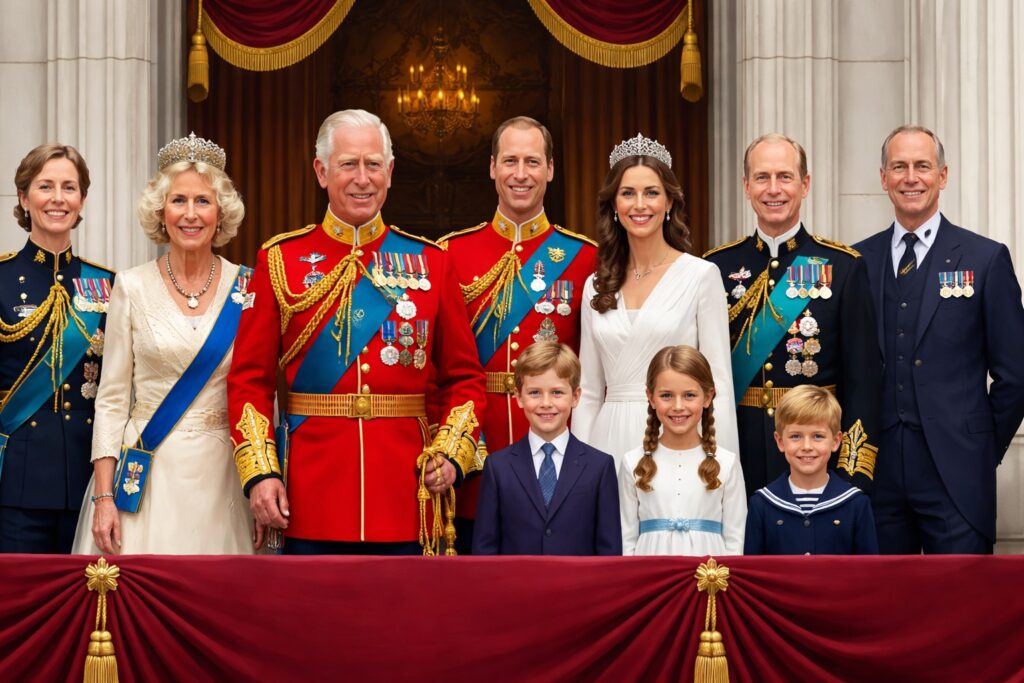
nIn the language of the British royal family, names belong to individuals, while titles belong to the institution. News reports refer to King, not Charles; Prince of Wales, not William. This is not a matter of politeness, but of constitutional structure. The British monarchy defines power and responsibility through titles, not personal names.n

nTake Charles III as an example. His full legal title is: Charles the Third, by the Grace of God of the United Kingdom of Great Britain and Northern Ireland and of His other Realms and Territories King, Head of the Commonwealth, Defender of the Faith. This string of words is not rhetoric but a declaration of the source of power. Names can be repeated, but the throne cannot be confused. Titles represent institutional positions, not personal emotions.n

nThe title Prince of Wales is customarily used for the heir apparent but must be conferred by the monarch, not automatically assumed. In 2022, after Charles III ascended the throne, he appointed his eldest son William, Prince of Wales as Prince of Wales. Historically, this title almost equates to the future king, but legally, flexibility remains. The corresponding title for the spouse is Princess of Wales, currently held by Catherine, Princess of Wales. These titles are not mere decorations but signify the order of succession.n

nWilliam’s family exemplifies the system in operation. The Prince of Wales is also the Duke of Cornwall and, in Scotland, the Duke of Rothesay. His children are Prince George of Wales, Princess Charlotte of Wales, and Prince Louis of Wales. When William eventually ascends the throne, these titles will change overnight, but the names will remain the same. The institution comes first, the individual second.n

nCharles III’s siblings are also defined by titles. Anne, Princess Royal, is Charles III’s sister and holds the title Princess Royal, a lifelong honorific. Prince Edward, Duke of Edinburgh, is Charles’s brother and currently holds the title Duke of Edinburgh. As for Prince Andrew, Duke of York, also Charles’s brother, he was formerly Duke of York. In recent years, he has ceased using the styles Prince and His Royal Highness, and is often referred to in public as Andrew Mountbatten-Windsor. Legally, the abolition of titles requires formal procedures, not public opinion. Even so, he no longer performs royal duties, highlighting the distance between institutional identity and public role.n

nMountbatten-Windsor is the legal surname of the British royal family. In 1917, George V changed the dynasty’s name from its Germanic origins to Windsor. In 1960, Elizabeth II combined her husband Prince Philip’s surname Mountbatten with Windsor, forming Mountbatten-Windsor. This surname is primarily used in contexts such as the military, schools, or legal documents. Royal family members do not typically use surnames, as titles suffice to identify them. Andrew’s use of Andrew Mountbatten-Windsor for private affairs after stepping back from royal roles illustrates that when titles are no longer central to public identity, surnames emerge.n

nThe British royal naming system may seem complex, but it follows a single principle: the institution supersedes the individual. Titles define power and responsibility, while names carry personal life. Surnames belong to the legal realm, not the core of identity. News reports refer to The King not out of reverence, but because that is how the constitution functions. Understanding this, the language of the royal family becomes less mysterious, leaving only order and tradition.n

n#UK #RoyalFamily #Monarchy #PrinceOfWales #Columnn

Names as Private Property, Titles as Public Assets: The British Royal System Read More »

The Truth About Air Fryers

The name is catchy, but let’s be clear: air fryers do not actually ‘fry’. They do not immerse food in oil; instead, they use high-speed hot air to dry the surface, creating a texture similar to that of fried food.

The principle behind air fryers is not complicated. At the top of the unit is a heating element, in the middle is a fan, and at the bottom is a food basket. When turned on, the heating element reaches temperatures between 160 and 200°C, and the fan blows hot air rapidly towards the food, creating a circulating convection. The strong hot air quickly removes moisture from the surface, drying it out and triggering the Maillard reaction, resulting in a golden and crispy exterior. The so-called ‘frying’ effect is actually achieved through hot air roasting.

Air fryers excel at handling small portions of food that require a crispy texture. Items like fries, chicken wings, fish fillets, and frozen snacks can yield satisfactory results. The key lies in achieving surface crispiness. Due to their compact size, air fryers heat up quickly and do not require the preheating of a large cavity like traditional ovens. They are particularly convenient for small households of one or two people.

However, they are not a panacea. The results for wet batter foods are limited, as the batter may be blown away before it can dry. Overcrowding the food basket can also impede the flow of hot air. For whole chickens or large cuts of meat, smaller models may not be suitable. Essentially, an air fryer functions as a small, powerful oven and should be used with this understanding.

Is it healthier? From a fat perspective, it often is. Traditional frying requires immersing food in oil heated to 170 to 180°C, resulting in higher oil absorption. An air fryer only needs a thin layer of oil, or even none at all, which can reduce fat intake. However, high temperatures still pose risks such as the formation of acrylamide. Whether it is healthy or not depends not on its name, but on the control of temperature and time.

As for energy efficiency, it depends on the comparison. Typical air fryers have a power rating of about 1200 to 2000 watts, while traditional ovens usually range from 2000 to 3000 watts. The power difference is not drastic, but air fryers have a smaller capacity and shorter preheating times. If cooking for one or two people, the overall energy consumption is often lower. However, if large quantities of food need to be cooked at once, requiring batch processing, the total energy consumption may not be advantageous.

There is also a practical consideration. Due to their enclosed and smaller space, air fryers have a lower impact on the overall temperature of the kitchen. Using them in the summer reduces the burden on air conditioning, indirectly saving energy. This is a point often overlooked in everyday use.

The popularity of air fryers is not mysterious. They condense the oven’s size and enhance convection, resulting in speed and efficiency. They do not truly ‘fry’, yet they can simulate the texture of fried food. Understanding this means we need not mythologize them, nor should we dismiss them.

Tools are merely tools. Names can be misleading, but principles are not.

The Truth About Air Fryers Read More »

How Far Can You Travel for a Few Pounds?

In the UK, a few pounds can take you hundreds of miles. This is not a sporadic promotion, but rather a result of a mature market.

The long-distance bus market in the UK is primarily dominated by three operators: National Express, FlixBus, and Megabus. These companies compete through online direct sales and dynamic pricing, allowing tickets to be purchased for as little as a few pounds if booked in advance. Routes such as London to Manchester and Birmingham to Edinburgh, which span 200 to 400 miles, often cost less than a single fare on a local train.

The low prices are supported by a cost structure that works. Long-distance buses operate with high-density seating, and online ticket sales reduce intermediaries, resulting in high fleet utilization. Most importantly, dynamic pricing plays a crucial role: the earlier you book, the cheaper the fare, while prices rise during peak times. This is similar to the logic used by airlines, but with a lower barrier to entry. Those who plan ahead can exchange minimal costs for long-distance travel.

Time is the primary trade-off. A journey that takes 2 hours by train may take 4 to 6 hours by bus, with traffic congestion on highways being unavoidable. The onboard facilities range from practical to minimal; most buses are equipped with air conditioning, charging sockets, and onboard restrooms, but hygiene standards depend on passenger usage, so expectations should be tempered.

Long-distance buses also fill the gaps left by rail services. Early morning and late-night services between Heathrow and Gatwick airports are often more reliable than trains. When rail fares are exorbitant or services are cancelled at short notice, buses become a predictable alternative.

Traveling hundreds of miles for a few pounds is essentially a trade-off. Passengers exchange time for price advantages and comfort for distance. For students and those on a budget, this is a rational choice; for those who prioritize efficiency, it may not be worth it. However, the availability of such options contributes to market flexibility.

In an era of rising transportation costs, long-distance buses maintain the lowest threshold for intercity mobility. They are neither glamorous nor fast, but they are practical. The question is not whether they are good enough, but how much more you are willing to pay for a faster option.

How Far Can You Travel for a Few Pounds? Read More »

A Landmark Ruling on Tariffs and the Constitution

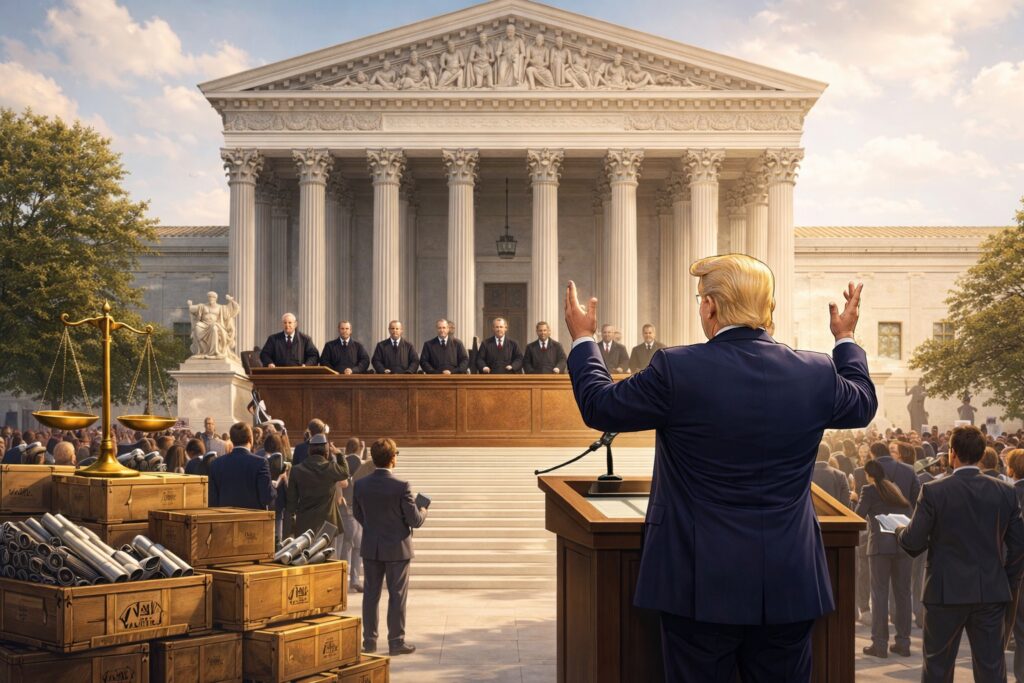
On February 20, 2026, the United States Supreme Court ruled 6 to 3 to overturn the extensive global tariffs imposed by President Trump under the International Emergency Economic Powers Act. This case transcends a mere trade dispute; it is a significant ruling regarding the constitutional boundaries of power. The issue at hand is not whether the tariffs had political support, but whether the president had the authority to impose them.

Beginning in April 2025, Trump declared a state of economic emergency, imposing a baseline tariff of at least 10% on imports from most trading partners, with even higher rates for certain countries and products. The White House justified this move by citing trade deficits, supply chain risks, and national security concerns related to the influx of fentanyl. The administration argued that the law granted the president the authority to regulate imports during an emergency, thereby encompassing tariff measures.

However, businesses and several state governments filed lawsuits, arguing that the law did not explicitly authorize the president to impose tariffs. Tariffs are fundamentally a form of taxation, and the U.S. Constitution clearly grants the power to levy taxes and tariffs to Congress. The executive branch may adjust tariffs under explicit congressional authorization, but it cannot unilaterally create a new comprehensive taxation tool. The case ultimately reached the Supreme Court.

The majority of justices noted that when a law involves significant economic and political implications, Congress must express its authorization for the executive branch to act in clear and specific terms. General emergency authorization clauses cannot be extended to serve as a basis for reshaping the entire tariff system. This encapsulates the core spirit of the so-called major questions doctrine. In other words, the boundaries of executive power cannot be defined by the executive itself.

Dissenting opinions argued that trade policy falls within the political realm and should be managed by elected officials. However, the majority opinion emphasized that precisely because the policy has far-reaching effects, judicial review is necessary to ensure the legitimacy of the source of power. The judiciary does not interfere in politics; rather, it upholds the baseline of the system.

As for whether tariffs already collected need to be refunded, this remains a technical and procedural issue. Generally, when tariffs are deemed illegal by a court, affected businesses can apply for refunds through customs and court procedures. If the ruling is retroactive, theoretically, illegal taxes should be refunded; if it only restricts future collections, the approach may differ. Specific arrangements will depend on the details of administrative execution and subsequent legal processes.

The significance of this ruling extends beyond a single trade policy victory or defeat; it reaffirms the constitutional framework. Congress legislates, the president executes, and the judiciary reviews—each branch has its distinct role and mutual checks and balances. When the executive branch seeks to expand its power under the guise of a state of emergency, the role of the courts is to delineate the boundaries.

The overturning of Trump’s tariffs does not signify the end of trade disputes, nor does it imply the disappearance of political divisions. It serves as a reminder that the President of the United States is not a monarch endowed with divine right. True democracy lies not only in electoral outcomes but also in institutional design; it rests not only on authorization but also on the balance of power.

A Landmark Ruling on Tariffs and the Constitution Read More »

The Truth About Refugees and UK Public Finances

The UK government spends approximately £1.2 trillion annually, with around £5 billion allocated to refugees and asylum seekers, accounting for less than 0.4% of total expenditure. At this point, the issue could have been considered settled.

However, politics rarely allows matters to conclude so simply. The figure of 0.4% is too calm, too difficult to incite emotion, and too unhelpful for garnering votes. Consequently, the numbers are downplayed, while emotions are elevated; refugees and asylum seekers have conveniently become scapegoats.

Let us clarify a frequently confused fact: a significant portion of refugee-related expenditure actually comes from the Official Development Assistance (ODA) budget. By design, this money cannot be used for local public services; whether spent on asylum seekers or not, it does not translate into more hospitals or additional beds in the UK. To claim that ODA spending ‘takes away resources for livelihoods’ is a conceptual sleight of hand. More importantly, if this portion is excluded, the actual expenditure that directly competes with local public services is even lower than 0.4%. However, such precision is of no use in politics.

Anyone who believes that the government can simply cut this less than 0.4% of expenditure to transform the UK from poverty to prosperity has a flawed understanding of mathematics. Unfortunately, mathematics has never been a strong suit in elections.

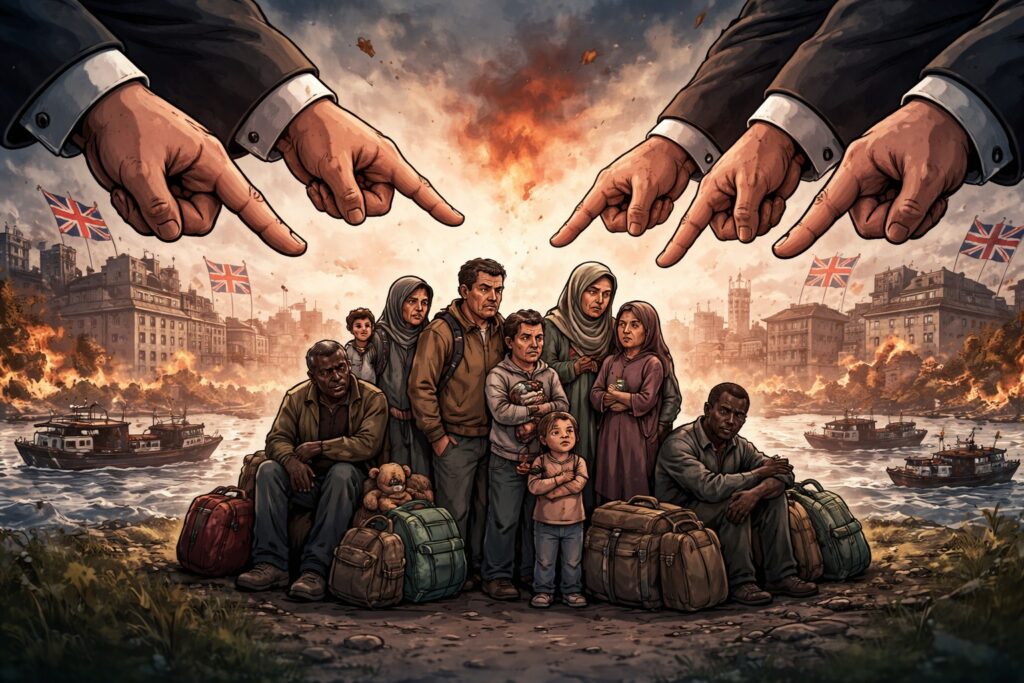
Thus, demonization has become a shortcut. Hotels are requisitioned, accommodation sites are established near communities, and images of small boats are repeatedly broadcast; these highly visible scenes are sufficient to overshadow the entire government budget. In contrast, the items that truly consume public finances—healthcare, pensions, and debt interest—are vast and silent, unable to bear the brunt of public anger. Political discourse thus chooses the most visible and least defensible group of people.

Systemic failures are consequently obscured. Backlogs in asylum processing, work prohibitions, and reliance on high-cost temporary accommodation are all outcomes of policy choices; acknowledging this would necessitate reform and accountability. In comparison, shifting the bill to refugees is both easier and safer.

This is not a new trick. When pressing issues such as housing shortages, healthcare waiting times, and local government financial crises cannot be swiftly resolved, someone must be scapegoated to absorb public discontent. Today it is refugees, yesterday it was EU migrants, and tomorrow it could be anyone; what matters is that the target must be weak, silent, and unable to retaliate.

As a result, a ludicrous situation has emerged in British society: a group that accounts for less than 0.4% of public finances is portrayed as the root cause of public distress, while the genuine policy failures and structural issues that determine quality of life remain largely unaddressed.

It is always easier to cast a group of people as enemies than to confront reality and solve problems.

The Truth About Refugees and UK Public Finances Read More »

How Sunbelt Regions Are Reshaping the Global Economy

The energy transition is not merely a matter of emissions reduction; it is also about costs.

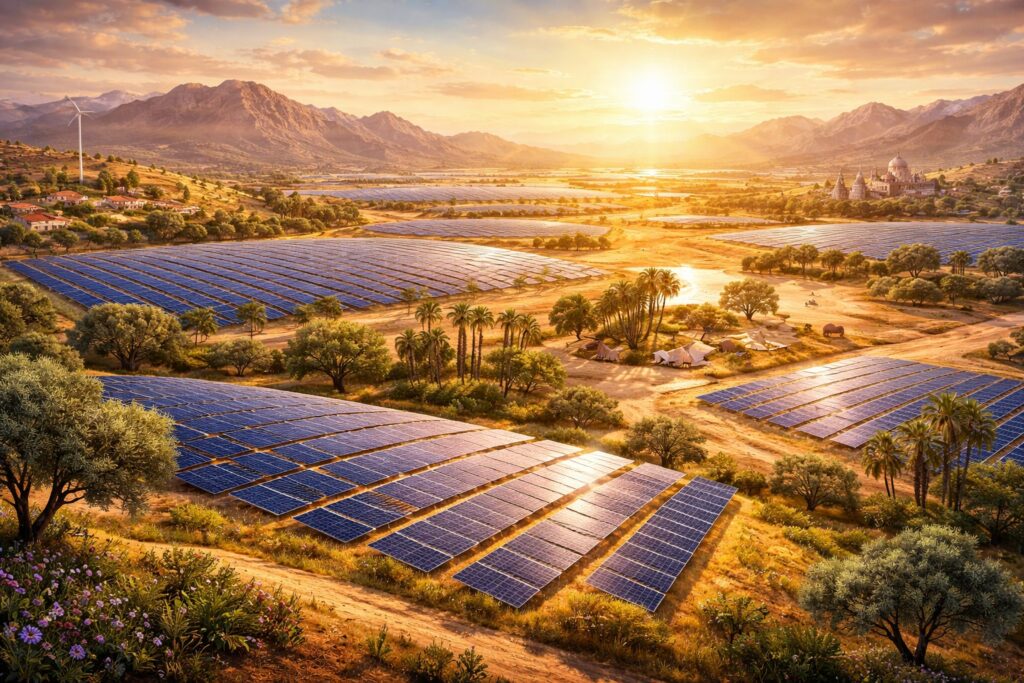
In the era of renewable energy, low latitudes become competitive. The so-called Sunbelt encompasses Southern Europe, North Africa, the Middle East, India, Australia, the southern United States, and large areas of sub-Saharan Africa. These regions receive between 2,500 and 3,500 hours of sunlight annually, while many parts of Northern Europe receive only about 1,000 hours. Although the price of solar panels is similar globally, the output can differ significantly, sometimes by a factor of two.

The key to solar energy lies in capacity factors. The same equipment in India or North Africa generates far more output than in the UK or Germany. Over the past decade, the cost of photovoltaics has fallen by more than 80%. As equipment becomes cheaper, geographical advantages become apparent. If electricity prices can be kept between €20 and €30 per megawatt-hour in the long term, energy-intensive industries will naturally relocate. Sectors such as aluminum, steel, hydrogen, and data centers will not cling to high electricity prices.

A turning point emerges here.

In the era of fossil fuels, resources were concentrated in a few exporting countries. Solar energy, however, is widely distributed and tends to favor low latitudes. Many developing economies, previously constrained by energy shortages, now have the opportunity to turn the tide. India already has a manufacturing base and a large market. If coupled with stable and inexpensive green electricity, its attractiveness will increase further. Sub-Saharan Africa has long struggled with power shortages, but if photovoltaics and energy storage are deployed effectively, the threshold for industrialization will lower.

The global factory may not always be in East Asia.

Low electricity prices are the most compelling incentive. Capital will take notice. As energy costs comprise a higher proportion of total costs, geographical advantages become more pronounced. If Sunbelt countries can ensure the stability of their electricity supply and transparency in their systems, they could very well attract a new wave of industrial migration.

As for Europe, the issue is more straightforward. Rather than forcing photovoltaics in areas with insufficient sunlight, it would be better to first unlock the potential of Southern Europe. There remains significant solar capacity in Spain, Portugal, Southern Italy, and Greece. Strengthening cross-border electricity grids to transmit excess power from the south to Central and Northern Europe is a pragmatic choice. Although the cost of high-voltage direct current transmission is not low, transmission losses are manageable, making it a one-time infrastructure investment.

As demand continues to rise, collaboration with North Africa can be considered based on circumstances. The Mediterranean is not far away. While political risks exist, energy diversification itself is a method of hedging against risks.

Energy has never been purely a technical issue; it is a combination of geography and systems.

The sun will not move, but industries will.

In the past, those who controlled oil wells held the advantage. In the future, those who harness sunlight will gain the upper hand. The question is not whether the sun is fair, but whether countries understand how to move towards it.

How Sunbelt Regions Are Reshaping the Global Economy Read More »

Tourist Tax: Fairness vs. Competitiveness

Tourists bring consumption, but they also incur costs. When governments legislate to allow local councils to impose overnight visitor taxes, the core question is quite simple: who should bear the additional burden on the city?

The so-called tourist tax is not a punitive charge but an overnight fee added to accommodation costs. Typically, this fee is collected by hotels, guesthouses, and short-term rental platforms like Airbnb. The calculation is usually a fixed amount per room per night or per person per night, which the operators then remit to the local government. The design of the system emphasizes simplicity and transparency to avoid excessive administrative costs.

The rationale for imposing such a fee is not difficult to understand. During peak seasons, the streets of Edinburgh become congested, leading to increased cleaning and policing expenses; during major events and concerts in Manchester, public transport and municipal facilities experience heightened strain; and Brighton sees a significant surge in foot traffic on summer weekends, resulting in noticeable wear on infrastructure. Since tourists utilize the city’s public resources, it is only fair that they contribute to some of the costs. If these expenses are solely borne by local municipal taxes, it may not be equitable for residents.

The issue lies not in the principle but in the design. If the revenue from the tax is earmarked for specific uses, such as improving transportation, maintaining historical buildings, and enhancing cleanliness and safety, the policy is more likely to gain consensus. However, if the revenue flows into the general treasury merely to fill budget gaps, public trust will quickly erode. The legitimacy of the tax hinges on its clear and restrained purpose.

Yet economic behavior is rarely dictated by principles alone. For business travelers, a few pounds per night may not significantly impact their decisions; however, for families, it could be a different story. A family of four staying for three nights, with an additional charge of £3 per night, would incur an extra £36. For those on a tight budget, this could alter their choices.

Moreover, there is a concerning phenomenon known as the ‘displacement effect.’ If a fee is imposed in the city center, cost-sensitive travelers may opt to stay in the outskirts or nearby towns to avoid the surcharge. They would still enter the city during the day for shopping but return to their accommodations outside in the evening. The result could be increased traffic flow, a rise in commuter traffic, and greater pressure on roads. A policy intended to alleviate burdens in the city center may inadvertently shift costs to transportation and environmental concerns.

Regional competition cannot be overlooked either. If some cities impose fees while others do not, will this marginally affect the location choices for exhibitions and large events? The tourism industry is already influenced by exchange rates and economic cycles; the psychological impact of an additional fee should not be underestimated.

There is also a practical consideration. Once a tax system is established, raising rates is often easier than repealing them. Today it may be £2 or £3 per night, but will it increase tomorrow? Without a clear cap and regular review mechanisms, the policy can easily shift from ‘reasonable burden-sharing’ to ‘fiscal dependency.’

Essentially, the tourist tax is a tool for cost distribution. Cities must attract the world while maintaining the quality of life for residents. If all additional burdens are placed on local taxpayers, it is not fair; if the tax is excessive, it may weaken the city’s appeal and even alter accommodation and transportation patterns.

The issue has never been about right or wrong emotions, but rather about economic calculations. How much is collected, how it is used, and whether it can be restrained will determine the success or failure of the policy. Charging is not difficult; earning trust is.

Tourist Tax: Fairness vs. Competitiveness Read More »

The Astronomical Logic of the Lunar Calendar

The lunar calendar is not a vague folk tradition but a system governed by clear astronomical rules. Its central question is singular: how to simultaneously track the moon and the sun, ensuring that months follow lunar phases while years remain aligned with the four seasons.

The historical evolution can be summarized. The ancient ‘Xia Calendar’ established the prototype of a system that began the year in the month of Yin. In 104 BC, the Western Han dynasty promulgated the ‘Taichu Calendar’, which first fully established a lunisolar calendar system that set the new moon as the start of the month and corrected the solar year with solar terms. In 1645, during the early Qing dynasty, the ‘Shixian Calendar’ was implemented, introducing Western astronomical calculation methods to derive new moons and solar terms based on actual celestial phenomena. Since then, the calendar has entered a phase based on precise astronomical calculations. The modern lunar calendar has developed along this technical trajectory.

The specific calculation methods are regulated by the ‘Compilation and Issuance of the Lunar Calendar’ (GB/T 33661-2017), implemented in mainland China in 2017. The principles are not mysterious and can be summarized in four steps.

First, the month is determined by the astronomical new moon. When the moon and the sun have the same ecliptic longitude and the moon’s surface is not visible from Earth, this moment is called the new moon. According to Beijing time, the day of the new moon is designated as the first day of the month. A synodic month averages approximately 29.53 days, so lunar months alternate between 29 and 30 days without a fixed pattern.

Second, the year is determined by solar terms. The Earth’s orbit around the sun creates 24 solar terms, with one term occurring every 15 degrees. Among these, 12 are ‘mid-terms’, such as the spring equinox, summer solstice, autumn equinox, and winter solstice. Mid-terms are crucial for correcting the calendar year.

Third, a month without a mid-term is designated as a leap month. Twelve synodic months total about 354 days, which is roughly 11 days shorter than the tropical year of about 365.2422 days. To prevent solar terms from advancing each year, the rule states that if there is no mid-term between one new moon and the next, that month is designated as a leap month, retaining the name of the previous month. On average, there are about 19 leap months in 7 cycles, but the actual determination depends on the celestial phenomena of that year.

Fourth, the eleventh month is determined by the winter solstice. The standard requires that the winter solstice must fall within the eleventh month of the lunar calendar. By calculating forwards and backwards from this point, it ensures that the first day of the lunar new year generally falls between late January and mid-February in the Gregorian calendar, maintaining the relative stability between the Spring Festival and the beginning of spring.

The logic of this entire system is clear: the new moon addresses the ‘month’ issue, mid-terms address the ‘year’ issue, leap months resolve the discrepancies between the lunar and solar cycles, and the winter solstice establishes the sequence of the year. The tools for calculation may have evolved from counting rods to computers, but the principles remain unchanged.

Thus, the lunar calendar is neither purely lunar nor purely solar; it is a lunisolar calendar based on astronomical observations. Its stability lies not in tradition but in rules.

Time originates from celestial bodies, and calendars merely translate celestial phenomena into human order. What appears complex is, in fact, the repeated application of a few clear principles.

The Astronomical Logic of the Lunar Calendar Read More »

Scroll to Top