UK Affairs

UK life, politics, and policy seen from a Hongkonger’s perspective. Coverage spans immigration and visa policy, housing, council tax, transport, energy markets, and the diaspora’s encounter with British civic life.

The Truth About Refugees and UK Public Finances

The UK government spends approximately £1.2 trillion annually, with around £5 billion allocated to refugees and asylum seekers, accounting for less than 0.4% of total expenditure. At this point, the issue could have been considered settled.

However, politics rarely allows matters to conclude so simply. The figure of 0.4% is too calm, too difficult to incite emotion, and too unhelpful for garnering votes. Consequently, the numbers are downplayed, while emotions are elevated; refugees and asylum seekers have conveniently become scapegoats.

Let us clarify a frequently confused fact: a significant portion of refugee-related expenditure actually comes from the Official Development Assistance (ODA) budget. By design, this money cannot be used for local public services; whether spent on asylum seekers or not, it does not translate into more hospitals or additional beds in the UK. To claim that ODA spending ‘takes away resources for livelihoods’ is a conceptual sleight of hand. More importantly, if this portion is excluded, the actual expenditure that directly competes with local public services is even lower than 0.4%. However, such precision is of no use in politics.

Anyone who believes that the government can simply cut this less than 0.4% of expenditure to transform the UK from poverty to prosperity has a flawed understanding of mathematics. Unfortunately, mathematics has never been a strong suit in elections.

Thus, demonization has become a shortcut. Hotels are requisitioned, accommodation sites are established near communities, and images of small boats are repeatedly broadcast; these highly visible scenes are sufficient to overshadow the entire government budget. In contrast, the items that truly consume public finances—healthcare, pensions, and debt interest—are vast and silent, unable to bear the brunt of public anger. Political discourse thus chooses the most visible and least defensible group of people.

Systemic failures are consequently obscured. Backlogs in asylum processing, work prohibitions, and reliance on high-cost temporary accommodation are all outcomes of policy choices; acknowledging this would necessitate reform and accountability. In comparison, shifting the bill to refugees is both easier and safer.

This is not a new trick. When pressing issues such as housing shortages, healthcare waiting times, and local government financial crises cannot be swiftly resolved, someone must be scapegoated to absorb public discontent. Today it is refugees, yesterday it was EU migrants, and tomorrow it could be anyone; what matters is that the target must be weak, silent, and unable to retaliate.

As a result, a ludicrous situation has emerged in British society: a group that accounts for less than 0.4% of public finances is portrayed as the root cause of public distress, while the genuine policy failures and structural issues that determine quality of life remain largely unaddressed.

It is always easier to cast a group of people as enemies than to confront reality and solve problems.

The Truth About Refugees and UK Public Finances Read More »

Tourist Tax: Fairness vs. Competitiveness

Tourists bring consumption, but they also incur costs. When governments legislate to allow local councils to impose overnight visitor taxes, the core question is quite simple: who should bear the additional burden on the city?

The so-called tourist tax is not a punitive charge but an overnight fee added to accommodation costs. Typically, this fee is collected by hotels, guesthouses, and short-term rental platforms like Airbnb. The calculation is usually a fixed amount per room per night or per person per night, which the operators then remit to the local government. The design of the system emphasizes simplicity and transparency to avoid excessive administrative costs.

The rationale for imposing such a fee is not difficult to understand. During peak seasons, the streets of Edinburgh become congested, leading to increased cleaning and policing expenses; during major events and concerts in Manchester, public transport and municipal facilities experience heightened strain; and Brighton sees a significant surge in foot traffic on summer weekends, resulting in noticeable wear on infrastructure. Since tourists utilize the city’s public resources, it is only fair that they contribute to some of the costs. If these expenses are solely borne by local municipal taxes, it may not be equitable for residents.

The issue lies not in the principle but in the design. If the revenue from the tax is earmarked for specific uses, such as improving transportation, maintaining historical buildings, and enhancing cleanliness and safety, the policy is more likely to gain consensus. However, if the revenue flows into the general treasury merely to fill budget gaps, public trust will quickly erode. The legitimacy of the tax hinges on its clear and restrained purpose.

Yet economic behavior is rarely dictated by principles alone. For business travelers, a few pounds per night may not significantly impact their decisions; however, for families, it could be a different story. A family of four staying for three nights, with an additional charge of £3 per night, would incur an extra £36. For those on a tight budget, this could alter their choices.

Moreover, there is a concerning phenomenon known as the ‘displacement effect.’ If a fee is imposed in the city center, cost-sensitive travelers may opt to stay in the outskirts or nearby towns to avoid the surcharge. They would still enter the city during the day for shopping but return to their accommodations outside in the evening. The result could be increased traffic flow, a rise in commuter traffic, and greater pressure on roads. A policy intended to alleviate burdens in the city center may inadvertently shift costs to transportation and environmental concerns.

Regional competition cannot be overlooked either. If some cities impose fees while others do not, will this marginally affect the location choices for exhibitions and large events? The tourism industry is already influenced by exchange rates and economic cycles; the psychological impact of an additional fee should not be underestimated.

There is also a practical consideration. Once a tax system is established, raising rates is often easier than repealing them. Today it may be £2 or £3 per night, but will it increase tomorrow? Without a clear cap and regular review mechanisms, the policy can easily shift from ‘reasonable burden-sharing’ to ‘fiscal dependency.’

Essentially, the tourist tax is a tool for cost distribution. Cities must attract the world while maintaining the quality of life for residents. If all additional burdens are placed on local taxpayers, it is not fair; if the tax is excessive, it may weaken the city’s appeal and even alter accommodation and transportation patterns.

The issue has never been about right or wrong emotions, but rather about economic calculations. How much is collected, how it is used, and whether it can be restrained will determine the success or failure of the policy. Charging is not difficult; earning trust is.

Tourist Tax: Fairness vs. Competitiveness Read More »

The Value and Considerations of Water Softeners

The Value and Considerations of Water Softeners

In the UK, one of the most underestimated hidden costs of living is not rent or energy bills, but water. Many residents only notice after some time that their kettles have a white residue, irons begin to emit white powder, showerheads lose pressure, and washing machines and dishwashers seem to age prematurely. These phenomena are not due to product quality issues, but rather the long-term effects of hard water.

Hard water is not a sign of unclean water; it contains higher concentrations of calcium and magnesium. In many areas of the UK, tap water comes from underground sources that flow through limestone and chalk strata, naturally dissolving minerals. It is important to clarify that these minerals are harmless to human health and are even considered neutral to slightly beneficial in public health studies; for instance, calcium is good for bones, and magnesium is related to cardiovascular function. However, the amount of minerals provided by hard water is limited, and many people have already filtered out or precipitated these minerals when boiling water, brewing coffee, or using water filters, rendering the health implications negligible. The real impact lies in daily life and equipment.

The distribution of hard water in the UK is highly uneven. Overall, the southern and eastern parts of England experience the most severe hard water issues, while the northern and western regions are relatively mild. Areas around London, including Kent, Essex, Hertfordshire, and Cambridgeshire, are generally classified as very hard water zones. In contrast, cities like Manchester and Birmingham, as well as regions in Wales and Scotland, primarily rely on surface water, which is significantly softer and has far fewer limescale problems. This north-south disparity reflects a tangible difference in daily living experiences.

The problems caused by hard water first manifest in efficiency. When limescale coats heating elements, their heat transfer capacity declines, requiring longer heating times and higher energy consumption for the same amount of water. Consequently, boilers, washing machines, and dishwashers consume more electricity and are more prone to premature aging. This is not a sudden malfunction but rather a chronic wear-and-tear issue.

However, not all appliances require a water softener for protection. For most household devices, regular use of descalers can effectively manage the risks. Kettles, coffee machines, and irons can significantly reduce limescale accumulation if descaled according to recommended frequencies. The same applies to washing machines and dishwashers, which already have dedicated descaling powders and cleaning programs available on the market. Dishwashers also use dishwasher salt, and many laundry capsules and powders now include anti-limescale components, designed with the assumption that users are in hard water environments. In other words, through regular maintenance and consumables, many hard water issues can be managed rather than spiraling out of control.

For certain sensitive applications, a complete home overhaul may not be necessary. For instance, medical equipment can directly use distilled or deionized water to avoid any mineral residues. This approach is technically the cleanest but comes at a relatively high cost, making it suitable only for small quantities and specific uses, and it cannot serve as a substitute for everyday water.

The real challenge that cannot be resolved with descalers lies within the entire hot water system. Limescale accumulated in boilers, hot water tanks, and pipes will not disappear simply because you diligently clean your kettle. Once accumulated, it still requires chemical cleaning or maintenance, which can be costly and risky. This context is why water softeners have historically been viewed as a form of ‘long-term protection.’ However, in low-temperature systems centered around heat pumps, these risks have been significantly reduced, thereby diminishing the value of water softeners.

Therefore, whether a water softener is worth it hinges not on ‘whether there are alternative methods,’ but rather on ‘what types of costs you wish to avoid.’ If you live in an area with severe hard water, have a large household, use a lot of water, and plan to stay long-term, a water softener may still play a role. However, if you have switched to a heat pump and can accept regular descaling and maintenance, it is more likely to be an optional upgrade rather than a necessary investment.

Labeling water softeners simply as ‘intelligence tax’ or ‘essentials’ is inaccurate. They are not tools for enhancing health but rather long-term protective solutions tailored to specific regions, technologies, and durations of residence. In the UK, the need for a water softener has never been a matter of belief but rather a calculable aspect of daily living.

The Value and Considerations of Water Softeners Read More »

Public Funds, Private Control: The UK Bus Privatization Dilemma

The issues surrounding local buses in the UK extend beyond mere driver shortages or declining passenger numbers. The real conflict lies in a system branded as a private market that increasingly relies on public funds for survival, while public authority is excluded from decision-making.

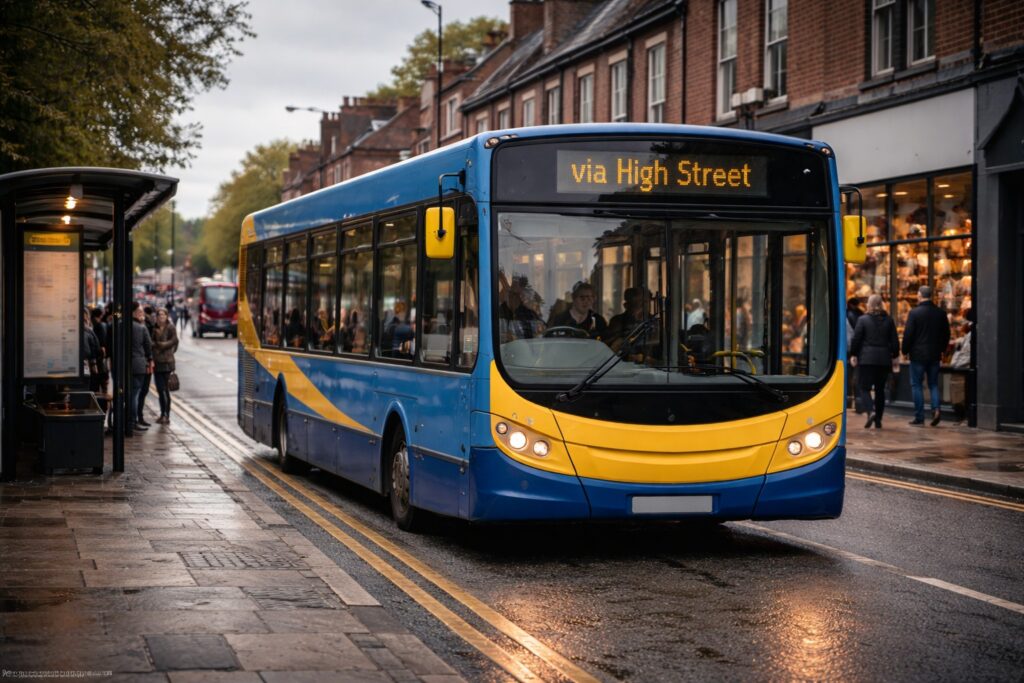
Since the 1980s, buses outside London in England have been treated as ‘commercial operations’. Routes, schedules, and fares are determined by bus companies themselves; local governments can only provide subsidies without the power to plan. In theory, market competition should enhance efficiency; in reality, busy routes face overlapping competition, while remote areas and off-peak services are continually reduced. Urban transport has ceased to function as a cohesive system, devolving into a collection of disparate commercial products.

Fares illustrate the problem well. Outside London, bus companies can set their own prices. Recent government initiatives to cap single fares at £2 and £3 may appear to regulate fares, but in practice, they merely use subsidies to bridge the gap between private pricing and policy objectives. This is not an exercise of public authority but rather a case of public funds chasing the market. Fares have not been systematically lowered; they have simply been temporarily obscured.

More critically, consider the revenue structure. Under the concessionary fare system, elderly and eligible individuals ride for free, and local governments are legally required to compensate bus companies. Over the years, this subsidy has become a stable source of income for many operators. When concessionary fare reimbursements, fare cap subsidies, and support for non-profitable routes are combined, the proportion of local bus operating revenue derived from public funds has approached 40% or more in many areas. The so-called ‘market operation’ is, in fact, built upon public finances.

However, the most absurd aspect of the system is not the level of subsidies but the lack of control that comes with them. Even though public funds form the revenue base, local governments remain powerless to decide whether routes should be retained, frequencies increased, or fare structures integrated. If operators deem a route unprofitable, they can simply notify the authorities and cancel it with virtually no substantive consequences. The repercussions of service failures are borne by citizens, while political accountability falls on local governments that lack decision-making power.

This misalignment is also evident in daily operations. Maintaining standby drivers constitutes a long-term cost; cancelling a bus service incurs almost no immediate penalties. Under the private system, cancellation often becomes the cheapest option. Reliability is not priced into the system, leading the market to undervalue it. Consequently, citizens receive not a predictable public service but a transportation option that can be arbitrarily withdrawn.

London demonstrates that things can be different. When routes, schedules, and fares are returned to public planning, operators become mere contractors, and cancellations or delays constitute breaches of contract with tangible consequences. This is not without cost; rather, it is a choice to exchange public control for reliability and overall efficiency. Greater Manchester is moving along this path, Wales has fully shifted to public planning, and Scotland has included similar options in its legislation.

It is noteworthy that almost no region has chosen to revert to the previous model after reclaiming control. The reason is simple: when funds must be spent, it is better to use them to regain power and accountability. The real issue is no longer whether to privatize but whether to continue allowing a system of ‘public funds underpinning private control’ to operate.

The predicament of UK buses is not one of inefficiency but of systemic contradiction. As public funding increases, public control diminishes, and service quality inevitably fails to improve. This is not a market failure; it is a consequence of policy choices.

Public Funds, Private Control: The UK Bus Privatization Dilemma Read More »

The Reality of Green Belts in the UK

When discussing green belts, many in the UK envision a ring of accessible natural spaces. However, the reality is often quite the opposite: many areas lack forests and pathways, consisting instead of farmland or wasteland, and are predominantly private land, restricting public access. They are neither Areas of Outstanding Natural Beauty (AONB) nor country parks, and do not exist for the purpose of ‘using nature’.

The crux lies in the original intent of the system. The UK’s green belts are fundamentally a tool of urban planning rather than an environmental policy. Established post-war to prevent urban sprawl, the core rule is singular: no building is allowed. The ecological richness of the land or its benefits to the public are of no concern to the system. As long as development is prohibited, the land is deemed compliant.

This approach is not mainstream internationally. Other countries also have urban boundaries, but these are often seen as adjustable tools; in the UK, however, the prohibition of development is moralized and sanctified as a means of protecting nature. Once designated as a green belt, the land is almost permanently frozen, with the political costs of review and adjustment being extremely high.

The outcome directly affects land quality. The safest choice for landowners is to maintain low-investment, low-ecological-value uses. Single crops, grazing land, or even semi-wild states are considered more ‘stable’ than actively restoring nature. The system only protects the boundaries but does not safeguard the value, leading to a planning vacuum within the green belts.

A more significant consequence emerges in urban structure. Many British cities have height restrictions, preventing tall buildings, while boundaries cannot expand. Development must leap over green belts, spilling into more distant towns. This creates a separation between cities, with a ring of undeveloped yet underutilized land in between, forcing people to live further away and travel longer distances.

This spatial pattern undermines the viability of public transport. With insufficient density, rail and bus services struggle to operate at high frequencies, resulting in increased reliance on private cars. Green belts have not reduced travel; rather, they have extended commuting distances.

The UK’s green belts are ‘not green’ by chance, but rather a result of systemic logic. When policies merely prohibit development without requiring land to create ecological or public value, what remains is a line that appears green but is, in reality, hollow. The real question worth contemplating is not whether to retain green belts, but whether they still merit preservation in today’s context.

The Reality of Green Belts in the UK Read More »

The Rise of Airbus and the Role of Britain

The dominance of the civil aviation market has undergone a structural shift. This is not merely the result of a cyclical economic trend over one or two years, but rather a gap that has accumulated due to long-term route choices. The disparity is evident when viewed through the most direct figures.

In terms of delivery volumes, Airbus has consistently outperformed Boeing for several years. For instance, in 2024, Airbus is set to deliver 735 commercial aircraft, while Boeing will deliver only 528, a gap of over 200 aircraft. The difference in order backlogs is even more critical: Airbus has more than 8,600 undelivered orders, which, based on current production capacity, equates to over ten years of work; Boeing has about 5,600 orders, heavily concentrated in a few models, resulting in significantly lower buffers against production and regulatory risks.

These figures reflect not just market preferences, but also a trust vote from airlines regarding delivery stability, product lines, and corporate reliability.

Airbus’s advantage stems primarily from its earlier and more consistent technological choices. The A320neo series made an early bet on fuel efficiency and emissions control, directly addressing the cost structure that airlines are most sensitive to amid rising fuel prices and environmental pressures. The A350, with its high proportion of composite materials and long-range efficiency, solidifies the core demand in the wide-body market. In contrast, Boeing chose to continue with the 737 platform, making minimal changes in response to competition, ultimately paying a heavy price during the 737 Max crisis. The incident resulted in not only grounding but also a comprehensive damage to delivery rhythm, regulatory relationships, and corporate trust, which has yet to be fully restored.

Building on this foundation, Airbus has further pushed the boundaries of its products. The A321XLR extends the range of single-aisle aircraft to approximately 4,700 nautical miles, allowing airlines to operate long-haul point-to-point routes at lower costs, even across the Atlantic. This is not merely the introduction of a new model, but a rewriting of operational models: using single-aisle aircraft to open up market gaps traditionally occupied by wide-body aircraft, expanding route options while simultaneously lowering risks. Competitors have responded at a noticeably slower pace, forcing them to follow Airbus’s competitive rhythm.

When discussing Airbus, one cannot overlook the role of Britain. Airbus operates as a highly specialized European joint industrial system, but the design and manufacturing of wings for all major commercial aircraft models are concentrated in the UK. The facility in Broughton, North Wales, is responsible for the manufacture and assembly of wings for the A320 series, A330, A350, and A321XLR; while Filton, near Bristol, is a hub for global wing aerodynamics, structures, and next-generation technology development. In other words, regardless of where the final assembly of the aircraft occurs, it cannot do without the critical engineering completed in the UK.

This is not a symbolic role but one of substantial industrial weight. According to historical data and official estimates, the UK accounts for approximately 20% of the industrial value of each Airbus aircraft, concentrated in the wing systems, which have the highest technical barriers and are the most difficult to relocate. Airbus directly employs about 14,000 people in the UK, and together with the supply chain, supports over 100,000 high-tech jobs, generating approximately £6 to £7 billion in value for the UK economy each year. For Britain, this is not merely a foreign factory; it is an integral part of the long-term competitiveness of the aviation industry.

The competition in civil aviation, on the surface, appears to be a contest between two companies, but in reality, it reflects a contrast between two systems and cultures. When engineering judgments can prevail over short-term financial thinking, and when supply chain stability is regarded as a strategic asset, a lead will naturally accumulate into a gap. The combination of the A320neo, A350, and A321XLR exemplifies how such a gap can be transformed into market reality.

The Rise of Airbus and the Role of Britain Read More »

The Tower of London: A Symbol of Power and History

For every first-time visitor to London, a few names invariably appear on the itinerary: Buckingham Palace, the London Eye, the British Museum. Yet, the place that truly elucidates the formation of this nation is often mistaken for just ‘another tourist attraction’: the Tower of London. Cold, heavy, and unappealing, it is more honest than any ornate structure. This site does not present the image that Britain wishes to project; rather, it preserves the traces of how Britain once operated.

The existence of the Tower of London is, in itself, a declaration of power. Established in the 11th century, the White Tower looms over the city, its purpose never being to defend against external foes, but to intimidate the populace. The message it conveys to Londoners is crystal clear: power resides here, and resistance is futile. Over the ensuing centuries, the castle expanded continuously, its functions increasingly centralized—serving as a royal palace, armory, treasury, and prison, all within the same confines. The core power of a nation is compressed between thick stone walls and narrow doors.

Most unsettling is the Tower’s role as a prison. Those incarcerated here were never ordinary citizens but individuals too close to power. Queens, nobles, religious leaders, and political adversaries, once deemed a threat, would see their identities flipped in an instant. Executions did not take place in the bustling streets for public spectacle; they were quietly carried out within the Tower. The violence was not loud, yet it was strikingly efficient. This calm cruelty represents the most authentic visage of institutionalized power.

Today, the image most familiar to tourists is that of the Crown Jewels gleaming behind glass, symbolizing the continuity of monarchy and national stability. However, to linger solely on this superficial layer is to easily overlook the true weight of the Tower of London. The walls, towers, underground spaces, and open grounds lack glamorous packaging, yet they retain the primal language of power’s operation. Standing at the site of former executions, surrounded by tranquility, serves as a poignant reminder: fear does not need to be flaunted; it only needs to be understood and remembered.

Even the legend of the ravens is not merely a piece of folklore. The saying ‘if the ravens leave, the kingdom will fall’ is, in fact, a form of symbolic management. Traditions are meticulously maintained, making order seem self-evident. Within the Tower of London, nature, history, and power are woven into a singular narrative.

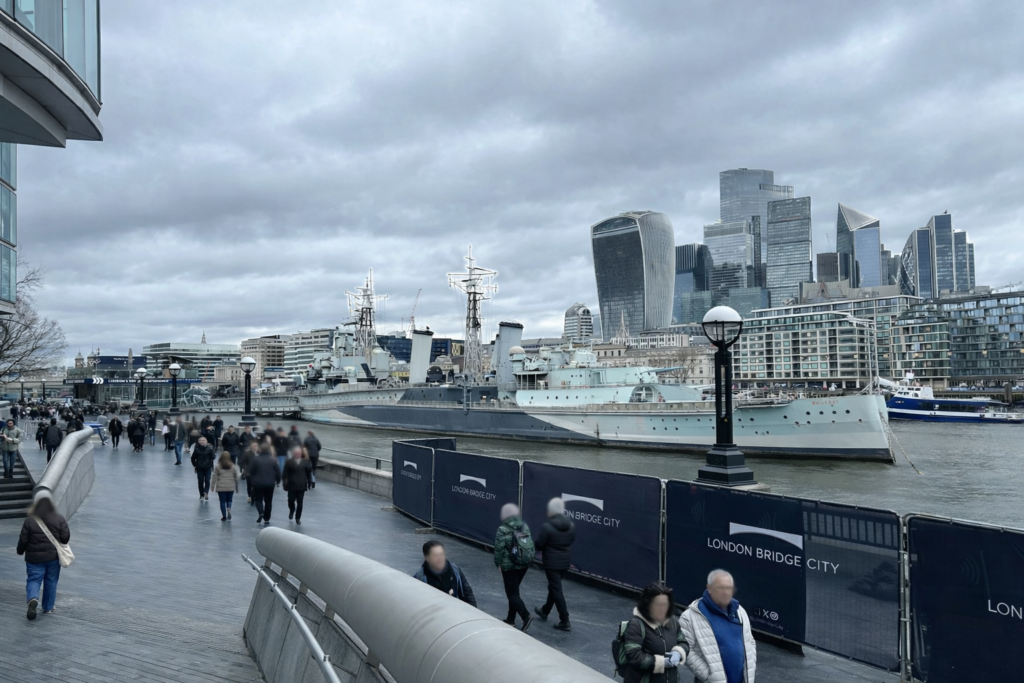
For this reason, the Tower of London is not suited for a hasty visit. When planning a visit, it is advisable to purchase tickets in advance from the official website, not only to avoid long queues but also to secure a more reasonable price than on-site purchases. The location is very accessible, just a short walk from Tower Hill station; for a more gradual approach, one might stroll along the Thames from London Bridge, allowing the castle walls to slowly come into view. Allocate at least three hours for the visit, or risk leaving with only fragmented impressions. Once inside, do not rush to see the jewels; instead, participate in a Yeoman Warder tour to quickly establish historical context and hear numerous details behind the institution. Inside the White Tower, rather than merely observing the armor, pay attention to the evolution of weaponry across different eras, as it concretely illustrates how state violence has evolved alongside institutional changes. Lastly, remember to wear comfortable shoes and prepare for windy and chilly weather, as this is a medieval fortress that does not compromise for tourists.

The Tower of London is worth entering for every visitor not because of its antiquity, but because it refuses to embellish history. It stands quietly, reminding you of how power once existed in its raw form, long before the advent of democracy and the rule of law. Any institution that considers itself secure should occasionally look back at this cold castle.

The Tower of London: A Symbol of Power and History Read More »

UK Special Education Spending Fails to Improve Quality

The core issue lies in the Education, Health and Care Plan (EHCP). This legally binding individual support plan mandates local governments to provide specified services once approved. Over the past decade, the number of students with EHCPs has surged from approximately 240,000 to over 570,000. Funding for these high-cost cases, known as the High Needs Block, has exceeded £10 billion, resulting in significant deficits for many councils.

The rising demand has its context, but the system simultaneously creates perverse incentives. Mainstream schools face financial pressures; if they absorb the support costs themselves, the burden falls entirely on them. However, if a student secures an EHCP, part of the expenditure can be covered by the High Needs Block. Consequently, referrals become a rational choice, leading to an increasing number of statutory cases.

Legal procedures further exacerbate conflicts. If parents disagree with the arrangements, they can appeal to the Special Educational Needs and Disability Tribunal. The success rate for these appeals has long hovered around 90%. As a result, local governments tend to resist, while parents are inclined to fight for their rights, leading to resource consumption in assessments and litigation rather than in teaching itself. Those who are more familiar with the system gain the upper hand.

The supply side is equally imbalanced. There is a shortage of public special schools, forcing local governments to purchase places from private institutions, with some charging between £60,000 and £100,000 per student annually. Cross-district placements are common, which increases transportation costs. Some students require one-on-one taxi services, which can cost up to £20,000 per year. A portion of the education budget is effectively spent on transportation.

Early support has been cut, resulting in problems accumulating until an EHCP application is necessary for resolution. The budgets for health, education, and social welfare are siloed, each operating independently. Population mobility further exacerbates pressures in certain areas.

Overall, there is a mismatch of incentives. Schools have a referral incentive, parents have an appeal incentive, providers have a price increase incentive, and local governments have a delay incentive. Each party acts rationally, yet the outcome is costly and inefficient.

To enact change, discussions cannot solely focus on increasing funding or cutting budgets. It is essential to address the root causes.

UK Special Education Spending Fails to Improve Quality Read More »

The Flexibility and Logic of Parking in Britain

Upon arriving in the UK, many newcomers often wonder why roadside parking spaces are not clearly marked with white lines, despite the apparent availability. Frequently, the remaining space is insufficient for a vehicle, leading to wasted potential. This situation is common and raises the question: is the absence of markings truly reasonable?

In fact, the UK does not intend for roadside parking to be viewed as ‘allocated spaces.’ On most residential streets, roadside parking is considered a continuous use area rather than a segmented resource. As long as there are no yellow lines, no obstructions to entrances, and no impact on intersection safety, parking is legally permissible. The system assumes not that ‘each car has a space,’ but rather that ‘everyone adjusts according to the actual situation.’

This approach is grounded in practicality. While marked spaces may seem orderly, fixed parking lengths often accommodate larger vehicles; a smaller car parked in such a space leaves unused gaps. Without markings, vehicles can theoretically arrange themselves according to their lengths. Academic research and simulations indicate that in areas with a higher proportion of smaller cars, unmarked roadside parking can sometimes accommodate more vehicles, although this heavily relies on driver behavior.

However, the reality is that humans are not algorithms. Sometimes, a space may be insufficient for parking, resulting in fragmented areas that appear wasted. Yet, the system itself allows for such imperfections in exchange for lower costs and greater flexibility. Moreover, given the age and varying widths of British streets, comprehensive marking would not only be costly but could also lead to a more rigid use of space, potentially reducing parking capacity.

Furthermore, this practice is not unique to the UK. Countries such as Ireland, France, Belgium, Italy, and even the Netherlands’ historic districts still extensively utilize unmarked roadside parking. In contrast, Germany, Japan, Switzerland, Hong Kong, and Singapore employ a different logic: the absence of clear markings equates to a prohibition on parking. These two systems reflect not a right or wrong, but differing orientations.

Nonetheless, the UK is not static. In recent years, there has been an increase in white lines in city centres, new development areas, near railway stations, and in paid parking and resident permit zones. The reason is not aesthetic; it is due to high demand, the need for regulation, and the convenience of enforcement. In simple terms, areas that require management will have markings, while older residential streets retain their flexibility.

Finally, a practical legal point: in the UK, the determination of whether a vehicle is ‘on the yellow line’ does not depend on the body of the car or the entire wheel, but rather on the contact point between the tire and the ground. As long as the part of the tire making contact with the ground does not cross the yellow line, even if the front or rear of the vehicle extends beyond it, it is not legally considered a violation. Many new immigrants are initially unaware of this detail.

Thus, while roadside parking in the UK may appear disorganized and sometimes waste space, it offers flexibility, low costs, and a ‘no prohibition means permission’ logic. Once accustomed to it, one might find it quite quintessentially British.

The Flexibility and Logic of Parking in Britain Read More »

The Painful History of Immigration in Britain

When examining British history from its origins, immigration is not merely an episodic occurrence during certain periods; rather, it is a fundamental means by which this island has been continuously reshaped. The difference lies in whether immigrants arrived with luggage or with legions.

The earliest inhabitants of Britain were Neanderthals, who roamed the region intermittently between 400,000 and 40,000 years ago. They became extinct across Europe around 40,000 years ago, leaving no continuous population. Today, the genetic contribution of Neanderthals in modern Britons is minimal, representing traces left by earlier mixed populations on the European continent rather than a local continuity.

Modern humans began to settle in Britain approximately 10,000 to 8,000 years ago. After the Ice Age, Britain was still connected to Europe, allowing hunter-gatherers to move freely. Around 4000 BC, Neolithic farmers migrated from Europe, introducing agriculture and settled life; by around 2500 BC, the population associated with the Bell Beaker culture, which arrived with bronze technology, had genetically replaced much of the original population on the island. Before written records, Britain had already experienced multiple instances of population replacement.

From 800 BC to the 1st century AD, tribal societies emerged on the island, collectively referred to as the Celts. However, the Celts were not a single ethnic group but rather a linguistic and cultural sphere, already the result of multiple waves of migration and mixing. They are often mistakenly identified as ‘the earliest Britons’ simply because there were no stronger newcomers before the arrival of the Romans.

Beginning in AD 43, Roman legions entered Britain. Politically, this was a military occupation, but in terms of population and institutions, it was still a form of immigration: soldiers, bureaucrats, merchants, and their families settled long-term, establishing cities, roads, laws, and tax systems. Local residents were incorporated into the imperial system but remained on the margins of power. After the Roman withdrawal in the early 5th century, a power vacuum was left behind.

From the 5th to the 7th century, the Anglo-Saxons gradually settled in Britain. They came from what is now northern Germany, Denmark, and the Netherlands, and their arrival was not a brief invasion but a migration of families. Language, land tenure, and laws were completely rewritten, giving rise to the term ‘England,’ while the original inhabitants were progressively marginalized.

From the 8th to the 10th century, Vikings from Scandinavia entered Britain via the North Sea and the eastern coast, engaging in raiding, trade, and settlement, even establishing their own rule. By the early 11th century, they had been absorbed into local society. The Norman Conquest of 1066 represented an elite-level immigration, with the ruling class from northern France taking over land, military, and legal systems, relegating English to a lower-class language for centuries.

From the medieval period to the early modern era, the flow of people between Britain and the European continent never ceased. Merchants, craftsmen, scholars, and mercenaries frequently moved back and forth. In the 16th and 17th centuries, a significant influx of Protestant refugees, such as the Huguenots, migrated from France and the Low Countries, reshaping the handicraft industries of London and southeastern England. During the same period, Britain began to export large numbers of people to North America and the Caribbean, gradually becoming a country of emigration.

In the 18th and 19th centuries, imperial expansion sent populations, institutions, and military forces around the world; by the mid-20th century, as the empire receded, immigration began to reverse. After 1948, immigrants from the Caribbean and South Asia were brought in to help rebuild post-war Britain, yet they were often viewed as temporary residents. The subsequent ‘Windrush scandal’ revealed not only administrative failures but also systemic neglect.

Entering the 21st century, new immigrants from Hong Kong began arriving in Britain after 2021. They came legally to fill labor and professional gaps but faced tightening policies and shifting public sentiment. Although times and languages have changed, the structural logic remains the same.

A clear understanding of this timeline leads to a rather calm conclusion: Britain has never been a static nation-state but rather a result of layers upon layers of migration. Immigration is not an exception; it is Britain itself. The recurring bloodshed and tears do not stem from the arrival of people but from the timing of power’s exclusion.

The Painful History of Immigration in Britain Read More »

Scroll to Top