UK Affairs

UK life, politics, and policy seen from a Hongkonger’s perspective. Coverage spans immigration and visa policy, housing, council tax, transport, energy markets, and the diaspora’s encounter with British civic life.

Corruption in Reform UK and Farage’s Illusions

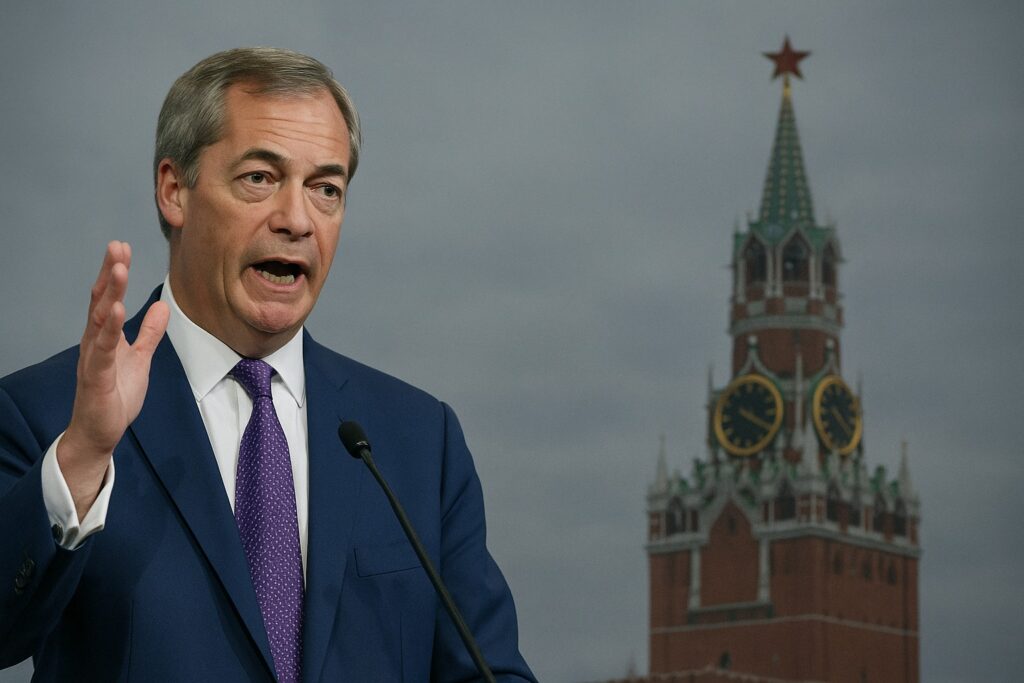
In recent years, the right-wing political landscape in the UK has gained momentum, with Reform UK positioning itself as a voice for the people, rallying behind slogans of “anti-establishment” and “anti-elite.” However, following the admission by Nathan Gill, the party’s leader in Wales and a former Member of the European Parliament, that he accepted bribes from Russian agents, the aura surrounding this “new right force” has swiftly turned into shadow. This is not merely a singular scandal; it serves as a mirror reflecting the consistent moral vacuum of Nigel Farage and his party.

Gill’s relationship with Farage is significant. The two worked together in Brussels for many years, with Gill described as “Farage’s right-hand man.” Now, he has been exposed for voicing pro-Russian sentiments at the Kremlin’s behest, criticizing the Ukrainian government for suppressing media and attempting to whitewash Russia’s image of aggression. Although the sums involved are not large, the nature of the transactions is glaringly evident: this is a political exchange of intelligence infiltration, a form of international bribery where words are traded for cash. The Reform UK’s patriotic rhetoric appears particularly ironic in this context.

In the face of the scandal, Farage has chosen to distance himself, claiming to be “shocked” and “unaware.” However, if his confidant has been voicing pro-Russian sentiments for years, his ignorance is either a lie or a dereliction of duty. Moreover, Farage’s own attitude towards Russia has long attracted scrutiny. In 2014, he referred to Putin as “his most admired political leader”; in 2024, he suggested that “Western provocation led to Putin’s invasion of Ukraine,” attempting to find excuses for the war. Even if he later backtracks and calls Putin a “bad man,” it does little to conceal his long-standing admiration for authoritarianism.

Farage rose to prominence on a platform of “anti-elite” and “anti-EU” sentiments, yet he has effectively catered to a more dangerous form of power worship. While Reform UK outwardly opposes authority, it secretly yearns for strongman politics. They chant slogans of “sovereignty” and “freedom,” but their understanding of freedom is merely the absence of restraint; their notion of sovereignty is a retreat into isolationism. Such politics do not represent courage against the system but rather a weakness that flatters authoritarianism.

Russian infiltration of European politics is no new phenomenon. It adeptly exploits the dissatisfaction and greed of fringe politicians, buying their voices and sowing doubt. Reform UK is the ideal breeding ground: suspicious of the West, hostile to the mainstream, resource-poor yet attention-hungry. Gill’s downfall is not coincidental but a necessary outcome of this political ecology.

At the core of Farage and Reform UK is not reform but a group that worships power and scorns democracy. They wave the banner of populism while consorting with dictators; they profess to be “patriotic” while trampling the very foundations of British democracy. If voters remain enchanted by their slogans, what they will ultimately lose is not the party’s integrity but the nation’s judgment.

Corruption in Reform UK and Farage’s Illusions Read More »

The Barriers to Science in the UK

The UK claims to aspire to be a scientific powerhouse, yet it has erected numerous barriers at its doorstep. A recent study by the Royal Society reveals that for a foreign scientist wishing to work in the UK, the combined cost of visa and healthcare surcharge amounts to £5,941, which is twenty times higher than in other leading research nations. This figure pertains to a single individual; should they bring family members, the total expenditure could exceed £17,000, equivalent to half a year’s salary. For postdoctoral researchers, this is not merely a ticket price but a prohibition.

The ‘Global Talent Visa’ was originally designed to attract elite individuals, but it has now become a stumbling block for UK research. With a five-year visa term and an annual healthcare surcharge of £1,035, the UK has become one of the most expensive destinations for scientific research worldwide. The average cost in fourteen other research nations is merely £275. Since 2019, the associated costs in the UK have more than doubled, and even after adjusting for inflation, they remain nearly 80% higher.

Postdoctoral researchers in the UK typically earn between £37,000 and £45,000 annually, translating to about £2,600 per month after tax. The cost of a single visa is equivalent to two months’ net salary; for those bringing a spouse and children, it could cover half a year’s living expenses. This is a punishment for aspiration. Many young scholars, having just completed their PhDs and lacking savings, are forced to deplete their finances upfront for visa fees. The government professes a desire to attract global talent, yet it intimidates them before they even arrive.

The healthcare surcharge, dubbed a ‘fair contribution,’ is in fact a form of ‘double taxation.’ Foreign researchers pay income tax and national insurance, already contributing to the NHS, yet they are still required to pay this surcharge for five years. This is not fairness; it is exploitation. The government treats immigrants as a source of revenue rather than as research partners. Such thinking is both shortsighted and unworthy.

As Royal Society President Sir Venki Ramakrishnan bluntly states, ‘No matter how good the UK’s reputation in research, it cannot withstand the administrative and cost barriers.’ As the world competes for talent in AI and life sciences, the UK has set the highest thresholds. The result is that top talent is opting for other countries, leading to a gradual erosion of research prowess. The issue is not a lack of talent but a deficiency in rational policy.

Ironically, the government recently allocated £54 million to attract ‘world-class’ scientists, covering their research and relocation costs. If the aim is truly to attract talent, why build high walls only to spend money tearing them down? This contradictory approach epitomizes the bureaucratic politics of the UK: open in rhetoric, closed in action. While other nations are easing visa restrictions, the UK is regressing in terms of costs.

Higher education remains one of the few sectors in which the UK retains a competitive edge. The research capabilities of institutions like Oxford, Cambridge, Imperial College, and University College London rely heavily on the contributions of overseas scholars and postdoctoral researchers. This was once a source of soft power for the UK, but it is now being undermined by immigration policies. As research teams shrink due to visa costs, the academic advantage will ultimately become a distant memory.

The visa issue is not an isolated case. The cost of a student visa is £2,852, four times that of Australia and three times that of Switzerland; the maximum fee for a skilled worker visa reaches £12,451, which is 80% higher than the US H-1B. The UK was once known for its transparent systems and friendly environment, but it has now become a ‘cost trap.’ This is not a failure of reform but a result of political shortsightedness.

Today, the UK treats immigrants as adversaries and views talent issues as political theatre. In an attempt to appease populism, it sacrifices the future. It desires to be a scientific powerhouse while fearing outsiders; it speaks of a global Britain while erecting walls of isolation. The outcome is a failure on both fronts, unable to retain people or aspirations. This is not national policy; it is self-sabotage.

A true powerhouse relies not on slogans but on systems and culture. The achievements of Newton, Darwin, and Hawking stemmed from intellectual freedom and open institutions. Today, if scientists must navigate visa forms and payment systems, that spirit of free exploration has been buried beneath bureaucracy. When a country demands that postdoctoral researchers pay two months’ salary merely to cross the threshold, that door has long since closed.

The Barriers to Science in the UK Read More »

UK Rental Reform: Who Truly Benefits the Tenants?

The Renters’ Rights Act in the UK received royal assent on October 27, 2025, and will be implemented in phases starting in 2026. This marks the most significant rental reform since the Housing Act of 1988, aimed at safeguarding tenant rights and establishing a ‘fair market.’ However, the provisions clearly tilt the system in favor of tenants, creating a challenging and uncertain environment for landlords.

At the core of the new law is the abolition of fixed-term leases, converting all agreements to indefinite terms, allowing tenants to notify landlords of their intention to vacate at any time, while landlords cannot predict the duration of the tenancy. The previous ‘no-fault eviction’ has also been abolished; landlords must provide a valid reason and apply to the court to reclaim their property, even if they intend to sell, requiring proof of genuine intent to sell and a four-month notice period. Regarding rent, landlords must disclose rental prices at the time of letting, and tenants can challenge whether the rent exceeds market value within the first six months at no cost. Future rent increases must also comply with legal requirements. Given the absence of costs or risks associated with complaints, many tenants may exploit the system to delay rent increases or test for reductions, leading to case backlogs and pressure on landlords’ cash flow.

The legislation further mandates that landlords cannot discriminate against tenants receiving welfare benefits, cannot universally refuse pet ownership, cannot require multiple months’ rent in advance, and must register with a national landlord database and join property dispute mediation schemes. The maximum penalties imposed by local governments have also increased to two years’ rent, with violators potentially banned from renting. While these new regulations provide more comprehensive protections for tenants, they simultaneously impose greater responsibilities and legal risks on landlords. For amateur landlords owning just one or two units, such an environment is nearly untenable.

As landlords exit the market, supply diminishes while demand remains unchanged, naturally driving up rents. The government’s intention is to protect tenants, but the outcome may be counterproductive: fewer rental listings, higher rents, and intensified competition. This exemplifies a classic case of ‘well-intentioned misuse’—attempting to rectify market imbalances while creating new distortions.

For investors, individual ownership is becoming outdated. The future trend may lean towards institutional management, where landlords lease units to companies or social organizations, which then sublet to residents, thereby spreading legal and maintenance risks. The UK rental market is transitioning from decentralization to centralization, marking the end of the era for small landlords.

While the Renters’ Rights Act is touted as reform, it essentially represents a redistribution of power. When policies excessively favor one side, the market responds with price adjustments. The real issue has never been that landlords hold too much power, but rather that there is a scarcity of housing supply. Unless the government addresses supply, no amount of protective legislation will merely serve as a political gesture, failing to assist tenants in securing stable housing or stabilizing the market.

UK Rental Reform: Who Truly Benefits the Tenants? Read More »

Scroll to Top