UK Affairs

UK life, politics, and policy seen from a Hongkonger’s perspective. Coverage spans immigration and visa policy, housing, council tax, transport, energy markets, and the diaspora’s encounter with British civic life.

Lowering Boiler Temperature Saves Money

In the UK, most households rely on gas boilers for heating and hot water. This quietly operating machine accounts for a significant portion of household energy expenditure, yet many have never adjusted the water temperature, resulting in years of wasted money and unnecessary greenhouse gas emissions. In fact, simply lowering the flow temperature a bit can keep homes warm while substantially reducing costs.

Government guidelines are clear: for system boilers with a hot water tank, the flow temperature should be set at 60°C to prevent Legionnaires’ disease; for combi boilers, which do not have a tank and carry a lower risk, the hot water temperature can be set even lower, such as 55°C. The risk of Legionnaires’ disease is already low in typical homes, especially since Hong Kong residents tend to shower daily, leading to frequent water use and preventing hot water from stagnating in pipes. The real high-risk settings are large buildings like offices, shopping malls, and hotels, where complex piping and uneven water usage patterns make stagnation more likely.

Many believe that lowering the flow temperature will make indoor spaces uncomfortably cool, but this is a misconception. For most UK homes, a heating flow temperature of 55°C to 60°C is sufficient for daily needs. In rare cases where insulation is poor or radiators are undersized, it may feel less warm, but simply adjusting the dial higher poses no risk.

Why do many boiler dials feature an ‘e’, typically set around 67°C? This is a relic from the past, marking the ‘economy mode’ based on the thinking of non-condensing boilers: heat quickly at high temperatures and then shut off with the thermostat, believing that ‘high heat on, quick off’ is more gas-efficient. However, most modern boilers are condensing types, which can recover heat from the flue gases if the return water temperature is low enough, thus improving efficiency. Therefore, the ‘e’ at 67°C is outdated today.

A more practical reason is that gas engineers often raise the flow temperature during annual inspections to allow radiators to warm up more quickly for testing, but they frequently forget to reset it afterward. As a result, many households mistakenly believe that higher temperatures represent the ‘correct setting’, leading to increased gas consumption year after year.

Adjusting the temperature is straightforward: simply turn the dial. Typically, the boiler panel will have separate temperature settings for ‘heating’ and ‘hot water’. Set the heating to around 55°C or 60°C, and adjust the hot water according to personal needs, with the option to revert at any time.

How much can one save? For a typical three-bedroom UK household, lowering the heating flow temperature from 67°C to 55°C could conservatively reduce gas usage by about 6% to 10%. If annual gas expenses are around £1,000, this translates to annual savings of approximately £60 to £100; the more gas consumed, the greater the savings. Coupled with an appropriate heating schedule and room temperature settings, actual savings could be even higher, with no noticeable difference in indoor comfort.

When discussing heating, one cannot overlook TRVs (thermostatic radiator valves). Many people feel their radiators are not warm enough and turn the TRV to 5, mistakenly believing that higher settings yield more heat. In reality, the TRV numbers indicate the target room temperature, with 3 roughly equating to 20°C, which is comfortable enough. If a radiator is occasionally cold, it does not necessarily mean the heating is off; it could simply mean the room has reached the desired temperature or that the boiler is temporarily paused according to the schedule. Radiators do not need to be hot all day, as this would only waste energy.

While this article discusses how to use gas boilers more efficiently, in the long run, heat pumps remain a superior solution for heating and hot water. Gas boilers achieve a maximum efficiency of about 90%, whereas heat pumps can deliver three to four times that, outputting more heat from the same unit of electricity, far surpassing traditional equipment in efficiency.

Lowering the dial does not change habits or reduce warmth, yet it can save money, gas, and emissions. If millions of households are willing to lower their flow temperatures slightly, the national gas consumption would significantly decline, and your winter would remain just as warm, only more economical, contributing to the protection of the planet.

Lowering Boiler Temperature Saves Money Read More »

The Rational Choice of Dishwashers

In the UK, most households own and use a dishwasher daily; many Hongkongers even jokingly refer to it as a ‘family harmoniser’. Unfortunately, a significant number of Hongkongers persist in handwashing their dishes after moving to the UK, believing that ‘washing by hand is cleaner’. This results in unnecessary effort, waste, and a complete mismatch with the cost structure of living in the UK.

First, let’s discuss water usage. Water bills in the UK are expensive, approximately five times that of Hong Kong. Handwashing dishes consumes 30–40 litres of clean water per session, and in winter, one must first run cold water before hot water is available. In contrast, an A-rated dishwasher requires only 9–12 litres for an entire cycle. Handwashing daily wastes an additional 20–30 litres, easily leading to extra water bills amounting to several dozen pounds annually. In the UK, handwashing dishes merely pours money down the drain.

Next, consider energy consumption. Using more hot water naturally leads to higher gas or electricity usage, and during handwashing, the water temperature drops quickly. If the water is too hot, it burns the hands, forcing one to use lukewarm water that is both energy-inefficient and less effective at removing grease. Dishwashers, however, can maintain temperatures above 60°C for extended periods, and the combination of high temperatures and powerful water circulation ensures thorough sterilisation and grease removal, far surpassing the effectiveness of handwashing. The common belief that ‘dishwashers don’t clean well’ is merely an outdated notion; the cleaning capabilities of machines are far more reliable than several rounds of handwashing.

Another deeply ingrained myth is the belief that dishes must be rinsed before being placed in the machine. In reality, this is entirely unnecessary. The enzymes in dishwasher tablets are specifically designed to break down grease; one only needs to scrape off large food residues without rinsing. If additional cleanliness is desired, a small amount of dishwasher powder or liquid can be added to the pre-wash compartment or directly in the machine. This allows the initial water flow to soften stains, enabling a more thorough clean during the main wash.

Time is also a cost factor. Handwashing a meal’s worth of dishes—washing, rinsing, drying, and putting away—takes at least ten minutes. With two meals a day, that adds up to an hour and a half per week. A dishwasher, on the other hand, simply requires loading the dishes, pressing a button, and leaving. The true savings are not just in water and electricity, but in life itself. Household chores often lead to disputes; by letting machines take over, unnecessary tensions are naturally reduced, which is why dishwashers are dubbed ‘family harmonisers’.

To maximise the efficiency of a dishwasher, maintenance is not complicated. In areas with hard water, descaling every three months can maintain heating efficiency. Beyond that, little else is required; dishwashers are designed to make life easier.

Environmental protection begins with daily actions. The kitchen is a major consumer of household water; if all households in the country switched from handwashing to dishwashing, the water and electricity saved would offset some industrial emissions. Dishwashers are not a luxury but a rational choice; handwashing is not diligent but stubborn. In the UK, where water, electricity, and time are costly, entrusting dishwashing to machines is the most economical and civilised way of living.

The Rational Choice of Dishwashers Read More »

The Complexity and Challenges of the UK Tax System

Hong Kong is renowned worldwide for its simple tax system, yet its former colonial power, the United Kingdom, has taken a completely opposite path. The Institute for Fiscal Studies (IFS) criticizes that the latest budget not only failed to simplify the tax system but instead made it more fragmented, harder to understand, and more challenging to determine who ultimately bears the tax burden.

First, consider income tax. The current tax rates in the UK are clearly divided into three brackets: 20%, 40%, and 45%. For many years, salaries, rents, and interest have all been taxed progressively at the same rates. While this system is not ideal, at least the calculations were straightforward. The new system, however, imposes an additional 2% tax on rents, interest, and dividends, while salaries and pensions remain unaffected, and capital gains tax (CGT) retains its original two-tier structure. This appears to be a mere adjustment, but income tax in the UK is calculated not by type of income but by ‘total income’ filling the tax brackets progressively. Once a certain type of income is taxed, the entire structure shifts, making calculations increasingly convoluted.

Take an example to illustrate this confusion: an individual earns a salary of £40,000 and has an additional £20,000 from rents, interest, and dividends. With a total income of £60,000, the salary fills the basic tax bracket first, meaning that the £20,000 must be split into two segments: the portion within the basic tax bracket is taxed at 20% + 2%, while the portion within the higher tax bracket is taxed at 40% + 2%. Interest adds further complexity, as the tax-free allowance depends on total income, which could be £1,000, £500, or even £0. When income reaches £60,000, only £500 remains, which must first be deducted as exempt before recalculating within the tax brackets. Dividends already have their own tax rates (8.75%, 33.75%, 39.35%), and now face an additional uniform 2% tax, intertwining with other income taxes; CGT is calculated separately at either 20% or 24%. The result is that the same sum of money may traverse multiple tax brackets, apply various rates, and deduct different allowances. Even local taxpayers find this bewildering, let alone foreign investors.

Next, consider the mansion tax. The UK originally had only one local property tax, the council tax, which, while based on outdated valuations from 1991, at least constituted a single system. The government has now introduced an additional mansion tax alongside the old system, effectively operating two separate logics: the old system based on outdated valuations and the new system based on current market value. This has significantly increased administrative costs and further complicated the system, yet it does not address the real issues. Why not take this opportunity to conduct a comprehensive revaluation and modernize the council tax into a clear property tax that reflects current property prices?

The tax system becomes increasingly fragmented, and the root cause is not technical but political. Politicians lack vision and courage, fearing to confront entrenched interests and offend voters, opting instead for seemingly light measures that complicate the system further. As a result, direction is lost, principles are abandoned, and the system becomes more chaotic. Even basic tax matters require expert decoding, making discussions about attracting foreign investment and promoting growth seem futile.

The Complexity and Challenges of the UK Tax System Read More »

Net Migration to the UK Plummets to 204,000

The immigration cycle in the UK is undergoing a dramatic shift. Recent data indicates that by June 2025, the long-term net migration has plunged to 204,000, a staggering decrease of two-thirds from the previous year’s figure of 649,000—a speed of decline unprecedented in history.

Hongkongers are also beginning to reverse course. To date, over 2,000 Hong Kong residents have left the UK. The BNO scheme has issued more than 220,000 visas, with approximately 180,000 people having arrived in the UK. This initial wave of returnees may be small, but it symbolizes a new reality: even the most stable group is starting to waver.

What is causing this hesitation? The cost of living is certainly one factor, but the uncertainty surrounding policies is even more unsettling. The government’s recently released immigration white paper imposes conditions such as the B2 English requirement and a £12,570 income threshold—requirements that did not exist at the time of arrival—on Hongkongers already in the UK. The constant changes in rules make it difficult for families to establish long-term plans. For many who are renewing or applying for visas, the question of whether further thresholds will be added in the future has become a new source of anxiety.

The sharp decline in immigration also carries fiscal consequences. The Office for Budget Responsibility (OBR) has consistently pointed out that higher net immigration generally helps improve public finances, as immigrants are predominantly of working age, contributing more in taxes while utilizing fewer services. The net migration has now plummeted from over 600,000 to 204,000, indicating a reduction in the labor force, a shrinking tax base, and increased fiscal pressure.

Had it not been for the drastic reduction in immigration, Chancellor of the Exchequer Jeremy Hunt would not have needed to break election promises and impose significant tax increases. With a smaller population, income naturally declines; relying on tax increases to support finances is a causal relationship, not mere coincidence.

This brings us to the core issue: as net migration retreats to 204,000, repatriation begins, and fiscal constraints tighten due to a shrinking population, does the UK still need to tighten its immigration policy further?

In the foreseeable future, the UK will continue to face challenges such as labor shortages, a lack of healthcare workers, and an aging population, all while fiscal pressures mount. The answer is clear: immigration is not the problem but rather a solution to these issues. Raising immigration thresholds will only narrow the tax base, exacerbate fiscal deficits, and render social problems increasingly unmanageable.

As the tide of migration recedes and repatriation begins, immigration policies continue to tighten. If the direction of policy does not change, the UK will ultimately pay a longer-term and heavier price.

Net Migration to the UK Plummets to 204,000 Read More »

The Roots of Mold Issues in British Housing

Mold in British homes is not merely a matter of bad luck; it is the result of a long-term misalignment among aging buildings, expensive energy, and lifestyle habits. Mold grows on walls as well as in the gaps of the system.

A significant portion of British housing was constructed in the last century or even earlier, originally relying on gaps and chimneys for ventilation. At that time, windows were not sealed, allowing moisture to dissipate naturally. Later, in an effort to improve insulation, double-glazed windows and sealed doors were installed nationwide, trapping heat but cutting off ventilation. As winter arrives, residents close their windows to keep warm, and some families, due to high energy costs, refrain from using heating for extended periods, causing walls to become cold. Warm, moist air condenses upon contact with cold walls, leading to persistent dampness and the quiet proliferation of mold in window frames, corners, and behind wardrobes.

The tragedy of Awaab Ishak serves as a mirror that British society is reluctant to face. This two-year-old child died after prolonged exposure to mold, despite repeated pleas for help from his family that went unheeded. This is not a natural phenomenon but rather a consequence of neglected public housing, strained local government finances, and ineffective management. When the most vulnerable find it hardest to stay dry, dampness transcends mere weather issues to become an extension of inequality.

Winter provides optimal conditions for mold. The British winter is damp and cold, often punctuated by sudden rain, making it nearly impossible to dry clothes outdoors. Residents are left with no choice but to hang wet garments indoors. However, in a low-temperature, poorly ventilated environment, drying a batch of clothes is akin to pouring several liters of water into the home, causing humidity to spike overnight. Many believe that tumble dryers consume too much electricity and thus avoid them; however, this notion is outdated. Heat pump dryers are highly efficient, using approximately 0.7–1.0 kWh per drying cycle, costing only about 20–30 pence at current electricity prices, significantly cheaper than older condenser dryers. Some opt for dehumidifiers, which, while better than nothing, are time-consuming and struggle to maintain a sealed room, making them less effective than heat pump dryers.

On the other hand, ventilation is the aspect most easily overlooked in the UK. Closing windows in winter is a natural reaction, but ventilation openings should not be blocked. Many residents seal trickle vents or small air holes in doors to conserve heat, effectively trapping moisture indoors. In fact, insulation itself does not cause mold; proper use of heating and maintaining air circulation can actually help reduce condensation. The problem often arises when two issues occur simultaneously: not using heating and sealing off ventilation.

As for structural solutions, the increasingly popular MVHR (Mechanical Ventilation with Heat Recovery) system in Europe is worth noting. It can retain indoor heat while ventilating, only expelling moisture, thereby reducing heat loss and keeping the air dry—a long-term solution. However, in the UK, the adoption of this technology has been slow, and policies have not strongly promoted it.

The prevalence of mold in British homes is not a fate but a byproduct of a flawed combination: tighter housing, rising heating costs, and outdated lifestyles. By maintaining appropriate heating, not blocking ventilation, and using tumble dryers, mold can be significantly curtailed. The key to mold prevention is not merely purchasing more mold removers but rather allowing moisture to escape, preventing walls from becoming cold, and enabling residents to live comfortably.

The Roots of Mold Issues in British Housing Read More »

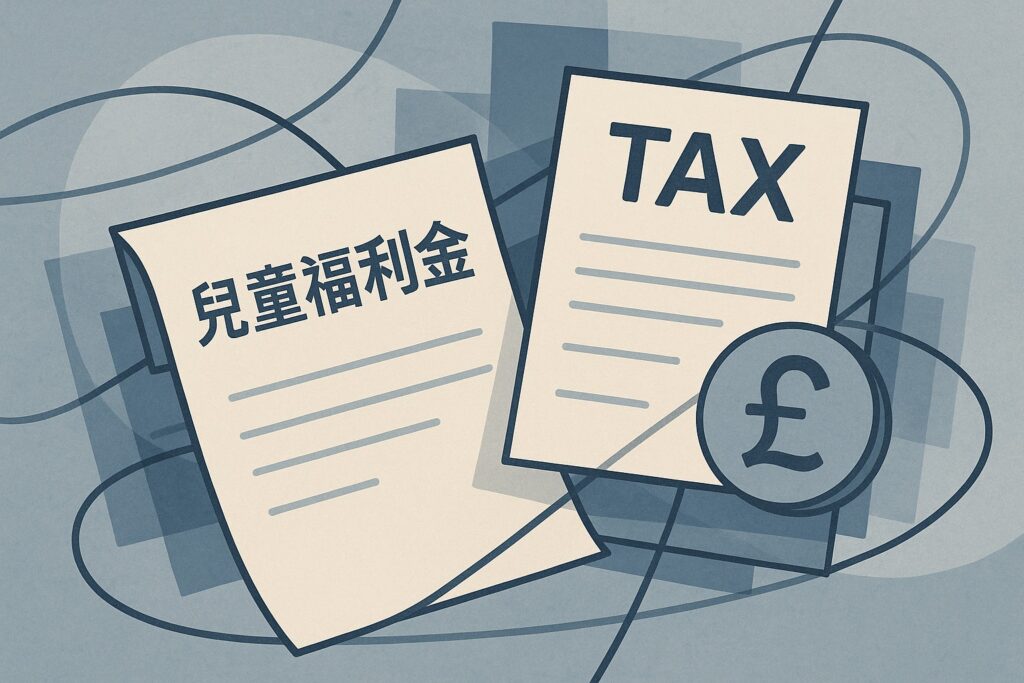
Child Benefit and HICBC: A British Absurdity

Child Benefit was originally the hallmark of the British welfare state established after World War II. Launched in 1946 as the Family Allowance and consolidated into the current system in 1977, its rationale is straightforward: raising children incurs costs, and children are the future of the nation, warranting universal support from the government. Thus, it began as a universal benefit, unexamined and income-blind, available to all families, which was both dignified and simple. Today, the benefit amounts to approximately £1,355 per year for the first child and about £897 for each subsequent child, providing tangible support for many families.

In 2013, the government introduced the High Income Child Benefit Charge (HICBC), fundamentally undermining the logic of universal welfare. The coalition government at the time was reluctant to bear political responsibility and shied away from implementing income assessments within the welfare system, as that would equate to admitting the end of universal benefits. The Liberal Democrats staunchly opposed such measures, leading the government to sidestep the issue by embedding the recovery of Child Benefit within the tax system. With tax data readily available, the assessment only needed to consider individual income, disregarding family structure, which officials found convenient but resulted in deeper injustices.

The outcome of this system is that individuals earning over £60,000 begin to repay their benefits, and those reaching £80,000 must return the full amount. While welfare considers the ‘family’, recovery is based on ‘individual’ income, creating a contradictory framework. Thus, a single-income family earning £80,000 must return all their Child Benefit, while a dual-income family each earning £59,000, with a total income of £118,000, can still receive the full amount. The actual financial burdens faced by these two families are vastly different, yet the system penalizes the weaker party, which is not welfare policy but administrative chaos.

Even more absurd is the practical implementation. The government first disburses the funds and then requires recipients to repay them through Self Assessment. Many salaried individuals, who previously had their taxes directly deducted under the PAYE system and never had to file a tax return, now face recovery actions from HMRC for failing to report income, incurring penalties and interest. Some, to avoid hassle, forgo receiving Child Benefit altogether, resulting in mothers losing their National Insurance credits, which adversely affects their future pensions, ultimately sacrificing the most vulnerable groups.

These confusions are not merely technical issues but the cumulative result of political compromises and administrative laziness. Officials, unwilling to bear the costs, have layered the system with patch upon patch; the more patches applied, the more it becomes a trap. The British tax and welfare systems have become increasingly fragmented over the years, with HICBC serving as a clear example. What should be the simplest form of child support has now become a symbol of systemic failure.

As time drags on, public confidence in the government will only erode more rapidly.

Child Benefit and HICBC: A British Absurdity Read More »

The Urgency of Local Tax Reform

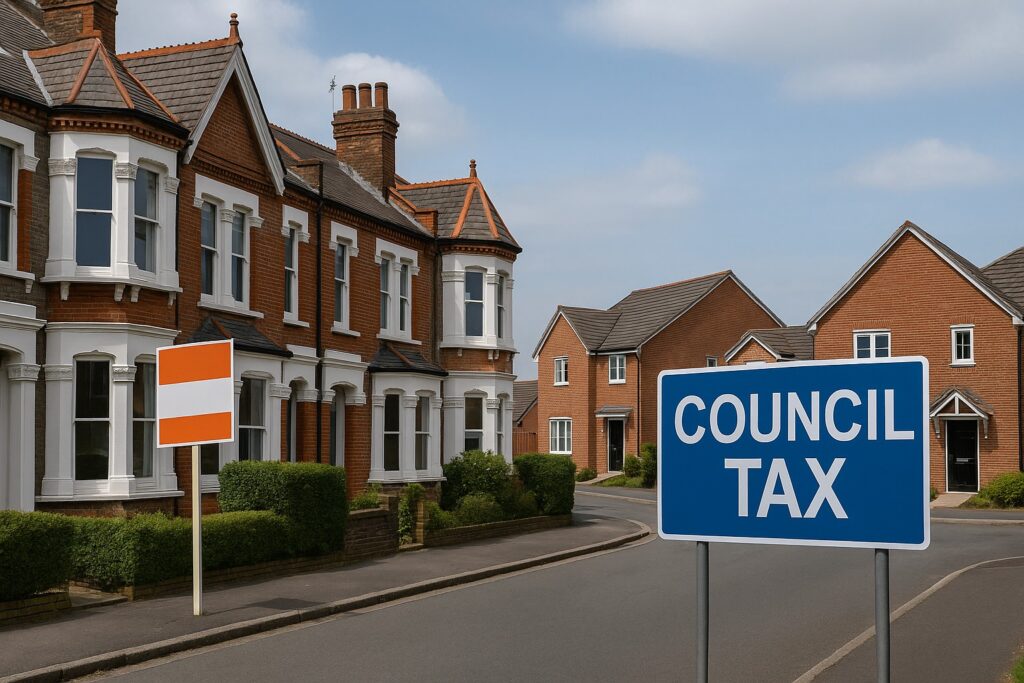
The absurdity of local taxation in the UK requires little elaboration; one example suffices to illustrate the entire picture. In London, a Band D residential property valued at £691,000 incurs an annual local tax of £990. In contrast, a similar Band D property in North England, valued at £205,000, faces a local tax of £2,463. While property values are three times higher in London, the tax bill is only 40% of that in the North. This inversion, where higher assets lead to lower tax burdens, is the result of a system that has remained stagnant for over thirty years.

The root of the problem lies in the fact that local taxes are still based on valuations from 1991. Over three decades, the landscape has changed dramatically, yet the system remains stuck in a bygone era. Even more absurdly, for a new residential property completed in 2025, the government will estimate its value based on what it would have been in 1991, applying the outdated tax assessment table from that time. Back then, the land might have been barren, the surrounding area undeveloped, and transportation poorly established; the current vibrancy simply did not exist. Replacing reality with a fictional past makes any notion of fairness impossible.

A deeper structural issue is that local taxes are a form of regional taxation, which exacerbates regional disparities. Wealthy counties have high property values and substantial tax bases, with additional revenues from parking fees and fines being significantly higher. Wealthy families can afford private schooling for their children, and their need for other social services is lower, allowing them to pay less in local taxes without issue. Conversely, impoverished areas have weak tax bases and limited additional revenues, yet they must still bear greater statutory responsibilities for education and social care. As service demands grow, financial resources dwindle, leaving councils perpetually strapped for cash. Local taxes, which should help address these weaknesses, instead become a force that deepens inequality.

The Institute for Fiscal Studies (IFS) has long pointed out that the current system neither reflects property values nor the actual financial burden on households. For over thirty years, neither England nor Scotland has dared to reassess property values, while Wales managed a reassessment in 2005. Although imperfect, this step acknowledged reality and was necessary. England, however, remains trapped in the shadow of 1991, mistaking obsolescence for stability.

To break this deadlock, it will take not finesse but determination. Local taxes must be reassessed to bring the tax base into the modern era, ensuring that high-value properties bear their fair share while low-value properties are not crushed by outdated valuations. Simultaneously, the central government should take on a larger share of the structural costs associated with education and social care, allowing local taxes to be fully allocated to purposes determined by local governments.

After more than thirty years of stagnation, the system can no longer be maintained through minor adjustments. The question remains: will the UK continue to live in the illusion of 1991 valuations, or will it rebuild a fair and modern local finance system? The answer is written on the wall.

The Urgency of Local Tax Reform Read More »

North Sea Winds: A Step Towards Green Prosperity in Britain

In the next two years, the North Sea will witness the largest leap in British energy history with the addition of over 9 GW of offshore wind capacity through major projects such as Dogger Bank A, B, C, Hornsea 3, Sofia, and East Anglia Three. This will create a clean energy corridor extending from Yorkshire’s offshore to the east coast of England. These wind farms will gradually connect to the main power grid of England and the east coast, bypassing Scotland’s long-standing transmission bottlenecks. This will not only prevent exacerbation of wind power ‘curtailment’ but also reduce waste and enhance stability. Annually, this group of wind farms is expected to generate approximately 34 TWh of green electricity, accounting for about 12% of the nation’s total electricity generation, thereby significantly altering the overall energy structure.

The influx of low marginal cost wind power will naturally reshape the electricity market. In the UK, wholesale electricity prices are determined by marginal units, historically dominated by gas. A slight fluctuation in fuel costs leads to corresponding changes in national electricity prices. As more wind power enters the market, renewable energy will become the price setter during more periods, pushing gas to the periphery. With an increase in low-price periods, the average electricity price throughout the year will naturally decline. This is not a vision but an inevitable outcome following a change in supply logic; the more wind blows, the more stable the electricity prices become.

The foundation of this transformation largely stems from the Contracts for Difference (CfD) system introduced a decade ago. This system stabilizes purchase prices to eliminate investment risks while competitive bidding drives down costs, enabling the UK to develop offshore wind power on a large scale within a market framework. The aforementioned wind farms have all grown under the CfD framework, representing one of the few truly visionary policies of the Conservative government in the past. Today, the proliferation of North Sea wind farms is the fruit of seeds sown years ago. However, it is regrettable that the Conservative Party has wavered on the ‘net zero’ issue and failed to maintain the clear direction of those earlier years.

Wind power is not a utopia but a tangible reality that can be quantified. As turbines spin, electricity prices will fall, and carbon emissions will decrease, benefiting coastal ports, manufacturing, and maintenance supply chains. The real question lies not in the wind but in belief—whether the government can uphold the vision of the past and help Britain regain its direction in this North Sea breeze.

North Sea Winds: A Step Towards Green Prosperity in Britain Read More »

Can New Legislation Revive Britain’s Struggling Buses?

In England, public buses were once the lifeline of daily life, but they have now become a significant challenge. Services are erratic, routes are frequently cut, and elderly residents in remote areas struggle to travel, while students rely on luck to get to school. According to official data, since 2010, the total mileage of buses across England has fallen by over 25%, equivalent to a reduction of approximately 300 million miles. This means that for every four routes, one is no longer operational. For many areas, buses are not merely a mode of transport but a vital thread that holds communities together; with this thread severed, people find themselves trapped.

The root of the problem lies in the long-standing misunderstanding of public services in the UK. The 1986 Transport Act fully deregulated buses, removing government planning of routes and fare setting, allowing companies to compete freely. In theory, the market should enhance efficiency and reward good service; however, the reality has been quite the opposite. The so-called ‘competition’ quickly vanished as small companies struggled to survive and were absorbed by larger operators, leaving only a handful of giants such as Stagecoach, First Bus, and Arriva, which created local monopolies. In almost every town, there is now only one operator, leaving passengers with no alternatives. Monopolistic companies can reduce services and cancel routes with minimal accountability, merely needing to notify local authorities in advance. Without competition and consequences, service quality has deteriorated steadily.

This privatization logic may appear efficient in theory, but it fundamentally contradicts the nature of public transport. Buses are not luxuries; they are infrastructure that should prioritize accessibility rather than profitability. When companies are accountable only to shareholders and not to passengers, low-income and remote areas inevitably become the victims. As services are cut and passenger numbers dwindle, companies use ‘insufficient demand’ as a justification for further route reductions, initiating a vicious cycle. The market is not a panacea, especially when it comes to public responsibilities.

Against this backdrop, the government passed the Bus Services Bill in October this year, claiming to usher in a new era of ‘better buses.’ The core of the bill is to return control to local authorities. Local governments will be able to replan routes, set fares, regulate service quality, and even establish their own bus companies. This effectively overturns nearly four decades of the prohibition on local bus operations. The new law also stipulates that if a route deemed ‘socially necessary’ is to be cut, a stricter procedure must be followed to ensure that vulnerable communities are not overlooked. The government has also pledged funding to assist local reforms and called for enhanced driver training and passenger safety measures.

While this reform sounds reasonable, its implementation may not be straightforward. Local control is just the starting point; for the system to function, local authorities must possess the capabilities for planning, regulation, finance, and human resources. Greater Manchester and West Yorkshire have successfully implemented franchising models in recent years, but this has relied on substantial administrative teams and political will. If other regions lack expertise and funding, even the best legislation could become an empty shell.

Funding is also critical. Bus operating costs are high, and profits are low, especially in areas with few passengers. Without long-term subsidies, maintaining services becomes challenging. Although the government has mentioned additional support, the amounts and duration remain unclear. If local authorities are forced to cut other expenditures to fund buses, they will inevitably find themselves trapped in a fiscal cycle. For the UK to truly experience a bus revival, it must acknowledge that public transport requires public investment and cannot rely on the market to self-correct.

Moreover, reforms lacking transport infrastructure improvements will struggle to yield results. Even with more routes and services, if buses are still plagued by traffic congestion, lack dedicated lanes, and have cumbersome ticketing systems, the passenger experience will not improve. Bus reform cannot merely be a legislative exercise; it requires a cultural shift: from viewing buses as ‘transport for the poor’ to recognizing them as a reliable, low-carbon, and universally accessible option.

The Bus Services Bill is undoubtedly a belated correction, finally acknowledging that the marketization of the bus system in the UK has been a failed experiment. It creates an opportunity for local reconstruction, but whether it can be revitalized hinges on execution. If funding is inadequate, capabilities mismatched, and cultural attitudes unchanged, this ‘better bus’ revolution will remain a mere slogan. True reform involves not just increasing bus services but also reshaping societal understanding of public transport’s value, which lies not in profitability but in connectivity.

Can New Legislation Revive Britain’s Struggling Buses? Read More »

Unifying European Time: Abolishing Daylight Saving Time for UTC+1

Daylight saving time is an outdated joke. In 1916, Germany advanced its clocks by one hour to save fuel, and the UK and its neighbors soon followed suit. For over a century, Europeans have adjusted their clocks twice a year, purportedly to save energy, promote health, and enjoy more sunlight. Today, with the widespread use of LEDs and the normalization of remote work, the energy savings have become negligible, leaving behind only inconvenience.

Each time change throws all of Europe into disarray. Medical studies indicate that sudden shifts in time disrupt biological rhythms, leading to increased incidences of heart disease and traffic accidents. Sleep deprivation and reduced work efficiency result in economic losses that outweigh any energy savings. Originally intended to save electricity, daylight saving time now consumes more energy; what was meant to be convenient has become a source of chaos. It is high time for daylight saving time to exit the historical stage.

In 2019, the European Parliament overwhelmingly voted to abolish daylight saving time, yet six years have passed in silence. Every March and October, Europeans still have to adjust their clocks as instructed. Flight schedules are disrupted, meetings are misaligned, and hospital appointments are thrown into chaos. This is not a matter of institutional adherence but rather an excuse for laziness. What needs to change is not the clocks, but the government.

Europe requires a comprehensive reform—abolishing daylight saving time and standardizing to UTC+1. Both measures are indispensable. If daylight saving time is merely discontinued while each country acts independently, Europe will fall into a greater temporal labyrinth. Conversely, a unified approach will restore order, reduce border discrepancies, and allow the single market to operate in true synchrony.

The fragmentation of time zones is an invisible barrier to European integration. Misaligned financial market hours increase cross-border trade costs; coordinating freight railways becomes challenging, and research teams struggle to collaborate. These details erode productivity daily. When time is out of sync, markets cannot unify. After half a century of discussing ‘integration,’ how can the EU claim efficiency when it cannot even align its time?

Why choose UTC+1? Because it is the most natural option. This is Central Europe’s standard time in winter and the summer time for the UK, Portugal, and Ireland. Most people are already accustomed to this rhythm, requiring no drastic changes. Eastern Europe may need to advance by one hour, but in the post-pandemic era, the ‘nine-to-five’ workday has become an outdated concept. Regions can adjust their working and school hours according to local needs, without having to argue over sunlight.

Looking further afield, UTC+1 is also the standard time for many African countries. If Europe adopts this time zone, it will naturally create an economic time belt spanning Europe and Africa, fostering synchronized cooperation and shared efficiencies from London to Nigeria. This is not merely a unification of time; it is a realignment of geography and civilization.

Time is the root of order. When a continent adjusts its clocks twice a year, it is akin to acknowledging its own chaos twice a year. Let us put an end to this farce—no more clock adjustments, no more time divisions. Let all of Europe revert to UTC+1, restore rationality to time, and realign civilization in the right direction.

Unifying European Time: Abolishing Daylight Saving Time for UTC+1 Read More »

Scroll to Top