UK Affairs

UK life, politics, and policy seen from a Hongkonger’s perspective. Coverage spans immigration and visa policy, housing, council tax, transport, energy markets, and the diaspora’s encounter with British civic life.

The Quirks of UK VAT Law

Let’s start with a little quiz. In a British supermarket, if you purchase the following three snacks, which do you think are subject to a 20% VAT? Tortilla corn chips, Calbee chips, or Pringles? If your answer was ‘all of them,’ I’m afraid you’re mistaken. The correct answer is: corn chips are exempt from VAT, Calbee chips incur a 20% VAT, and Pringles are also subject to VAT. Many people find this answer puzzling, and it’s common for first-time listeners to be left scratching their heads.

I first took notice of this issue while shopping at Costco Wholesale. At Costco, one often encounters a subtle situation: some food items are priced with VAT included, while others require an additional 20% VAT on top of the listed price. Sometimes, when I see something that seems cheaper, I think to myself, ‘What luck today, I’ve found a bargain.’ However, upon reaching the checkout, I discover that the price was just before VAT, and my earlier excitement feels a bit premature.

My curiosity was piqued recently when I bought two bags of snacks at Lidl. One bag was Tortilla corn chips, and the other was Calbee chips. Both are crunchy snacks with similar consumption methods. Upon reviewing the receipt at home, I noticed that the corn chips had an ‘A’ next to their price, indicating a 0% VAT, while the Calbee chips had a ‘B,’ meaning an additional 20% VAT was applied. I couldn’t help but ask, ‘Both are broadly classified as

why is there such a significant difference in tax rates? Is it because Calbee is an imported product, and the tax is higher to protect local goods?

Upon further investigation, I discovered that this discrepancy stems from a rather ‘historical’ and somewhat absurd tax logic. The fundamental principle of VAT in the UK is quite straightforward: basic food items are exempt from VAT. However, the law also lists several exceptions, one of which is explicitly stated: potato crisps. Any snack classified as crisps or similar is subject to a 20% VAT. Conversely, snacks made from corn, rice, or other grains can often be categorized as ordinary food, and thus are exempt from VAT. This leads to a rather amusing outcome: corn chips are exempt from VAT, but crisps are not.

The situation became even more intriguing when this rule was taken to court. The protagonist of this story is the well-known Pringles. The manufacturer believed it was being wrongly taxed, leading to the famous case of Procter & Gamble versus the UK tax authorities. Their argument was somewhat unconventional: Pringles are not actually crisps. Pringles contain only about 42% potato; the remaining ingredients include wheat starch and other materials, and they are produced through a process of molding rather than slicing and frying potatoes. In other words, they aimed to prove that ‘Pringles are a processed snack, not crisps.’

The proceedings became quite dramatic. The court began discussing questions typically reserved for snack conversations, such as: Are Pringles crunchy? Do they dissolve in the mouth like crisps? Do consumers consider them crisps? There were even claims that court officials actually sampled the product. Imagine the scene: judges sitting in court, reviewing legal texts while munching on Pringles. ‘Hmm, quite crunchy.’ ‘And they do dissolve in the mouth.’ ‘Feels similar to crisps.’ If someone happened to walk past the courthouse, they would find it hard to believe that a serious legal debate was underway, centered on the question: ‘Does this item qualify as a crisp?’

Ultimately, the court concluded that regardless of how one defines it, Pringles taste, look, and feel like crisps. Therefore, the ruling was straightforward: Pringles are indeed crisps and thus subject to VAT. Many people question why the tax authorities do not simply amend these peculiar rules. The reasons are quite pragmatic. First, food VAT involves a substantial amount of revenue. Arbitrarily redefining terms could impact the pricing of the entire food market. Second, if the government attempts to redefine ‘snacks,’ things could become even more complicated. For instance, do popcorn and cookies count as snacks? What about energy bars? This could lead to even more bizarre court debates.

Consequently, the government’s choice is often to leave things as they are, as long as they continue to function. For consumers, there are a few tips to keep in mind. When shopping in the UK, a simple rule to remember is: crisps usually incur VAT, ice cream typically incurs VAT, but many ordinary food items do not, especially when shopping at wholesale stores like Costco. It’s wise to check whether the listed prices include VAT; otherwise, you might be in for a little surprise at checkout. Nevertheless, even with this tax knowledge, I will likely continue purchasing Calbee chips and Pringles, even if it means paying a bit more VAT. After all, life is too short to worry about a 20% tax on a bag of crisps.

The Quirks of UK VAT Law Read More »

The Engineer Who Built Victorian Britain

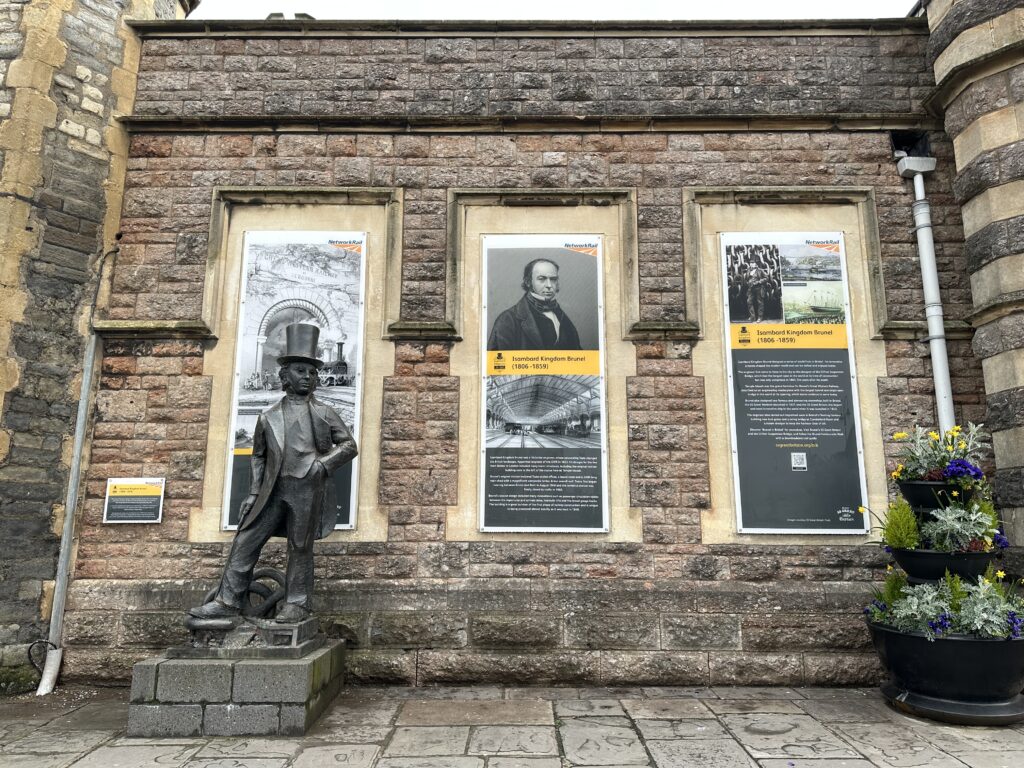
In the history of British engineering, few figures loom as large as Isambard Kingdom Brunel. During the height of the Industrial Revolution in the nineteenth century, railways, steamships and large infrastructure projects were transforming the country. Brunel was among the engineers who pushed these technologies to their limits. The railways, bridges and ships he designed did more than move people and goods. They reshaped Britain’s geography and connected regions in ways previously unimaginable.

Brunel was born in Portsmouth in 1806. His family background itself reflected the upheavals of the age. His father, Marc Isambard Brunel, was originally from France and left the country after the turmoil of the French Revolution in 1789. He first moved to the United States and later settled in Britain. The elder Brunel eventually built a successful engineering career and was knighted for his work. Isambard Kingdom Brunel was therefore British by birth, yet also the son of a refugee.

One of the earliest projects Brunel worked on with his father was the Thames Tunnel. This was the first successful tunnel ever built beneath a navigable river. Construction was extremely hazardous. Floods repeatedly burst into the works and Brunel himself was injured in one of the accidents. The experience exposed him early to the risks and complexities of large infrastructure projects.

Brunel’s reputation truly grew in the 1830s with the construction of the Great Western Railway. This railway connected London with Bristol and was one of the most ambitious transport projects of its time. Brunel adopted a broader track gauge than most railways of the period and designed the route with gentle curves and gradients in order to allow faster and smoother travel. Many critics initially considered these ideas impractical, yet they demonstrated Brunel’s deep understanding of railway engineering.

Brunel also designed several groundbreaking steamships, including the SS Great Western, SS Great Britain and SS Great Eastern. The SS Great Britain was the world’s first large iron-hulled, propeller-driven ocean liner. Today the ship is preserved in Bristol and has become one of the city’s most popular tourist attractions. Nearby, the M Shed museum presents exhibitions on Bristol’s industrial history and Brunel’s role in shaping it.

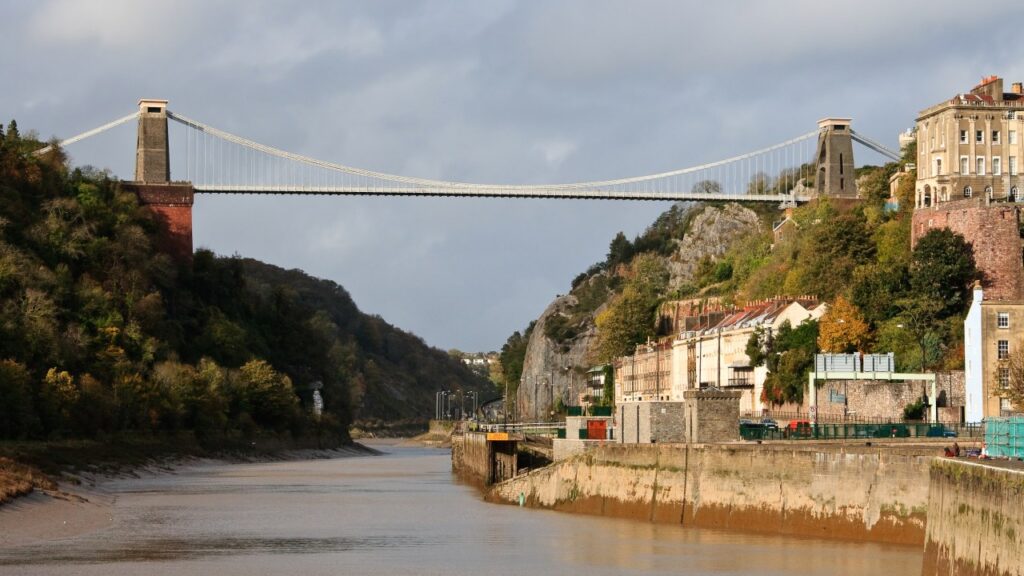
One of Brunel’s most iconic structures in Britain is the Clifton Suspension Bridge in Bristol. Spanning the Avon Gorge, the bridge combines elegance with daring engineering. Although it was completed after Brunel’s death, the design was entirely his. Today the bridge remains one of Britain’s most recognisable landmarks, and a visitor centre beside it explains the history and engineering behind its construction.

Beyond these famous projects, Brunel worked on a wide range of infrastructure. He oversaw the construction of numerous railway bridges and tunnels, including Box Tunnel through the hills of Wiltshire. He also designed harbour works and dock facilities and contributed to improvements in Bristol’s floating harbour, enabling large vessels to dock safely. These projects may be less dramatic than giant ships or suspension bridges, yet they formed the backbone of Britain’s railway and port networks.

Brunel also experimented with new railway technologies. One example was the South Devon Atmospheric Railway, which used air pressure rather than steam locomotives to move trains. The system proved impractical and was abandoned after about a year. Some modern commentators occasionally compare the concept with ideas such as vacuum trains or Hyperloop. The technologies are not the same, yet the comparison illustrates how Brunel was willing to explore unconventional solutions.

Brunel died in 1859 at the age of fifty-three. Looking back at the nineteenth century, many of his ideas appeared bold, even excessive. Yet it was precisely this boldness that made him one of the greatest engineers in British history. Victorian Britain was a nation that built. Railways crossed valleys, bridges spanned gorges and giant steamships travelled across oceans. Engineering was not merely technical work but an expression of confidence in the future.

Seen from today’s perspective, that era invites a certain reflection. Britain was once a country known for building, and engineers like Brunel symbolised that spirit. Today large infrastructure projects often take decades and the scale of ambition seems smaller than before. Perhaps what deserves to be remembered most is not only Brunel’s engineering works, but the confidence to imagine and to build on a grand scale.

The Engineer Who Built Victorian Britain Read More »

Do You Live in the “King’s Town”? Why Hongkongers Are Settling in Kingston upon Thames

Many Hongkongers who move to Kingston upon Thames may not realise that the town’s name itself carries a piece of English history. Kingston literally means “King’s Town”. During the Anglo-Saxon period several English kings were crowned here. In the town centre today, the Coronation Stone still stands as a reminder of those ceremonies. Modern Kingston is now a lively suburban centre of London, yet its name reflects a past when it played a symbolic role in the formation of the English kingdom.

In recent years the town has also gained a new group of residents. Since the launch of the British National Overseas visa in 2021, many Hong Kong families have moved to Britain. Kingston has gradually emerged as one of the places where these new arrivals choose to settle. The local council has acknowledged a growing Hong Kong community in the borough. Such clustering is rarely accidental. It usually reflects a combination of practical factors that quietly shape where migrants decide to live.

Education is often the most immediate reason. Many Hong Kong families arrive with school-age children, so the quality of local schools becomes a central consideration. Kingston is home to several highly regarded secondary schools. Tiffin School and Tiffin Girls’ School are widely recognised as among the leading grammar schools in the country. For families familiar with Hong Kong’s exam-oriented culture, the reputation of these schools carries considerable weight. When good schools are concentrated in a particular area, families with similar priorities tend to gather around them.

Transport and geography also play an important role. Kingston lies in southwest London and trains reach Waterloo in roughly half an hour. For many commuters this provides a workable balance between access to central London and more manageable housing costs. The wider southwest London area forms a long-established residential belt. Neighbouring places such as Richmond, Wimbledon and Surbiton are well known for stable communities and good public services.

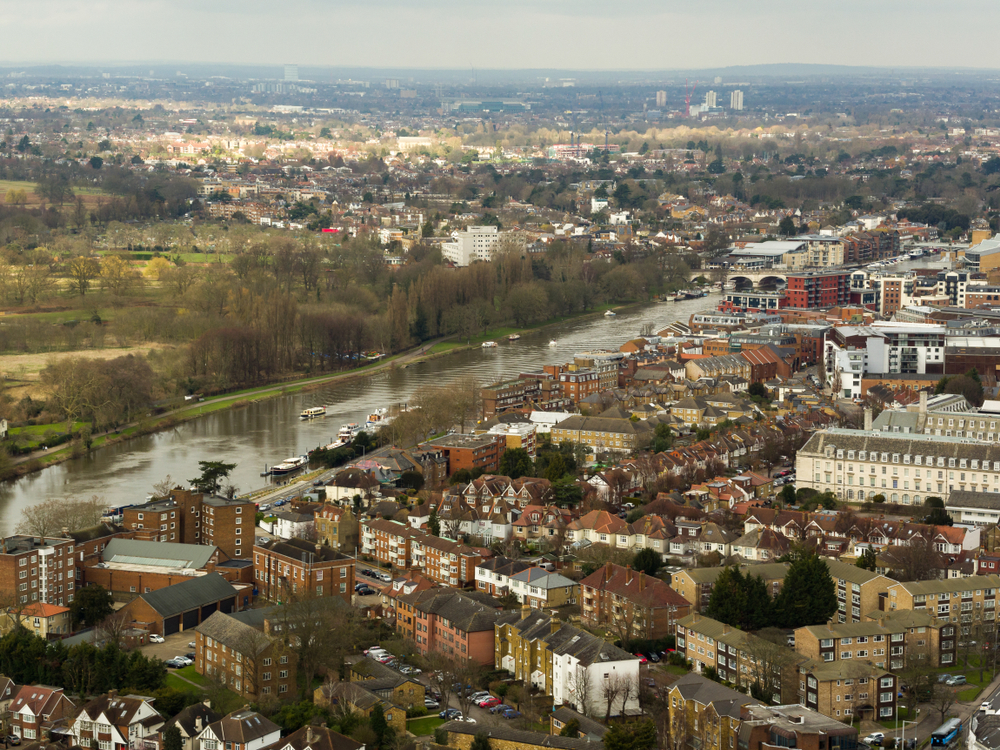
The living environment adds another layer of attraction. The River Thames runs through Kingston’s town centre. Along the riverside are cafés, restaurants and walking paths. For many people arriving from the dense urban landscape of Hong Kong, the combination of urban convenience and open riverside space offers a noticeably different pace of life. Nearby Richmond Park and Bushy Park are among London’s largest royal parks, where deer still roam freely. In this part of London the boundary between city and nature feels unusually close.

The surrounding historical landscape also contributes to the character of the area. Not far from Kingston stands Hampton Court Palace, the Tudor residence closely associated with Henry VIII. Residents often cycle or walk along the Thames towards the palace grounds. Daily life and centuries of English history sit side by side in this landscape in a way that few London suburbs can easily replicate.

Future transport plans add another layer of possibility. The proposed Crossrail 2 project would connect southwest London to the capital’s core with a high-frequency cross-city railway. Kingston is expected to fall within the service area of the route. If the project is eventually realised, commuting capacity between southwest London and central London would increase significantly, potentially strengthening the strategic position of the entire area.

Yet the formation of any migrant community ultimately depends on social networks. Once the first few families settle, information spreads through friends, social media groups, churches and community organisations. New arrivals often follow familiar paths rather than starting from scratch. Gradually a location that once appeared simply as a point on the map begins to take on meaning within the shared mental map of a community.

Migration geography often emerges in exactly this way. What begins as a handful of personal choices slowly becomes an invisible route that others follow. Kingston was once known for the crowning of kings. Today it is also gaining recognition for a new chapter in its story. Many residents may pass the Coronation Stone without much thought, yet the name of the town continues to whisper its past. Kingston remains the King’s Town, even as new communities add their own layers to its history.

Do You Live in the “King’s Town”? Why Hongkongers Are Settling in Kingston upon Thames Read More »

Why Do UK Student Loans Never Seem to End? In Reality They Are a Graduate Tax with a Cap

Why do UK student loans often appear impossible to repay? The reason is not simply the size of the debt, but the way the system is designed. In practice the UK student loan functions less like a conventional loan and more like a graduate tax, except that the tax stops once the loan and interest have been fully repaid.

Students in England can usually borrow two types of loans while at university. The first is a tuition fee loan, which pays the university directly. The tuition fee cap for domestic students in England is currently £9,535 per year. The second is a maintenance loan, paid directly to the student to cover rent, food, transport or other living costs. Students can spend this money as they wish. Because the maintenance loan is substantial, the total amount borrowed over three years often exceeds £50,000.

The key feature of the system is income-contingent repayment. Graduates only begin repaying once their income exceeds a certain threshold. For those who started university between 2012 and 2022, this is known as Plan 2. The repayment threshold in 2025 is £27,295, and the government has announced that it will rise to £28,470 from April 2025. Graduates repay 9 percent of income above this threshold. If earnings fall below the threshold, no repayment is required.

The amount repaid therefore depends on income rather than the total debt. Suppose a graduate earns £38,470 a year. With a threshold of £28,470, the income above the threshold is £10,000, meaning annual repayments of £900, or about £75 per month. Whether the outstanding loan is £40,000 or £70,000 does not change the repayment that year.

Plan 2 loans also have a time limit. Any remaining balance is written off 30 years after repayments begin. Research by the Institute for Fiscal Studies (IFS) suggests that only about a quarter of borrowers will fully repay their loans under this system. Most borrowers will still have a balance outstanding when the write-off occurs.

The system therefore behaves very much like a graduate tax. Higher earners repay more and are more likely to clear the full balance. Lower earners may repay only part of the loan before the remaining amount is written off by the government. Once the loan and interest have been fully repaid, deductions stop immediately.

Interest rates are also income dependent. Under Plan 2 the rate is based on the Retail Price Index with an additional margin of up to three percentage points. Students are normally charged RPI plus three percent while studying. After graduation the rate varies with income. Only the highest earners pay the maximum RPI plus three percent, while those on lower incomes pay interest closer to RPI alone.

Another less discussed feature is the repayment threshold itself. The system was originally designed so that the threshold would rise with inflation. In practice, however, governments have sometimes frozen the threshold and at other times increased it substantially. As a result, borrowers from different cohorts may face very different effective repayment burdens even under the same scheme. If student loans are effectively a graduate tax, the threshold arguably should be tied to inflation in law rather than adjusted at political discretion.

The UK student loan system also contains several different plans. Plan 1 applies mainly to students who began university before 2012 in England or Wales. Interest rates are generally lower under this plan. Plan 3 covers postgraduate loans, including both master’s and doctoral programmes. Plan 4 applies to students from Scotland and operates similarly to Plan 1 but with a higher repayment threshold.

Students starting university in England from 2023 fall under a new system known as Plan 5. The repayment threshold is lower and the repayment period has been extended to 40 years. Interest is fixed at the rate of inflation, measured by the Retail Price Index, without the additional margin used under Plan 2.

Understanding UK student loans therefore requires looking beyond the headline debt figure. What matters is not the size of the loan but the repayment rules. In practice the system functions like a graduate tax with an upper limit. The real policy question is not whether the debt can be repaid in full, but whether this structure remains a stable and transparent way to share the cost of higher education.

Why Do UK Student Loans Never Seem to End? In Reality They Are a Graduate Tax with a Cap Read More »

Britain’s Minimum Wage Is Three Times Hong Kong’s. That Is No Accident

Britain’s minimum wage is far higher than Hong Kong’s, but the more important point is that this difference is intentional. From 1 April 2026, the UK National Living Wage for workers aged 21 and over will rise to £12.71 per hour. At recent exchange rates, that is about HK$132. Hong Kong’s statutory minimum wage is currently HK$42.1 per hour and will increase to HK$43.1 in May 2026, subject to legislative approval. Even using the new figure, Britain’s legal minimum remains about three times higher than Hong Kong’s. The gap reflects not only living costs but also very different policy choices.

Hong Kong’s minimum wage functions mainly as a safety floor to prevent extreme exploitation. Adjustments are usually cautious and framed around avoiding damage to employment. Britain treats minimum wage policy quite differently. It is seen as a tool to reshape the low-pay labour market. The system is guided by the Low Pay Commission, an independent advisory body that brings together representatives of employers, trade unions and the government. Each year it reviews economic conditions and labour market data before recommending the new statutory rates, which governments have generally followed.

A key feature of the British approach is that the minimum wage is linked to the distribution of wages across the economy. In 2020 the government set a target to raise the National Living Wage to 60 percent of median earnings. Since then the policy has been to keep it close to about two thirds of the median, roughly 65 to 66 percent. This means the minimum wage is not adjusted only by inflation. Instead it is designed to track the broader wage structure. As overall pay rises, the wage floor rises as well. The intention is clear. The policy aims to lift the lower end of the labour market rather than simply protect the very bottom.

This design has produced measurable effects. When the minimum wage rises, the pay of the lowest-paid workers increases directly. The gap between the bottom and the middle of the wage distribution narrows, reducing overall inequality. Over the past decade the earnings of low-paid workers in Britain have generally grown faster than average wages. Another purpose of the policy is to reduce “in-work poverty”. When wages are extremely low, governments often have to supplement incomes through welfare benefits. Raising the minimum wage shifts some of that burden back to employers and the market.

However, a high wage floor also creates tensions. As the minimum wage moves closer to the middle of the wage distribution, the gap between entry-level and more senior roles narrows. For firms this compresses internal pay structures. For workers it may weaken incentives for promotion. If the wage difference between frontline staff and supervisory roles becomes small, some employees may feel less motivation to take on additional responsibility for a modest pay rise. This compression of the pay ladder has already appeared in parts of the retail and service sectors.

Another long-standing debate is whether higher minimum wages cost jobs. The Institute for Fiscal Studies (IFS) notes that past increases in Britain have not led to clear evidence of large employment losses overall. Many businesses have absorbed the cost through productivity improvements, small price increases or reduced margins. Yet researchers also stress that this does not mean the wage floor can rise indefinitely without consequences. As the minimum wage approaches the middle of the pay distribution, firms have less room to adjust and employment risks may grow. The key question is not whether there is a limit, but where that limit lies.

Young workers are often the most sensitive group. Britain has long maintained different minimum wage rates for different age groups. The rationale is that younger workers typically have lower experience and productivity, so a single high wage floor could discourage firms from offering entry-level jobs. The Labour government has proposed gradually extending the National Living Wage to younger age groups, but it has recently shown greater caution. The concern is that raising youth wage floors too quickly could make employers less willing to hire young people during uncertain economic conditions.

Research has not reached a single conclusion that minimum wages have already harmed youth employment in a clear way. Some studies, however, suggest firms may adjust in subtler ways. Instead of cutting jobs outright, employers might reduce working hours, raise hiring standards or cut back on training and apprenticeship places. These changes may not immediately appear in unemployment figures, but they can affect how easily young people enter the labour market. The Low Pay Commission has therefore warned that youth wage policy should be approached carefully to avoid damaging entry-level opportunities.

Minimum wages look like a single number, but they reflect a broader social choice. Britain has chosen to push the wage floor higher in order to reduce inequality and lift low pay, while expecting businesses to adapt through higher productivity. Hong Kong has taken a more cautious approach, maintaining a basic safety line to avoid sharp disruptions to employment. As the wage floor moves closer to the centre of the wage distribution, the debate becomes less about the level itself and more about the adjustment it forces on the labour market. A higher floor raises incomes, but it also reshapes incentives and costs. The real question is how much adjustment a society is willing to accept.

Britain’s Minimum Wage Is Three Times Hong Kong’s. That Is No Accident Read More »

Why So Many Hongkongers Are Settling in Milton Keynes: From Mong Kok to MK

To Hongkongers, MK means Mong Kok. Neon lights, packed pavements, relentless density. In Britain, MK stands for Milton Keynes. The initials are the same. The reality could not be more different. What attracts many Hongkongers is precisely that contrast.

Milton Keynes was designated in 1967 and is widely regarded as the last major new town built in the United Kingdom. With a population of around 290,000, it was planned from scratch with modern life in mind. Wide roads, low housing density and abundant green space define its character. For families arriving from one of the most crowded cities in the world, this sense of space is not cosmetic. It is transformative.

Location is central to its appeal. Trains to London take roughly 30 to 40 minutes, making commuting realistic. At the same time, the town sits between London, Cambridge and Oxford, forming part of what is often described as the knowledge triangle of southern England. For professionals in finance, technology and academia, this geography matters. It offers access without the full cost of living inside the capital.

There is also a social dimension. Early arrivals under the BNO route looked for places outside London where property was more affordable and houses larger. Milton Keynes met that requirement. Once a critical mass of Hongkongers settled, churches, tutoring centres and Cantonese restaurants followed. Migration rarely spreads evenly. It clusters. Familiar networks reduce uncertainty, and word of mouth accelerates the flow.

The town’s design further distinguishes it. Milton Keynes is built on a grid road system, with major junctions largely structured as roundabouts. There are well over a hundred of them. Traffic generally flows smoothly. The town was planned for cars, not constrained by medieval street patterns. For many families, having a driveway and a garden is more valuable than living above an Underground station. At the same time, the redway network of cycle and pedestrian paths allows safer movement away from main roads.

Amenities are substantial. The large central shopping complex, indoor leisure facilities, theatres, lakes and parks create a balanced environment. Willen Lake and other green spaces provide room for outdoor life. Schools in the area are generally well regarded, an important consideration for families relocating with children. Compared with London, similar budgets often secure significantly larger homes.

Milton Keynes also contains a site of historical weight. Bletchley Park, located within the borough, served as Britain’s codebreaking centre during the Second World War. Alan Turing and his colleagues worked there to decrypt German communications, influencing the course of the war. Today it stands as a museum, adding depth to what is otherwise a relatively young town.

Looking ahead, the future may reinforce its position. The proposed Oxford–Cambridge Innovation Arc seeks to strengthen economic and research links between Oxford, Cambridge and the towns in between. Milton Keynes sits within this corridor. The East West Rail project, progressing in stages, aims to connect Oxford, Milton Keynes and Cambridge directly. If fully delivered, it would improve east–west connectivity and potentially enhance the area’s economic attractiveness. For homeowners, this is not merely about lifestyle. It is about long term positioning.

Migration decisions are rarely romantic. They are calculations. From Mong Kok to Milton Keynes, the initials may match, but the scale and pace of life do not. For many Hongkongers, that difference is exactly the point.

Why So Many Hongkongers Are Settling in Milton Keynes: From Mong Kok to MK Read More »

⚓ Above the Guns, Within the Memory: Why HMS Belfast Is Worth Boarding in Person

Beside Tower Bridge in London lies a warship that truly saw combat. She is not a replica, not a prop, but a steel vessel that emerged from the storms of the North Sea and the gunfire of the Korean War. HMS Belfast rests quietly on the Thames, yet the moment you step onto her deck, you realise this is no ordinary attraction, but a chapter of history you can physically enter.

Launched in 1938, this light cruiser took part in Arctic convoys, helped sink the German battleship Scharnhorst, and opened fire on the French coast during the D-Day landings in 1944. After the Second World War, she sailed to Asia and carried out bombardment missions during the Korean War. These are not just a few lines on an information board. They are gun turrets you can touch, a bridge and engine room you can see with your own eyes. Standing beside the great guns on the forward deck, looking out at the glass façades and skyline of modern London, you may suddenly sense that today’s prosperity and calm were once secured at the cost of steel and lives.

A recent news report has added a layer of warmth to this warship. The BBC told of a Hong Kong family who, while visiting the ship, unexpectedly found their grandfather’s name in the crew records, confirming that he had served on board during the Korean War. For that family, the visit was not merely an exhibition but a reunion with their own history. HMS Belfast is not only a symbol of Britain’s military past. It is also connected to Hong Kong, to the Far East, and to many Chinese who served under the structures of the Empire. As you walk through the narrow passageways below deck, you may find yourself thinking of your own elders and the stories they never fully told.

HMS Belfast is managed by the Imperial War Museums and forms part of its wider network. IWM members can enter free of charge. For non members, tickets cost about £26 for adults and around £13 for children aged five to fifteen, with free entry for those under five. Admission includes access to multiple decks and interactive exhibition areas. By London standards, it is a substantial and distinctive experience.

It is worth noting that this is a real warship converted into a museum. The corridors are narrow and the stairs steep. It may not be suitable for everyone, particularly those with limited mobility or sensitivity to enclosed spaces. Yet that very constraint makes the experience authentic. You are not reading history in a flat gallery space. You are moving through steel and rivets, sensing the living and fighting conditions of sailors decades ago. That level of immersion is rare in conventional museums.

London does not lack attractions. Yet places that invite quiet reflection are fewer than one might think. Next time you walk past Tower Bridge, consider setting aside half a day to come aboard. Stand on the deck with the river wind in your face, look at the city as it is today, and reflect on the gunfire and distant voyages that once shaped it. The visit may carry more weight than you expect.

⚓ Above the Guns, Within the Memory: Why HMS Belfast Is Worth Boarding in Person Read More »

Sutton: A New Home for Hongkongers — What “Hong Kong Building” Reveals About Migration Choices

Within Hongkonger community forums and migration videos, several residential blocks near Sutton railway station are often informally nicknamed “Hong Kong Building”. The term is not an official name but a community label. It reflects the relatively high concentration of Hong Kong residents in those buildings, where Cantonese is frequently heard in lifts and familiar faces appear in corridors.

Sutton has become a preferred landing point for practical reasons. As one of London’s 32 boroughs, it sits close enough to central London while offering a slower suburban pace of life. There is more green space, a relatively safe residential environment and, compared with many inner London districts, more affordable rents and property prices. For families leaving Hong Kong’s dense urban landscape, this balance carries clear appeal. The Daily Mail previously reported that since the launch of the BN(O) visa in 2021, more than 4,000 Hongkongers have settled in Sutton, forming what some describe as a “Little Hong Kong” cluster.

Education is another decisive factor. Sutton hosts several state and grammar schools rated Outstanding by Ofsted, including the well-known Sutton Grammar School. For families planning long-term residence, access to strong schools is not a peripheral issue but a central one. School catchment areas shape housing decisions, and educational continuity offers reassurance in an unfamiliar country.

Transport connectivity also matters. Sutton station is served by Thameslink and other rail services, with direct trains to central London taking around 30 to 40 minutes. Many residents commute daily into the city. The advantage lies in being close to employment opportunities without living amid the intensity and cost of the inner zones. For working families, this balance between accessibility and quiet residential life weighs heavily in location choices.

For households that continue to travel between the UK and Hong Kong, proximity to Gatwick Airport adds a practical benefit. From Sutton, a southbound train or bus journey of roughly half an hour can reach the airport, avoiding the need to cross central London. For families making frequent long-haul trips, time efficiency becomes more than a convenience.

Community life has gradually expanded alongside the arrival of Hongkongers. Some estate agents offer Cantonese-language services. The high street includes chains such as Lidl and Starbucks, alongside a modest presence of Asian food options. Churches and community groups have organised bilingual welcome sessions to help newcomers navigate local systems and daily routines.

Yet Sutton is not without challenges. As demand rises, property prices and rents have edged upward. Some longer-term residents view demographic change with mixed feelings. When communities become heavily concentrated, questions of cultural integration inevitably follow. Genuine integration involves more than language acquisition or lifestyle adjustment. It requires building mutual recognition within a diverse society.

In this sense, the phrase “Hong Kong Building” captures a natural human instinct. In an unfamiliar city, migrants seek shared language, cultural familiarity and informal support networks. Sutton’s attraction lies not in a single block of flats, but in the broader combination of transport links, educational resources, relative affordability and perceived safety. How the area balances continued growth with cultural integration will shape its next chapter.

Sutton: A New Home for Hongkongers — What “Hong Kong Building” Reveals About Migration Choices Read More »

How Far Can You Travel for a Few Pounds?

In the UK, a few pounds can take you hundreds of miles. This is not a sporadic promotion, but rather a result of a mature market.

The long-distance bus market in the UK is primarily dominated by three operators: National Express, FlixBus, and Megabus. These companies compete through online direct sales and dynamic pricing, allowing tickets to be purchased for as little as a few pounds if booked in advance. Routes such as London to Manchester and Birmingham to Edinburgh, which span 200 to 400 miles, often cost less than a single fare on a local train.

The low prices are supported by a cost structure that works. Long-distance buses operate with high-density seating, and online ticket sales reduce intermediaries, resulting in high fleet utilization. Most importantly, dynamic pricing plays a crucial role: the earlier you book, the cheaper the fare, while prices rise during peak times. This is similar to the logic used by airlines, but with a lower barrier to entry. Those who plan ahead can exchange minimal costs for long-distance travel.

Time is the primary trade-off. A journey that takes 2 hours by train may take 4 to 6 hours by bus, with traffic congestion on highways being unavoidable. The onboard facilities range from practical to minimal; most buses are equipped with air conditioning, charging sockets, and onboard restrooms, but hygiene standards depend on passenger usage, so expectations should be tempered.

Long-distance buses also fill the gaps left by rail services. Early morning and late-night services between Heathrow and Gatwick airports are often more reliable than trains. When rail fares are exorbitant or services are cancelled at short notice, buses become a predictable alternative.

Traveling hundreds of miles for a few pounds is essentially a trade-off. Passengers exchange time for price advantages and comfort for distance. For students and those on a budget, this is a rational choice; for those who prioritize efficiency, it may not be worth it. However, the availability of such options contributes to market flexibility.

In an era of rising transportation costs, long-distance buses maintain the lowest threshold for intercity mobility. They are neither glamorous nor fast, but they are practical. The question is not whether they are good enough, but how much more you are willing to pay for a faster option.

How Far Can You Travel for a Few Pounds? Read More »

A Landmark Ruling on Tariffs and the Constitution

On February 20, 2026, the United States Supreme Court ruled 6 to 3 to overturn the extensive global tariffs imposed by President Trump under the International Emergency Economic Powers Act. This case transcends a mere trade dispute; it is a significant ruling regarding the constitutional boundaries of power. The issue at hand is not whether the tariffs had political support, but whether the president had the authority to impose them.

Beginning in April 2025, Trump declared a state of economic emergency, imposing a baseline tariff of at least 10% on imports from most trading partners, with even higher rates for certain countries and products. The White House justified this move by citing trade deficits, supply chain risks, and national security concerns related to the influx of fentanyl. The administration argued that the law granted the president the authority to regulate imports during an emergency, thereby encompassing tariff measures.

However, businesses and several state governments filed lawsuits, arguing that the law did not explicitly authorize the president to impose tariffs. Tariffs are fundamentally a form of taxation, and the U.S. Constitution clearly grants the power to levy taxes and tariffs to Congress. The executive branch may adjust tariffs under explicit congressional authorization, but it cannot unilaterally create a new comprehensive taxation tool. The case ultimately reached the Supreme Court.

The majority of justices noted that when a law involves significant economic and political implications, Congress must express its authorization for the executive branch to act in clear and specific terms. General emergency authorization clauses cannot be extended to serve as a basis for reshaping the entire tariff system. This encapsulates the core spirit of the so-called major questions doctrine. In other words, the boundaries of executive power cannot be defined by the executive itself.

Dissenting opinions argued that trade policy falls within the political realm and should be managed by elected officials. However, the majority opinion emphasized that precisely because the policy has far-reaching effects, judicial review is necessary to ensure the legitimacy of the source of power. The judiciary does not interfere in politics; rather, it upholds the baseline of the system.

As for whether tariffs already collected need to be refunded, this remains a technical and procedural issue. Generally, when tariffs are deemed illegal by a court, affected businesses can apply for refunds through customs and court procedures. If the ruling is retroactive, theoretically, illegal taxes should be refunded; if it only restricts future collections, the approach may differ. Specific arrangements will depend on the details of administrative execution and subsequent legal processes.

The significance of this ruling extends beyond a single trade policy victory or defeat; it reaffirms the constitutional framework. Congress legislates, the president executes, and the judiciary reviews—each branch has its distinct role and mutual checks and balances. When the executive branch seeks to expand its power under the guise of a state of emergency, the role of the courts is to delineate the boundaries.

The overturning of Trump’s tariffs does not signify the end of trade disputes, nor does it imply the disappearance of political divisions. It serves as a reminder that the President of the United States is not a monarch endowed with divine right. True democracy lies not only in electoral outcomes but also in institutional design; it rests not only on authorization but also on the balance of power.

A Landmark Ruling on Tariffs and the Constitution Read More »

Scroll to Top