UK Affairs

UK life, politics, and policy seen from a Hongkonger’s perspective. Coverage spans immigration and visa policy, housing, council tax, transport, energy markets, and the diaspora’s encounter with British civic life.

UK to Have Europe’s Largest Lithium Mine, Leading Energy Transition

The United Kingdom’s past aspirations for energy transition have largely remained confined to policy planning and commitment targets. Now, a lithium mine buried beneath Cornwall is poised to bring these commitments to fruition. Cornwall is no longer merely a symbol of tourism and historical mining; it is becoming a crucial component of the energy supply chain in the UK and Europe. The latest resource assessments indicate that this region is home to one of the largest lithium resources in Europe, providing the UK with a solid foundation to take a leading position in the electric vehicle and energy storage industries.

This assessment is not unfounded. Multiple mining and local development evaluations show that the lithium resources in Cornwall rank among the best in Europe. Although the final extractable scale will depend on subsequent exploration results and the maturity of commercialization technologies, the overall potential is already quite clear. Companies involved in the region’s development estimate that the relevant reserves could support at least half of the lithium required for the UK’s electric vehicle batteries by 2030.

Lithium is no ordinary metal. It is a core component of the vast majority of electric vehicle batteries worldwide. Whether in high-energy-density NMC batteries or cost-effective and safe LFP batteries, lithium compounds are essential as base materials. Recently, sodium-ion batteries have garnered attention for their potential applications, but their lower energy density limits them to specific stationary storage or low-end scenarios, making it difficult for them to challenge the mainstream status of lithium batteries in the mid- to high-end electric vehicle market. This indicates that, for the foreseeable future, lithium remains an irreplaceable key material in the energy transition.

Historically, the UK has been almost entirely passive regarding lithium supply issues. Until recently, the country relied on nearly 100% imports of lithium raw materials, sourced from Australia, South America, and products processed through other countries. This structural dependency not only weakened the UK manufacturing sector’s agency within the supply chain but also exposed the domestic electric vehicle and battery industries to price volatility and geopolitical risks. The advancement of the Cornwall lithium mine fundamentally rewrites this narrative.

In recent years, both the UK government and private capital have significantly increased their investment in Cornwall’s lithium resources. Demonstration plants have been established, completing the full process from extraction to the production of battery-grade lithium hydroxide for the first time in the UK. This milestone is significant as it signifies that the UK is no longer merely a holder of raw materials but has genuinely acquired the capability to transform resources into industrial-grade battery materials without complete reliance on overseas refining.

The success of this demonstration project is not an isolated case. The government continues to provide support for the next phase of development through various investment tools and public capital, accelerating the transition of projects from experimentation to commercialization. Simultaneously, the industry is exploring innovative models that combine geothermal development with lithium extraction, aiming to enhance overall resource utilization efficiency while reducing carbon footprints.

All of this reflects a deeper shift in supply chain thinking. The UK is no longer satisfied with merely manufacturing electric vehicles or attracting battery factories; it is attempting to extend upstream and control the sources of critical materials. Once the Cornwall lithium industry matures, it could significantly enhance the resilience of the UK’s battery supply chain and potentially secure an important position in the European and even global markets for electric vehicles and energy storage materials.

The Cornwall lithium mine also carries another layer of symbolic significance. This land was once renowned as an industrial hub for tin and copper mining, and it may once again play a central role in a new industrial revolution as a source of new energy materials. The real challenge lies in balancing environmental responsibility, community interests, and long-term economic benefits during the development process, avoiding the pitfalls of past practices of ‘digging and leaving.’

In summary, the value of the Cornwall lithium mine lies not only in the quantity of resources but also in its symbolism of the UK genuinely seizing strategic initiative in the energy transition. Moving from reliance on imports to self-sufficiency marks a foundational step towards the maturation of the UK’s electrification and energy storage industries and presents a critical opportunity to secure a position in the global energy competition landscape.

UK to Have Europe’s Largest Lithium Mine, Leading Energy Transition Read More »

Nottingham: An Underrated British City Chosen by Hongkongers

When it comes to relocating to the UK, Hongkongers often first think of London, Manchester, or Birmingham. However, an increasing number are turning their attention to Nottingham in the East Midlands. Although it may not be widely known, it excels in practicality; it is unpretentious yet remarkably complete. Consequently, Nottingham has become a popular choice for many Hong Kong families moving to the UK in recent years.

This is not merely based on impression. According to data from the UK Home Office on BN(O) visa applications and residential distribution compiled by local governments, the East Midlands has consistently been one of the main areas for Hongkongers settling outside London, with Nottingham frequently cited as the most mentioned city. Various real estate studies also indicate that Nottingham is a medium-sized city experiencing a significant net inflow of Hongkongers. The reasons behind this are straightforward: housing prices and rents remain affordable, job and educational resources are ample, and there is a balance between living costs and urban convenience that many immigrant cities have lost.

A prime example is its public transport system. With a population of around 330,000, Nottingham boasts a mature and highly utilized tram network, which is rare in the UK. The Nottingham Express Transit is not a symbolic project; it genuinely serves a commuting function, connecting major residential areas, universities, hospitals, and the city center. For many families from Hong Kong, accustomed to public transport, this urban structure, which does not rely heavily on private cars, is inherently appealing.

Education is also a crucial pillar for Nottingham. The University of Nottingham is a member of the prestigious Russell Group, consistently ranking among the top research universities in the UK, excelling in fields such as medicine, pharmacy, engineering, life sciences, and social sciences. Another institution, Nottingham Trent University, specializes in design, business, and applied disciplines, attracting a large number of local and international students. Both universities not only bring a youthful population and international atmosphere to the city but also provide stable demand for the job and rental markets, which is particularly important for families planning to settle long-term rather than just transition temporarily.

Culturally, Nottingham is inextricably linked to Robin Hood. This legendary figure, known for robbing the rich to give to the poor, has become part of the city’s spirit: maintaining distance from power and remaining vigilant against injustice. This ethos is somewhat reflected in the city’s emphasis on public spaces and services, characterized by a lack of ostentation and a focus on pragmatism.

On a more everyday level, Nottingham also has a distinct football identity. Nottingham Forest has won the European Cup twice but has also experienced prolonged periods of decline. It is not a representative of money-driven football but rather a club supported by history, community, and loyalty, mirroring the character of the city itself. For many newcomers, this football culture, which retains local identity, makes integration easier.

Walking through Nottingham, one does not sense a desperate need for the city to prove itself. The castle overlooks the city, trams traverse the squares, and students, families, and long-time residents share a common rhythm. It lacks the oppressive atmosphere of London and the disorder found in some former industrial cities; everything appears measured and rational.

Perhaps for this reason, Nottingham rarely appears on travel lists but increasingly shows up on the relocation lists of Hong Kong immigrant families. The competition among British cities has never been about fame but rather about whether life can be sustainably established. In this regard, Nottingham provides a clear and honest answer.

Nottingham: An Underrated British City Chosen by Hongkongers Read More »

UK Set to Become Electric Vehicle Battery Powerhouse

When it comes to electric vehicles, the UK has long been seen as a laggard, with production capacity trailing behind China and progress lagging behind continental Europe. However, by 2026, this assessment will clearly be outdated. With several battery gigafactories either commencing or nearing production, the UK is on the verge of being able to supply batteries for hundreds of thousands of electric vehicles annually. Based on current calculations, its battery supply potential has even begun to exceed the actual annual output of the UK’s automotive sector in recent years. The question is no longer whether there will be enough batteries, but whether vehicle production capacity can keep pace.

The first pillar is the new gigafactory in Sunderland, expanded by Envision AESC, which is set to begin production around the end of 2025, with an annual capacity nearing 16 GWh. Calculating based on mainstream electric vehicles requiring approximately 60 to 80 kWh batteries each, this single factory could support around 200,000 electric vehicles (the actual figure will depend on vehicle models and battery sizes). More importantly, the power structure it relies on is already highly decarbonized. The UK’s offshore wind power ranks among the best globally, meaning that a battery produced in the UK inherently has a lower carbon footprint, which will translate into substantial competitiveness under Europe’s increasingly stringent lifecycle carbon accounting.

The second pillar is larger in scale and has more structural impact. The gigafactory being constructed by Agratas, a subsidiary of Tata Group, is designed for an annual capacity of approximately 40 GWh and is expected to commence production in 2026 or 2027. Once it enters stable mass production, this factory could theoretically supply batteries for around 250,000 to 300,000 electric vehicles, propelling the UK’s battery supply from a single project to a true scale operation.

The third tier involves medium-sized enterprises and subsequent expansions. New-generation battery manufacturers like Volklec are advancing along a path of initially small-scale production, followed by a move towards higher capacities, with a long-term goal of establishing factories at around the 10 GWh level (dependent on financing and customer orders). While this capacity may not significantly alter the total output, its significance lies in enhancing supply chain flexibility and connecting with the UK’s unique industrial translation capabilities, allowing laboratory results to avoid complete reliance on overseas mass production.

The UK’s battery landscape is also extending upstream and downstream. On the upstream side, Cornish Lithium is spearheading lithium mining and geothermal brine lithium extraction projects in Cornwall, attempting to establish a limited but strategically significant domestic lithium supply. In terms of technology, research teams represented by the University of Cambridge are at the forefront of sodium-ion battery research. Sodium is abundant and inexpensive, and while its energy density remains lower than that of lithium batteries, it offers a viable alternative route for small vehicles and energy storage, reducing dependence on a single chemical system.

Moreover, the UK’s advantages in this industry do not stem from a single segment but rather from a comprehensive combination. The highly decarbonized power structure provides a low-carbon advantage during the production phase; a robust research system ensures a continuous stream of new technologies; and industrialization platforms like the UK Battery Industrialisation Centre push laboratory results towards mass production processes, mitigating commercialization risks. Coupled with a relatively stable and predictable regulatory environment, these factors combine to enable the UK to not necessarily pursue the lowest costs, but to possess resilience in long-term competition.

When combining production capacities, the approximately 15.8 GWh from Sunderland, along with around 40 GWh from the Agratas factory, suggests that the UK could realistically approach an annual production capacity of over 50 GWh by the mid to late 2020s. Based on an average of 70 kWh per vehicle, this corresponds to a theoretical supply capacity of 700,000 electric vehicles or more annually, surpassing the actual annual output of the UK automotive sector in recent years. In terms of quantity, batteries are shifting from being a constraint to becoming a prerequisite.

For this reason, the next steps in policy are quite clear. Currently, UK-manufactured cars exported to the EU still face around a 10% tariff, but this is not an immutable fate; rather, it is a result of ongoing negotiation space. If the UK wishes to truly convert its battery advantages into manufacturing scale, exports, and jobs, there is ample reason to reach a more pragmatic arrangement with the EU as soon as possible. Otherwise, while batteries are already ahead, the entire industry may find itself stuck at the border.

UK Set to Become Electric Vehicle Battery Powerhouse Read More »

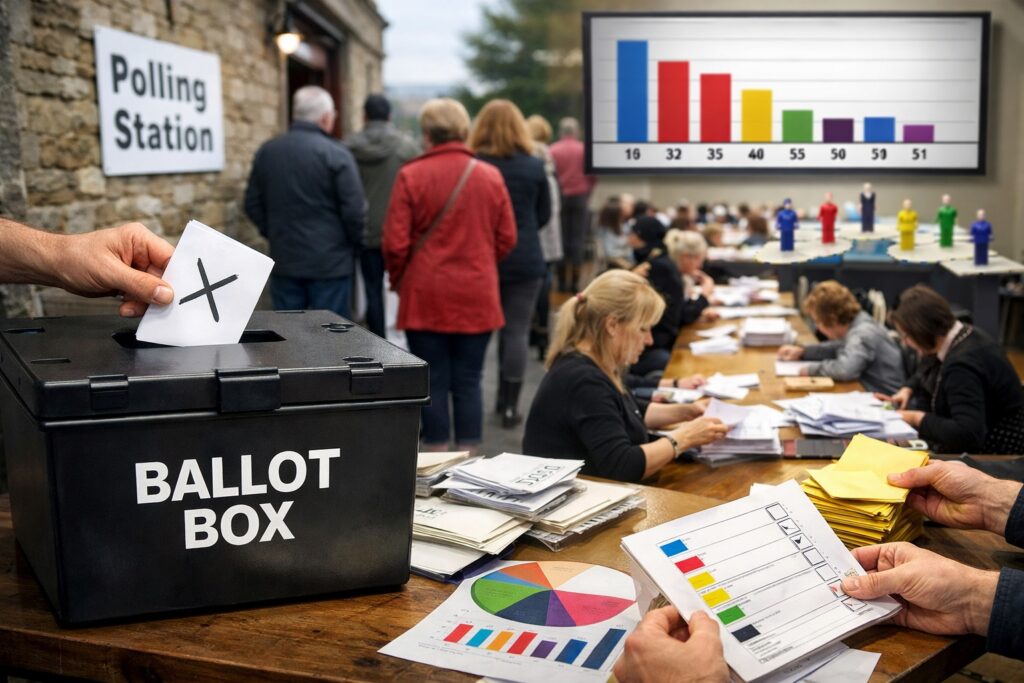
Strategic Voting in the UK General Election

The current system used by the UK House of Commons is the First Past the Post (FPTP) electoral system. In each constituency, only one representative is elected, with the candidate receiving the most votes declared the winner, regardless of whether they achieve a majority. While this system appears straightforward, it is predicated on a harsh reality: it only acknowledges the first-place candidate, rendering all other votes, regardless of their margins, ineffective in translating into any parliamentary seats.

Under this system, the efficacy of votes is not uniform. If a voter’s preferred candidate consistently ranks third, fourth, or lower in their constituency, their votes are unlikely to alter the outcome or influence the distribution of power in Parliament. This is not a negation of voter intent but rather a consequence of the operational mechanics of the system. Whether a vote is deemed ‘effective’ hinges solely on its ability to change the identity of the first-place candidate.

Consequently, although ballots often list multiple candidates, creating an illusion of ample choice, in reality, only two candidates typically matter. Elections do not involve a fair competition among several options but rather a contest between the two candidates with the highest chances of winning. The presence of other names serves more as a symbol or diversion, having limited impact on the final result.

This also explains why voting is practically compelled to transform into a strategic choice. When the outcome is determined solely between two individuals, voters’ considerations shift from ‘whom do I prefer?’ to ‘who is likely to win?’ and ‘do I want that person to win?’ Thus, voting may not necessarily express support; it can also signify clear opposition.

If you are certain you do not want a particular candidate to win, the most effective strategy is often not to vote for the candidate whose views align most closely with yours but rather to deliberately vote for their main opponent, even if that person is not your first choice. This form of strategic voting may seem disingenuous, but it merely acknowledges that the system counts only wins and losses, not motivations.

The challenge lies in the fact that this calculation heavily relies on information. In constituencies with highly fragmented parties and multiple contenders, who the ‘top two’ candidates are may not be clear. Insufficient polling, variations in local mobilization, and last-minute changes can all lead to misjudgments. The system forces voters to engage in precise calculations, yet it may not provide sufficient reliable clues.

From a design perspective, proportional representation clearly better reflects the true will of the electorate. Under such a system, voters can confidently support the parties or candidates they genuinely endorse, as every vote translates proportionally into seats, eliminating the need to guess who might win or who could block whom. Voting becomes an expression of preference rather than a game of strategy. Unfortunately, systemic change is not immediate; for the foreseeable future, the UK must continue to operate under the First Past the Post system.

Understanding this is not an encouragement of cynicism but rather a call to avoid naivety. Under the current system, the power of a vote lies not in what you wish to express but in where you place your vote. You can cast a vote in favor or against; however, if you refuse to calculate, you will ultimately be calculated for by the system.

Strategic Voting in the UK General Election Read More »

The Financial Impact of Increased Civil Servants Post-Brexit

Brexit is often framed as an opportunity to streamline government and reduce regulation, yet the reality has been quite the opposite. Since the referendum in 2016, the number of full-time equivalent civil servants in the UK central government has risen from approximately 380,000 to over 510,000, an increase of more than 130,000. Multiple research institutions have pointed out that, after accounting for the pandemic, around 100,000 of these positions are directly or indirectly related to the new systems, border controls, regulations, and negotiations that emerged post-Brexit. This is not a result of improved administrative efficiency, but rather a structural cost incurred from exiting a common system that necessitates compensatory staffing.

The issue is not merely one of having more personnel; it is that this influx represents a permanent increase in ongoing expenditure. When calculating the total cost of civil servants, one must consider not only salaries but also employer national insurance contributions, pension liabilities, office rentals, IT systems, cybersecurity, training, and management costs. Even under conservative assumptions, the annual cost per civil servant is estimated to be between £50,000 and £60,000. If we consider the 100,000 staff related to Brexit, the additional ongoing expenditure reaches £5 billion to £6 billion per year, and this is not a one-off cost but rather a recurring burden embedded in government spending.

One of the most expensive and difficult-to-reverse areas is border control and immigration. Prior to Brexit, the UK did not require complete third-country checks on goods and people from the EU; post-Brexit, customs declarations, rules of origin, plant and animal health inspections, border IT systems, port infrastructure, and additional border and immigration officials have all become the norm. The Home Office and HM Revenue and Customs have maintained high staffing levels to manage the new visa system, residency approvals, customs clearance, and compliance enforcement. These costs are reflected not only in salaries but also in the expensive construction and maintenance of border systems, making this one of the heaviest burdens on public finances post-Brexit.

Another underestimated source of expenditure is the regulation of food, pharmaceuticals, and agriculture. Previously centralized by the EU, food safety assessments, drug approvals, agricultural subsidies, and environmental compliance have all returned to domestic management post-Brexit. In the pharmaceutical sector, the UK must establish parallel approval and regulatory capabilities to the EU, which, even if the outcomes often align, still requires a complete set of independent personnel and procedures. The same applies to food and agriculture, where health inspections, subsidy management, standard-setting, and enforcement demand additional long-term human resources. These tasks are not an expansion of policy choices but rather an unavoidable duplication resulting from institutional fragmentation.

In addition, there are layers of Brexit-related expenditures that are less frequently mentioned but equally resource-intensive. Legally, a significant number of regulations that were previously EU-based need to be transposed, amended, and maintained over the long term, requiring specialized legal and policy personnel. In trade, the UK must independently maintain rules of origin verification, trade remedies, subsidy regulation, and dispute resolution mechanisms, even if actual cases are few; the system itself must still exist in its entirety. Furthermore, the government must continue to provide businesses with guidance on Brexit compliance, support hotlines, and transitional arrangements. These seemingly scattered tasks cumulatively represent a long-term burden on both human resources and finances.

When these expenditures are distributed at the household level, the picture becomes clearer. With approximately 27 million households in the UK, the annual Brexit-related personnel expenditure of £5.5 billion translates to about £200 per household each year. This amount will not appear on tax bills as a ‘Brexit cost’; instead, it will be absorbed indirectly through tax pressure, dilution of public service resources, or the squeezing of other budget items.

It is noteworthy that the government often attributes the rise in civil servant numbers to the pandemic while downplaying the long-term impact of Brexit. The pandemic has led to a temporary spike, which theoretically can recede; however, the effects of Brexit are permanent and recurring. As long as the UK chooses to operate independently in institutional terms, it will require more personnel and financial resources in the long term to accomplish tasks that could have been shared within a common system.

Whether Brexit was worth it remains a matter of political division; however, from an administrative and financial perspective, the accounts are quite clear. Approximately 100,000 new civil servants and billions of pounds in annual ongoing expenditure ultimately fall on every household. This may not be the most prominent page in the Brexit narrative, but it is likely the most enduring and hardest to ignore.

The Financial Impact of Increased Civil Servants Post-Brexit Read More »

The True Significance of Stonehenge

Whenever discussing travel in the UK, Stonehenge almost invariably makes the list. Consequently, it has also become one of the most easily overlooked landmarks. Some merely slow down to glance at it from the roadside, declaring it nothing more than a pile of stones on a barren plain; others, put off by the ticket price, simply park nearby and peer through the fence, inadvertently causing traffic jams. Thus, Stonehenge finds itself in a paradoxical situation: dismissed as unworthy of a look, yet significant enough to slow down the entire road.

However, to regard Stonehenge merely as ‘stones’ is to fundamentally misunderstand the issue. It has never been an isolated structure, but rather a project spanning approximately 1,500 years, constructed and modified repeatedly by successive generations. The earliest circular ditch can be traced back to 3000 BC, followed by the gradual addition of bluestones from Wales and massive sandstone blocks weighing 30 to 40 tons, likely sourced from the Marlborough Downs. This was not an impromptu act, but a long-term plan.

Naturally, the question arises: why? In an era devoid of metal tools, wheeled vehicles, or writing systems, why expend such enormous human resources and time merely to erect a set of stones that serve no direct practical function? Precisely because it is ‘useless’ that it becomes crucial. Archaeologists widely believe that the core function of Stonehenge was not habitation, defense, or production, but rather ritualistic—it marked time, order, and shared beliefs.

The precise alignment of the stones with the summer and winter solstices indicates that the builders possessed advanced astronomical observation skills. In an agricultural society, seasonal changes are not romantic symbols but vital knowledge. The ability to predict seasonal variations directly impacts sowing, harvesting, and the timing of rituals. Fixing this knowledge within the landscape equates to transforming time itself into a public asset, while also transferring the power to interpret time to specific groups.

This is not merely a historical conjecture. Even today, during the summer and winter solstices, large crowds gather around Stonehenge to witness the sunrise or sunset. Some participate in modern neo-pagan rituals, while others quietly observe, but the act itself illustrates the point: in a highly rationalized and digital society, people are still willing to return to this barren land at specific moments, simply to experience the turning points of the year. This is not a tourism event, but a collective experience that has persisted for thousands of years.

More importantly, Stonehenge symbolizes a capacity for collective mobilization. It signifies that some individuals can persuade, or even command, others to engage in long-term labor without any immediate material reward. This reflects not a primitive society, but a highly socialized one—one that has learned to maintain order through rituals, beliefs, and collective memory. The ability to repeatedly conduct seasonal rituals year after year is itself a manifestation of power and consensus.

Ironically, it is precisely because Stonehenge does not offer immediate shock and does not cater to the rhythm of modern tourism that it is misjudged as ‘overrated’. Fences, fixed routes, and guided tours every few minutes compress what was once a trace of a prehistoric civilization into a mere backdrop for photos. Tourists are encouraged to take pictures, yet rarely guided to understand that the stones before them represent humanity’s early understanding of paying a real price for abstract values.

To claim that Stonehenge is overrated is often not because it is too hollow, but because we are too impatient. Eager to see results, we are unwilling to imagine the process; eager to evaluate, we refuse to acknowledge that in an age without technology, states, or markets, humanity already understood the value of gathering repeatedly to construct time, order, and shared beliefs.

What has always been underestimated is not that circle of stones, but its enduring power to draw people back to the same moment.

The True Significance of Stonehenge Read More »

England’s Drunk Driving Standards Need Reform

England’s drunk driving laws are virtually without debate when compared to Europe: they are indeed the most lenient. The current standard permits 80 milligrams of alcohol per 100 milliliters of blood, a threshold that is not only higher than Scotland’s but also significantly above that of other European countries. The Labour government recently proposed tightening the standard to align with mainstream Europe, a move not made lightly but rather in response to a long-ignored gap in road safety.

Translating these figures into barroom reality makes the differences starkly apparent. Under the current 80 mg standard, many drivers can still be considered ‘legally able to drive’ after consuming two to three pints of beer; however, under the proposed 50 mg standard, even an 85-kilogram individual drinking beer with an alcohol content of approximately 4.5% would barely remain within the limits after just one pint.

Scientific evidence has long indicated that even below 50 mg, drivers experience quantifiable declines in reaction time, distance judgment, and risk assessment abilities. This is precisely why countries like France, Germany, and Spain have set their legal limits at 50 mg. This is not a moral lecture but a risk management conclusion drawn from accident statistics and behavioral studies.

In recent years, approximately 250 to 300 people in the UK still die annually in alcohol-related road accidents, with thousands more classified as serious injuries related to drunk driving or alcohol factors. On average, someone dies from this every day. Among all preventable road risks, alcohol remains the clearest and most easily reducible through legislation.

Opposition primarily arises from certain members of the Reform and Conservative parties, focusing on the impact on the bar and restaurant industry. They worry that lowering the standard will affect nighttime consumption, harm rural pub businesses, and even alter existing social culture. These concerns are understandable, but fundamentally, they place bar business on the same level as road safety, attempting to offset a clearly quantifiable and annually fatal public risk with economic considerations.

However, the reality is that the choice is not limited to the extremes of ‘drink or stay home.’ Those wishing to drink a few more can easily arrange for a designated driver among friends; for those wanting to socialize and drive, non-alcoholic or low-alcohol beers are already available. The reform does not aim to strip away social life but rather to demand a clearer distinction between drinking and driving.

Since Scotland lowered its standard in 2014, the predicted wave of pub closures has not materialized; on the contrary, alcohol-related accidents have gradually declined, and societal tolerance for ‘driving after drinking’ has correspondingly diminished. The purpose of the policy is not to prohibit alcohol but to draw a clear line: if you have been drinking, you should not drive.

What is truly questionable is not whether the reform is too strict, but why we continue to tolerate a proven lethal risk for the sake of bar businesses. Alcohol will not become milder due to economic pressures, nor will roads become safer due to political slogans. The only question England needs to answer is whether it is willing to acknowledge that it has fallen behind Europe on this issue for far too long.

England’s Drunk Driving Standards Need Reform Read More »

Why Does Trump Desire Greenland So Much?

From a resource perspective, Greenland is not particularly appealing. While it does contain rare earth elements, uranium, zinc, and nickel, the question has never been about availability but rather about viability. The polar climate results in a very short construction season, and the costs of transporting equipment, fuel, and labor across half the globe far exceed those of other mining regions. Furthermore, local political sensitivities regarding environmental issues have led to the shelving of several mining projects amid controversy. Even as the world seeks to diversify its rare earth supply, the market generally believes that Greenland will struggle to become a significant player in the foreseeable future.

The military aspect has also been exaggerated. Under a 1951 defense agreement between the United States and Denmark, the U.S. has long been permitted to deploy any necessary military facilities in Greenland. While Thule Air Base is indeed important, it is often overlooked that the U.S. has significantly reduced its troop presence there over the years. At the height of the Cold War, the base was staffed by tens of thousands; today, only a few hundred remain, with their roles primarily focused on missile warning, space surveillance, and radar operations. If Greenland were truly a critical military asset, the U.S. would have ramped up its presence rather than continuously downsizing it.

Given that resources are not economically viable and military urgency is lacking, the focus must shift to politics.

With Arctic warming, the strategic value of Greenland is indeed increasing; however, making sovereignty a public issue carries significant costs. Denmark is a NATO member, and although Greenland enjoys a high degree of autonomy, it remains part of the Kingdom of Denmark. Publicly discussing the ‘purchase’ of allied territory undermines the foundation of post-war alliance trust. If this logic is accepted, NATO would cease to be a partnership of equals and devolve into a stark power dynamic, potentially costing the U.S. the political trust of the entire continent of Europe.

This high-risk posture aligns perfectly with Trump’s political instincts. He favors simple, tangible narratives that can be immediately promoted, reducing complex geopolitical issues to ‘America wants a piece of land.’ This strongman image is particularly appealing to voters who lack a basic understanding of international politics but yearn to see displays of power—no need to understand the costs or calculate the consequences, just the perception of strength mobilizes their emotions.

Moreover, one cannot overlook the role of distraction. In the U.S., the ongoing controversy surrounding the Epstein case has been contentious. Even though the court has ordered the release of related documents, the actual content released by the Justice Department has been widely criticized as representing only a tiny fraction—reportedly less than 1%—of the total. In this context, shifting public attention to a grand external issue—Arctic sovereignty, territory, national power—naturally feels safer than confronting thorny and sensitive domestic issues. By occupying news space, the original problems become diluted.

Thus, the Greenland issue is less about a strategic blueprint and more about a political performance: crafting a strongman image while deflecting domestic pressures. Greenland may not hold treasures, but it reflects a reality—when politics appeals to emotion and posture, it often attracts those least willing to understand the complexities of the world; yet, it is allies, institutions, and the already fragile international trust that will ultimately bear the consequences.

Why Does Trump Desire Greenland So Much? Read More »

The Paradox of Population Decline and Immigration Policy in the UK

As we enter 2026, the population issue in the UK has shifted from a long-term concern to an immediate risk. The Daily Telegraph reports that net immigration is heading towards a two-decade low, with a reduction of over 100,000 foreign workers and students within a year. Applications for nursing and health visas have nearly halved, while skilled worker visas have plummeted by more than 30%, and family visas have also contracted. James Bowes, a researcher at the University of Warwick, warns that under the current policy trajectory, net immigration could realistically fall to zero this year, or even turn negative. This is not a case of ‘successful management’; rather, the immigration pool is being actively drained by policy.

As immigration declines, another pillar of population support is also beginning to collapse. Sky News cites an analysis by the Resolution Foundation, indicating that the UK is approaching a tipping point where natural population growth will turn negative, meaning that deaths will long outnumber births. The persistently low birth rate has become a structural problem that will not automatically rebound due to tightened immigration. When negative net immigration coincides with negative natural growth, the UK will not merely experience a slowdown in population growth but a substantive contraction. This point has received almost no positive response from government policy.

The first impact of population contraction is felt in the labour force. A decreasing working-age population makes it more difficult for businesses to hire, naturally slowing economic growth; simultaneously, the pace of population aging accelerates, with a rising proportion of retirees, meaning that pension and NHS healthcare expenditures will balloon more rapidly. The problem lies in the fact that there are increasingly fewer taxpayers, while the number of beneficiaries continues to rise, placing ever-greater structural pressure on public finances.

The Times cites the Resolution Foundation, stating that if net immigration remains approximately 200,000 lower than originally forecasted over the long term, the resulting gap in public finances would be equivalent to needing to raise the basic income tax rate by about 2 pence to compensate. In other words, tightening immigration does not ‘alleviate burdens’; it merely shifts financial pressure onto existing taxpayers, ultimately manifesting as a tax increase burdening workers.

Ironically, there exists a significant gap between public opinion and reality. A poll by The Guardian shows that despite a substantial drop in net immigration, around two-thirds of voters mistakenly believe that immigration is on the rise, and three-quarters lack confidence in the government’s immigration policy. The issue of small boat crossings has become a highly visible political focal point, yet it constitutes only a tiny fraction of total immigration numbers. By catering to these misconceptions and continuing to tighten legal immigration channels, the government will only further weaken the labour force and tax base.

If the UK simultaneously faces negative net immigration, negative natural growth, labour shortages, and rapid aging, yet still chooses to narrow the immigration pool, this is no longer prudent but shortsighted. The population issue is structural and requires a stable, predictable, and attractive system to retain people. Continuing to tighten immigration policy at this juncture will not only fail to resolve the problem but will also resemble a self-defeating cycle, pushing the UK towards a vicious circle of ‘fewer people, higher taxes, and weaker economy.’

The Paradox of Population Decline and Immigration Policy in the UK Read More »

How Secondary Legislation Replaces Parliamentary Decision-Making

Secondary legislation in the UK has never been particularly complex in its original intent. It was meant to serve merely as an administrative lubricant for handling technical details: updating fees, adjusting procedures, revising forms. If every minor issue required restarting the full legislative process, it would be both inefficient and disproportionate. The problem lies not in the existence of secondary legislation, but in how its use has been progressively expanded, ultimately replacing policy choices that should be addressed directly by Parliament.

This slippery slope did not occur suddenly; it is a natural result of institutional incentives. When Parliament passes primary legislation, it often grants ministers the authority to ‘regulate details,’ citing the need for flexibility. The broader the delegated powers, the less political resistance there is at the moment; controversies are postponed to be dealt with later through statutory instruments. A successful instance becomes a precedent; as precedents accumulate, they become the norm.

During the COVID-19 pandemic, this model was pushed to its limits. Lockdowns, business restrictions, and bans on gatherings—measures that profoundly impacted personal freedoms and economic activities—were not debated as individual bills but were rapidly enacted through secondary legislation. Often, statutory instruments were submitted to Parliament only after the measures had already been implemented, rendering the debate a mere formality. While theoretically subject to rejection, in practice, it is nearly impossible to overturn a policy that is already in operation.

The welfare system follows a similar pattern. Eligibility thresholds, sanction mechanisms, and adjustments to amounts are often introduced under the guise of technical amendments, yet for those affected, they represent a critical juncture for maintaining their livelihoods. In terms of procedure, the time allocated for debate on these changes is disproportionate to their substantive impact.

The true exposure of systemic issues lies within immigration policy. The UK’s immigration rules are not legislated by Parliament on a case-by-case basis; rather, they are formulated by the Home Secretary under existing delegations and submitted to Parliament via ‘Statements of Changes’ before taking effect. These documents are neither bills nor statutory instruments in the conventional sense, yet they carry full legal force; Parliament cannot amend them line by line, nor is there an inherent mechanism for debate.

Upcoming changes to immigration policy will similarly follow this path. Residency thresholds, family reunion conditions, language requirements, and arrangements affecting the rights of BN(O) applicants can all be rewritten without comprehensive parliamentary scrutiny. Formally legal, yet in substance, they transfer highly political and personally impactful decisions to be handled unilaterally by the executive.

This arrangement is even more regressive in terms of oversight than typical secondary legislation. It is not bound by affirmative or negative procedures, and the political cost of rejection is exceedingly high, resulting in Parliament’s role being reduced to that of a bystander. The system has not been explicitly dismantled, but in practice, it has been hollowed out.

Proponents often defend this by citing efficiency, arguing that the government needs to respond quickly. However, efficiency has never been a justification for undermining democratic oversight. The real issue lies in the boundary: what constitutes execution details, and what are actual policy choices? When the latter is long packaged as the former, Parliament’s legislative function is supplanted by executive power.

The UK’s system has not collapsed overnight; rather, it has gradually morphed through repeated ‘reasonable arrangements.’ Secondary legislation was meant to be an auxiliary tool but has become a political shortcut; Statements of Changes were intended as technical pathways but now bear the weight of life-and-death decisions, including those of BN(O) applicants. When significant choices no longer require genuine discussion in Parliament, what remains of democracy is merely procedural legitimacy, devoid of substantive accountability.

How Secondary Legislation Replaces Parliamentary Decision-Making Read More »

Scroll to Top