Ten years ago today, Britons walked into polling stations and, on a ballot offering exactly two options, decided the direction of a country. During the campaign a red bus toured the motorways with a promise painted along its side, that the £350 million sent to Brussels each week could go to the NHS instead. The UK Statistics Authority publicly called the claim misleading, since it was a gross figure that ignored the rebate and the money flowing back, and the true net sum was only a fraction of it. The bus kept rolling all the same, the claim kept spreading, and by 2018 four in ten people who had heard the slogan still believed it.
The trouble was never only that number. It was the ballot itself. Voters were asked a single line, remain or leave, and the answer ran to one word. Yet inside that one word sat several futures that flatly contradicted one another. Some wanted a Singapore-on-Thames, a low-tax, lightly regulated offshore financial island. Some wanted a Global Britain signing free trade deals across the world. Some were content to stay in the single market like Norway. And some wanted to sign nothing at all, a no-deal isolation that critics mocked as the North Korea option. These destinations pointed in opposite directions and could not all come true, yet a single yes-or-no question flattened them into one answer.
Before the vote, the Leave camp spoke in reassuring tones. The Conservative MEP Daniel Hannan insisted that nobody was threatening Britain’s place in the single market; Nigel Farage praised Norway for being both prosperous and self-governing. After the vote the tone hardened overnight. Farage now declared that staying in the single market would betray the 17.4 million people who had voted to leave. The same people, the same mouths, told two different stories before and after the result. A vague promise, once it has to be honoured, is honoured in its most extreme form.
The cost has been real. The Office for Budget Responsibility estimates that, set against remaining, Brexit will lower long-run productivity by 4 per cent; a 2025 study by the National Bureau of Economic Research goes further, putting UK GDP per head 6 to 8 per cent below where it would have been by 2025. The promised global trade feast produced only a handful of new deals, and even the minister who negotiated the flagship one would not stand behind it. George Eustice, the former environment secretary, told the Commons plainly that the agreement with Australia was not a good deal, that Britain had given away far too much for far too little.
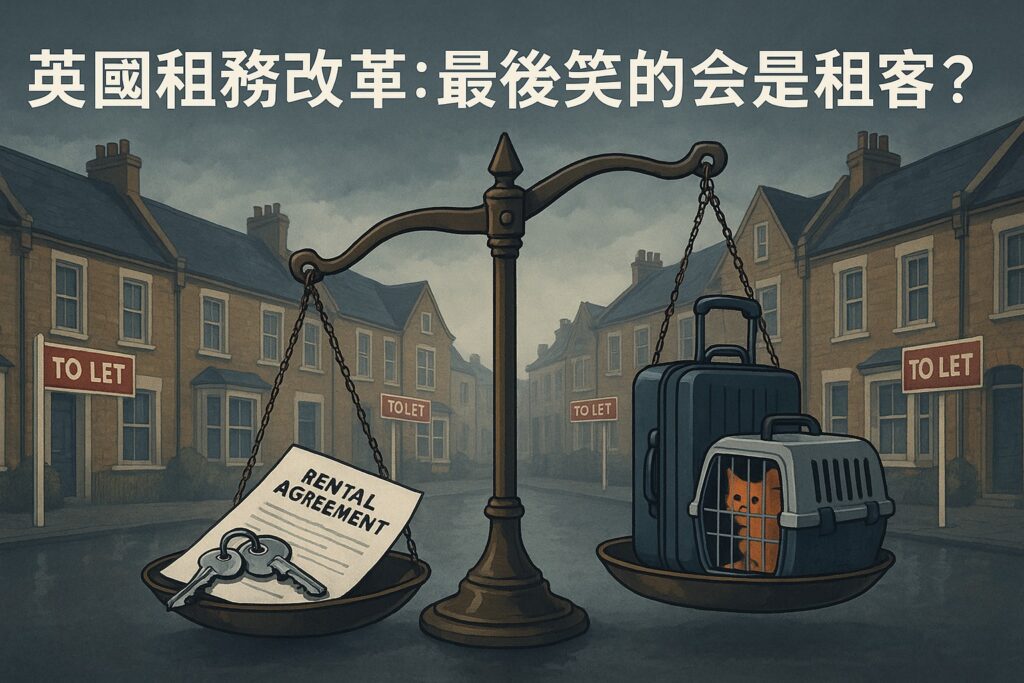
The bill did not stop at the national accounts; it seeped into ordinary days. The London School of Economics found that the border checks and sanitary rules brought by Brexit added almost £7 billion to British household food bills between late 2019 and early 2023, about £250 per household, and accounted for roughly a third of food price inflation over that period. To take a trip to the continent now, a British passport joins the long non-EU queue, and within the Schengen area you may stay no more than 90 days in any 180, with peak-season crossings running to hours. Even taking a cat or a dog along has become a chore: the old workaround of an EU pet passport was closed off in April 2026, so every trip now requires a fresh Animal Health Certificate, a vet visit and roughly £100, good for one journey only. None of these costs appeared on the ballot by itself, yet they are paid line by line.
The sharpest cost of all landed on the poorest places. The EU’s structural funds had for years been directed at the regions that had fallen behind, West Wales and the Valleys, Cornwall, the north east of England, the old industrial belts where the mines had closed and the factories had gone, and it was this money that paid for roads, training and small businesses. These were precisely the places that voted to leave most enthusiastically. The Leave camp promised that a UK Shared Prosperity Fund would replace every penny. In the event, the Welsh government calculates that of the roughly £1.4 billion in regional funding it should have received between 2021 and 2025, it came up more than £1 billion short; Cornwall, Yorkshire and the north east rank among the heaviest losers. The hand that had fed the left-behind was the one they had voted to cut, and Westminster did not make up the difference.
Forcing through the hardest version of all required the governing party to purge itself first. In 2019, 21 Conservative MPs who opposed a no-deal exit had the whip removed, several of them seasoned grandees. Two snap elections and three prime ministers all revolved around a question that had never been spelled out.
Ten years on, opinion has turned. In June 2026, 57 per cent of Britons thought leaving had been wrong and only 30 per cent still thought it right; asked to vote again, 55 per cent would rejoin, while the share wanting to stay outside has fallen to 31 per cent, against the 52 per cent who chose Leave in 2016. The shift is half regret and half arithmetic: the young oppose Brexit overwhelmingly, the old were its mainstay, and the electoral register turns over year by year. Yet whenever anyone proposes moving closer to Europe again, the same camp brands the smallest repair as a betrayal of Brexit, a surrender to Brussels. The will of the people they invoke, though, is the will of one day in 2016. That electorate is no longer this one, and a fair number of them are no longer alive.
Since the referendum, Britain has had 7 governments. Every few years we vote, without embarrassment, on who should run the country, changing the prime minister and changing the governing party, and nobody calls that a betrayal. But when it comes to the one decision that has proved a poor bargain and that opinion has since abandoned, we are told it was settled for all time and may never be revisited. If democracy lets us choose a government afresh every few years, why must Brexit alone be fixed forever? Respecting a result matters, and democracy cannot mean re-running a vote until your side wins. But democracy has never meant enshrining a single ballot from a single day as scripture beyond question. A nation that ages and renews itself owes no permanent obedience to a majority that has long since dispersed.
The referendum question was badly written from the start. It named no destination and set no checkpoint to confirm the terms, so whoever shouted the will of the people loudest took charge of the result. The Leave camp will say what was won was sovereignty, the right to govern oneself, and to many who voted that carries real weight. But the impoverished regions stripped of their subsidies, the households paying more, the travellers stuck in the queue have borne most of the cost, which prompts the only question worth asking. Remain or leave was never the hard part. Ten years on, the hard question is who all of this was actually for.