Author name: 胡思

The Identity Conundrum: Why the UK Needs Digital ID Cards

nIn Hong Kong, identity cards are an integral part of life. Whether enrolling in school, opening a bank account, renting a property, or getting a job, this small card is indispensable. Its necessity is unquestioned. Across Europe, most countries have long established identity card systems and are progressively digitizing them. The UK, however, remains a “cardless nation,” lacking both physical identity cards and a unified national digital version. In 2010, the coalition government abolished the previous administration’s identity card scheme and destroyed the database the following year. This absence of a system is increasingly becoming a vulnerability in the digital age. Without a convenient and reliable identity tool, public services operate sluggishly, and opportunities for illegal activities abound.n

nThe UK’s identity verification system is highly fragmented. Different procedures exist for tax filing, welfare claims, healthcare, employment, and housing. Citizens repeatedly submit the same information across various departments, leading to high administrative costs and frequent errors. In contrast, many European countries have established unified electronic identity infrastructures, enabling both public and private sectors to verify identities within a secure framework. Users need only authenticate once, allowing them to handle data with the “minimum disclosure principle,” such as confirming age eligibility without revealing birth dates. If the UK could establish such a foundational system, it would not only reduce document duplication but also enhance privacy protection and trust. For those lacking smart devices or internet access, the government could still provide non-digital options and on-site assistance to ensure no one is excluded.n

nImmigration and labor market pressures further highlight the issue. Without a unified identity system, frontline personnel often struggle to verify an individual’s true identity promptly. Illegal immigrants can present fake documents claiming to be British citizens, while unscrupulous employers or landlords can argue in court that they “did their best to check but couldn’t distinguish between real and fake,” thus evading responsibility. The current “Right to Work” and “Right to Rent” verification systems are fragmented and complex, leaving room for document forgery. Adopting verifiable, traceable, and revocable digital identities would allow employers and landlords to instantly verify the legal status of individuals, while maintaining audit records. This would close loopholes in illegal employment and black market rentals, offering greater protection to law-abiding businesses and citizens.n

nFiscal integrity and trust are also affected. HM Revenue and Customs estimates that tax losses due to evasion, misreporting, and fraud amount to tens of billions of pounds annually. The Daily Telegraph suggests that enhancing verification through digital identities could help the government recover approximately £600 million in taxes each year. This is not about increasing taxes but plugging gaps, ensuring honest taxpayers no longer foot the bill for fraudsters. When welfare claims and tax filings are based on verified identities, processes become faster and more accurate, raising the cost of fraud and enabling quicker approval for genuinely eligible individuals. Such systemic reform would enhance fairness and instill confidence in public finances.n

nNaturally, privacy and surveillance risks must be handled with care. The UK’s previous attempt to implement identity cards failed due to societal distrust in the government’s ability to protect data. Any new initiative must prioritize rights protection. First, information disclosure should be minimized and not centralized in a single database. Second, system design must be transparent and subject to external oversight, ensuring any cross-purpose data usage is legally justified and traceable. Third, offline options must be retained for vulnerable groups to prevent new forms of social exclusion due to technology. If these principles are upheld, digital identities could enhance rather than diminish privacy, empowering citizens to have greater control over their personal data.n

nThe implementation should start with high-risk and high-frequency scenarios, such as work rights, rental rights, and tax verification, gradually extending to healthcare and local government services. The government should also publish performance metrics, such as reductions in illegal employment cases, declines in tax error rates, and improvements in public service efficiency. Most European countries have already demonstrated that identity systems are not antithetical to freedom. With clear boundaries, strict oversight, and defined purposes, identity infrastructure is the foundation upon which a free society operates. Hong Kong’s experience also shows that with reasonable system design and sufficient credibility, identity cards can simultaneously safeguard privacy and efficiency. For the UK to restore order and trust, rebuilding a credible digital identity system is no longer a question of whether to implement it, but how to do so.n

The Identity Conundrum: Why the UK Needs Digital ID Cards Read More »

Wetherspoon: The People’s Pub Philosophy in the UK

nIn the UK, whether in London, Manchester, Glasgow, or a remote small town, you can always find a Wetherspoon. This is the most iconic chain pub in the UK, humorously referred to by Hong Kongers as the ‘British Café de Coral.’ With affordable prices, simple meals, and a casual atmosphere, it has its own order. In the morning, it’s a place for the elderly to read newspapers; at lunchtime, it fills with workers and students; and at night, it becomes a gathering spot for people to drink and chat. It is not just a pub but a part of everyday British life.n

nWetherspoon was founded by Tim Martin in 1979, with the first pub opening in Muswell Hill, North London. The name carries a hint of humor: ‘Wetherspoon’ was taken from a teacher at Martin’s school who struggled to control the class, while ‘J D’ was borrowed from a character in an American TV series. This anti-establishment humor perfectly aligns with the brand’s later positioning: practical without pretension. The company went public in 1992 and now has over 700 branches, making it one of the most influential food and beverage chains in the UK.n

nIts expansion strategy is unique. Many Wetherspoon pubs are located in former post offices, banks, or theaters, retaining the original building structure while adding local history introductions and custom carpets. Each pub has an independent name, such as The Moon Under Water, The Gate Clock, or The Robert Shaw, paying tribute to local figures or landmarks. This local naming creates a sense of familiarity, but the operations behind it are highly standardized: a unified menu, interior design, and mobile app across the country. No matter which one you enter, you feel ‘the same yet different’—this is the secret of its success.n

nWetherspoon’s business model extends beyond pubs. Its Wetherspoon Hotels offer affordable accommodation, often co-located with pubs, allowing customers to ‘eat, drink, and stay’ in one place. Travelers can enjoy coffee during the day and a drink at night before heading upstairs to rest. These hotels are usually located in city centers or near train stations, offering reasonable prices and comprehensive facilities, making them popular with short-term travelers and business people. This cross-industry operation not only increases revenue but also reinforces the brand’s image of ‘affordable convenience.’n

nTo summarize Wetherspoon’s success, it can be attributed to three characteristics: cheap, fast, and inclusive.n

nCheap is its foundation. Wetherspoon leverages economies of scale to lower costs, insisting on small profits but quick turnover. In an era when the average price of a pint of beer has exceeded £5, it still sells for just over £2. Coffee, breakfast, and all-day meals are also highly competitive. Over two decades, the proportion of revenue from food and drink has risen from less than 20% to nearly 40%, becoming a pillar of profitability.n

nFast is its rhythm. Customers order via mobile phones, with no service charge, and meals are delivered within minutes. This streamlined design caters to modern efficiency while allowing customers to feel at ease. It is one of the few chains open from early morning until late at night, providing space for the elderly, students, workers, and travelers alike.n

nInclusivity is its spirit. Traditional pubs often belong to a specific community, but Wetherspoon welcomes everyone—from office workers to the homeless, from prams to wheelchairs. It breaks down social boundaries, restoring the pub to its role as a ‘public living room.’n

nRecently, the so-called ‘Wetherspoon Game’ has emerged: young people invite strangers via social media to order for them at different Spoons branches, then share the drinks and meals they receive. This game-like interaction may seem like a joke, but it actually reflects the brand’s cultural penetration. The game exists precisely because all branches have consistent systems, menus, and processes—this consistency allows Wetherspoon to transcend geographical boundaries and become a nationwide social platform.n

nFounder Martin has been controversial for his support of Brexit and political statements, but his business acumen remains sharp. He established non-smoking areas before government legislation and launched mobile ordering before the pandemic. This pragmatic innovation keeps the brand resilient in turbulent times.n

nIn an era when the number of pubs in the UK is declining, Wetherspoon plays a paradoxical yet important role. Some criticize it for eroding local culture through chain operations, while others believe it preserves the last space for popular socializing. It has no music, no fancy decorations, yet it allows people to sit quietly with a drink, making this simplicity a symbol of modern Britain.n

nIn times of rising living costs and increasing social division, Wetherspoon represents an undervalued virtue—affordable, accessible, and coexistent. It reminds people that true public spaces are not in expensive coffee shops or members-only clubs, but at a table where you can sit down at any time.n

Wetherspoon: The People’s Pub Philosophy in the UK Read More »

London’s Journey from Smog to Clean Air: Progress and Challenges

nThe term “Fog City” once symbolized London, but it was not a poetic mist; it was a toxic haze of coal smoke and exhaust fumes. In the winter of 1952, a temperature inversion trapped pollution, shrouding the city in a yellowish gloom. Within five days, thousands died from respiratory distress. This “Great Smog” finally awakened the UK, leading to the 1956 Clean Air Act, which gradually phased out coal heating and established smokeless zones, marking the beginning of London’s rebirth.n

nSeventy years later, daylight once again illuminates the city. Low Emission Zones and Ultra Low Emission Zones have been implemented, forcing high-pollution vehicles off the roads. Following the 2023 expansion of the ULEZ to cover Greater London, nitrogen oxide levels have nearly halved. Electric vehicles are ubiquitous, with half of the iconic black cabs now zero-emission models. The energy mix has shifted towards natural gas and renewable sources, and both the Underground and buses are becoming cleaner. London is no longer the smog-filled city of old.n

nHowever, progress does not equate to completion. Air pollution continues to claim lives. The World Health Organization estimates that approximately eight million people die prematurely each year due to air pollution; UK research indicates that in 2019 alone, nearly 50,000 deaths were linked to pollution. In London, around 4,000 people die annually for this reason. These figures are not warnings but reminders: the air has improved, but it is not yet clean.n

nLondon’s experience is commendable and should be replicated. Manchester, Birmingham, and Bristol remain mired in congestion and exhaust, with local policies hesitant and public opinion divided. Air knows no borders, and pollution does not discriminate between north and south. If only London breathes clean air while other cities remain shrouded in smog, environmentalism becomes nothing more than an illusion on the map.n

nTrue progress envisions an era without exhaust pipes, where all cars glide silently, accompanied only by the sound of wheels and wind. Our children, or perhaps their children, may one day ask: how did you live in such dirty air? By then, the question may seem unbelievable—and rightly so.n

nLondon’s transformation from “Fog City” to “Clean City” is a triumph of policy and technology, as well as a reflection of societal introspection. Yet blue skies are not permanent, and cleanliness is not destiny. Only through continuous implementation and nationwide advancement can we ensure that the city does not revert to its shadowy past. Clean air should not be a privilege but a fundamental human right.n

London’s Journey from Smog to Clean Air: Progress and Challenges Read More »

Parking Apps: Government Action Needed, Not Platform Overhaul

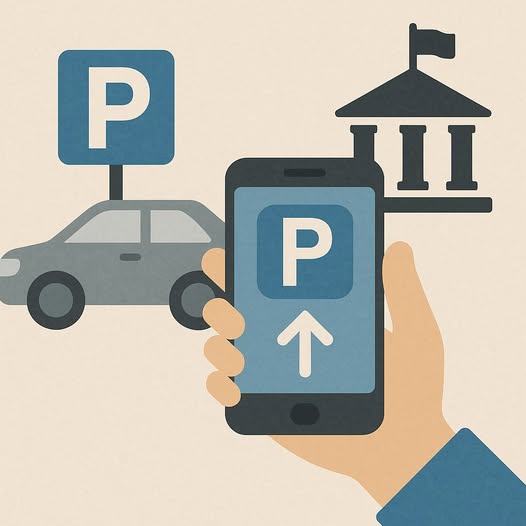
nThe UK’s Department for Transport has invested heavily in creating the ‘National Parking Platform’ to address the issue of drivers downloading too many parking apps. However, this initiative has not simplified matters; instead, it has made a straightforward public service unnecessarily complex. What drivers truly need is not a multi-layered interoperable system, but a government app that can be used nationwide. Rather than establishing a massive platform for private companies to manage, the government should develop it themselves. This is not only technically feasible but also prevents the privatization of public resources once again.n

nCurrently, local governments do not develop their own parking apps but outsource this to private companies. These companies charge a ‘convenience fee’ for each transaction and profit from advertising and data analytics. The cost of this so-called ‘convenience’ is that drivers end up paying more while helping the government save on costs. Electronic payments have already reduced the costs of maintaining coin machines, handling cash, and printing tickets for local governments, which should make parking cheaper. Instead, users bear an additional burden. This inverted logic completely contradicts the principles of public service.n

nEven more absurd is that the Department for Transport has not tightened control over this outsourcing chaos but has instead created a ‘platform’ to unify intermediaries. The government funds the system’s construction and then transfers operational rights to non-profit organizations or private companies. Local governments become clients of the platform, and drivers become fee-paying subjects. Public parking is fragmented into a chargeable business, and public data is turned into a potential asset. This so-called ‘innovation’ is essentially an experiment in excessive privatization, where taxpayers fund the infrastructure while companies collect the rent.n

nIf the government genuinely wants to make parking more convenient, there is no need to take such a convoluted route. Developing a nationwide government app is no more challenging technically than building a national platform. The functionality for parking payments is already mature: entering a license plate, selecting a time slot, electronic payment, and notification reminders are all readily available technologies. Local governments only need to connect their backend systems and policies, allowing the entire nation to use a single app. Drivers would only need to download it once to use it anywhere, with clear accountability, public ownership of data, and transparent fee structures, truly benefiting the public.n

nSuch a model would better leverage economies of scale. With council car parks and street parking combined, the government is already the largest provider of parking spaces nationwide. If the entire country used the same app, the government could negotiate lower payment processing fees through centralized bargaining and share maintenance costs. The average cost per transaction would decrease, while system security and user experience would improve. This is true efficiency, relying on public unification rather than platform commissions.n

nOver 70% of drivers have encountered difficulties using existing parking apps, from unstable signals to system crashes. These problems are not due to a lack of platforms but because there are too many. If the government truly cares about the public, it should reduce the layers of intermediaries and return parking to simplicity. Drivers do not care which company operates behind the scenes; they just want to park easily anywhere without being charged ridiculous ‘convenience fees’.n

nPublic parking is a public resource and should not be packaged as a stage for corporate innovation. The government’s responsibility is to provide reliable, low-cost, and transparent services, not to let private enterprises hitch a ride. Launching a nationwide official app is not only feasible but also common sense. After all, it’s just a parking app—how hard can it be?n

Parking Apps: Government Action Needed, Not Platform Overhaul Read More »

Beyond the ‘Small Boats’: Unveiling the UK’s Asylum System Gaps

nIn the UK, the term ‘small boats’ often stirs emotional reactions when discussing asylum issues, as if it were synonymous with a looming threat. However, the reality is far more complex than such slogans suggest. Since Brexit, the UK is no longer bound by the Dublin III Regulation, which allowed the transfer of asylum seekers to the first EU country they entered. With this route closed, smuggling networks have expanded, making small boat crossings a common occurrence. The problem lies in systemic gaps, not the refugees themselves. Relying on slogans for reassurance is ultimately futile.n

nAccording to Home Office data, in the year ending June 2025, about half of asylum seekers arrived in the UK through irregular routes, while another 37% entered legally on student, work, or visitor visas and applied for asylum while still within their visa validity. In other words, many enter legally and seek asylum due to worsening situations or increased personal risk. Some Hong Kong residents, entering the UK visa-free as short-term visitors with SAR passports, have also applied for asylum. The system permits this, so how is it ‘illegal’? Simplifying the entire group as illegal immigrants only obscures the issue.n

nConsider the outcomes of asylum decisions. Long-term statistics from the Parliamentary Library show that in recent years, about two-thirds of applicants eventually receive refugee status or other forms of protection after appeals and reviews. This indicates that most applicants meet the standards of the Geneva Convention. If some still insist that ‘most are bogus refugees,’ the issue lies not in the facts but in prejudice. A rational society relies on evidence, not anger, to shape policy.n

nRegarding expenditure, public misconceptions run deep. For the 2024/25 fiscal year, total public spending is approximately £1.28 trillion, with asylum support accounting for only £4 billion, or 0.31%; even at the previous year’s high of £4.7 billion, it remains just 0.3–0.4%. In comparison, NHS annual spending exceeds £200 billion, state pensions and social security cost hundreds of billions, and the defense budget surpasses £60 billion. Asylum-related spending is negligible in macroeconomic terms, and importantly, most of it falls under Official Development Assistance (ODA) projects. According to international guidelines, ODA can only be used for foreign aid, not domestic purposes. Therefore, cutting this spending would not increase budgets for domestic education, healthcare, or transport. The real expense comes from administrative delays and hotel accommodations, not the refugees themselves. Efficiency and humanity are not opposites but two sides of the same coin.n

nThe worsening ‘small boats’ crisis is rooted in systemic issues. Post-Brexit, the UK is isolated from the European asylum system, with transfer and family reunification clauses now history. The country relies on bilateral agreements, which are limited in scope and uncertain in outlook. When systems weaken, illegal networks naturally grow. Without structural repairs, political posturing and emotive slogans only add costs without solving the problem.n

nMore alarming is the shift in public discourse towards extremism. Demonizing asylum seekers often precedes a wave of xenophobia. When society routinely labels this vulnerable group as a ‘threat’ or ‘burden,’ the next targets could be legal immigrants, then non-native-born individuals, eventually leading to divisions based on race and skin color. History repeatedly shows that this path ends in division and resentment. Reason and facts may be silent, but they are never ineffective. May the UK find the courage to return to a place that values reason, upholds the rule of law, and trusts in humanity.n

Beyond the ‘Small Boats’: Unveiling the UK’s Asylum System Gaps Read More »

The Absurdity of UK Council Tax: Lessons from Thatcher to Hong Kong

nThe UK’s Council Tax is a historical mistake born out of political chaos in the early 1990s. The system was introduced after Prime Minister Margaret Thatcher’s imposition of the Poll Tax, which sparked nationwide protests and riots. Her policy not only destroyed her own reputation but also led to the loss of a parliamentary seat for then Conservative Party Chairman Lord Chris Patten in the 1992 election. Patten, who later became the last Governor of Hong Kong, witnessed how a tax system could become a fatal burden for the ruling party. To quell public anger, John Major’s government hastily introduced the Council Tax in 1993 to replace the Poll Tax. While the new system stopped the political hemorrhaging, it was a rushed and compromised solution that sowed the seeds for future chaos.n

nThe biggest issue with the Council Tax is its outdated tax base. Property valuations in England are still based on 1991 figures and have not been updated for over thirty years. While property prices across the country have changed dramatically, taxes are still calculated using Cold War-era numbers. According to analysis by the Financial Times, more than half of all homes in the UK are incorrectly categorized in tax bands. As a result, multi-million-pound London apartments and ordinary homes in the North often pay similar tax amounts. This design not only violates the principle of fairness but also distorts the financial foundation of local governments.n

nRegional disparities further exacerbate this injustice. Residents in Burnley pay 4.5% of their income on Council Tax annually, while in Westminster, London, it’s only 0.1%. Poorer areas bear a heavier burden, while wealthier areas pay less. Worse still, poorer counties often require more social services spending—from elder care to public housing maintenance—while wealthier counties can supplement their finances with parking fees, fines, and commercial activities. The central government should balance these disparities through grants, but over the past decade, funding for local governments in the UK has been significantly cut, worsening this fiscal inequality. Consequently, poorer areas face the dual pressures of higher tax rates and reduced public services.n

nThe root of the problem lies in the misaligned system design. Council Tax uses property values as a long-term tax base but ignores the structural imbalances caused by asset accumulation and land scarcity. Low-income families, living in lower-value areas, end up paying relatively more, while the wealthy, owning high-value properties, enjoy implicit subsidies. Economists widely agree that the UK needs a wealth tax based on land or property net value to replace it. This would not only align tax burdens with wealth but also improve housing market efficiency and reduce regional distortions.n

nIn contrast, Hong Kong’s ‘Rates and Government Rent’ system, also originating from British colonial times, is fairer. Rates are reassessed annually based on property rental value, and government rent is adjusted according to land value. This means tax amounts are updated with market changes, making the tax burden more reflective of the actual economic situation. Even with Hong Kong’s volatile property prices, the tax system itself retains a self-correcting feature. By comparison, the UK’s Council Tax remains stuck in a static 1991 world, leaving taxpayers with a system disconnected from reality, lacking transparency and legitimacy.n

nThe Blair government once abandoned revaluation due to fear of public backlash, and now Chancellor Jeremy Hunt is similarly reluctant to address this ‘political minefield’. However, continued delay will only further undermine the system. Council Tax not only weakens local finances but also erodes public trust in fairness. If the UK is to truly rebuild the justice of its tax system, it must bravely move away from this 30-year-old temporary compromise and push for a new wealth-based local tax system. Only then can local governance return to a path of fairness and reality.n

The Absurdity of UK Council Tax: Lessons from Thatcher to Hong Kong Read More »

Earned Settlement: Fair or Feasible, But Not Both

nThe concept of ‘earned settlement’ suggests that permanent residency can be exchanged for tax contributions, which sounds fair: the more taxes one pays, the more benefits one receives. However, upon closer examination of the UK’s tax system and public expenditure structure, this idea proves neither fair nor feasible. If only certain taxes are considered, the system would penalize immigrants who contribute in other ways; if all taxes and indirect benefits are included, the complexity becomes unmanageable. Ultimately, the system risks either being biased or becoming mired in bureaucratic quagmire.n

nThe fiscal contributions of immigrants extend beyond income tax and National Insurance. Anyone living in the UK pays council tax, fuel duty, vehicle tax, and VAT on every purchase. Although VAT is collected by businesses, the ultimate burden falls on consumers, meaning every purchase represents a tangible tax contribution. If the system only accounts for income and employment taxes, it overlooks this most common and stable source of revenue. In theory, fairness would require considering VAT; in practice, this is nearly impossible. The standard VAT rate is 20%, but energy and heating are taxed at 5%, and food and books are zero-rated, with some services exempt or outside the tax net. To track five years of tax burden accurately would require everyone to record every receipt via an app from now on. Omitting it would be unfair; including it would be unfeasible.n

nAnother often overlooked item is employer National Insurance contributions. Employers must pay an additional 15% on employee salaries. While nominally borne by companies, economically, part of this cost is passed on to wages and prices. If the system only accounts for the employee’s contributions, it underestimates the immigrant’s overall tax contribution.n

nFocusing solely on salary income as a measure of contribution can mislead policy direction. The vibrancy of the UK economy stems from innovation and entrepreneurship, not just salaried workers. Many immigrants start companies, initially drawing modest salaries, yet they pay corporate taxes, employ local staff, and drive investment and employment. A system that rewards stable employment while ignoring entrepreneurial risks and long-term benefits effectively penalizes the most dynamic individuals. True contributions should encompass value and opportunity creation, not just short-term figures on a tax bill.n

nIndirect contributions should not be overlooked either. Immigrants’ consumption supports the retail, hospitality, transport, and energy markets; their labor fills shortages in healthcare, construction, and logistics sectors. Their spending and employment activities create a multiplier effect, with each transaction generating ripple benefits throughout society. These induced effects, although not individually recorded, are the lifeblood of local economies. Focusing solely on tax records when discussing contributions inevitably leads to distorted conclusions.n

nConversely, calculating ‘costs’ is even more challenging. Public services are not billed per individual: visiting a GP, police or fire services, and using roads and streetlights are shared by all. Education is similar. The state provides education for children as a long-term investment in society. Charging these costs to parents would negate the nature of public education; charging them to children would absurdly require them to ‘repay’ their schooling upon adulthood. Public services cannot be accounted for on an individual ledger without undermining the social contract.n

nIf policy insists on annually offsetting contributions against costs, the consequences could be dire. Families might delay having children for fear of ‘burdening the social ledger’; young people pursuing further education or entrepreneurship might see their short-term income decline and be deemed ‘ineligible’; women taking maternity leave or caring for family might be misjudged as ‘low contributors’. Such a system would not only be unfair but would also undermine sustainable demographic and economic development.n

nThe more immediate issue is the administrative burden. Even if the current system functions, implementing earned settlement would instantly double the workload of the Home Office. Personal tax returns, employer contributions, household expenses, and welfare records would all require cross-checking, causing administrative costs to skyrocket, ultimately borne by taxpayers and applicants alike. What appears to pursue fairness in reality increases waste and delays, entangling the system in further complexity.n

nA truly fair and sustainable system should be based on simple, objective, and verifiable criteria—legal residence duration, law-abiding record, English proficiency, and self-sufficiency—rather than a pseudo-precise tax algorithm to determine who ‘deserves to stay’. Fairness lies not in exhaustive calculations but in equal treatment.n

nFor earned settlement to be fair, it must include all taxes and indirect contributions; to be feasible, it can only selectively account, thereby losing fairness. The two cannot coexist. Rational policy should acknowledge the essence of the social contract: everyone contributes and benefits at different stages. Only by replacing political slogans with calm and reason can a stable and enduring immigration system be established.n

Earned Settlement: Fair or Feasible, But Not Both Read More »

Reassessing Electric Vehicles: Data and Lifecycle Analysis Speak Volumes

nIn the UK, outdated perceptions of electric vehicles (EVs) persist: limited range, inconvenient charging, and high prices. While these views may have been valid a decade ago, they are now far removed from reality. Recent advancements in battery technology, increased charging network density, and revamped government subsidy policies have transformed the market landscape. Discussions about EVs can no longer remain one-dimensional; they must be based on data, cost, and lifecycle emissions. This energy transition has moved from an idealistic phase to a pragmatic reality.n

nFirst, range is no longer the Achilles’ heel of EVs. Mainstream models now typically achieve a tested range of 200 to 300 miles, with some high-performance models exceeding 400 miles. For instance, the Mercedes-Benz EQS 450+ boasts an official WLTP range of 453 miles, enough to cover the journey from London to Edinburgh. This progress is not coincidental but results from increased battery energy density, aerodynamic design, and advanced thermal management technologies. According to National Grid data, the average daily driving distance for UK motorists is just 7 miles. For most people, EV range is more than sufficient, and “range anxiety” reflects psychological inertia rather than the current technological state.n

nRegarding price, policy changes are gradually lowering barriers. From July 2025, the UK government will introduce a new round of the Electric Car Grant, offering up to £3,750 for new EVs priced under £37,000. After subsidies, many entry-level crossovers and hatchbacks are priced between £26,000 and £30,000, comparable to petrol cars. Some brands further reduce monthly payments to levels similar to fuel vehicles through salary sacrifice or long-term leasing schemes. This is not merely a marketing strategy but the result of policy, supply chain, and economies of scale working in concert. When purchase decisions are based on a “three-year total cost of ownership” rather than a simple price comparison, the appeal of EVs becomes more apparent.n

nThe cost advantage of using EVs is even more direct. For owners who can charge at home, adopting night-time low electricity rates reduces per-mile electricity costs to about one-sixth of petrol. Additionally, the simpler structure of EVs, with no engine, gearbox, or oil system, results in significantly lower maintenance needs and long-term servicing costs compared to fuel vehicles. When fuel, maintenance, taxes, and low-emission zone exemptions are considered, the overall cost of EVs is often more economically viable. Even for those relying primarily on public charging, the cost difference remains, albeit with slightly smaller savings.n

nCharging infrastructure is also rapidly expanding. By the third quarter of 2025, the total number of public charging points across the UK is expected to reach 86,000, spread over more than 43,000 locations, with an annual growth rate exceeding 20%. The proportion of fast and ultra-fast chargers is increasing, reducing waiting times and enhancing availability. For residents without private parking, the prevalence of roadside lamp post charging and community car park facilities makes daily recharging less challenging. While some areas still face uneven distribution, the overall trend indicates that charging convenience is steadily catching up with traditional refueling methods.n

nFinally, the most misunderstood aspect—environmental benefits. Critics often focus solely on the carbon emissions during battery production, overlooking lifecycle emissions. According to research by the International Council on Clean Transportation (ICCT), EVs in Europe emit about 70% less greenhouse gases over their entire lifecycle compared to petrol cars. The UK Energy Trust estimates that the overall emissions of a typical EV are about one-third of those of a fuel vehicle. This is because EVs have zero tailpipe emissions during operation, significantly reducing carbon emissions and improving urban air quality. As the share of renewable energy in the grid continues to rise, the environmental advantages of EVs will become even more pronounced.n

nThe persistence of myths surrounding EVs is not due to technological limitations but to outdated perceptions. Old reports emphasize anxiety and inconvenience, ignoring the fundamental changes of recent years. Today, with policy subsidies, improved range, simplified maintenance, and enhanced infrastructure, EVs have evolved from an emerging technology to a viable option. They are no longer a symbol of luxury but a crucial tool in transitioning to a low-carbon economy. The real question is not “if” but “when” to fully embrace this energy transition.n

Reassessing Electric Vehicles: Data and Lifecycle Analysis Speak Volumes Read More »

The Inevitable Return to Europe: Timing and Implementation Challenges

nThe costs of Brexit are gradually becoming apparent. Starting in October, British travelers entering the EU will be subject to the Entry/Exit System (EES) for fingerprint and facial recognition registration. This is not a punishment from the EU but a direct consequence of Brexit: British citizens have lost the right to free movement, resulting in additional scrutiny and procedural delays. The slogan “take back control of our borders” has now become a symbol of restricted freedom of movement. Sovereignty has returned, but convenience has not.n

nThe economic impact is even more fundamental. According to estimates by the Office for Budget Responsibility (OBR), Brexit has reduced the UK’s long-term GDP by about 4%. The shrinking economic size has led to a significant decrease in tax revenue, weakening the government’s discretionary resources. The anticipated trade dividends and investment boom have not materialized; instead, there are higher import and export costs and declining business confidence. As a result, the Treasury has been forced to raise taxes and cut spending, increasing pressure on public services and stalling economic growth. Brexit, once portrayed as a path to prosperity, has now become synonymous with long-term constraints.n

nThe institutional burden has also expanded. The UK must now handle regulatory, trade negotiations, subsidies, and border functions previously managed by the EU, leading to a rapid expansion of the central government. The number of civil servants has increased significantly in recent years, especially in customs and border surveillance departments. Although functions have increased, efficiency has not improved. More bureaucracy brings higher costs but fails to deliver greater efficiency. This administrative expansion reveals another side of Brexit: in maintaining an independent system, the UK has become a heavier and slower state apparatus.n

nImmigration and border policies further highlight the isolationist dilemma. After exiting the Dublin III Regulation, the UK lost the mechanism to return asylum seekers to the first country of entry. This has left the government unable to effectively manage cross-border applications, turning the “small boat arrivals” into an unsolvable political issue. New policies are repeatedly overturned by courts, reflecting a governance vacuum lacking institutional support. This is not a singular failure of the ruling party but a structural outcome of the UK’s withdrawal from the European cooperative network.n

nEconomic pressures and institutional fractures have reignited discussions on rejoining Europe. The business community broadly advocates for re-aligning with EU frameworks to reduce trade friction and restore market confidence. The Liberal Democrats support rejoining the single market as the first step to economic recovery; the Green Party goes further, advocating for eventual full EU membership. While the Labour Party remains cautious, public opinion is rapidly shifting. A YouGov survey shows that over half of Britons believe Brexit was a mistake, with a majority supporting rejoining the EU.n

nRejoining Europe is no longer an emotional issue but a pragmatic choice. The economic contraction, declining tax revenues, and rising administrative costs caused by Brexit are gradually eroding the UK’s global competitiveness. The question is no longer whether to return to Europe, but when and how. If the UK can proactively design a cooperative framework, it can still find a balance between sovereignty and integration; if it continues to delay, it will ultimately have to accept Europe’s terms passively. The path to rejoining may be difficult, but it is transitioning from a political debate to a historical inevitability.n

The Inevitable Return to Europe: Timing and Implementation Challenges Read More »

Farage’s Leadership Could Lead to UK’s Self-Destruction

nRecent national polls indicate that Reform UK is now leading the Labour Party in terms of support. The latest Ipsos survey shows Reform UK with a 34% approval rating, leading by approximately nine percentage points. Voter disillusionment with the traditional two major parties’ long-standing inability to reform has allowed Farage to rise as an ‘anti-establishment’ figure. However, his proposals do not aim to reshape the UK but to dismantle it. Should Reform UK truly come to power, the country could face not only economic turmoil but also the collapse of its foundational structures.n

nFarage has publicly praised former Prime Minister Liz Truss’s ‘mini-budget’ of 2022, calling it ‘the best Conservative budget since 1986.’ This statement was widely criticized at the time. The budget led to market panic, a sharp drop in the pound, soaring bond yields, and ultimately forced Truss to resign. This history reveals Farage’s economic perspective: he advocates for unfettered tax cuts and market liberalization, even though such approaches have been proven to undermine confidence. Now, he is campaigning for power with similar slogans, and the risks are evident.n

nMore destructive is his advocacy for the UK to withdraw from the European Convention on Human Rights (ECHR). This is not merely a diplomatic or legal stance but could be the catalyst for the disintegration of the United Kingdom of Great Britain and Northern Ireland. The Belfast Good Friday Agreement, which is central to Northern Ireland’s peace, is underpinned by the ECHR. Withdrawal would destabilize the agreement’s legal foundation, potentially reigniting local conflicts. Scotland has already expressed a desire to remain within the human rights framework and the EU. If London proceeds unilaterally, calls for independence will inevitably grow louder. The UK’s unity could first fracture in Northern Ireland, then spread to Scotland, ultimately tearing the nation apart.n

nExiting the ECHR would also bring UK judicial and economic cooperation with the EU and the European Free Trade Association to a near standstill. According to the terms of the UK-EU Trade and Cooperation Agreement, if the UK ceases to adhere to the human rights convention, the EU could terminate judicial cooperation, policing collaboration, and data sharing. This would increase cross-border trade risks, double legal costs, and disrupt logistics and supply chain operations. Businesses would face higher insurance and contract risks, leading to increased import costs. Ultimately, ordinary households would suffer, as inflationary pressures would become harder to alleviate. The UK would become isolated within the European economic system, with rising prices and declining investment confidence occurring simultaneously.n

nIn terms of economic policy, many of Reform UK’s proposals have been criticized by the Independent Fiscal Studies (IFS) as ‘unfunded commitments.’ Farage claims he will significantly cut taxes, reduce ‘wasteful’ spending, limit legal immigration, and restructure the central bank system, yet he has not explained the source of funding. Such baseless promises are likely to trigger market panic. If the government ultimately relies on borrowing to fill the gap, its credibility will inevitably decline. Bond yields would rise, currency devaluation would occur, and inflation would worsen, replaying the crisis of the Truss era. It seems Farage has not learned from the lessons of the mini-budget.n

nEqually dangerous is Reform UK’s regression in energy and infrastructure. Farage advocates abolishing the net-zero emissions target and halting the HS2 high-speed rail project, even if the latter is near completion. This means abandoning long-term growth and industrial modernization. Renewable energy and infrastructure investment are key engines for job creation and regional development, yet they have become casualties of political slogans. Investors, faced with policy reversals, will inevitably withdraw and wait. Since Brexit, the UK’s potential GDP has already fallen by about four percentage points. If compounded by such misguided policies, the economic outlook will become even bleaker.n

nReform UK’s immigration policy exposes its contradictions. They claim to ‘expel illegal immigrants’ and ‘tighten legal immigration,’ yet overlook the UK’s heavy reliance on overseas personnel in healthcare, research, and higher education. Nearly one-fifth of NHS staff are foreign nationals, and tuition fees from international students are crucial for university operations. If Reform UK governs and tightens entry comprehensively, healthcare and education will inevitably face staffing crises, and local economies will suffer a chain reaction. The result will be that legal immigrants are wrongly targeted, while the issue of illegal immigration remains unresolved.n

nOverall, Farage’s political project is neither pragmatic nor stable. While he uses ‘taking back control’ as a slogan, in reality, he is promoting a self-dismantling process from institutions, the economy, to national structure. Exiting the ECHR could lead to the disintegration of the United Kingdom, unfunded policies would trigger fiscal and inflation crises, reversing energy transition and infrastructure investment would weaken productivity, and tightening immigration would destroy public services. True national sovereignty lies not in building walls but in maintaining an open, stable, and credible system. If Farage’s path becomes reality, the UK will embark on a self-destructive journey amid the drumbeats of populism.n

Farage’s Leadership Could Lead to UK’s Self-Destruction Read More »

Scroll to Top