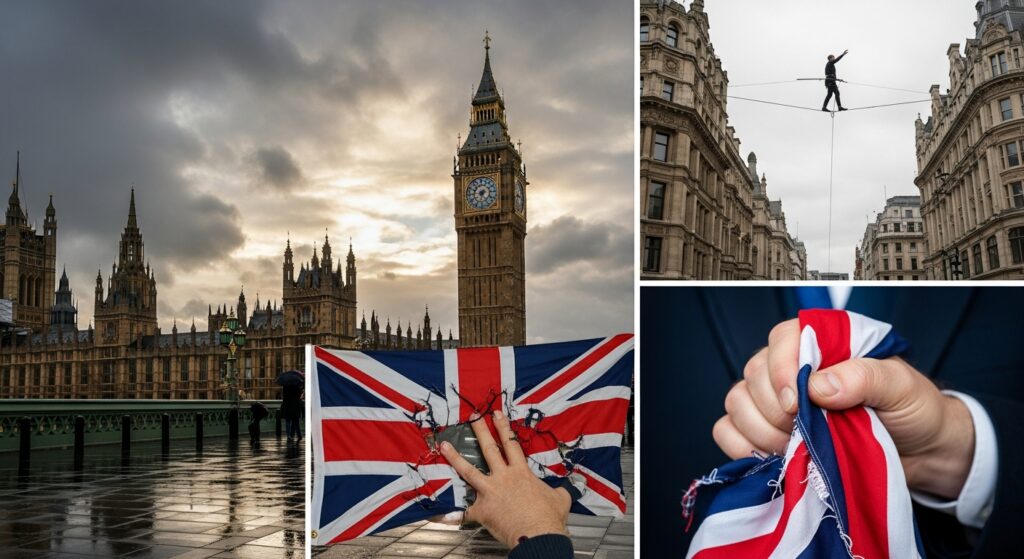
nIn the UK, the term ‘small boats’ often stirs emotional reactions when discussing asylum issues, as if it were synonymous with a looming threat. However, the reality is far more complex than such slogans suggest. Since Brexit, the UK is no longer bound by the Dublin III Regulation, which allowed the transfer of asylum seekers to the first EU country they entered. With this route closed, smuggling networks have expanded, making small boat crossings a common occurrence. The problem lies in systemic gaps, not the refugees themselves. Relying on slogans for reassurance is ultimately futile.n
nAccording to Home Office data, in the year ending June 2025, about half of asylum seekers arrived in the UK through irregular routes, while another 37% entered legally on student, work, or visitor visas and applied for asylum while still within their visa validity. In other words, many enter legally and seek asylum due to worsening situations or increased personal risk. Some Hong Kong residents, entering the UK visa-free as short-term visitors with SAR passports, have also applied for asylum. The system permits this, so how is it ‘illegal’? Simplifying the entire group as illegal immigrants only obscures the issue.n
nConsider the outcomes of asylum decisions. Long-term statistics from the Parliamentary Library show that in recent years, about two-thirds of applicants eventually receive refugee status or other forms of protection after appeals and reviews. This indicates that most applicants meet the standards of the Geneva Convention. If some still insist that ‘most are bogus refugees,’ the issue lies not in the facts but in prejudice. A rational society relies on evidence, not anger, to shape policy.n
nRegarding expenditure, public misconceptions run deep. For the 2024/25 fiscal year, total public spending is approximately £1.28 trillion, with asylum support accounting for only £4 billion, or 0.31%; even at the previous year’s high of £4.7 billion, it remains just 0.3–0.4%. In comparison, NHS annual spending exceeds £200 billion, state pensions and social security cost hundreds of billions, and the defense budget surpasses £60 billion. Asylum-related spending is negligible in macroeconomic terms, and importantly, most of it falls under Official Development Assistance (ODA) projects. According to international guidelines, ODA can only be used for foreign aid, not domestic purposes. Therefore, cutting this spending would not increase budgets for domestic education, healthcare, or transport. The real expense comes from administrative delays and hotel accommodations, not the refugees themselves. Efficiency and humanity are not opposites but two sides of the same coin.n
nThe worsening ‘small boats’ crisis is rooted in systemic issues. Post-Brexit, the UK is isolated from the European asylum system, with transfer and family reunification clauses now history. The country relies on bilateral agreements, which are limited in scope and uncertain in outlook. When systems weaken, illegal networks naturally grow. Without structural repairs, political posturing and emotive slogans only add costs without solving the problem.n
nMore alarming is the shift in public discourse towards extremism. Demonizing asylum seekers often precedes a wave of xenophobia. When society routinely labels this vulnerable group as a ‘threat’ or ‘burden,’ the next targets could be legal immigrants, then non-native-born individuals, eventually leading to divisions based on race and skin color. History repeatedly shows that this path ends in division and resentment. Reason and facts may be silent, but they are never ineffective. May the UK find the courage to return to a place that values reason, upholds the rule of law, and trusts in humanity.n