Author name: 胡思

When High-Speed Rail Plans Derail: The HS2 Dilemma

nThe UK’s high-speed rail project was once envisioned as a monumental undertaking. Now, it has been reduced to half its original scope. Some argue that HS2 merely aims to speed up trains, shortening the journey from London to Birmingham. While this seems reasonable, it misses the point. The true value of this line lies not in speed, but in capacity.n

nThe UK’s railways are already overcrowded. From London to Manchester, freight and passenger trains share the same tracks. Long-distance trains dominate the rails, leaving no room to increase local services. HS2’s purpose is to create a new track for long-distance trains, allowing the existing lines to be revitalized. This would enable more frequent local services and increase freight capacity, providing relief to the entire system.n

nThis is the core logic of HS2: it’s not about running faster, but about running more; it’s not about who arrives first, but ensuring everyone can travel.n

nPhase 1, from London to Birmingham, is already under construction. Phase 2a was planned to extend north to Crewe, with 2b reaching Manchester and Leeds, forming a comprehensive design. Unfortunately, the government announced its suspension in 2023. The stated reason was cost, but this is shortsighted. Without 2a, long-distance trains remain on the old lines, significantly reducing capacity benefits. Without the northern section, the north-south divide persists, and the promise of northern revitalization remains unfulfilled.n

nThe regional disparity in the UK is well-known. London and its surroundings absorb most of the funds and talent, with GDP twice that of the north. Manchester, Leeds, and Sheffield have long suffered from underinvestment, with low wages, outdated infrastructure, and limited opportunities. This is not a natural fate, but a policy choice. HS2 was meant to change all that. By connecting the north and south, the flow of goods, people, and capital would increase. The north wouldn’t have to rely on London, allowing for economic balance. Now that the project is cut, the path to equilibrium is severed.n

nMore regrettably, environmental and carbon reduction efforts are also compromised. To reduce road freight, the UK must rely on rail. The capacity freed by HS2 could allow more freight to move by rail, reducing truck emissions on roads. This is a practical green transition, not just political rhetoric. How can one advocate for energy savings and carbon reduction today, yet cut rail projects tomorrow?n

nSome claim HS2 is too expensive. In reality, abandoning it halfway is costlier. Halting construction midway wastes both funds and confidence. Building a line is an investment; not building it is a loss. On the day trains run between London and Birmingham, northerners will still be on slow trains on old lines, which is the real injustice.n

nThe UK doesn’t lack money, but direction. Policies focus on elections, not generations. While other countries build new lines, expand tracks, and promote regional balance, the UK dismantles its own projects. This isn’t saving; it’s regression.n

nThe value of railways isn’t measured in the short term, but over centuries. Abandoning Phase 2 and the Northern Powerhouse Rail today leaves bottlenecks for the future. In ten years, with more passengers and more congested freight, costs will rise, and regrets will deepen.n

nIf HS2 could be completed in its entirety, it would not just be a transport project, but a restructuring of the national landscape. The imbalance between the UK’s north and south won’t be solved by speeches, but by steel rails. Each year of delay widens the gap.n

nWhen trains don’t move forward, neither do people’s aspirations. When decision-makers cut visions in half, the nation’s future is also diminished.n

When High-Speed Rail Plans Derail: The HS2 Dilemma Read More »

Forecasting the Future: The Secrets of the UK’s Meteorological System

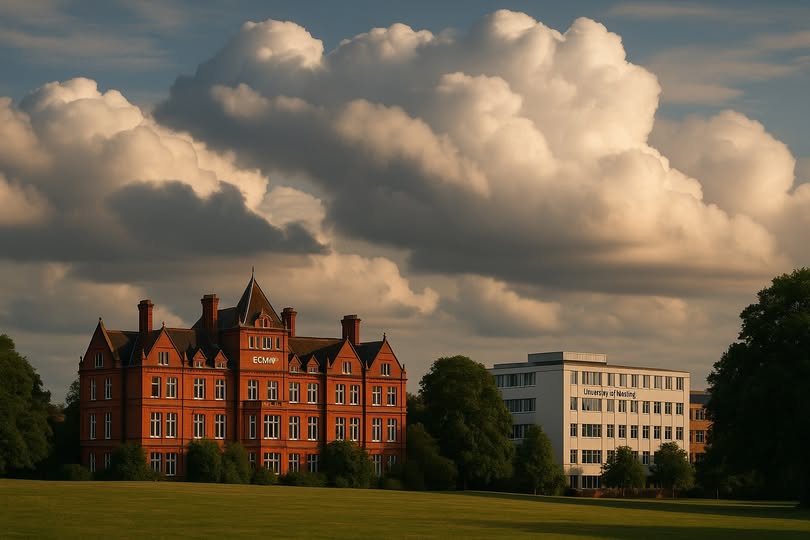
nThe UK’s notoriously changeable weather has positioned it as a world leader in meteorological science. Recently, the European Centre for Medium-Range Weather Forecasts (ECMWF) announced plans to relocate its headquarters from Shinfield Park, south of Reading, to the University of Reading campus. This move represents more than just a change of address; it signifies an institutional restructuring where research, education, and international collaboration are being reintegrated into the UK’s meteorological framework.n

nEstablished in 1975, the ECMWF is an intergovernmental organization comprising 35 European countries, responsible for global ‘medium-range weather forecasts,’ which simulate atmospheric conditions four to fifteen days ahead. It operates one of Europe’s most powerful supercomputers and maintains the world’s largest meteorological database, with its model outputs widely adopted by national weather services. Not an EU entity, the ECMWF remains unaffected by Brexit. Despite the UK’s departure from the EU, the ECMWF continues to operate in the UK, with its legal status and financial mechanisms unchanged, underscoring the UK’s central role in meteorological collaboration networks.n

nThe University of Reading’s Department of Meteorology serves as a hub for academic excellence and talent. Ranked among the top globally, its courses, accredited by the Royal Meteorological Society, cover climate dynamics, numerical forecasting, and atmospheric physics. The on-campus Atmospheric Observatory operates around the clock, allowing students to engage directly in observation and analysis. Over the years, the University of Reading has maintained a close partnership with the ECMWF, sharing research data and models through the OpenIFS project, training students in the use of world-class forecasting systems. With the ECMWF’s move to the campus, both entities will achieve greater spatial and academic integration, creating a new dynamic of complementary research and teaching.n

nAnother pillar of this system is the UK Met Office, located in Exeter. It is the core of national weather forecasting and one of the World Meteorological Organization’s training centers. Young meteorologists from Africa, South Asia, and the Middle East receive training here, learning satellite monitoring and numerical simulation. Its Foundation Operational Meteorology course is practice-oriented, developing professionals capable of responding to disasters in real-time. This training export has long been a facet of the UK’s soft power.n

nUniversities nurture talent, centers conduct research, and the Met Office applies findings, forming a coherent closed loop. The UK’s meteorological system is not about isolated excellence but institutional advantage. When the ECMWF’s new headquarters opens in 2027, Reading will become the meteorological capital of Europe. This city symbolizes not just scientific prowess but a national ethos—viewing weather forecasting as a core public service and translating science into societal security.n

nWeather forecasting, seemingly trivial, is in fact the frontline of the dialogue between civilization and nature. The UK’s sustained leadership in this field is not by chance but through structural confidence. As clouds gather and pressure shifts, people may only wonder if it will rain tomorrow; yet between Reading and Exeter, scientists are forecasting a much more distant future.n

Forecasting the Future: The Secrets of the UK’s Meteorological System Read More »

From Les Misérables to The Phantom: London’s Century of Stage Legends

nLondon’s West End is the heart of theatre. From the Victorian era to today, its streets have remained largely unchanged, with theatre facades still adorned with carvings and warm yellow lights. Some call it Britain’s Broadway, but it is older, more restrained, and deeper. Theatre here is not mere entertainment; it is a faith. Whether on a weekday afternoon or a cold weekend night, the audience fills the hall. As the lights dim, time seems to stand still, and London begins to tell its most adept stories.n

nLes Misérables is the longest-running epic on this land. Since its premiere in 1985, it has never left the London stage. It depicts a rain-soaked Paris, a turbulent era, and the rawest stage of humanity. When the ensemble sings ‘Do You Hear the People Sing?’, the waves of sound are like tides, intertwining anger and hope. The audience rises and falls with the melody, tears and applause intermingling. It is not just a musical, but an ode to suffering and dignity.n

nThe Phantom of the Opera offers a different kind of magic. At the moment the chandelier falls, the entire audience holds its breath; the booming bass of the organ is soul-stirring. The Phantom’s solitude and love haunt the theatre like a specter. It speaks not only of romance but of the curse of artists and dreams. When the curtain falls, the audience remains silent for a long time. London’s night sky seems tinged with a deep blue sigh.n

nMost West End theatres were built in the 19th century. While the old buildings are beautiful, the seats are narrow. The armrests barely accommodate a leg, and even turning is a challenge. For those accustomed to the spacious seating of Hong Kong’s Cultural Centre or West Kowloon Cultural District, the first visit may be surprising. Yet it is this closeness that fosters intimacy and condenses the atmosphere. When stage lights reflect on the audience’s faces and breaths intertwine, the immediacy is something no modern theatre can offer.n

nTo experience the West End’s charm, one need not spend a fortune. Official websites and platforms like ‘TodayTix’ and ‘TKTS’ often offer discounts, and sometimes same-day lottery tickets are the cheapest. The ‘rush ticket’ system also allows spontaneous visitors to enter for just a few dozen pounds. If time permits, consider an afternoon show—leaving while it’s still daylight makes it easier to awaken from the dream.n

nTheatres are mostly concentrated between Piccadilly Circus and Covent Garden, right next to Chinatown. Having a plate of fried noodles or a bowl of sweet soup before or after a show is a routine for London theatre fans. The intertwining of neon and theatre lights feels like a continuation of the play. Some say the West End’s theatre isn’t just on stage, but also in the streets. For visitors from afar, these plays are not just entertainment but a part of life—reminding us that ideals and romance still exist.n

nAs you leave the theatre, the night breeze gently blows, and the city remains bright. Perhaps life is like a play, and the play is like life. London’s West End, with its century of light and shadow, tells us: as long as the curtain hasn’t fallen, anything is still possible.n

From Les Misérables to The Phantom: London’s Century of Stage Legends Read More »

When Autumn Leaves Become Everyday Sight

nIn Hong Kong, red leaves are a luxury. Every early winter, many people travel to Tai Tong in Yuen Long just to see a few sweet gum trees turning red. The red is not intense, the leaves are not plentiful, yet people flock there. In subtropical Hong Kong, most trees are evergreen, making it hard to feel the autumnal spirit, and red leaves become a rare guest.n

nIn the UK, red leaves become commonplace. Come October, parks in London, country lanes, and Scottish valleys are awash with red, orange, and gold. The maple, oak, and beech trees lining the streets ignite like simultaneous flames, illuminating the entire island nation. For Hongkongers newly arrived in the UK, such an autumn is both unfamiliar and captivating—a palette never belonging to the southern climes.n

nThe reason leaves turn red is not romantic but physiological. As autumn days shorten and temperatures drop, chlorophyll breaks down and photosynthesis halts. Carotenoids and xanthophylls, which lie dormant in the leaves, become visible. Coupled with sugar accumulation, ample sunlight, and cool, dry nights, plants produce anthocyanins, turning leaves from green to red. The red is not a melancholy farewell but a defensive strategy before departure—it reduces photodamage, delays decay, and allows the tree to reclaim nutrients before winter.n

nHong Kong sees few red leaves due to its warm climate. The small temperature difference between day and night, high humidity, and short autumn make it hard for sugars to accumulate and anthocyanins to form. Moreover, evergreen species dominate, and deciduous trees are scarce, leaving only sweet gum, liquidambar, and soapberry to turn red. In contrast, the UK’s temperate climate, with its sunny, dry autumn days and cool, non-freezing nights, provides perfect conditions for red leaves. When natural conditions align, the entire country changes color simultaneously.n

nIn the UK, one does not need to seek out red leaves. From late September, the Scottish Highlands first blush; by mid-October, the Lake District, Cotswolds, and New Forest follow suit; and from late October to early November, London’s Richmond Park, Hampstead Heath, and Kew Gardens reach their peak. At dusk, with the sunset reflecting in the mist, the forest seems to burn silently, with only the sound of falling leaves.n

nFor new immigrants, this scene is like a belated revelation. What once required a journey to see is now just outside the window. This natural rhythm suddenly makes one realize that migration is not just about changing places but also about learning a new season. Hong Kong’s red leaves are fleeting and rare, while the UK’s are a perpetual cycle; the same leaf color reflects different lives.n

nRed leaves teach us that leaving does not mean losing, and changing color does not signify withering. The transition of seasons is, in fact, a continuation of life. As Hongkongers gaze at the fiery trees in a foreign land, they may also understand that their hearts are finding peace with the seasons.n

When Autumn Leaves Become Everyday Sight Read More »

From Bristol Road to Bristol City: A New Haven for Hong Kong Migrants?

nBristol Road, located in Tsim Sha Tsui, is a short street connecting Salisbury Road and Peking Road. Its name is derived from the old Chinese translation of the British city of Bristol. Today, most Chinese media use the transliteration “Bristol,” but “Bixiantao” resonates more with the Hong Kong accent and carries a poetic touch. Increasingly, more Hong Kong migrants are choosing to settle in this city, making “Bixiantao” more than just an old street name; it has become a new home with real significance.n

nBristol is situated in the southwest of England and is part of the Greater Bristol urban area, with a population exceeding 800,000. The city is of moderate size, offering prosperity outside the capital while retaining the charm of a mid-sized city. From London Paddington, one can reach Bristol Temple Meads in as little as one hour and twenty minutes via the Great Western Railway; opting for Bristol Parkway reduces the journey to one hour and thirteen minutes. Geographically, it is located at the intersection of the M4 and M5 motorways, making it highly accessible to Cardiff, Gloucester, Cheltenham, and Exeter, serving as a transport hub for the southwest of England.n

nThe charm of this city lies in its blend of the old and the new. Along the River Avon, old docks have been transformed into galleries and cafes, with street art and music festivals adding vibrancy. Bristol’s creative industries and tech companies are growing side by side, attracting numerous startups and media talents. The pace of life is slower than in London, yet it is full of energy. For Hong Kong people, it offers the “just right” balance—more affordable than London, livelier than a small town—perfectly aligning with their post-migration aspirations.n

nFor tourists, Bristol offers unique sights. The Clifton Suspension Bridge is a city landmark, spanning the Avon Gorge like a steel rainbow. Nearby, the Clifton Observatory offers panoramic views of the city and the valley. In the city center, the SS Great Britain, the world’s first iron-hulled, screw-propelled ocean liner, now serves as a museum showcasing Victorian-era innovation. To the north, the Aerospace Bristol museum houses historic aircraft, including the last Concorde to fly, reviving the city’s engineering glory of yesteryears.n

nThe Labour government’s recent announcement of the “West Innovation Arc” plan further cements Bristol’s role as a regional growth engine. This development encompasses three core areas: the new Brabazon town, the Bristol Parkway transport hub, and the Bristol & Bath Science Park. Together, they form an innovation corridor spanning housing, transport, and high-tech industries, with the YTL Arena as a cultural landmark. This massive venue, converted from an old aircraft hangar, can accommodate 20,000 people and is expected to boost the music, exhibition, and tourism industries. The overall plan will create over 30,000 jobs, injecting new vitality into southwest England.n

nTransport infrastructure is also advancing in tandem. Phase two of the MetroWest project will add North Filton and Henbury stations, improving connectivity between the north and the city center. Meanwhile, local authorities and the West of England Combined Authority are exploring the development of a light rail system to establish a modern, low-carbon public transport network for Bristol. If successfully implemented, it will significantly enhance urban commuting and promote regional integration.n

nHowever, development comes at a cost. New towns and infrastructure have driven up property prices and rents, with construction sites proliferating, traffic congestion worsening, and living costs rising. For early-arriving Hong Kong migrants, this may mean asset appreciation; for newcomers, it presents both adaptation and financial burdens. Bristol is undergoing reconstruction and trial. Convenience and comfort will take time to materialize.n

nIn Hong Kong, Bristol Road is merely an old street name; in the UK, Bristol City is an emerging metropolis. Its story mirrors the lives of many Hong Kong migrants—starting from the familiar, venturing into the unknown; finding new meaning from old impressions. For Hong Kong people seeking a place to settle and develop, Bristol may not be the final destination, but it is becoming a path to the future.n

From Bristol Road to Bristol City: A New Haven for Hong Kong Migrants? Read More »

The Illusion of Points: Flaws in the UK’s Immigration System

nSince 2021, the UK has implemented a ‘points-based immigration system,’ claiming to attract global talent through a fair and transparent process to determine who can work in the UK. It sounds like Australia’s quantitative system, but in reality, it is not. It neither truly selects people based on scores nor allows the government to take control. The so-called ‘points’ are merely a repackaging of the old system.n

nUnder the current system, applicants must accumulate 70 points to be approved. However, these 70 points are almost predetermined: having an employer sponsorship, meeting the specified skill level, and passing an English test collectively account for 50 points. The remaining points can be obtained by meeting salary standards, having a job on the shortage occupation list, or possessing a PhD. In other words, once an applicant finds a willing sponsor, the other conditions are mostly met. This is not a competition of points but a ticket to entry.n

nA genuine points-based system should allocate points to everyone in a detailed manner. Scores should not be a patchwork of ‘choose one of three’ but rather a quantitative weighting of hundreds of detailed items. Factors such as which university, which department, English proficiency, work experience, age, and professional level should all be scored on a continuous scale. This way, everyone has an independent score, and the government can decide who to admit based on total scores. If there are only a few levels, each worth five points, and thousands of people have the same score, the so-called ‘points system’ loses its meaning.n

nA well-designed system should allow the government to truly control the scale of immigration. The government could set an annual quota and then admit applicants based on their scores, thus controlling numbers while maintaining quality. In contrast, the current UK system sets a fixed passing line, allowing anyone who meets the criteria to enter. As a result, visa numbers fluctuate with market changes, and the government loses control. It seems like ‘the government decides who can enter,’ but in reality, companies decide who can apply.n

nMore seriously, visas are tied to employers. Holders of Skilled Worker visas may lose their legal status if their employer goes bankrupt, restructures, or lays off workers due to economic cycles. No one can guarantee a job will last five years, let alone ten. This uncertainty makes foreign employees hesitant to resign, complain, or defend their rights. The system creates a dependency relationship, turning so-called ‘talent’ into replaceable labor.n

nThe UK has long been short of healthcare workers, engineers, and researchers, yet it still ties them to a single employer. To truly attract and retain talent, the UK should expand systems like the Global Talent visa. Not only award-winning scholars or Nobel laureates should be considered talent. Any doctor, nurse, engineer, or scientist with professional qualifications should be able to work freely. As long as they meet objective standards, they should be able to apply for permanent residency and citizenship without being beholden to their employer.n

nToday’s ‘points-based system’ neither selects the capable nor prevents abuse. It is neither a points system nor a real system. To rebuild credibility and efficiency, the UK must fundamentally reform—making scores a true selection standard and allowing the government to regain control, rather than letting employers manage the country’s borders.n

The Illusion of Points: Flaws in the UK’s Immigration System Read More »

Misalignment and Reform in the UK’s Electoral System: Ensuring Every Vote Counts

nThe UK prides itself as a model of democracy, yet its electoral system has not kept pace with the times. The ‘first-past-the-post’ (FPTP) system has been in place for over a century, originally designed to simplify procedures and prevent political fragmentation, focusing on ‘preventing malpractice’ rather than ‘selecting the worthy.’ However, times have changed, and society no longer speaks with just two voices. The limitations of this system are now glaringly apparent.n

nThe rules of FPTP are simple: each constituency elects one representative, and the candidate with the most votes wins, rendering all other votes ineffective. This might have been reasonable in an era of two-party competition, but it is out of touch with today’s multi-party landscape. In the 2024 general election, the Labour Party secured 33.7% of the vote yet captured 63% of the seats; the Reform Party received 14.3% and the Green Party 6.7%, together accounting for over 20% of the votes but winning only nine seats. When the majority of votes fail to translate into representation, the proportionality of democracy is compromised.n

nThis is not a coincidence but a long-standing structural bias. Since the post-war period, almost no government has secured a majority of the votes. Most administrations have been formed with just over 30% of the vote. The only exception was the 2010 Conservative-Liberal Democrat coalition, which collectively garnered 59.1% of the votes. Yet, even with a majority of votes, the seat distribution was skewed—the Liberal Democrats received nearly a quarter of the votes but only 10% of the seats. Such disparities weaken the credibility of the system.n

nProponents might argue that FPTP ensures stability and prevents political fragmentation. This argument holds some truth, but in a pluralistic society, stability cannot be maintained through suppression. If minorities are consistently excluded from the political process, public discontent will inevitably build. When voters feel that ‘it doesn’t matter who they vote for,’ turnout declines, and political engagement wanes. In the long run, this is more concerning than political instability.n

nIn fact, the UK already has experience with different electoral systems. Scotland and Wales use the Additional Member System, Northern Ireland employs the Single Transferable Vote, and the same applies at the local level. Wales is set to fully adopt proportional representation by 2026. These examples demonstrate that electoral reform is not an unattainable goal but a feasible path to follow.n

nProportional representation may not be perfect, but it aligns seats more closely with public opinion, giving each vote more value. It requires parties to negotiate and fosters a culture of shared governance. If local governments in England and the House of Commons gradually adopt it, UK democracy will become more complete and inclusive.n

nAn electoral system should not be merely a tradition; it should respond to current realities. While the old system once brought stability, today it limits representativeness. If the UK is to rebuild public trust in politics, it must bravely adjust its course to ensure every vote counts. After all, the true essence of democracy lies not in who wins, but in everyone being heard.n

Misalignment and Reform in the UK’s Electoral System: Ensuring Every Vote Counts Read More »

Path to Settlement: Public Opinion Shaping Future UK Policy

nThe UK Parliament’s Home Affairs Committee has recently launched a public inquiry titled ‘Routes to Settlement,’ inviting the public to submit opinions on the immigration settlement system. This is not a typical consultation but a preliminary battle over policy that affects the fate of hundreds of thousands of people, billions in tax revenue, and the UK’s ability to continue attracting talent. The deadline for submissions is December 2, and each response will serve as a basis for parliamentary discussions.n

nUnder the current system, legal residents can apply for Indefinite Leave to Remain after five years. The government is considering extending this period to ten years and introducing a ‘contribution-based’ principle, requiring applicants to demonstrate their societal contributions through work, volunteer service, language skills, and more. On the surface, this seems reasonable, but a closer look reveals a host of issues.n

nFirstly, extending the period would diminish the UK’s attractiveness. Skilled applicants often have multiple options. Canada and Australia offer settlement in three to five years; if the UK extends it to ten, it effectively relinquishes the best and brightest. The most capable and mobile professionals will choose places with clearer rules and more certain prospects. Those who remain in the UK may be those unable to establish themselves elsewhere. A system that only attracts ‘those who can afford to come but can’t afford to leave’ will, in the long run, weaken overall productivity and the tax base. The UK needs contributors, not passive residents.n

nSecondly, policy changes will create uncertainty. Many residents in the UK have already planned their lives and finances according to existing rules. If the system changes suddenly, they will be forced to pay additional years of visa fees and the Immigration Health Surcharge (IHS), while student families will continue to pay ‘overseas’ tuition fees. This is not just a financial issue but a matter of trust. If the government can change rules at will, both citizens and immigrants will find it hard to trust the system’s stability.n

nMoreover, using volunteer service or community involvement as a ‘contribution’ standard will entangle the system in bureaucratic complexity. Who will be responsible for verification? How will it be quantified? These tasks will require civil servants, leading to significant expenses and lengthy procedures. The value of volunteer service lies in its spontaneity and sincerity; turning it into a points game will only distort its original intent.n

nIf fiscal contribution is the measure, balancing fairness and simplicity becomes difficult. Contributions are not limited to income tax and National Insurance (NI) but also include VAT from daily consumption. In theory, these should be included, but it’s impossible to retrospectively calculate ten years of receipts, and asking individuals to keep ten years of bills is absurd. A system that is neither accurate nor fair will ultimately lose credibility.n

nThe UK’s appeal lies in its rule of law, stability, and predictability. If ‘settlement’ becomes an uncertain goal, the UK will lose its most valuable asset—trust. This inquiry is the only window before policy takes shape. Everyone has the right to submit their experiences and views, allowing Parliament to hear genuine voices.n

nIf you find it difficult to express yourself in writing, jot down key points and use AI to help refine them. The key is not to let others speak for you. When policy determines ‘who can stay,’ if you remain silent, you allow others to define your future.n

Path to Settlement: Public Opinion Shaping Future UK Policy Read More »

Why the UK Needs to Admit 700,000 Immigrants Annually

nThe problem in the UK is not aging, but pretending to be young. Today, for every 100 people of working age, there are about 30 retirees to support; by 2045, this will rise to about 35. This is known as the old-age dependency ratio, meaning each worker bears a heavier burden. With a shrinking tax base and rising expenditures, pensions and the National Health Service (NHS) rely on the current pool of taxpayers. When taxpayers decrease and beneficiaries increase, there are only three outcomes: cut pensions, weaken healthcare, or raise taxes. This is not an opinion, but arithmetic.n

nAccording to the Office for National Statistics (ONS), without further immigration, the old-age dependency ratio will rise to about 44 by the 2050s, meaning 100 working-age people will have to support nearly half as many retirees. To maintain the status quo, the UK needs a net immigration of 400,000 to over 700,000 people annually, about 1% of the population. This is not an absurd figure. Canada has maintained a similar proportion for years, and Australia’s net immigration reached 518,000 in the 2022-23 fiscal year, nearly 2% of its population. Advanced countries have long understood that immigration is not a threat but a lifeline.n

nThe UK is already on this path. The ONS estimates that net immigration reached 960,000 by June 2023; although it fell to about 720,000 the following year, it remains higher than pre-pandemic levels. Most of these immigrants come from non-EU regions, entering on work or study visas. The issue is not the numbers, but the direction. The government dares not admit this is a long-term phenomenon, treating it instead as a “temporary imbalance.” The result? Housing shortages, strained healthcare, and crowded education. Without prepared policies, public sentiment naturally turns negative. Then politicians claim they must “control immigration.”n

nRegrettably, few in mainstream politics dare to mention the words “population structure.” Everyone talks about borders, security, and asylum, yet no one acknowledges: without an influx of young workers, who will pay taxes? Who will care for the sick? Who will support the nation? Reducing immigration is easy, but the cost is borne by every pensioner’s pension and every patient’s surgery schedule. Pretending there is no cost is the most expensive illusion of our time.n

nEncouraging childbirth? It sounds appealing but fails in practice. The total fertility rate in England and Wales is only 1.41 in 2024, and South Korea’s has dropped to 0.72. Countries offer subsidies, tax benefits, and childcare, but none have succeeded. Even if more children were born today, they would only enter the workforce in over twenty years, and the state must first bear the cost of their education and healthcare. By the time these children grow up, the aging problem will already be overwhelming.n

nHealthcare illustrates the issue best. In the NHS in England, one in five employees is not British, with even higher proportions among doctors and nurses. Without them, the entire system would immediately become unbalanced. To reduce reliance on foreigners, more local training and retention are needed, but this requires money, time, and political will. In recent years, we have lacked all three.n

nImmigration is not a panacea, but it is a tourniquet. Foreign populations will also age, that is a fact; but without them, society will age even faster. Immigration policy should act as a “buffer,” buying ten to twenty years to restructure, boost productivity, and improve education and housing supply. Otherwise, aging and xenophobia will only drag the UK down together.n

nAging is certain, and numbers do not lie. The UK can choose to face it, using planned immigration to support intergenerational balance; or it can choose to evade it, allowing taxes to rise, pensions to shrink, and healthcare to collapse. The question is not whether to open the door, but whether to take responsibility for reality.n

Why the UK Needs to Admit 700,000 Immigrants Annually Read More »

The Paradox of Capital Gains Tax in the UK: Too High and Too Low

nThe UK’s Capital Gains Tax (CGT) has long been criticized as “too low.” Critics argue that it is significantly lower than the combined burden of income tax and National Insurance (NI), thus favoring “unearned income.” Currently, the highest income tax rate is 45%, with employees contributing an additional 2% to NI, while employers bear about 15%. When accounting for the tapering of tax allowances, the marginal tax rate can exceed 60%. In contrast, the maximum CGT rate is only 24%, which inevitably fuels public discontent.n

nHowever, the core issue is not the tax rate but the tax base. The current system calculates gains based on nominal prices, without adjusting for inflation. If an asset appreciates by 50% over ten years, 30% of that could merely reflect currency depreciation. Investors see no real increase in purchasing power, yet they are taxed on this illusory “gain.” Regardless of whether the tax rate is high or low, this is unfair. Although the government has not explicitly raised taxes, it effectively broadens the tax base through inflation, thereby collecting more in a roundabout way. This approach is neither honest nor does it reward long-term investment.n

nThe UK once had a more reasonable system. From 1982, asset costs could be adjusted for inflation, taxing only real gains. In 1998, then-Chancellor Gordon Brown abolished indexation in favor of “taper relief,” citing “simplification.” This new system reduced tax liability based on asset type and holding period, theoretically encouraging long-term investment but in practice making the system more complex. Taxpayers had to determine asset nature, calculate holding periods, and apply various taper coefficients. A decade later, Chancellor Alistair Darling reformed it again, abolishing taper relief in favor of a flat 18% rate, and introduced “Entrepreneurs’ Relief” (now Business Asset Disposal Relief), taxing the first £1 million of gains from business sales at just 10%. While this appeared to simplify the system, it actually added layers of complexity and permanently removed inflation adjustment, detaching the tax base from reality.n

nTo restore fairness, the tax system should return to basics. Inflation is not income and should be excluded; real returns are the true gains and should be taxed at the same rate as wages. By adjusting costs according to the Consumer Price Index and taxing real gains as income, the disparity between labor and capital taxation can be eliminated, reducing the incentive to disguise wages as capital gains to avoid taxes.n

nA transitional arrangement could adopt a “choice at sale, time-limited” model. The government could set a one-year transition period during which taxpayers could choose between the old or new system upon asset sale. After the transition, all transactions would follow the new system, with newly acquired assets immediately subject to it. This design requires no valuation, ensures a smooth transition, and avoids a long-term dual system. Since the new system taxes real gains at income tax rates, many investors might cash out before the reform to lock in the old 24% rate, potentially increasing government revenue in the short term. In the long run, higher rates and a smaller tax base are expected to offset each other, maintaining overall tax revenue stability.n

nA fair tax system is not about high or low rates but about honestly defining “income.” As long as inflation is treated as income for taxation, the system will remain unbalanced. Only by taxing inflation-adjusted real returns at the same rate as wages can distortions be eliminated, bringing capital and labor back to the same standard.n

The Paradox of Capital Gains Tax in the UK: Too High and Too Low Read More »

Scroll to Top