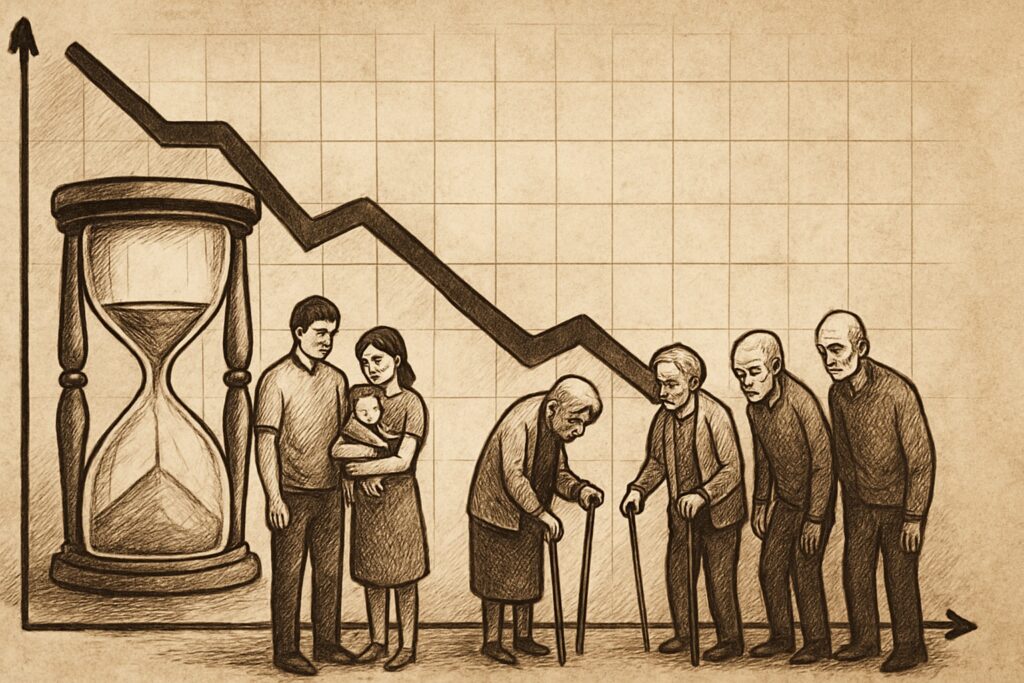
When measuring a country’s achievements, GDP is never the final destination. The true bottom line is how long people live. When examining this indicator, the United States’ performance is strikingly disproportionate to its wealth status.
First, let’s look at the numbers. The life expectancy at birth for American men is around 75 to 76 years; in contrast, men in other high-income countries such as the UK, Germany, France, and Japan generally live between 79 and 81 years. For women, the life expectancy in the U.S. is approximately 80 to 81 years, while Western Europe averages between 83 and 85 years, and Japan reaches 86 to 87 years. In both genders, the U.S. lags significantly behind its peers, with the gap for men being particularly pronounced, further dragging down the overall life expectancy.
This discrepancy is not due to insufficient healthcare spending. On the contrary, the U.S. boasts the highest healthcare expenditures among OECD countries. In recent years, American healthcare spending has accounted for about 17 to 18% of GDP, far exceeding the 9 to 12% typical of other developed nations. In other words, the proportion of GDP the U.S. allocates to healthcare is nearly double that of some countries, yet it fails to yield corresponding life expectancy outcomes.
The issue lies not in how much is spent, but in how it is spent. The U.S. still lacks a universal healthcare system, leaving tens of millions without any health insurance, while many more have only nominal coverage. Access to medical care depends on employment status and insurance terms. Under this system, illness is not merely a health issue but also a financial risk.
More critically, even with insurance, coverage does not guarantee security. Insurance denials are not uncommon in the U.S., with various technical reasons frequently cited. For the average person, the appeals process is complex and costly, often requiring time, expertise, and even legal support. Consequently, most individuals choose to forgo pursuing claims or are simply too afraid to seek medical help. Over time, the choice to ‘avoid getting sick’ becomes a rational decision.
This is directly reflected in mortality statistics. Numerous studies indicate a significant proportion of avoidable deaths in the U.S.: people do not die from medical impossibilities but rather due to delayed treatment, chronic diseases that cannot be managed over the long term, or the fear of bills that prevents them from visiting emergency rooms during crises. During the pandemic, the mortality rate among uninsured populations was significantly higher, a trend that is not incidental but rather a systemic inevitability.
Even in the absence of immediate death, the healthcare system continues to erode life expectancy. Chronic diseases such as cardiovascular disease, diabetes, and kidney disease, which require stable follow-up, typically imply long-term coexistence in countries with universal healthcare. In the U.S., however, these conditions often spiral out of control due to insurance lapses, denials, or prohibitively high out-of-pocket costs, ultimately leading to premature death.
Ironically, the U.S. does not lack cutting-edge medical technology. It leads the world in advanced treatments, drug development, and specialized medicine. However, longevity is never achieved through the most expensive technologies; it is built on accessible, stable, and affordable basic healthcare. A system that invests substantial resources upstream while imposing heavy barriers at the entry point is destined to be inefficient.
The lag in life expectancy indicates that the issue is not that America is insufficiently wealthy, but rather that there is a fundamental imbalance in institutional choices. When healthcare spending approaches one-fifth of GDP yet still allows people to die prematurely due to insurance issues, denials, and bills, the societal cost incurred far exceeds what any fiscal numbers can explain.