The film “Don’t Look Up” superficially presents itself as a black comedy or tragedy about an asteroid colliding with Earth. However, the true discomfort lies not in the celestial threat but in humanity’s response patterns when faced with clear crises. The film repeatedly reminds viewers that the issue is not one of ignorance, but rather the choice to disregard what is known.
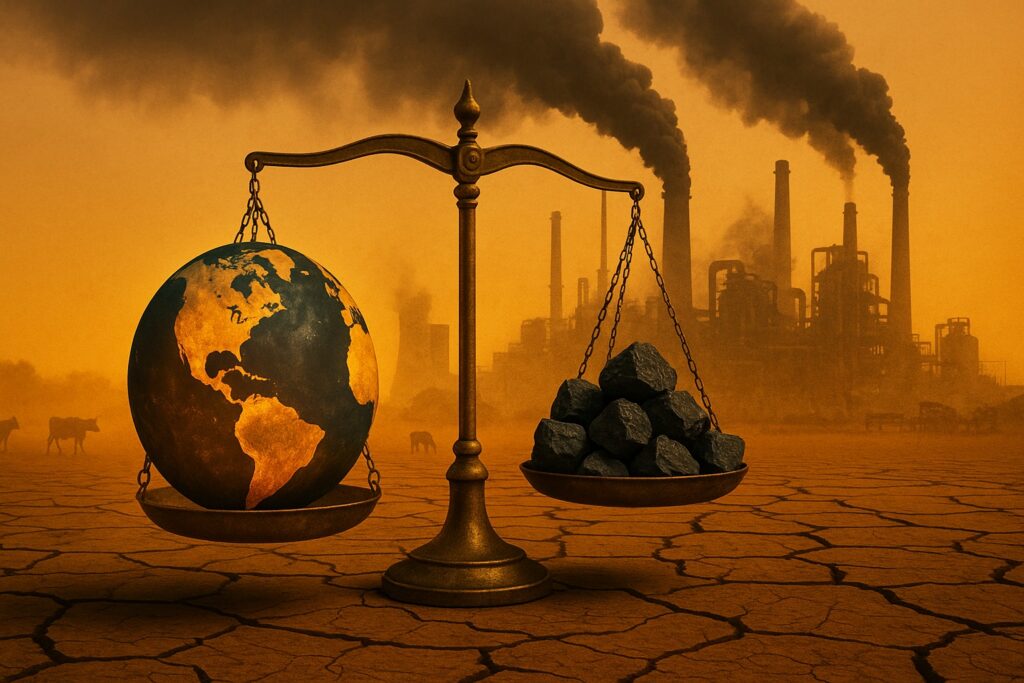
Many have pointed out that the asteroid serves as a metaphor for climate change. Its trajectory is clear, the data has been repeatedly verified, and the timeline is already laid out in models, yet it is persistently delayed, downplayed, and politicized. Much like global warming, the problem has never been a lack of evidence but the stark reality of the costs associated with acknowledgment.
When the two astronomers first enter the White House and clearly outline the timeline and probability of the asteroid’s impact, there is no scientific controversy left. The data is consistent, the models align, and even uncertainties have been accounted for. Yet the first question from political figures is not how to respond, but whether discussing it will affect their electoral prospects. This scene is not exaggerated; it starkly presents a reality: within power structures, the severity of a crisis often must first be filtered through political costs. It is not a matter of misunderstanding but of inconvenient truths.
This distortion is further amplified in the media landscape. When scientific warnings are brought to morning talk shows, rational discourse is quickly consumed by the show’s rhythm. “Don’t be too heavy,” and “Viewers don’t want to hear this first thing in the morning,” lead to the end of the world being packaged as palatable entertainment. When a female scientist breaks down emotionally and cries out, the content of her message becomes secondary; what matters is that she has “lost her composure.” The film’s satire here is chillingly calm: in a media environment that prioritizes emotional management, the validity of facts is often overshadowed by whether the speaker is deemed “appropriate.”
Ironically, when there is already a viable plan with a high success rate to mitigate the crisis, the decision is easily rewritten by a tech billionaire. In his narrative, the asteroid is no longer a threat to be destroyed but rather an untapped source of immense wealth; risk is no longer a disaster to be avoided but a probability to be embraced in the innovation process. The original goal of “saving the planet” is suddenly transformed into a grand scheme of “making a fortune on the side.” As for what happens in the event of failure, it is cleverly obscured, as if simply not stating it clearly will prevent the consequences from occurring. The film mocks not only greed but also a profound arrogance that believes capital and technology can transcend risk itself—an attitude frequently observed in climate policy.
As time progresses, the asteroid becomes visible to the naked eye, no longer requiring telescopes, yet denial enters a new phase. “Don’t look up” becomes not just a slogan but a marker of political identity. As long as leaders say there is no need to look, supporters learn to avert their gaze. At this moment, the film’s focus transcends a single issue, pointing to a more universal phenomenon: when facts conflict with positions, people often choose to protect their stance rather than correct their understanding. It is not that the evidence is unclear; rather, clarity itself becomes unacceptable.
In the end, the world is not saved. There are no heroes to reverse the situation, no miracles to be found. All that remains is an ordinary dinner, where a group of people acknowledges their powerlessness and finally stops deceiving themselves. This scene is poignant precisely because it stands in stark contrast to all previous political performances, media noise, and technological fervor. When all grand narratives collapse, humanity briefly returns to honesty.
The sharpest satire of “Don’t Look Up” lies not in its depiction of a foolish world but in its portrayal of a reality where rationality is systematically suppressed. Here, people are not indifferent due to a lack of evidence; rather, they are paralyzed by the clarity of the evidence, which compels them to change their lives, challenge power, and bear the costs.
As the film concludes, the asteroid arrives as expected. This is not a conclusion but a question: when real-life “asteroids”—be they climate change or other imminent crises—repeatedly loom above us, do we truly not see them, or have we learned to choose not to look up under the guidance of power and money?