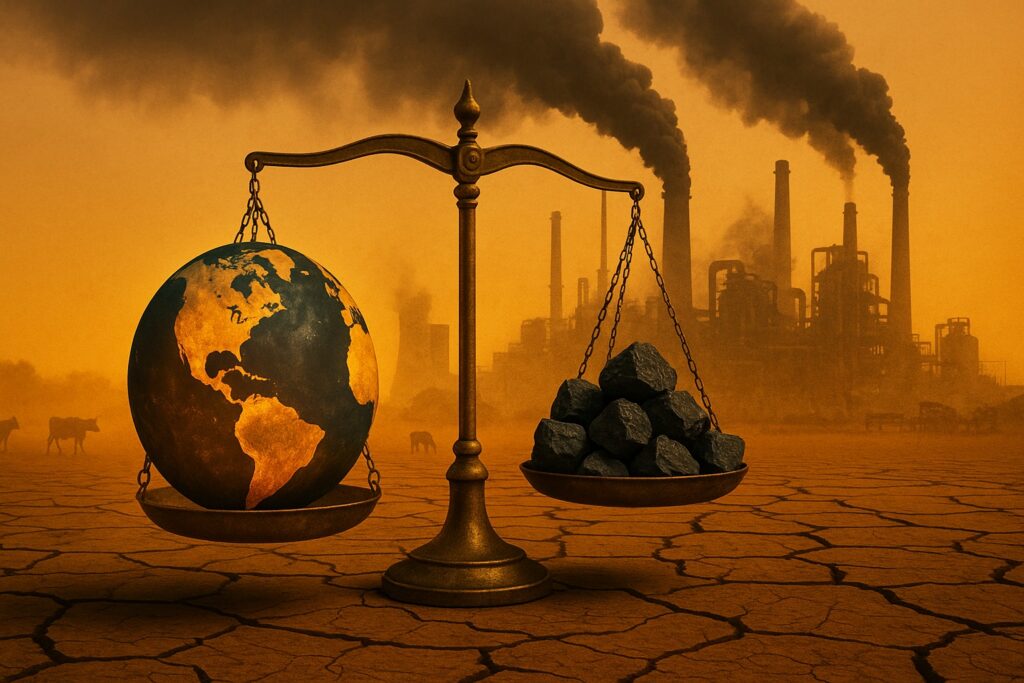
For the past century, ski resorts have symbolized winter stability, nature’s generosity, and the lifeblood of mountain economies. Today, they have become the most visible and brutal victims of global warming. In the European Alps, an increasing number of ski resorts are quietly closing, not due to mismanagement, but because the absence of snow has become the norm. The disappearance of white slopes has not led to successful transformations, but rather to abandoned ‘ghost towns.’
The low-altitude ski resorts in the French Alps were the first to fall. Historic small resorts like Céüze, once the economic heart of local communities, provided jobs and income for entire valleys during winter. Now, as the snow line rises year by year and natural snowfall becomes increasingly unreliable, even artificial snowmaking often fails due to insufficiently low temperatures. Snowmaking equipment requires electricity and water, which are costly, while returns are becoming more uncertain. Consequently, local governments have ceased subsidies, operators choose to stem losses, and ski lifts stop running, leading to the closure of restaurants and hotels.
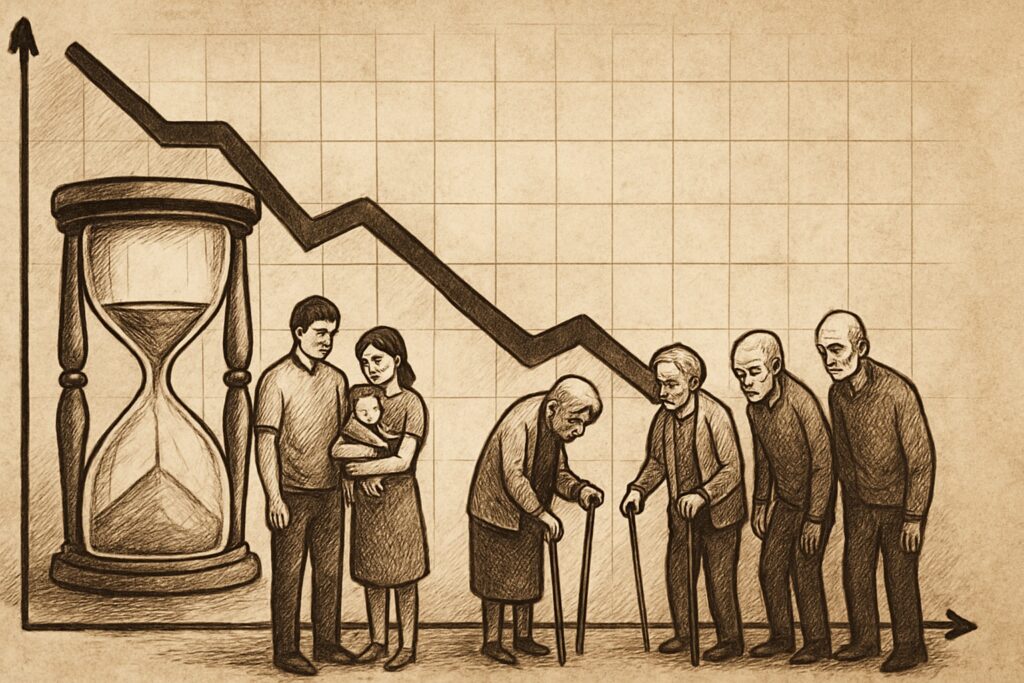
This is not an isolated incident but a structural collapse. The economic model of ski resorts is predicated on the assumption that ‘winter will always be cold.’ When this premise fails, the entire industry chain breaks down. Unemployment first strikes the grassroots level: ski lift operators, slope maintenance workers, and seasonal instructors; next, it affects hotels, guesthouses, restaurants, and equipment rental shops. Mountain economies are highly singular, and once winter tourism disappears, alternative industries are often non-existent, making population outflow nearly inevitable.
Some may think this is merely a European issue, with Asia still having room to maneuver. However, experiences from Japan and South Korea are shattering this illusion. Japan, renowned for its ‘powder snow,’ attracts a large number of overseas ski tourists, but in recent years, frequent warm winters have delayed the start of the season and led to inconsistent snow conditions, becoming a well-known concern in the industry. Some low-altitude ski resorts have had to shorten their operating periods or even close for the entire year. For rural areas reliant on winter tourism, this is not just a decline in tourism revenue but a destabilization of local finances and employment structures.
The situation in South Korea is equally severe. Many ski resorts are located at lower latitudes and altitudes, making them heavily dependent on artificial snow. With climate change, the ‘cold windows’ suitable for snowmaking have shortened, while electricity and water costs continue to rise. Some ski resorts require government support just to barely survive; otherwise, they face closure. These closures often do not make international headlines, but their impact on local communities is no less significant than that in the Alps.
It is worth noting that this crisis did not arrive suddenly. The scientific community has long pointed out that as global average temperatures rise, winter snowfall will exhibit ‘less and more unstable’ characteristics, particularly in mid- to low-altitude regions. The question is not whether it will happen, but when and how quickly it will occur. The closures of ski resorts today are, in fact, a delayed reckoning of years of ignored risks.
Ironically, artificial snowmaking itself is not a long-term solution. It is energy- and water-intensive, deepening reliance on cold climates and creating a vicious cycle. Once temperatures surpass a certain threshold, technology will be powerless. By then, the so-called ‘transformation’ will be nothing more than a slogan, leaving behind only sunk costs and shattered communities.
The closures of ski resorts remind us that global warming is not an abstract statistic or a distant future, but an ongoing economic and social event. It first strikes marginal areas, taking away seasonal jobs, hollowing out local economies, and ultimately rewriting demographic maps. Today, it is the slopes that disappear; tomorrow, it could be entire industries.
If there is one question worth pondering, it is this: when climate change has already begun to reshape landscapes and livelihoods, do we still pretend that this is merely the ‘individual misfortune’ of certain industries? The fate of ski resorts may be a preview of what awaits other industries reliant on stable climates.