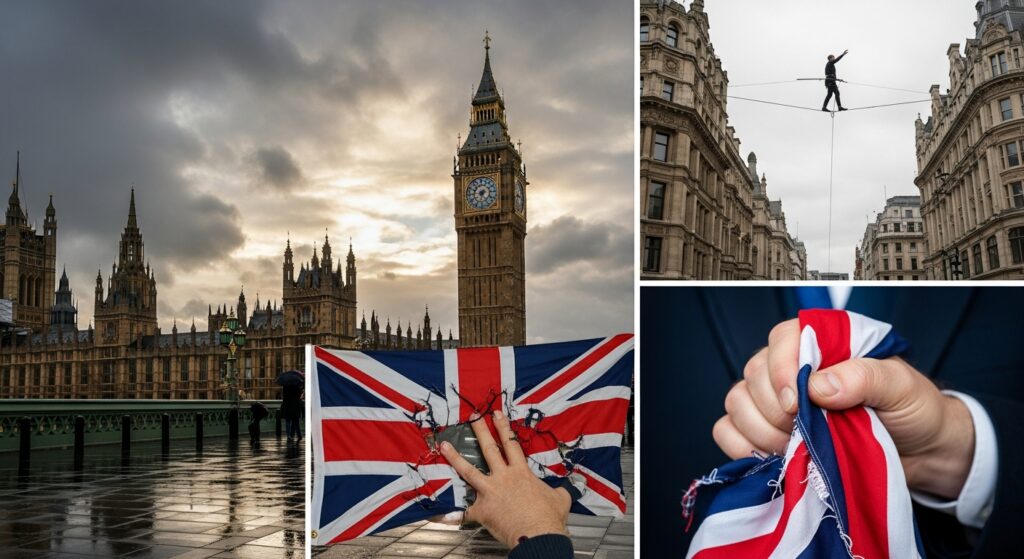
nWhat kind of society would you design if you didn’t know whether you would be born into a wealthy or poor family, whether you would be able-bodied or disabled, or whether you would belong to a majority or minority group?n
nThis question is posed by American political philosopher John Rawls. In his 1971 book, ‘A Theory of Justice,’ he introduced the thought experiment of the ‘veil of ignorance.’ The idea is to place everyone behind a ‘veil’ before establishing societal rules, where no one knows their future class, gender, race, abilities, or wealth. Since one cannot predict their position, the only option is to design a system that is acceptable even to the least advantaged.n
nThis is not a fairy tale but a form of rational reasoning. Rawls argues that in this original position, people would choose two principles: first, everyone should have equal basic liberties; second, social and economic inequalities must be arranged to benefit the least advantaged and ensure opportunities are open to all. This is known as the ‘difference principle.’n
nWhy think this way? Because real-world discussions are often hijacked by vested interests. The wealthy tend to support low taxes, while the poor lean towards high welfare; majority groups are less concerned with minority rights because they are not at risk. Conflicts of position often masquerade as ideological disputes. The value of the veil of ignorance lies in forcing us to temporarily detach from our identities and consider institutional design from a risk management perspective.n
nThis theory still offers insights for contemporary policy debates. When discussing healthcare systems, would you accept a system where only the wealthy receive quality treatment? If you suddenly fell seriously ill tomorrow, your answer might differ. When considering educational resources, do you support concentrating the best schools in affluent areas? If you didn’t know which community your child would be born into, would you reconsider? The veil of ignorance does not demand egalitarianism but insists on preserving a baseline for the most unfortunate.n
nOf course, Rawls has his critics. Economists and libertarian thinkers like Robert Nozick question whether the difference principle excessively interferes with markets and individual property rights. He argues that as long as wealth acquisition and transfer processes are just, the state should not redistribute based on outcomes. This debate reflects differing understandings of ‘justice’: is it about procedure or outcome?n
nEven if one disagrees with Rawls’s conclusions, it is hard to deny that the veil of ignorance provides a powerful metric. It reminds us that institutional design should not only ask, ‘Is this beneficial to me?’ but also, ‘If I were in the worst position, could I still accept this?’ This is a form of cool-headed moral discipline, not emotional sympathy.n
nIn political reality, completely detaching from identity is nearly impossible. People have positions, interests, and fears. But the significance of the veil of ignorance is not in erasing memory but in fostering a habit of thought: before taking a stance, put yourself at risk. When you applaud welfare cuts, ask what would happen if you were unemployed for three years; when you oppose tax increases, consider how you would choose if you were the one unable to afford medical expenses.n
nJustice is not an abstract slogan or a passionate cry. It is an institutional arrangement, a set of rules that allows people with different fates to stand on solid ground. The veil of ignorance teaches us this kind of calm imagination.n
nThe issue is not where you stand today, but whether you could still accept the system you support if your identity were swapped tomorrow.n