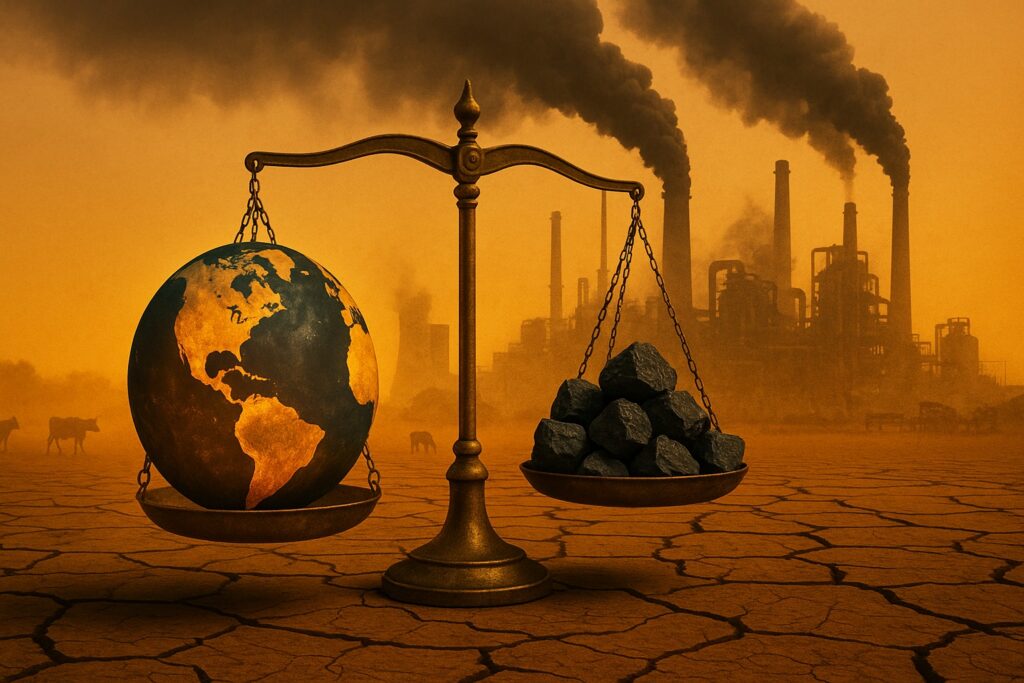
Many people first encounter the concept of “carbon offsetting” not through climate reports, but at the checkout page when purchasing airline tickets. A small box pops up: for just a little extra money, you can offset the carbon emissions of your flight. This design appears considerate, yet its actual effect is highly misleading. It suggests that emissions can be immediately “remedied”; as long as one is willing to pay, they can continue to fly guilt-free. This sense of reassurance is more psychological comfort than a genuine reduction in carbon emissions; worse still, it can lead people to mistakenly believe that by opting in every time, they can fly more often.
The primary issue with carbon offsetting is that it attempts to counterbalance immediate, certain, and irreversible emissions with uncertain promises of future action. Take the most common example of tree planting: the carbon absorbed by trees is merely temporarily stored within the biomass. Trees age, decay, and can be destroyed in wildfires; in a world where warming is intensifying, these risks are only increasing. More critically, there is currently no technology that can guarantee that this carbon will not re-enter the atmosphere in the future.
Strictly speaking, not all carbon absorption by the biosphere is meaningless. In climate policy, there exists the category of LULUCF (Land Use, Land Use Change, and Forestry): when land use undergoes long-term, institutional, and nearly irreversible changes—such as converting agricultural land into legally protected long-term forest—the stability of its carbon storage is relatively high, and it has a reasonable place in national carbon accounting. However, the projects offered by aviation carbon offsets rarely involve genuine permanent changes in land use, let alone decades of institutional guarantees.
In recent years, some carbon offsets have shifted focus from tree planting to claiming investments in solar or wind energy. On the surface, this seems more reliable than biospheric carbon absorption, as it directly replaces fossil fuel power generation. However, the fatal flaw of such projects lies in their inability to prove “additionality.” Renewable energy has become the cheapest new power option in most countries, supported by policies, subsidies, and financing; many projects would have been built regardless. If solar and wind farms would still emerge without the purchase of carbon offsets, then the so-called “offsetting” merely claims credit on paper without delivering any additional emissions reductions.
Theoretically, the only true method to counterbalance fossil fuel emissions is to return carbon dioxide to geological layers, permanently sequestering it underground. However, the costs of geological carbon sequestration are exorbitant, far beyond the few pounds presented at the airline checkout page. For this reason, it has never been an option in the carbon offset box for airlines.
Consequently, the carbon offset options on airline tickets not only fail to help but may actually be counterproductive. When passengers believe they have “paid to address” emissions, flying ceases to be viewed as a high-carbon behavior that requires moderation, instead becoming a morally cleared choice. The result is not a reduction in flights, but rather a more comfortable and frequent flying experience, with even less pressure to confront the real need for emissions reductions. This design does not facilitate any structural change; it merely exchanges psychological comfort for continued behavior, allowing high-carbon activities to expand under the guise of seeming responsibility.