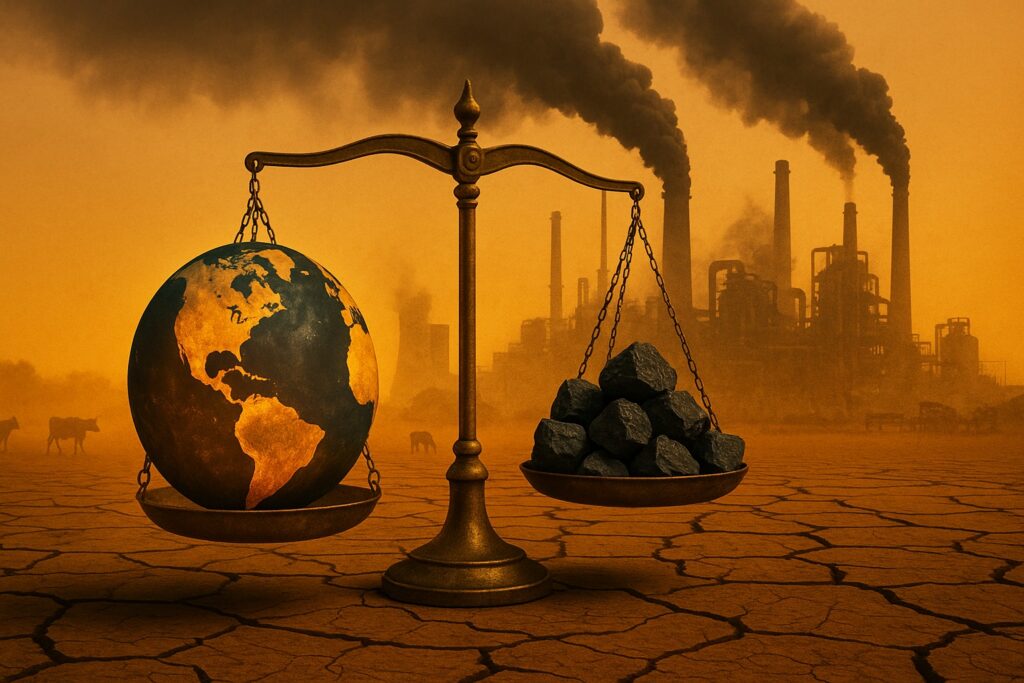
The International Energy Agency’s (IEA) Announced Pledges Scenario (APS) is not an aggressive environmental blueprint; rather, it is a model that incorporates the climate commitments that various countries have announced and claim they will implement. Even so, the conclusion remains clear: by 2050, global oil demand will fall to around 50 to 60 million barrels per day, nearly halving from current levels. Oil will not disappear overnight, but its historical peak has already passed.
In this context, discussions about ‘building new pipelines’ appear increasingly out of touch. Pipelines are not flexible assets; they are heavy infrastructure with lifespans of 40 to 50 years, and their commercial premise hinges on one factor: long-term, stable, and predictable demand. The world depicted by the APS fundamentally contradicts this premise.
Alberta, Canada, serves as a microcosm of this issue. For years, local politicians have periodically raised concerns about ‘pipeline shortages,’ claiming that without new pipelines, oil sands would be trapped inland, missing out on export opportunities. Such discussions have become almost a cyclical political maneuver, surfacing around elections, yet they have consistently failed to overcome the reality threshold—capital no longer believes this is a viable business.
The completed Trans Mountain Expansion (TMX) exemplifies the problem. The project was ultimately completed not because the market was optimistic, but because the federal government took over, with costs ballooning from the initial estimate of CAD 7.4 billion to over CAD 30 billion. It can operate, but the returns are highly uncertain; its existence resembles a policy choice rather than a successful investment.
As for those projects still ‘under discussion’ but unable to materialize, their fate is already sealed. Whether it is the former Energy East or the rejected Northern Gateway, they share a common assumption: that oil demand would exist long-term, even expand. With the advent of the APS, this assumption is no longer valid; future iterations will only become more challenging, not easier.
Turning to the United States, the situation is equally clear. Keystone XL has become a symbol of long-term political controversy, yet it has never truly addressed a core issue—who will bear the risk of declining long-term demand. Donald Trump repeatedly endorsed the pipeline, but political rhetoric cannot replace financial decision-making; under the premise of stagnant demand growth, insurance, financing, and long-term contracts all fail, and projects naturally remain on paper.
This does not mean that North America lacks pipelines. The extensive network from the Permian Basin to the Gulf of Mexico is still operational, the Dakota Access Pipeline continues to transport oil, and the Colonial Pipeline maintains refined product supply. However, these are existing, amortized assets, not new bets in the APS era. Their logic is to be used until they can no longer be used, rather than to reinvest for another forty years.
The only projects that may still pass approval are ‘replacement’ or ‘lifespan extension’ projects, such as the Line 3 Replacement. These projects are not intended to increase throughput but to mitigate risks and update aging facilities; they are defensive rather than offensive. This represents the limit of pipeline investment permissible in an APS world.
Proponents of rebuilding pipelines often invoke ‘energy security’ and ‘jobs,’ but this misplaces short-term political pressures onto long-term infrastructure decisions. The risks pointed out by the APS are not about a lack of oil but about an excess of unused pipelines. Once the pace of demand decline outstrips the payback period, assets will swiftly turn into liabilities, ultimately borne by public finances.
Oil will still be used for some time, but the investment window is closing. In a world of structurally contracting demand, laying new long-lived channels for high-cost, high-carbon intensity crude oil is neither forward-looking nor pragmatic; it is a refusal to confront reality. Oil will eventually phase out, and building new pipelines in the interim can only be described as folly.