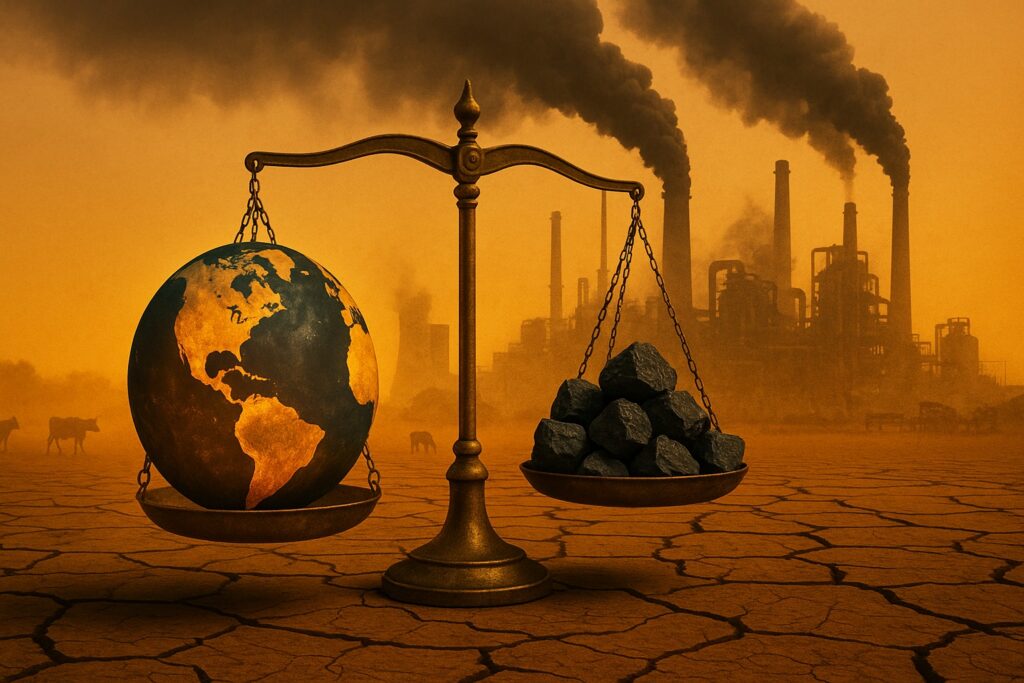
Donald Trump envisioned a military operation to seize Caracas, capture Nicolás Maduro, and declare that the United States would take control of Venezuela. In his narrative, the logic was simple and direct: the world’s largest oil reserves would fall into American hands, granting energy security, geopolitical advantages, and even influence over oil prices. While this rhetoric is appealing and politically mobilizing, it mistakenly treats oil as a treasure chest rather than a complex industrial system that requires long-term operation and cannot simply be turned on and off.
Indeed, Venezuela possesses the largest proven oil reserves globally, but ‘largest’ does not equate to ‘cheapest’ or ‘easiest to profit from.’ Its oil resources are highly concentrated in the Orinoco heavy oil belt, characterized by extra-heavy, high-sulfur, and high-viscosity crude. Transforming this oil from underground into a marketable product necessitates a significant amount of diluents, expensive upgrading facilities, and a stable power, maintenance, and logistics infrastructure. All these conditions are indispensable, yet they have been eroded or entirely collapsed in Venezuela over the past decade. While the reserves are real, their availability and economic viability have been severely constrained from the outset.
Even setting aside technical and cost considerations, safety and order alone are sufficient to deter investment. During the transitional period of external intervention and power restructuring, the most vulnerable aspect is often not the central government but the energy infrastructure. Pipelines, pumping stations, storage tanks, substations, and upgrading plants are all targets for guerrilla warfare and armed sabotage. Such attacks do not need to completely paralyze the industry; their mere recurrence can create long-term uncertainty, driving up insurance, security, and financing costs, rendering any long-term investment return calculations meaningless. For the energy sector, the most challenging aspect is not a single incident but the perpetual unpredictability of interruptions.
Time is also not on Venezuela’s side. Restoring production to a scale that allows for sustainable exports is generally viewed as a multi-year endeavor requiring hundreds of billions of dollars in continuous investment. However, the demand side is undergoing structural changes. Approximately half of global oil demand comes from land transportation, which is facing the most direct and rapid alternatives. Advances in battery technology regarding energy density, lifespan, and cost are accelerating the adoption of electric vehicles.
Simultaneously, the transformation of the power generation sector is altering the entire energy landscape. Solar and wind energy are expanding rapidly worldwide, with new generation capacity hitting record highs each year; nuclear energy is experiencing a revival in several major economies, with both new nuclear power plants and small modular reactors providing stable, low-carbon baseload power to the electricity system. The cheaper and cleaner electricity becomes, the faster electrification occurs, and the smaller the space for fossil fuels in end-demand. These overlapping trends are systematically compressing the long-term growth potential of oil.
Currently, Brent crude oil prices hover around $60 per barrel. This price level is acceptable for low-cost, low-risk oil-producing countries; however, for Venezuela’s heavy oil, which requires massive restoration investments and faces political and security risks, there is virtually no buffer. Even in a more optimistic and politically stable scenario, the breakeven oil price for Venezuelan oil is estimated to be around $40–60 per barrel; however, should the risk premium rise, it could escalate to $60–80 per barrel or even higher. Comparing this range to current oil prices reveals that profit margins are quite limited, clearly disproportionate to the risks involved.
Thus, viewing Venezuelan oil as an energy shortcut fundamentally misjudges long-term, structural industrial and market issues as short-term geopolitical victories. Oil is ultimately not acquired through occupation but through stable order, substantial capital, and prolonged time. And time is increasingly favoring batteries, electric vehicles, wind, solar, and nuclear energy, rather than the high-cost, heavy-oil-dependent Venezuela.