Uncategorized

The Veil of Ignorance: Justice Beyond Personal Identity

nWhat kind of society would you design if you didn’t know whether you would be born into a wealthy or poor family, whether you would be able-bodied or disabled, or whether you would belong to a majority or minority group?n

nThis question is posed by American political philosopher John Rawls. In his 1971 book, ‘A Theory of Justice,’ he introduced the thought experiment of the ‘veil of ignorance.’ The idea is to place everyone behind a ‘veil’ before establishing societal rules, where no one knows their future class, gender, race, abilities, or wealth. Since one cannot predict their position, the only option is to design a system that is acceptable even to the least advantaged.n

nThis is not a fairy tale but a form of rational reasoning. Rawls argues that in this original position, people would choose two principles: first, everyone should have equal basic liberties; second, social and economic inequalities must be arranged to benefit the least advantaged and ensure opportunities are open to all. This is known as the ‘difference principle.’n

nWhy think this way? Because real-world discussions are often hijacked by vested interests. The wealthy tend to support low taxes, while the poor lean towards high welfare; majority groups are less concerned with minority rights because they are not at risk. Conflicts of position often masquerade as ideological disputes. The value of the veil of ignorance lies in forcing us to temporarily detach from our identities and consider institutional design from a risk management perspective.n

nThis theory still offers insights for contemporary policy debates. When discussing healthcare systems, would you accept a system where only the wealthy receive quality treatment? If you suddenly fell seriously ill tomorrow, your answer might differ. When considering educational resources, do you support concentrating the best schools in affluent areas? If you didn’t know which community your child would be born into, would you reconsider? The veil of ignorance does not demand egalitarianism but insists on preserving a baseline for the most unfortunate.n

nOf course, Rawls has his critics. Economists and libertarian thinkers like Robert Nozick question whether the difference principle excessively interferes with markets and individual property rights. He argues that as long as wealth acquisition and transfer processes are just, the state should not redistribute based on outcomes. This debate reflects differing understandings of ‘justice’: is it about procedure or outcome?n

nEven if one disagrees with Rawls’s conclusions, it is hard to deny that the veil of ignorance provides a powerful metric. It reminds us that institutional design should not only ask, ‘Is this beneficial to me?’ but also, ‘If I were in the worst position, could I still accept this?’ This is a form of cool-headed moral discipline, not emotional sympathy.n

nIn political reality, completely detaching from identity is nearly impossible. People have positions, interests, and fears. But the significance of the veil of ignorance is not in erasing memory but in fostering a habit of thought: before taking a stance, put yourself at risk. When you applaud welfare cuts, ask what would happen if you were unemployed for three years; when you oppose tax increases, consider how you would choose if you were the one unable to afford medical expenses.n

nJustice is not an abstract slogan or a passionate cry. It is an institutional arrangement, a set of rules that allows people with different fates to stand on solid ground. The veil of ignorance teaches us this kind of calm imagination.n

nThe issue is not where you stand today, but whether you could still accept the system you support if your identity were swapped tomorrow.n

The Veil of Ignorance: Justice Beyond Personal Identity Read More »
Names as Private Property, Titles as Public Assets: The British Royal System

nIn the language of the British royal family, names belong to individuals, while titles belong to the institution. News reports refer to King, not Charles; Prince of Wales, not William. This is not a matter of politeness, but of constitutional structure. The British monarchy defines power and responsibility through titles, not personal names.n

nTake Charles III as an example. His full legal title is: Charles the Third, by the Grace of God of the United Kingdom of Great Britain and Northern Ireland and of His other Realms and Territories King, Head of the Commonwealth, Defender of the Faith. This string of words is not rhetoric but a declaration of the source of power. Names can be repeated, but the throne cannot be confused. Titles represent institutional positions, not personal emotions.n

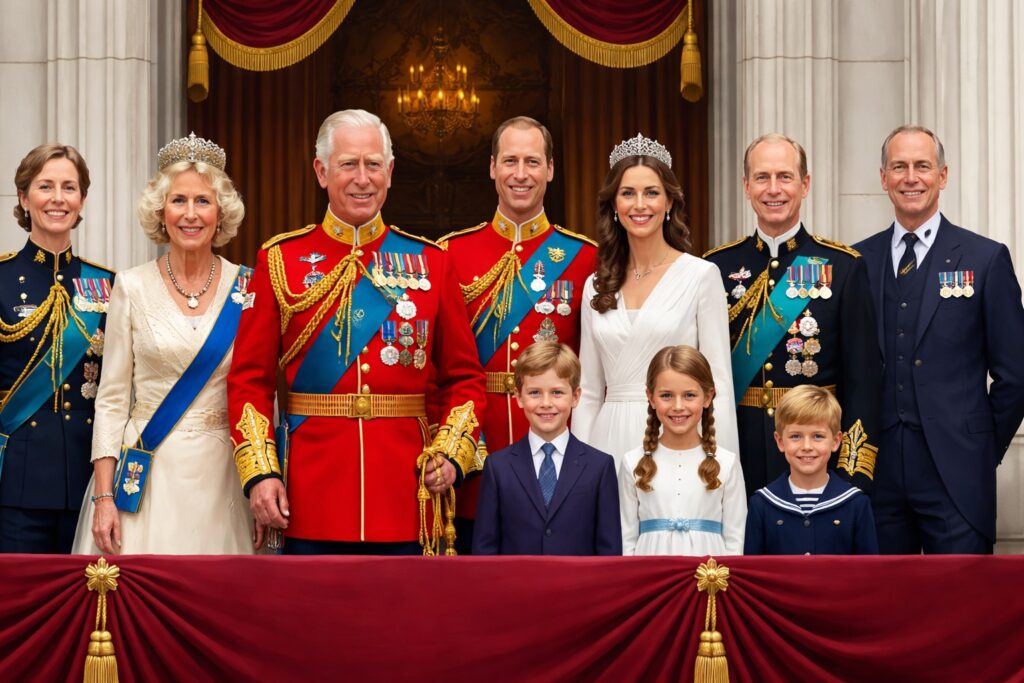
nThe title Prince of Wales is customarily used for the heir apparent but must be conferred by the monarch, not automatically assumed. In 2022, after Charles III ascended the throne, he appointed his eldest son William, Prince of Wales as Prince of Wales. Historically, this title almost equates to the future king, but legally, flexibility remains. The corresponding title for the spouse is Princess of Wales, currently held by Catherine, Princess of Wales. These titles are not mere decorations but signify the order of succession.n

nWilliam’s family exemplifies the system in operation. The Prince of Wales is also the Duke of Cornwall and, in Scotland, the Duke of Rothesay. His children are Prince George of Wales, Princess Charlotte of Wales, and Prince Louis of Wales. When William eventually ascends the throne, these titles will change overnight, but the names will remain the same. The institution comes first, the individual second.n

nCharles III’s siblings are also defined by titles. Anne, Princess Royal, is Charles III’s sister and holds the title Princess Royal, a lifelong honorific. Prince Edward, Duke of Edinburgh, is Charles’s brother and currently holds the title Duke of Edinburgh. As for Prince Andrew, Duke of York, also Charles’s brother, he was formerly Duke of York. In recent years, he has ceased using the styles Prince and His Royal Highness, and is often referred to in public as Andrew Mountbatten-Windsor. Legally, the abolition of titles requires formal procedures, not public opinion. Even so, he no longer performs royal duties, highlighting the distance between institutional identity and public role.n

nMountbatten-Windsor is the legal surname of the British royal family. In 1917, George V changed the dynasty’s name from its Germanic origins to Windsor. In 1960, Elizabeth II combined her husband Prince Philip’s surname Mountbatten with Windsor, forming Mountbatten-Windsor. This surname is primarily used in contexts such as the military, schools, or legal documents. Royal family members do not typically use surnames, as titles suffice to identify them. Andrew’s use of Andrew Mountbatten-Windsor for private affairs after stepping back from royal roles illustrates that when titles are no longer central to public identity, surnames emerge.n

nThe British royal naming system may seem complex, but it follows a single principle: the institution supersedes the individual. Titles define power and responsibility, while names carry personal life. Surnames belong to the legal realm, not the core of identity. News reports refer to The King not out of reverence, but because that is how the constitution functions. Understanding this, the language of the royal family becomes less mysterious, leaving only order and tradition.n

n#UK #RoyalFamily #Monarchy #PrinceOfWales #Columnn

Names as Private Property, Titles as Public Assets: The British Royal System Read More »

Scotland’s Promises and Disillusionment: Union, Brexit, and the Quest for Nationhood

nScotland was once a kingdom with its own monarch, parliament, and laws, distinct from England. In 1603, James VI inherited the English throne, creating a union of crowns but not of states. By 1707, the Act of Union merged the two parliaments, forming the Kingdom of Great Britain. Three centuries have passed, and while names have changed, the relationship remains complex.n

nIn 2014, Scotland held an independence referendum, resulting in 55% voting against and 45% in favor. At the time, those advocating for remaining in the UK argued that staying meant staying in the EU. This assurance was shattered two years later. In the 2016 Brexit referendum, the UK voted to leave the EU, while the majority in Scotland voted to remain. Many felt deceived, as staying in the UK turned into a ‘double exit’—leaving the EU while being trapped within the UK.n

nThis sentiment transformed into political momentum. The Scottish National Party seized the opportunity to demand another referendum. The London government refused, and the UK Supreme Court ruled that the Scottish Parliament could not unilaterally hold an independence referendum. Legal and political power structures thus stymie action, regardless of public sentiment.n

nThe cost of independence extends beyond politics to finance, which poses the greatest challenge. Scotland’s current public spending partly relies on transfers from the UK. Independence would end this financial support, necessitating a rebalancing of taxes and expenditures. Who would cover the deficit? Critics argue that without its own currency, Scotland would need to rebuild its banking system, presenting significant risks.n

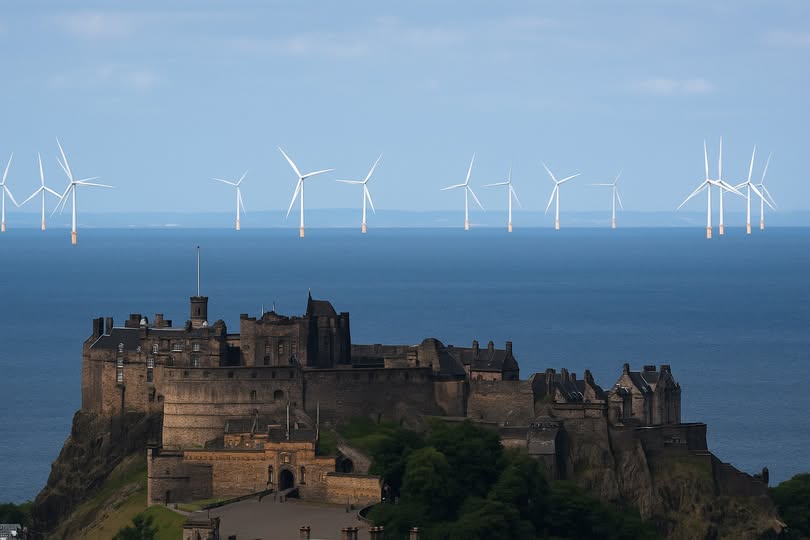
nProponents counter that Scotland has North Sea oil and gas and wind power resources. If these resources were under Scottish control, fiscal pressures might be alleviated. Wind power accounts for nearly half of the UK’s production, serving as a natural economic pillar. However, fluctuating oil prices and the long-term nature of wind energy investment pose challenges. Resources are valuable but cannot sustain a nation alone. The real issue lies in whether the institutions can remain stable and markets can maintain trust.n

nThe prospect of rejoining the EU post-independence is fraught with challenges. Even if Scotland wishes to return to the EU, immediate membership is not possible. The EU has stringent accession procedures requiring unanimous approval from all member states. Even with European goodwill, negotiations could take years. During this period, Scotland would be neither part of the UK nor the EU, leaving trade, tariffs, and borders in a grey area. Theoretical freedom might result in practical isolation.n

nRejoining the EU would further complicate border issues. Customs might need to be re-established between England and Scotland, restricting the flow of goods. This is not merely a political stance but an economic reality. From agricultural products to energy transmission, every checkpoint would need redesigning. For ordinary people, this might mean additional hassle; for businesses, it could be a matter of survival.n

nPolitically, public opinion remains divided and inconclusive. Various polls in 2025 show support and opposition are evenly split. Younger people tend to favor independence, while older generations prefer the status quo. This appears balanced but is in fact a tiring tug-of-war. Society is split in two—one half looking forward, the other clinging to nostalgia. Neither side can persuade the other.n

nThis tug-of-war reflects the broader predicament of the UK itself. London has long governed the four nations from a central position, with limited devolution and an aging system. Post-Brexit, the UK’s cohesion has been shaken. Scottish independence is not merely a local issue but a symptom of the United Kingdom’s systemic ailment, exposing outdated institutions and neglected regions.n

nThree hundred years ago, Scotland joined the UK for security and prosperity; now, it seeks to withdraw for sovereignty and identity. History seems to loop back on itself, reaching an end only to return to the start. But this time, the path is steeper and the fog thicker. Independence is not just about leaving; it is about rebuilding. It requires redefining currency, taxation, borders, and identity. Each step demands time and negotiation.n

nThe Scots’ pursuit is for autonomy and dignity. This pursuit is admirable, but passion alone is insufficient for success. It requires institutions, rationality, and preparation. Historical belonging cannot be eaten, nor can national pride fund a budget. A nation is not built on dreams but sustained by reality.n

Scotland’s Promises and Disillusionment: Union, Brexit, and the Quest for Nationhood Read More »

The Hidden Costs of Ignoring Decarbonization and Investment

nClimate change is no longer a prediction but a reality. Summers in the UK are becoming increasingly hot, heavy rains more frequent, and coastal erosion is intensifying. Without emission reductions, humanity will lose habitable land. For the UK, energy transition is not a moral stance but a matter of national survival. Only rapid decarbonization can ensure economic stability, job security, and energy safety.n

nThe backbone of this transition is the Contracts for Difference (CfD) system. The government and power generators agree on electricity prices in advance; if the market price falls below this line, the government subsidizes the difference. Conversely, if the market price exceeds it, generators return the surplus. The key to this system is not the subsidy amount but its stability. With predictable income, banks are willing to lend, and investors are willing to take risks. Wind and solar power require substantial upfront capital, and without price stability, financing costs would make many projects unfeasible. CfD makes clean energy financing possible and has positioned the UK as a leader in wind and solar energy in Europe.n

nThe sixth auction round (AR6) in 2024 is the latest outcome of this system. All figures are adjusted to 2025 prices. The mainstream offshore wind contract price is about £82 per megawatt-hour, while onshore wind and solar range from £70 to £75. In contrast, the nuclear power plant Hinkley Point C has a contract price of £130, with Sizewell C close to this level. Although wind power is affected by climate, its average generation cost has steadily decreased; nuclear power offers stable supply but is expensive and involves 35-year contracts, with taxpayers ultimately bearing the risk.n

nAR6 also includes two costly new technologies: floating offshore wind at about £195 per megawatt-hour and tidal power at around £240. These projects have minimal installed capacity and negligible impact on overall electricity prices. Their value lies in demonstration and technological maturity. Floating wind can open up deep-sea wind farms, while tidal power is predictable and stable. The government bears high costs to help new technologies cross the ‘valley of death’ towards scalability, mirroring the trajectory of fixed-bottom wind power from expensive to widespread.n

nMeanwhile, gas-fired power plants remain the system’s backbone. The cost of existing gas turbine plants is about £70 to £90 per megawatt-hour due to long-term depreciation; however, building new combined cycle gas turbines (CCGT) would raise costs to £110 to £120. This gap means that when old plants are decommissioned, maintaining supply will require more expensive reconstruction. Some politicians argue that the UK should continue relying on CCGT and avoid investing in grid upgrades to keep electricity prices low. This appears pragmatic but is short-sighted. Existing gas plants will eventually be decommissioned, and without grid upgrades and renewable energy expansion, more CCGTs will be needed to fill capacity gaps. The result will be larger investments and higher costs. The long-term average cost per megawatt-hour will far exceed current wind, solar, and grid upgrade expenses. Relying on fossil fuels seems cost-effective but merely delays the bill.n

nMore critically, national security is at risk. Fossil fuels are concentrated in a few oil-producing countries, and the UK’s long-term reliance on natural gas means its energy lifeline is in the hands of ‘oil nations.’ When geopolitical tensions rise and supplies are constrained, the UK is forced to pay high fuel costs. Moreover, traditional centralized power plants are more vulnerable to attacks. Since the Russia-Ukraine war, multiple countries have seen power facilities destroyed and grids paralyzed, highlighting the resilience and necessity of decentralized energy systems. Building a more flexible grid is not just an economic consideration but a defensive strategy.n

nIf the UK fails to continue reducing emissions, it will also face trade consequences. The EU is about to fully implement the Carbon Border Adjustment Mechanism (CBAM), imposing carbon taxes on imported products. If the UK continues to produce with high-carbon electricity, exports to the EU will be taxed, losing price competitiveness and incurring heavy emission reporting and auditing procedures. Ideally, the UK and EU would reach an agreement to mutually recognize carbon pricing systems, exempting UK products from carbon taxes and administrative costs. This is also the economic motivation for emission reductions: without decarbonization, market access is lost.n

nThe seventh auction round (AR7) began in August 2025, with results expected in early 2026. The government plans to extend contract terms from 15 to 20 years and relax planning permission thresholds for offshore wind. The goal is to deploy over 40 gigawatts of offshore wind by 2030. This competition is not just a battle of technology and capital, but a choice of long-term national direction.n

nThe real issue with the UK’s energy policy has never been ‘which kilowatt-hour is cheapest,’ but ‘which path best guarantees the future.’ Continued investment in the grid and renewable energy is the only way to avoid costly reconstruction of gas power. CfD provides institutional stability for this path. AR6 has proven its feasibility, and AR7 will determine whether the UK is willing to go further.n

The Hidden Costs of Ignoring Decarbonization and Investment Read More »

When High-Speed Rail Plans Derail: The HS2 Dilemma

nThe UK’s high-speed rail project was once envisioned as a monumental undertaking. Now, it has been reduced to half its original scope. Some argue that HS2 merely aims to speed up trains, shortening the journey from London to Birmingham. While this seems reasonable, it misses the point. The true value of this line lies not in speed, but in capacity.n

nThe UK’s railways are already overcrowded. From London to Manchester, freight and passenger trains share the same tracks. Long-distance trains dominate the rails, leaving no room to increase local services. HS2’s purpose is to create a new track for long-distance trains, allowing the existing lines to be revitalized. This would enable more frequent local services and increase freight capacity, providing relief to the entire system.n

nThis is the core logic of HS2: it’s not about running faster, but about running more; it’s not about who arrives first, but ensuring everyone can travel.n

nPhase 1, from London to Birmingham, is already under construction. Phase 2a was planned to extend north to Crewe, with 2b reaching Manchester and Leeds, forming a comprehensive design. Unfortunately, the government announced its suspension in 2023. The stated reason was cost, but this is shortsighted. Without 2a, long-distance trains remain on the old lines, significantly reducing capacity benefits. Without the northern section, the north-south divide persists, and the promise of northern revitalization remains unfulfilled.n

nThe regional disparity in the UK is well-known. London and its surroundings absorb most of the funds and talent, with GDP twice that of the north. Manchester, Leeds, and Sheffield have long suffered from underinvestment, with low wages, outdated infrastructure, and limited opportunities. This is not a natural fate, but a policy choice. HS2 was meant to change all that. By connecting the north and south, the flow of goods, people, and capital would increase. The north wouldn’t have to rely on London, allowing for economic balance. Now that the project is cut, the path to equilibrium is severed.n

nMore regrettably, environmental and carbon reduction efforts are also compromised. To reduce road freight, the UK must rely on rail. The capacity freed by HS2 could allow more freight to move by rail, reducing truck emissions on roads. This is a practical green transition, not just political rhetoric. How can one advocate for energy savings and carbon reduction today, yet cut rail projects tomorrow?n

nSome claim HS2 is too expensive. In reality, abandoning it halfway is costlier. Halting construction midway wastes both funds and confidence. Building a line is an investment; not building it is a loss. On the day trains run between London and Birmingham, northerners will still be on slow trains on old lines, which is the real injustice.n

nThe UK doesn’t lack money, but direction. Policies focus on elections, not generations. While other countries build new lines, expand tracks, and promote regional balance, the UK dismantles its own projects. This isn’t saving; it’s regression.n

nThe value of railways isn’t measured in the short term, but over centuries. Abandoning Phase 2 and the Northern Powerhouse Rail today leaves bottlenecks for the future. In ten years, with more passengers and more congested freight, costs will rise, and regrets will deepen.n

nIf HS2 could be completed in its entirety, it would not just be a transport project, but a restructuring of the national landscape. The imbalance between the UK’s north and south won’t be solved by speeches, but by steel rails. Each year of delay widens the gap.n

nWhen trains don’t move forward, neither do people’s aspirations. When decision-makers cut visions in half, the nation’s future is also diminished.n

When High-Speed Rail Plans Derail: The HS2 Dilemma Read More »

Forecasting the Future: The Secrets of the UK’s Meteorological System

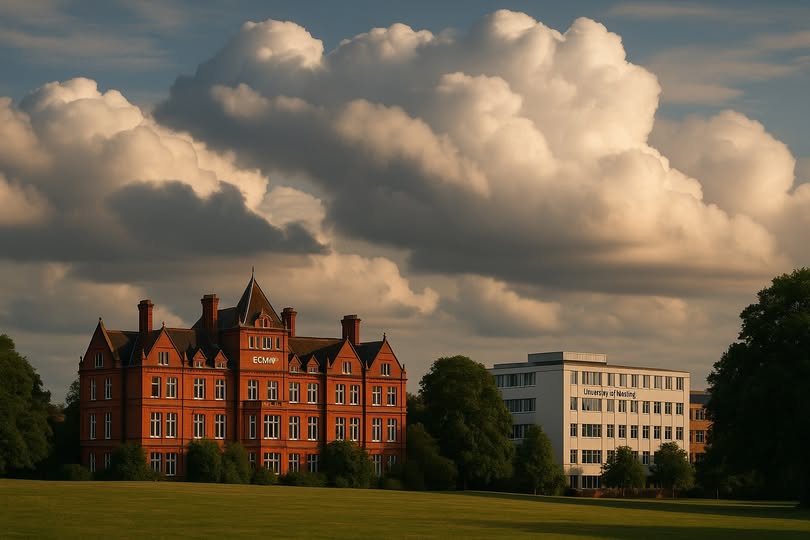
nThe UK’s notoriously changeable weather has positioned it as a world leader in meteorological science. Recently, the European Centre for Medium-Range Weather Forecasts (ECMWF) announced plans to relocate its headquarters from Shinfield Park, south of Reading, to the University of Reading campus. This move represents more than just a change of address; it signifies an institutional restructuring where research, education, and international collaboration are being reintegrated into the UK’s meteorological framework.n

nEstablished in 1975, the ECMWF is an intergovernmental organization comprising 35 European countries, responsible for global ‘medium-range weather forecasts,’ which simulate atmospheric conditions four to fifteen days ahead. It operates one of Europe’s most powerful supercomputers and maintains the world’s largest meteorological database, with its model outputs widely adopted by national weather services. Not an EU entity, the ECMWF remains unaffected by Brexit. Despite the UK’s departure from the EU, the ECMWF continues to operate in the UK, with its legal status and financial mechanisms unchanged, underscoring the UK’s central role in meteorological collaboration networks.n

nThe University of Reading’s Department of Meteorology serves as a hub for academic excellence and talent. Ranked among the top globally, its courses, accredited by the Royal Meteorological Society, cover climate dynamics, numerical forecasting, and atmospheric physics. The on-campus Atmospheric Observatory operates around the clock, allowing students to engage directly in observation and analysis. Over the years, the University of Reading has maintained a close partnership with the ECMWF, sharing research data and models through the OpenIFS project, training students in the use of world-class forecasting systems. With the ECMWF’s move to the campus, both entities will achieve greater spatial and academic integration, creating a new dynamic of complementary research and teaching.n

nAnother pillar of this system is the UK Met Office, located in Exeter. It is the core of national weather forecasting and one of the World Meteorological Organization’s training centers. Young meteorologists from Africa, South Asia, and the Middle East receive training here, learning satellite monitoring and numerical simulation. Its Foundation Operational Meteorology course is practice-oriented, developing professionals capable of responding to disasters in real-time. This training export has long been a facet of the UK’s soft power.n

nUniversities nurture talent, centers conduct research, and the Met Office applies findings, forming a coherent closed loop. The UK’s meteorological system is not about isolated excellence but institutional advantage. When the ECMWF’s new headquarters opens in 2027, Reading will become the meteorological capital of Europe. This city symbolizes not just scientific prowess but a national ethos—viewing weather forecasting as a core public service and translating science into societal security.n

nWeather forecasting, seemingly trivial, is in fact the frontline of the dialogue between civilization and nature. The UK’s sustained leadership in this field is not by chance but through structural confidence. As clouds gather and pressure shifts, people may only wonder if it will rain tomorrow; yet between Reading and Exeter, scientists are forecasting a much more distant future.n

Forecasting the Future: The Secrets of the UK’s Meteorological System Read More »

From Les Misérables to The Phantom: London’s Century of Stage Legends

nLondon’s West End is the heart of theatre. From the Victorian era to today, its streets have remained largely unchanged, with theatre facades still adorned with carvings and warm yellow lights. Some call it Britain’s Broadway, but it is older, more restrained, and deeper. Theatre here is not mere entertainment; it is a faith. Whether on a weekday afternoon or a cold weekend night, the audience fills the hall. As the lights dim, time seems to stand still, and London begins to tell its most adept stories.n

nLes Misérables is the longest-running epic on this land. Since its premiere in 1985, it has never left the London stage. It depicts a rain-soaked Paris, a turbulent era, and the rawest stage of humanity. When the ensemble sings ‘Do You Hear the People Sing?’, the waves of sound are like tides, intertwining anger and hope. The audience rises and falls with the melody, tears and applause intermingling. It is not just a musical, but an ode to suffering and dignity.n

nThe Phantom of the Opera offers a different kind of magic. At the moment the chandelier falls, the entire audience holds its breath; the booming bass of the organ is soul-stirring. The Phantom’s solitude and love haunt the theatre like a specter. It speaks not only of romance but of the curse of artists and dreams. When the curtain falls, the audience remains silent for a long time. London’s night sky seems tinged with a deep blue sigh.n

nMost West End theatres were built in the 19th century. While the old buildings are beautiful, the seats are narrow. The armrests barely accommodate a leg, and even turning is a challenge. For those accustomed to the spacious seating of Hong Kong’s Cultural Centre or West Kowloon Cultural District, the first visit may be surprising. Yet it is this closeness that fosters intimacy and condenses the atmosphere. When stage lights reflect on the audience’s faces and breaths intertwine, the immediacy is something no modern theatre can offer.n

nTo experience the West End’s charm, one need not spend a fortune. Official websites and platforms like ‘TodayTix’ and ‘TKTS’ often offer discounts, and sometimes same-day lottery tickets are the cheapest. The ‘rush ticket’ system also allows spontaneous visitors to enter for just a few dozen pounds. If time permits, consider an afternoon show—leaving while it’s still daylight makes it easier to awaken from the dream.n

nTheatres are mostly concentrated between Piccadilly Circus and Covent Garden, right next to Chinatown. Having a plate of fried noodles or a bowl of sweet soup before or after a show is a routine for London theatre fans. The intertwining of neon and theatre lights feels like a continuation of the play. Some say the West End’s theatre isn’t just on stage, but also in the streets. For visitors from afar, these plays are not just entertainment but a part of life—reminding us that ideals and romance still exist.n

nAs you leave the theatre, the night breeze gently blows, and the city remains bright. Perhaps life is like a play, and the play is like life. London’s West End, with its century of light and shadow, tells us: as long as the curtain hasn’t fallen, anything is still possible.n

From Les Misérables to The Phantom: London’s Century of Stage Legends Read More »

When Autumn Leaves Become Everyday Sight

nIn Hong Kong, red leaves are a luxury. Every early winter, many people travel to Tai Tong in Yuen Long just to see a few sweet gum trees turning red. The red is not intense, the leaves are not plentiful, yet people flock there. In subtropical Hong Kong, most trees are evergreen, making it hard to feel the autumnal spirit, and red leaves become a rare guest.n

nIn the UK, red leaves become commonplace. Come October, parks in London, country lanes, and Scottish valleys are awash with red, orange, and gold. The maple, oak, and beech trees lining the streets ignite like simultaneous flames, illuminating the entire island nation. For Hongkongers newly arrived in the UK, such an autumn is both unfamiliar and captivating—a palette never belonging to the southern climes.n

nThe reason leaves turn red is not romantic but physiological. As autumn days shorten and temperatures drop, chlorophyll breaks down and photosynthesis halts. Carotenoids and xanthophylls, which lie dormant in the leaves, become visible. Coupled with sugar accumulation, ample sunlight, and cool, dry nights, plants produce anthocyanins, turning leaves from green to red. The red is not a melancholy farewell but a defensive strategy before departure—it reduces photodamage, delays decay, and allows the tree to reclaim nutrients before winter.n

nHong Kong sees few red leaves due to its warm climate. The small temperature difference between day and night, high humidity, and short autumn make it hard for sugars to accumulate and anthocyanins to form. Moreover, evergreen species dominate, and deciduous trees are scarce, leaving only sweet gum, liquidambar, and soapberry to turn red. In contrast, the UK’s temperate climate, with its sunny, dry autumn days and cool, non-freezing nights, provides perfect conditions for red leaves. When natural conditions align, the entire country changes color simultaneously.n

nIn the UK, one does not need to seek out red leaves. From late September, the Scottish Highlands first blush; by mid-October, the Lake District, Cotswolds, and New Forest follow suit; and from late October to early November, London’s Richmond Park, Hampstead Heath, and Kew Gardens reach their peak. At dusk, with the sunset reflecting in the mist, the forest seems to burn silently, with only the sound of falling leaves.n

nFor new immigrants, this scene is like a belated revelation. What once required a journey to see is now just outside the window. This natural rhythm suddenly makes one realize that migration is not just about changing places but also about learning a new season. Hong Kong’s red leaves are fleeting and rare, while the UK’s are a perpetual cycle; the same leaf color reflects different lives.n

nRed leaves teach us that leaving does not mean losing, and changing color does not signify withering. The transition of seasons is, in fact, a continuation of life. As Hongkongers gaze at the fiery trees in a foreign land, they may also understand that their hearts are finding peace with the seasons.n

When Autumn Leaves Become Everyday Sight Read More »

From Bristol Road to Bristol City: A New Haven for Hong Kong Migrants?

nBristol Road, located in Tsim Sha Tsui, is a short street connecting Salisbury Road and Peking Road. Its name is derived from the old Chinese translation of the British city of Bristol. Today, most Chinese media use the transliteration “Bristol,” but “Bixiantao” resonates more with the Hong Kong accent and carries a poetic touch. Increasingly, more Hong Kong migrants are choosing to settle in this city, making “Bixiantao” more than just an old street name; it has become a new home with real significance.n

nBristol is situated in the southwest of England and is part of the Greater Bristol urban area, with a population exceeding 800,000. The city is of moderate size, offering prosperity outside the capital while retaining the charm of a mid-sized city. From London Paddington, one can reach Bristol Temple Meads in as little as one hour and twenty minutes via the Great Western Railway; opting for Bristol Parkway reduces the journey to one hour and thirteen minutes. Geographically, it is located at the intersection of the M4 and M5 motorways, making it highly accessible to Cardiff, Gloucester, Cheltenham, and Exeter, serving as a transport hub for the southwest of England.n

nThe charm of this city lies in its blend of the old and the new. Along the River Avon, old docks have been transformed into galleries and cafes, with street art and music festivals adding vibrancy. Bristol’s creative industries and tech companies are growing side by side, attracting numerous startups and media talents. The pace of life is slower than in London, yet it is full of energy. For Hong Kong people, it offers the “just right” balance—more affordable than London, livelier than a small town—perfectly aligning with their post-migration aspirations.n

nFor tourists, Bristol offers unique sights. The Clifton Suspension Bridge is a city landmark, spanning the Avon Gorge like a steel rainbow. Nearby, the Clifton Observatory offers panoramic views of the city and the valley. In the city center, the SS Great Britain, the world’s first iron-hulled, screw-propelled ocean liner, now serves as a museum showcasing Victorian-era innovation. To the north, the Aerospace Bristol museum houses historic aircraft, including the last Concorde to fly, reviving the city’s engineering glory of yesteryears.n

nThe Labour government’s recent announcement of the “West Innovation Arc” plan further cements Bristol’s role as a regional growth engine. This development encompasses three core areas: the new Brabazon town, the Bristol Parkway transport hub, and the Bristol & Bath Science Park. Together, they form an innovation corridor spanning housing, transport, and high-tech industries, with the YTL Arena as a cultural landmark. This massive venue, converted from an old aircraft hangar, can accommodate 20,000 people and is expected to boost the music, exhibition, and tourism industries. The overall plan will create over 30,000 jobs, injecting new vitality into southwest England.n

nTransport infrastructure is also advancing in tandem. Phase two of the MetroWest project will add North Filton and Henbury stations, improving connectivity between the north and the city center. Meanwhile, local authorities and the West of England Combined Authority are exploring the development of a light rail system to establish a modern, low-carbon public transport network for Bristol. If successfully implemented, it will significantly enhance urban commuting and promote regional integration.n

nHowever, development comes at a cost. New towns and infrastructure have driven up property prices and rents, with construction sites proliferating, traffic congestion worsening, and living costs rising. For early-arriving Hong Kong migrants, this may mean asset appreciation; for newcomers, it presents both adaptation and financial burdens. Bristol is undergoing reconstruction and trial. Convenience and comfort will take time to materialize.n

nIn Hong Kong, Bristol Road is merely an old street name; in the UK, Bristol City is an emerging metropolis. Its story mirrors the lives of many Hong Kong migrants—starting from the familiar, venturing into the unknown; finding new meaning from old impressions. For Hong Kong people seeking a place to settle and develop, Bristol may not be the final destination, but it is becoming a path to the future.n

From Bristol Road to Bristol City: A New Haven for Hong Kong Migrants? Read More »

The Illusion of Points: Flaws in the UK’s Immigration System

nSince 2021, the UK has implemented a ‘points-based immigration system,’ claiming to attract global talent through a fair and transparent process to determine who can work in the UK. It sounds like Australia’s quantitative system, but in reality, it is not. It neither truly selects people based on scores nor allows the government to take control. The so-called ‘points’ are merely a repackaging of the old system.n

nUnder the current system, applicants must accumulate 70 points to be approved. However, these 70 points are almost predetermined: having an employer sponsorship, meeting the specified skill level, and passing an English test collectively account for 50 points. The remaining points can be obtained by meeting salary standards, having a job on the shortage occupation list, or possessing a PhD. In other words, once an applicant finds a willing sponsor, the other conditions are mostly met. This is not a competition of points but a ticket to entry.n

nA genuine points-based system should allocate points to everyone in a detailed manner. Scores should not be a patchwork of ‘choose one of three’ but rather a quantitative weighting of hundreds of detailed items. Factors such as which university, which department, English proficiency, work experience, age, and professional level should all be scored on a continuous scale. This way, everyone has an independent score, and the government can decide who to admit based on total scores. If there are only a few levels, each worth five points, and thousands of people have the same score, the so-called ‘points system’ loses its meaning.n

nA well-designed system should allow the government to truly control the scale of immigration. The government could set an annual quota and then admit applicants based on their scores, thus controlling numbers while maintaining quality. In contrast, the current UK system sets a fixed passing line, allowing anyone who meets the criteria to enter. As a result, visa numbers fluctuate with market changes, and the government loses control. It seems like ‘the government decides who can enter,’ but in reality, companies decide who can apply.n

nMore seriously, visas are tied to employers. Holders of Skilled Worker visas may lose their legal status if their employer goes bankrupt, restructures, or lays off workers due to economic cycles. No one can guarantee a job will last five years, let alone ten. This uncertainty makes foreign employees hesitant to resign, complain, or defend their rights. The system creates a dependency relationship, turning so-called ‘talent’ into replaceable labor.n

nThe UK has long been short of healthcare workers, engineers, and researchers, yet it still ties them to a single employer. To truly attract and retain talent, the UK should expand systems like the Global Talent visa. Not only award-winning scholars or Nobel laureates should be considered talent. Any doctor, nurse, engineer, or scientist with professional qualifications should be able to work freely. As long as they meet objective standards, they should be able to apply for permanent residency and citizenship without being beholden to their employer.n

nToday’s ‘points-based system’ neither selects the capable nor prevents abuse. It is neither a points system nor a real system. To rebuild credibility and efficiency, the UK must fundamentally reform—making scores a true selection standard and allowing the government to regain control, rather than letting employers manage the country’s borders.n

The Illusion of Points: Flaws in the UK’s Immigration System Read More »

Scroll to Top